Family Holdings #39 - Cost Price Revolution: the opportunities and the impact

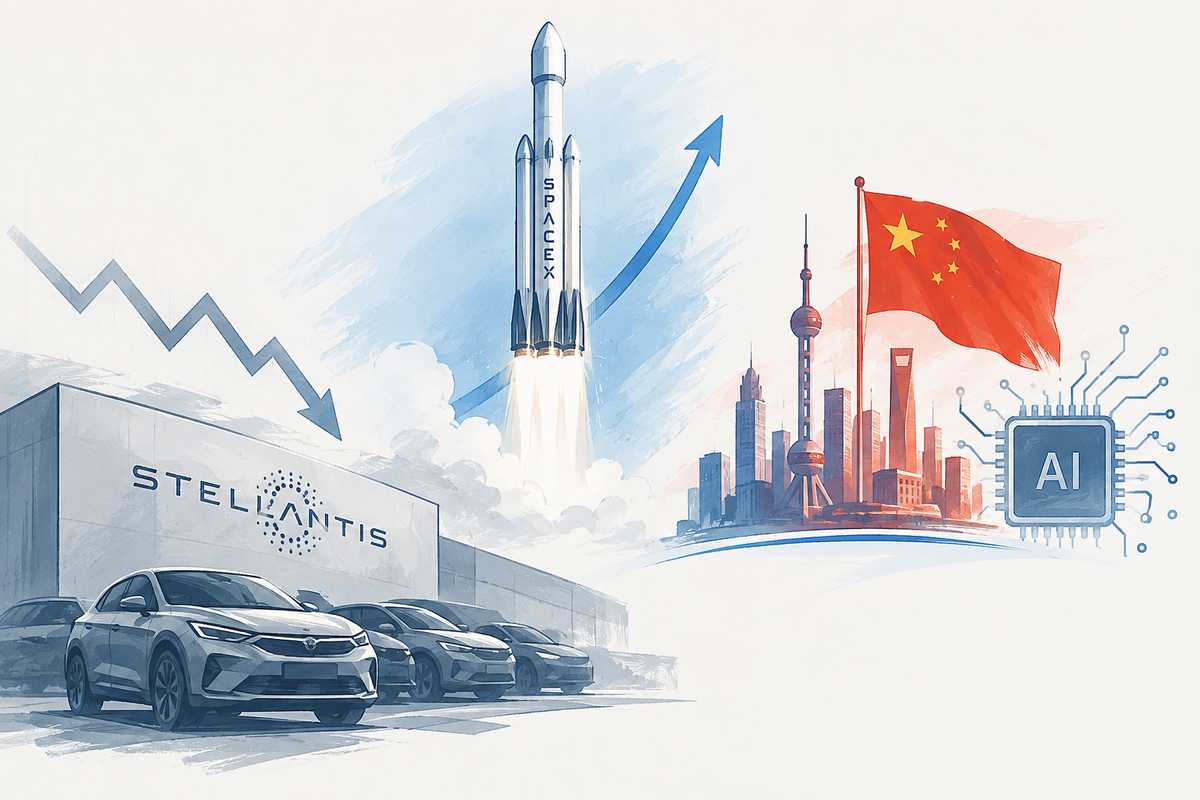
This week's topics:
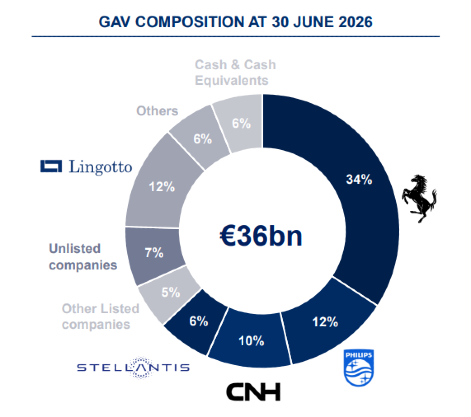
The past year was a difficult one for Exor, as major portfolio companies in the European automotive and luxury sectors came under pressure. Net asset value per share fell by 3.9% in the first half of the year to €157.90. This decline was almost entirely attributable to Stellantis, which is grappling with operational headwinds that caused the carmaker's weighting in the portfolio to more than halve. Important counterbalance came from Ferrari, which now accounts for 34% of Exor's gross net asset value and raised its full-year guidance thanks to a strong product mix and bespoke options. To address the undervaluation, Exor announced a €500 million share buyback programme via the stock exchange. Although this buyback is value-enhancing, the chosen approach and its relatively modest size compared with the expected cash reserve of €4 billion may well raise a few questions.
In Brief:
Topicus (Toronto: TOI) is acquiring Zorgweb, based in Zwolle. Zorgweb gathers and structures data on insurance policies, premiums, contracting and care quality. It supplies this data via links (APIs) to comparison websites, insurers and advisory applications. Its best-known product is De VoorzieningenWijzer, which points residents towards allowances and municipal schemes they are entitled to. Zorgweb will continue under its own name within Topicus Healthcare, along with its roughly 35 employees in Zwolle.
Prosus (Amsterdam: PRX) is bringing in Ronald Hans, better known as Nalden (co-founder of WeTransfer), as head of product development. At the same time, Prosus is acquiring his start-up Boomerang, a young competitor of WeTransfer. No amount has been disclosed, and Nalden himself describes it as an acquihire, an acquisition primarily driven by the team. In addition, Euro Beinat and Paul van der Boor, who already held senior AI positions, have been appointed chief AI officer and chief technology officer respectively. Together they are to translate CEO Fabricio Bloisi's AI strategy into proprietary products. These products will be built on a language model that Prosus trains using transaction data from its portfolio companies, and on a platform on which some 60,000 AI agents have already been built.
Berkshire Hathaway (New York: BRK.B) has significantly increased its stake in homebuilder Lennar (New York: LEN). Between 17 and 21 September, Berkshire bought approximately $212 million worth of additional shares, bringing its stake to 23.7 million Class A shares, worth around $1.8 billion. It is Berkshire's second recent move in the homebuilding sector, following its $6.8 billion acquisition of Taylor Morrison in July.
Constellation Software (Toronto: CSU) completed two acquisitions this week. Through Adapt IT Hospitality, subsidiary Volaris is expanding its South African hotel software business with Travel Trackers. This company supplies data analytics and reporting to safari lodges and will be integrated into Adapt IT's reservation system. According to Adapt IT chief executive Tony Vicente, the acquisition accelerates product development in data analytics and AI "by years rather than quarters." In addition, Vela subsidiary Smart Software Group acquired Italy's Iungo (Modena). Iungo offers a platform that streamlines supplier collaboration for industrial companies, covering everything from procurement and quality control to invoicing.
Scottish Mortgage on the SpaceX monopoly and Chinese AI
This week, Scottish Mortgage Investment Trust (London: SMT) held its annual digital conference under the theme "Change Drives Growth". Managers Tom Slater and Lawrence Burns were joined by mathematician and presenter Hannah Fry, Wharton professor Ethan Mollick, and Linda Lin, head of the China team at manager Baillie Gifford. Two topics dominated the afternoon, namely SpaceX and China. In between, there was also significant news from the private portfolio. Following an upward revaluation of its stake in AI developer Anthropic, this position's weighting rose from 2.9% at the end of August to 3.9% of the total portfolio. This once again underscores SMT's view of the growing importance of private AI holdings within the trust.
"SpaceX is turning science fiction into reality"
As a reminder: SpaceX listed on the Nasdaq on 12 June 2026, after which the position made up more than 25% of Scottish Mortgage's total portfolio just a few days later. Such a size naturally raises questions about concentration risk. During the Q&A session, Tom Slater addressed this explicitly. "We do not equate large positions with risk," Slater clarified. "Selling too hastily and without proper thought would be more damaging to returns. For us, risk is not short-term share price volatility, but the permanent loss of capital."
Management emphasised that SpaceX remains a core position with an extremely strong investment case, but that its size will gradually be reduced as liquidity allows. The lock-up period, during which existing shareholders are not permitted to sell, is not in fact a fixed six-month term, but unfolds in phased steps. The most recent portfolio update shows that the position still stands at around 17-18%. This suggests that Scottish Mortgage had not yet made use of the first liquidity window at the earliest possible moment, directly following the group's second-quarter results.
Lawrence Burns then outlined why the team remains so convinced of this investment. According to management, the cost of putting a kilogram of cargo into orbit has now fallen from $18,000 to around $900, with a further outlook towards just $200. Burns described this as the moment when science fiction becomes reality. When launching becomes this cheap, applications emerge that were previously simply unthinkable due to the high costs. According to him, SpaceX has a "near-monopoly on access to the rest of the universe".
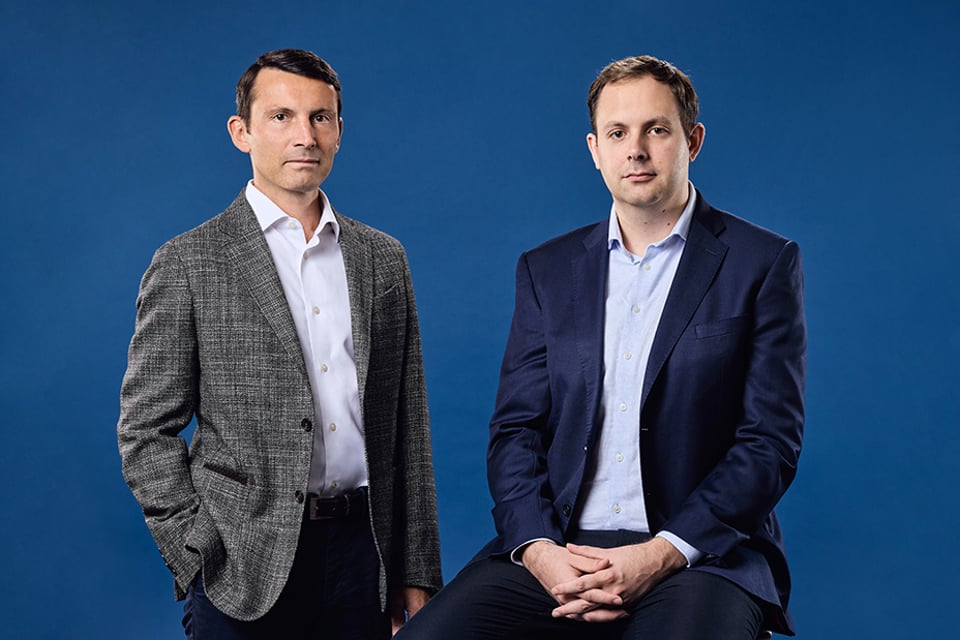
 Travis Beals
How concrete this is became clear just a day after the conference. Google announced that Project Suncatcher, research into AI computing power in space, is entering its first test phase. Satellites in low Earth orbit capture sunlight almost continuously and can generate up to eight times more energy than solar panels on Earth. The prototype, equipped with Google's own AI chips, will fly on SpaceX's Transporter-18 mission. A follow-up step is planned for 2027, which illustrates precisely the type of breakthrough Burns was referring to.
"The West continues to underestimate China's global impact"
The second central theme was China. The team emphasised that the reduced weighting in Chinese equities is not a strategic reversal, but the result of stricter selection. Burns acknowledged that Chinese holdings carry a shared geopolitical risk, while at the same time pointing to the historically low valuations for companies that continue to grow very strongly operationally.
According to Linda Lin, China is too often judged in the West as a macro story about real estate, consumer confidence and geopolitics. "That's all true, but it's like judging a restaurant by the weather outside rather than by what's on your plate," Lin said. Anyone who speaks directly with the founders sees enormous drive and innovative power. In her view, the key question is not whether China is attractive as a country, but whether individual, exceptional companies can be found there. Bottom-up stock selection therefore carries more weight than ever.
Lin also warned that the West underestimates China's impact. Where people used to talk about "the Google of China" or "the Meta of China", that analogy no longer works for a company like ByteDance (TikTok). The West is now actually trying to copy ByteDance. According to Lin, the real risk is that we underestimate the extent to which Chinese companies can disrupt global industries. She pointed to the rise of Chinese electric cars, which are putting pressure on the European car market, and posed the question of what happens if China succeeds in producing its own fully-fledged alternatives to advanced semiconductors.
This Chinese dominance is also increasingly evident in the theme of AI models. While a large part of the market is focused on the most advanced models from Western giants such as OpenAI and Anthropic, China is opting for a very different approach. By committing heavily to open-source models, the country is making AI available to everyone at a fraction of the price. Although these models may not reach the absolute top in every respect, that low cost could prove decisive for emerging markets and less prosperous countries. Even if the US and Europe close themselves off due to geopolitical tensions, the rest of the world has an enormous need for affordable AI applications.
This means China's AI strategy shows a striking parallel with the view on SpaceX. In both cases, the same core principle applies: when the cost of a crucial technology falls drastically, room emerges for a wave of new applications and accelerated global mass adoption.
Why Exor's share buyback has not yet fully restored confidence
It has been a while since we last wrote about Exor (Amsterdam: EXO). For us, the company remains the textbook example of a classic family holding company: a family that has acted as majority shareholder for generations and invests for the very long term in both private and listed companies.
The past year, however, was a tough one for the portfolio. Exor is active in sectors that took a hefty beating, such as the European car industry and the luxury sector. The chart below clearly shows the impact of this: over the past twelve months, Exor has been the laggard among a number of well-known European holding companies. Investor AB, by contrast, tops the list with a gain of around 40%.
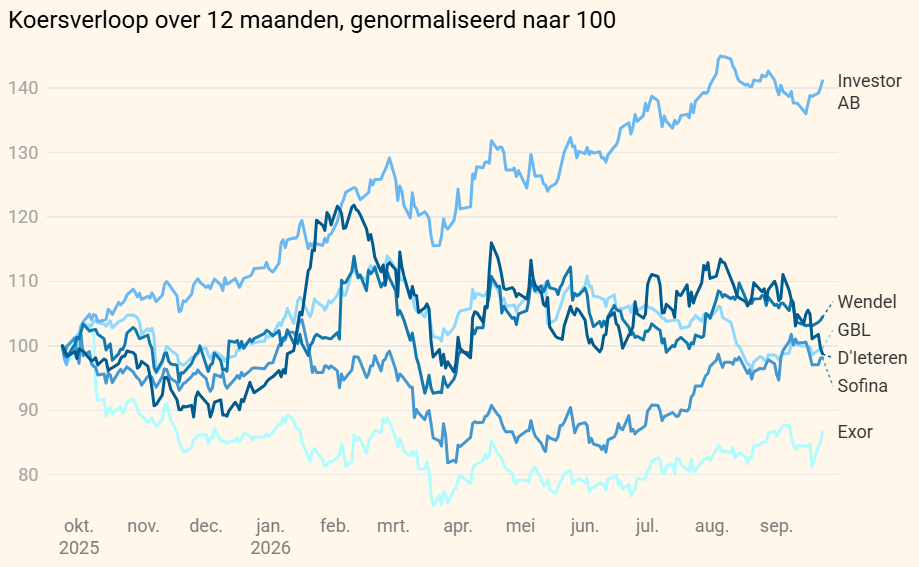
However, Exor, and investors too, look primarily at net asset value (NAV) per share. In the first half of the year, this fell by 3.9% to €157.90. The return for shareholders came in even lower, at minus 6.9%, as the discount to net asset value widened further to 57.6% at the end of June, a level that, according to Chief Financial Officer Guido de Boer, Exor has not seen in a long time.
Stellantis under pressure
The decline in net asset value was almost entirely attributable to Stellantis. The value of that stake fell over six months from €4.25 billion to €2.24 billion, a loss of €2.0 billion, which is larger than the total decline in net asset value (€1.2 billion). Partly as a result, Stellantis's share of Exor's gross net asset value fell from 11.5% at the end of 2025 to 6.3%.
In his commentary on the half-year figures, CEO John Elkann pointed to geopolitical tensions and ongoing market uncertainty. The half-year report describes the car industry as a sector in a turbulent phase, dominated by the shift to electric driving and a fierce global battle over cost prices. Players such as BYD, with far-reaching scale and cost advantages, have unleashed a genuine cost-price revolution, putting Western carmakers under enormous margin pressure. According to Exor, Stellantis is currently undergoing a 'restart', with the emphasis on operational execution, the customer and product quality. That operational headwind hit the share price hard, with Stellantis shares halving in value. In addition, Exor received no dividend from the carmaker this half-year, compared with €306 million a year earlier. Management, however, remains optimistic for the longer term. Elkann described the first results of the new five-year plan FaSTLAne 2030, under which Stellantis is investing €60 billion, as encouraging.
Luxury automotive as a counterweight
Where the broader European car industry is having a hard time, the same is much less true for Ferrari. The stake in the Italian thoroughbred now accounts for 34% of Exor's gross intrinsic value. Asked how the board views this concentration, chief financial officer Guido de Boer pointed to the sale of €3 billion worth of Ferrari shares a year and a half ago. At the time, the stake was heading towards 50% at a much higher valuation. Currently, that valuation is considerably lower and the weighting remains well below half. Asked whether Exor would sell Ferrari shares to fund new investments, he replied that Exor first looks at its cash position and borrowing capacity. Only after that would the least attractive holding be sold. 'But Ferrari isn't at the top of that list. We think it's a fantastic company,' De Boer said.
That confidence is easy to explain for this year. With sustained pressure on both the car industry and the luxury sector, it is striking that a company combining these two worlds actually provided a counterweight to the decline in Stellantis this year. That was by no means a given, especially considering that even the ultra-luxury segment, in the form of Hermès, has been under pressure this year and lost almost 40% of its market value.
Ferrari delivered fewer cars in the first half of 2026, but earned more from them on balance. The number of cars delivered fell from 7,087 to 6,802, yet half-year revenue nonetheless rose by 14% to €3.79 billion. That growth was driven partly by the second quarter, in which revenue grew by an outsized 8%, thanks to a richer product mix and strong demand for personalisation. These customisation options now account for more than 20% of revenue from cars and parts. Partly on the back of these results, Ferrari raised its revenue guidance for 2026. According to management, orders now already extend well into 2027, and several models are already sold out for their entire production run. This strong foundation and rock-solid brand image allow Ferrari to take innovative steps, even though this sometimes causes considerable stir among traditional enthusiasts. That was evident earlier this year with the launch of its newest model.
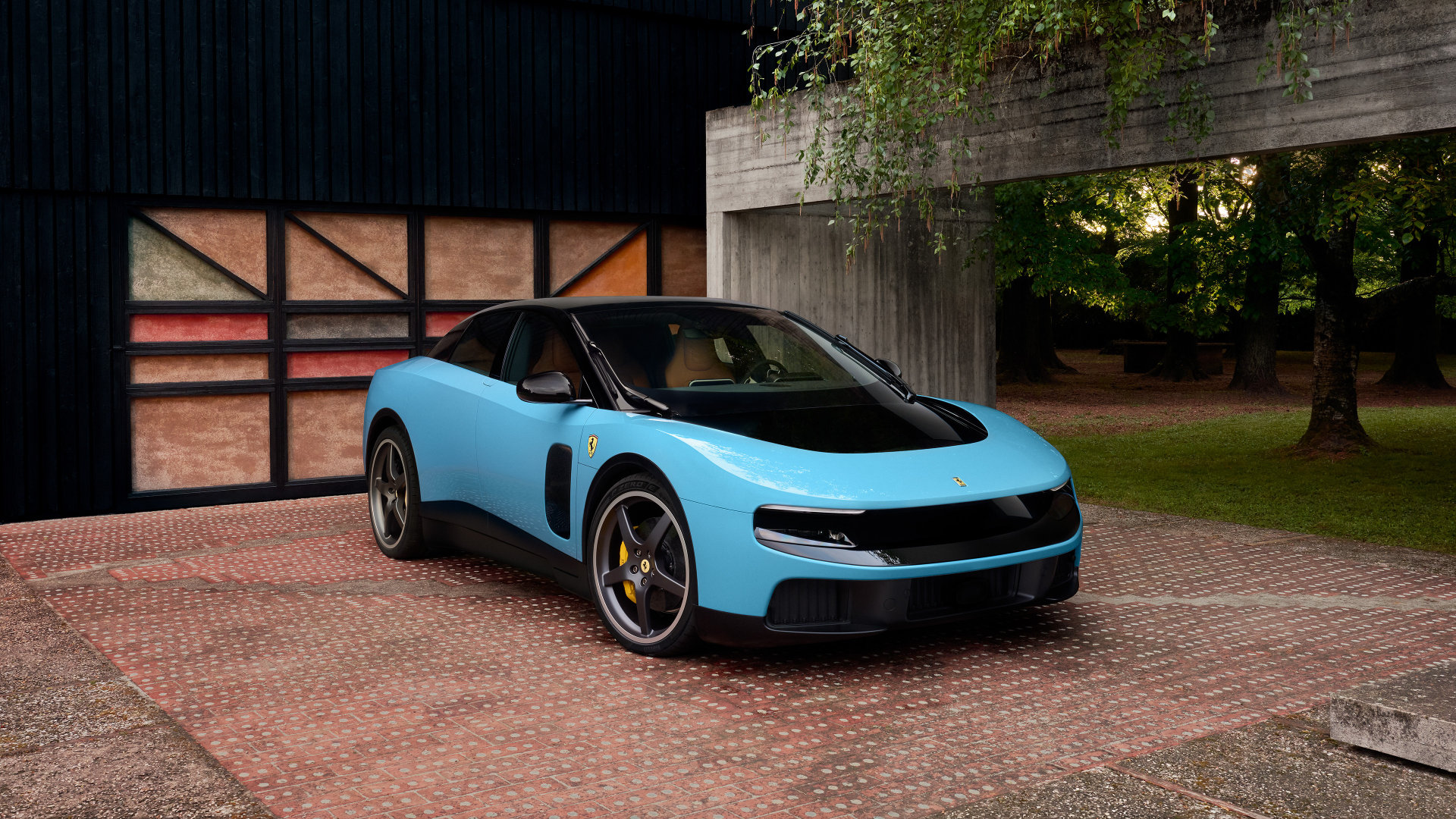
That stir arose around the presentation of the Luce, Ferrari's first fully electric model. The four-door, five-seat electric GT was unveiled in Rome with a price tag of €550,000. The model was co-designed by former Apple designer Jony Ive and his design collective, LoveFrom. The design deviated so sharply from what the market is used to from Ferrari that the shares in Milan immediately dropped by more than 7%. Ferrari quickly recovered, however, thanks to the aforementioned quarterly figures and the raised annual guidance.
Despite the criticism, the very first production example fetched no less than $40 million at Monterey Car Week at RM Sotheby's, a record amount for a new car. However, this says little about the model's market value or future success. It was, after all, a charity auction, with the proceeds going entirely to the Ferrari Foundation to fund education projects. As a result, the donation is tax-deductible for the buyer. That buyer, incidentally, is no stranger. It is Dr. Herbert 'Herbie' Wertheim, who owes his fortune mainly to an early investment in HEICO. He invested $5 million in 1992 and grew that stake to a value of $2.8 billion today, making him still one of the company's largest shareholders.
Share buybacks
While Ferrari excels, Exor is also trying to create value at the holding company level. The holding company announced a share buyback programme worth €500 million, to be carried out on the stock exchange until the annual results in March. A first tranche of €125 million runs until the end of November. At a price of around €71.50, Exor will thereby acquire just over 3% of the outstanding shares. De Boer spoke of a threefold coincidence: "The discount is very high, our companies are at a low level, and we have an ample cash position." He added that this is not an opportunistic transaction and that Exor is deliberately choosing to do this via the stock exchange rather than through a public tender offer.
However, that choice and the communication surrounding it raise questions, questions that, remarkably, were not asked during the analyst call. At a discount of 57.6%, Exor is buying more than €2.30 worth of intrinsic value for every euro invested. Even with a modest premium via a public tender offer, a buyback would be strongly value-accretive for shareholders. So why spread this amount over six months? Buying on the stock exchange does give management flexibility, but the signal to the market is weaker. It perhaps suggests that the board does not consider the discount extreme enough to pay a premium for it, or expects that the discount will not disappear for the time being anyway. A public tender offer, by contrast, would have powerfully demonstrated that Exor currently regards its own shares as the very best investment. That signal is now absent. This is also because €500 million, although a substantial amount, is only a fraction of the roughly €4 billion in liquid assets sitting on the balance sheet after all the divestments.
Moreover, history teaches that a share buyback on its own rarely suffices to make a stubborn NAV discount disappear. Look at the Belgian holding company GBL, which, as De Tijd noted, has bought back some €3 billion worth of its own shares since the end of 2018 without the discount narrowing in the slightest. Only when new CEO Johannes Huth began restructuring the portfolio at an accelerated pace did confidence return, and the discount halved from 42% to 21%. Share buybacks do raise intrinsic value per share, but to truly convince the market, investors ultimately demand action and structural improvement within the portfolio itself.
Receive weekly insights in your inbox
Exclusive analyses and updates on family holding companies and global market developments.
Would you like more information about our services?
Get in touch
Disclaimer:
No rights can be derived from this publication. This is a publication of Tresor Capital. Reproduction of this document, or parts of it, by third parties is only permitted after written consent and with reference to the source, Tresor Capital.
This publication has been compiled by Tresor Capital with the greatest possible care. The information is intended in a general sense and is not tailored to your individual situation. The information should therefore explicitly not be regarded as advice, an offer or a proposal to purchase or trade investment products and/or to make use of investment services, nor as investment advice. The authors, Tresor Capital and/or its employees may hold positions in the securities discussed, for their own account or on behalf of their clients.
You should carefully consider the risks before you start investing. The value of your investments can fluctuate. Past performance offers no guarantee for the future. You may lose (part of) your capital. Tresor Capital disclaims any form of liability for any inaccuracies or errors. This information is purely indicative and subject to change.
Read the full disclaimer at tresorcapitalnieuws.nl/disclaimer .
This article was translated automatically from Dutch using AI. In case of any difference, the Dutch original prevails. Read the original in Dutch.