Family Holdings #44 - Constellation builds out security software, Brookfield finances AI factory



This week's topics:
Brookfield is investing up to USD 9 billion in the AI factory that South Korean internet company Naver is building together with Nvidia. In addition, Westinghouse, the nuclear company in which Brookfield holds a 51% stake, is preparing an IPO at a targeted valuation of more than USD 50 billion.
In Brief:
Lifco (Stockholm: LIFCO-B) is acquiring the UK's Maxlight, which designs, manufactures and installs aluminium sliding doors with slim frames and other architectural glazing for luxury homes. The London-based company has 50 employees and generated revenue of approximately GBP 10 million in 2025. Maxlight will become part of the Infrastructure Products division within the Systems Solutions business area.
Chapters Group (Frankfurt: CHG) has, through its subsidiary Software Circle, acquired the UK's Gintech Solutions for up to GBP 4.5 million in cash. Gintech makes MidexPRO, software used by nearly 800 private clinics in the United Kingdom to manage their practices, from scheduling to billing. Each year, MidexPRO retains more than 95% of its revenue from existing customers. Caroline and Gary Parker, who have led the company since 2014, will remain at the helm.
Constellation Software (Toronto: CSU) continues to enjoy the confidence of analyst Paul Treiber of RBC Dominion Securities, who maintains his buy rating and a price target of CAD 4,400. Treiber expects organic growth to return to the ten-year average in Q3 and therefore sees the quarterly results on 6 November as a potential catalyst for the share price. Although Constellation spent less on acquisitions in Q3 than Treiber had estimated, he notes that, including October's purchases, the amount spent on acquisitions this year remains at a healthy level. He also still considers the share to be undervalued.
How AI is transforming Constellation's security software
The Canadian acquisition machine Constellation Software (Toronto: CSU) is investing increasingly in security software through its subsidiary Volaris. Volaris acquired SureView and LoginRadius this year. SureView provides software that allows control rooms to manage alarms, cameras and other security systems from a central screen. LoginRadius's software enables companies to let their customers log in securely.
Volaris entered this market in 2021 with the acquisition of Aislelabs, which makes software that lets companies see how people move through buildings and other spaces. A year later came Bravura Security and Intellicene. Bravura Security makes software that lets companies control which employees have access to which computer systems. Intellicene makes software that lets users manage camera footage and link it to other security systems. Volaris now owns five companies that make security software. Three of them focus on physical security, the other two on cybersecurity.
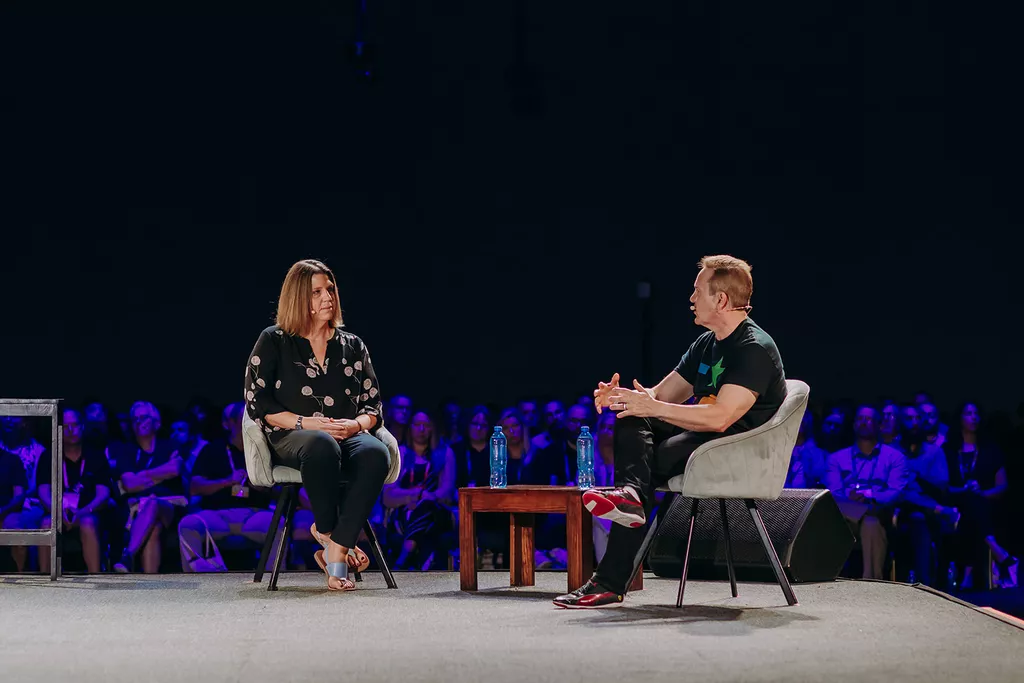
Group Leader Becky Stout sees two developments reshaping this market. Customers no longer want to work with twenty different suppliers, but are instead looking for a platform that brings together physical security and cybersecurity. Security systems have, after all, been built up separately from one another over the years. Many security managers chose the best solutions available five years ago. As a result, they now often work with four or five separate systems, supplemented by all sorts of smaller programs.
The second development is the rise of artificial intelligence (AI). In the past, a security camera only provided footage of, say, a corner of a building. An employee then had to watch that footage themselves. Now AI analyses that footage and alerts a guard the moment something suspicious happens. In cybersecurity, it works in much the same way. There, an analyst receives an alert to check the recorded activity on the computer systems.
"It's moved incredibly fast. At first, the software only provided a dashboard and analyses. With that, we were still only scratching the surface of what AI can do. Now AI is increasingly becoming the force that intervenes on the spot and handles the follow-up itself."
Becky Stout, Group Leader at Volaris

For clients, that can quickly save hours of work per week. Stout also sees both developments going hand in hand. Once cameras, alarms and login systems come together on a single platform, AI can analyse all that data at the same time. This allows clients to recognise and fend off threats more quickly.
“As an acquirer of software companies, we follow these developments closely, because they can open new doors for us. There is always a strategic move to be made.”
Becky Stout, Group Leader at Volaris
Volaris therefore mainly looks for companies that make software for alarm systems, for building access, or for managing the login rights of people and devices. Stout also places explicit emphasis on training new leaders, because every manager who moves up creates room to acquire more companies and integrate them properly. In this year's acquisitions, she already has her own people help with completing the deals and onboarding the new companies into the group, while colleagues look on to learn the trade. Here we clearly see Constellation's model reflected, in which managers with specific industry knowledge decide for themselves which small, specialised companies are bought.
 Michael Gielkens

Many investors fear that AI will make the software of companies such as Constellation and Topicus.com redundant. Volaris's experience points in the opposite direction. There, thanks to AI, the software is increasingly carrying out work itself, making clients lean on it even more heavily.
In this newsletter we have argued before that Constellation's subsidiaries are less vulnerable to disruption from AI, because they hold unique data and their software is deeply woven into the day-to-day processes of their clients. Now that AI itself is becoming ever cheaper for everyday tasks, value is expected to shift increasingly towards companies like Constellation, which have such data and client relationships. Software that uses AI to handle an incident independently must also know who is allowed into a building, who may switch off an alarm, and which situations require human judgement. That knowledge has already been captured in the existing software after years of working with clients. For security software, there is the added factor that clients cannot afford outages, making them less likely to switch quickly to an unproven alternative.
Brookfield finances Naver's AI factory with USD 9 billion
The Canadian investment holding company Brookfield Corporation (New York: BN) this week signed an agreement with South Korean internet company Naver through its listed subsidiary Brookfield Asset Management. Brookfield is investing up to USD 9 billion in the AI factory that Naver is building together with chipmaker Nvidia.
An AI factory is a data centre full of powerful chips on which companies train and run AI models. The project in the South Korean city of Sejong costs USD 10 billion in total. In addition to Brookfield's contribution, Nvidia is buying USD 1 billion worth of new Naver shares. Naver is contributing the remaining part itself. Capacity will grow from 55 megawatts in the first half of 2027 to 200 megawatts in 2028, as a first step towards 1 gigawatt.

For the investment, Brookfield is setting up a separate company that will buy the chips and data centres and retain ownership of them. Naver Cloud rents the computing power from that company and passes it on as a service to its own clients. In exchange, Naver Cloud pays a fee that moves in line with the revenue it generates from this. As a result, Naver does not have to pay for the large investment itself upfront and can scale up capacity step by step as demand increases.
“With Nvidia's strategic investment and the infrastructure agreement with Brookfield, Naver's AI factory has entered the phase of actual execution.”
Lee Hae-jin, founder and chairman of Naver
Energy supply alongside AI factories
South Korea is thus growing into an important market for Brookfield, which aims to increase its assets invested in the country from KRW 17 trillion now to KRW 30 trillion by 2030. At the end of September, the United States and South Korea also signed a framework agreement in which Korea commits up to USD 120 billion towards building eight nuclear reactors in the United States. Those reactors use technology from Westinghouse, the nuclear company 51% of which is owned by Brookfield.

Meanwhile, Westinghouse is preparing an initial public offering in the United States. Brookfield bought the company out of bankruptcy in 2018 for a couple of billion and sold a 49 percent stake to uranium producer Cameco in 2023, at a valuation of around USD 8 billion for the entire company. According to press reports, Westinghouse is targeting a valuation of more than USD 50 billion for the IPO. If this valuation is achieved, it will be yet another sign of the success of the Canadian investment holding company's contrarian investment philosophy.
Receive weekly insights in your inbox
Exclusive analyses and updates on family holding companies and global market developments.
Would you like more information about our services?
Get in touch
Disclaimer:
No rights can be derived from this publication. This is a publication by Tresor Capital. Reproduction of this document, or parts of it, by third parties is only permitted after written permission and with reference to the source, Tresor Capital.
This publication has been compiled by Tresor Capital with the greatest possible care. The information is intended in a general sense and is not tailored to your individual situation. The information should therefore explicitly not be regarded as advice, an offer or a proposal to purchase or trade investment products and/or to take investment services, nor as investment advice. The authors, Tresor Capital and/or its employees may hold positions in the securities discussed, for their own account or on behalf of their clients.
You should carefully consider the risks before you begin investing. The value of your investments can fluctuate. Past performance offers no guarantee for the future. You may lose (part of) your invested capital. Tresor Capital disclaims any form of liability for any inaccuracies or errors. This information is purely indicative and subject to change.
Read the full disclaimer at tresorcapitalnieuws.nl/disclaimer .
This article was originally written in Dutch and automatically translated into English with the help of AI. In case of any difference, the Dutch original prevails.