Family Holdings #1 - Buffett steps down, Investor AB has beaten the market for 15 years running


This week's topics:
Investor AB beat the index for the 15th year in a row, with a return of over 15%, driven by a strong finish in the fourth quarter of 2025. The growth was fuelled by outperformers such as Saab and a recovery at AstraZeneca, pushing the market capitalisation past the SEK 1,000 billion mark. With its focus on intrinsic value creation, the Wallenberg family's holding company once again demonstrates the strength of a diversified and disciplined long-term portfolio.
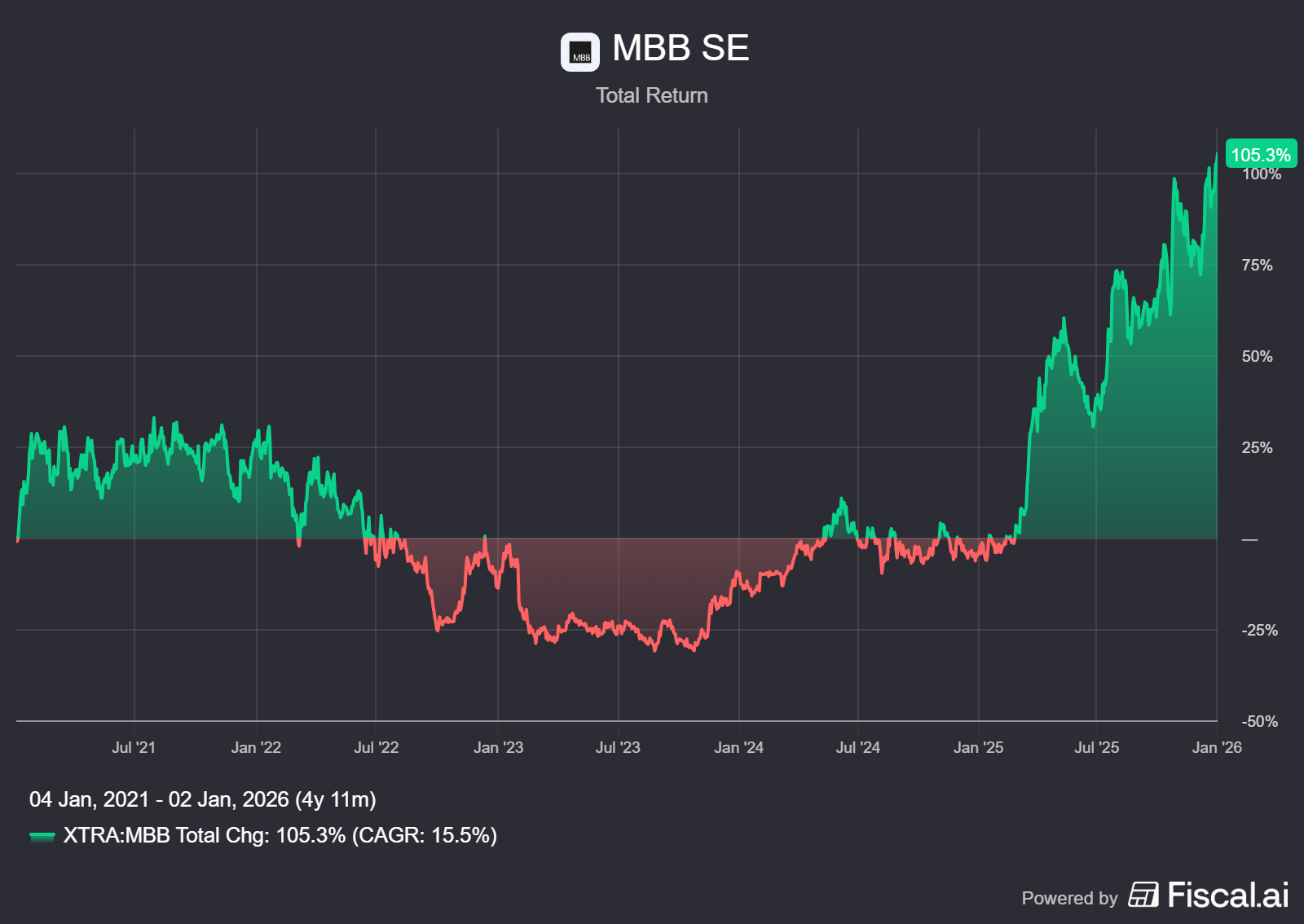
Despite structural pressure on the German economy, MBB achieved record results in 2025 thanks to a strong focus on long-term value and financial soundness. The performance confirms that the quality of management and the underlying portfolio matter more for value creation than the general economic climate.
On 31 December 2025, Warren Buffett stepped down as CEO of Berkshire Hathaway after 60 years, during which time a USD 100 investment made in 1964 has grown into USD 5.5 million. Successor Greg Abel receives full confidence and day-to-day leadership over a company that, with USD 380 billion in cash, has been built to last at least another 100 years. Although Buffett steps back as chairman, the unique corporate culture and the focus on integrity and long-term value remain the unchanged foundation of the holding company.
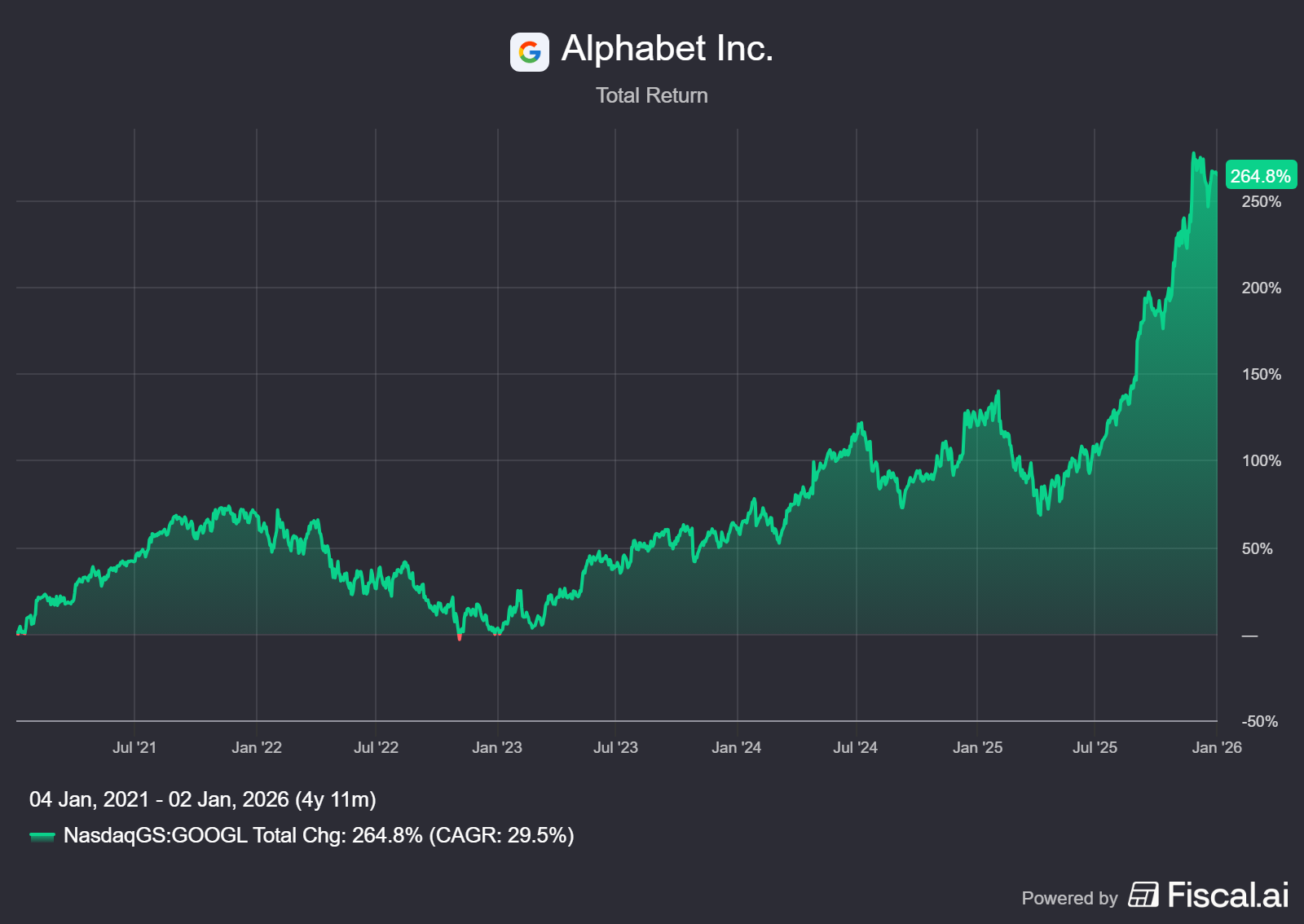
Alphabet is doubling down on vertical integration with the acquisition of Intersect for USD 4.75 billion, taking scarce power supply and data centre capacity into its own hands. This strategic move prevents delays in the AI stack and offers speed and certainty in a market where the cost of "no capacity" outweighs the price of ownership. At the same time, AI chatbot Gemini is gaining ground, with its market share rising from 5.4% to 18.2% in one year, strengthening Alphabet's monetisation potential and intrinsic value.
In Brief:
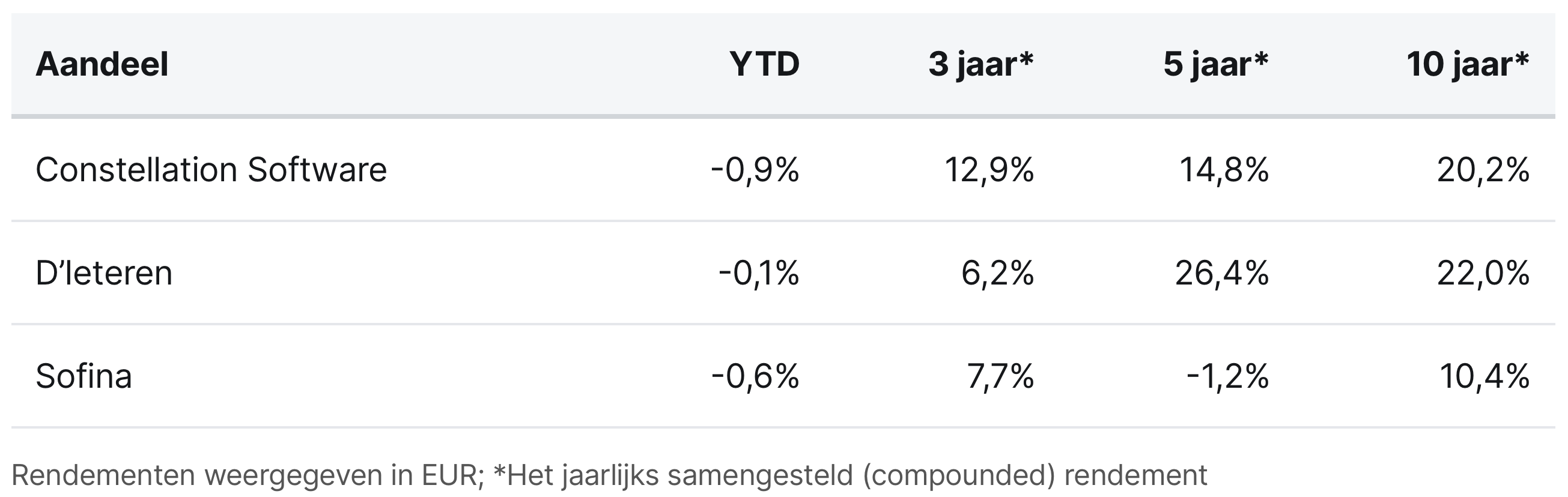
Constellation Software (Toronto: CSU) acquired, within its Jonas division, the American company Site Service Software, a specialist in workflow and field-service solutions for the elevator industry. The company, which has around 10 employees, is being combined with Total Service, which is likewise a market leader in this vertical niche. This was one of the last deals of 2025. That brings the tally for 2025 to more than 111 completed acquisitions for the group as a whole, of which 83 were made by Constellation and 24 by Topicus.
D'Ieteren (Brussels: DIE) announced the relaunch of a share buyback programme worth up to EUR 100 million, resuming the programme that was started in 2023 following the extraordinary dividend payment at the end of 2024. At the current share price, approximately 670,000 shares can be repurchased, representing around 1.2% of the total number of shares outstanding. The repurchased shares will be cancelled or used for long-term incentive plans.
Sofina (Brussels: SOF) saw plenty of activity in its portfolio over the past few weeks. Battery producer GEO raised USD 110 million and immediately acquired two factories from Mitsubishi Chemical. Sofina was one of the founders of this company, which focuses on electrolytes for the battery industry. In addition, portfolio company Team.blue continues to maintain a high growth pace with the acquisition of the Czech AI player Macaly. Finally, Sofina led a new USD 33 million investment round in Qargo. This logistics platform uses smart software to plan transport more efficiently and automate administration.
Constellation Software, D'Ieteren and Sofina are currently trading on the Toronto and Brussels exchanges at prices of CAD 3,260, EUR 154.80 and EUR 247.20 per share, respectively.
Michael Gielkens speaks at VFB Trefpunt Hasselt
On Thursday 15 January 2026, Michael Gielkens, partner and co-owner of Tresor Capital, will give a lecture at VFB Trefpunt Hasselt.
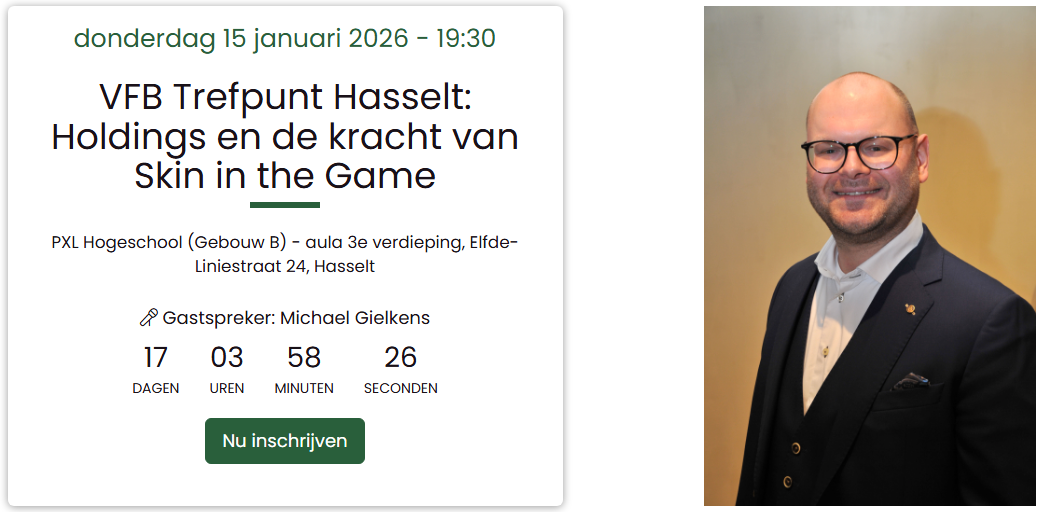
During this session, Michael discusses why holding companies are one of the most effective structures for diversified and sustainable wealth creation across generations, and why it is crucial that entrepreneurs and families themselves invest substantially in the same vehicles as their investors. This skin in the game dynamic ensures discipline, careful decision-making and a natural long-term focus.
"Having no skin in the game is like a chef who doesn't taste his own food"
Michael also addresses an element that is often overlooked: internal diversification. Whereas many investors judge diversification based on the number of shares in their portfolio, Michael shows how holding companies such as Berkshire Hathaway and Constellation Software actually consist of dozens to hundreds of underlying businesses, sectors and geographic markets.
As a result, an investor holding a handful of well-chosen holding companies can, in practice, be far more broadly and robustly diversified than someone holding dozens of separate single-product shares.
We would be delighted to welcome you there. You can register via the button below. For non-VFB members, the entrance fee is €10.
Investor AB has been beating the market for 15 years running
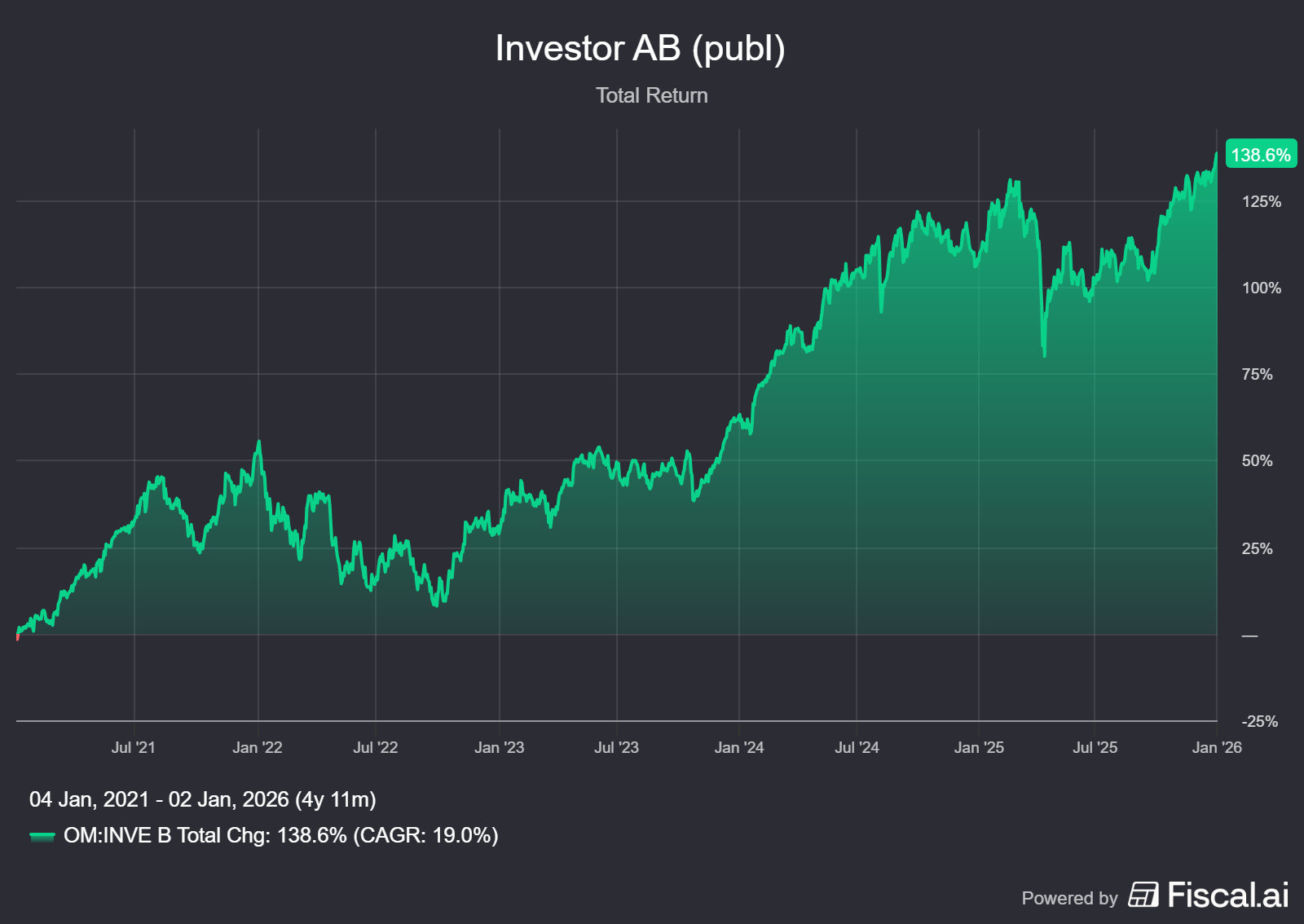
The Swedish investment holding company Investor AB (Stockholm: INVE-B) of the Wallenberg family has outperformed the market for the 15th year in a row. The track record is built on fundamental growth, as more than 80% of the total return over the past fifteen years is attributable to growth in net asset value, with the remainder made up of dividends and the narrowing of the undervaluation.
We previously wrote about the unique qualities that Sweden has to offer:

With a total return of just over 15% versus 12.5% for the SIX Return Index, Investor AB again outperformed in 2025. This result is remarkable, given that at the end of September the stock was still facing a loss of 1.7%, while the index was already up more than 4% at that point. The turnaround in the fourth quarter was driven by a combination of factors, including a narrowing of the discount to net asset value and a strong recovery of heavyweights such as EQT and AstraZeneca.
Within the listed portfolio, defence company Saab was the clear standout, with an annual gain of 126%, while ABB, up almost 16%, also made a substantial contribution to the result. Atlas Copco initially acted as a drag on performance but recovered with a gain of more than 8% in the final three months, ultimately making a positive contribution as well. This once again shows how a holding company like Investor AB benefits from a diversified portfolio.

A similar pattern was visible in the unlisted portfolio under Patricia Industries, where, after negative returns in the first two quarters, a gain of 4% was achieved in the third quarter thanks to rising valuation multiples. Thanks to this strong finish, Investor passed the SEK 1,000 billion mark in market capitalisation, making the holding company the largest listed company on the Stockholm exchange after AstraZeneca.
Chief Information Officer Jacob Lund emphasises that Investor has never been worried. "We know the companies have worked hard, even though the market was somewhat challenging." The focus is primarily on future value creation rather than on celebrating past results. That is exactly what we like to see in the holding companies in our portfolio.
Investor AB is currently trading on the Stockholm exchange at a price of SEK 325.50 per B share.
MBB thrives despite a disappointing German economy
The German investment holding company MBB SE (Frankfurt: MBB) had an exceptionally successful 2025 and shared a brief review of the year. Whereas the German economy as a whole is grappling with significant structural pressure and geopolitical uncertainty, MBB delivered record figures.
The performance underscores the strength of the business model. Precisely in the current economic climate, it is becoming clear that MBB's core principles, namely long-term thinking, financial soundness and entrepreneurial spirit, are of crucial value.

Management thereby demonstrates that it is able to create value consistently, despite the headwinds in Germany. This is an important lesson for investors: the economic situation in a country does not necessarily always translate into the share price of a company operating there.
With Vorwerk, MBB is perfectly positioned for the extensive investments in German energy infrastructure, while DTS is the wildcard in the field of cybersecurity.
For us as investors, all of this confirms the quality of the management team and the underlying portfolio. We therefore look forward to developments in 2026 with confidence.
MBB is currently trading on the Frankfurt exchange at a price of EUR 210 per share.
Receive weekly insights in your inbox
Exclusive analyses and updates on family holding companies and global market developments.
Buffett steps down: the end of an era
The American investment holding company Berkshire Hathaway (New York: BRK-B) made one of the biggest changes of the past decades this week. CEO Warren Buffett had his last working day as CEO of the holding company on 31 December 2025.
After sixty years at the helm, he is handing day-to-day leadership over to Greg Abel. Although Buffett remains chairman, his message is clear: "Greg is now the decision-maker."
Warren Buffett retires today, most likely in his mind at the closing bell, just minutes from now.
— Christopher Bloomstran (@ChrisBloomstran) December 31, 2025
Congratulations to the greatest investor the world will ever know. The returns speak for themselves - Berkshire earned 6,118,651% or 19.9% annually over his 60 years running the… pic.twitter.com/VShwP9DLTg
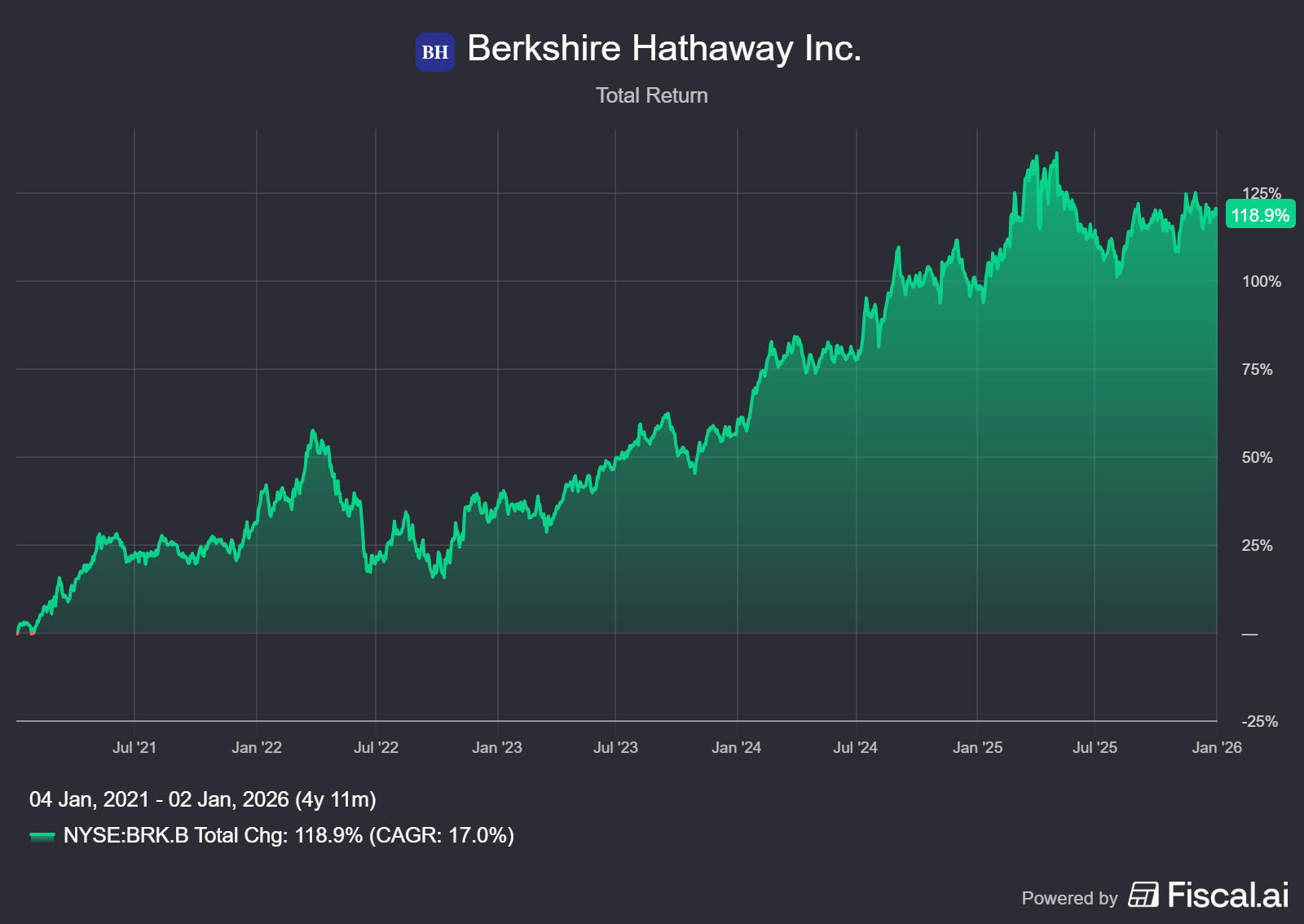
The returns Buffett achieved are phenomenal. Chris Bloomstran summed it up aptly in the tweet above. Since Buffett took charge, the value of Berkshire has risen by more than six million per cent. This equates to an annual return of 19.9 per cent. By comparison, the S&P 500 achieved 10.4 per cent per year over the same period.
One statistic that illustrates the power of this difference is almost impossible to grasp. Berkshire's shares could fall by 99.2 per cent today and would still have outperformed the market over the past six decades.
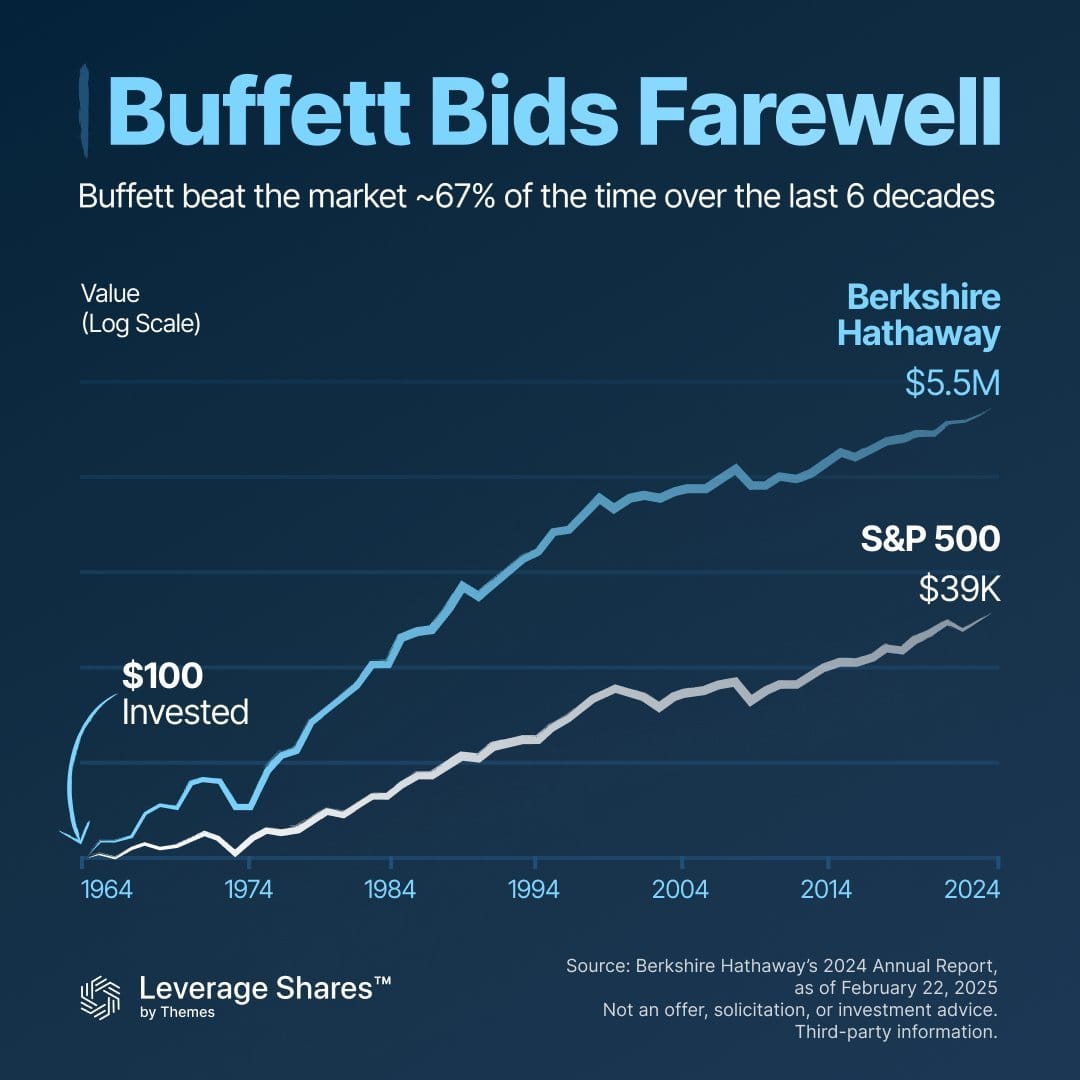
Anyone who invested one hundred dollars in the S&P 500 in 1964 now has approximately USD 39,000. That same hundred dollars invested in Berkshire Hathaway has grown to USD 5.5 million today.
At least as impressive as the returns is the way they were achieved. As Bloomstran notes, Buffett did this with integrity and humour. He beat the market in roughly 67 per cent of the years, but his real edge was patience. He stayed invested for sixty years.
 Yun Li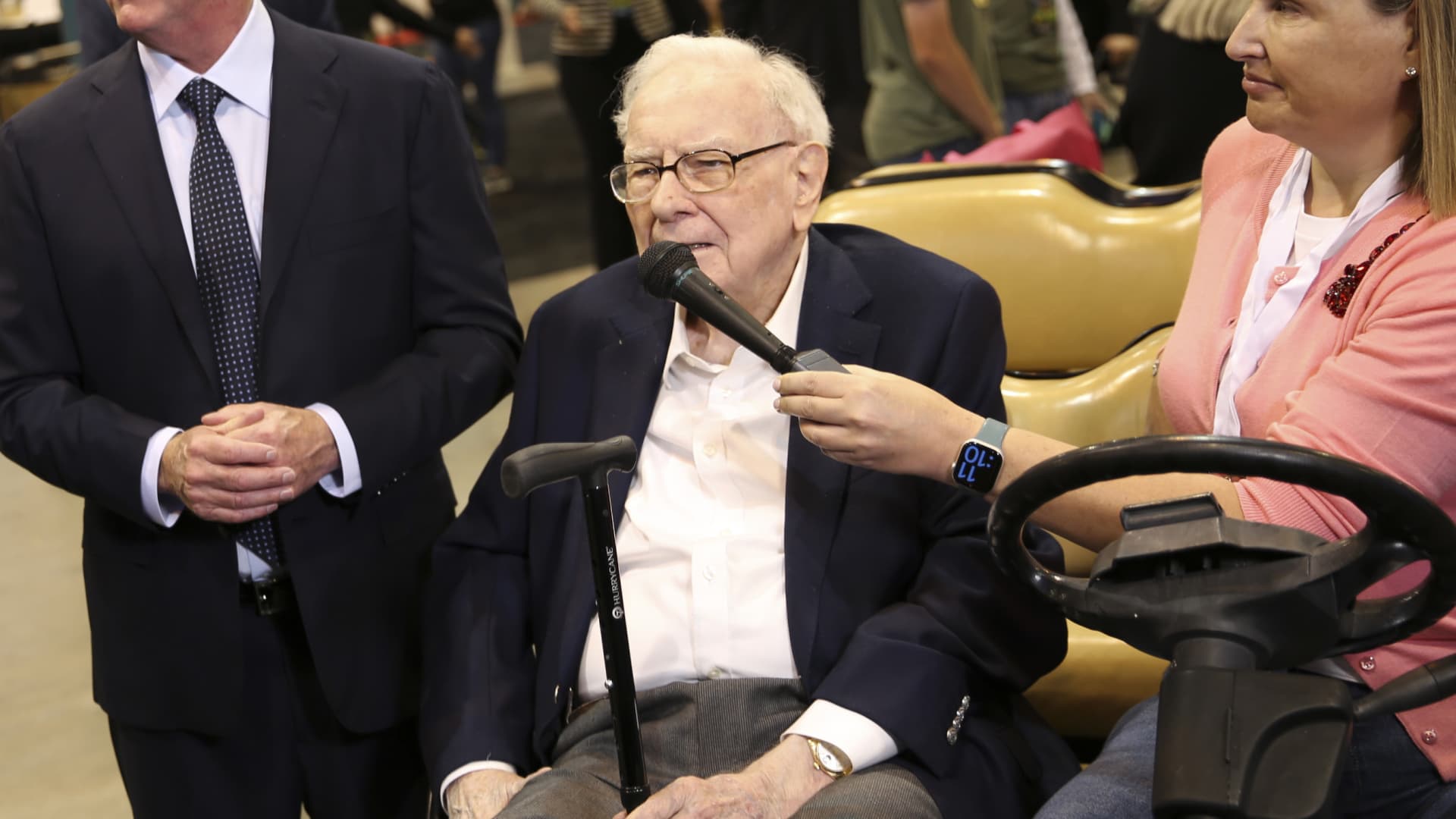
In his farewell interview with CNBC, which will be broadcast in full on 13 January, Buffett emphasises that Berkshire's culture was built to survive. He states that the company "has the best chance of being around in a hundred years of any company I know".
Confidence in his successor is unconditional. Buffett indicated that he would rather have Greg Abel manage his money than any other top investor or CEO in the United States. Buffett drew a striking comparison about the new CEO's work ethic: "I can't imagine how much more he gets done in a week than I do in a month."
What makes Abel the ideal successor is his character. He is not a "twisted individual" as a result of power or money, but leads a strikingly normal life. "He likes playing ice hockey with his children," Buffett said. "If the neighbours didn't know who he was, they wouldn't have the faintest idea that, come 1 January, he is the decision-maker at a company that employs almost 400,000 people."
Buffett will now step further into the background, but for those who fear major changes, there is a reassuring message. "Everything stays the same," said Buffett. He will still come to the office. The only visible difference will be during the iconic annual meetings in Omaha. "I will no longer stand on stage and speak there, but will take a seat in the section for the directors."
The ship he has built, however, sails steadily on. With Greg Abel at the helm, a war chest of more than USD 380 billion and a collection of diverse quality companies, Buffett's legacy is secured.
On behalf of us, and many investors worldwide alongside us, we thank Warren for the excellent returns and his wise lessons about life and investing over the years.
Berkshire Hathaway is currently trading on the New York stock exchange at a price of USD 500.26 per B-share.
Alphabet: vertical integration and the rise of Gemini
The American investment holding company Alphabet (New York: GOOGL) is in the news almost every week. This time, Google's parent company is taking a further step in the vertical integration of its data centre chain, with the announced acquisition of Intersect, a developer of data centre and energy infrastructure, for USD 4.75 billion in cash plus assumed debt.
Intersect is not a "classic" data centre operator, but a party that solves the puzzle on which AI infrastructure increasingly gets stuck: organising power and capacity simultaneously. Think of developing sites where data centres and new energy generation capacity (and related infrastructure) are built in a coordinated and integrated manner, so that you can move from plan to operational capacity more quickly. Alphabet explicitly states that Intersect helps to build new power generation "in lockstep" with data centre load, thereby helping to bring capacity online faster.

This allows Alphabet to further cover the strategic bottleneck of supply and time constraints. The company already held a minority stake in Intersect and built projects together with it. With the full acquisition, Alphabet is therefore mainly opting for speed and certainty. Speed, because building data centres and arranging power supply increasingly need to run in parallel, and the latter in particular is becoming increasingly scarce. Certainty, because capacity that you develop and coordinate yourself is less dependent on external priorities, queues and the bargaining power of third parties.
You can see that large platform companies are increasingly trying to lock down critical links in the AI stack: talent, data, distribution and, above all, infrastructure. Not because everything necessarily becomes cheaper in-house, but because at this stage the strategic costs of lacking capacity (delay, missed growth, dependence on third parties) can outweigh the price of ownership. We saw the same strategy this year at Meta. The company aggressively attracted new AI talent with exceptional compensation packages and further strengthened its position with the recent acquisition of Manus AI. In doing so, Meta explicitly brings in agent technology that can carry out tasks autonomously and, in time, can be deeply integrated into its own distribution channels such as WhatsApp, Instagram and Facebook.
Gen AI Website Traffic Share, Key Takeaways:
— Similarweb (@Similarweb) December 25, 2025
→ Gemini is approaching the 20% share benchmark.
→ Grok's momentum continues.
→ ChatGPT drops below the 70% mark.
🗓️ 12 Months Ago:
ChatGPT: 87.2%
Gemini: 5.4%
Perplexity: 2.0%
Claude: 1.6%
Copilot:… pic.twitter.com/uyXnFJbxgV
Gemini update
Similarweb's X account publishes a monthly update on the market share balance among the largest Large Language Models (LLMs), i.e. AI chatbots. Those figures show a striking shift. Where Gemini's market share stood at around 5.4% a year ago, it had risen to 18.2% by early December. In the market, some analysts describe this as the clearest signal yet that Alphabet is gaining ground in the AI race.
What underlies this is what interests us most. Market share is not profit, but it is an early indicator of distribution strength, product momentum and, ultimately, monetisation potential. And this is precisely why it brings us back to a question we have asked more often: what is the intrinsic value of Gemini within Alphabet?
Figures like these support our assumption that, in a sum-of-the-parts approach, Gemini should increasingly be seen not as a 'by-catch', but as a factor that can materially contribute to Alphabet's long-term valuation.
Alphabet is currently trading on the New York Stock Exchange at a price of USD 312.51 per A-share.
Receive weekly insights in your inbox
Exclusive analyses and updates on family holding companies and global market developments.
Would you like more information about our services?
Get in touch
Disclaimer:
No rights may be derived from this publication. This is a publication of Tresor Capital. Reproduction of this document, or parts of it, by third parties is only permitted after written consent and with reference to the source, Tresor Capital.
This publication has been compiled by Tresor Capital with the greatest possible care. The information is intended in a general sense and is not tailored to your individual situation. The information should therefore explicitly not be regarded as advice, an offer or a proposal to purchase or trade investment products and/or to obtain investment services, nor as investment advice. The authors, Tresor Capital and/or its employees may hold a position in the securities discussed, for their own account or for their clients.
You should carefully consider the risks before you start investing. The value of your investments may fluctuate. Past performance is no guarantee for the future. You may lose (part of) your investment. Tresor Capital disclaims any form of liability for any inaccuracies or errors. This information is purely indicative and subject to change.
Read the full disclaimer at tresorcapitalnieuws.nl/disclaimer .
This article was translated automatically from Dutch using AI. In case of any difference, the Dutch original prevails. Read the original in Dutch.