Deep Dive – Report on the Pilgrimage to the Woodstock of Capitalism
Foreword
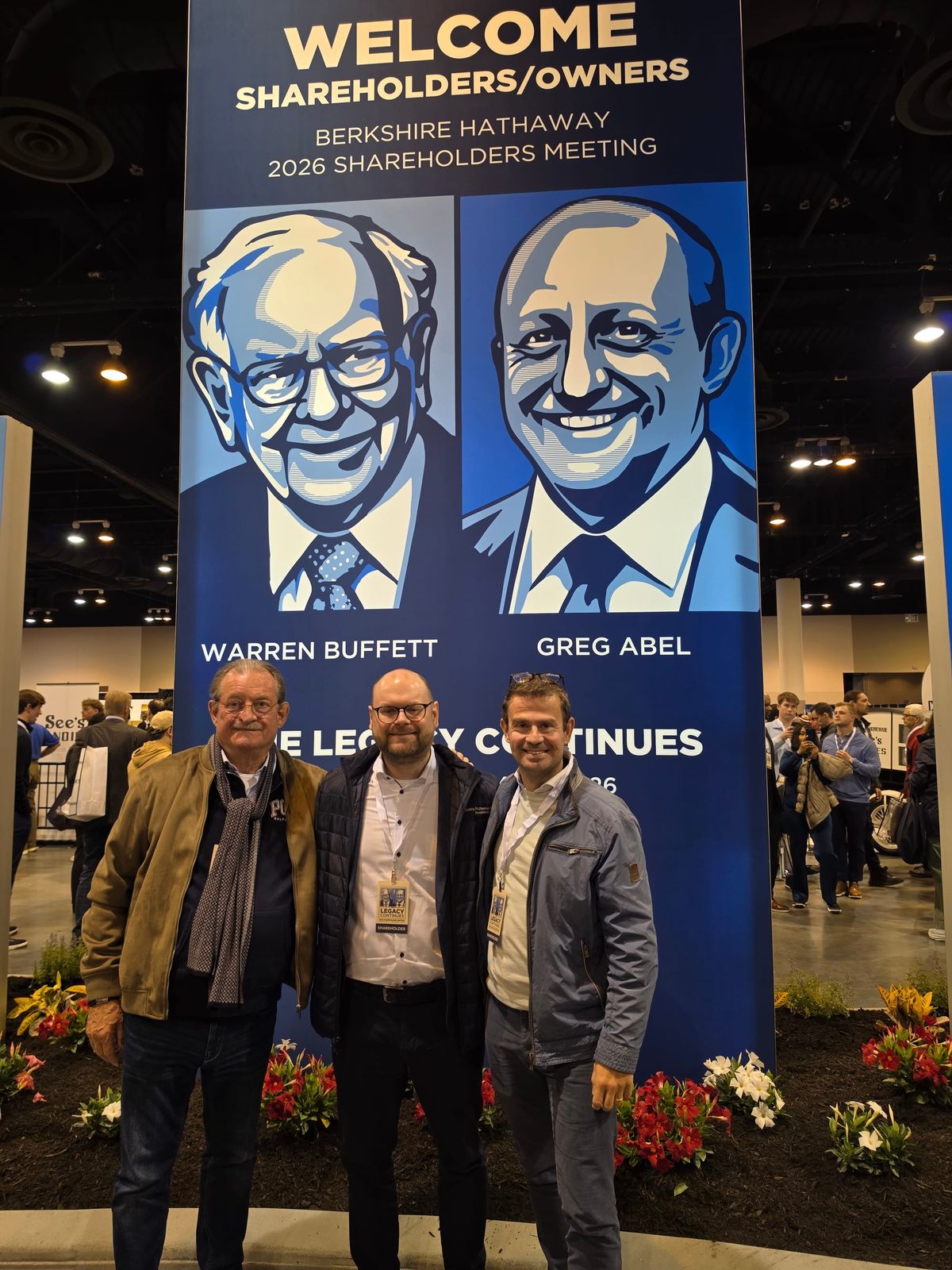
This year’s trip to the Berkshire Hathaway annual meeting in Omaha had a special feel to it. It was the first edition without Warren Buffett on stage. But Berkshire wouldn’t be Berkshire if they didn’t still give the “Oracle of Omaha” a prominent role. Warren Buffett briefly addressed the audience from the floor, there was an extensive live interview, and the first question was asked by a certain Warren from Omaha (spoiler: an AI deepfake).
But perhaps the many events surrounding the meeting offer an even more valuable experience. There were presentations by big names such as Tom Gayner (CEO of Markel), value investor Mohnish Pabrai, Bill Ackman, and many others. A personal highlight was meeting Mark Miller, the new CEO of Constellation Software. You can read all about it in this in-depth analysis.
A personal note
This deep dive will be a bit more personal than what you’re used to from us. The reason for this is that the trip to the shareholders’ meeting has long since ceased to be merely a “business trip.” Our travel group can now be considered a group of friends. This adds an extra dimension to the unique insights from the world’s best investors, as we reflect on them together during and after the events in Omaha.
On a personal note, I’d like to share that it was especially meaningful to have my father join us on this year’s trip to Omaha. My father taught me how to manage money, explained what a stock is, and sparked my interest in the financial world. It’s no coincidence that the first stock we bought together was Berkshire Hathaway (a Class B share, to be precise). In 2022, we made our first trip together to the “Woodstock of Capitalism,” as the meeting is also known.
For some background information on the new CEO, Greg Abel, I’d like to refer you to our in-depth analysis from last week:
 Michael Gielkens
The shareholders' meeting
You can watch the full shareholders' meeting here:
Interview with Greg Abel:
Interview with Warren Buffett:
Our loyal readers know that I sometimes tend to write what amounts to half a book. Some readers appreciate this, while others find it too lengthy and lose interest. That’s why I’ve made a conscious decision to refer you to some excellent articles from the shareholders’ meeting—articles to which I’ve also contributed myself. You can read a few excerpts here and click through for more information.
Five members of our travel group—Pieter Slegers (Compounding Quality), Jurgen Vluijmans (Backstage Communication), Kristof Heyndrikx (Potential Multibaggers), Kevin Schoovaerts (100baggerhunting.com), and myself—reported on our experiences at the Investment Officer shareholders’ meeting. A brief excerpt from my contribution:
“A symbolic yet telling detail: whereas Buffett always referred to the ‘shareholders’ meeting,’ Abel explicitly calls it the ‘owners’ meeting.’ ‘You are our owners, and we welcome you to Omaha.’ This year’s theme was therefore ‘the legacy continues,’ a reference to the transition at the top of the company. All Berkshire employees on stage frequently quoted Buffett and his late business partner Charlie Munger. They were clearly still very much present, but the torch has truly been passed.’
You can read the full article via the link below. The editors of Investment Officer were kind enough to make an exception and remove the paywall, for which we are very grateful.
 Investment Officer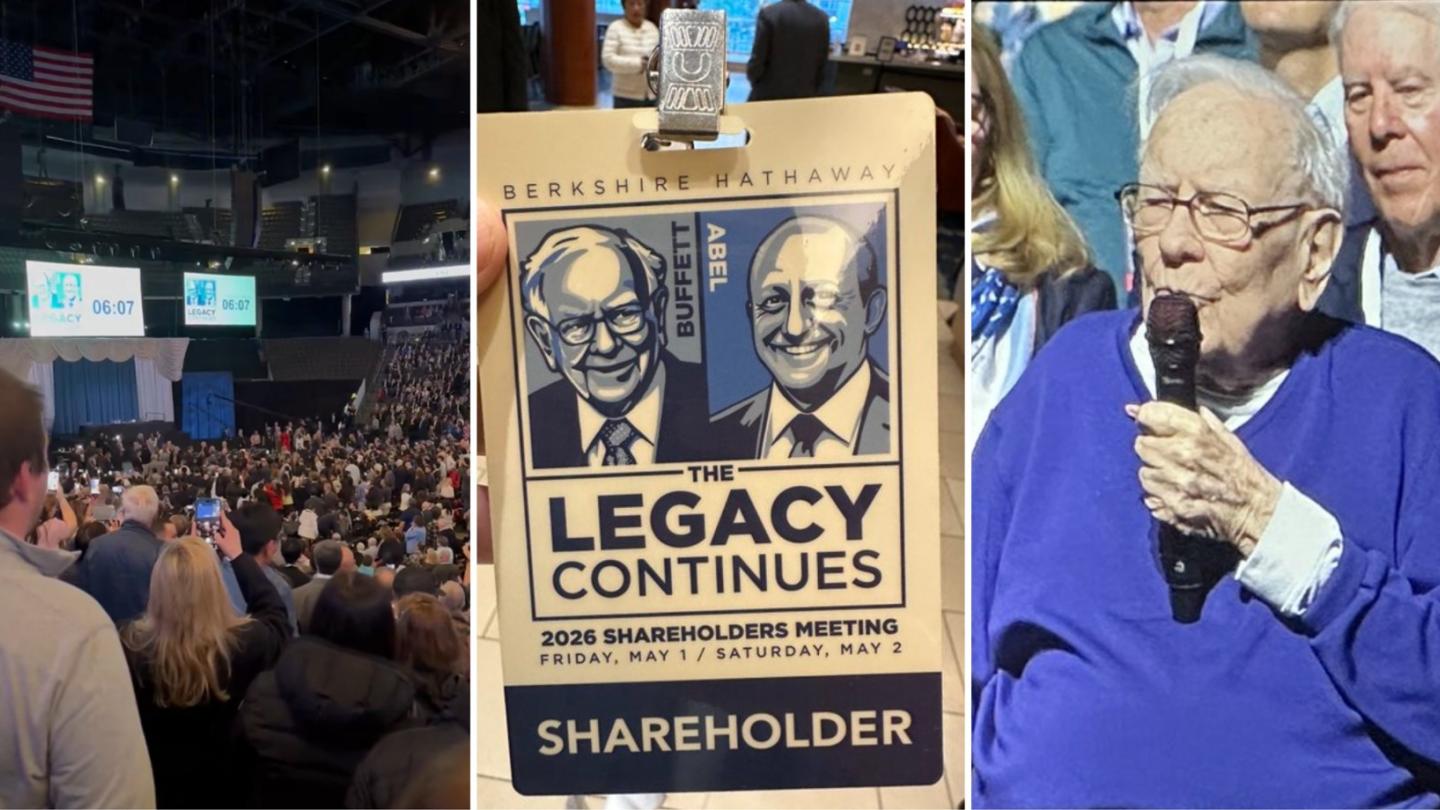
Journalist Laurens Bouckaert interviewed Pieter and me for the trade show magazine Trends, in which we share five observations. You can read some excerpts below.
Greg Abel goes into more depth and hits the nail on the head:
“This year, we learned more about Berkshire in terms of substance than we did at all the annual meetings over the past ten years combined,” says Slegers. During the first hour, Abel went into greater detail about the subsidiaries than Buffett ever did. He showed slides in which competitors outperform Berkshire in specific areas. The auto insurer Progressive outperforms Berkshire subsidiary Geico. The railroad company Union Pacific outperforms subsidiary BNSF on operational metrics. “We have significant gaps to close,” Abel admitted.
Abel is clearly committed to this:
Abel earns $15 million a year. He invests his entire net income in Berkshire shares. He has pledged to continue doing so as long as he remains CEO. For decades, Buffett received a fixed salary of $100,000, which decreased each year after adjusting for inflation. Buffett himself remains active. He comes to the office every day. On Friday morning, he even called Abel about the figures from the Japanese trading houses, Gielkens says. Insurance CEO Ajit Jain filled the role of the late Charlie Munger. When an investor asked when Berkshire would insure ships passing through the Strait of Hormuz, Jain replied, “That depends on the price.” The room laughed.
Pieter on Berkshire's current appeal:
Anyone who invested $10,000 in 1965 would have $3.6 billion today. The same investment in the S&P 500 would have yielded $6 million. Slegers sees the current underperformance as an opportunity. “For the passive investor, Berkshire is more attractive today than an index fund. It has a lower valuation, better diversification, and a massive cash pile ready to deploy if the market crashes.”
 Kris
Kris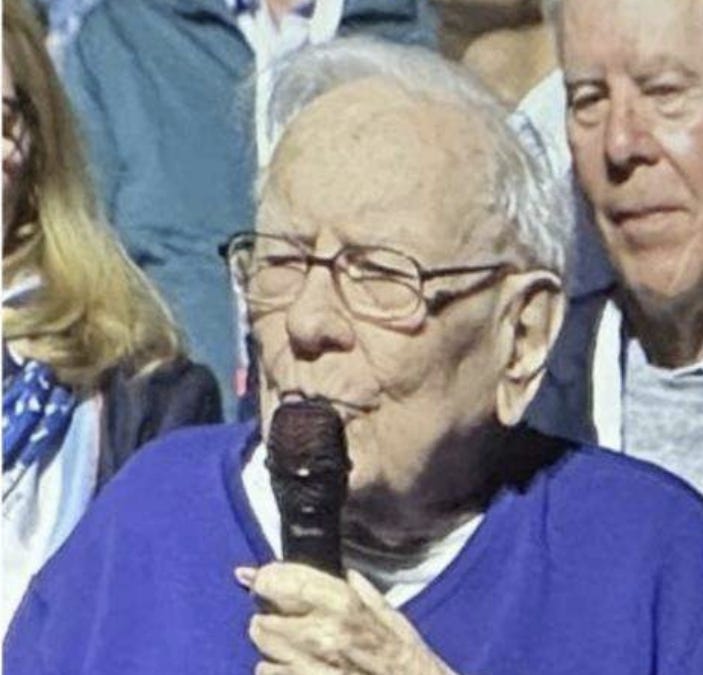
In his newsletter *Potential Multibaggers* , Kristof Heyndrikx wrote about the five lessons he learned in Omaha. A particularly interesting moment during the meeting was when the first question was asked. Kris writes about it:
The Q&A session began with a video shown on the big screens. A man in a suit, who claimed to be “Warren from Omaha,” asked the first question. That Warren looked quite familiar. He asked Abel: “I am now 95 years old and have nothing but time and Cherry Coke. Why should shareholders hold Berkshire shares for the long term?”
Abel later revealed that the video was an AI-generated deepfake of Buffett, created without Buffett’s knowledge or consent. He turned it into a 5-minute lesson on cybersecurity risks, as this is a risk that Berkshire’s insurance subsidiaries deal with on a daily basis. It was likely the most viral moment of the entire weekend. And at the same time, it’s probably a good indication that the AI opportunity is being recognized by every company in the world. The threats are real, but the defense represents a multi-billion-dollar opportunity.
 Kevin
Kevin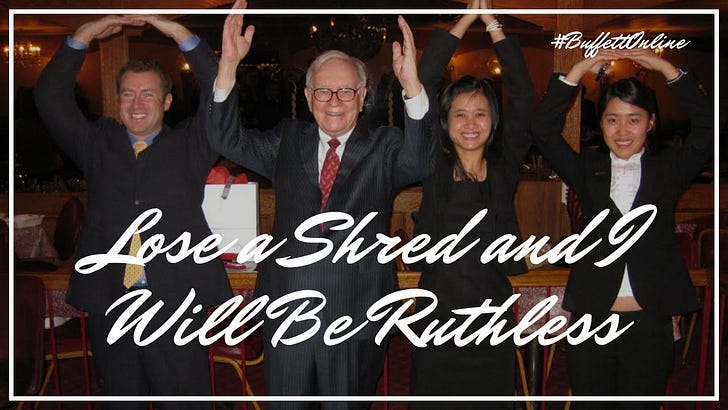
In his newsletter,*100 Bagger Hunting* , Kevin Schoovaerts wrotethat it’s all about the people. One of the best things to do is go to an event and talk to like-minded people:
[Warren] Buffett and Charlie [Munger] have created something similar. And it’s not just about investing in stocks. It’s about values. About integrity and respect. Forty thousand people don’t show up to hear what the Berkshire Hathaway holding company stands for. They want to seek out today’s philosophers. They want to feel connected to like-minded people.
And that’s why I think the introductory video they chose at the start of the annual meeting was so fitting. To emphasize that, even though Buffett is no longer at the helm, those values and virtues will be kept alive. I’ve watched this video several times, but those last 10 seconds still give me goosebumps.
The introductory video features a famous example from Buffett about reputation
Receive weekly insights in your inbox
Exclusive analyses and updates on family holdings and global market developments.
Events related to the meeting
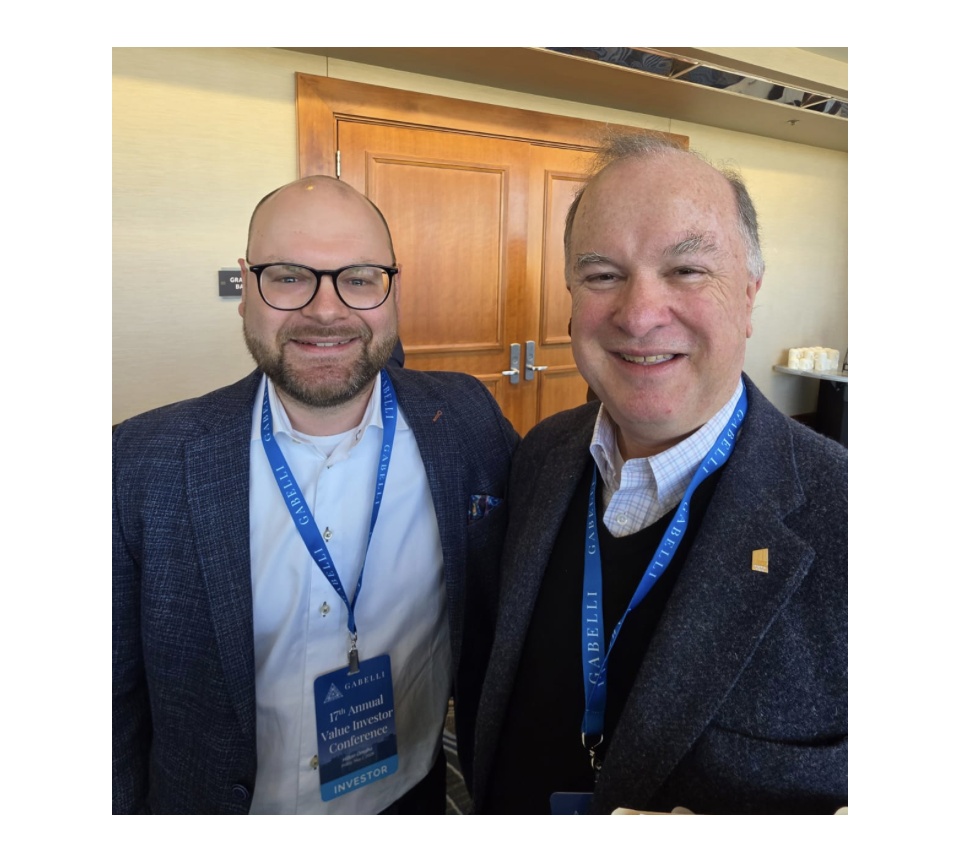
As mentioned, it was extremely valuable to attend the various related events. Pieter Slegers participated in the Berkshire Hathaway Panel at the Gabelli Conference for the third consecutive year, alongside, among others, the well-known Berkshire analyst Chris Bloomstran.
This was followed by a conversation with Markel CEO Tom Gayner; you can watch a video of it below.
I had the opportunity to speak with Gayner on several occasions in Omaha. Recently, Markel came under pressure from activist shareholder Jana Partners, which argued that Markel should, among other things, sell its Ventures division (non-insurance businesses). I spoke with Gayner about this after the Gabelli conference. Last week, we wrote the following about it:
While Jana views this division as a distraction, Gayner sees it as a crucial form of diversification that generates additional cash flow to offset downturns in the company’s other business pillars. According to Gayner, Jana simply has a different investment horizon and views the situation from a perspective that is less aligned with Markel’s culture. He emphasized that entrepreneurs and families sell their businesses to Markel precisely because of the intended long-term partnership; after all, you don’t sell a family business to the first bidder who comes along. Markel therefore consciously chooses to act as an active partner, continuously strengthening the underlying companies rather than divesting them.
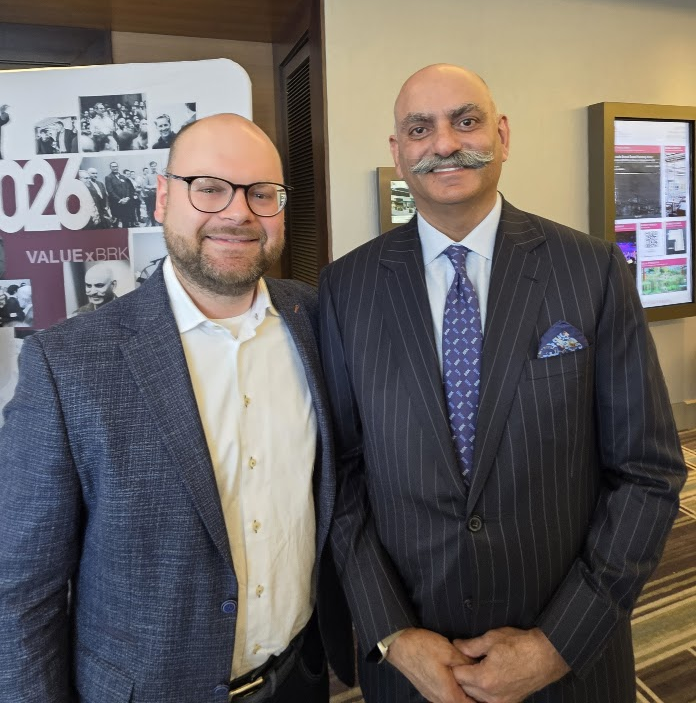
During Guy Spier’s ValueX event—which, by the way, is well worth watching in its entirety, with impressive speakers and insights—Gayner gave another presentation. This time, I asked him a question over the microphone, against the backdrop of the activist campaign:
Markel is known as a family-run business. It is named after the Markel family. You describe yourself as the fourth generation of Markels. But there is no major, controlling long-term shareholder like Buffett at Berkshire. There are a few larger, long-term-oriented quality shareholders, but what would you say to people who are actually trying to succeed in such an activist campaign, and what safeguards does Markel have in place to keep a short-term activist at bay in order to maintain its long-term focus?
The full recording of the ValueX event. At 1:40, I ask Gayner a question
Gayner gave a fitting reply, complete with a Scottish accent (which comes across better in the video above):
Communication. I recently met with a Scottish gentleman again, and he told me about a particular project he had been working on. He was the third presenter on this project. The first two presenters had gone before him, and this was a pretty tough problem he was working on. He said at the start of his presentation—and I’ll do my best not to mess up the Scottish accent too much: “For this project to succeed, all three of us had to commit to a program of hyper-honesty and hyper-communication.”
“So what I promise you is to be hyper-honest and hyper-communicative.” That is the process I can control. I cannot control the outcomes. For 39 years, we have acted with the utmost integrity as a publicly traded company and have delivered on the promises we made, not only to you as our shareholders, but also to the people who are our customers. That is why people continue to do business with us, and why we care for our employees and our partners. That is a culturally beautiful way to live life.
Charlie Munger spoke about his goal of wanting to live in a seamless web of earned trust. It’s a spectacular concept and a spectacular way to conduct oneself. I can’t control what markets do or how people behave. But I can be hyper-honest and hyper-communicative and do what we’ve said we would do. So, do what we say we’ll do, and we’ll see where the ship ends up.
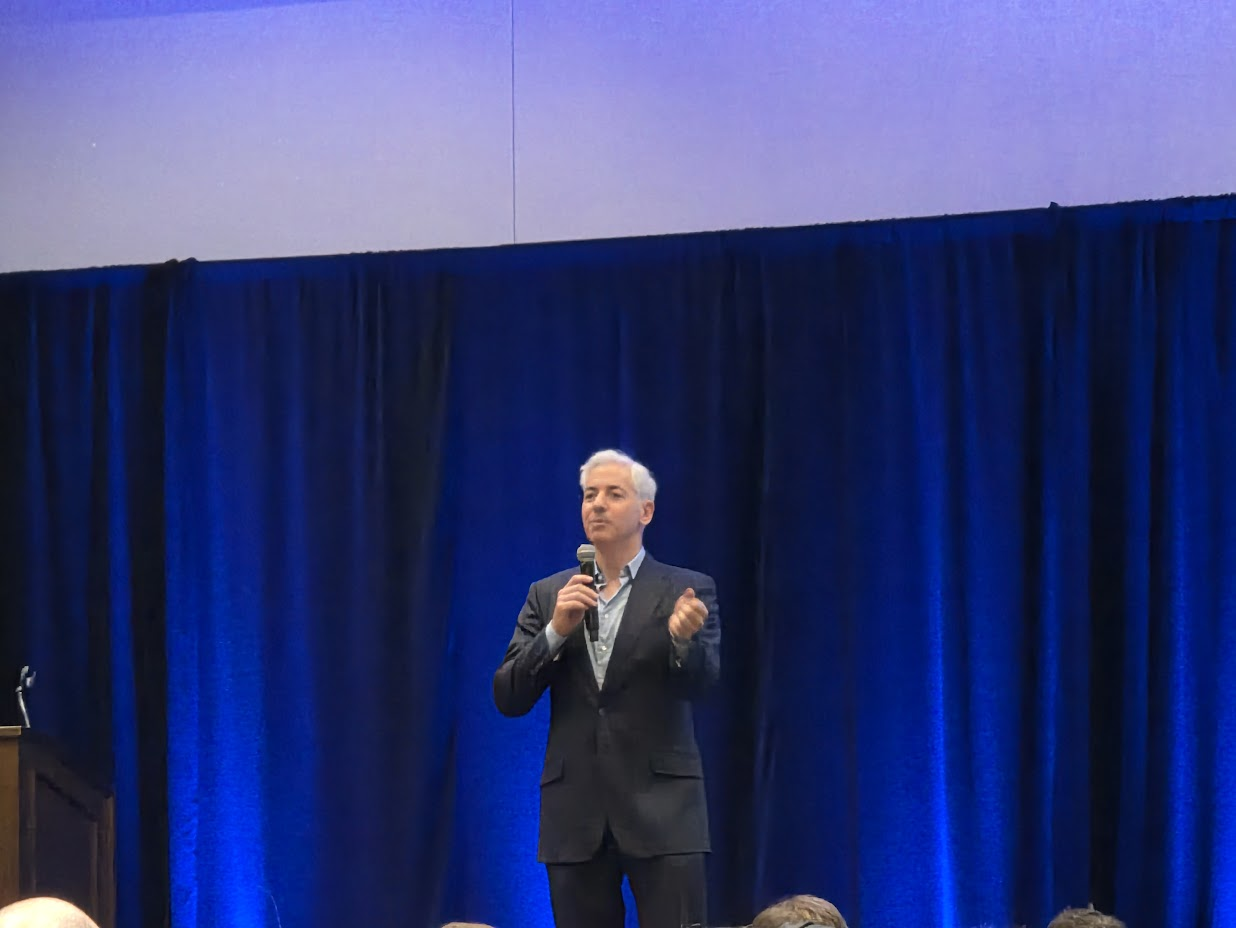
Mark Miller, CEO of Constellation Software
That evening, our travel group attended a dinner hosted by Mattias Saggau, chairman of Chapters Group. It was valuable to speak with various board and executive members of Chapters. The most memorable moment, however, was meeting the CEO of another software company: Mark Miller, the new CEO of Constellation Software, during a dinner hosted by François Rochon’s Giverny Capital (an excellent investor, by the way).
Miller explicitly views AI as an enabler rather than an existential threat to the Constellation Group, which includes Topicus.com. Given his background as a software developer, he is actually very enthusiastic about the possibilities AI offers. Within the decentralized organization, all subsidiaries are working on this. The now 1,600 subsidiaries are actively experimenting with AI and sharing their best practices with one another .
We have previously written extensively about the integration of AI within the Constellation Group, including an interview with CFO Jamal Baksh. You can read this report in the article below.
Michael Gielkens
Miller emphasized that not all companies will survive and that this must be accepted. He simply views this as the reality of capitalism and adheres to the principle that one should not throw good money after bad.
He spent his first five months as CEO primarily visiting all the companies and divisions to prepare himself for the role of CEO. Under his previous leadership, the subsidiary Volaris spent the most capital on acquisitions within the holding company, a process in which he was more operationally involved at the time. He approaches business more from the perspective of a developer and strongly believes in clustering companies within the same sector, a strategy he will also implement at Constellation Software.
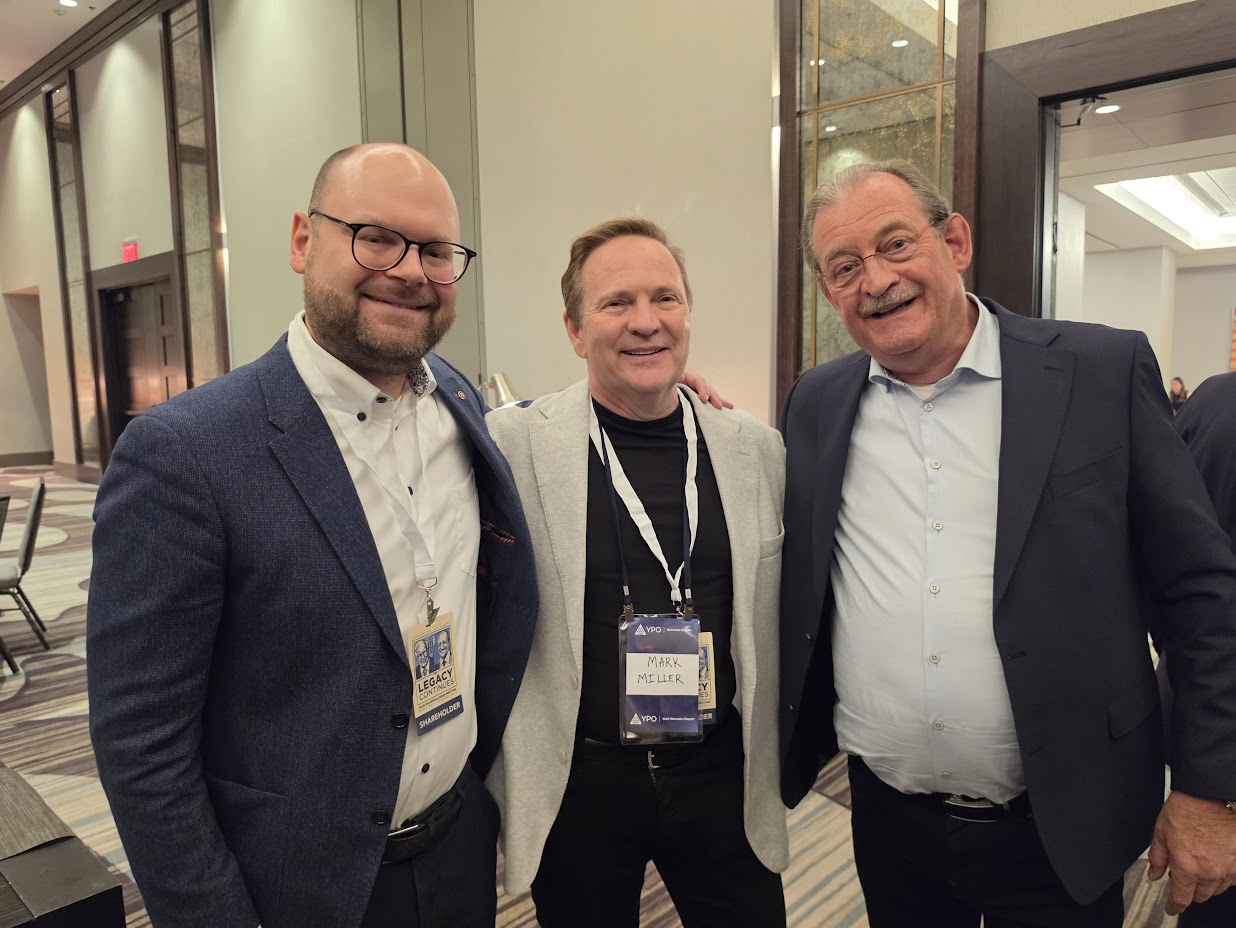
During the conversation, he spoke at length about capital allocation and came across as very confident. He also proved to be very open and expressed his willingness to provide much greater transparency, including by attending events, holding conference calls, and visiting key investors and employees.
When asked whether, as CEO, he focuses primarily on integrating acquisitions or on optimizing operations, he made it clear that his primary focus is on the top 50 people within the company. These are the key decision-makers responsible for driving the company forward. In such a large and decentralized organization, he pays particular attention to this core group. If this top 50 functions well and successfully conveys the collective message, the organization is extremely resilient and can handle a great deal.
Receive weekly insights in your inbox
Exclusive analyses and updates on family holdings and global market developments.
Conclusion
The trip has clearly bolstered confidence in the future of our portfolio companies. Greg Abel has established himself as someone who, while lacking Buffett’s charisma, knows just as much (if not more) about the company’s operations. As the guardian of Buffett and Munger’s legacy, he is the right man in the right place at Berkshire Hathaway.
The same can be said of Mark Miller, who also has big shoes to fill as the successor to founder and major shareholder Mark Leonard. First impressions are positive, and in a world where one AI development follows another, it seems like a smart move to have a software developer (Miller) at the helm rather than someone with a more financial background (Leonard). It appears that Miller feels a greater sense of urgency to transform Constellation, Topicus, and Lumine into “AI-first” organizations.
Chapters served as a reaffirmation of existing confidence, and Markel CEO Tom Gayner once again emphasized why it is so important in investing to take a long-term view rather than chasing quick, short-term gains.
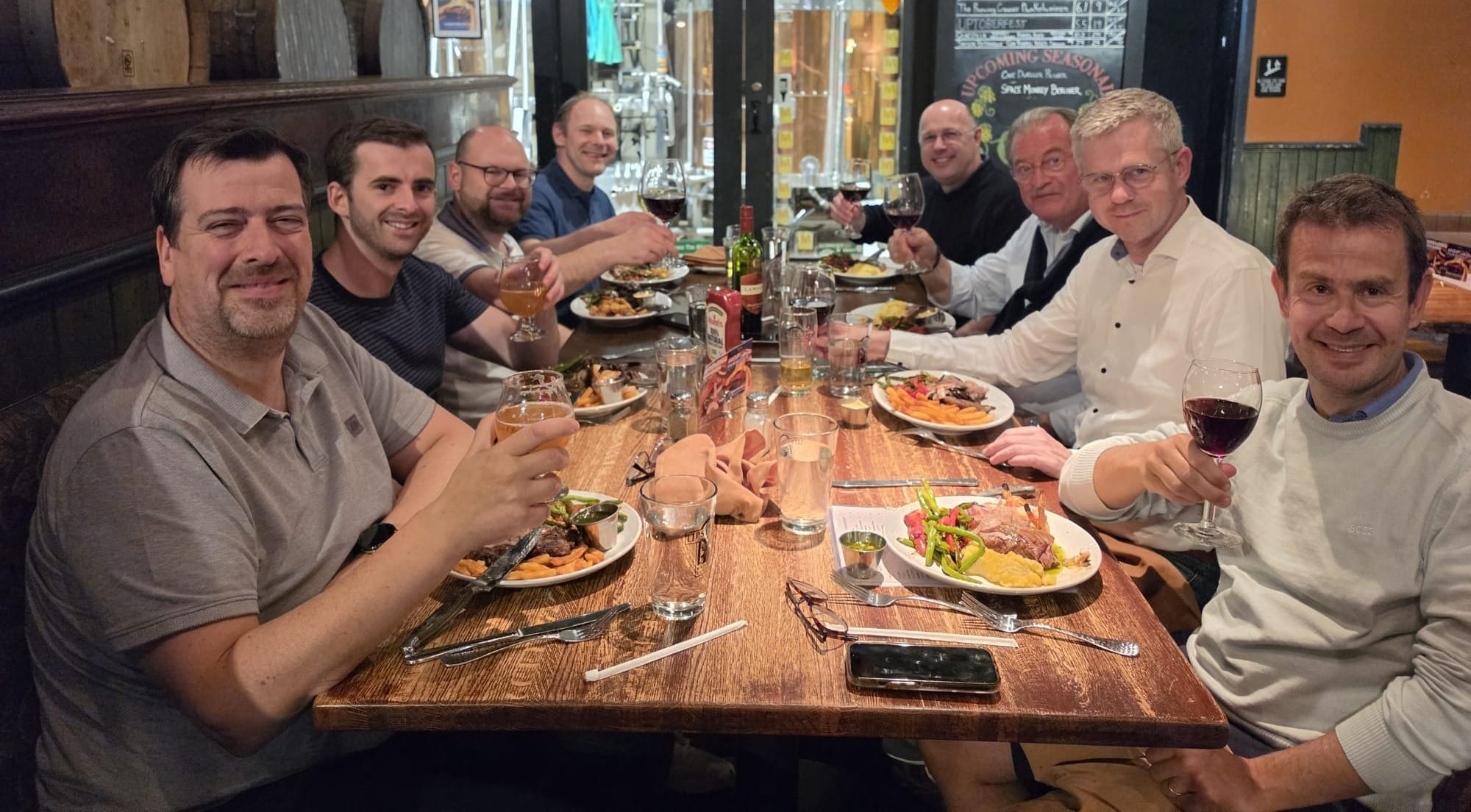
It was a special week filled with meaningful conversations, plenty of reflection, and valuable insights. We reconnected with old acquaintances, made new contacts, and deepened our bonds with the friends in our travel group. It was a highly rewarding journey, both professionally and personally. This gives the word “value” in value investing a dual dimension.
To wrap things up, I’m applying the principle of “shamelessly copying” ideas, just like Mohnish Pabrai does, since Kris had already shared this in his article. One of our travel companions summed up the experience in Omaha perfectly: “Everyone here is a friend, or a friend I haven’t met yet.” I couldn’t have put it better myself.
I look forward to many more wonderful trips with this group, and I’ll be happy to share updates with you in our newsletter.
Warm regards to our investors,
Michael Gielkens
Partner/Owner, Tresor Capital
Receive weekly insights in your inbox
Exclusive analyses and updates on family holdings and global market developments.
Would you like more information about our services?
Contact us
Disclaimer:
No rights can be derived from this publication. This is a publication by Tresor Capital. Reproduction of this document, or parts thereof, by third parties is only permitted with written permission and with reference to the source, Tresor Capital.
This publication has been compiled with the utmost care by Tresor Capital. The information is intended in a general sense and is not tailored to your individual situation. The information should therefore expressly not be regarded as advice, an offer or a proposal to purchase or trade investment products and/or purchase investment services, nor as investment advice. The authors, Tresor Capital and/or its employees may hold positions in the securities discussed, either for their own account or for their clients.
You should carefully consider the risks before you start investing. The value of your investments may fluctuate. Past performance is no guarantee of future results. You may lose (part of) your investment. Tresor Capital accepts no liability for any inaccuracies or omissions. This information is for indicative purposes only and is subject to change.
Read the full disclaimer at tresorcapitalnieuws.nl/disclaimer .