Economy & Markets #24 - From Van Veldhoven to Mars

SpaceX: new market, big test for the stock exchange
SpaceX's flotation, this coming Friday, will give investors access to a market that has until now remained largely private: space travel, satellite networks and commercial infrastructure. In doing so, SpaceX faces little direct competition on a comparable scale, in a market that some see growing into a total market size of more than USD 28,000 billion! A genuine hype has also arisen for other reasons: the USD 75 billion share offering is the largest ever, and with a valuation of around USD 1,700 billion against annual revenue of approximately USD 18.7 billion in 2025, the company is being valued at almost 90 times annual revenue, while a net loss of roughly USD 4.9 billion was also reported at the bottom line.
Institutional investors seem, because of these fundamentals, not to be genuine fans of the IPO, although through passive index investing they will still have to buy SpaceX shares at a later point. Asset manager Neuberger Berman even estimates that in a base scenario, index funds (ETFs on the Nasdaq, Russell, MSCI) could absorb up to 24% of the free float in SpaceX within 15 trading days.
It is somewhat concerning that the banks managing the offering (Goldman Sachs and Morgan Stanley) are notably targeting retail investors, with early signs pointing to the offer being oversubscribed by a factor of four. Bear in mind that, in the event of subscription demand running up to four times the offer size ahead of listing, capital will need to be freed up from other assets to finance participation. As a result, the IPO could turn into a make-or-break moment for broader market sentiment.
 10.06.2026 - Philipp Immenkötter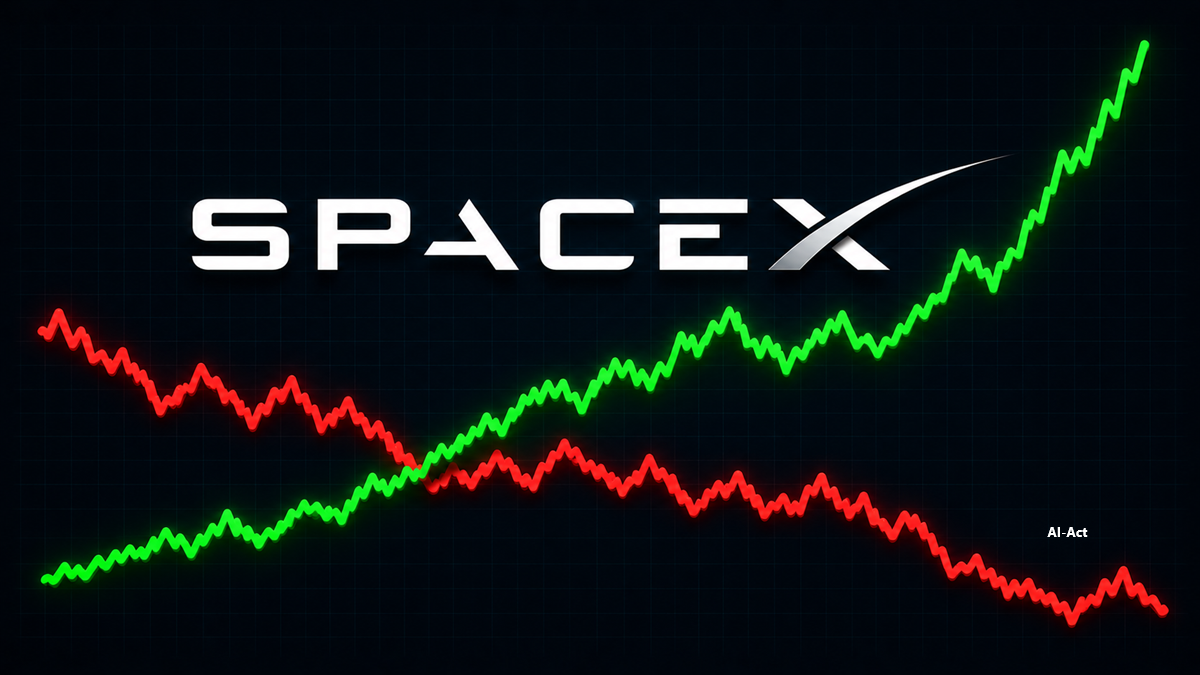
source: Flossbach von Storch
Why the eagerness (of retail investors) to participate?
According to the platform Hyperliquid, the price indication for the IPO is USD 165 (a 22% premium versus the offering price of USD 135). Could it turn out to be a success after all? An interesting study by Flossbach von Storch shows that, on average, US IPOs get off to a strong start. Over the past 45 years, US shares have risen by an average of around 19% above the offering price on their first trading day.
Technology companies did even better, with an average rise of 31% on the first trading day; during the dotcom period this even climbed to 87%. But averages do not tell the whole story: since 1980, 30% of IPOs have ended up below the offering price. The primary question is why the lead banks (in consultation with SpaceX) set the offering price (too) cheap or (too) expensive. To attract investors, a relatively low offering price must be set, so that the uncertainties surrounding a company's low profitability are offset by the prospect of a quick share price gain (Beatty and Ritter, 1986). Given the later mega offerings this year from Anthropic and OpenAI, institutional investors should now be incentivised with a discount. The company must weigh the expected benefits of underpricing against the drawbacks of forgone proceeds. Under normal circumstances, the benefits of underpricing lie in a reputational effect for the share and a marketing effect for the company. In addition, management benefits from a perceived increase in its wealth when it holds shares in the company itself (Musk owns around 45% of SpaceX, but has indicated he has no intention of parting with it). This raises the question of whether the flotation might not even involve overpricing, since for Elon Musk and SpaceX the need for capital may well weigh more heavily than share price support and investor sentiment.
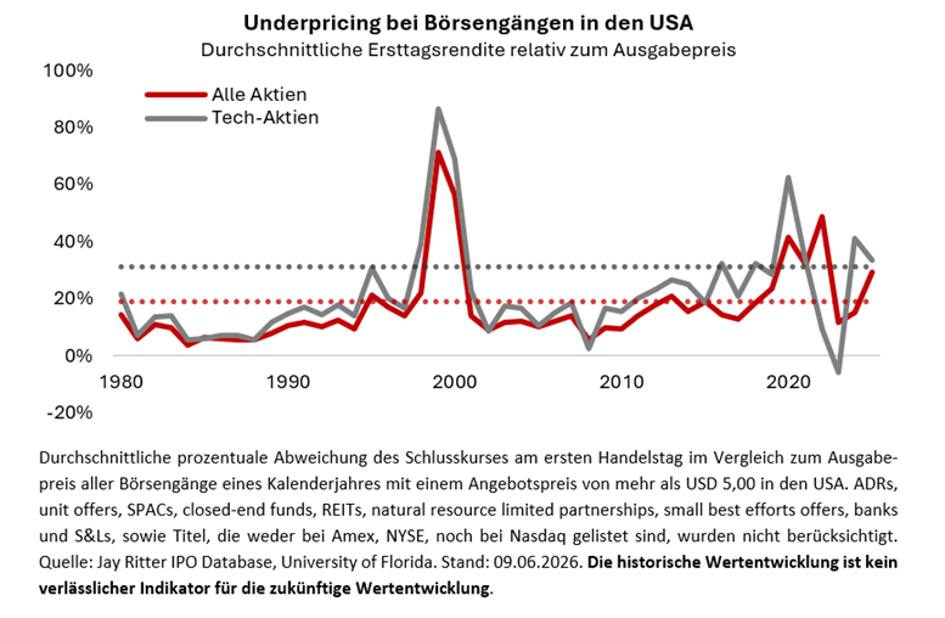
Friday will at most provide an initial indication of whether SpaceX marks the start of a new hot IPO market, in which large technology companies come to market relatively cheaply. Only over the longer term will it become clear whether the offering price was genuinely attractive for new investors, or whether it in fact reflected peak valuations that insiders took advantage of to sell shares on favourable terms.
Will Europe then also get its own USD 1 trillion company?
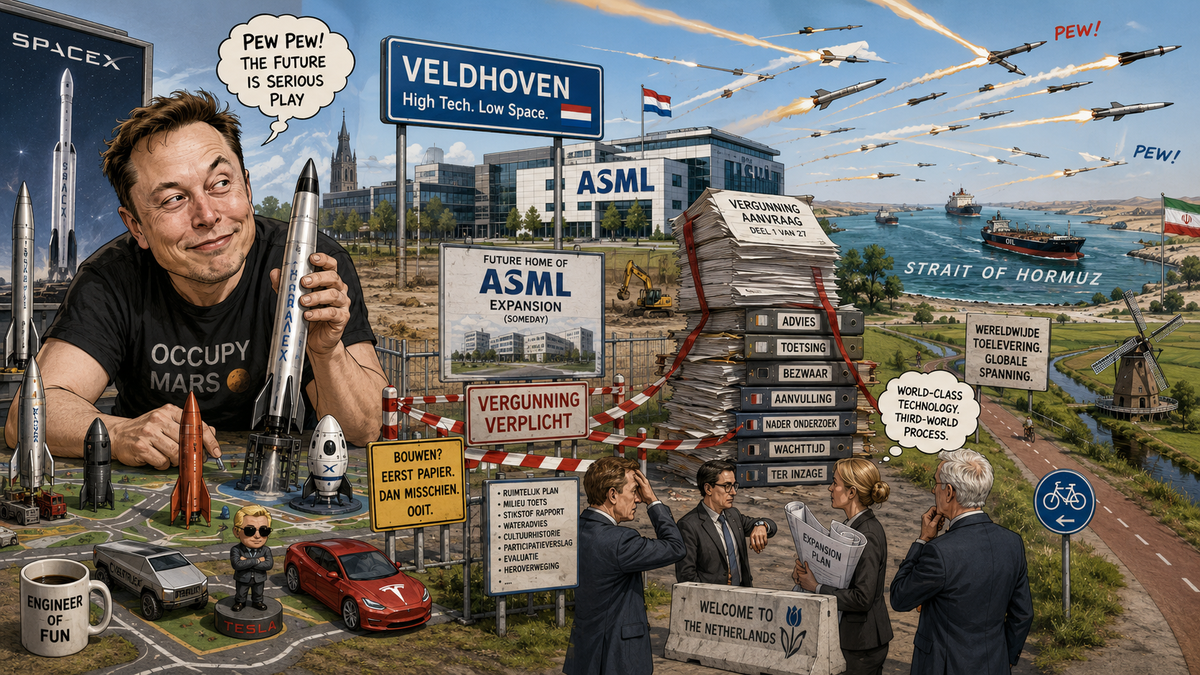
Not yet, but ASML is getting closer and closer. It still needs roughly 46% additional market value to reach USD 1,000 billion (1 trillion). That is ambitious, but not inconceivable if the AI investment cycle continues and ASML can scale up its production capacity more quickly. The key question thus becomes: can Europe, with ASML, finally produce a genuine "trillion dollar company"? ASML has grown into Europe's most valuable listed company. The Dutch chip machine maker reached a market value of approximately USD 684 billion during trading on Thursday afternoon, driven by strong demand for AI infrastructure and a share price increase of roughly 60% since the start of this year. This puts ASML ahead of Novo Nordisk's earlier European record valuation from June 2024. Analysts see particular upside potential from higher expected deliveries to major chip manufacturers such as TSMC and Samsung. Whether Terafab will join as a new customer remains dependent on several factors.

ASML supports European cloud ambitions but warns of slowness in Brussels
ASML backs the new European plans to become less dependent on American and Chinese technology in the fields of chips, cloud and AI. CEO Christophe Fouquet calls the EU sovereignty package an important step for the European tech ecosystem. The focus on demand-driven policy and the appointment of former SAP chief Jim Hagemann Snabe as Special Envoy are particularly well received. Nevertheless, Fouquet adds an important caveat to the call to buy "European first", pointing out that this assumes there is actually something European to buy. And that is precisely where the problem lies, because ASML is barely European either on the procurement side or on the sales side. With a few exceptions, the supply chain relies on non-European parties; the leading European partnerships so far are mainly with Germany's Zeiss for lenses and France's Mistral for software.
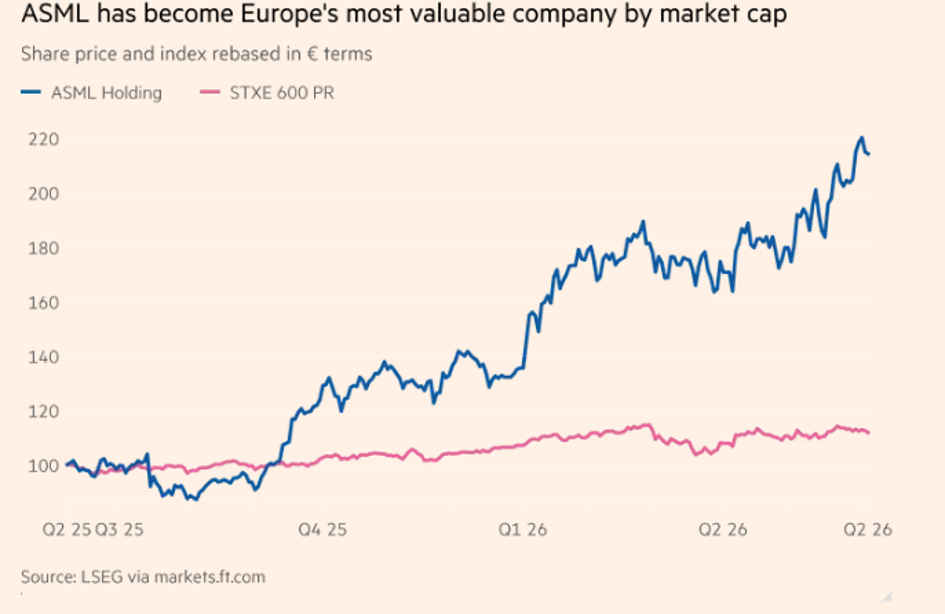
Fouquet is thus issuing a clear warning aimed at Brussels: ambition too often gets bogged down in bureaucracy. The global AI and chip race is not won with policy papers, but with investment, production capacity, talent and scalable infrastructure. As noted, the figures speak for themselves: only 1% of ASML's revenue comes from Europe, versus 80% from Asia. Incidentally, Europe is not only lagging behind in terms of revenue and investment. International investors' valuations of European technology companies also show a discount.
 Henry Ren and Sarah Jacob
According to Bloomberg, ASML (+60% in USD) is lagging behind American chip giants in share price performance this year (the SOXX index is up 80% this year). However, this underperformance can partly be explained by the fact that ASML benefits less directly from the acute and explosive demand for AI chips. In addition, increasingly strict American (and European) export restrictions towards China are weighing on ASML's revenue growth, even as China used to be a highly profitable growth market for the company.
Elon Musk, the USD 1 trillion man
While ASML appears to be heading towards a market capitalisation of USD 1 trillion, Elon Musk as an individual may perhaps be approaching that same magical threshold even sooner. His career began relatively modestly in internet software and online payments, but grew into a unique technological empire spanning electric cars, rockets, satellite internet, artificial intelligence, brain implants, social media and possibly even chip manufacturing. What is remarkable about Musk is not just the scale of his fortune, but above all the breadth of his impact. Many entrepreneurs build one exceptional company. Musk has built or decisively influenced multiple companies that would each be iconic in their own right: PayPal, Tesla, SpaceX, Starlink, X, xAI, Neuralink, The Boring Company and possibly soon Terafab. The fact that he is currently simultaneously the driving force behind a series of capital-intensive, technologically complex companies underlines why many see him as an unprecedented phenomenon: part engineer, part entrepreneur, part capital allocator and, above all, someone capable of disrupting entire industries.
Elon Musk's techno-industrial empire
Seventeen companies and projects that Musk founded, financed or decisively influenced, from his first internet company to his AI and chip ambitions.
Valuations and wealth indications are indicative and partly speculative; private valuations can fluctuate significantly. — Source: compiled by Tresor Capital.
ASML and Musk: invitation is sensitive among some employees
Commercially speaking, Musk is highly relevant for ASML. ASML makes the most critical machines for advanced chip production, while Musk builds companies that require enormous amounts of chips and computing power: Tesla for self-driving cars and robots, xAI for AI models, SpaceX for satellites and possibly future data centres. If chip manufacturer Terafab gets off the ground, Musk would even become a direct customer of ASML.
That is why it is quite remarkable that some ASML staff do not want Musk to take part in Thursday's video call with ASML chief executive Christophe Fouquet on AI, robotics, space travel and semiconductor production. Musk is therefore not only controversial for Dutch pension funds, which, wearing their ESG hat, look at governance, reputational risk, labour relations and political positioning, among other things.
In American business circles, Musk is often viewed more favourably than in the Netherlands or Europe. That was also evident during the SpaceX IPO roadshow in June 2026, where, according to US media, JPMorgan chief executive Jamie Dimon explicitly compared Musk to Thomas Edison, calling him the "Edison of our time". That comparison fits the way Wall Street likes to position Musk: not just as an entrepreneur, but as someone capable of building entire new industrial ecosystems.
Edison was known as the "Wizard of Menlo Park". Musk, in that respect, is more of an architect of techno-industrial platforms: he combines technology, capital, labour, data, infrastructure and public imagination. His companies are not standalone businesses but touch entire value chains: electric mobility, space travel, satellite internet, artificial intelligence, robotics and possibly semiconductor production.
At the same time, it is precisely this scale that makes him controversial. Both Edison and Musk combined technological innovation with the ruthless build-up of commercial power. Edison was criticised for his aggressive patent battles and business methods; Musk is under fire for his public behaviour, political statements, platform power, labour relations and management style.
Elon Musk is set to be the world's first trillionaire pic.twitter.com/qcl2m1FXaH
— Hedgeye (@Hedgeye) June 12, 2026
With roughly $835 billion (as at 1 June), Musk already ranks among the richest individuals in modern financial history. In the event of a highly successful SpaceX IPO, he could potentially become the first publicly estimated trillionaire. In nominal dollars, Musk is probably the richest modern entrepreneur ever, but the comparison remains uncertain from a historical perspective. Figures such as Mansa Musa, Rockefeller, Carnegie and Emperor Augustus at times controlled a far larger share of the economy in their day, which means the title of "richest person ever" remains debatable. Certainly compared with Emperor Augustus, whose wealth is estimated at 5 trillion in present-day USD. Naturally, Musk would dispute whether this even constitutes private wealth, and he could also claim that, in terms of ESG standards, he built his wealth more fairly.
Uncertain and wait-and-see stock market climate
The military escalation between Iran and the US, combined with rising inflationary pressure, is creating an uncertain investment climate. The most recent inflation and labour market figures paint a mixed picture. US headline inflation came in at 4.2% year-on-year in May, driven mainly by sharply higher energy prices. Core inflation, at 2.9%, actually came in slightly lower than expected. At the same time, the labour market remains reasonably solid, although indicators such as job openings, ADP figures and sentiment among smaller businesses point to some cooling.
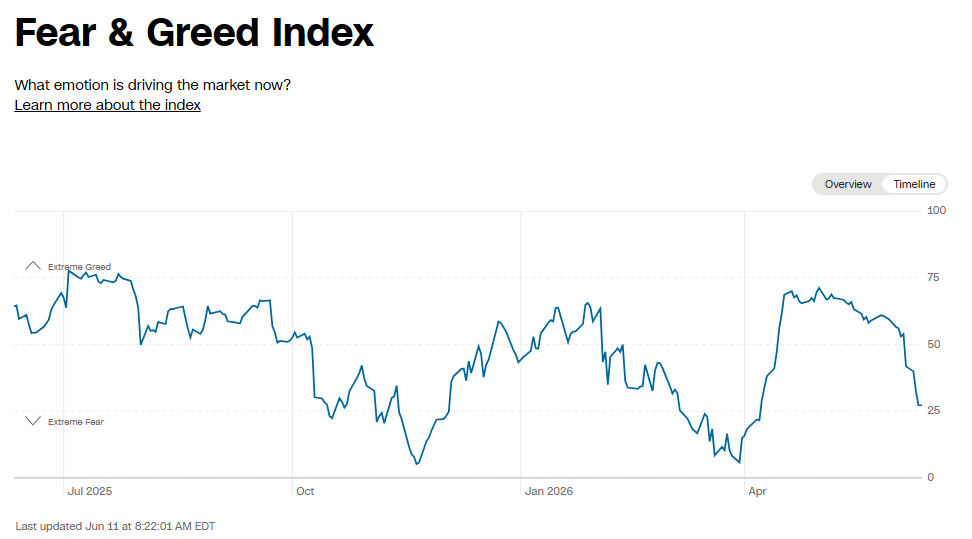
The CNN Fear and Greed Index is also under pressure, pointing to rapidly deteriorating sentiment. Notably, the breadth factor (% of stocks rising / % falling) and safe-haven demand (rotation out of equities into cash and bonds) point to growing uncertainty.
As a result, the Federal Reserve faces a difficult balancing act. Inflation risks are rising due to geopolitical tensions and higher energy prices, while economic growth and employment are showing signs of slowing. This increases the likelihood of market volatility and a more cautious stance among investors.
Remarkably, the oil price continues to fall despite the military clashes with Iran during the night of Wednesday into Thursday and the escalating geopolitical tensions. Earlier this week, Trump reportedly tried to persuade Israeli Prime Minister Netanyahu to halt the fighting in Lebanon and not retaliate further against Iran, but the US now appears to be engaging more forcefully in the confrontation after all.
Even so, the oil market is reacting relatively calmly. Brent is trading at around USD 90 a barrel, well below the peak levels of roughly USD 120 earlier this year. Derivative products, such as urea and gas prices, also appear to be under pressure. One possible explanation is that the market assumes supply through the Strait of Hormuz has not come to a complete standstill. There are signals, including from Trump, that ships can pass through the strait, sometimes with their transponders switched off. As a result, the actual flow of oil may be greater than what is visible from public tracking data.
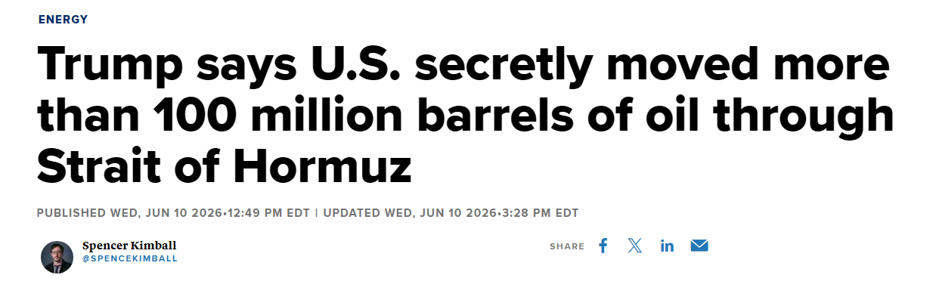
This suggests that, for now, the market is assuming less maximum disruption and more of a scenario in which logistical flows, despite heightened risks, continue to function partially. Still, it remains striking that the gold price also keeps falling, and is now 25% below its peak from late January. Could it be, after all, that investors are trimming assets to free up capital to participate in the SpaceX IPO?
Receive weekly insights in your inbox
Exclusive analyses and updates on family holding companies and global market developments.
Would you like more information about our services?
Get in touch
Disclaimer:
No rights can be derived from this publication. This is a publication of Tresor Capital. Reproduction of this document, or parts thereof, by third parties is only permitted after written permission and with reference to the source, Tresor Capital.
This publication has been compiled by Tresor Capital with the greatest possible care. The information is intended in a general sense and is not tailored to your individual situation. The information should therefore expressly not be regarded as advice, an offer or a proposal to purchase or trade investment products and/or to obtain investment services, nor as investment advice. The authors, Tresor Capital and/or its employees may hold positions in the securities discussed, for their own account or for their clients.
You should carefully consider the risks before you start investing. The value of your investments may fluctuate. Past performance is no guarantee of future results. You may lose (part of) your investment. Tresor Capital disclaims any liability for any inaccuracies or errors. This information is purely indicative and subject to change.
Read the full disclaimer at tresorcapitalnieuws.nl/disclaimer .
This article was translated automatically from Dutch using AI. In case of any difference, the Dutch original prevails. Read the original in Dutch.