Economy & Markets #28 - Leverage in Korea

In the technology sector, Micron confirmed with excellent quarterly figures that demand for AI memory and HBM remains structurally strong. The South Korean stock market benefited as well, although concentration risk around Samsung and SK Hynix remains a point of concern. At the same time, reports of a possible postponement of the OpenAI IPO to 2027 caused nervousness among closely related names such as Oracle, CoreWeave and SoftBank.
Finally, Volkswagen announced a restructuring of unprecedented scale, with potentially 100,000 job losses and four plant closures. It underscores the structural pressure on the European car industry, which simultaneously has to deal with high costs, weak EV margins and growing Chinese competition.
When ETFs don't just track the market, but push it forward too
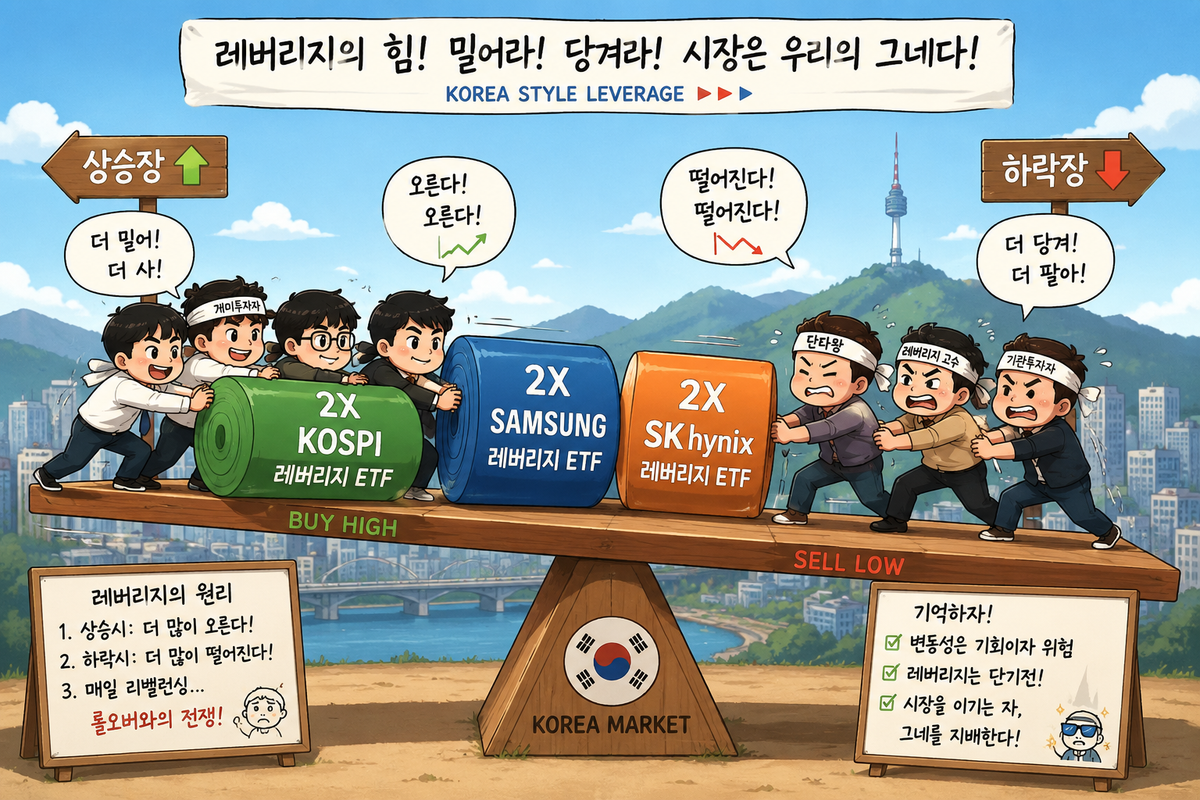
The Korean stock market has increasingly come to resemble a seesaw in 2026. On one side stand the exploding chip sales of Samsung Electronics and SK Hynix, two companies that together now account for more than half of the KOSPI 200. On the other side stands a rapidly growing pile of leveraged ETFs, futures products, inverse funds and derivatives. As long as everyone is moving in the same direction, the plank goes up. But the moment the direction reverses, the weight of the leverage can actually accelerate the opposite move.
That is because most leveraged products do not promise twice the long-term return. They target twice the daily return. To deliver on that promise afresh every trading day, they need to buy more after a rise and sell after a fall. The product is therefore structurally procyclical.
How large is the visible leverage?
The snapshot below uses data from Korea-listed products as of 10 July 2026. For Hong Kong, the last officially published fund assets as of 31 May 2026 have been used. The outcomes are estimates, not exact (real-time) positions.
| Underlying asset | Total gross long exposure (incl. leverage) |
|---|---|
| SK Hynix | approximately $32.6 billion |
| Samsung Electronics | approximately $12.0 billion |
| KOSPI 200 and broad Korea index products | approximately $14.5 billion |
The calculation only includes the known leveraged ETFs; not included are, among other things, margin loans, ELWs, options, structured notes, non-listed swaps and direct derivative positions held by retail and institutional investors. The actual leverage in the system is therefore higher. Trading turnover also tells a different story than AUM alone. In the first half of 2026, turnover in KODEX Leverage amounted to approximately $177.1 billion, and in KODEX 200 Futures Inverse 2× approximately $76.3 billion. The two largest Hynix leveraged funds together accounted for roughly $97.7 billion in turnover. The largest Samsung 2× fund alone reached approximately $35.1 billion. So these are not purely investments, but to a significant extent trading instruments, used for highly tactical positioning and short-term trading.
Why a 2×-leveraged fund needs to buy or sell every day
Take an investor who puts in 100 into a daily 2× product on SK Hynix. At the start of the day, the balance sheet, simplified, looks like this:
- the fund's net assets: 100;
- desired exposure to Hynix: 200;
- implied financing or derivative leverage: 100.
If Hynix rises 10% that day, the following happens before rebalancing:
- the position of 200 rises to 220;
- the profit amounts to 20;
- net assets rise from 100 to 120.
But a fund with 120 in assets needs to have 2 × 120, or 240, in exposure for the next day. It currently holds only 220 in economic terms. It therefore needs to buy 20 more at or around the close. Naturally, the opposite volume of transactions applies in the event of a price fall. The general rule for a 2× fund with a starting capital of 100 is simple: Required closing transaction = 200 × the daily return.
The problems in practice
In practice, this rebalancing can take place through a variety of instruments such as shares, futures, total-return swaps or options. When a bank delivers the swap, a large part of the physical hedge still ends up with the dealer or market maker. The net effect, however, is the same in all cases: the daily rebalancing of these leveraged ETFs reinforces the existing price movement towards the end of the trading day.
That effect is considerably larger for a single-stock product than for a broad index. With an index fund, the rebalancing flow is after all spread across dozens or hundreds of shares, whereas with a single-stock leveraged ETF the entire order flow is concentrated in a single share. That concentration is especially relevant in the Korean case, because SK Hynix and Samsung together account for an index weight of around 20% in the KOSPI. Moreover, in 2026 SK Hynix already saw dozens of trading days with price moves of more than 5%. With visible Hynix assets of around $32 billion, an intraday move of five percent could theoretically trigger up to $1.6 billion in additional hedge adjustments towards the close, an order flow that is entirely concentrated in that single share.
A second, more subtle problem lies in the mathematics of daily rebalancing itself: twice the daily return is not the same as twice the period return. Because the leverage factor is reset every day, returns become path-dependent. Suppose Hynix first rises 10% and then falls 9.09% the next day; the share then ends up exactly back at one hundred (100 → 110 → 100). The 2× fund, however, moves from 100 to 120 to 98.18, a loss of 1.82%, while the share itself is unchanged on balance. With larger moves, this effect quickly intensifies. The Korean regulator itself uses the example of a share that first rises 30% and then falls 30%: the share ends at -9%, but a daily 2× product ends at -36%.
This so-called "volatility drag" does not, incidentally, mean that leveraged ETFs always inevitably melt away. In a strong, sustained trend, daily compounding can actually work in the investor's favour. The problem arises mainly with large back-and-forth moves, precisely the market regime that Hynix and Samsung currently find themselves in.
What is the regulator doing?
Against this background, it is not surprising that the Korean Financial Services Commission has not approved these single-stock products without conditions. Among other things, the underlying shares must meet requirements regarding market capitalisation, turnover, credit quality and derivatives liquidity, and the maximum leverage is capped at 2×. Retail investors must complete additional education and hold a basic deposit of $6,645 to trade leveraged and inverse ETFs and ETNs, while product names must explicitly state "single stock", "leverage" or "inverse". Nevertheless, the authorities' stance has visibly become more critical since the introduction. Due to the extreme volatility, the Korea Exchange postponed the planned introduction of weekly options on individual shares, and both regulators and the Bank of Korea have warned of losses among retail investors and of amplifying market moves.
This illustrates the underlying dilemma. The regulator wants a deeper, internationally competitive capital market and wants to prevent Korean investors from buying their innovative products exclusively in Hong Kong or the United States. But the more local leveraged products are permitted, the greater the mechanical trading flow becomes around a small number of very heavily weighted index shares, resulting in exactly the self-reinforcing closing moves described above.
Does SK Hynix's US listing change the system?
Yes, but not necessarily in one direction.
SK Hynix will make its Nasdaq debut on 10 July 2026 under the ticker SKHY. The US listing makes it easier for American funds, options strategies and single-stock ETFs to offer direct exposure to Hynix. But here too we see that GraniteShares has already filed documentation for a daily 2× long product and a 2× short product on the ADR.
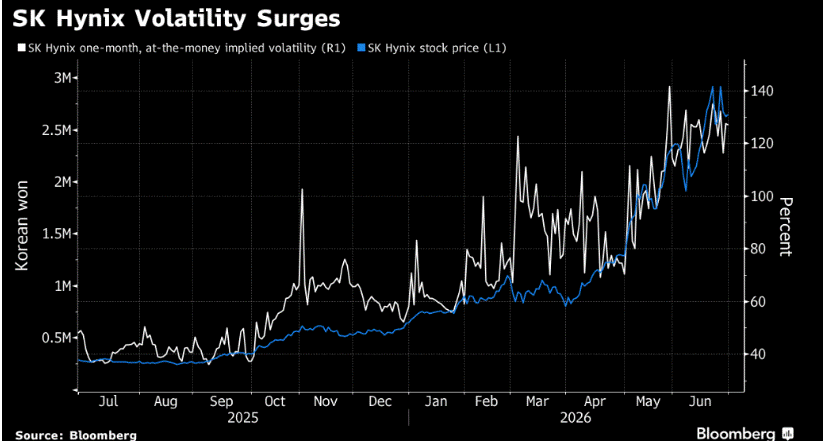
In the short term, part of the rebalancing will therefore shift from the closing auction in Seoul to the American close. That may somewhat spread the direct pressure in Korea. The risk, however, does not disappear. Market makers can hedge their ADR risk through Korean shares, futures, swaps and currencies. A strong move in New York can therefore be passed through at the Seoul open, after which Korean leveraged funds have to rebalance again at the end of their own trading day. The market thus effectively gets an almost 24-hour feedback loop:
Seoul moves → Asian funds rebalance → New York trades the ADR → American funds rebalance → Seoul opens with a gap.
Initially, the effect of new American 2× products will be limited, since their AUM is small at launch, but the experience in Hong Kong shows how quickly that can change: the Hynix 2× fund there grew from around $1.49 billion at the end of January to $10.81 billion at the end of May.
Seven times oversubscribed and still cheaper than Micron
Strictly speaking, SK hynix's US listing on 10 July is not a classic IPO (the share is, after all, already listed in Seoul) but a first issuance of American Depositary Shares on Nasdaq. Just as with SpaceX's IPO, interest is now exceptional: the $26.5 billion offering, priced at $149 per ADR, was oversubscribed roughly seven times by more than 500 institutional investors. Among the most notable subscribers were long-term investor Baillie Gifford (manager of Scottish Mortgage Trust), technology investor Coatue Management, and Situational Awareness Partners, the fund of former OpenAI researcher Leopold Aschenbrenner. Together they had initially shown interest in up to $7 billion; due to the strong demand, their final allocations were reportedly scaled back.
The appeal is clear. SK hynix is the market leader in high-bandwidth memory for AI servers and holds a strong position as a supplier to Nvidia. The Nasdaq listing gives US investors direct access to this growth, without the operational and currency-related hurdles of the Korean stock exchange. At the same time, Hynix still trades more cheaply than Micron on the basis of expected earnings.
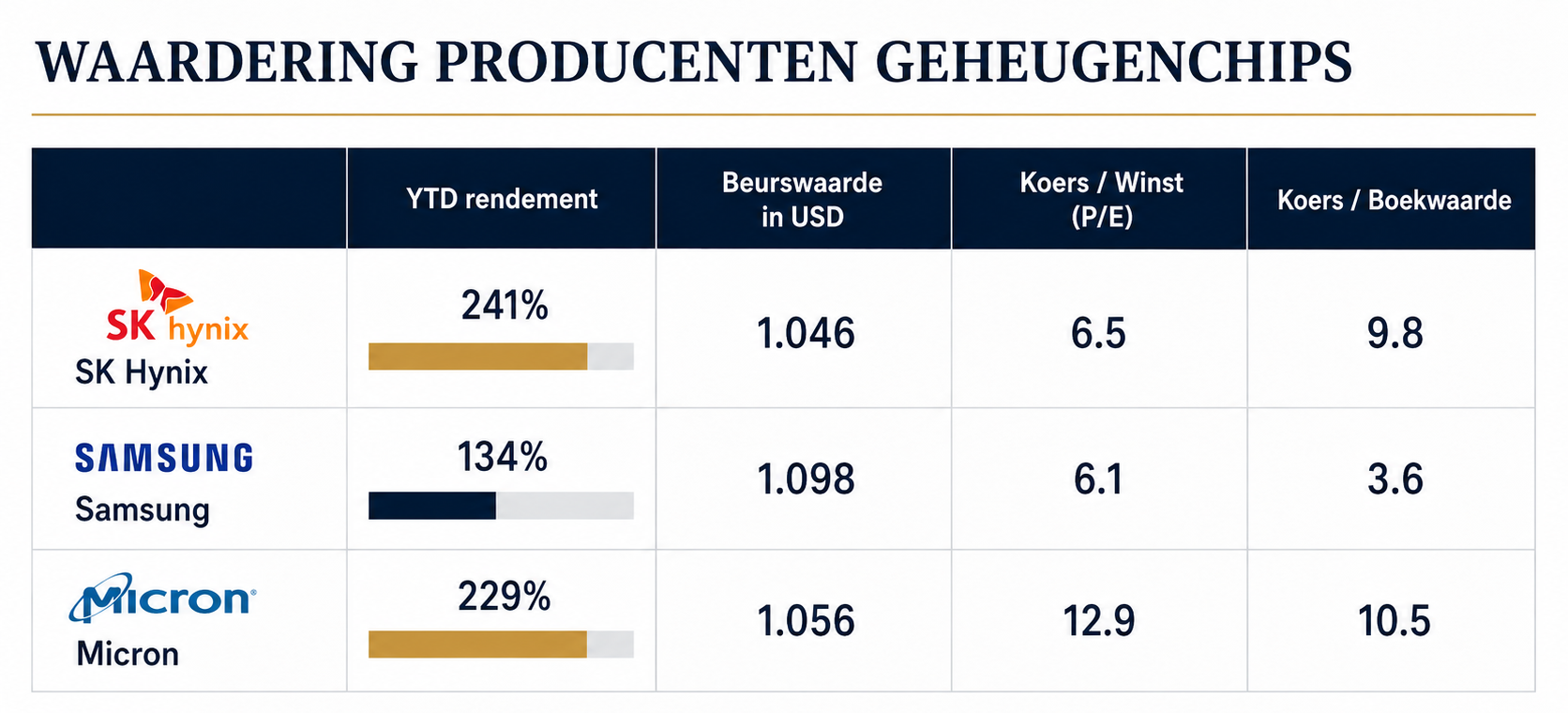
Within the chip sector, that discount is not entirely illogical, however. The memory chip market is still widely regarded as cyclical, current profits are benefiting from exceptionally high prices, and a large part of production capacity depends on a handful of major AI customers. The US listing could, however, narrow this traditional "Korea discount".
Receive weekly insights in your inbox
Exclusive analyses and updates on family holding companies and global market developments.
Chipmakers remain strongly positioned for major investments in data centres
Semiconductor companies continue to benefit directly from hyperscalers' unprecedentedly high investments in AI data centres. The combined capital expenditure of Amazon, Microsoft, Alphabet, Meta and Oracle is estimated at more than $600 billion for 2026, of which roughly three-quarters will go towards servers, chips and data centre infrastructure.
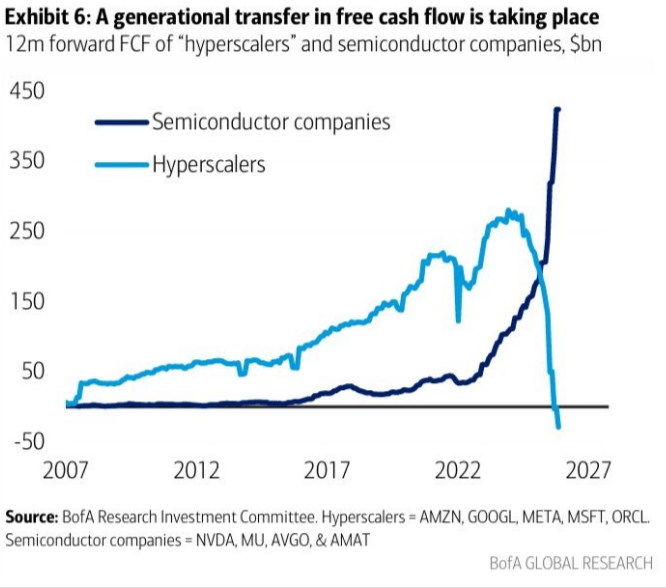
The money flows through the entire chain: from Nvidia GPUs and Broadcom networking chips to TSMC production, HBM memory from Micron & SK Hynix, and lithography machines from ASML. Recent quarterly results confirm that growth is not yet slowing. Nvidia saw its data centre revenue rise by 92% to $75.2 billion. Broadcom reported growth of 143% in AI chip revenue to $10.8 billion and already expects $16 billion for the current quarter. Micron announced on 24 June that data centre revenue exceeded $25 billion in a single quarter and that demand for DRAM and NAND still significantly outstrips supply. According to Micron, the shortage could even persist beyond 2027.
Despite these strong fundamentals, the majority of technology companies fell back into a bear market (20% below their peak) in June and July.
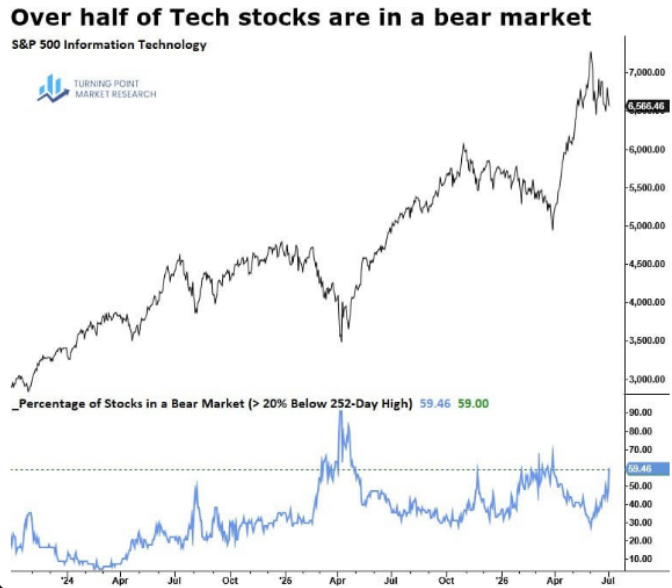
According to research by Bank of America, the recent correction in technology and chip stocks is being used remarkably often by insiders to buy additional shares in their own companies. That is a constructive signal: executives generally understand order flow, margins and investment plans better than external investors, and by making an open-market purchase they are putting their own capital on the line. In early July, around 69% of stocks within the S&P 500 technology sector were trading at least 20% below their recent highs, which means valuations have become considerably more attractive in a short space of time.
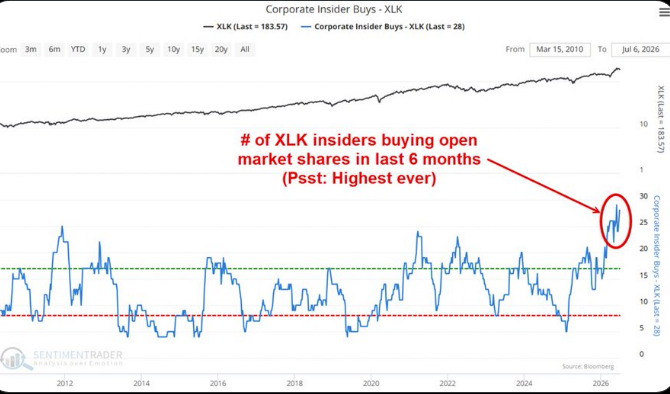
The insider purchases are not visible at every large SOXX company individually, but BofA's broader picture suggests that executives view the sell-off more as a buying opportunity than as the start of a fundamental deterioration. This creates a cautiously positive contrarian signal for the technology sector and, in particular, for battered chip and AI-related stocks.
The effect is also visible further down the chain. ASML will publish its second-quarter results on Wednesday 15 July. The company expects revenue of €8.4 to €9.0 billion and a gross margin of 51% to 52%. Hyperscalers' multi-billion-dollar investments in AI data centres are driving additional demand for advanced processors and HBM memory, which means chip manufacturers such as TSMC, Samsung and SK Hynix need to expand their production capacity further. For ASML, this ultimately translates into greater demand for EUV, High-NA EUV and advanced DUV machines. Investors will be paying particular attention to new order intake and to any comments on the investment plans of major customers. For the full year 2026, ASML expects revenue of €36 to €40 billion.
Volkswagen and Porsche: Germany's de-industrialisation is accelerating
Volkswagen is on the eve of a historic shrinking of the organisation. The group is being forced to reduce its structural production capacity, scrap models and variants, and substantially cut its workforce. Scenarios circulating in the German media suggest that between 100,000 and 140,000 jobs could disappear in Germany. Although not all the figures are final and the powerful German trade unions will push back, the direction is clear: Volkswagen is not simply adjusting to a temporary recession, but to permanently lower production.
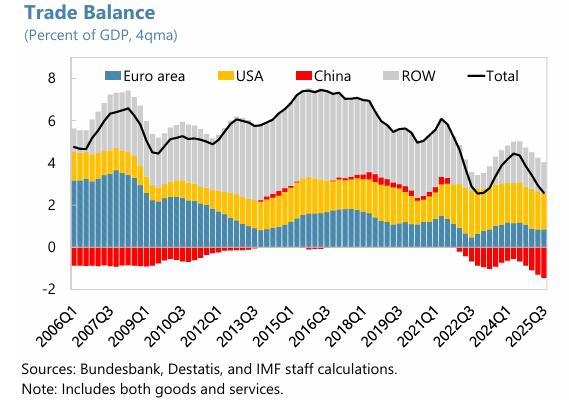
China appears to be the main cause. For years, profits from the Chinese market financed Germany's costly production apparatus. Now local manufacturers are gaining ground with cheaper electric cars, faster model cycles and better software. At the same time, Volkswagen continues to struggle with high labour costs, complex organisational structures and a fragmented model range.
The picture at Porsche is similar. After earlier workforce reductions, the company is reportedly looking to cut thousands more jobs, potentially also in development and management. That is precisely what is concerning: Porsche is not only cutting back on production, but possibly also on high-quality technical roles in Weissach. Porsche too is being hit by the downturn in China and disappointing demand for electric models. The 911 remains strong, but volume models such as the Macan and Taycan are under pressure. This shows that even an exceptionally strong brand is not immune to Chinese competition and a misjudged electrification strategy.
The wave of job cuts at Volkswagen and Porsche is therefore more a German problem than a Chinese one. When even the crown jewels of the German car industry are shrinking factories and cutting development jobs, this is no longer a cyclical dip, but a fundamental weakening of the German industrial model. The seeds of Germany's decline were sown during the Merkel years, with the Energiewende, the nuclear phase-out and an increasingly heavy regulatory and tax climate. The consequences have become particularly visible since 2014 and are being reinforced by European climate policy heading towards 2030.
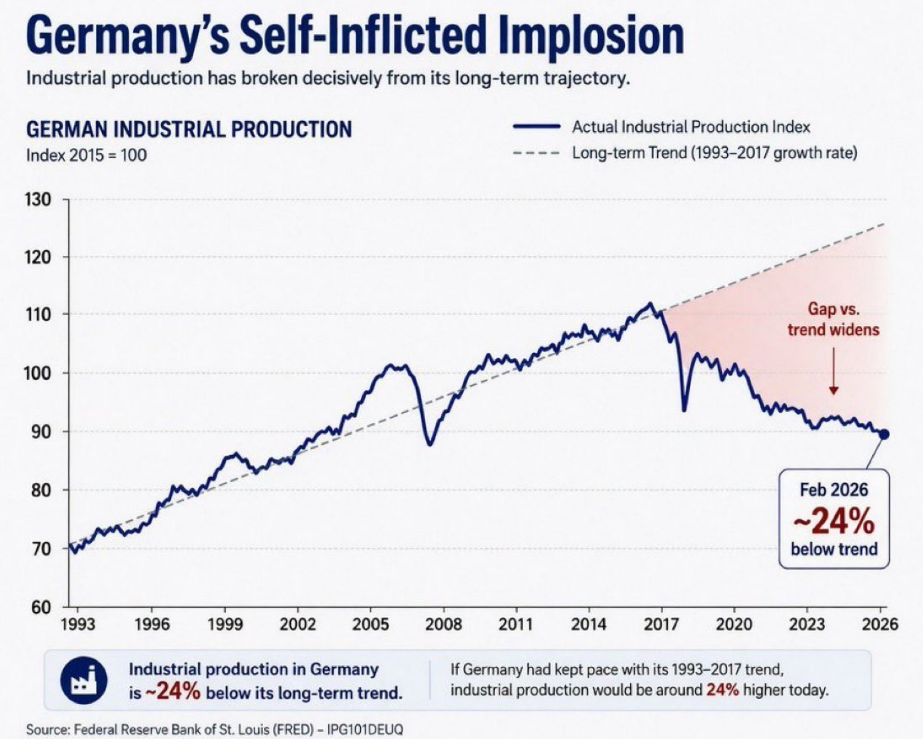
Germany was in recession in 2023 and 2024, with economic contraction of -0.9% and -0.5% respectively; in 2025 growth amounted to just 0.2%. Industry contracted for the third year in a row, with industrial value added falling by 1.3% in 2025. These policy changes have resulted in an unfavourable cost base for Standort Deutschland (Germany as a business location). In the second half of 2025, medium-sized German companies paid an average of €0.226 per kWh of electricity, around 23% above the EU average. Energy costs for chemicals, heavy industry and steel are even 3 to 5 times higher than for comparable industrial companies in the US. The tax burden on labour amounted to around 49% of total labour costs in 2025, compared with an OECD average of 35%. At the same time, job growth has ground to a halt: the number of people in employment remained stuck at 46 million in 2025.
High energy prices, taxes and regulation are thus not leading to the intended green growth, but to lower investment, industrial contraction and creeping de-industrialisation. The fact that German consumers have less to spend may be sustainable in that sense, but it is becoming ever less politically desirable.
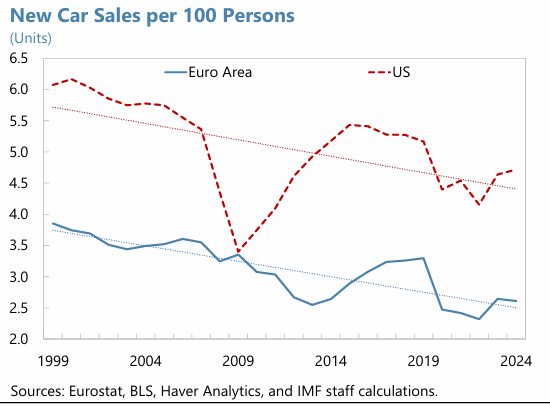
Looking at the chart below, we see that Germany is no longer exporting more to China, but is in fact importing more from it. Yet there is also a second notable trend: the supposedly strong domestic European market is also no longer a dominant export market. What in our view receives too little attention is that Europe, and Germany itself, is becoming poorer, and therefore no longer offers a strong home market.
Reforming on credit, too little too late to prevent a lost decade
Chancellor Friedrich Merz announced a package of 34 reforms this week aimed at making the German economy more competitive again. From 2027, around €10 billion a year in tax relief will be introduced for low and middle incomes, temporary employment contracts will be expanded, and stricter rules will apply to sick leave. In addition, permits must be automatically approved after four months if the government fails to respond, while reporting obligations for companies are being scrapped. The pension system is also being tackled: the retirement age (currently 67) is to eventually move in line with life expectancy, and a larger share of pension accrual will be invested in the capital markets.
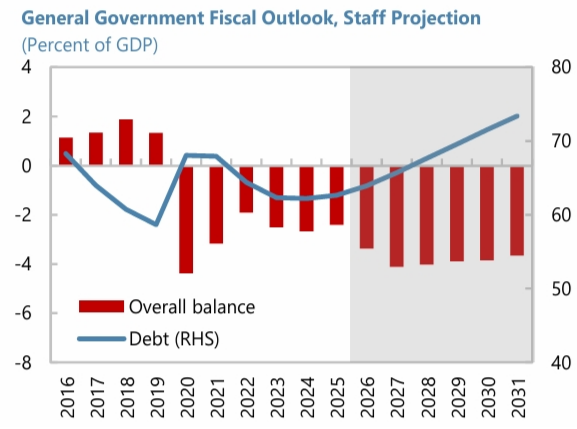
The direction is right, but the reforms are being combined with a historic expansion of debt. Germany intends to borrow roughly €838 billion between 2027 and 2030 for defence, infrastructure and other government spending. As a result, government debt will rise to almost 80% of GDP by 2027, while annual interest costs are set to climb to around €81 billion by 2030. Merz is thus not only trying to reform the German economy, but above all to restart it with borrowed money. Without a clear improvement in productivity, energy prices and industrial investment, the bill risks ultimately landing on the taxpayer's doorstep.
Receive weekly insights in your inbox
Exclusive analyses and updates on family holding companies and global market developments.
Would you like more information about our services?
Get in touch
Disclaimer:
No rights can be derived from this publication. This is a publication of Tresor Capital. Reproduction of this document, or parts thereof, by third parties is only permitted after written consent and with reference to the source, Tresor Capital.
This publication has been compiled by Tresor Capital with the greatest possible care. The information is intended in a general sense and is not tailored to your individual situation. The information must therefore explicitly not be regarded as advice, an offer or a proposal to purchase or trade investment products and/or to make use of investment services, nor as investment advice. The authors, Tresor Capital and/or its employees may hold positions in the securities discussed, for their own account or on behalf of their clients.
You should carefully consider the risks before you start investing. The value of your investments can fluctuate. Past performance is no guarantee of future results. You may lose (part of) your invested capital. Tresor Capital disclaims any form of liability for any inaccuracies or errors. This information is purely indicative and subject to change.
Read the full disclaimer at tresorcapitalnieuws.nl/disclaimer .
This article was translated automatically from Dutch using AI. In case of any difference, the Dutch original prevails. Read the original in Dutch.