
Economy & Markets #41 - Will the midterms put the brakes on the AI race?


US midterms: is the AI revolution coming under political pressure?
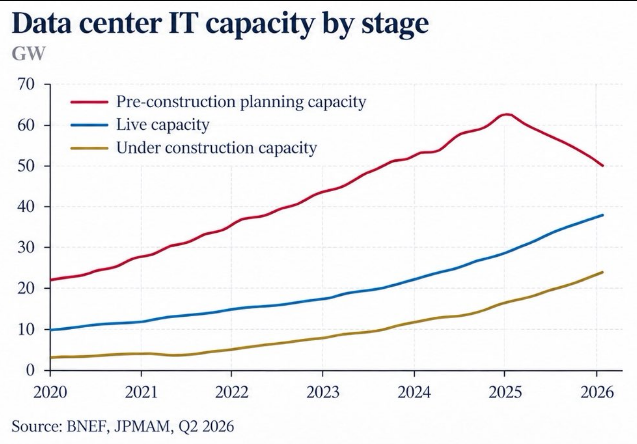
Could a Democratic win in the US midterm elections of 3 November bring the enormous investments in AI data centres to a halt? The risk of stricter regulation is increasing, but the structure of the US government makes a nationwide building freeze considerably more complicated. What's more, political division could actually fuel greater competition between individual states.
Trump under pressure
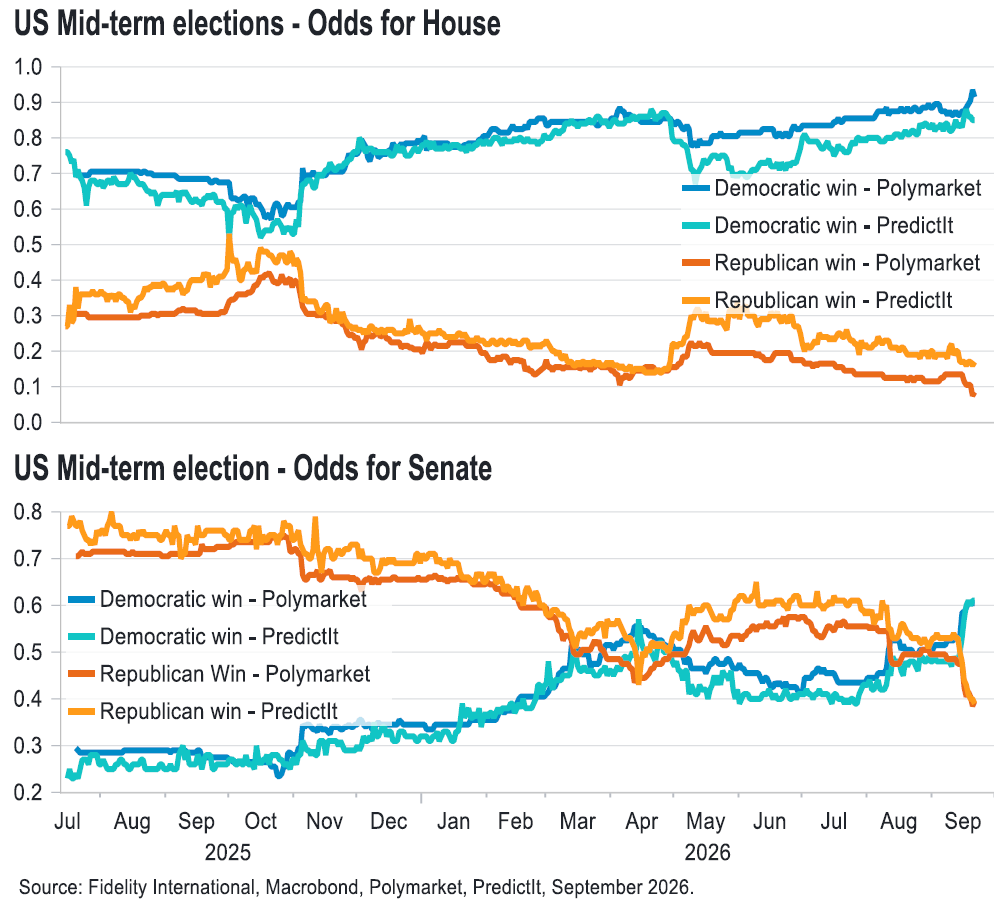
President Trump may be facing a significant political setback in the midterm elections of 3 November. Recent national polls put the Democrats roughly 8 percentage points ahead. A Democratic majority in one or both chambers would lead to greater political deadlock (gridlock) and possibly additional budget concessions and fiscal stimulus. However, Trump retains substantial executive powers in foreign policy and trade, including the ability to impose import tariffs within legal limits. This makes his economic agenda harder to implement, but certainly not fully blocked.
Washington cannot simply shut everything down
The debate over the societal consequences of artificial intelligence is becoming increasingly political in the United States. In June 2026, prominent Democrats Alexandria Ocasio-Cortez and Bernie Sanders introduced proposals for a nationwide moratorium on the construction and expansion of AI data centres. They want further expansion to be permitted only once sufficient legal protections are in place regarding energy prices, employment, the environment and AI safety.
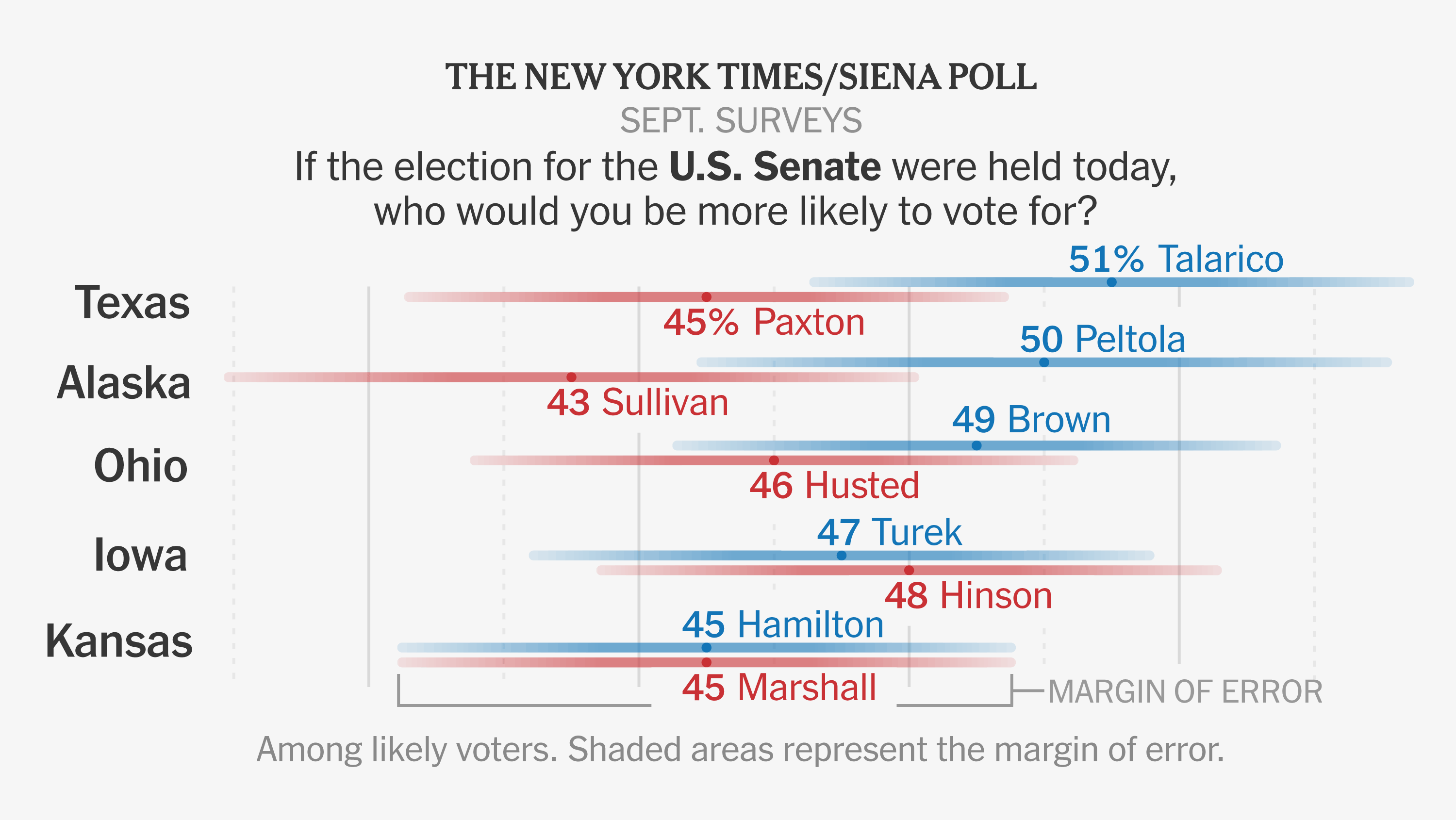
A Democratic majority in both the House of Representatives and the Senate could give such proposals more political room to manoeuvre. That does not mean, however, that a building freeze will automatically become reality.
After all, President Trump remains in office until January 2029 and can block new legislation with a veto. Overriding a veto requires a two-thirds majority in both chambers. In addition, most regular bills in the Senate face a procedural threshold of 60 votes. There is also no unanimity within the Democratic party itself on a full moratorium. We therefore do not see a nationwide building freeze as a likely base case for the 2027–2028 period. Stricter requirements regarding energy consumption, environmental impact and funding of electricity grids are, however, entirely conceivable.
Individual states hold considerable power
An important feature of the US political system is that Washington does not independently make every decision on the construction of data centres. Authority is divided across three levels of government:
- Federal level – Washington
Congress can introduce nationwide legislation, including a potential national building ban. International trade rules, export controls on advanced chips, federal environmental legislation, subsidies and certain energy infrastructure also fall under federal authority. The federal government can set national rules that, where legally valid, override conflicting state rules. - State level – the fifty states
States have major influence over tax breaks, investment subsidies, environmental and water permits, and the regulation of utility companies. They can impose requirements on new large-scale electricity users and, within legal limits, introduce temporary building moratoria. State laws also determine how much authority is delegated to local governments. - Local level – municipalities and counties
Actual building permits and zoning are often arranged locally. Depending on state legislation, municipalities can impose restrictions due to noise pollution, water use, land use and other local effects. Some municipalities have already temporarily halted new data centre projects. A technology company's investment decision therefore depends not solely on Washington, but also on the political and legal circumstances at the intended site.
 Cody Good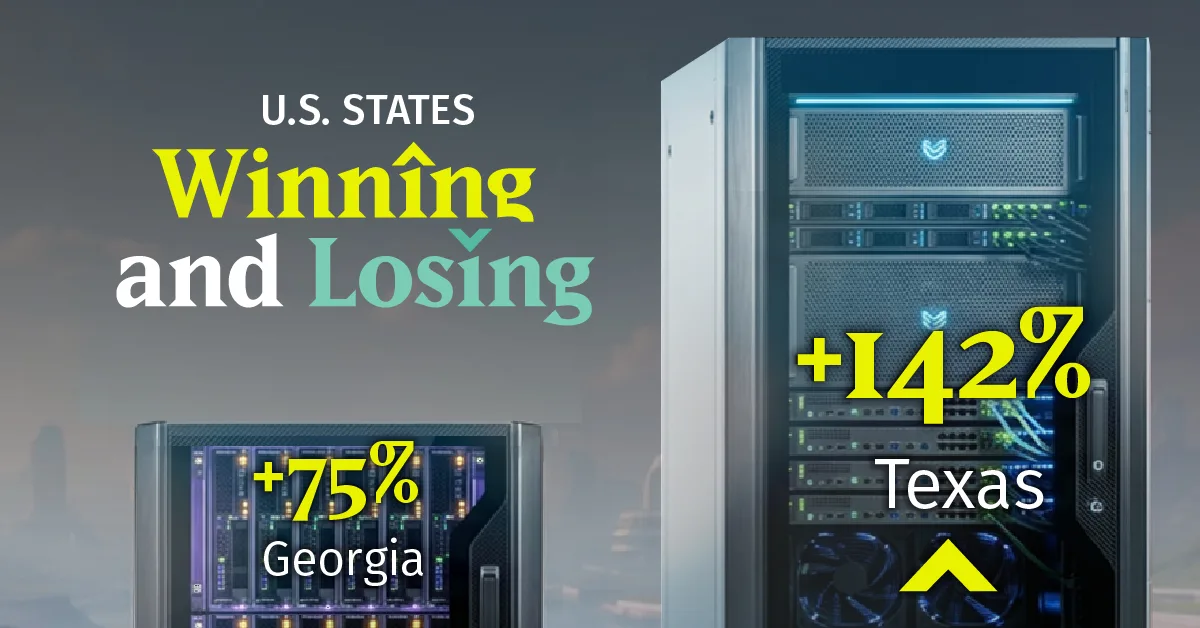
Competition between red and blue states
This very decentralisation could form an important counterforce against far-reaching restrictions. American states have been competing with one another for decades to attract companies, employment and capital. This happens through corporate taxes, tax exemptions, regulation and investment subsidies. The location of new data centres could become the subject of a similar competitive battle. According to the National Conference of State Legislatures, 38 US states now offer specific tax benefits for data centres. At the same time, proposals for temporary construction restrictions have been on the table in sixteen states. Some of these, incidentally, have been rejected or not yet adopted.

The differences are already becoming visible. The Democratic-led state of New York announced a moratorium of up to one year in July 2026 on new large-scale data centre projects that require certain state permits. Texas, by contrast, continues to treat attracting technology investment as a key economic priority, although stricter rules for large electricity consumers have been introduced there too.
However, the dividing line does not run purely along party-political boundaries. Democratic-led Virginia is one of the most important data centre locations in the world, while proposals for construction restrictions have also been put forward in Republican states, including Georgia. We therefore expect not so much a simple opposition between Republican and Democratic states, but rather growing competition based on tax climate, electricity availability, infrastructure and the speed of permit issuance.
States that can supply sufficient energy while also offering a predictable investment climate stand to benefit. A project that becomes politically or economically difficult to carry out in one state may still go ahead in another. Naturally, such relocation takes time: electricity grids, land positions and fibre-optic connections cannot be put in place overnight.
 Editorial Team
The United States is therefore not only engaged in a technological race with China over the development of AI data centres, but also faces intense competition among its own states. This mutual rivalry is characteristic of the dynamism and decisiveness of the American economy. States actively compete to attract investment, employment and companies, among other things through tax benefits, favourable regulation and fast permit issuance. Businesses respond to this flexibly. Companies can, for example, relatively easily relocate entire business units and teams from New York to Florida to benefit from a more attractive tax and business climate. Well-known examples include Goldman Sachs, which has moved parts of its wealth management business to West Palm Beach, Florida, and Apollo, which is opening a second head office in Austin, Texas, alongside its headquarters in New York. This internal competition is an important driving force behind the American investment climate and could also play a decisive role in the further expansion of AI infrastructure.
Major financial institutions relocating activities from New York
| Company | To | Year | Move |
|---|---|---|---|
| Goldman Sachs | Dallas | 2023–2028 | Campus for 5,000+ employees |
| Apollo | Austin | 2026 | Second headquarters |
| JPMorgan Chase | Texas | 2015–2026 | 32,000 jobs, more than in NYC |
| AllianceBernstein | Nashville | 2018–2022 | Headquarters, approx. 1,250 jobs |
| Elliott Management | West Palm Beach | 2020 | Headquarters |
| Icahn Enterprises | Sunny Isles Beach | 2020 | Headquarters |
| Schonfeld | Miami | 2021–2023 | Second headquarters |
| Citadel | Miami | 2022–2026 | Headquarters (from Chicago) |
From New York, unless otherwise stated.
Context: The shift towards Florida and Texas in particular has been under way for some time and is driven by taxes, the business climate, talent availability and operating costs. This is not solely about complete headquarters relocations, but above all about the shift of future growth and employment. This trend, incidentally, largely began before Democratic mayor Mamdani took office in 2026.
Oracle's Project Jupiter: illustrative of growing resistance
A concrete example of the challenges surrounding the US AI build-out is Project Jupiter, a large-scale AI data centre complex being built by Oracle and partners in New Mexico, intended among other things for OpenAI. Note that New Mexico is a Blue state, with both chambers controlled by Democrats. The project includes its own power supply with a capacity of roughly 2.46 gigawatts, comparable to the output of several large power plants. Despite the economic benefits, including thousands of construction jobs and substantial tax revenues, the project is facing legal proceedings and local opposition over water use, energy supply and environmental impact. In August, key permitting procedures were temporarily halted by the New Mexico Supreme Court. These blocks were lifted on 17 September, while construction of the data centre itself continued. Project Jupiter thus illustrates that the biggest threat to the AI build-out currently does not necessarily come from Washington, but rather from local and regional regulation, public resistance and constraints in energy infrastructure.
 Diego Almada Lopez
What does this mean for investors?
For the AI sector, the distinction between a complete investment halt and a slowdown or geographic shift in investment is essential. A nationwide construction freeze could have far-reaching consequences for demand for AI processors, memory modules and networking equipment. With stricter regulation at the state level, a different scenario is more likely: projects become more expensive, face delays or shift to other locations.
For companies such as Nvidia, Micron, SK Hynix and Samsung, this could lead to greater uncertainty about the pace of growth in future orders, without the underlying demand for computing power necessarily disappearing.
Our conclusion is that the US midterms pose more of a risk to the pace and cost of the AI build-out than to its continued existence. Competition between US states could prove to be a stabilising factor in this respect. The main limiting factor may turn out not to be political willingness to build data centres, but the availability of sufficient affordable electricity.
Brazil: election rally and Trump's Monroe Doctrine bear fruit
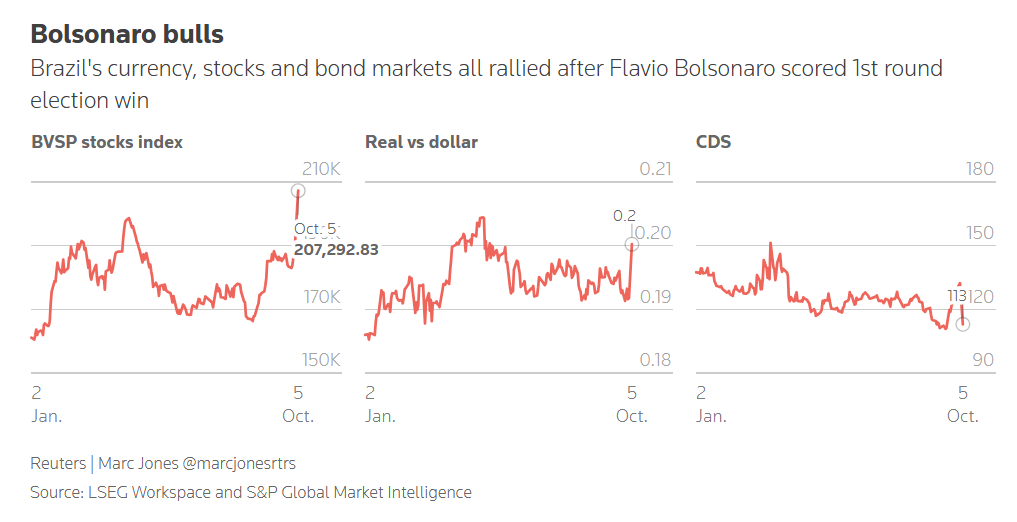
The first round of the Brazilian presidential election has triggered a spectacular stock market rally. Flávio Bolsonaro, son of former president Jair Bolsonaro, unexpectedly won 47% of the vote against 45% for incumbent president Lula. The Brazilian Ibovespa index rose 7.7% on 5 October, while the dollar lost more than 4% against the Brazilian real. Investors are anticipating more market-oriented economic policy, fiscal discipline and lower interest rates. The decisive second round follows on 25 October.
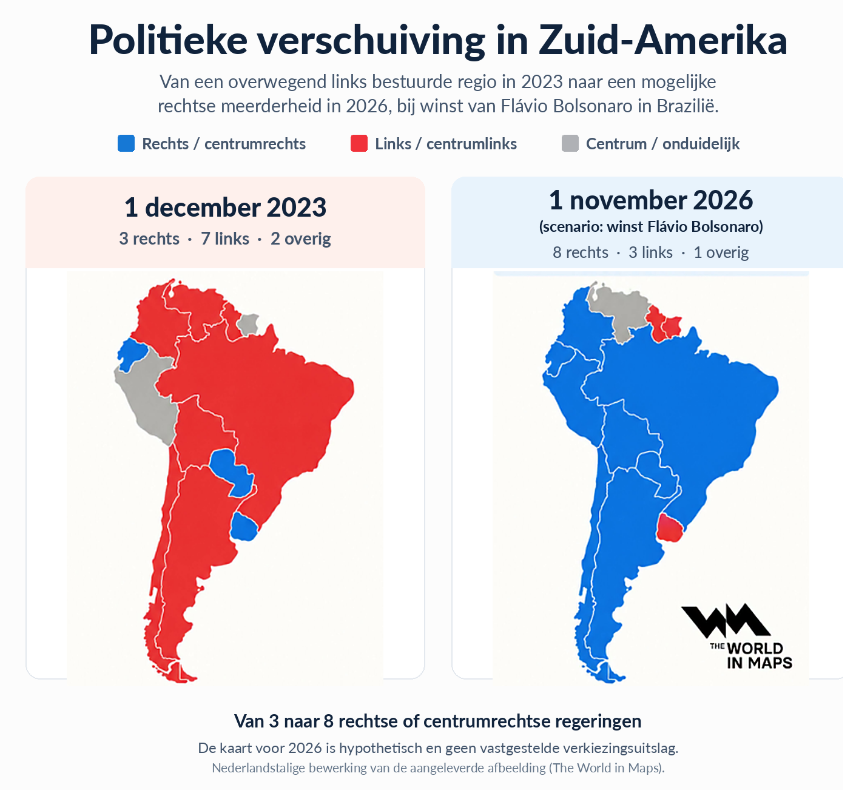
It is striking that Trump's renewed Monroe Doctrine is finding increasing political traction in Latin America. After Argentina, Chile, Peru and Colombia, Brazil may now also be shifting to the right. This increases the number of governments pursuing closer cooperation with Washington. Although these election results cannot be attributed solely to Trump, the regional trend fits with his ambition to strengthen American influence in the western hemisphere and push back China's. Economically, however, China's position remains exceptionally strong.
Druckenmiller repeats his Argentine success in Brazil
Top investor Stanley Druckenmiller again appears to have anticipated political change in Latin America remarkably well. Following Javier Milei's rise to power, he built up his Argentine equity positions during 2024 from around USD 30 million to USD 280 million, including stakes in YPF, Banco Macro and the Argentine equity ETF ARGT.

In the fourth quarter of 2025, he turned his attention to Brazil. Through his Duquesne Family Office, he bought approximately 3.55 million shares in the iShares MSCI Brazil ETF (EWZ) and also took call options on 4.23 million underlying ETF shares.
According to his latest SEC filing, as of 30 June 2026 he still held 3.44 million ETF shares worth USD 118.5 million, plus call options with an underlying share value of USD 145.9 million. Together this represented approximately USD 264 million in reported equity value, more than 5% of his US 13F portfolio. The actual investment in the options is lower and is not publicly disclosed.
After the first election round, the Brazilian stock market rose 7.7%, while the dollar-denominated EWZ gained as much as 12.5%. Whether Druckenmiller still holds his full position is unknown. But once again, he appears to have seen a major political shift coming months ahead of the market.
Asian governments encourage shareholder value creation
Asia is on the brink of a structural change in how it handles shareholder capital. Japan, South Korea, China and several other Asian economies have introduced measures to encourage listed companies to allocate capital more efficiently. Where companies traditionally held large cash reserves and shareholder returns were not always a priority, attention is increasingly shifting towards return on equity, dividend payouts, share buybacks and the divestment of non-strategic holdings.
This development is especially relevant for Asian holding companies and conglomerates that sometimes trade significantly below their intrinsic value. By now, it is not just a matter of policy intentions: several major companies have announced, and partly implemented, concrete programmes.
Legal reforms aim to narrow the Korea discount
South Korea has implemented one of the most far-reaching reform programmes. The so-called Korea discount, whereby Korean companies are structurally valued lower than comparable international companies, is partly attributed to complex ownership structures, the influence of controlling families and insufficient protection of minority shareholders.
Since July 2025, directors have been legally required to explicitly consider the interests of all shareholders. A further legal amendment, in effect since March 2026, stipulates that newly repurchased treasury shares must in principle be cancelled within one year. For existing shares, a transition period of eighteen months generally applies, subject to legally permitted exceptions.
Capital distribution is also being encouraged through tax measures. Certain large conglomerates are subject to an additional 20% tax on fiscally calculated excess profit reserves. From 2026, qualifying dividend payments can reduce the tax base. In addition, domestic individual shareholders of qualifying high-dividend companies benefit from a more favourable separate tax regime, with rates ranging from 14% to 30%.
Companies are now actually taking action.
On 19 August 2026, SK Hynix announced a share buyback worth no less than 40 trillion South Korean won, with all repurchased shares to be cancelled. At the time of announcement, this represented approximately 3.3% of outstanding share capital. In addition, the company raised its target to distribute more than 50% of cumulative free cash flow over 2025–2027 through dividends and share buybacks.
In March 2026, Samsung Electronics decided to cancel approximately 87 million ordinary and preferred shares, with an estimated value of 5.35 trillion won. Hyundai Motor applies a minimum total payout ratio of 35% of net profit for 2025–2027, combined with quarterly dividends and share buybacks. Hyundai also announced further cancellation of treasury shares.
These developments are particularly interesting for Korean family conglomerates, where simplifying group structures and improving the treatment of minority shareholders could unlock significant value.
Japan: capital efficiency becomes a structural priority
Japan was the first major Asian market to explicitly put shareholder value at the centre of a broad stock exchange reform. Since March 2023, the Tokyo Stock Exchange has required companies on the Prime and Standard markets to critically assess their cost of capital, return on equity and market valuation. In April 2026, these expectations were tightened further.
Companies are being urged to put excess cash to use, divest non-strategic holdings and publish concrete plans to improve their return on capital. Although the exchange's specific call does not amount to a legal obligation to make distributions, pressure from institutional investors is increasing.
The first results of this are already visible at Japan's major trading houses. In August 2026, Mitsui & Co. announced a new share buyback programme of up to 200 billion yen, followed by cancellation of the repurchased shares. The programme could cover around 2.1% of outstanding share capital. Mitsubishi Corporation is likewise placing greater emphasis on capital efficiency, portfolio improvement and shareholder distributions, including a sizeable buyback programme of 1 trillion yen.
For investors, the opportunities lie mainly with companies that hold substantial cash reserves, valuable stakes, and a market value that lags their intrinsic value. Restructurings and share cancellations could lead to a structurally higher valuation here.
China: dividend payouts are being enforced more firmly
China is opting for a more regulatory approach. Since 2024, profitable listed companies with available reserves can be given a so-called Special Treatment (ST) risk warning if they pay out insufficient dividends for three consecutive years.
For companies on the main board, this applies when cumulative dividend payouts are both below 30% of average annual net profit and below RMB 50 million. In addition, certain large index constituents must develop policies to improve their market valuation. Companies structurally trading below book value must also disclose improvement plans.
Concrete examples are visible here too. In 2025, Tencent repurchased approximately HKD 80 billion worth of its own shares and subsequently cancelled them. This programme took place on the Hong Kong stock exchange and is separate from the specific ST rules for mainland China. China Mobile paid out around 75% of its net profit as dividends for 2025, with a total dividend of HKD 5.27 per share.
For investors, cash-rich state-owned enterprises, telecom companies and conglomerates are of particular interest. That said, it remains important to take into account the influence of government policy on corporate decisions.
Taiwan: shareholder returns benefit from strong technology companies
Taiwan, too, has placed greater emphasis on shareholder value. Through the Power Up Program, listed companies are encouraged to publish plans to improve capital efficiency, corporate governance and shareholder returns. By the end of 2025, 487 companies, around 46% of listed firms, had announced such a plan. At several technology companies, rising profitability is already translating into higher distributions.
TSMC has raised its quarterly dividend from NT$4 per share in the first quarter of 2024 to NT$7 per share in the second quarter of 2026. The company also expects total dividend payouts per share to rise by around 33% in 2026 compared with the previous year.
Hon Hai Precision Industry, better known as Foxconn, announced a record dividend of NT$7.20 per share for 2025. This corresponds to roughly 53% of net profit. MediaTek has for some time pursued a distribution policy aimed at a regular dividend of 80–85% of net profit.
Taiwan stands out because shareholder distributions here go hand in hand with substantial growth opportunities in semiconductors, AI servers and advanced electronics.
Will Asian chipmakers follow Micron's lead?
The explosive demand for AI memory is set to drive exceptionally high cash flows at semiconductor producers over the coming years. According to UBS, the American company Micron could generate free cash flow of USD 155 billion, USD 225 billion and USD 205 billion in 2027, 2028 and 2029 respectively.
This would allow Micron to buy back around 30% of its outstanding shares over the next two years, potentially rising to as much as 50% by the end of 2029. UBS also expects that gross margins could remain above 65–70% even during a downturn, driven by structural demand for AI memory.
The question is to what extent Korean and Taiwanese technology companies will follow this example. In Korea, this trend is already visible: SK Hynix announced a share buyback of 40 trillion won, while Samsung is significantly increasing its capital distributions. In Taiwan, TSMC is for now opting mainly for higher dividends and expansion of production capacity.
For shareholders, this could become a second major driver of value creation: alongside improved corporate governance, also a structurally higher capital distribution, funded by AI-related cash flows.
 Radhika Anilkumar Nadig
Receive weekly insights in your inbox
Exclusive analyses and updates on family holding companies and global market developments.
Would you like more information about our services?
Get in touch
Disclaimer:
No rights may be derived from this publication. This is a publication by Tresor Capital. Reproduction of this document, or parts of it, by third parties is only permitted after written consent and with reference to the source, Tresor Capital.
This publication has been compiled by Tresor Capital with the greatest possible care. The information is intended in a general sense and is not tailored to your individual situation. The information should therefore explicitly not be regarded as advice, an offer or a proposal to purchase or trade investment products and/or to acquire investment services, nor as investment advice. The authors, Tresor Capital and/or its employees may hold positions in the securities discussed, for their own account or on behalf of their clients.
You should carefully consider the risks before you start investing. The value of your investments may fluctuate. Past performance is no guarantee of future results. You may lose (part of) your invested capital. Tresor Capital disclaims any form of liability for any imperfections or inaccuracies. This information is purely indicative and subject to change.
Read the full disclaimer at tresorcapitalnieuws.nl/disclaimer .
This article was originally written in Dutch and automatically translated into English with the help of AI. In case of any difference, the Dutch original prevails.