
Family Holdings #13 - European Holding Companies and the Figures of Their Prized Assets


This week's topics:
D'Ieteren saw reported profit fall by 10.3% in 2025 due to high interest expenses and currency effects, although underlying performance (+3.8%) held up thanks to star performer Belron and growth driver PHE. While divisions such as TVH and Automotive are grappling with margin pressure and a cooling market, Belron is shining with record margins as a result of the increasing technological complexity of car windscreens. The group is now meticulously preparing its crown jewel for an IPO, with aggressive debt reduction and strong cash flows paving the way for a cash-in at a maximum valuation.
In Brief:
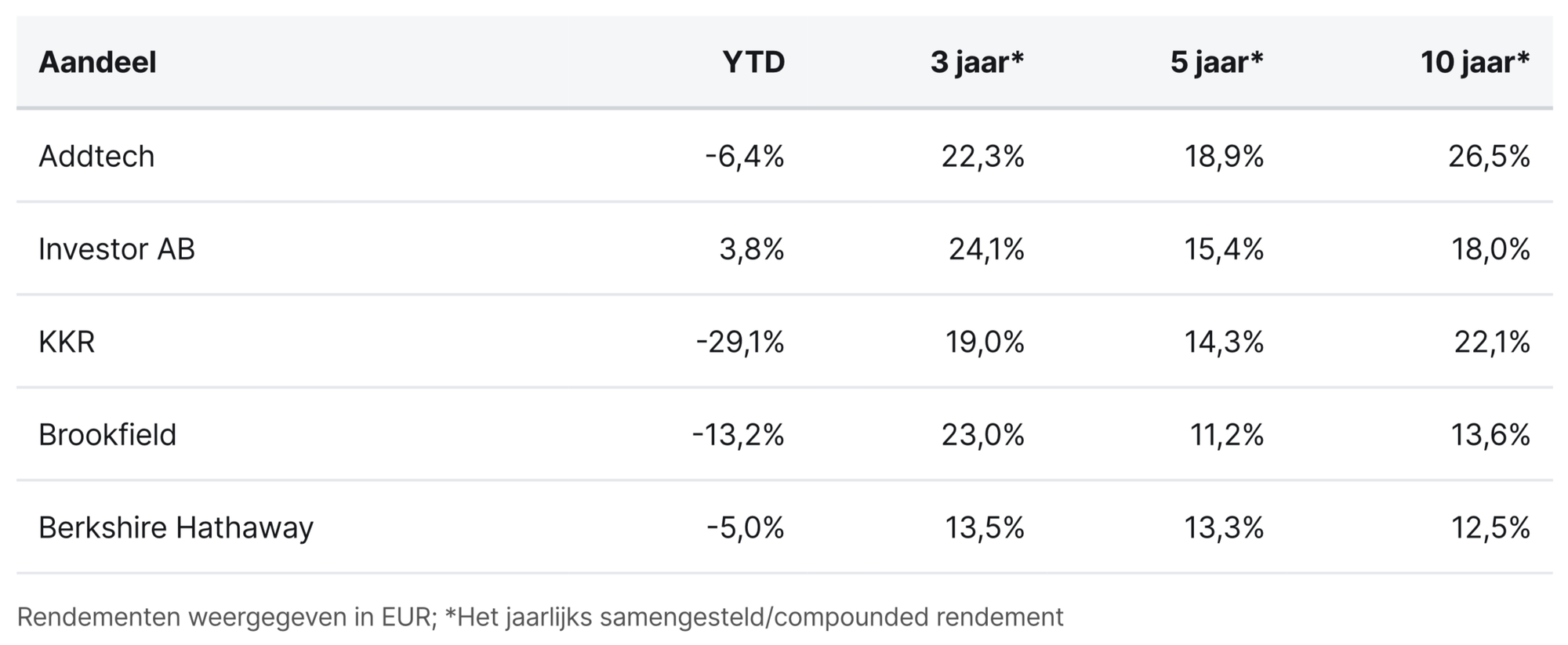
Addtech (Stockholm: ADDT.B) recently saw a sign of confidence when board member Fredrik Börjesson bought SEK 2.1 million worth of shares. This purchase on the Stockholm exchange fits the recent trend of insiders at our Swedish holding companies further expanding their stakes in their own businesses.
Investor AB (Stockholm: INVE.B), the major shareholder of Atlas Copco, bought 214,635 shares in the industrial serial acquirer this week. The shares were acquired at a price of SEK 138.23 per share, corresponding to a transaction value of SEK 29.7 million.
KKR (New York: KKR) is underlining the success of its broad-based ownership model with the sale of CoolIT Systems to Ecolab for USD 4.75 billion, a deal that delivers the investment holding company a return of 15 times its investment. Thanks to the 'skin in the game' of the 650 employees, they directly share in this success, with substantial payouts ranging from one to as much as eight annual salaries per person.
Brookfield (New York: BN), together with investor La Caisse, is set to fully acquire Canadian sustainable energy producer Boralex in a deal with an enterprise value of approximately CAD 9 billion. This privatisation gives Boralex access to Brookfield's large-scale capital resources and global network, which is essential for the accelerated expansion of its wind, solar and hydro power portfolio across North America and Europe.
Berkshire Hathaway (New York: BRK.B) is increasing its exposure to Japan by taking a 2.5% stake in insurer Tokio Marine Holdings for approximately USD 1.8 billion. The investment holding company of newly appointed CEO Greg Abel is thereby betting on a long-term reinsurance partnership and does not rule out further expanding the stake in the future.
Addtech, Investor AB, KKR, Brookfield and Berkshire Hathaway ended the trading week on the Stockholm and New York exchanges at prices of SEK 308.80, SEK 345.50, USD 88.50, USD 39.00 and USD 468.49 (B-share) per share, respectively.
A 'compounding machine' heading towards normalisation?
The British investment holding company 3i Group (London: III) recently held its annual webinar on Action, a holding that, accounting for between 75% and 85% of intrinsic value, forms the absolute core of the portfolio. During the event, management provided extensive insight into the underlying figures and the strategic direction of the discount chain, with a specific focus on current performance in core markets such as France and the plans for intercontinental growth.
Insights from 2025 and the first weeks of 2026
Since 3i Group's initial investment in 2011, Action has built up an unprecedented track record. The chain functions as a true compounding machine: since 2005, annual revenue growth has averaged 24%. Operating profitability (EBITDA) rose by as much as 27% per year over the same period, driven by margin expansion from 8.7% to 14.8%.
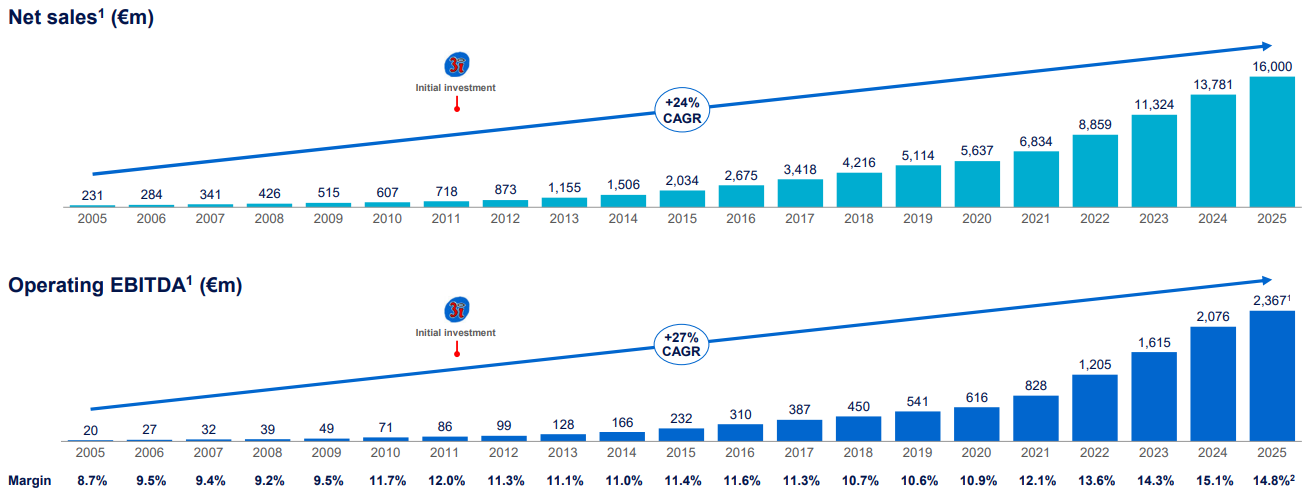
The 2025 results show revenue growth of 16.1% (to €16 billion) and a 14.0% increase in profitability. Although these figures fall below both the long-term and shorter-term averages (see image below), Action's foundation remains extremely stable. It is quite conceivable that we are seeing the first signs here of a future normalisation. That is, in itself, a logical development; after all, few companies manage to sustain growth rates of over 20% for decades on end. Some degree of flattening seems, over time, simply an inevitable consequence of the enormous scale the company has now reached.
CAGR Overview — Sales
CAGR Overview — Operating EBITDA
Although this could be the start of a broader normalisation, closer analysis shows that the current growth slowdown is mainly concentrated geographically. France, which accounts for roughly a third of group sales, has now underperformed for two consecutive quarters, dragging down the group's results. In 2025, organic growth (LFL) in France stalled at a modest 1.3%, while the other markets showed a strong 7.2%. Although the weakness in France is likely to persist into the first half of 2026, an initial recovery is already visible. LFL growth improved from -2.7% in the fourth quarter of 2025 to +0.9% over the first twelve weeks of 2026.
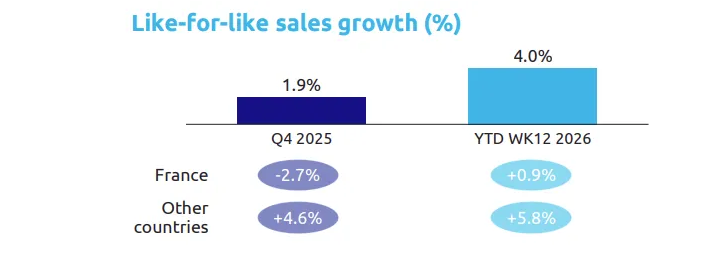
The argument that the weakness in France, on top of consumer confidence, is also due to market saturation or a structural normalisation is undermined by a comparison with the Netherlands. Although the Dutch market is nearly saturated (Action opened only 3 stores in the Netherlands in 2025) and holds the most mature position within the portfolio, this market actually showed above-average organic growth. This suggests that the current pressure in France is more likely to be temporary in nature and that growth figures are likely to stabilise again towards the group average over the longer term.
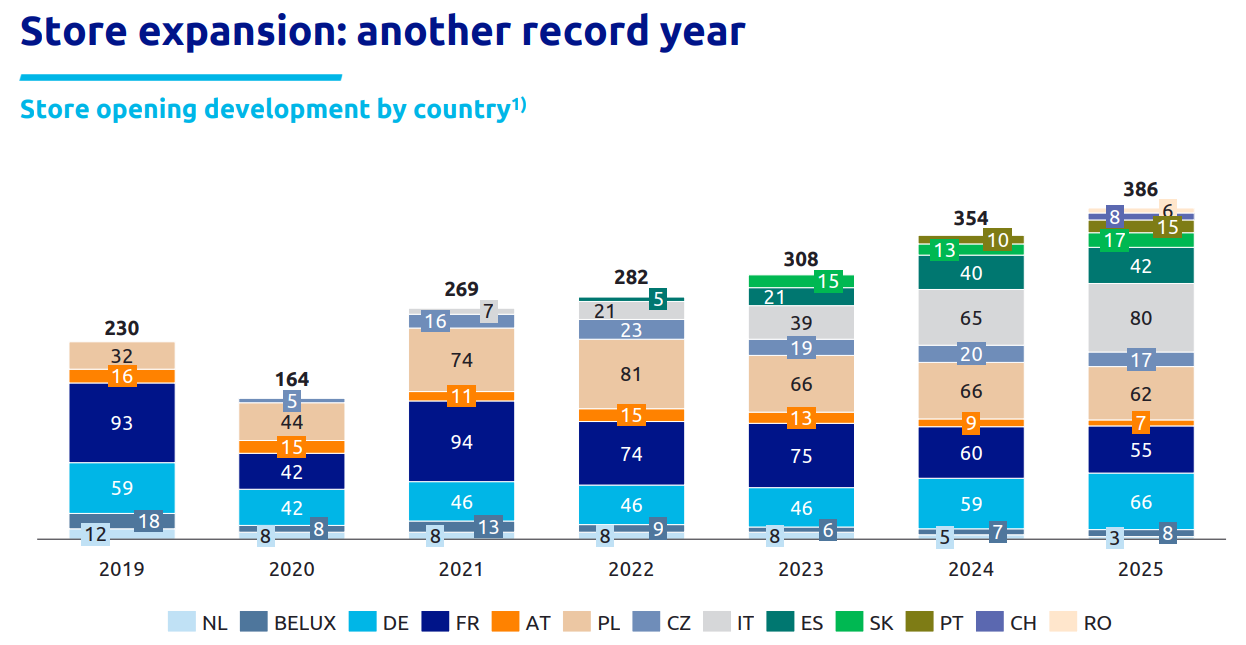
While organic growth is currently under some pressure, inorganic growth tells a different story. Over the past year, Action managed to open no fewer than 384 new stores, an increase in the store base of 13.2%, fully in line with the historical average.
This growth was partly driven by the successful expansion into Switzerland and Romania, where, according to management, the reception has exceeded all expectations. In Romania, the rollout is going so smoothly that a first distribution centre (DC) is being opened. As is customary with Action's logistics strategy, this DC is located close to the border; in this case, in preparation for entry into the Bulgarian market in 2027.
Action goes U.S.A.
In addition to the expansions in Europe, management also revealed concrete plans for entering the American market for the first time. After a thorough two-year study, Action has decided to enter the market at the earliest by the end of 2027, in the states of Georgia, North Carolina and South Carolina. By the end of 2030, 100 stores should be operational in this region.
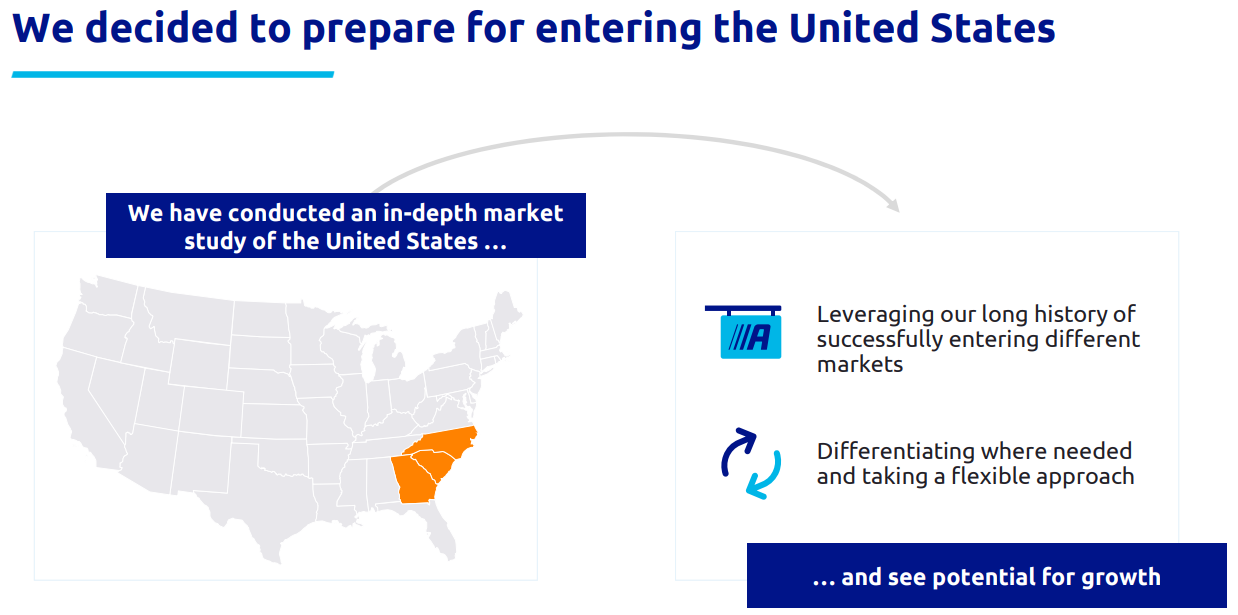
However, this expansion comes with a higher cost profile. Action is investing in a local purchasing team and stepping up its marketing efforts to build the necessary brand awareness. In addition, capital expenditure (CapEx) per store opening in the US is higher than in Europe. With this kind of cost profile, however, the company has already gained valuable experience during its recent entry into the Swiss market. Although the payback period there is slightly above the group average due to higher costs, it is still only around one year. All of this results in a longer breakeven period per store, a point investors are watching critically. The memory of other European retailers, such as Tesco and Sainsbury's, which came unstuck in the US market, is fuelling a degree of caution in the market.
Although the United States is a challenging market with a different consumer profile and formidable competitors such as Costco, Dollarama and Five Below, Action's management has repeatedly proven capable of successfully scaling a proven formula to new cultures. Current concerns about a possible failure therefore seem premature.
Supply chain management
Now that revenue growth is flattening somewhat, investors' focus is inevitably shifting to margins. After all, a normalisation of growth should not come at the expense of profitability. Although the margin declined slightly last year, this effect was minimal once the one-off staff bonus in honour of the 3,000th store is excluded.
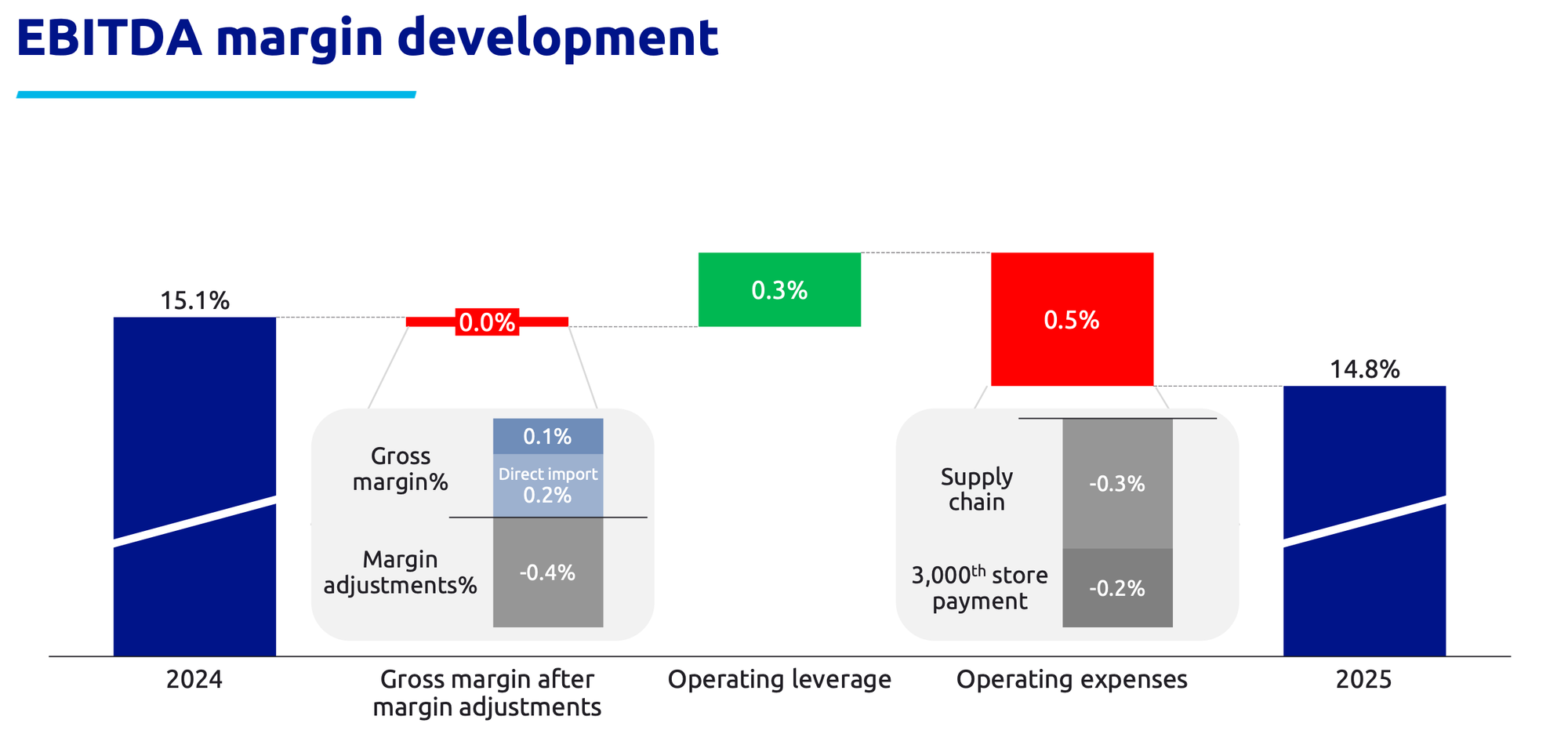
CFO Joost Sijpenbeek explained that the margin pressure was partly caused by a strategic investment in the supply chain. Action is increasingly sourcing products directly from the manufacturer and holding them in stock itself. Although this process incurs costs during the start-up phase, it leads to lower purchasing costs and therefore a margin improvement over time.
Management is clear about how these scale benefits are being allocated:
- One third is being reinvested in internalising logistics processes.
- Two thirds are being used to improve quality and further lower prices.
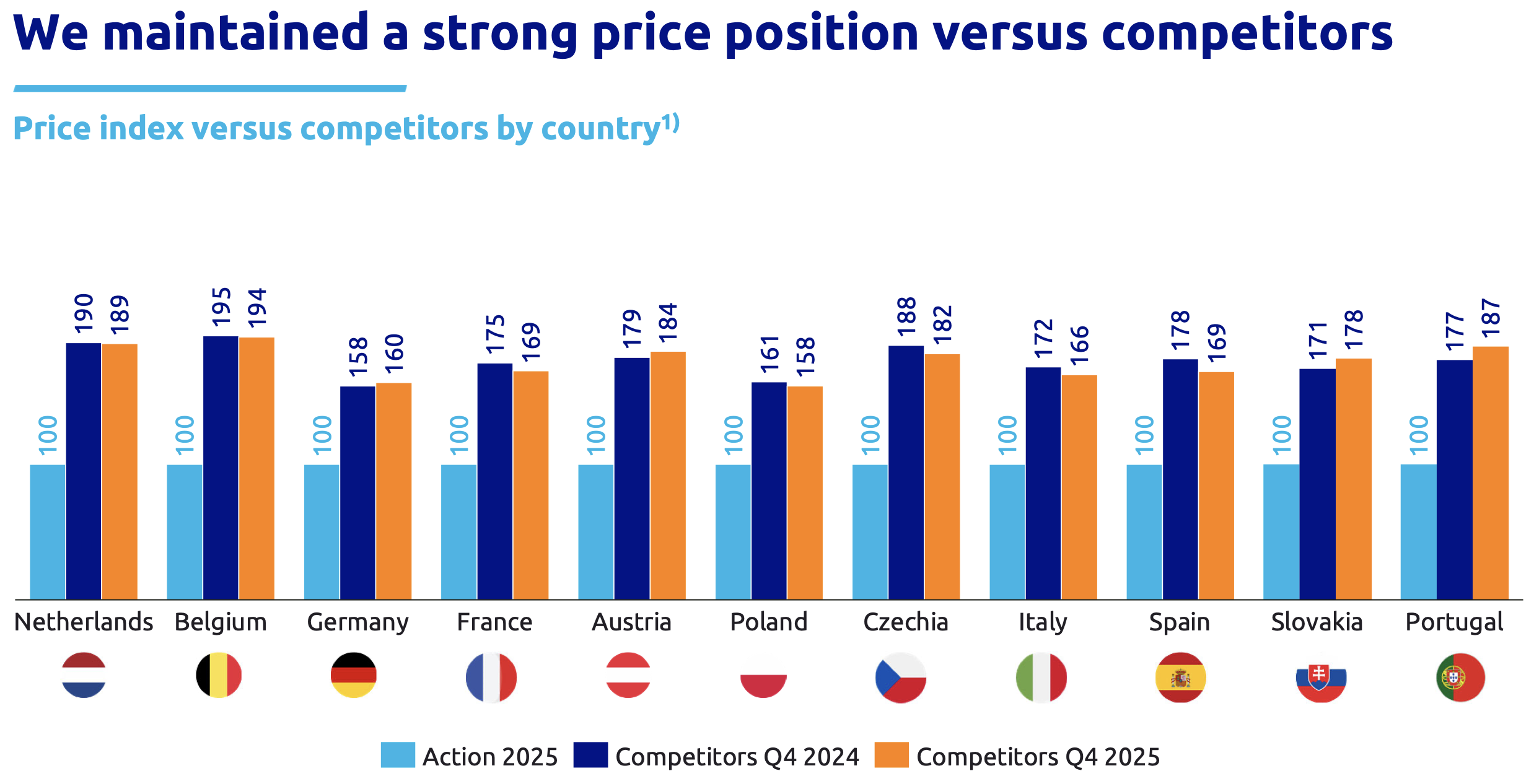
The latter is a crucial weapon in the current market. CEO Hajir Hajji emphasised that Action actively lowered prices in France at the end of 2025 and the beginning of 2026 to give a boost to faltering consumer confidence. The company can afford this aggressive pricing strategy thanks to the structural cost advantage it has built up over its competitors (see photo below).
Conclusion
Looking ahead to 2026, management is working with a wider range of expectations. This caution can be directly traced back to the current geopolitical unrest, particularly in the Middle East. Rising fuel prices could push up transport costs and, through persistent inflation, put further pressure on consumer confidence.
- Store openings: Action is targeting at least 400 new stores in 2026, with the focus on the second half of the year.
- Organic growth: The projected like-for-like growth of 4-5% looks conservative, but makes sense given the continued pressure in France. By comparison, the rest of the countries (excluding France) already posted growth of 5.8% in the first twelve weeks of 2026.
- Profitability: The EBITDA margin is expected to remain stable at 14.8%.
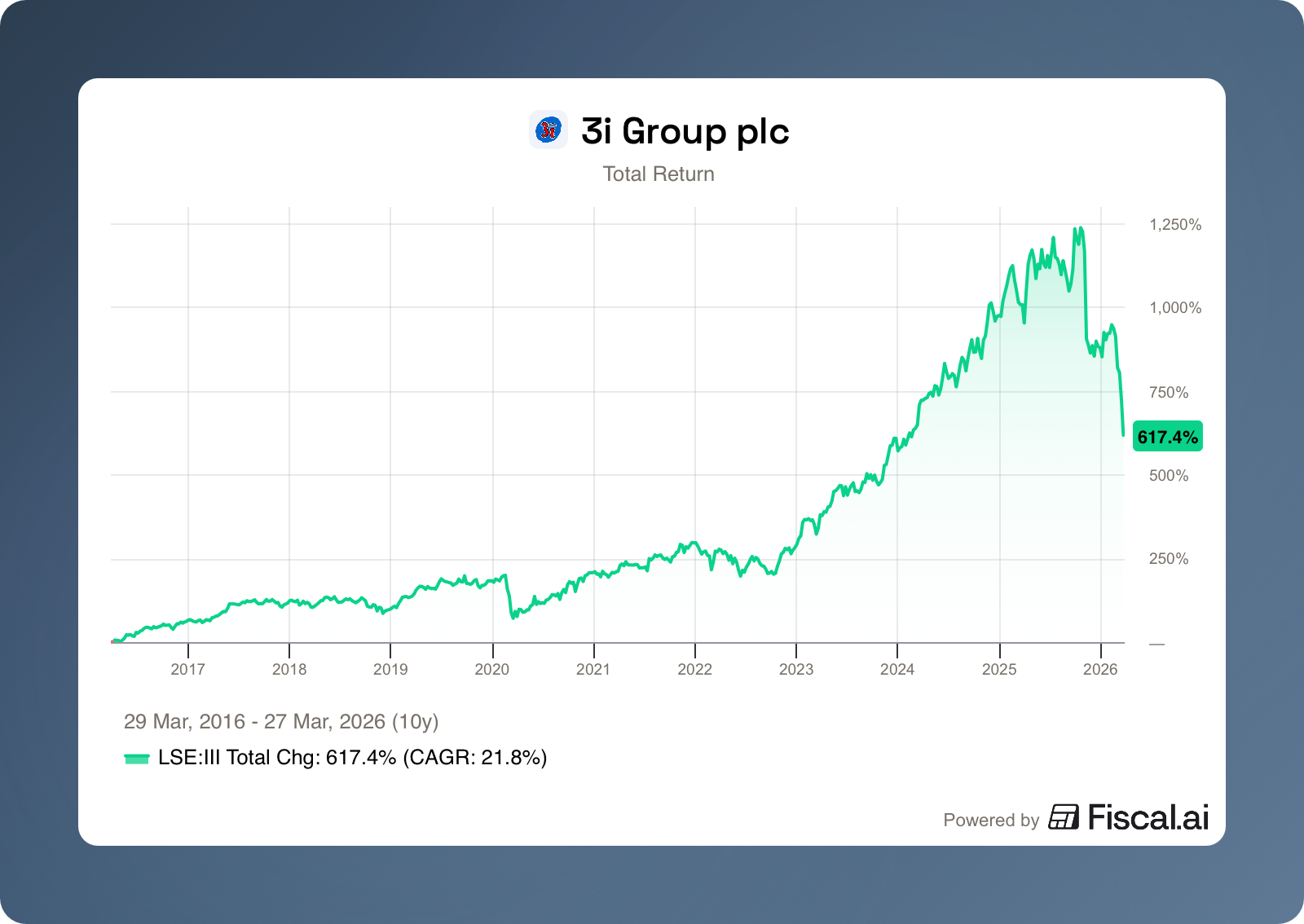
In our view, management is building in a small safety margin here. The increased short-term uncertainty has led to a sharp correction on the stock market, but for the long-term investor the fundamental picture remains intact. Action is a mature organisation that has proven it can withstand economic headwinds. With the upcoming expansion into South-Eastern Europe and the United States, the growth story of this discount giant is far from over.
If Action's multi-million dividend flows in, it would not surprise us if 3i Group launched a share buyback programme to take advantage of the current undervaluation. We are also keeping a close eye on insider purchases, which can be seen as an additional sign of confidence.
3i Group PLC ended the trading week on the London Stock Exchange at a price of GBP 33.51 per share.
Receive weekly insights in your inbox
Exclusive analyses and updates on family holding companies and global market developments.
Mixed picture at D'Ieteren
D'Ieteren Group (Brussels: DIE) recently presented its 2025 results, in which the actual, reported pre-tax profit fell by 10.3% to €955.6 million. This decline is the hard economic reflection of a year in which the group had to absorb heavy additional interest charges from its substantial debt financing at the end of 2024, combined with an unfavourable dollar exchange rate.

At constant exchange rates and excluding these extra financing charges, underlying profit growth came to 3.8%. Although, according to the holding company, this figure better reflects the operational strength of the core businesses, this modest increase masks large differences between the divisions:
- Belron (Carglass): The absolute standout performer. Despite headwinds in the first half of the year, a strong recovery in the US drove record revenue of €6.7 billion and an impressive margin of 23.0%.
- D'Ieteren Automotive: Profit fell by almost 10% to €215.3 million. Although market leadership in electric vehicles (28.8% market share) was retained, the division is grappling with a difficult Belgian market and margin pressure from manufacturers (OEMs).
- At TVH, profit plunged by 26.3% to €72.1 million due to a global slowdown in the agricultural and forklift sectors. In addition, start-up costs for new distribution centres in the US and Poland weighed on margins, while the search for a new CEO is still ongoing.
- PHE confirmed its role as growth engine with profit rising 9.7% to €181.6 million, partly thanks to market share gains in France. The division is fully committed to further consolidation and is currently in exclusive talks over two substantial acquisitions in Spain.
Belron heading towards the IPO
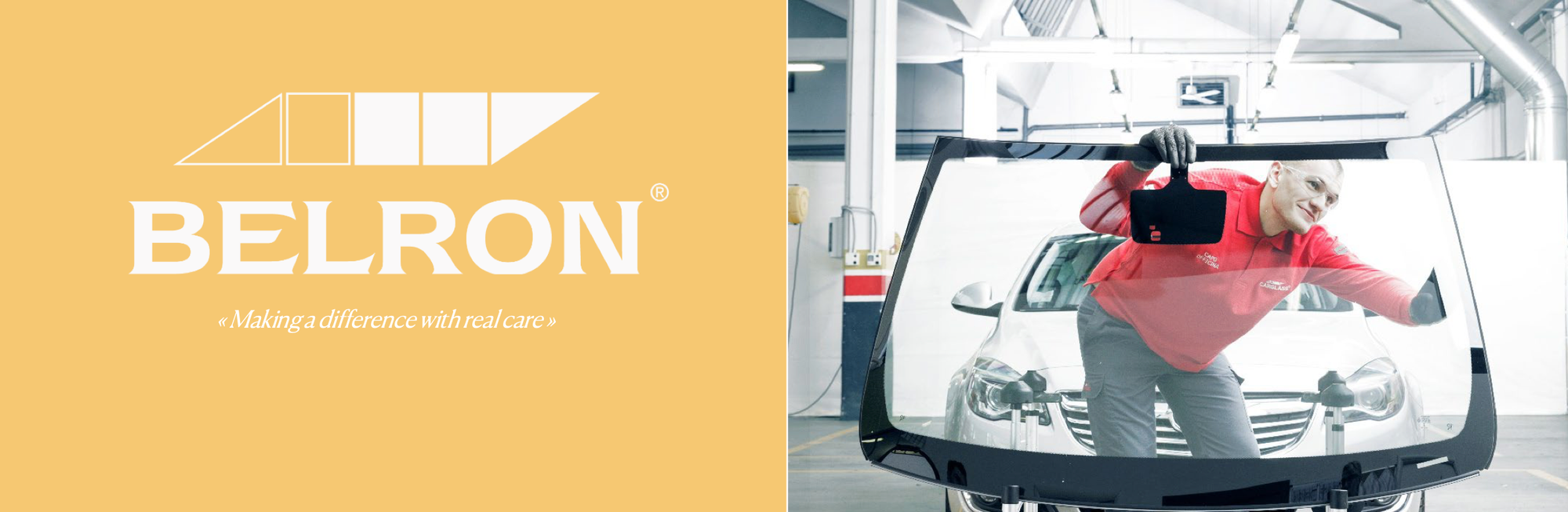
The focus of the results inevitably falls on Belron, the undisputed crown jewel and the holding company's principal cash flow generator. After a challenging first half of the year, in which the company had to contend with 'claim avoidance' by American insurers, Belron staged an impressive recovery in the second half of 2025. This resulted in record revenue of €6.7 billion and an adjusted operating margin of 23.0%.
According to CEO Francis Deprez, this success is due not only to higher volumes but above all to the increasing technological complexity of car windscreens. Almost half of all repairs now require complex calibration of driver assistance systems (ADAS), which structurally increases the value per job. For 2026, management is optimistic and expects further margin improvement towards its ambition of more than 25% by 2028, supported by a normalising American market in which insurers are abandoning their defensive stance.
During the call with analysts, the IPO was the topic that could not be ignored, fuelled by recent media reports about the appointment of investment banks to guide the flotation. Although Deprez emphasised that D'Ieteren is and remains a "happy majority shareholder", he acknowledged that the private equity partners in the capital will eventually seek an exit. "I cannot say exactly when that moment will come, because they are more in control of that button than we are," the CEO said. The group is, however, preparing meticulously by reducing Belron's debt level at record speed, which fell from 5.2x to 4.5x over the course of a year. Lower leverage combined with the strong free cash flow of €374 million positions Belron optimally for a stock market listing at a maximum valuation.
Conclusion
D'Ieteren's lukewarm figures at holding company level point to mixed results at the subsidiaries. It shows the importance of having diversification across various holdings.
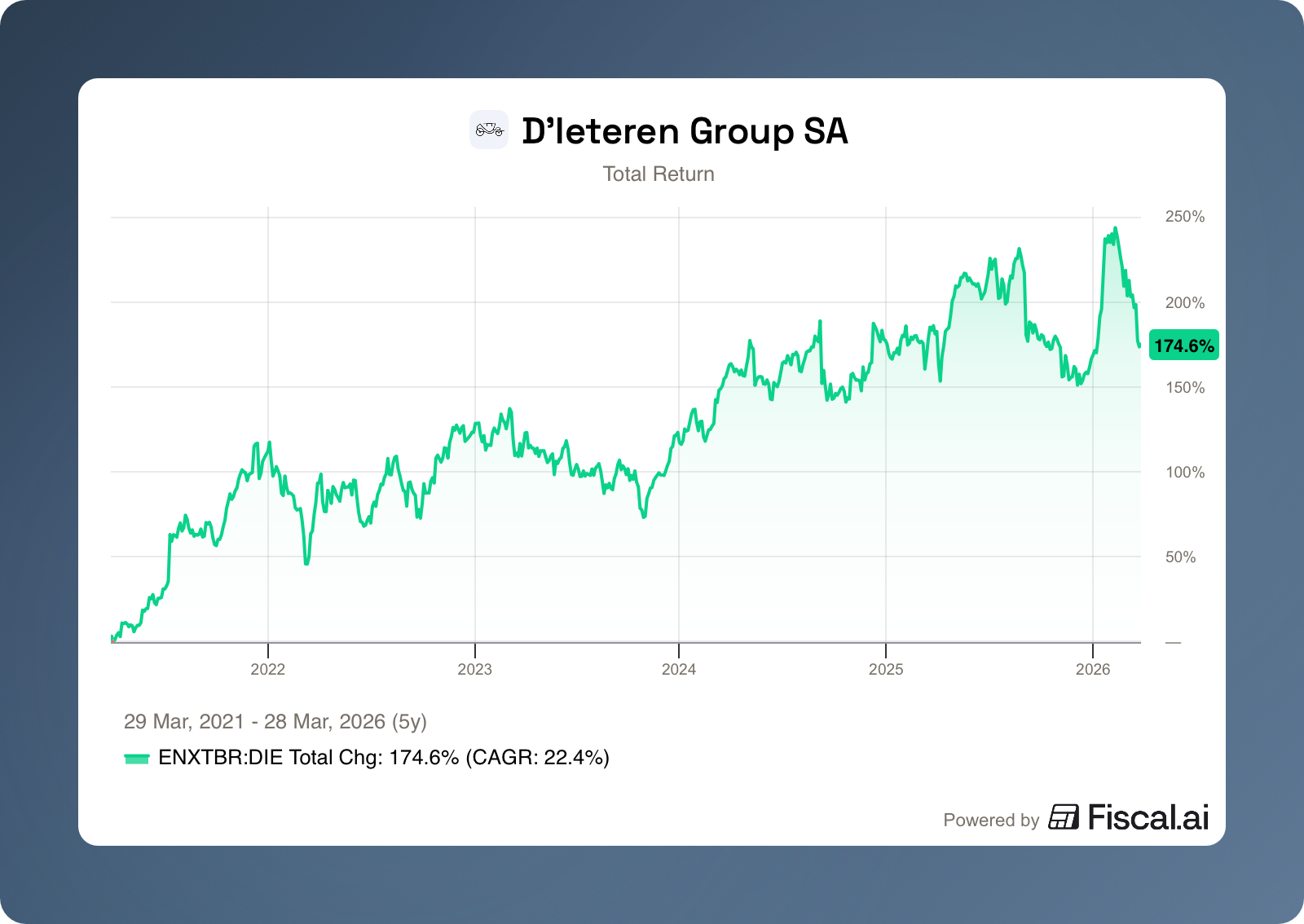
The development of Belron's operational figures and the upcoming IPO will influence the share price over the coming months. In the longer term, TVH and PHE, as serial acquirers, should propel the holding company further upward.
With a rock-solid global market leader such as Belron, a local market leader in D'Ieteren Automotive, and two well-positioned acquisition engines, D'Ieteren holding company in any case has several irons in the fire to continue creating value for its shareholders in the years ahead.
D'Ieteren ended the trading week on the Brussels stock exchange at a price of EUR 158.40 per share.
Receive weekly insights in your inbox
Exclusive analyses and updates on family holding companies and global market developments.
Would you like more information about our services?
Get in touch
Disclaimer:
No rights can be derived from this publication. This is a publication of Tresor Capital. Reproduction of this document, or parts thereof, by third parties is only permitted after written consent and with reference to the source, Tresor Capital.
This publication has been compiled by Tresor Capital with the greatest possible care. The information is intended in a general sense and is not tailored to your individual situation. The information should therefore explicitly not be regarded as advice, an offer or a proposal to purchase or trade investment products and/or to obtain investment services, nor as investment advice. The authors, Tresor Capital and/or its employees may hold positions in the securities discussed, for their own account or for their clients.
You should carefully consider the risks before you start investing. The value of your investments may fluctuate. Past performance is no guarantee of future results. You may lose (part of) your investment. Tresor Capital disclaims any form of liability for any inaccuracies or errors. This information is purely indicative and subject to change.
Read the full disclaimer at tresorcapitalnieuws.nl/disclaimer .
This article was translated automatically from Dutch using AI. In case of any difference, the Dutch original prevails. Read the original in Dutch.