Family Holdings #15 - Record-breaking figures for MBB leave us wanting more



This week's topics:
Chapters Group is accelerating its AI offensive with the launch of Altamount Ignite, a new venture designed to drive innovation within its portfolio companies. To finance this growth and new "AI-proof" acquisitions, the holding company is tapping additional capital from an existing bond issuance. In doing so, Chapters confirms its aggressive strategy of creating sustainable value through technological advantage and sharp investment criteria.
Brookfield and KKR have been swept up in the market turmoil surrounding private credit. We provide the nuance that sensationalist media fail to deliver.
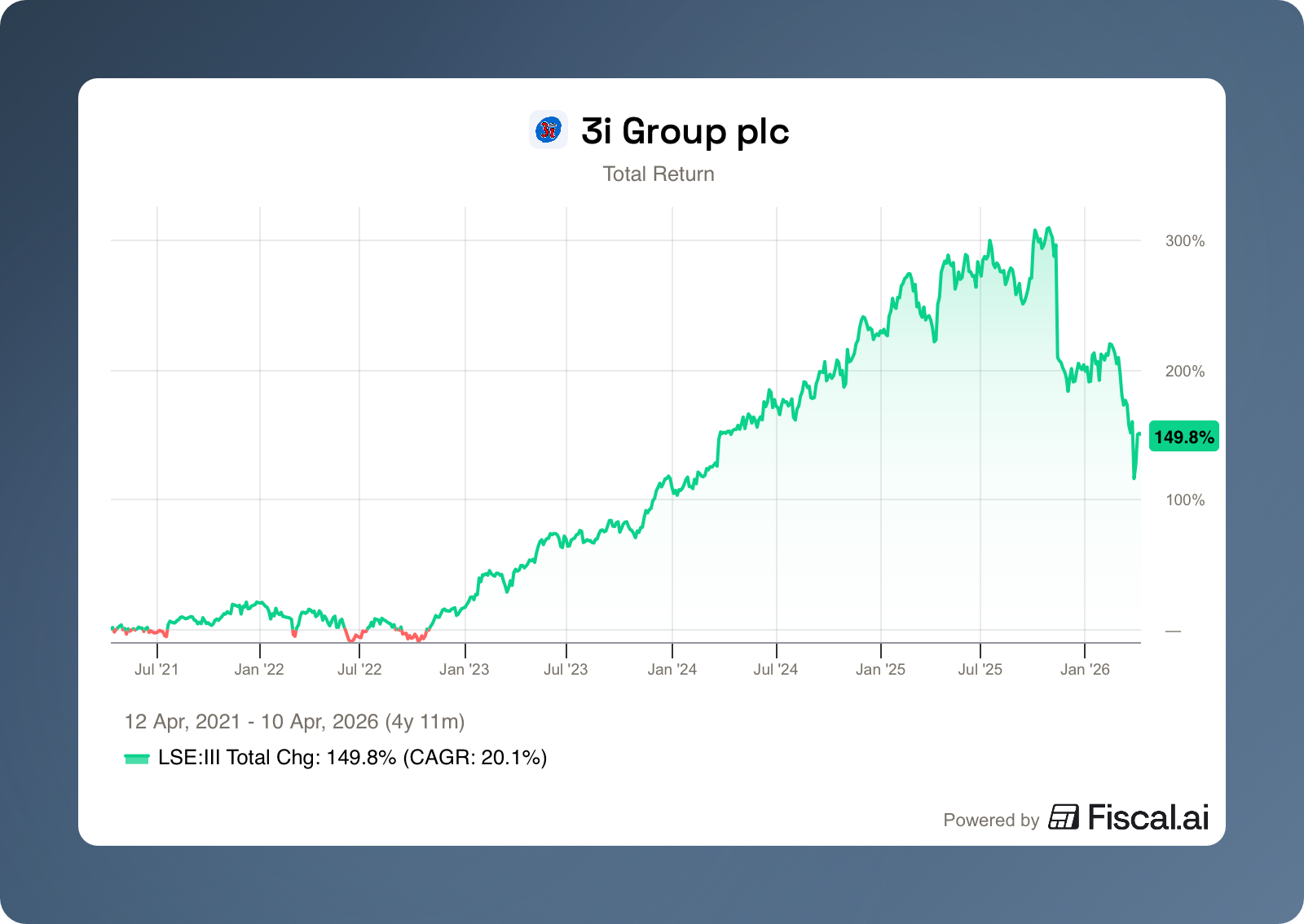
Following the impressive annual results of 3i Group subsidiary Action, attention is now turning to the planned leap into the United States in 2027. Despite his reputation as Mr. No, 3i chief Simon Borrows is giving the project the green light. Together with CEO Hajir Hajji, he is convinced that Action's unique concept fills a gap in the American market that has so far gone unaddressed.
Berkshire Hathaway's Warren Buffett may have officially stepped down as CEO, but anyone who hears him speak on CNBC quickly realises that the 95-year-old investor still keeps an eye on everything. Although the years are beginning to physically take their toll and his voice has become a little slower, his mental sharpness remains unchanged. In a candid conversation, he shares his view on the current market, explains why he sold Apple too early, and warns of the quiet force of inflation affecting savers worldwide.
In Brief:
Heico (New York: HEI.A) further strengthened its position in the defence and aerospace sector this week with two strategic acquisitions across both of the company's divisions. The Flight Support Group took an 80% stake in Sherwood Avionics and Accessories, a specialist in the maintenance, repair and overhaul (MRO) of critical components for military platforms such as the C-130 and F-16. This was shortly followed by the acquisition of a 90% stake in Southwest Antennas by the Electronic Technologies Group, further expanding Heico's expertise in high-end antenna technology for defence and law enforcement.
Vinted, one of the key holdings of Belgian holding company Sofina (Brussels: SOF), has surpassed the EUR 1.1 billion revenue milestone for the first time, a growth of almost 40%. Despite this record revenue, net profit fell by 19% to EUR 62 million, which according to CEO Thomas Plantenga is due to substantial investments in new markets (such as the US) and cheaper delivery options. Although there is speculation about an IPO, the CEO emphasises that this is not on the agenda for now; the platform is currently focusing on international expansion and new categories such as electronics.
Swedish acquisition machine Lifco (Stockholm: LIFCO.B) has acquired a majority stake in the Italian company Metalltech. This company specialises in designing and manufacturing expanded metal for architectural applications. With 53 employees, the company generated revenue of approximately EUR 15.8 million in 2025. Following the acquisition, Metalltech will be consolidated within Lifco's Systems Solutions division.
Within the Constellation family, numerous insider purchases took place between March and April 2026. At Topicus (Toronto: TOI), executives such as Robin van Poelje and Ramon Zanders significantly expanded their positions through the usual purchase plans, with the combined purchases of the mentioned insiders totalling more than $1.6 million. There was also plenty of activity at Constellation Software (Toronto: CSU) itself, with buyers such as Jeffrey Bender, Dexter Salna and Barry Symons together acquiring more than $1.8 million worth of shares.
On top of that, Constellation Software's (Toronto: CSU) acquisition machine continues to run at full speed. Subsidiary Volaris Group has acquired the Brazilian company Interplayers. Interplayers acts as a technology hub connecting the entire healthcare chain in Brazil through software, IT services and consultancy. Its platform integrates the value chain for a wide range of clients, including clinics, hospitals, pharmacies, distributors and health insurers. With around 900 employees, this can be seen as a very substantial acquisition; the amount paid for it is not known.
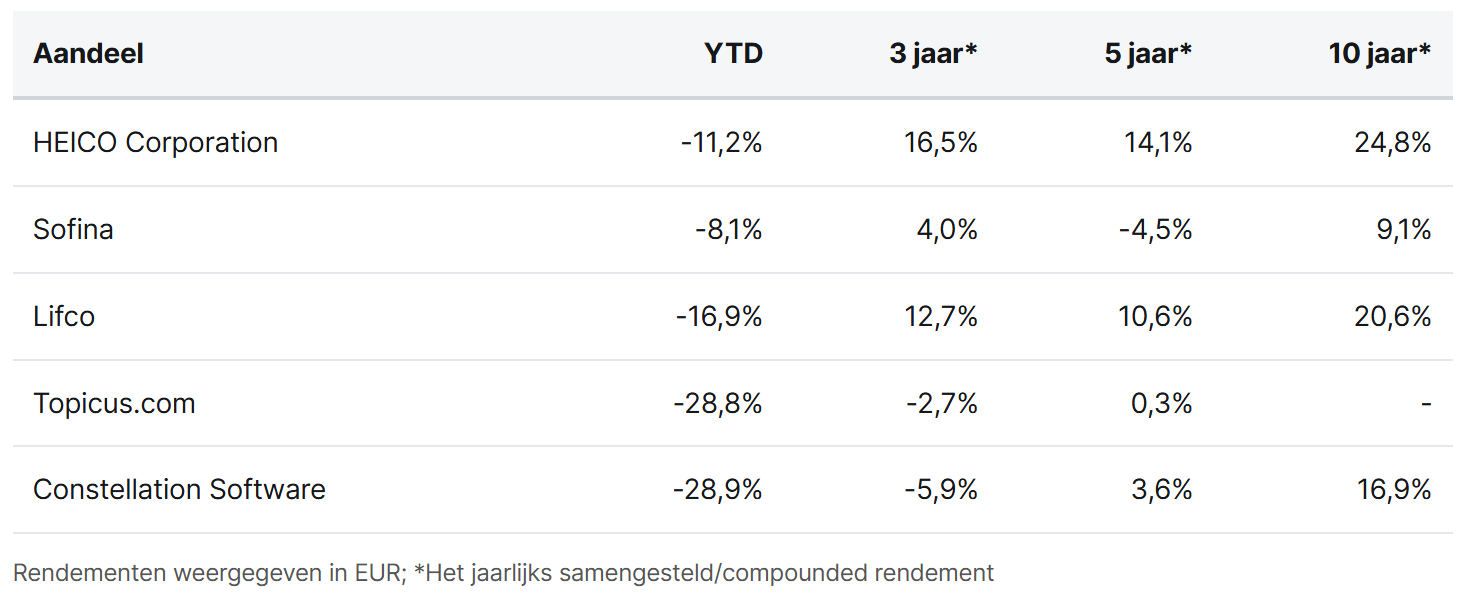
Heico, Sofina, Lifco, Topicus and Constellation Software are traded on the New York, Brussels, Stockholm and Toronto exchanges at prices of USD 219.13 (Class A share), EUR 223.60, SEK 292, CAD 91.37 and CAD 2,284 per share, respectively.
Record figures whet MBB's appetite for more
The German investment holding company MBB (Frankfurt: MBB) posted record figures in 2025, both in terms of revenue and operating profit. In this article, we share the highlights from the annual figures published in the annual report on 30 March.
During the results presentation, CFO Torben Teichler emphasised the company's unique profile as a family business. MBB offers long-term solutions for succession issues at mid-sized companies. Because MBB's founders remain the largest shareholders and stay very operationally involved, they share the same DNA as the companies they acquire. Three subsidiaries have by now been successfully listed on the stock exchange. This provides excellent access to the capital markets for further growth. The strategic focus is, and remains, on the long term, with no intention whatsoever of selling acquired companies again.
The 2025 figures
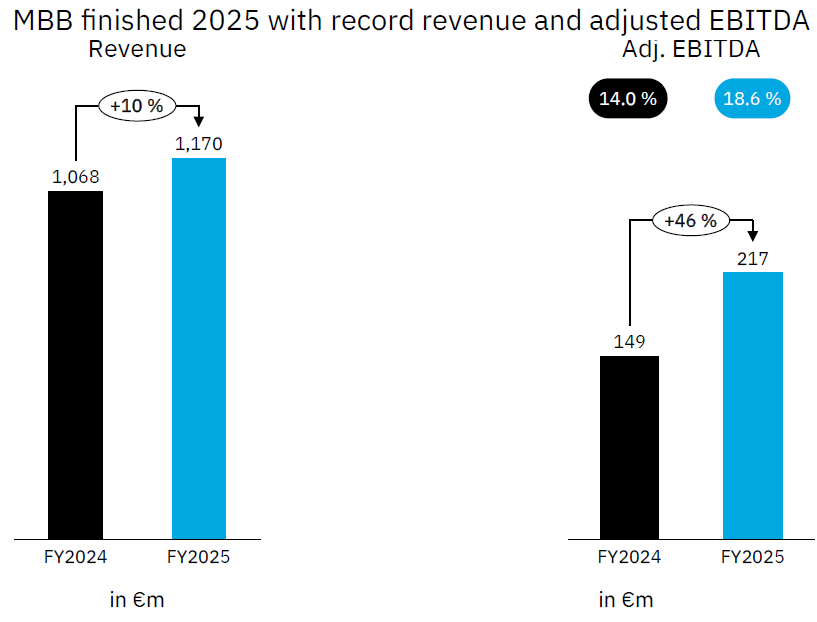
Revenue rose by around 10% in 2025 to EUR 1.17 billion. Operating profit surged by an impressive 46% to EUR 217 million. This brought the operating profit margin to an equally impressive 18.6%. Founder Christof Nesemeier writes in his letter to shareholders that these figures would have been unimaginable at the time of the company's founding in 1995 or its listing in 2006. In particular, the fourth quarter of 2025 contributed heavily to this, with an excellent operating profit margin of nearly 24%. This result was largely thanks to strong project execution at subsidiaries and tight, successful cost management across all companies in the portfolio.
On 9 May 2026, MBB will celebrate its 20th anniversary as a listed company. Since its listing, MBB has delivered a dizzying return of 2,200% for its shareholders. Nesemeier stresses that 2026 also promises to be a good year, and shows ambition for the future:
"We intend to improve our operational performance through further acquisitions, and to keep strengthening our share's performance through dividends, share buybacks and an intensive dialogue with you, our shareholders. However, we will continue to cherish and protect our strong financial position as usual, and deploy it only prudently for the type of investments for which you know us."
Interview with Nesemeier
Following the annual figures, Christof Nesemeier gave a German-language interview. The chief executive further elaborated on the performance and strategic positioning of the various subsidiaries. He stressed that the world has changed significantly since late 2025 due to geopolitical tensions and considerably higher energy prices. These developments are creating a notable split within the company's portfolio.
On the one hand, subsidiary Friedrich Vorwerk is benefiting enormously from current market conditions. The political choice for a CO2-free world and the resulting need to invest in energy infrastructure are ensuring well-filled order books with highly profitable projects. Nesemeier expects this exceptional growth to continue and to keep dominating MBB's overall positive development. In addition, Vorwerk acquired two sites from a competitor last year to specifically strengthen its workforce for large projects.
To meet the ongoing demand from international investors and increase liquidity in the Vorwerk share, MBB strategically and carefully reduced its own stake in the first months of 2026 to just under 40%.
On the other hand, subsidiaries such as Aumann are feeling the effects of inflation and the slowing economy. Consumer uncertainty is leading to reluctance in car purchases, which directly affects carmakers' willingness to invest. As a result, Aumann expects a significant decline in revenue, but according to Nesemeier the company will remain profitable and has a very high cash position. This gives Aumann the flexibility to seize opportunities precisely in a shrinking market and gain market share at the expense of financially weaker competitors.
Companies such as Hanke Tissue and CT Formpolster are also experiencing headwinds from sharply higher raw material prices and energy costs. The higher production costs cannot be passed on to end customers at the same pace immediately. Although demand for products such as toilet paper and mattresses remains stable, the delayed price adjustment results in temporarily lower profitability.
Cybersecurity as a trump card
Cybersecurity company DTS IT operates in a market with a persistently strong underlying trend. Demand for secure IT infrastructure remains unabated among both government bodies and private parties. To capitalise strongly on the visible trend towards European alternatives to American players, DTS is further expanding its range of proprietary security software, partly thanks to the earlier acquisition of ISL.
Moreover, Artificial Intelligence is playing an increasingly important role as a driver of growth, both by delivering internal efficiency improvements and by responding to a faster-changing and more complex landscape of online threats facing customers. Although higher costs for hardware such as memory chips are having a slightly dampening effect, and certain hardware projects are sometimes being pushed back to the first half of 2026, management remains particularly optimistic about future growth and the potential within this segment.
 Michael Gielkens
We spoke at length with Christof Nesemeier about MBB in January. You can read the deep dive here.
Capital allocation and expectations for 2026
Nesemeier highlights MBB's enormous financial firepower. The company holds net liquidity of more than EUR 750 million within the group and also has substantial borrowing capacity available. Although a share buyback programme worth EUR 22.2 million is currently underway, the limited liquidity in the shares themselves places limits on its size. Since its listing, MBB has already returned more than EUR 250 million to shareholders through dividends and share buybacks. The ample cash position allows the company to benefit from economically challenging times by investing in acquisitions that secure future growth, without being constrained by bank financing.
For further expansion, MBB is currently specifically looking for solid acquisition candidates in the German-speaking region with operating profit of at least EUR 5 million. In the meantime, the substantial excess cash is being managed conservatively through a diversified treasury portfolio, including EUR 150 million in bonds, equities and EUR 10 million in gold.
For the 2026 financial year, MBB is applying a cautious guidance. Management aims to keep revenue at least at the 2025 level, with an estimate of between EUR 1.1 billion and EUR 1.2 billion. The expected operating profit margin is between 15% and 18%. This guidance may be revised upwards as market visibility improves over the course of the year.
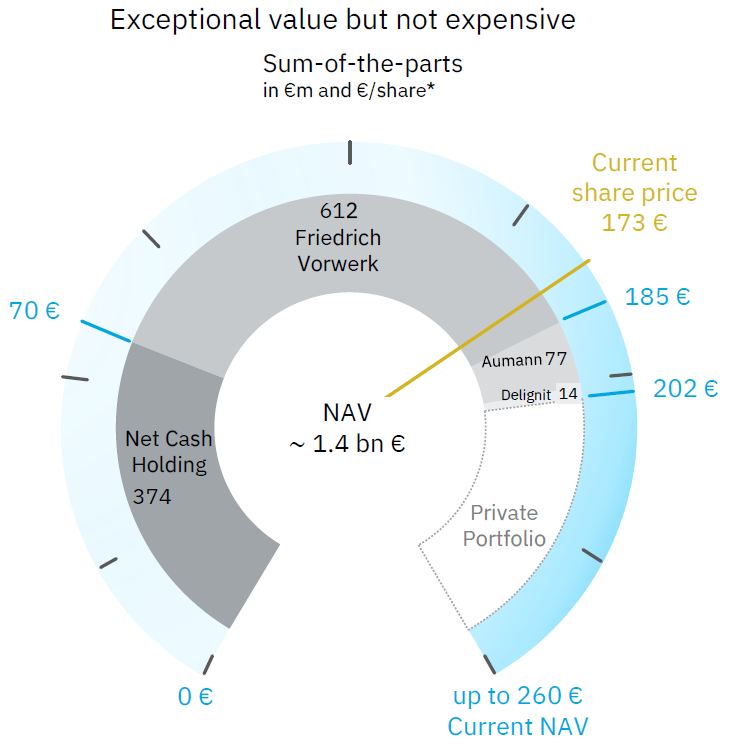
Attractively valued
Using the image above, CFO Teichler calculated that intrinsic value, based purely on the listed stakes and the cash within the holding company, alone amounts to EUR 202 per share. This leaves the entire private portfolio of profitable companies completely out of consideration, underscoring the upside potential relative to the current share price.
Despite an impressive track record and various strengths, such as Vorwerk, DTS and the optionality of its cash position, MBB is therefore still trading at an attractive valuation.
MBB ended the trading week on the Frankfurt exchange at a price of EUR 182.20 per share.
Actions, not words, at Chapters Group
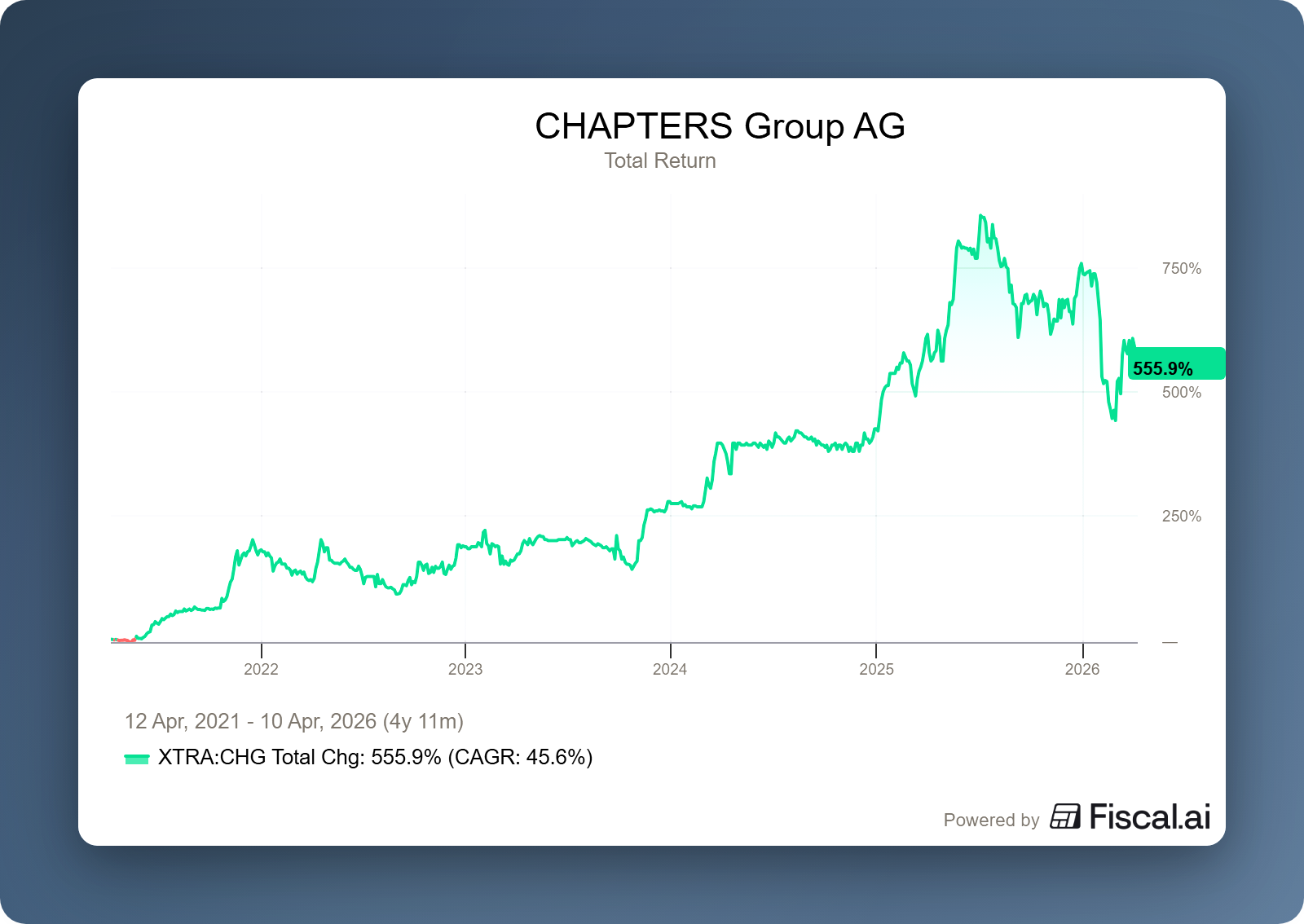
Recently, we wrote at length about our first insights from the Redeye serial acquirer conference in Stockholm, where we spoke with the management team of German VMS specialist Chapters Group (Frankfurt: CHG). That meeting made it abundantly clear that Chapters is aggressively preparing for the future. Where many peers still hesitate or remain defensive, Chapters is going on the offensive to become – and remain – AI-proof.
Michael Gielkens
Read our recent, in-depth report on Chapters Group here.
This week, that offensive character was confirmed once again with the announcement of a new venture called Altamount Ignite. This new division will be housed under the acquisition platform Altamount Software and will act as the technological catalyst for the entire group. The purpose of Altamount Ignite is:
"To drive AI applications and innovation within the operating companies of Altamount and Chapters. This makes these companies sharper, faster and more innovative, so as to deliver sustainable value to customers through advanced technological solutions."
This division will most likely become the connecting link for the Chapters Momentum initiative, which was successfully launched earlier this year to realise concrete AI products within the portfolio companies. The new division will be led by Lennart May, who brings a wealth of experience from Lufthansa, where he headed a large team for many years. It is notable, however, that he has no specific technical or AI background.
Alongside this strategic expansion, Chapters is also securing the necessary financial firepower. The company announced that part of the remaining EUR 28 million from the 2025 bond issue will be drawn down. This fresh capital provides the room to accelerate the AI expansion as well as pursue new acquisitions that meet the tightened, "AI-proof" investment criteria.
Chapters Group ended the trading week on the Frankfurt stock exchange at a price of EUR 31.35 per share.
Nuance on private credit sometimes hard to find
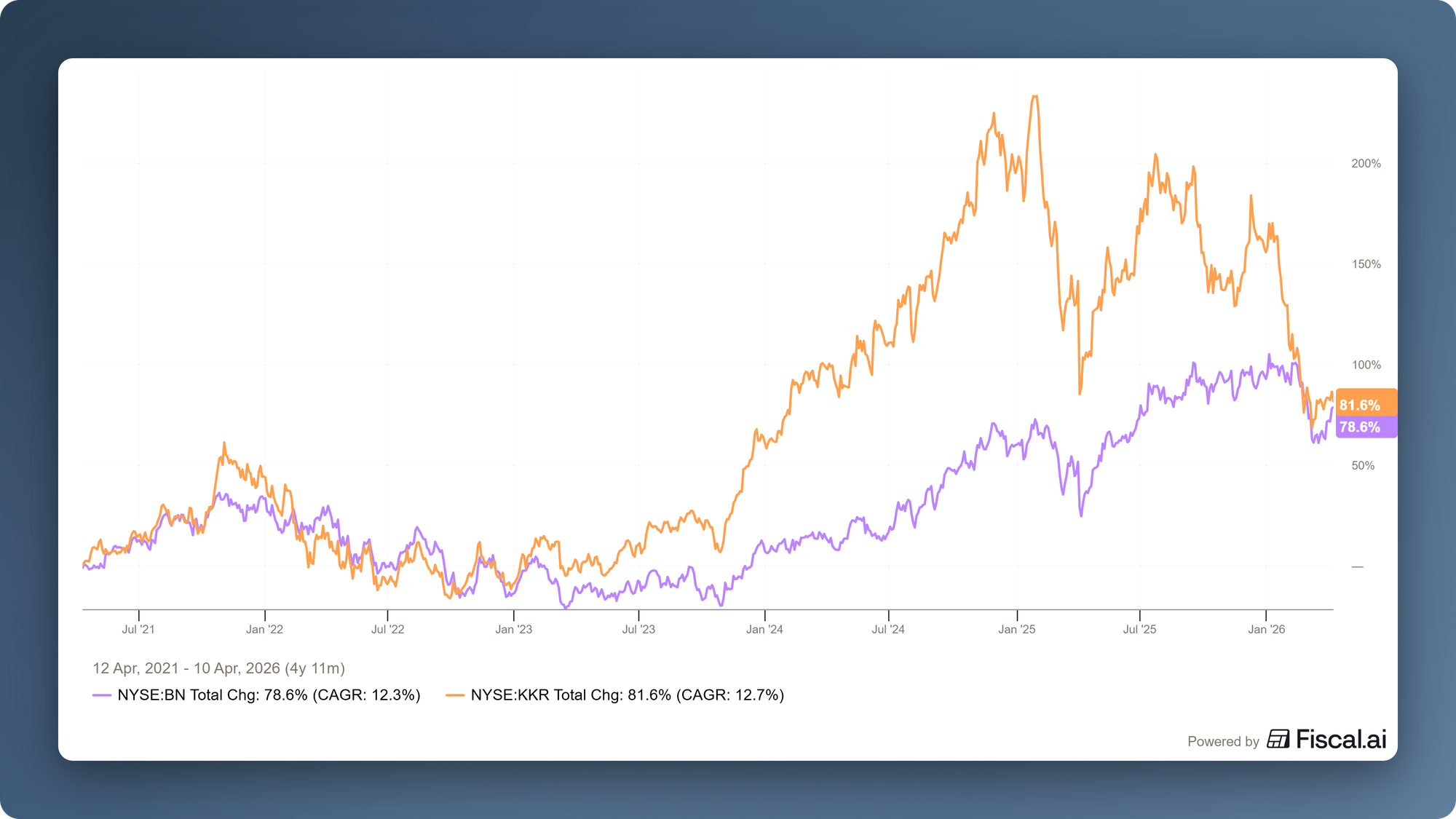
In recent months, there has been a great deal of commotion surrounding private credit. Investment holding companies with exposure to private markets, such as Brookfield Corporation (New York: BN) and KKR (New York: KKR), get dragged into this turmoil. Last week we already covered these two companies; you can read that article again below:
Joep Dikken
Headlines often blow things out of proportion whenever private credit funds enforce the clearly pre-agreed withdrawal limit of 5% per quarter. Commentators sometimes add extra fuel to the fire. That is why it does no harm to occasionally take a step back and add some nuance.
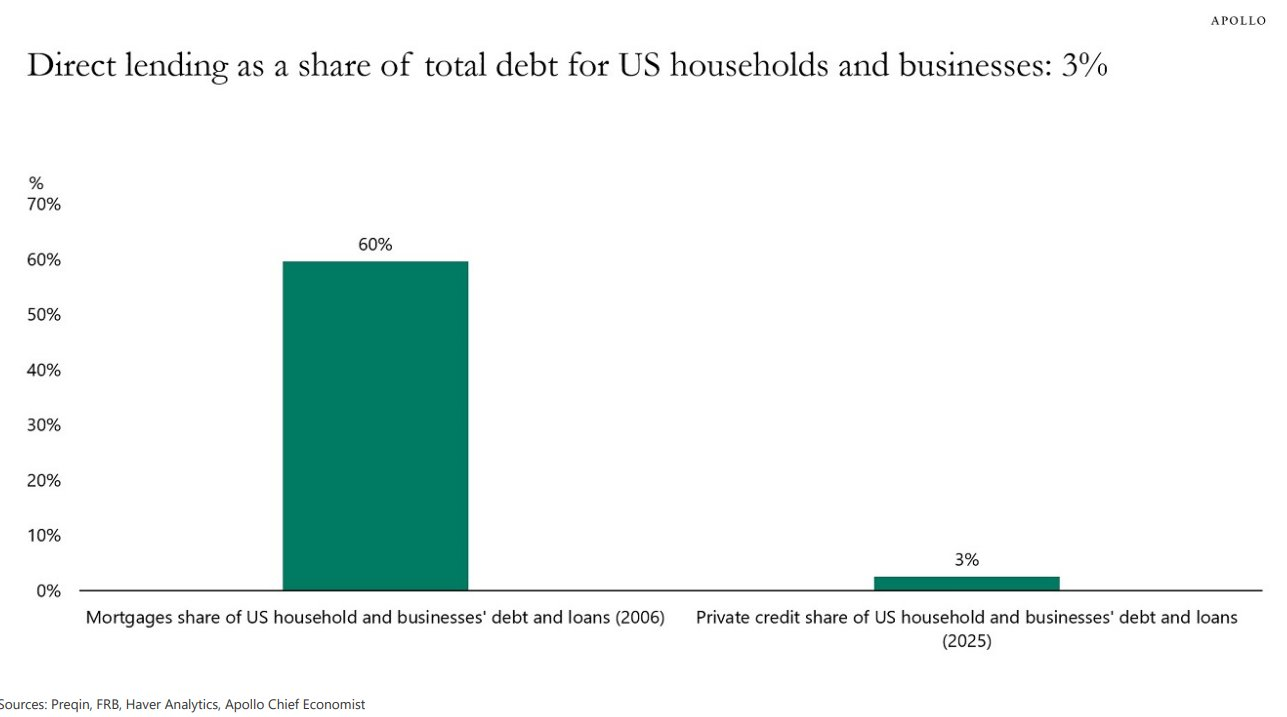
As we have written before, the exposure of Brookfield and KKR is, on the whole, fairly limited. There is certainly no question of a so-called systemic risk, as some would have you believe. Torsten Slok, chief economist at Apollo, shared the image below this week. The share of private credit as a percentage of total debt held by American households and companies is 3%. By way of comparison, the share of mortgages in 2006, just before the credit crisis at the peak of the housing bubble, was 60%.
In an extensive article (which you can read via the link below), Blackstone refutes common myths about private credit and stresses that today's market is fundamentally different from the financial crisis of 2008. Unlike the heavily indebted banks of that era, today's credit providers (such as BDCs) operate with much lower leverage and are strongly regulated and transparent. They are subject to strict oversight by the American SEC, make use of independent audits and publish clear, up-to-date valuations, which makes the market considerably safer and more transparent than critics often claim.
 Lefferts Lucia
The article also dispels fears of collapsing credit quality and a specific crisis in the software sector. Companies that receive loans are in fact showing resilient earnings, and the loans are protected by substantial equity buffers (on average around 60%), which limits the risk of large losses in the event of default. Finally, it is emphasised that these investment products, partly thanks to a semi-liquid structure that protects against forced selling during periods of unrest, are an effective and reliable instrument for wealth accumulation, not only for institutions but also for private investors.
'Show me the incentive, and I'll show you the outcome.'
- Charlie Munger
To put this in perspective, it is worth mentioning that both Apollo and Blackstone have exposure to the private credit market. They are therefore not independent parties, so bear that in mind when reading this article. However, the same applies to people such as JP Morgan CEO Jamie Dimon, who warns of "cockroaches" and skeletons in the closet in private credit. He has every interest in warning about the risks of private credit, since as a financier there is nothing he would like more than to win back market share from such parties.
As always, we continue to take a nuanced view of the actual exposure, and we see that investors have already priced in a great deal of misery. Whether the end of this is in sight remains uncertain. But should the soup not be eaten as hot as it is currently being served, then, as has often happened in the past, we could look forward to a strong recovery at these companies. In the meantime, however, the headlines continue to influence share price movements.
Brookfield Corporation and KKR are currently trading on the New York Stock Exchange at USD 42.11 and USD 90.89 per share, respectively.
Why "Mr. No" said an emphatic "yes" this time for Action
Following our earlier analysis of the annual figures during the Capital Markets Seminar, in which the impressive role of Action as a growth engine for 3i Group (London: III) took centre stage, two fascinating articles have recently appeared that offer a unique glimpse into the boardroom of this discount giant.
The move into the United States, planned from 2027 onwards, is viewed by many with healthy scepticism given the failed ventures of other European retailers. CEO Simon Borrows, known within 3i's investment committee by the nickname "Mr. No" for his critical eye, nevertheless gave his wholehearted approval for this project.
"My nickname at the 3i investment committee is Mr. No, but I believe that in this case the US will, over time, become a highly significant growth opportunity for Action."
This conviction is shared by chief executive Hajir Hajji. In an interview with de Volkskrant, she stresses that the Action concept of fourteen non-food categories at rock-bottom prices simply does not yet exist in the US. Her motivation is grounded in an unshakeable confidence in the company's own formula. "What we give our European customers, I want to give to people in America too," says Hajji. "Besides, I visit quite a few countries where I think: gosh, everything is so terribly expensive here. How I'd love to give these people an Action."
Despite geopolitical unrest and logistical challenges, management remains steadfast. They are deliberately taking their time to carefully build success in the coming years. "We focus on what people need on a daily basis. We buy that in very large volumes, and we always make sure the margins are small," the CEO explains. A clear ambition has now been set for the American market. "The goal is to have opened a hundred stores in the United States by the end of 2030."
Hajji also wants to definitively shake off the stigma attached to the term "discount chain," which de Volkskrant tendentiously raises. In her view, this label does a disservice to both the company and its customers. "I really think the word 'discount chain' falls short of what we stand for," says the CEO. She firmly positions Action as a serious retail chain that fulfils an important social role. "The fact that we manage to offer these low prices to people who have a little less to spend in somewhat harder times, that matters to me. I take that role seriously."
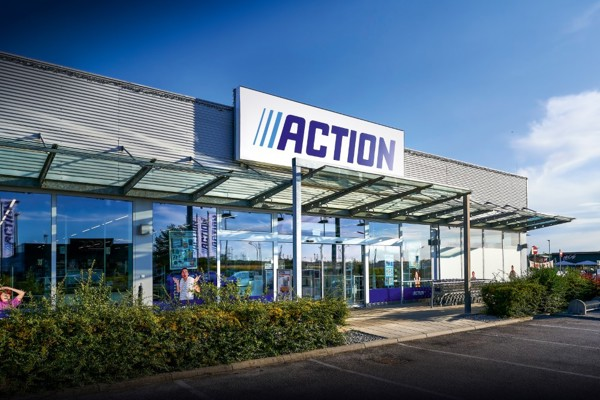
In doing so, she draws a sharp contrast with the traditional retail sector. "When you see other shops selling items for seven, eight times the cost price, I think: who's really not doing things properly here?" With a network of 3,300 shops and the ambition to open a new branch every day from 2025 onwards, Action's expansion drive shows no sign of slowing for now.
For readers with a subscription to the relevant media, the full articles can be accessed via the links below:
- Financial Times: Why 3i's 'Mr No' said yes to launching discount chain Action in America
- De Volkskrant: Action gaat Amerikaans: 'Het woord koopjesketen vind ik echt tekortdoen aan waar wij voor staan' (Action goes American: 'I really think the word bargain chain does us an injustice')
3i Group ended the trading week on the London Stock Exchange at a price of GBP 26.91 per share.
Interview with a 'retired' Buffett
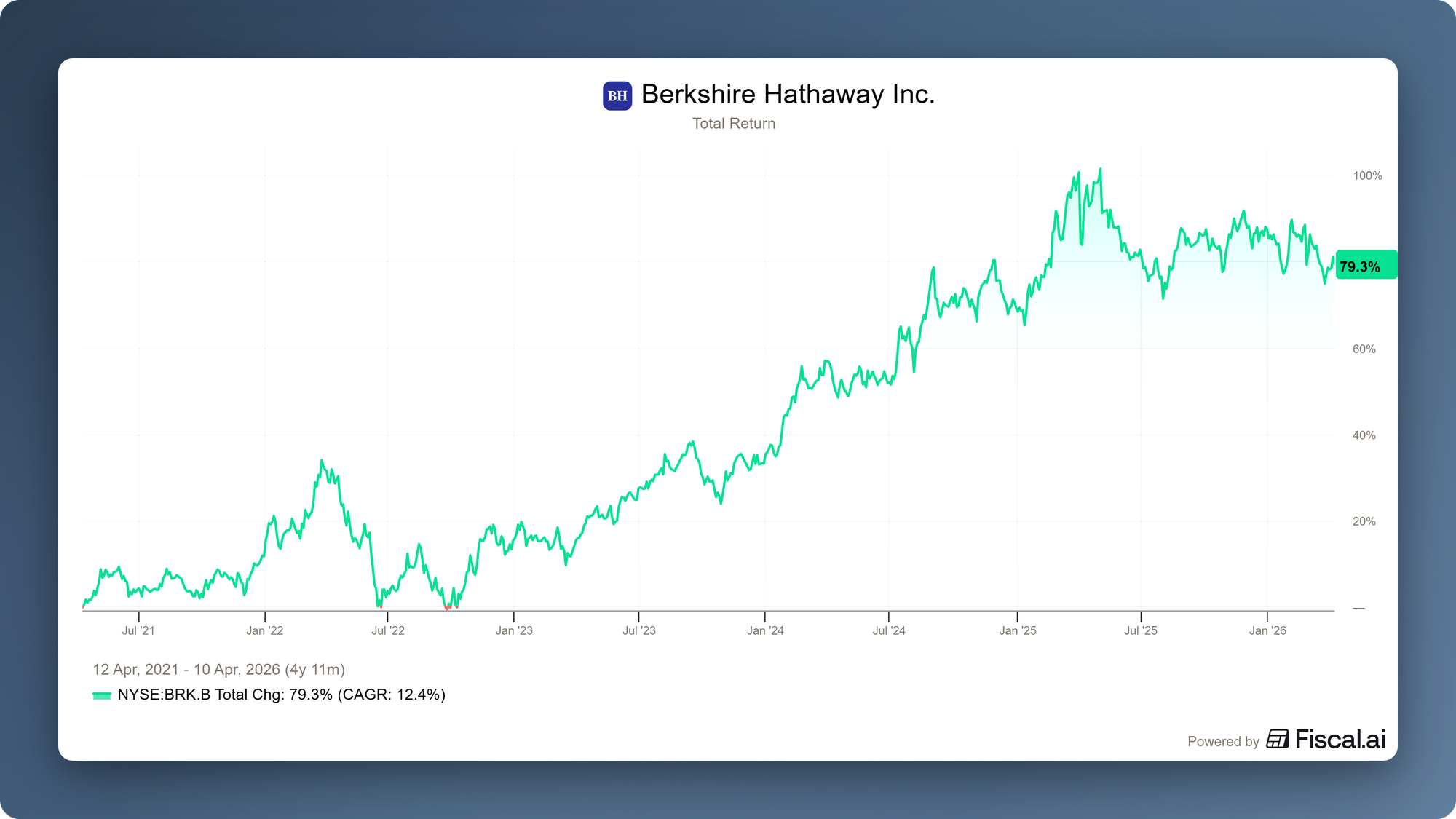
In his most recent interview with CNBC, Warren Buffett shows that, although he may be giving up a little physically at the age of 95, mentally he remains every bit the sharp "Oracle of Omaha" we know. Although he admits that everything now takes him more time, his passion for Berkshire Hathaway (New York: BRK.B) and the financial markets remains as strong as ever.
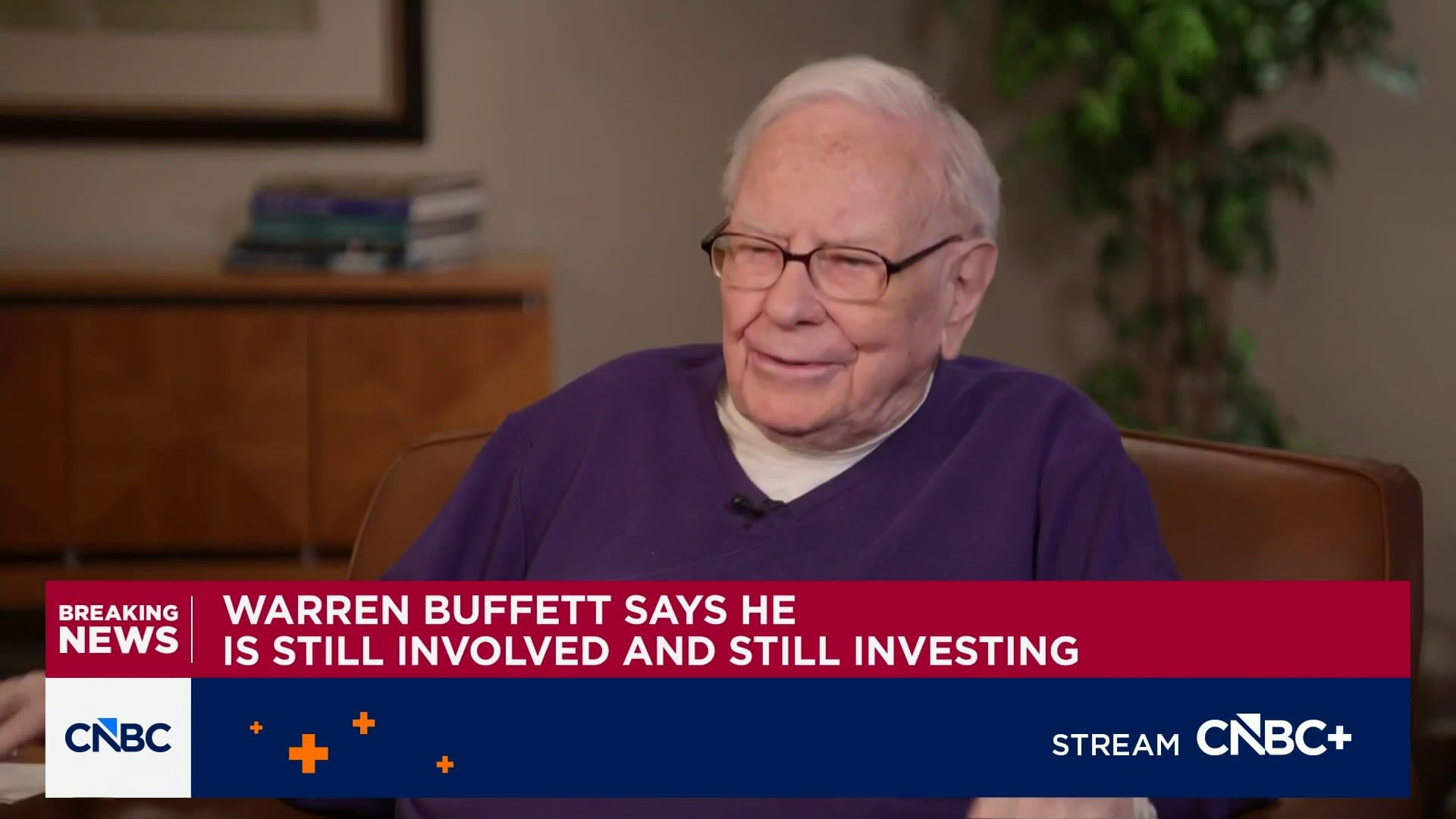
Since he officially stepped down as CEO on 1 January this year, his daily routine has changed remarkably little. He still goes to the office every day and remains closely involved in the company's investment decisions. In doing so, he works closely with his successor, Greg Abel, whom he praised extensively: according to Buffett, Abel gets through more work in a day than he himself did in a week during his absolute prime. Even so, Buffett keeps a close eye on things; every day before the market opens he calls his head of financial assets to go through orders and adjust limits. He even revealed that he recently made another "tiny" purchase in the investment portfolio, although he would not disclose which company it involved.
One of the most striking moments in the interview was his reflection on the investment in Apple. Although Berkshire booked billions in profits on the stock, Buffett candidly admitted that he had scaled back the position too early. He called Apple still a fantastic company, in his view even better than many companies Berkshire owns outright, but he added that, given the current valuation, he would not buy more shares right now.
Besides the business figures, weightier social themes also came up. Buffett voiced his concerns about the geopolitical situation, in particular the threat of nuclear weapons in countries such as Iran. On the economic front, he was critical of the Federal Reserve's current inflation policy; he personally advocates an inflation target of zero percent rather than the current two percent, because in his view inflation slowly but surely erodes the purchasing power of savers.
You can listen to the full interview here:
Berkshire Hathaway is currently trading on the New York Stock Exchange at a price of USD 480.21 per B share.
Receive weekly insights in your inbox
Exclusive analyses and updates on family holding companies and global market developments.
Would you like more information about our services?
Get in touch
Disclaimer:
No rights can be derived from this publication. This is a publication of Tresor Capital. Reproduction of this document, or parts thereof, by third parties is only permitted after written consent and with reference to the source, Tresor Capital.
This publication has been compiled by Tresor Capital with the greatest possible care. The information is intended in a general sense and is not tailored to your individual situation. The information should therefore explicitly not be regarded as advice, an offer or a proposal to purchase or trade investment products and/or to obtain investment services, nor as investment advice. The authors, Tresor Capital and/or its employees may hold positions in the securities discussed, for their own account or for their clients.
You should carefully consider the risks before you start investing. The value of your investments may fluctuate. Past performance is no guarantee of future results. You may lose (part of) your investment. Tresor Capital disclaims any form of liability for any inaccuracies or errors. This information is purely indicative and subject to change.
Read the full disclaimer at tresorcapitalnieuws.nl/disclaimer .
This article was translated automatically from Dutch using AI. In case of any difference, the Dutch original prevails. Read the original in Dutch.