Family Holdings #17 - The first figures from Sweden


This week's topics:
Lifco had a challenging start to 2026, as a record-high Q1 2025 and significant currency headwinds (–5.1%) limited organic growth to 1.2%. Thanks to an active acquisition strategy and a favourable product mix, the holding company managed to grow revenue by 3.7% and keep margins stable at 22.1%. To increase transparency and focus, CEO Per Waldemarson is splitting the Systems Solutions division into two new, high-quality business areas: Environmental Technology and Transportation Products. Despite cyclical pressure in construction-related segments, the M&A pipeline remains healthy, and Lifco continues to rely on its pricing power and disciplined capital allocation.
Alphabet is once again stepping up the pace in the AI race this week with the launch of its eighth-generation proprietary chips, the TPU 8t and 8i, reducing its reliance on external chipmakers such as Nvidia. Commercial momentum is strong, underscored by multi-billion-dollar agreements with major players such as Merck and Mars for the implementation of Gemini Enterprise. While Google Cloud now processes more than 16 billion tokens per minute, the transformation is also visible internally: 75% of all new code within Google is now generated by AI. With a new $750 million fund for the adoption of 'agentic AI', Alphabet is demonstrating that it has the full infrastructure in place to consolidate its dominant market position.
In Brief:
In a recent interview with the business newspaper De Tijd, Tresor Capital's expertise was mentioned. In the feature 'De portefeuille van' (The portfolio of), investor Simon Deré shares how he builds his stock selection and points to Tresor Capital's newsletters as a crucial source of information. According to Deré, Tresor Capital's analyses offer valuable ideas and unique perspectives that closely align with his own fundamental approach to investing. This mention in the newspaper is a welcome recognition of the quality of the content and the strategic insights we aim to share with the investor community.
Constellation Software (Toronto: CSU) has further expanded its portfolio through the acquisitions of Fisikal, eRedbook and two undisclosed companies by its subsidiary Jonas. The UK acquisition of Fisikal strengthens the group's position in the fitness and wellness sector, as this platform is used worldwide by gyms for bookings and payments. In addition, Harris Health Alliance has acquired the digital health platform eRedbook from Heathersoft, which focuses on the digitisation of child health services in the UK.
Prosus (Amsterdam: PRX) is seeing the value of its most important holding, Tencent, further supported by major ambitions in the AI sector. According to reports from Reuters and The Information, Tencent, together with Alibaba, is in talks to invest in the Chinese AI company DeepSeek at a valuation of more than USD 20 billion.
Sofina (Brussels: SOF) may be facing a lucrative exit as the battle for Spain's Salto Systems heats up. Singapore's state investment company Temasek and the wealthy families behind Verisure and Aldi are preparing binding bids for the global market leader in electronic locks. The Boël holding company owns a 12.17% stake in Salto and is reportedly among the group of minority shareholders looking to cash in their stake. At a valuation that could exceed €1 billion, this would mark a successful conclusion for Sofina to an investment that began in 2020.
Constellation Software, Prosus and Sofina are traded on the Toronto, Amsterdam and Brussels stock exchanges at prices of CAD 2,374.48, EUR 41.54 and EUR 220 per share, respectively.
Investor AB
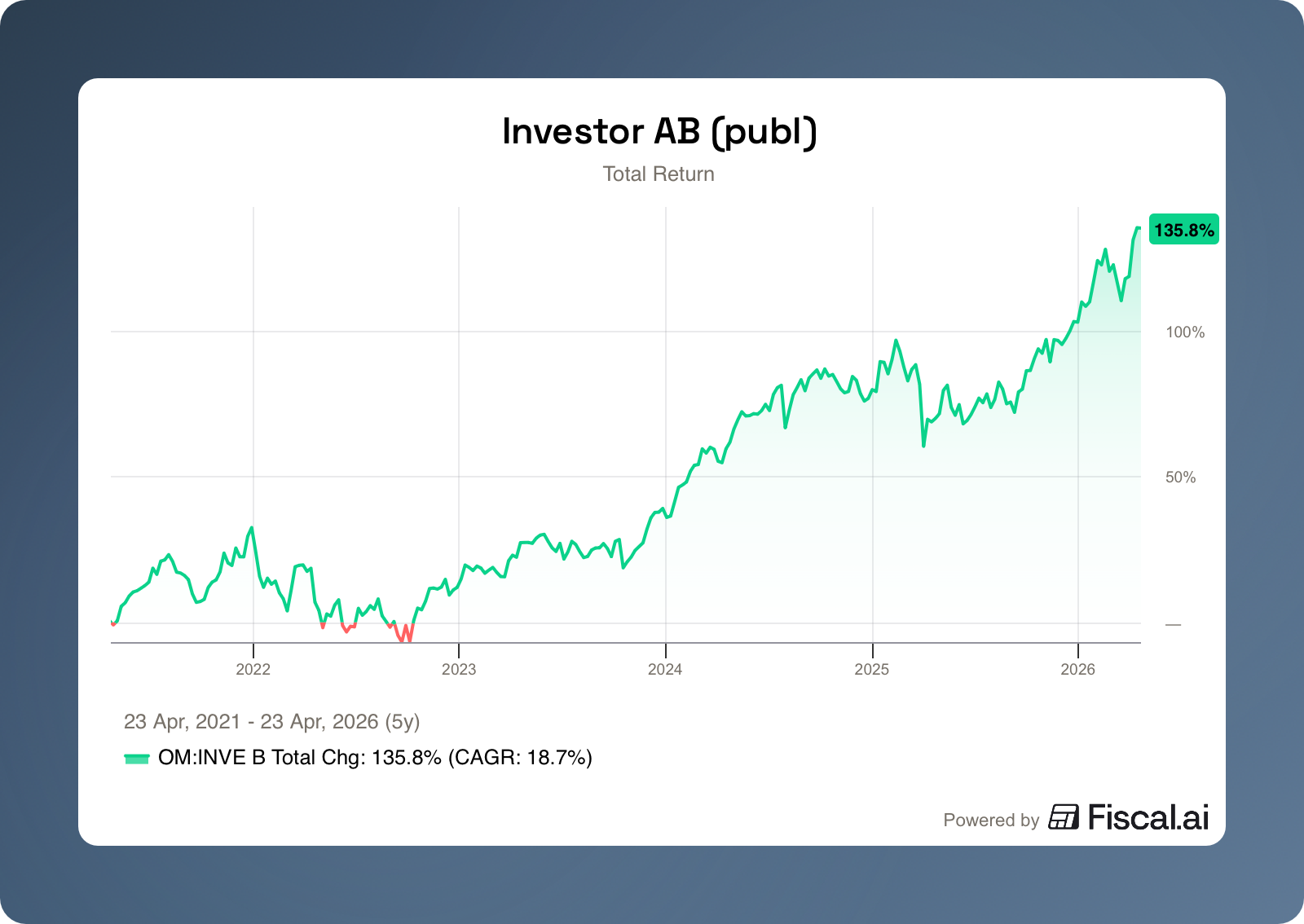
The Swedish family holding company Investor AB (Stockholm: INVE-B) recorded net asset value growth of 3% and a Total Shareholder Return (TSR) of 7% in the first quarter of 2026, well above the benchmark, the Swedish SIXRX index, which fell by 1%. As a result, the discount at which the holding company typically trades narrowed significantly over the past quarter.
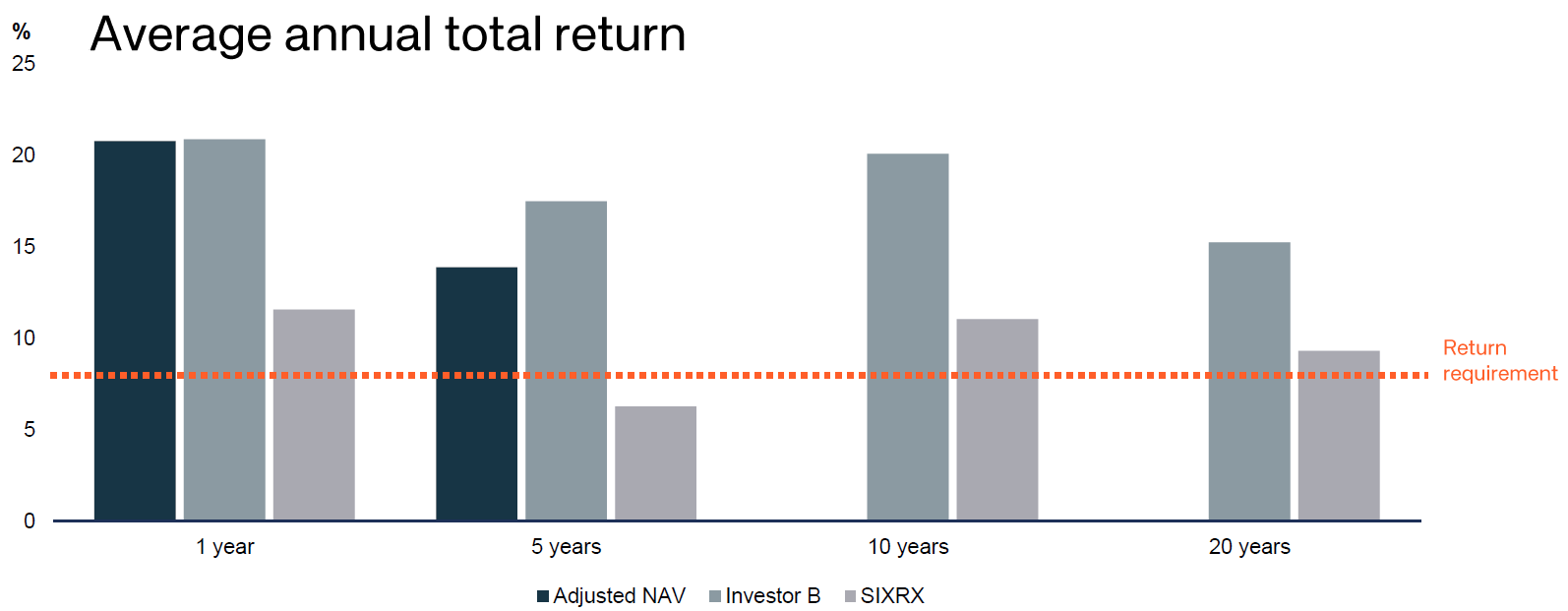
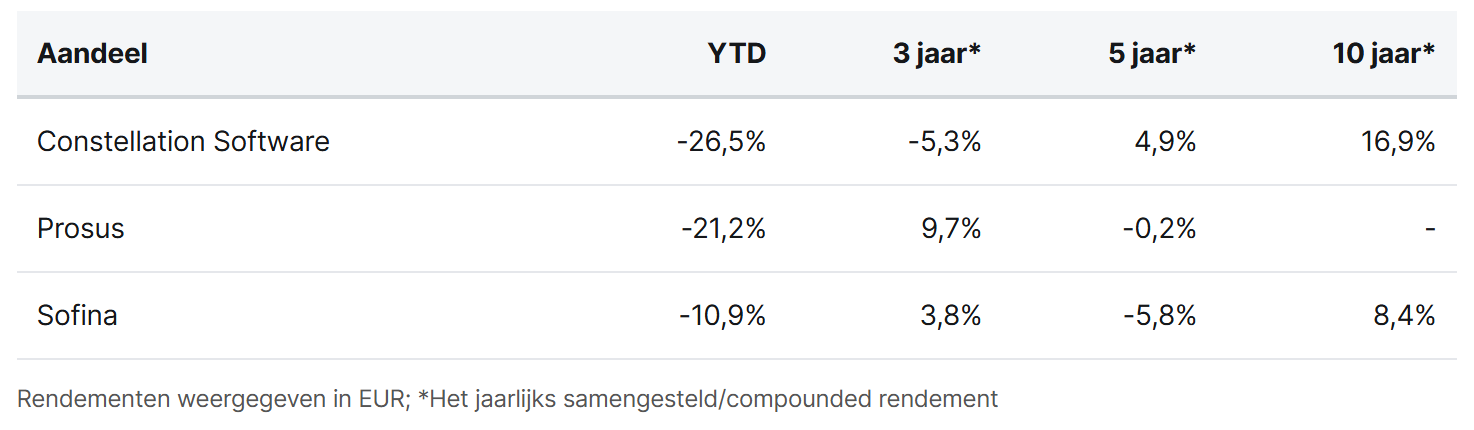
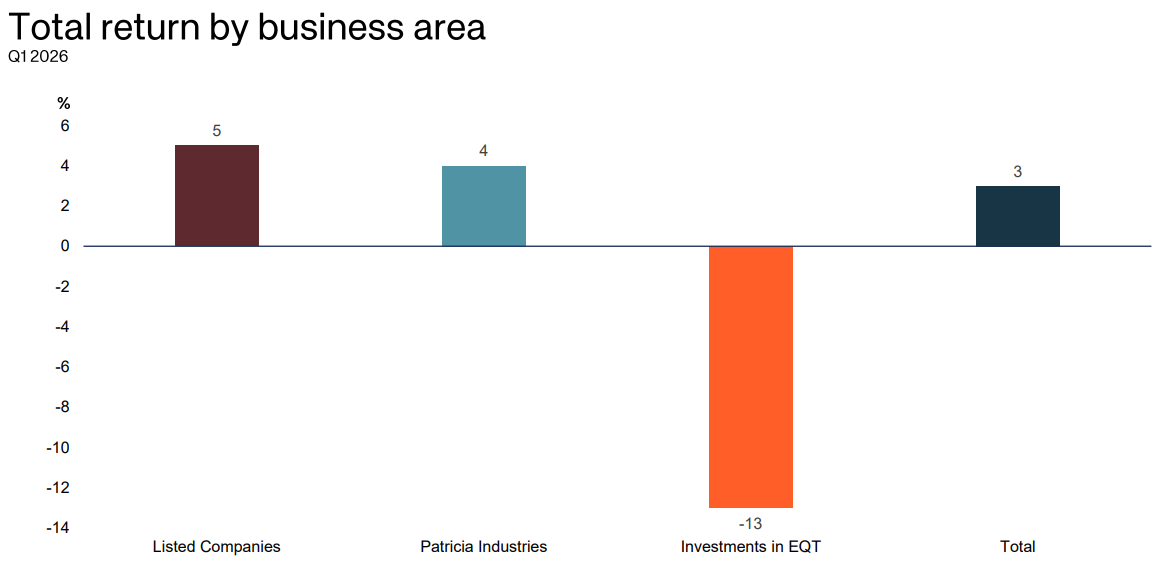
Investor AB has long been delivering strong performance and beating the index, as shown in the figure above. This quarter, however, the family holding company's three business areas produced sharply diverging results: Listed Companies +5%, Patricia Industries +4%, and Investments in EQT -13%.
Listed portfolio
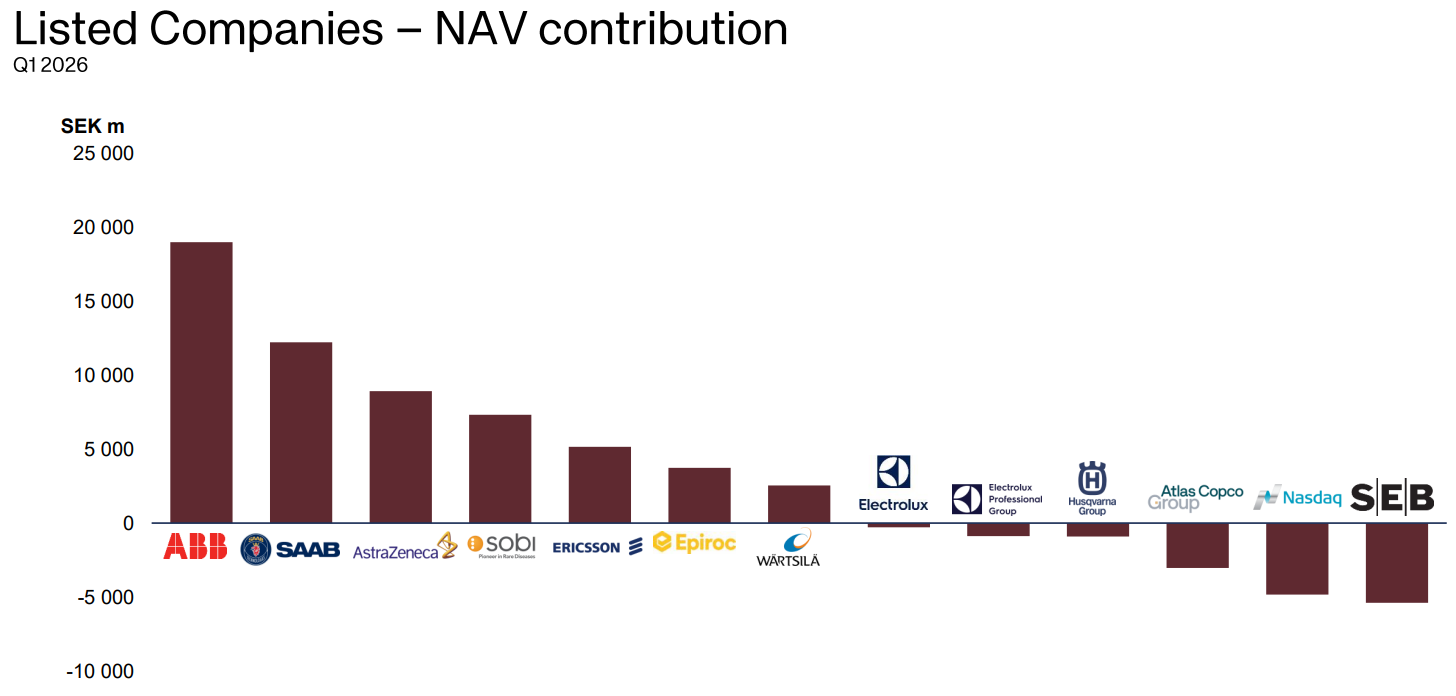
The listed portfolio (73% of total assets, SEK 830 billion) delivered a total return of 5%, while the broader Swedish market lost ground. Portfolio heavyweight ABB was the largest contributor to the rise in net asset value (NAV) within the listed companies this quarter.
Defence company SAAB also performed strongly in the first quarter, driven by rising geopolitical tensions under the influence of US President Trump. The share ended the quarter with a return of 18.5%. However, this gain has since been fully reversed after the end of the quarter, and the share price is now nearly flat.
On the other hand, the underwhelming performance of Husqvarna and Electrolux Professional stood out. Both names lost between 20% and 25% of their market value during the quarter. However, the impact on total NAV remained limited due to Investor's relatively low allocation to both companies. CEO Christian Cederholm acknowledged during the call that both companies have been underperforming for several years now: "We have the building blocks in place, but there is still a lot of work to do."
In the holdings in Atlas Copco, Nasdaq and subsidiary EQT AB (which is reported as a separate subsidiary but is listed), the lower share prices were used to buy additional shares. At bank SEB, by contrast, shares were sold for the fourth consecutive quarter. This was done to keep the ownership stake stable, as the bank itself continues to buy back shares. Once the buyback and subsequent cancellation of these shares has been completed, Investor's ownership stake will amount to approximately 22%.
Patricia Industries
The reported 7% revenue decline at Patricia Industries looked concerning at first glance. Adjusted EBITA fell by 4%, weighed down by a combination of the weaker dollar year-on-year, the impact of trade tariffs and restructuring costs, particularly at Permobil. Organic growth in constant currency did rise, but by a modest 3% only. The margin, however, improved from 23.3% to 24.0% across the portfolio.
During the call, management paid notably close attention to Patricia's USD exposure. CFO Jenny Ashman Haquinius explained that two fundamentally different mechanisms are at play, depending on whether it concerns the American or Scandinavian subsidiaries.
- The American subsidiaries (Nova Biomedical, Laborie, Sarnova, BraunAbility; together approximately 50% of Patricia's NAV) report in dollars. Because both revenue and costs are largely denominated in dollars, the operational impact of a weaker dollar on annual earnings figures is limited. What does play a role here is a quarter-on-quarter translation effect on NAV: when the dollar strengthens against the Swedish krona, as it did in Q1 2026 versus Q4 2025, the SEK value of those American assets rises. This made a positive contribution to Patricia's valuation this quarter.
- The Scandinavian subsidiaries (Mölnlycke, Piab, Permobil, Atlas Antibodies; also roughly 50% of Patricia's NAV) work fundamentally differently. These companies have healthy and profitable American operations, but report in kronor or euros. Mölnlycke, for example, generates approximately 35% of its revenue in dollars, with 30% of its costs in dollars, with the rest based in Europe. This means that year-on-year dollar fluctuations feed directly into the reported earnings figures. With the dollar significantly lower this year than in Q1 2025, this weighed heavily on the reported EBITA growth of the Scandinavian names, even though nothing has deteriorated operationally.
Management also pointed out that the companies actively manage natural hedging by keeping costs in the same currency as revenue wherever possible and structuring debt in the currency of net cash flows. Mölnlycke, for example, has around 60% of its debt in euros and 40% in dollars in order to limit currency risk wherever possible. Mölnlycke is also building a wound care factory in Maine (US) to increase local production and reduce reliance on imports from its Finnish factory in Mikkeli, although both sources will continue to exist alongside each other for a long time to come.
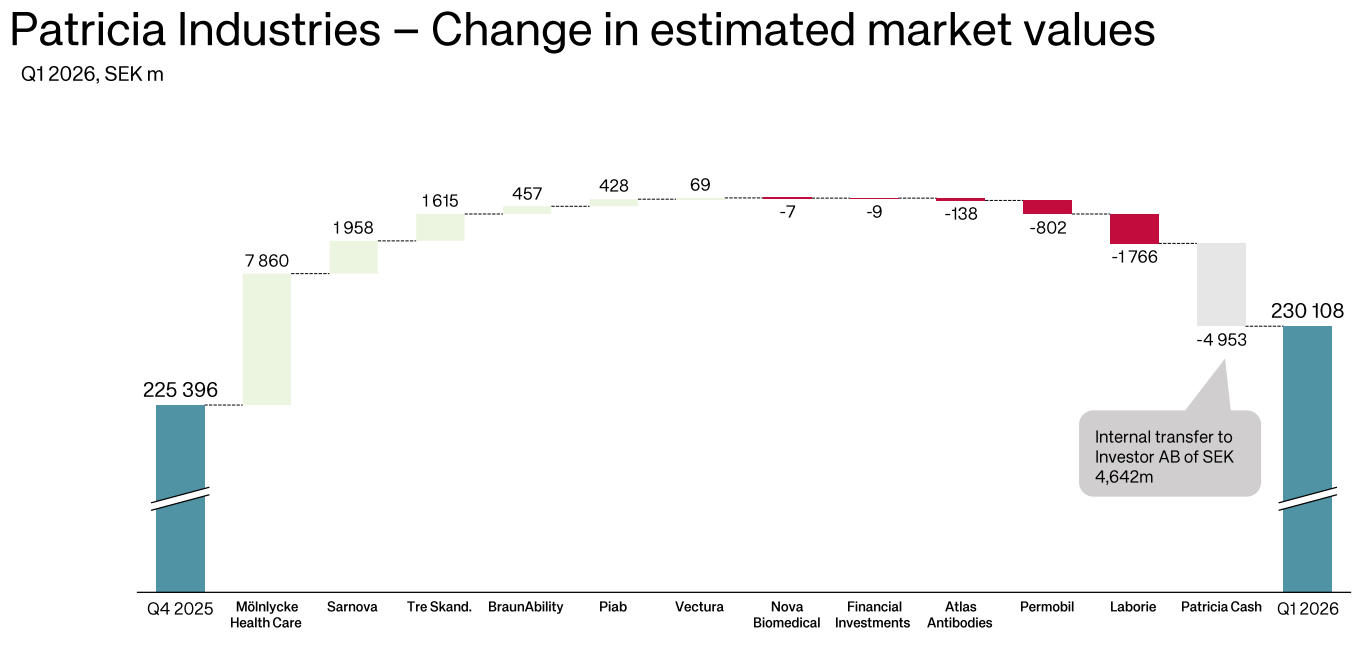
Mölnlycke also remained the biggest value driver within Patricia in Q1 2026. Operating cash flow nearly tripled from EUR 48m to EUR 132m, partly driven by a favourable working capital movement. Net debt fell from EUR 1,881m to EUR 1,798m.
As a result, the estimated market value rose by SEK 7.86 billion, from SEK 74.4 billion to SEK 82.3 billion. Management cited multiple expansion and earnings growth as the main value drivers. However, when we work through the underlying figures, LTM EBITDA remained virtually flat. The increase in value is therefore attributable to roughly 80% multiple expansion, from 14.7x to 15.6x EV/LTM EBITDA. The reduction in debt accounted for the remainder; operational earnings growth was negligible.
In the Q&A session, several questions were asked about Mölnlycke. CFO Jenny Ashman Haquinius explained that the wound care division (60% of revenue) grew by 2%, slightly lower than in previous quarters due to three factors: inventory drawdowns among customers in the US, ongoing pressure in France from reimbursement cuts, and irregular order patterns in the Middle East. None of these three factors is structural in nature, but the French market is also unlikely to improve soon, according to management.
On China, it was noted that Mölnlycke has two segments: hospital sales (affected by volume-based procurement) and e-commerce/B2C for scar management (not affected). Cederholm acknowledged that Chinese volume-based procurement is having an impact and that local presence is becoming increasingly important. Asked about Chinese competition in EMEA, he confirmed that this is increasing, including in operating room products.
EQT
The EQT segment consists of two components: the equity stake in the company EQT AB and Investor AB's investments in EQT's investment funds. At -13%, the EQT segment delivered the weakest quarter of the three business areas. The pain was almost entirely due to EQT AB's share price, which fell by 22%. The cause was sector-wide: private equity holding companies came under pressure from growing doubts over the valuations of software investments and the quality of certain private credit funds. Meanwhile, the value of the investments in the EQT funds rose by 2%, although this is reported with a one-quarter delay and therefore still reflects Q4 2025.
Investor chose to seize the moment by adding SEK 1.4 billion to its position in EQT AB at prices deemed attractive. CEO Cederholm noted that the current deal flow shows an overweight of opportunities on the private side.
Questions from Tresor Capital
During the call, we asked three targeted questions. Asked for concrete examples of AI implementation, Christian Cederholm cited Nasdaq subsidiary Verafin, where AI has quadrupled productivity and significantly reduced "false positives" in fraud detection. The role of Piab in the value chain for AI hardware was also discussed. Cederholm indicated that Piab is well positioned, as AI makes robots and machines more agile, allowing production processes with lower volumes and higher variation to now be effectively automated. Finally, questions were asked about the restructurings at Electrolux, Electrolux Professional and Husqvarna. Investor applies a fixed three-step plan for this, consisting of creating a shared view of the problems, developing an action plan, and appointing the right people. Cederholm emphasised that in practice this often takes multiple attempts, but that the fundamental building blocks are now in place.
Outlook
As always, CEO Christian Cederholm shared an outlook in his letter to shareholders:
The operating environment has become increasingly unpredictable in recent years. Experience shows, however, that periods like these enable high-quality companies to further strengthen their competitive position. We actively support our companies in driving profitable growth today, while ensuring continued investment in innovation, including AI, the green transition and geographic expansion, to drive value creation in the years ahead.
Investor's financial flexibility puts us in an excellent position to invest over time while also paying a steadily rising dividend, with the ultimate goal of generating attractive total returns for you, our shareholders.
Investor AB is currently trading on the Stockholm stock exchange at a price of SEK 373.70 per B share.
Receive weekly insights in your inbox
Exclusive analyses and updates on family holding companies and global market developments.
Lifco delivers stable performance in a challenging climate
Lifco (Stockholm: LIFCO.B) presented its first-quarter results today, which lay bare the ongoing challenges facing the Swedish holding company. Although the acquisition machine continues to run at full speed, an exceptionally high comparison base (record figures in Q1 2025) and substantial currency headwinds made for a challenging start to the year. Thanks to a favourable product mix, in which in-house manufactured products with high margins outperformed the distribution activities, the group nevertheless managed to defend its profitability admirably despite the macroeconomic pressure.
Total revenue rose by 3.7% in the first quarter to SEK 7.2 billion (compared with SEK 6.9 billion last year). Organic growth remained meagre at just 1.2%. The fact that revenue nevertheless grew is entirely down to the active acquisition strategy; inorganic growth (acquisitions) contributed 7.6% to the result.
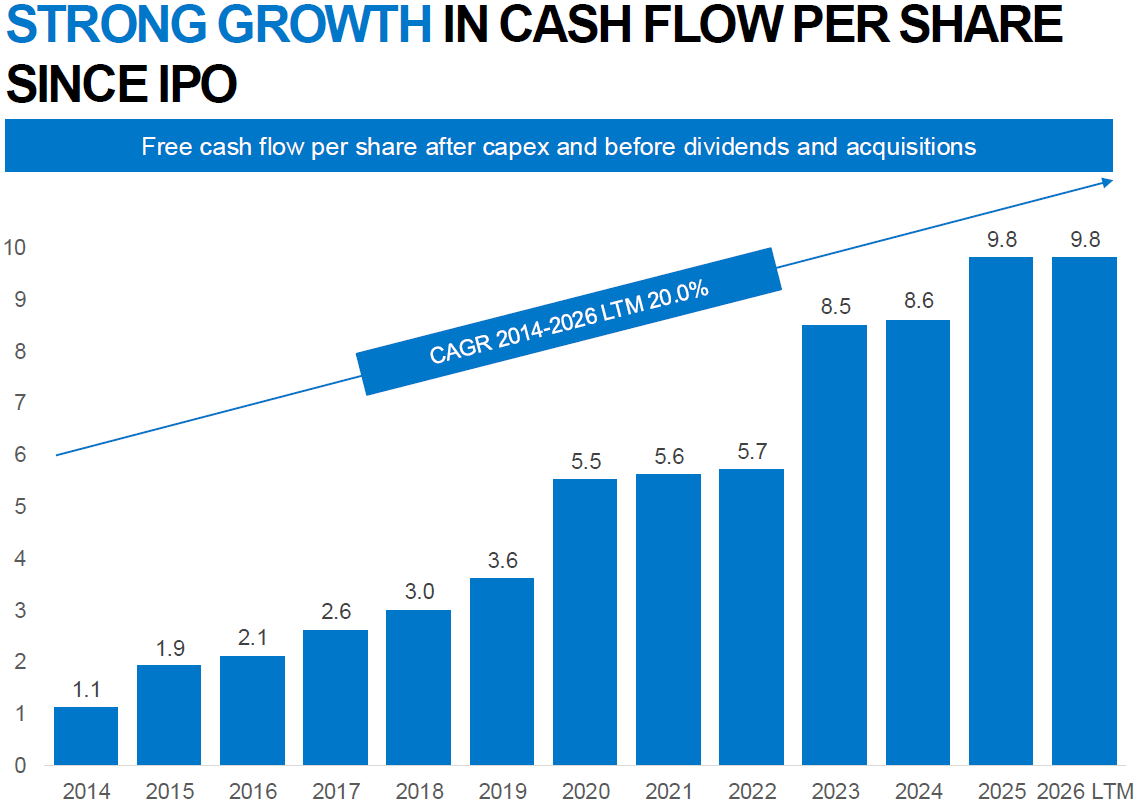
These results confirm what CEO Per Waldemarson had already indicated earlier during our conversations in Stockholm. In that meeting, he openly admitted to being "personally disappointed" by the lack of momentum in the underlying business. He stressed that boosting organic growth is currently his top priority, although market conditions are not yet cooperating. Still, Waldemarson also sees the opportunities presented by the current market. He noted that Lifco is, after all, a cyclical business, but that it is precisely these challenging times that separate the wheat from the chaff in the industrial sector. Waldemarson indicated that Lifco's disciplined approach often allows it to emerge even stronger from such periods.
In addition to the operational pressure, Lifco, like many of its Swedish peers, faced substantial headwinds in the currency market. The volatility of the Swedish krona put a clear drag on reported profitability; Lifco had to absorb a negative FX effect of as much as 5.1% on revenue growth.
Systems Solutions overhauled
To increase focus and transparency, Lifco announced a major restructuring today. The broad Systems Solutions division is being split up. Whereas this division was previously a collection of diverse activities, reporting will be divided from the second quarter onwards into more specific business areas. The Environmental Technology and Transportation Products divisions will henceforth report as standalone business areas.
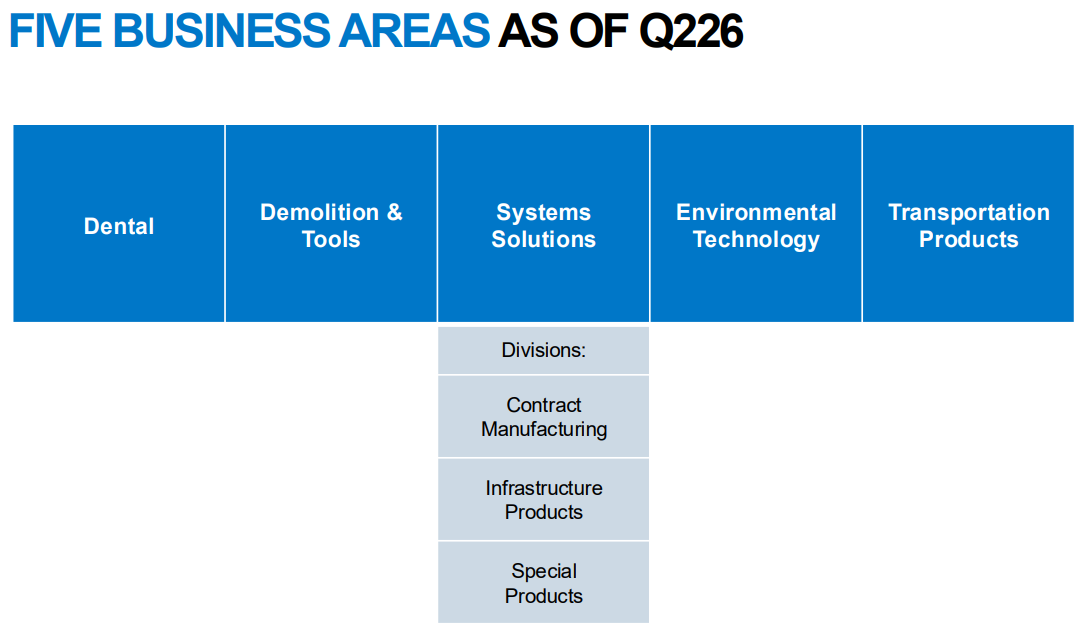
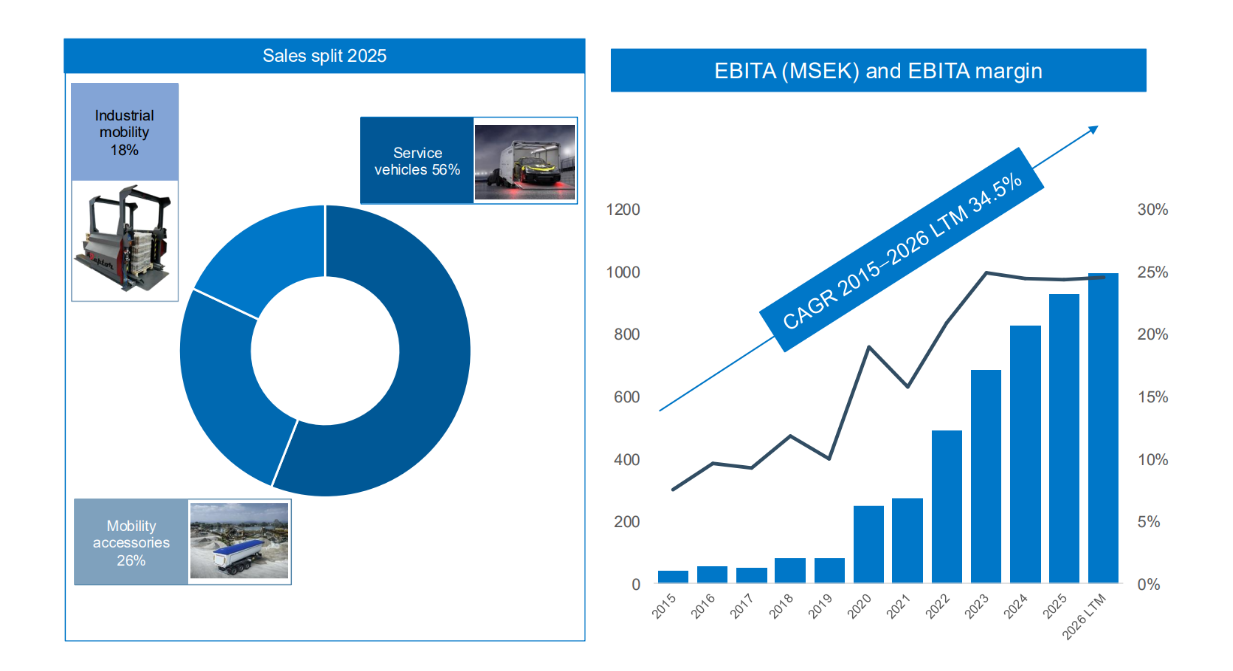
Waldemarson stresses that the split is a logical evolution, driven by the increased materiality of the divisions. With EBITDA approaching the SEK 1 billion mark and margins comfortably above 20%, Environmental Technology and Transportation Products have simply become too large and too significant to remain under a single heading. By now reporting these divisions as standalone business areas, Lifco sharpens its internal monitoring and capital allocation, while at the same time increasing external transparency towards investors.
The new divisions:
The new business area Environmental Technology houses a collection of niche companies focused on sustainable solutions, such as waste management, water treatment and energy efficiency. What stands out in the financials is the impressive profitability; with an EBITA margin of over 24%, this division therefore performs better than the group average (22.1%). The pro forma figures show stable revenue growth, with the division already accounting for revenue of nearly SEK 4 billion last year. By reporting this 'hidden gem' separately, it becomes clear that this segment is one of the key drivers behind Lifco's high margins.
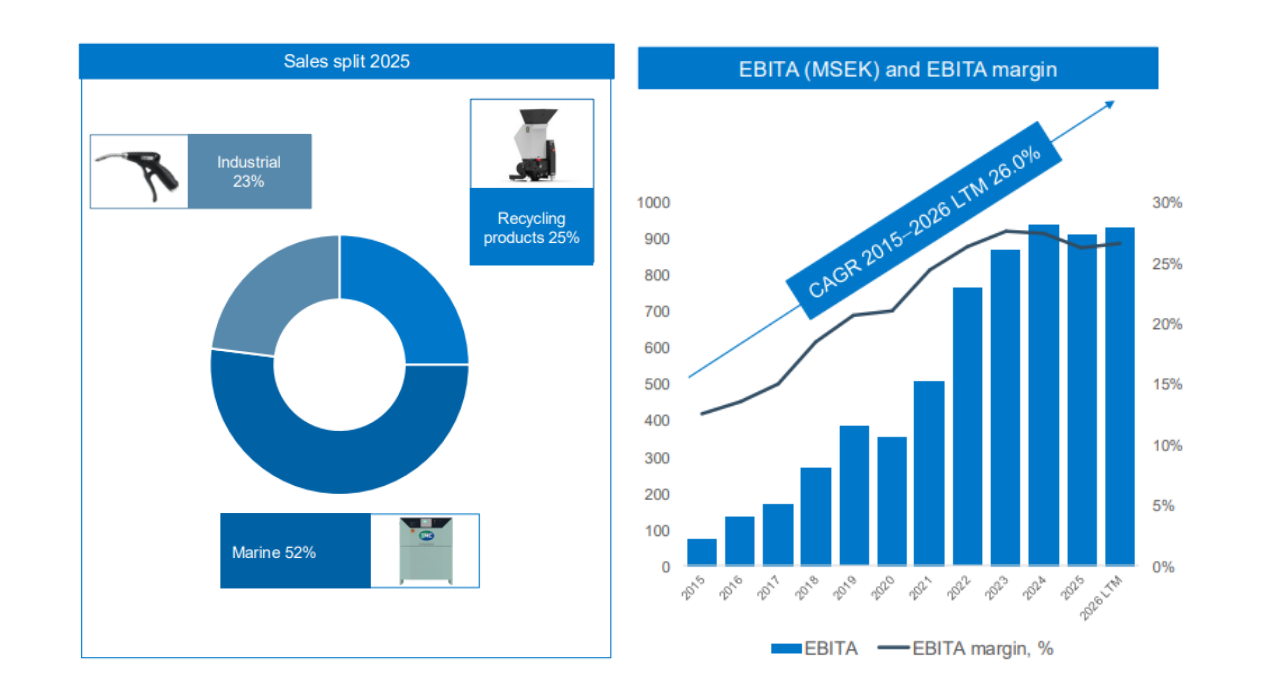
In the Transportation Products division, we find the companies specialised in equipment and systems for the transport sector and heavy vehicles. Although this segment, with revenue of around SEK 3.5 billion, is somewhat smaller than the environmental arm, margins here of around 22% are equally very solid and fully in line with the group's performance. The split makes clear that this segment generates a highly predictable cash flow, making it an ideal platform for the 'add-on' acquisitions announced by Waldemarson.
Conclusion:
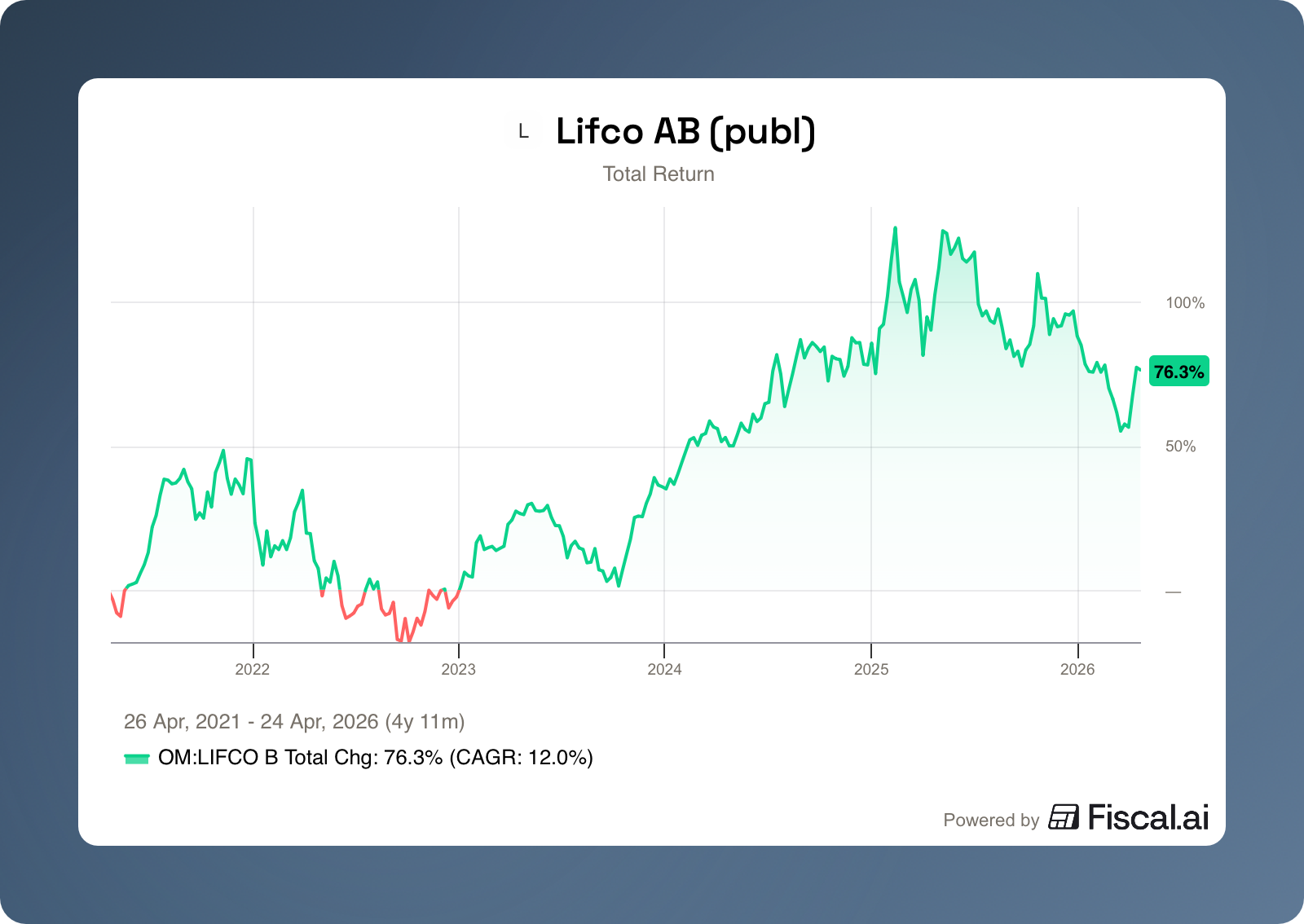
Although the first quarter exposed the necessary challenges, Lifco's fundamental course remains unchanged. The results show a company fighting against a high comparison base and currency headwinds, but managing, thanks to iron discipline, to keep margins stable at 22.1%. In a climate of limited visibility in the industrial arm, the focus for the coming quarters lies entirely on proving pricing power within the subsidiaries.
Lifco ended the trading week on the Stockholm stock exchange at a share price of SEK 306.60.
From Alphabet to AI-phabet
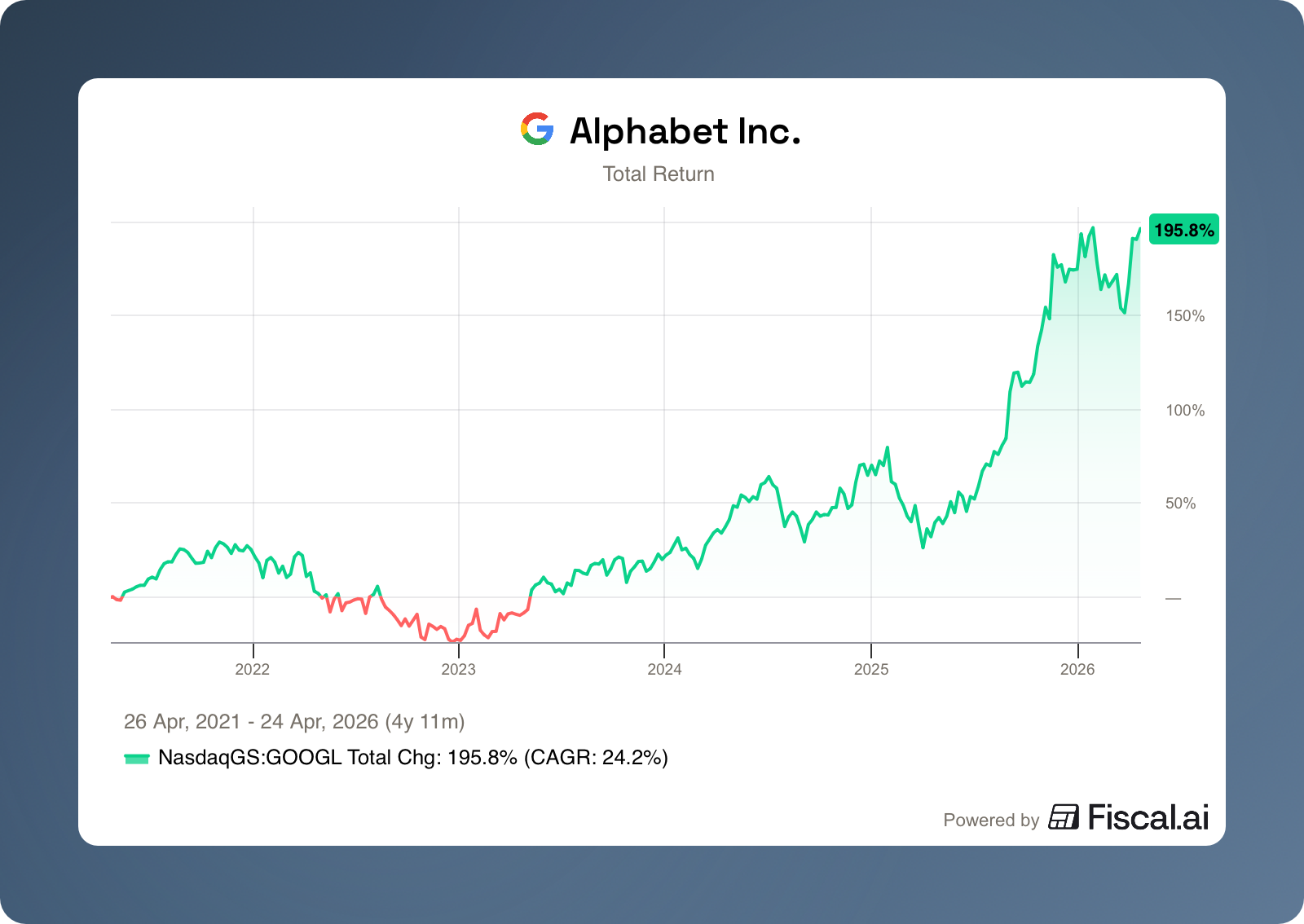
Last week, we already wrote an extensive piece about the latest developments at the American holding company Alphabet (New York: GOOGL) and how the tech giant is reinforcing its dominance through strategic alliances. This week, the company shifts up a gear with the unveiling of its own hardware and a series of substantial commercial contracts. During the Google Cloud Next 2026 event in Las Vegas, Google presented the TPU 8t and TPU 8i, the eighth generation of its own AI chips. This development is crucial to reducing dependence on chipmakers such as Nvidia. The new processors are specifically designed for 'agentic AI' and offer an enormous leap in computing power, both for training models and for carrying out complex tasks.
TPU 8t, optimized for training and TPU 8i, optimized for inference.
— Sundar Pichai (@sundarpichai) April 22, 2026
Looking good! pic.twitter.com/pTrblfF8mU
That the market is embracing these solutions is evident from the recent multi-billion-dollar agreements with Merck and Mars. While pharmaceutical giant Merck is investing around $1 billion to roll out Gemini Enterprise across its entire operations, Mars is deploying the AI assistants for marketing and productivity across its entire workforce. The figures shared by CEO Sundar Pichai underline this enormous momentum. Google Cloud models now process more than 16 billion tokens per minute, an increase of 60% compared with the previous quarter, with three-quarters of all Cloud customers now using the AI products.
The transformation is complete internally too, as Google estimates that around 75% of all new code within the company is now generated by AI. With the launch of a new fund of $750 million to support partners in adopting agentic AI, Alphabet demonstrates that it not only has the best models, but also the infrastructure and the capital to definitively pull the market towards itself.
Alphabet is currently trading on the New York stock exchange at a price of USD 343.10 per Class A share.
Receive weekly insights in your inbox
Exclusive analyses and updates on family holding companies and global market developments.
Would you like more information about our services?
Get in touch
Disclaimer:
No rights can be derived from this publication. This is a publication of Tresor Capital. Reproduction of this document, or parts of it, by third parties is only permitted after written consent and with reference to the source, Tresor Capital.
This publication has been compiled by Tresor Capital with the greatest possible care. The information is intended in a general sense and is not tailored to your individual situation. The information should therefore explicitly not be regarded as advice, an offer or a proposal to purchase or trade investment products and/or to obtain investment services, nor as investment advice. The authors, Tresor Capital and/or its employees may hold positions in the securities discussed, for their own account or for their clients.
You should carefully consider the risks before you start investing. The value of your investments may fluctuate. Past performance is no guarantee of future results. You may lose (part of) your investment. Tresor Capital disclaims any form of liability for any inaccuracies or errors. This information is purely indicative and subject to change.
Read the full disclaimer at tresorcapitalnieuws.nl/disclaimer .
This article was translated automatically from Dutch using AI. In case of any difference, the Dutch original prevails. Read the original in Dutch.