Family Holdings #23 - TerraVest Chairman Under Fire

This week's topics:
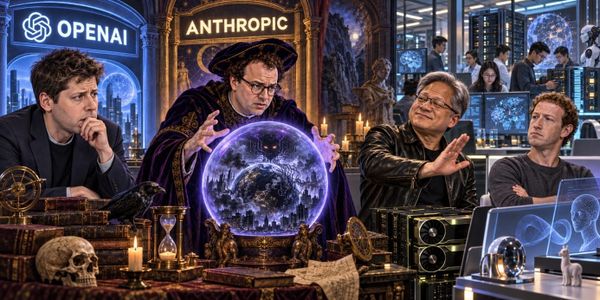
Berkshire Hathaway (New York: BRK-B) put roughly USD 16.8 billion of capital to work within a matter of days, a striking signal that successor Greg Abel is moving faster than the frugal Buffett years would have suggested. The conglomerate is putting USD 10 billion into Alphabet's capital raise, taking that stake towards USD 32 billion and making it the third-largest position in the portfolio. In addition, Berkshire is acquiring homebuilder Taylor Morrison outright for USD 6.8 billion, a bet on a turn in the US housing cycle that Abel intends to combine with Clayton Homes. It remains a drop in the ocean against the USD 380 billion cash pile, but with two swallows in one week, shareholders are right to wonder whether that mountain of cash is finally starting to shrink.
HEICO (New York: HEI.A) presented second-quarter fiscal 2026 results in which the word 'record' appeared three times in the press release headline, and not by accident. Net income rose 49% to USD 233.8 million, operating income by 41% and revenue by 25% to USD 1,375.7 million. In particular, the electronics division ETG, which had been the laggard in the first quarter due to a "perfect storm" in product mix, recovered a quarter earlier than expected, with revenue up 34% and cash margin climbing to 30.6%. Behind the numbers, three market forces are working in HEICO's favour simultaneously, ranging from the ongoing delivery crisis at Boeing and Airbus to structural growth in defence and aerospace. Later in this newsletter, we explore this dynamic in detail.
In Brief:
3i Group (London: III) has taken a stake in Laboratoire Nutergia, a French premium brand of scientifically-based nutritional supplements. Founded in 1989 by Claude Lagarde, the company, with its own "Active Cellular Nutrition" concept and distribution mainly through pharmacies, has been posting double-digit organic growth for more than ten years. 3i is investing to accelerate growth through deeper market penetration, innovation, digital channels and international expansion; the Lagarde family retains a substantial minority stake and remains actively involved.
HEICO (New York: HEI.A) has, through its Flight Support Group, acquired the UK's Cook Defence Systems, a specialist in track systems for armoured combat vehicles. The Stanhope-based company (around 130 employees) has long supplied ministries of defence and leading OEMs, with recurring aftermarket demand and a large share of revenue generated outside the United States. HEICO is taking an 80% stake in the new entity, while seller William Cook Holdings retains 20% and director William Cook remains at the helm.
TerraVest Industries (Toronto: TVK) completed two bolt-on acquisitions this week. In the United States, it acquired B&R Repair, a service and repair business for tank trailers and trucks that fits seamlessly with EnTrans's existing US footprint; estimated annual revenue is around CAD 20-30 million. In Québec, it acquired the smaller Jet Peinture Plus, which specialises in refurbishing and recertifying propane tanks. Together with the previously acquired Pro-Par, TerraVest now owns the vast majority of commercial propane tank refurbishment in Québec, a sizeable market with a relatively large number of rural and northern communities.
Constellation Software (Toronto: CSU) and its subsidiaries posted a long list of acquisitions this week, bringing the 2026 tally to 47 transactions so far. The biggest headline is a carve-out by Cora Group (part of Jonas Software) of Finastra's US mid-market banking operations, including brands such as the Phoenix Core Banking System, MalauzAi Digital Banking, Analyzer IQ and Enterprise Content Management. This concerns mission-critical software for hundreds of US banks and credit unions; estimated annual revenue is CAD 130-230 million, with an EBITDA margin of around 30% and roughly 500-900 employees. Finastra, owned by private equity firm Vista Equity Partners, looks like a forced seller with net debt of more than 5x EBITDA and a B3 credit rating, exactly the kind of situation Constellation likes to pounce on. In addition, Lumine Group (Toronto: LMN) announced the acquisition of the Video Network division of the UK's Synamedia, the group's sixteenth corporate carve-out. According to COO Tony Garcia, the acquisition deepens Lumine's position in the media supply chain, with a focus on video processing, broadcast distribution and live streaming.
Topicus.com (Toronto: TOI) was also active. The group took a minority stake in the American company Compli, which designs and installs compliance-ready inspection infrastructure for regulated sites. More striking was the revised, non-binding offer, made through subsidiary TSS Europe, for the listed Australian company ReadyTech Holdings, a provider of mission-critical SaaS for sectors including education, government and justice. Topicus offered A$2.00 per share via a scheme of arrangement, a premium of 49.3% to the closing price of A$1.34. ReadyTech's board of directors rejected the proposal that same day, stating that it insufficiently reflected intrinsic value in a change of control and would in any case not be executable.
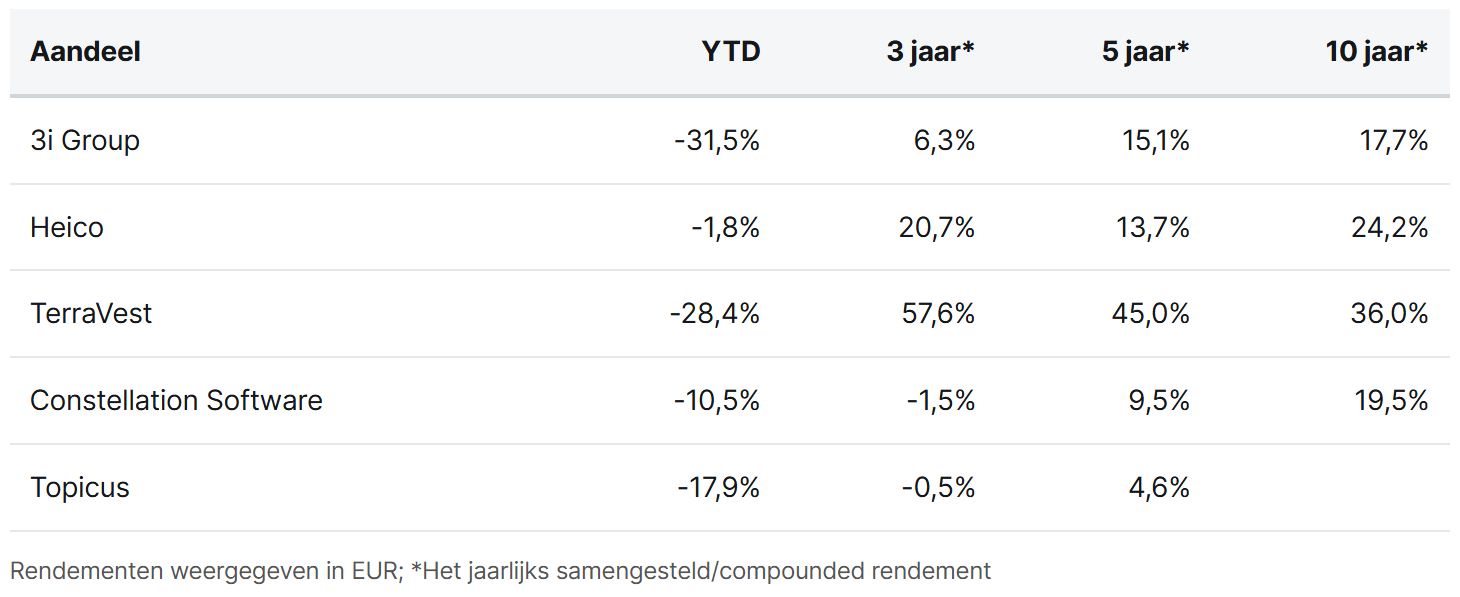
3i Group, Heico, TerraVest, Constellation Software and Topicus are currently trading on the London, New York and Toronto stock exchanges at GBP 22.22, USD 244.43, CAD 121.15, CAD 2,911.21 and CAD 105.01 per share, respectively.
A serious allegation at TerraVest
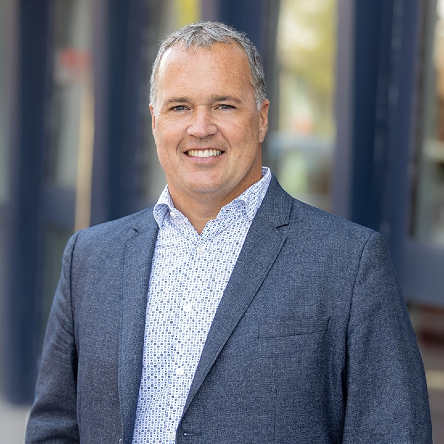
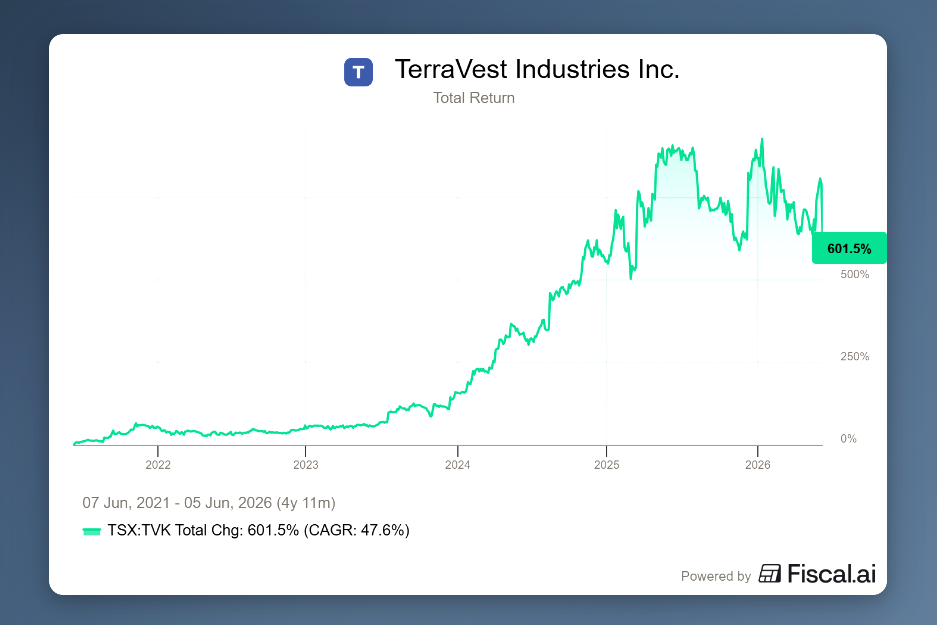
Unfortunately, we must start this week with less cheerful news about a name you know well from our editions, namely TerraVest Industries (Toronto: TVK). Through the Canadian outlet Le Journal de Montréal, it emerged that the Quebec regulator Autorité des marchés financiers (AMF) suspects chairman and major shareholder Charles Pellerin of leaking inside information around the largest acquisition in the company's history. The market punished this harshly, pushing the share down by as much as around 40% intraday at its lowest point.
The case concerns the acquisition of the American tank trailer manufacturer Entrans, which TerraVest announced in March 2025 for USD 780 million and which we discussed with you earlier as the cornerstone of its Service and Transport strategy. According to the AMF, Pellerin had known about the transaction since at least 12 December 2024. The regulator states that in the days before the announcement, a series of "opportunistic transactions" took place in the share by individuals with demonstrable ties to Pellerin, transactions that deviated from their usual trading pattern and which, according to the AMF, typically coincided with, or followed within minutes of, communication with Pellerin himself.
An important nuance is that these are explicitly allegations and that no one has yet been formally charged. The AMF carried out searches at Pellerin's premises and those of various other parties involved on 11 and 13 February. The AMF calculates the combined "theoretical benefit" at nearly CAD 6.8 million, based on the closing price of CAD 108.71 the day before the announcement and the peak of CAD 149.76 a week later, a jump of almost 38%.
For us as investors, Pellerin is not just any director. With a stake of more than 15%, worth hundreds of millions at the time of writing, he is by far the largest shareholder and also chairman of the board of directors. It is precisely that combination of skin in the game and board involvement that we value so highly in this category of companies, and which makes the story appealing to you and to us. But that also makes any potential breach of integrity correspondingly more serious. The big question occupying us now is what statement the company will issue. After all, TerraVest had just built up solid momentum following its strong half-year results and its recent acquisitions, including Colter Energy.
For now, we can do little but wait to see what statement the company and CEO Dustin Haw will issue, and what follow-up steps they will take. However, it seems plausible to us that Pellerin will ultimately have to step down in order to restore investor confidence in the company. You can count on us to continue following this case closely on your behalf and to keep you informed of every relevant development.
We would like to emphasise once again that this explicitly concerns a director who acted on his own initiative. In this case, the company is the party being wronged. We continue to view the outlook for TerraVest as positive, but it seems logical that the valuation will remain under pressure for some time now that investor confidence has been damaged. For an investor, sitting tight while being fleeced is often the wisest course now, but it is up to management to show that it is cut from the right ethical cloth. Within our family holding company strategy, after all, trust in the management and the supervisory board forms the foundation. In terms of capital allocation, long-term investors can still find some comfort in the fact that TerraVest has an active share buyback programme, although at this moment that feels like cold comfort.
TerraVest is currently trading on the Toronto stock exchange at CAD 121.15 per share.
Greg Abel puts cash to work at Berkshire Hathaway
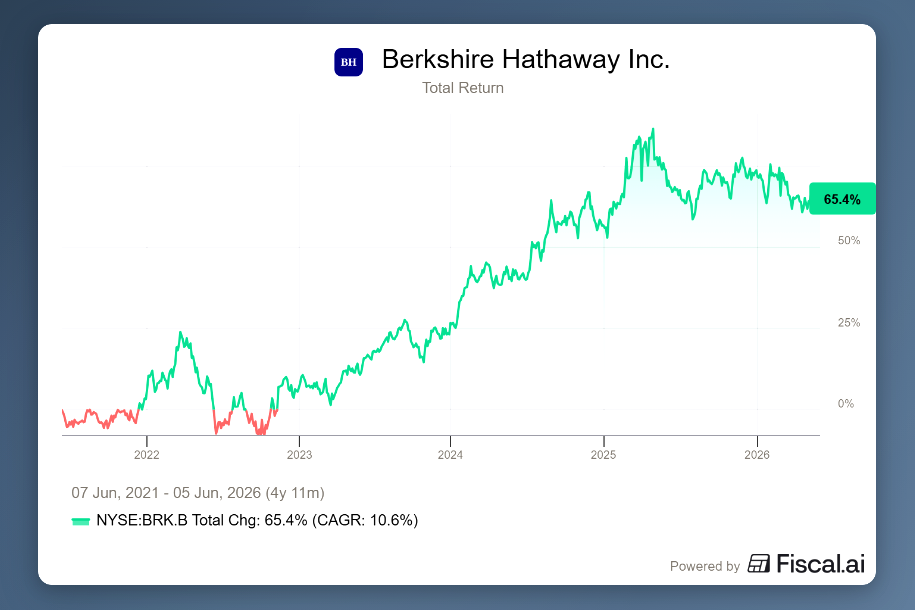
Within a matter of days, the American investment holding company Berkshire Hathaway (New York: BRK-B) put roughly USD 16.8 billion in capital to work. On Sunday, the holding company announced the acquisition of listed homebuilder Taylor Morrison, and a day later it emerged that the group was investing USD 10 billion in Alphabet's capital raise. After the sparing approach of previous CEO Buffett, these appear to be the first signs that successor Greg Abel is willing to move quickly when he spots interesting opportunities.
The Alphabet capital raise
Alphabet is raising a total of USD 85 billion to finance the build-out of its AI infrastructure. Through a private placement, Berkshire is buying USD 5 billion of Class A shares at USD 351.81 and USD 5 billion of Class C shares at USD 348.20, at a slight discount to the market price. Notably, Berkshire does not usually take part in this kind of share issue; the company generally prefers to buy entire businesses or build up stakes at prices of its own choosing. Berkshire has been accumulating Alphabet shares since the third quarter of 2025. Before this round, that stake was worth a little more than USD 20 billion; with the additional purchase, a quick market calculation puts it at around USD 32 billion, which would make Alphabet Berkshire's third-largest position, after Apple and American Express.

Why does a stock trading close to a record price fit into Berkshire's portfolio? Analyst Ben Thompson points out that with this move, Abel is continuing Buffett's playbook rather than breaking with it. In his comparison, Berkshire itself is the See's Candies of the story, the quality business that generates cash year after year, while Google is the BNSF, the investment that is large enough to put that enormous cash flow to work at a decent return. With hundreds of billions in cash and roughly USD 25 billion in free cash flow over 2025, there simply are not many businesses that can absorb that much capital.
The fundamental argument is that Alphabet can win in several ways at once. The AI investments strengthen the search and advertising business, the company is a serious player at the model level with Gemini, and it can sell computing capacity to the specialised AI labs. That capacity also carries a lasting cost advantage thanks to its own TPU chips, meaning that in a world where computing power is becoming a commodity, Google is the hyperscaler best positioned to profit from it.
The truly interesting layer, however, lies in the energy angle. Berkshire is not a passive shareholder in Google. Through Berkshire Hathaway Energy, the holding company is one of the largest suppliers of the electricity that powers Google's data centres. That means the company captures two returns on the same trend. It earns the equity return on Google's AI growth, and on top of that the regulated utility return on the electricity Google needs to deliver that growth. In effect, it amounts to a form of supplier credit extended to Google's energy demand.
At the 2026 shareholder meeting, Abel made clear just how far this has already progressed. In Iowa, Berkshire Hathaway Energy serves almost half the state, with four major hyperscalers and data centres connected to its network. Those data centres already account for 8 percent of peak load, whereas many other utilities hope to reach that level only in five years' time. Abel sees room for that load to grow by more than 50 percent over the next five years. There is one important condition, though: the hyperscalers and data centres bear their full costs themselves, so that burden is not passed on to other customers. At subsidiary MidAmerican, rates still run 45 percent below the national average. On the gas side, 15 percent of the natural gas consumed in the United States flows through the group's pipeline network.
Taylor Morrison acquisition
Besides Alphabet, Berkshire also announced a full acquisition this week. The company is putting USD 6.8 billion on the table for homebuilder Taylor Morrison, or USD 72.50 per share in cash, a 24 percent premium to the previous Friday's closing price of USD 58.50. Including debt, the enterprise value comes to roughly USD 8.5 billion. The transaction is expected to close in the second half of 2026, subject to shareholder and regulatory approval. Taylor Morrison shares jumped around 23 percent on the day of the announcement.
Abel wants to merge Berkshire's site-built operations, housed under Clayton Homes, with Taylor Morrison into a single platform. That in itself marks a break with the hands-off approach Buffett maintained for six decades. Buffett, who remains chairman at 95, spoke to CNBC about the acquisition.
"Greg did that faster than I could have done it, smoother than I could have done it, and I never talked to the CEO. He has launched."
Behind the deal lies a clear bet. Berkshire is buying a leading builder with more than 350 communities across the Sun Belt, positioning itself for a recovery in the US housing market, despite the high mortgage rates and affordability problems that have held the sector back for years. Bill Stone of Glenview Trust, himself a Berkshire shareholder, reads the purchase as a wager that the housing cycle is turning and that pent-up demand exists. Taylor Morrison chief executive Sheryl Palmer called the transaction a vote of confidence in what her company has built over thirteen years as a listed business.
In total, Berkshire thus put around USD 16.8 billion to work in a matter of days. That may sound like a lot, but it is a drop in the ocean when you consider its cash pile of USD 380 billion. For shareholders, the question is whether this is a sign of what still lies ahead. One swallow doesn't make a summer, so it is encouraging that two swallows can already be spotted. In addition to these investments, share buybacks will also be added over the coming quarters (although these remained negligible in the first quarter at USD 234 million), which could finally allow the cash pile to slowly start shrinking.
Berkshire Hathaway is currently trading on the New York Stock Exchange at a price of USD 478.63 per B share.
Receive weekly insights in your inbox
Exclusive analyses and updates on family holding companies and global market developments.
From a perfect storm to perfect results at Heico
HEICO (New York: HEI.A) published its results for the second quarter of fiscal year 2026 last week, and anyone who read just the headline of the press release knew enough already. The word record appears no fewer than three times in it, for net income, operating income and revenue alike. Consolidated net income rose 49% to USD 233.8 million, operating income rose 41% to USD 350.4 million, and revenue rose 25% to USD 1,375.7 million.
"We are, as they say, firing on all cylinders. Business is very strong for us across virtually the entire board, including in our largest markets: commercial aviation, defence and space. Orders remain at record or near-record levels in nearly all of these markets. And those markets themselves are growing, and growing fast."
Co-CEO Victor Mendelson
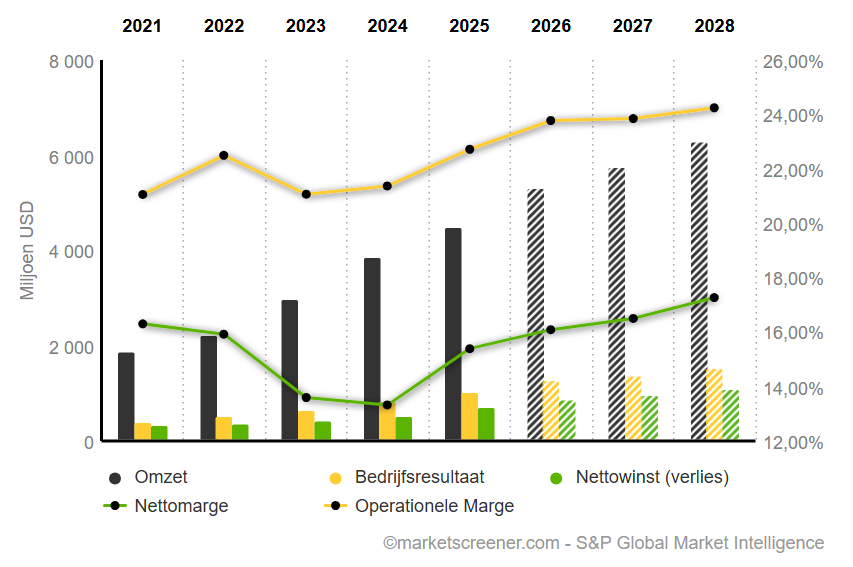
The Flight Support Group (FSG) posted record revenue of USD 929.4 million, up 21%, of which 19% was organic. The operating margin rose to 26.2%, more than two percentage points higher than a year earlier.
At the Electronic Technologies Group (ETG), the picture was even more spectacular. Eric Mendelson, co-CEO, summed up the performance in this division with a single word: "Wow". In the first quarter, this division had in fact been the problem child. Revenue did grow by 12.2%, but operating income fell by 4.3% and the margin shrank by as much as 330 basis points to 19.8%. The Mendelson brothers spoke at the time of a "perfect storm" in the product mix. More defence products with lower margins were delivered, while high-margin space shipments lagged behind. Management already indicated at the time that it viewed this as temporary and expected normalisation in the second half of the year. That normalisation did come, but a quarter earlier than expected and to an even greater extent.
ETG revenue jumped 34% to a record USD 459.5 million, and the margin surged to 26.5%, up from 22.8% a year earlier. Organic growth came in at 17%, driven by broad demand for electronics, defence, and aerospace products. A detail that gets lost in the numbers table but which Eric Mendelson emphasised repeatedly is that the reported margin understates the true earnings power. Amortisation of acquisition-related intangible assets, a purely accounting, non-cash item, ate up roughly 410 basis points of the ETG margin this quarter. Before that amortisation, i.e. on a cash basis, the operating margin came to 30.6%, which is nearly 400 basis points higher than the comparable cash margin of 26.7% a year earlier.
According to CFO Carlos Macau, this was simply a quarter in which all verticals, meaning all end markets, showed double-digit organic growth figures. When that happens simultaneously, the margin jump follows naturally. Asked whether these margins are the new normal, Victor Mendelson replied:
"We look at it as the first half of the year. That's how I view it. Those 90-day periods, however important, I don't always find fully representative of where the business is heading. We don't panic if a quarter is weaker, as in the first quarter, and we don't get overly excited or manic if it's great, as in the second."
General market developments
To understand whether HEICO can sustain this growth, we need to look at the broader market developments. Three forces are at work simultaneously, and remarkably, all three are working out favourably for the company.
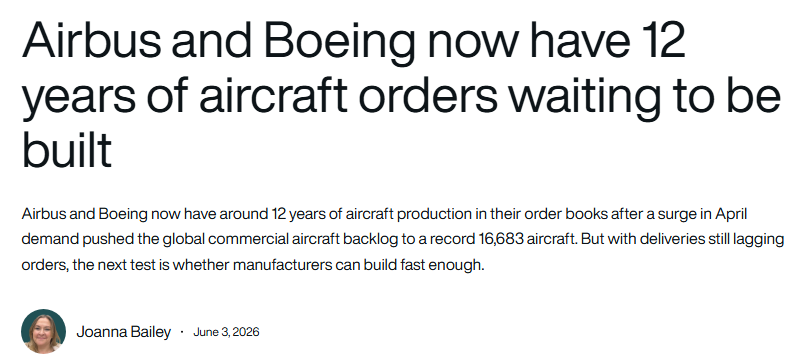
The first is the ongoing crisis at the aircraft manufacturers. Boeing and Airbus have been struggling with structural delivery backlogs since 2022, a situation made worse by the problems surrounding Pratt & Whitney's GTF engines. Because of this shortage of new aircraft, airlines have no choice but to keep operating their ageing fleets for longer. Those older aircraft require intensive maintenance, and the original manufacturers are simply overloaded to handle it. Airlines then turn to an independent player like HEICO, with certified parts that are considerably cheaper. According to the group, using their parts saves customers around USD 25 million annually. What makes HEICO's positioning attractive is that it focuses exclusively on the lucrative maintenance phase of an aircraft's life cycle, thereby staying clear of the industrial risks associated with launching new engines.
The second force is geopolitical. The war with Iran has dampened some sales to the Middle East, but Eric Mendelson stressed that the region accounts for a relatively small share of total revenue and that the impact has been amply offset elsewhere. The lost air traffic is being absorbed by European, North American, and other Asian airlines, a kind of rerouting around the conflict. Far more important is the indirect effect, which counterintuitively works in HEICO's favour. When unrest arises around commercial aviation, whether due to an oil price spike or a conflict, airlines realise they need to watch costs more seriously. As that pressure increases, interest in HEICO's products grows naturally along with it, more approvals follow, and that translates into higher future revenue and profit. For HEICO, a crisis is thus more like free advertising than a threat.
Analyst Gautam Khanna of TD Cowen asked about this specifically during the Q&A. He pointed to the rise in fuel prices since the outbreak of the war and wanted to know whether HEICO was seeing new customers approach it for its PMA parts as a result. Eric Mendelson replied: "The simple one-word answer is yes. We've seen that, in many different markets."
Mendelson mentioned a customer with whom HEICO had been in discussions for years about a new part, an order that is now within reach. Khanna followed up by asking whether customers are also coming forward with ideas for new parts faster than before, and again received an affirmative answer. Anyone who keeps doing what they've always done gets the same result, according to Mendelson, while anyone looking for high quality, short lead times, and sharp pricing naturally ends up at HEICO.
It is precisely this mechanism that means the war, on balance, tends to drive customers towards the company rather than away from it. That makes it a peculiar experience for us that HEICO's share price actually falls whenever tensions around the Iran war flare up.
The third force is structural growth in defence and space. In defence, the United States and its allies have, according to Victor Mendelson, come to realise that more investment is needed and that depleted stockpiles must be replenished, with, in his own words, a multi-year tail in orders and the backlog. In space, a market accelerating in the slipstream of the SpaceX hype, "the industry is shooting ahead like a rocket, and so are we," said Victor Mendelson.
A masterclass in operations and capital allocation
For anyone seeking a masterclass in excellent operations and capital allocation, in our view you need look no further than HEICO's latest quarterly call. In our view, management is best in class, and the way the Mendelson brothers approach acquisitions aligns seamlessly with our own view.
Asked about rising acquisition prices, Victor Mendelson laid bare the essence of the approach:
"When we buy, we buy to hold forever. Private equity sells you on again and puts pressure on hitting short-term results. We don't do that."
It is that promise of permanent ownership that makes HEICO the most attractive buyer for an entrepreneur who, after decades of hard work and building, is looking for a good home for their company, often while retaining a stake of their own. Eric Mendelson underpinned how deeply that approach is embedded with a concrete figure. At the end of last financial year, HEICO counted 31 minority partners in its businesses, a structure the holding company has built up over almost thirty years and one that, in his view, cannot be replicated. The acquired companies are held forever; HEICO does not sell them.
That discipline also determines the price the acquisition machine is willing to pay. Having completed around 110 acquisitions to date, Eric Mendelson says he knows exactly what makes a business successful. He pointed out that the aerospace and defence sector is littered with deals where buyers overpaid and the acquired companies are now performing well below par, a pitfall that HEICO has carefully avoided. As a rule of thumb, the holding company does not buy businesses with an operating profit margin below 20%, save for a few exceptions where management is convinced that margin will quickly grow to that level.
What perhaps appeals to us most as investors in family holding companies is what HEICO, according to management, stands for. Victor Mendelson said that the word people associate most often with the company is "trust": trust that the holding company delivers sustainable growth, innovation and quality, and above all real cash flow. He emphasised that latter point strongly: it is not accounting profit but the cash flow actually coming in that counts, and it is earned in an honest way.
That was evident again this quarter. Operating cash flow rose by 43% to USD 292 million, resources the company uses to keep investing in its people and its growth. With net debt to EBITDA of 1.74 times, after four acquisitions in this financial year, the balance sheet also remains conservatively financed. That, combined with a generation-long horizon and a high return on invested capital, makes HEICO, in our view, a textbook example within the category of companies we follow for you.
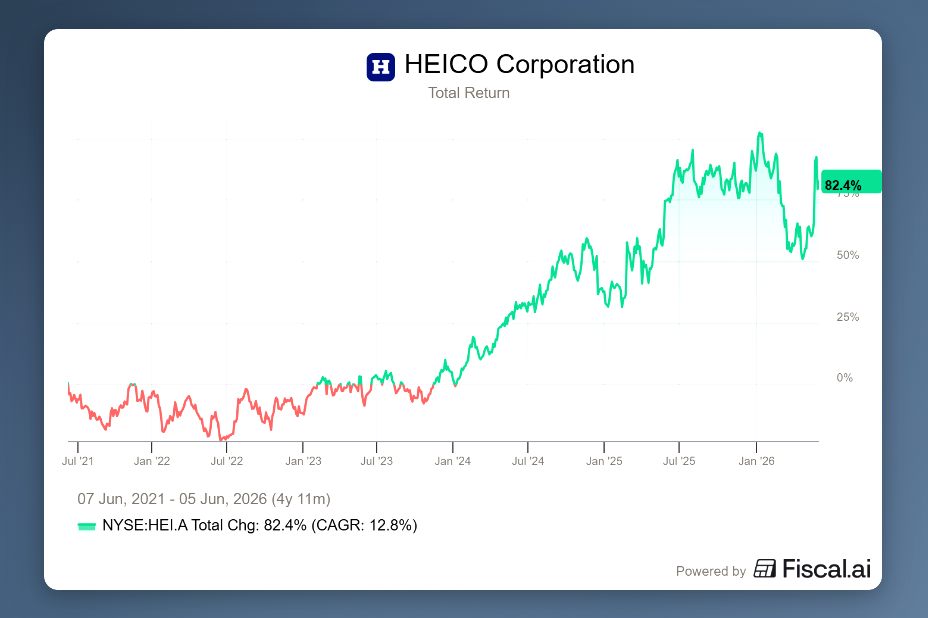
HEICO is currently trading on the New York Stock Exchange at a price of USD 246.30 per Class A share.
Receive weekly insights in your inbox
Exclusive analyses and updates on family holding companies and global market developments.
Would you like more information about our services?
Get in touch
Disclaimer:
No rights can be derived from this publication. This is a publication of Tresor Capital. Reproduction of this document, or parts thereof, by third parties is only permitted after written permission and with reference to the source, Tresor Capital.
This publication has been compiled by Tresor Capital with the greatest possible care. The information is intended in a general sense and is not tailored to your individual situation. The information should therefore explicitly not be regarded as advice, an offer or a proposal to purchase or trade investment products and/or to make use of investment services, nor as investment advice. The authors, Tresor Capital and/or its employees may hold positions in the securities discussed, for their own account or for their clients.
You should carefully consider the risks before you start investing. The value of your investments can fluctuate. Past performance is no guarantee of future results. You may lose (part of) your investment. Tresor Capital disclaims any form of liability for any inaccuracies or errors. This information is purely indicative and subject to change.
Read the full disclaimer at tresorcapitalnieuws.nl/disclaimer .
This article was translated automatically from Dutch using AI. In case of any difference, the Dutch original prevails. Read the original in Dutch.