Family Holdings #26 - A hot week on the stock markets


This week's topics:
3i Group published a short but positive update on Action this week. Like-for-like sales growth accelerated to 3.3% year-on-year through week 25, with a notable acceleration in the final six weeks, possibly related to the later onset of warm weather. Action's strong cash flow generation is translating directly into a brisk share buyback programme at 3i, which has now completed around 29% of the announced £750 million programme, at a current discount of more than 17% to net asset value.
Prosus took three concrete steps in its AI strategy this month. It launched a new AI platform for restaurant owners called Toqan via Just Eat Takeaway, invested €400 million in French health insurer Alan, and made a follow-on investment of US$30 million in India's Equal AI. The common thread is clear: Prosus is deploying its data and scale to build and finance AI applications across a wide range of consumer markets.
Alphabet had a turbulent week. The departure of four prominent AI researchers to OpenAI and Anthropic, including Nobel laureate John Jumper and Gemini architect Noam Shazeer, sent the stock lower on Monday and fuelled the debate over Google's position in the LLM race. The delay of Gemini 3.5 Pro from June to July added a further layer of uncertainty. There were positive notes too. Alphabet will be added to the Dow Jones Industrial Average on 29 June, and it launched a revamped Google Finance with AI-driven portfolio analysis, worth exploring for investors.
In Brief:
3i Group's portfolio company (London: III) Evernex, a global provider of data centre maintenance, acquired the British companies Empowered and OrderWork. It is the tenth acquisition since 3i's entry in 2019 and adds IT infrastructure implementation to Evernex's existing expertise in maintenance and end-of-life services. In this way, Evernex is building step by step towards an integrated platform that serves the full lifecycle of IT infrastructure.
Addtech (Stockholm: ADDT.B) has entered into a SEK 1 billion financing agreement with the Nordic Investment Bank (NIB) to support further acquisitions of small and medium-sized companies in the Nordic countries and Europe. The loan strengthens and diversifies the serial acquirer's financing structure and allows acquired companies to benefit more quickly from Addtech's network, market access and sustainability capabilities.
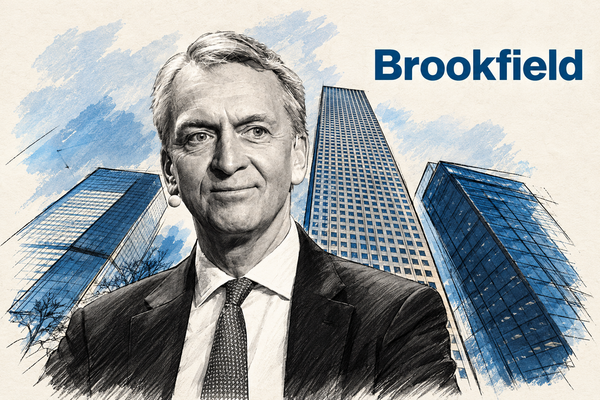
Brookfield Corporation (New York: BN) has, through its portfolio company Westinghouse, received a conditional financing commitment of $17.5 billion from the US Department of Energy for the construction of up to ten Westinghouse AP1000 nuclear reactors in the United States. Westinghouse, jointly owned by Brookfield and its institutional partners (51%) and Cameco (49%), aims to use this financing to bridge the long lead times for critical components and speed up construction. The goal is to have ten reactors under construction by 2030. Final financing still depends on technical, legal and financial approvals.
Sofina (Brussels: SOF) saw its portfolio company CRED receive a $900 million investment from Meta Platforms, valuing the Indian fintech platform at $4.5 billion. Sofina has been a shareholder in CRED since its Series C round in November 2020 and has participated in every subsequent funding round since then, a relationship that in fact goes back further, as Sofina already knew founder Kunal Shah from his previous company Freecharge. Meta acquires a minority stake without access to customer data. As part of the deal, Shah is taking over global leadership of WhatsApp, succeeding Will Cathcart. CRED serves 17 million members monthly, processes more than 40% of all credit card payments in India, and manages more than INR 240 billion in outstanding loans. The $4.5 billion valuation is above the $3.5 billion at the previous funding round in 2025, but still below the peak of $6.4 billion in 2022.
Founder Henry Kravis on fifty years of KKR and the power of permanent capital
The American investment holding company KKR (New York: KKR) turns fifty this year. What began in 1976 as three men with a combined stake of USD 120,000 has grown into an investment holding company with 38 offices, around 5,000 employees and 45 products, ranging from private equity to a large credit arm, real estate, insurer Global Atlantic and a fast-growing infrastructure arm.
In a fireside chat with Columbia Business School, co-founder and co-executive chairman Henry Kravis looked back on that half century. In doing so, he highlighted several elements that are so characteristic of the family holding companies we follow.
The full video can be watched here:
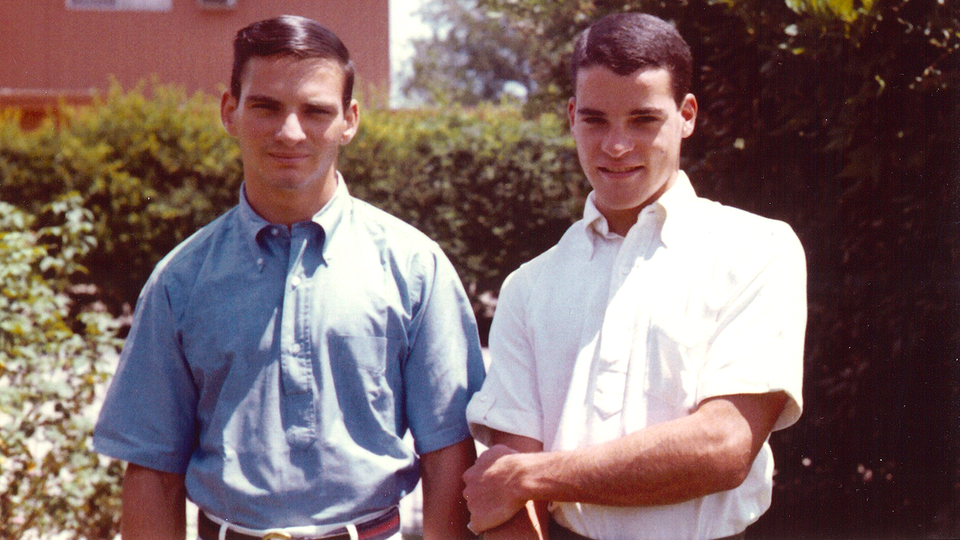
The term private equity did not yet exist in the 1970s. What Kravis, his cousin George Roberts and the 19-years-older Jerome Kohlberg were doing was known at the time as a bootstrap acquisition. The three letters K-K-R stand for the initials of their surnames. In those days, directors sat together on supervisory boards, played golf together, and critical questions were rarely asked. What was missing was aligned interest between owners and management. Kravis and his partners wanted managers to put in their own money. Not an amount that would force someone to remortgage their house, but a stake that would hurt in the event of a loss. It is what we call skin in the game, one of the selection criteria in our family holding company strategy.
Bear Stearns, the trading house the three men came from, never put a single dollar into their deals. When Kravis proposed building a private equity operation within Bear Stearns, the senior partner gave him an ultimatum: do what the firm wanted, or leave. Two days later, the resignation letters of all three partners were on the table. They then tried to raise a fund of USD 25 million, but could not do so on acceptable terms. One investor wanted to take half, which was fine. Two large insurers wanted to put up the other half, on the condition that they got a seat on the investment committee. The founders refused this, as they did not want to effectively work for the insurers.
At a steak dinner in New York, Roberts and Kravis worked out a different route. Both had three children, no money, and by then no job either, so they had to calculate carefully. Running KKR would cost roughly USD 500,000 a year. To raise that amount, they approached eight people who each contributed USD 50,000 a year for five years. That yielded USD 400,000. The remaining USD 100,000 had to come from fees on acquisitions. In return, the eight backers were allowed to see every deal and could decide for themselves whether they wanted to participate.
Dividing the profits among themselves took them a 35-second conversation. Kohlberg took 40 percent, Kravis and Roberts 30 percent each. If new partners joined later, Kohlberg would be the first to give up part of his share, until the three held an equal stake. Asked what tipped the scales for him, Kravis does not point to the business, but to his trust in his two partners and the knowledge that they shared the same value system.
No alpha-male culture
The most important conversation the three founders had was, according to Kravis, not about money but about culture. Bear Stearns had an eat what you kill mentality, in which everyone claimed a deal or an idea as their own. Kravis and his partners did not want a culture of the individual, but a culture of the collective. Whether or not you had sourced a deal, and whether or not you had worked on it, you shared in the carried interest and the fees. Half a century later, that culture remains unchanged. Everyone is paid from the firm's balance sheet, not on the basis of their own deals, and the whole is regarded as a team sport. People who earned the firm a great deal of money but did not fit that culture have left and were never made partner, because, according to Kravis, they destroy a firm.
The advice Kravis gives entrepreneurs on this point: "Build a culture and live it, hire for it, and talk about it constantly." A sign reading "arrogance kills" has hung behind his desk for years. He says he has seen more people fail because of arrogance than for any other reason. He immediately links this to the importance of continuing to learn. Anyone who believes they have all the answers closes themselves off to new insights, and humility is precisely the norm at KKR.
When it comes to risk, Kravis applies a fixed rule of thumb. "Don't look at how much you think you can make, look at how much you can lose if the investment goes wrong." Anyone who works that way, he says, will almost always make money. There is no single type of risk that applies to everything. Credit, venture capital and infrastructure each carry a different kind of risk. What matters is matching the right risk to the right opportunity.
Family business
The partnership with his cousin George Roberts lies at the heart of the KKR story. The two met when they were two years old. They have been each other's best friends their whole lives and led KKR together as co-CEOs for 45 years, with exactly equal say and pay from day one. They do not agree on everything, but they talk things through. If one does not convince the other, it does not go ahead. When Joe Bae and Scott Nuttall were appointed as the new co-CEOs, their first request was to be paid equally, no matter what.
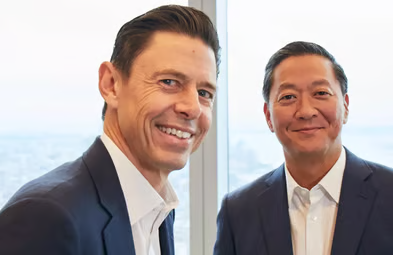
According to Kravis, you can go far when two partners share the same goals and values and want success for each other rather than trying to outdo one another. He draws a comparison with Charlie Munger and Warren Buffett, who built Berkshire Hathaway together in that same spirit.
Picks and shovels in AI
In its own portfolio, KKR deliberately opts for a picks-and-shovels strategy when it comes to AI. Rather than betting on the winning AI application, the holding company invests in the supplying infrastructure that every player needs, comparable to the seller of picks and shovels during the gold rush. Kravis therefore states bluntly that he cannot predict which AI company will succeed. KKR owns five platforms with stakes in more than 200 data centres worldwide, in the United States, Europe, Asia and the Middle East, with a large part of these in the cloud. Wherever the large language models move, the cloud, in his view, will continue to exist.
He adds a fundamental caveat to this. "AI has no judgement and no wisdom," he says, whereas investing is precisely about judgement, about assessing a person or the direction of a sector. At the same time, he calls AI a huge productivity accelerator that is here to stay and that is of great value for research and education. His message is that no one knows where this will end, but that you must learn to understand it and not be afraid of it.
The power of permanent capital
When a student asked where the most attractive opportunities lie for recent graduates, Kravis advised simply getting started first, since the perfect first job does not exist. He also warns that the world is not waiting for yet another private equity fund. In China alone there are more than 5,000 such funds. If he were to start again, he would look for a small company, buy it together with a group, become its chairman, appoint the best possible CEO and grow it by acquiring other companies.
The reason for this is permanent capital. "The power of compounding is the eighth wonder of the world," says Kravis. He contrasts the fund model with that permanent capital. A fund with a 2 percent management fee and 20 percent of the profit is attractive, but every four or five years it is fully invested and new money has to be raised again. Moreover, you only keep 20 percent of the profit. If you own the company yourself, 100 percent of the profit is yours. The example he cites is Berkshire Hathaway. Buffett rarely sold companies, did not load them with debt, paid no dividends and let cash flow accumulate, resulting in a cash position of around USD 400 billion and a value of more than USD 1 trillion.
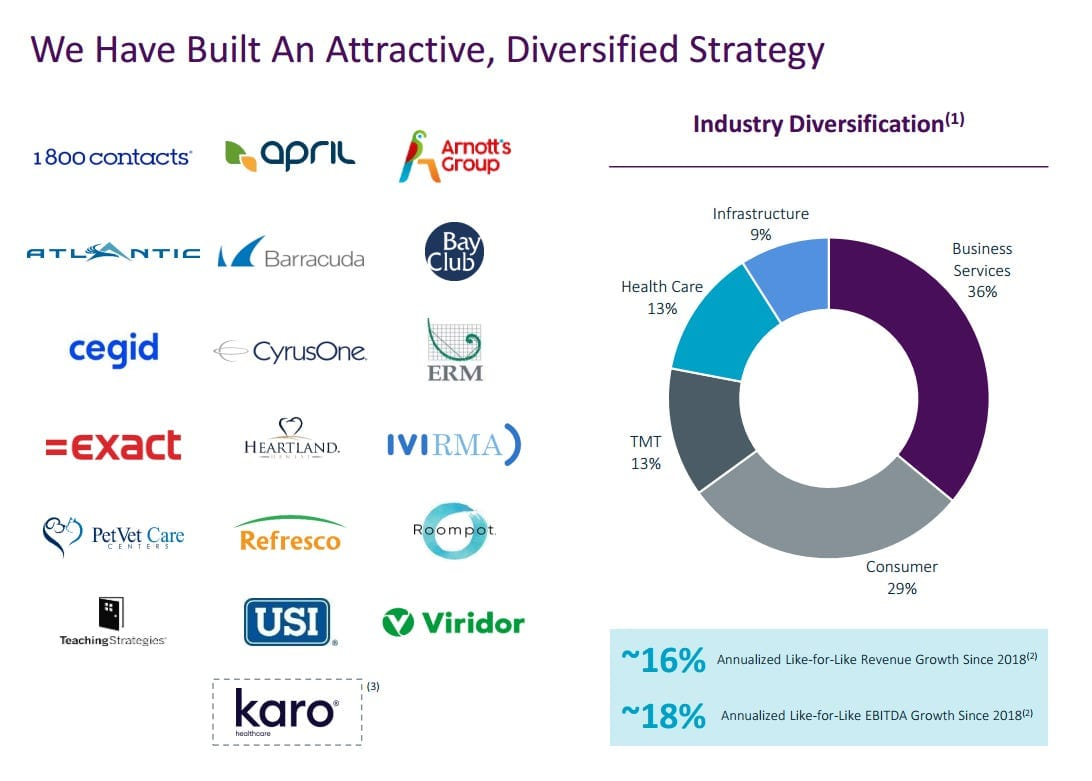
Tellingly, KKR itself has steadily moved in that same direction, partly through insurer Global Atlantic, making it less dependent on raising a new fund every few years. KKR has also formalised the "strategic holdings" segment. These are stakes that KKR holds on its own balance sheet with a long horizon, a first step towards a permanent capital structure at holding company level.
After fifty years, Kravis still emphasises the same two things. The first is the courage to start your own business, because without the willingness to take risks and make mistakes, nothing gets off the ground. The second is the patience to let the capital built up compound over a very long period. Whoever combines these two, in his view, builds something that can endure for generations.
Receive weekly insights in your inbox
Exclusive analyses and updates on family holding companies and global market developments.
Strong cash flows at Action drive share buyback
This week, 3i Group (London: III) published an update on Action during its shareholder meeting, the European discount retailer that accounts for the overwhelming majority of the holding company's value.
Like-for-like sales growth stood at 3.3% year-on-year through week 25 (21 June 2026). Over the same period, Action opened 105 new stores, on track with its expansion plans for 2026. Its cash position stood at €699 million on 21 June, after a €450 million dividend was distributed to all shareholders in May. 3i expects a good quarter for Action in terms of earnings growth. Over the first nineteen weeks, LFL growth stood at 2.4%, which suggests a substantial acceleration in growth has taken place.Massive Moats calculated that this implies weeks 20 through 25 showed LFL growth of roughly 6.1%, a sharp acceleration, especially compared with the same period last year, when the second quarter was the strongest quarter of the year at +7.4%. An obvious explanation is the warmer weather arriving later this year, which boosted demand for seasonal products in the second quarter.
Massive Moats also elaborates on the cash dynamics and share buyback in its post. On 10 May, Action still had €925 million; after the €450 million dividend distribution, a simple calculation would put the figure at €475 million. That the cash position nevertheless stood at €699 million on 21 June implies a cash inflow of roughly €224 million in just six weeks. It once again illustrates what an enormous cash cow Action is.
As of May 10, Action’s gross cash position stood at €925 million.
— Massive Moats (@massivemoats) June 25, 2026
This morning, 3i Group $III.L announced that Action distributed a €450 million dividend to its shareholders at the end of May. Of this distribution, approximately €300 million (£258 million) will have flowed to… pic.twitter.com/amwurybac5
That cash dynamic is worth a closer look. On 10 May, Action still held a gross cash position of €925 million. After the €450 million dividend distribution, a simple calculation would put this at €475 million, but the cash position on 21 June stood at €699 million. This implies a cash inflow of approximately €224 million in just six weeks. Of the dividend paid out, around €300 million (£258 million) flowed to 3i, which holds a 65.4% stake. Those funds are being deployed directly for share buybacks. Since 14 May, 3i has bought back almost 10 million of its own shares at an average price of GBP 22.23, accounting for around 0.95% of outstanding share capital and already about 29% of the announced £750 million buyback programme. With a reported NAV of GBP 30.30 per share and a current share price of 2,500p, the holding company is currently buying back its own shares at a discount of more than 17% to intrinsic value, which makes the buyback all the more attractive for as long as that gap persists.
Prosus further expands its AI portfolio
Amsterdam-listed technology holding company Prosus (Amsterdam: PRX) made three moves this month that sharply illustrate its "AI-first" strategy: a new platform for restaurant owners, a major investment in European healthcare, and a follow-on investment in India.
Together with Just Eat Takeaway, Prosus launched Toqan this week, an AI platform that gives restaurants and small business owners the ability to build their own dashboards and automations simply by describing in plain language what they need, much as you would explain it to a colleague. This is said to require no programming knowledge or IT department. The platform runs on Prosus' own AI foundation, the Large Commerce Model (LCM), trained on data from more than a billion customers and around 500 million daily interactions across its own platforms.
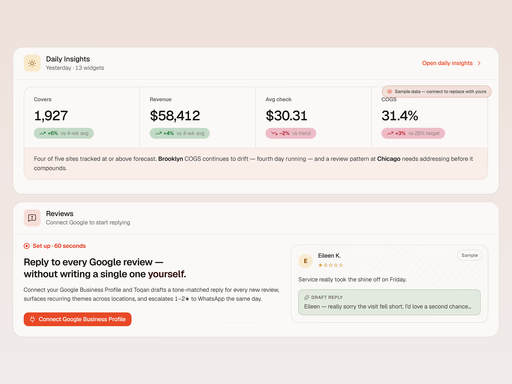
For a restaurant owner, this translates into a digital back office that proactively thinks along with you. Think direct insight into margins, inventory management that responds to real-time sales, weather forecasts and local events, staff rosters that fill themselves in, and promotions sent out at just the right time to fill empty tables. The initial results certainly sound promising.
For instance, Dutch coffee chain Lebkov & Sons cut its financial reporting time from several weeks to thirty minutes, and Rotterdam-based burger chain Burger & Frites built a delivery analysis agent that increased the number of deliveries by 25%, cut overtime by 60% and, according to the company, saves €21,000 a month as a result. Usage is free during the ongoing pilot phase. The rollout begins in Europe via JET, which has 362,000 affiliated partners, after which Latin America will follow via iFood.
"Good technology shouldn't be the exclusive domain of large chains with their own tech teams."
— Roberto Gandolfo, CEO of Just Eat Takeaway
Besides the platform, Prosus made two further investments in AI initiatives. The first is a major step into European healthcare. Prosus is leading a €480 million funding round in French health and insurtech company Alan, with an own investment of €400 million. The round values Alan at €5.5 billion. Alan combines health insurance, prevention and digital care guidance in a single app under the banner of "prevention insurance". The company is active in France, Belgium, Spain and Canada, has more than 1.1 million members, generates over €800 million in annual recurring revenue (+53% year-on-year) and is profitable in its home market of France.
 Prosus
The second investment takes place in India, where Prosus Ventures, together with Tomales Bay Capital, is co-leading a US$30 million Series B round in Equal AI. That company started out as India's first AI call assistant: a voice-controlled app that blocks spam calls, recognises who is calling and handles tasks on behalf of the user. Since its launch in October 2025, it has grown to more than one million monthly and around 350,000 daily users. With the fresh capital, founder Keshav Reddy aims to expand into a broader AI lifestyle concierge covering communication, financial services, shopping and lifestyle.
A brain drain at Google
The week began badly for technology holding company Alphabet (Nasdaq: GOOGL). Following a series of high-profile AI departures and persistent concerns about capital allocation, the stock fell at the market open on Monday.
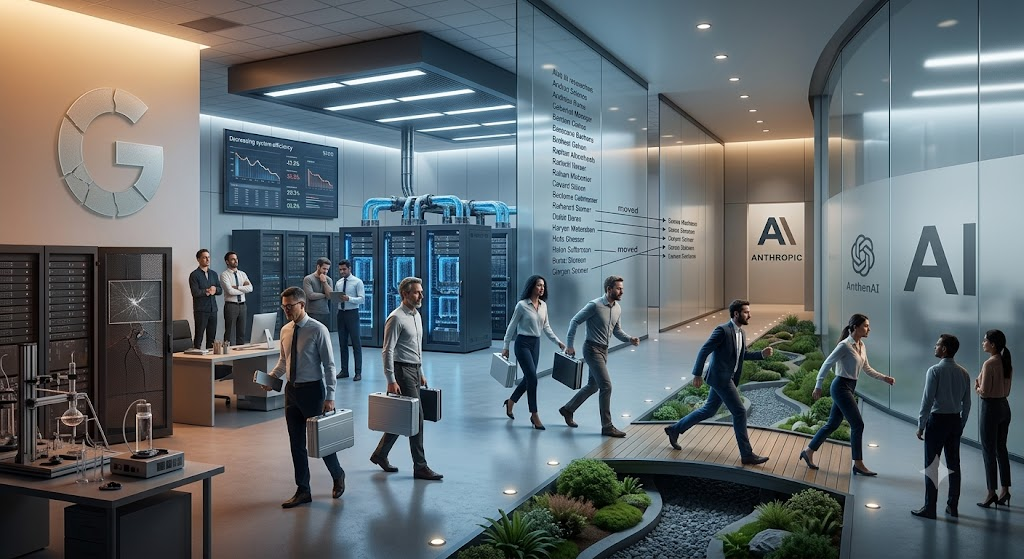
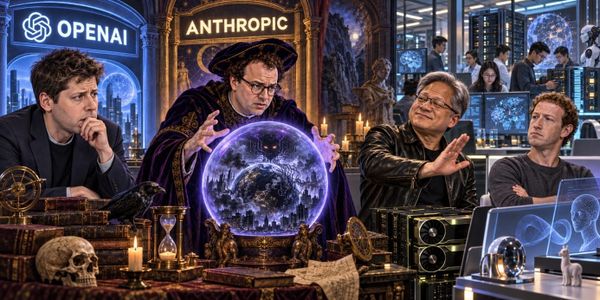
The immediate trigger was weekend news that Noam Shazeer, Google's VP of Engineering and co-lead of the Gemini model, is leaving for OpenAI. Google had brought him back less than two years ago by acquiring his start-up Character.AI for around $2.7 billion. Shortly afterwards, John Jumper, Nobel laureate and Vice President of Google DeepMind and co-creator of AlphaFold, confirmed that he is leaving Anthropic after almost nine years at Google. Bloomberg reported later in the week that these would not be the only departures, with researchers Jonas Adler and Alexander Pritzel, both regarded internally as key figures behind Gemini, also set to move to Anthropic. In a short space of time, Google is thus losing four prominent employees to its two most direct competitors. The news raises questions as to whether Google can maintain its position, particularly in the LLM race. DeepMind CEO Demis Hassabis responded calmly: "We're winning our fair share of the best talent. We have by far the largest and broadest research team of any lab." Whether that is enough to turn the sentiment around remains to be seen.
In the background, there is also internal discussion about the allocation of computing power. Shortly before Shazeer announced his departure, the computing capacity assigned to one of his projects was transferred to a London-based DeepMind team, reportedly to streamline collaboration and make the pre-training phase of new models more efficient. Whether this played a role in his decision has not been confirmed.
On top of that, Google has postponed the launch of Gemini 3.5 Pro from June to July. The company is using the extra time to process feedback from early testers and make adjustments. The delay itself is not dramatic, but combined with the departure of talent and growing competition from OpenAI and Anthropic, it adds an extra layer of uncertainty.
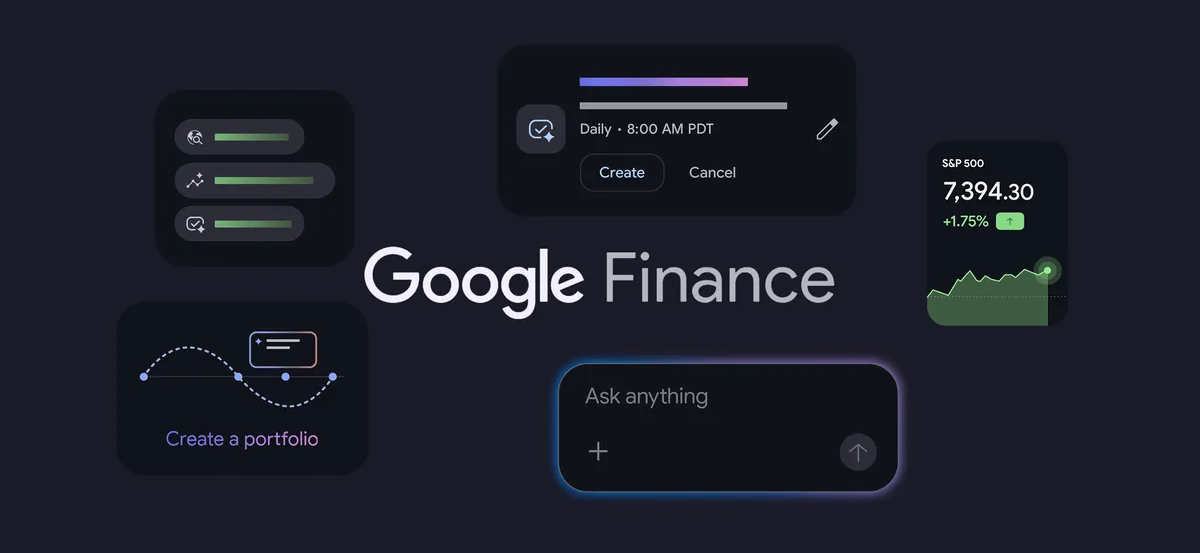
Less prominent, but worth mentioning for our readers, is that Google launched a revamped Google Finance platform this week. The renewed platform offers portfolio tracking, personalised market briefings and a new Android app. Users can upload their portfolio via screenshots, CSV files or a description, and then request AI-driven analyses of allocation and sector exposure. Those who want to experiment with it themselves can find it at finance.google.com.
Finally, it also emerged this week that Alphabet will be added to the Dow Jones Industrial Average on 29 June, replacing Verizon. The Dow is the world's oldest stock market barometer and comprises thirty components; a stock's weighting is determined by its price rather than its market capitalisation, meaning that with a share price of around $346, Alphabet will immediately have the fifth-largest weighting. The inclusion is mainly of symbolic value—few ETFs are benchmarked to the Dow—but it does underline the position Alphabet has taken as one of the most representative companies in the American economy.
Receive weekly insights in your inbox
Exclusive analyses and updates on family holding companies and global market developments.
Would you like more information about our services?
Get in touch
Disclaimer:
No rights can be derived from this publication. This is a publication of Tresor Capital. Reproduction of this document, or parts of it, by third parties is only permitted after written consent and with reference to the source, Tresor Capital.
This publication has been compiled by Tresor Capital with the greatest possible care. The information is intended in a general sense and is not tailored to your individual situation. The information should therefore explicitly not be regarded as advice, an offer or a proposal to purchase or trade investment products and/or to obtain investment services, nor as investment advice. The authors, Tresor Capital and/or its employees may hold positions in the securities discussed, for their own account or on behalf of their clients.
You should carefully consider the risks before you start investing. The value of your investments may fluctuate. Past performance is no guarantee of future results. You may lose (part of) your investment. Tresor Capital disclaims any form of liability for any inaccuracies or errors. This information is purely indicative and subject to change.
Read the full disclaimer at tresorcapitalnieuws.nl/disclaimer .
This article was translated automatically from Dutch using AI. In case of any difference, the Dutch original prevails. Read the original in Dutch.