Family Holdings #31 - Figures versus sentiment

This week's topics:
Markel Group delivered a strong combined ratio of 93%, although the quarterly result was weighed down by a USD 205 million reserve charge at State National. The insurance division is undergoing a thorough clean-up, with AI being actively deployed to speed up processes and boost efficiency. Management regards the shares as significantly undervalued relative to intrinsic value, which is why cash flows are being extensively used for share buybacks.
Technology giant Amazon, a more recent position in our portfolio, posted strong second-quarter results with revenue up 20% to $200.6 billion and operating income rising to $27.5 billion. Cloud division AWS stole the show with accelerated revenue growth of 36.7% and an operating margin of nearly 39%. Although capital expenditure (CapEx) for 2026 was raised to $220 billion to meet enormous demand for AI capacity, the contracted order backlog of nearly $500 billion and the payback period of under three years per server generation show that management is keeping the massive spending firmly under control.
In Brief:
The Swedish serial acquirer Lifco (Stockholm: LIFCO-B) has acquired the company ErgoPack France. This French company sells the products of Germany's ErgoPack, which has been part of Lifco since 2019 and is the world market leader in ergonomic, mobile machines used to strap tyres onto pallets. Following the acquisition of the American sales partner in 2021, Lifco is now also bringing ErgoPack's French sales in-house. In addition, Lifco announced the acquisition of Germany's Mozelt, a designer and manufacturer of generators and lifting magnets used by cranes to lift heavy metal loads, with ten employees and annual revenue of EUR 2.6 million.
The Canadian software holding company Constellation Software (Toronto: CSU) announced three acquisitions within two days, spread across Australia, Wales and Turkey. Subsidiary Vela acquired Australia's ABC Information Solutions (software for retail businesses) and Turkey's Enocta (an online learning and training platform), while subsidiary Jonas acquired the Welsh market research firm Delineate. This brings Constellation to 49 announced acquisitions so far this year, not counting its likewise listed subsidiaries Topicus and Lumine.
Berkshire Hathaway (New York: BRK.B) is expanding in temporary accommodation through subsidiary CORT Business Services. CORT, a leading provider in the United States of furniture rental for homes, offices and events, is acquiring Dwellworks Living, a provider of temporary furnished housing for companies, expats and business travellers. According to CORT CEO Mike Davis, this creates a stronger player able to serve clients through a network of partners in more than 90 countries.
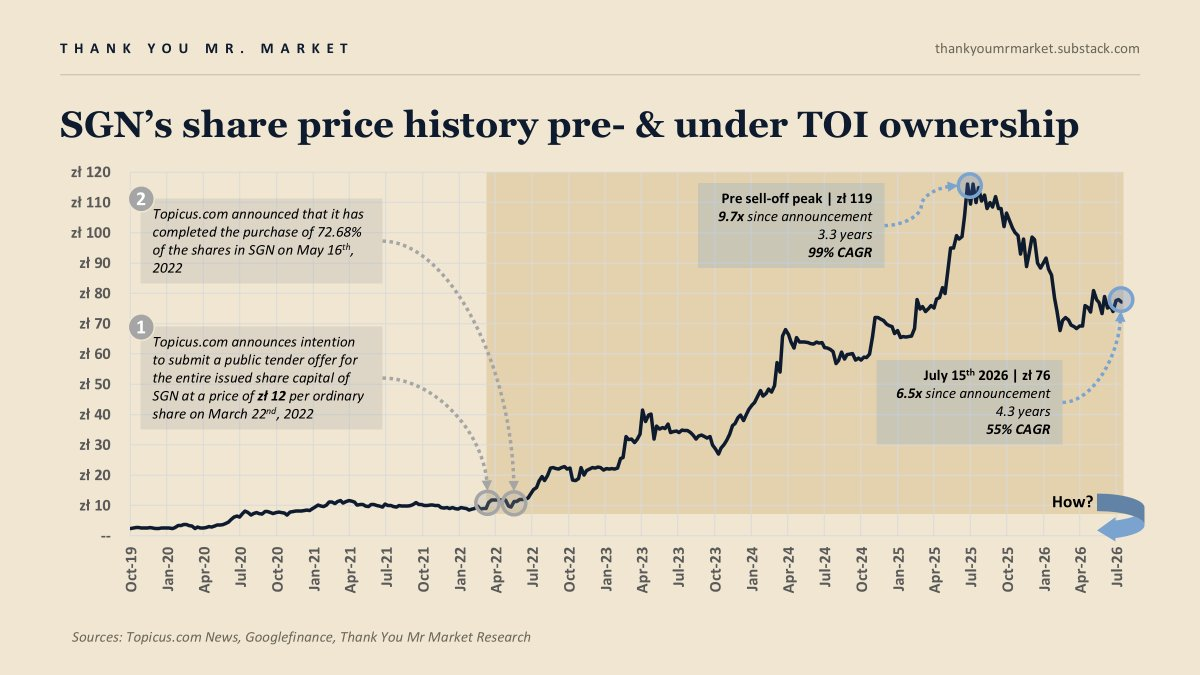
Sygnity (Warsaw: SGN), the listed Polish subsidiary of the Dutch company Topicus (Toronto: TOI), published strong preliminary half-year results, with revenue up 30% and net profit up 37% in the second quarter compared with a year earlier. Because Sygnity reports before its parent company, such figures often serve as a good forerunner for Topicus's own quarterly results. Since Topicus acquired almost 73% of Sygnity in May 2022, the share price has increased more than sixfold, equivalent to an annual return of 55%. That increase is the result of higher prices for maintenance contracts, parting ways with clients who did not go along with these, and small bolt-on acquisitions, which pushed the operating profit margin (EBITA) up from 14.7% to 28.5%. Analyst James Stawicki of Thank You Mr Market sees this as the blueprint for the 24.8% stake that Topicus took last year in Asseco Poland (Warsaw: ACP).
KKR figures contradict pessimism
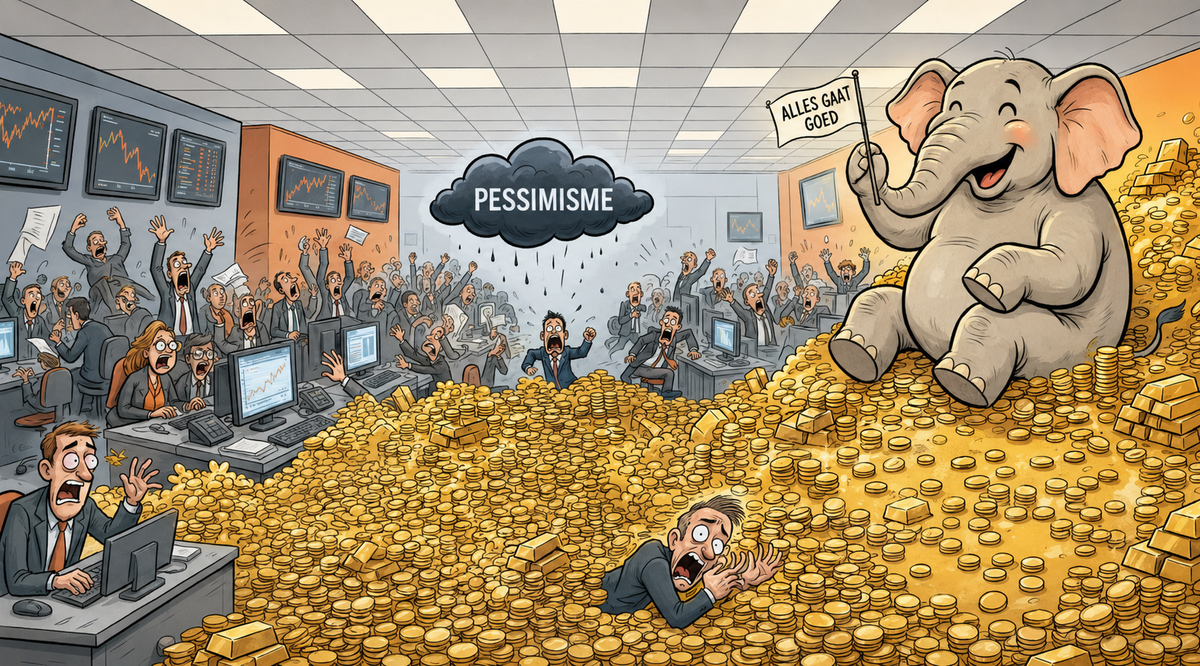
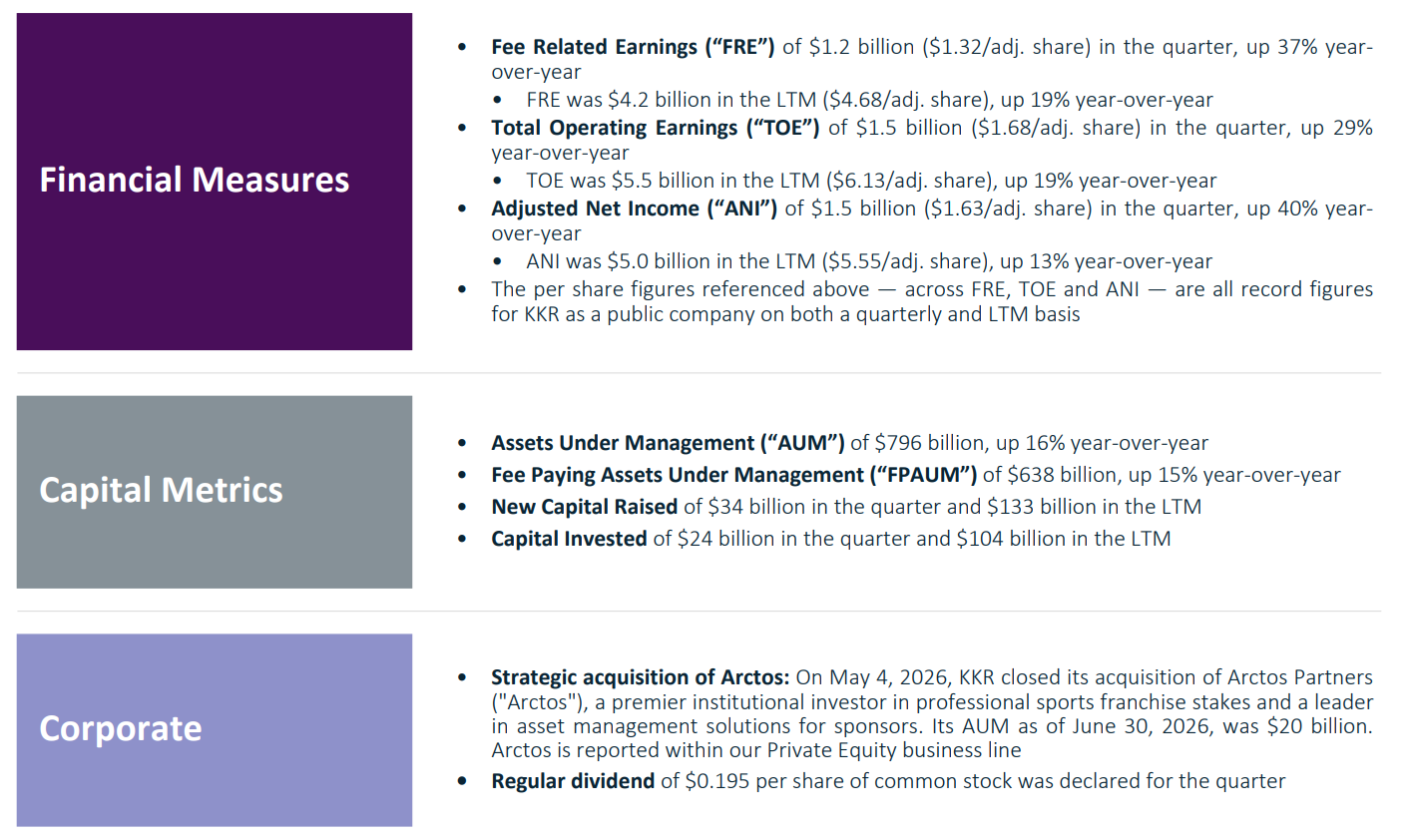
This week, KKR & Co. (New York: KKR) published its second-quarter results. The private equity holding company set an absolute record on all three key profit measures, both for the quarter just ended and over the trailing twelve months. Yet a so-called relief rally failed to materialise; the market seems to find it difficult to reward KKR. Management has noticed this too. According to them, the gap between persistent external pessimism and the strong internal operational reality is wider than they have ever seen before.
The figures as a rebuttal to the pessimism
The core results for the second quarter, however, directly contradict the weak market sentiment. Fee Related Earnings (FRE), the predictable profit from management fees, rose by 37% to $1.2 billion ($1.32 per share). Total Operating Earnings increased by 29% to $1.68 per share, while Adjusted Net Income (ANI), which serves as the measure for free cash flow, came in at $1.5 billion (+40%). Assets under management continued to grow, reaching $796 billion, and KKR raised no less than $34 billion in new capital during the quarter. This brought the twelve-month total to an impressive record of $133 billion, alongside $24 billion in new investments.
That contrast formed the main theme during the analyst call. Halfway through the Q&A session, co-CEO Scott Nuttall took the floor to deliver a structured rebuttal. He emphasised that KKR has been listed for seventeen years and that he and co-CEO Joe Bae have both worked at the company for thirty years. During that time, the sector faced external pessimism on several occasions, but never before had perception strayed so far from the operational facts and the feeling within the company. His firm conviction: the best response to pessimism is performance. Nuttall then explicitly named the four fears that, in his view, weigh on the sector, and addressed each one in turn.
The four fears refuted
The first fear concerns private credit, with the market worried about rising defaults and the sustainability of returns in private lending. KKR countered this with the expectation that it will raise a record amount of third-party credit capital this year.
The second fear centres on private wealth and the high-net-worth individual as a new client base, given the many articles that have appeared in recent months about capital outflows from such vehicles. Nuttall pointed out, however, that KKR's K-Series vehicles for retail investors grew in size by around 70% over twelve months thanks to new inflows. This year, on balance, more than 20% in fresh capital was added on top of that, a figure that, according to Nuttall, often receives too little attention in the media.
The third fear is that private equity firms can no longer get their companies sold, and would therefore be unable to return money to investors. A new slide in the results presentation shows, however, that this is not the case at KKR. Since sector-wide sales activity had stalled following the rise in interest rates in 2022, KKR in fact delivered the largest monetisation quarter in its history. Realised performance fees came in at $848 million, more than double last year's figure.
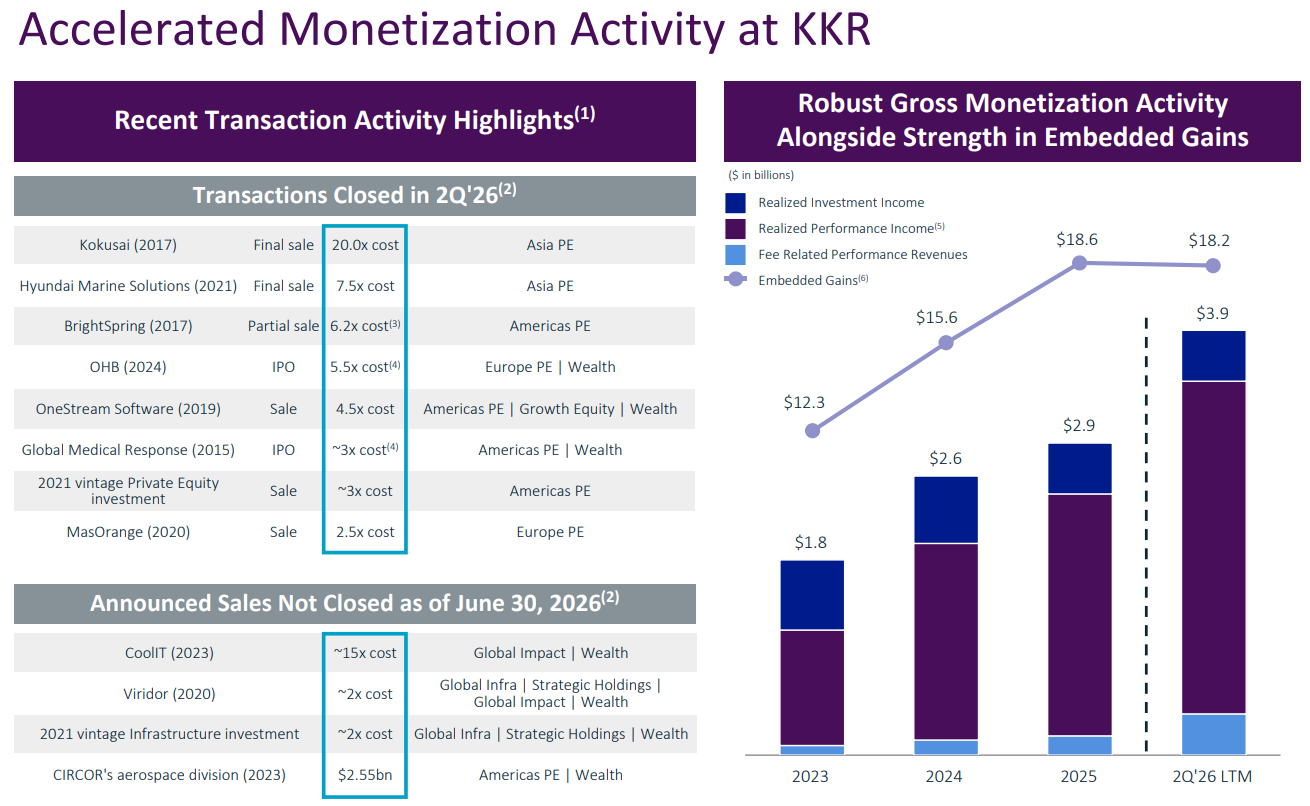
The left-hand part of the overview shows that returns on completed and announced deals range from 2.5 to as much as 20 times cost, with headline-grabbing standouts such as the sale of the remaining stake in Japan's Kokusai Electric at a twenty-times return, Hyundai Marine Solutions at 7.5 times cost, and further proceeds from, among others, BrightSpring, OHB, OneStream Software, Global Medical Response and MasOrange. For the third quarter, CFO Rob Lewin also gives a clear indication of around $700 million in visible monetisations, directly arising from transactions still to be completed, including the lucrative sale of CoolIT at an estimated multiple of fifteen times cost.
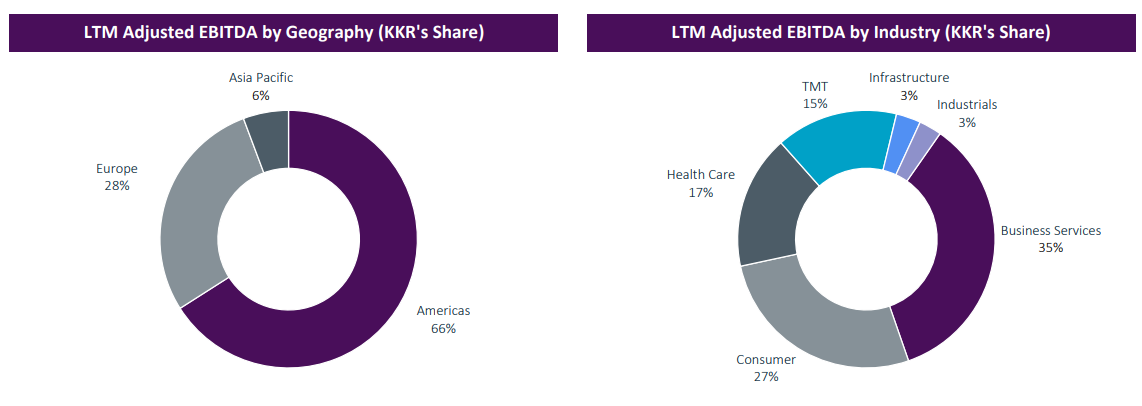
The fourth fear concerns software and AI, and the worry that software companies would be massively disrupted by artificial intelligence. Nuttall put this into perspective by pointing out that software accounts for only about 6% of KKR's assets under management, that the company sold software firm OneStream this year for 4.5 times cost, and that revenue and EBITDA growth across the portfolio still stood in the high single digits (7-9%).
According to management, these four concerns lead to a fifth and most important fear: that all of this would slow down fundraising. After all, if investors become nervous about credit, private investment channels, exits and technological disruption, inflows could dry up, even though this capital inflow is the lifeblood of an asset manager. KKR pushed back hard precisely on this point. According to Nuttall, fundraising was ahead of schedule, the twelve-month figure was a record, and momentum was accelerating rather than slowing.
His overall picture was that the market increasingly resembles the letter K. Only the largest and strongest players sit on the upward leg of that K. These firms already receive all the capital from investors and are thereby capturing ever more market share. The smaller and weaker funds, by contrast, are sliding down, causing their flow of capital to dry up. KKR, of course, sees itself on the winning side of that K.
Looking further, not everything is spectacular
Anyone looking beyond the record figures will see that not every part of the business is performing equally strongly. And in a few places, the picture is also simply more complicated than a single percentage suggests.
The 37% jump in Fee Related Earnings was partly coloured by an accounting change under which KKR moved performance fees from private-equity funds for private clients into recurring revenue. Because a much smaller share of this fee income is paid out to deal teams than is the case with traditional carried interest, the same amount of revenue suddenly leaves considerably more for shareholders. Although the company justifies the change on the grounds that these funds settle annually and that competitors have long done the same, KKR did not restate the prior-year comparable figures. On a like-for-like basis, underlying FRE growth therefore comes out at a still-strong 27%, while the margin under the same definition remained largely stable at around 69% compared with last year.
Furthermore, the insurance division built around Global Atlantic showed a more subdued movement. Operating profit rose modestly by 4%, and would have been essentially flat without one-off investment gains, while the proprietary balance sheet shrank slightly. Management stressed that this is a deliberate choice: due to increased competition in the policy market, KKR chose to allocate less capital and be more selective in order to avoid thin margins, even though the quality of the long-term liabilities remains high.
Finally, the Strategic Holdings segment, the portfolio of around twenty companies that KKR wants to hold for the long term using its own capital, also came under analysts' scrutiny. The segment only receives the dividends actually paid out, rather than the underlying operating profit. After two quarters, the tally stands at just $85 million, against an ambitious full-year target of just over $350 million. This means more than three times as much needs to come in during the second half as in the first half, which calls for an enormous final sprint - all the more so because the operating results of these companies have remained largely stable for three quarters in a row now. CFO Rob Lewin candidly admitted that KKR may have set up this segment somewhat too early given its scale at the time, but is sticking unwaveringly to the long-term target of $1.1 billion by 2030.
Receive weekly insights in your inbox
Exclusive analyses and updates on family holding companies and global market developments.
Strong insurance figures at Markel offset by one-off setback
The American Markel Group (New York: MKL) published its second-quarter figures this week. The insurance holding company has three "engines", with specialty insurance at its core, surrounded by an investment portfolio of over USD 33 billion, and alongside that a collection of non-listed companies ranging from ornamental plant grower Costa Farms to manufacturers of bakery machinery and precast concrete. The insurance business once again delivered a convincing quarter, but investors focused mainly on a one-off USD 205 million reserve booked in the financial division. The share price fell by almost 6 percent after publication to around USD 1,900.
Insurance engine running at full speed
The insurance division posted a combined ratio of 93 percent, a clear improvement on the 97 percent recorded a year earlier. This metric measures claims and expenses against earned insurance premiums, whereby anything below 100 percent means that the underwriting itself is profitable. Insurance profit rose by 125 percent to USD 142 million and the division's operating profit increased by 40 percent to USD 376 million, helped in part by 11 percent higher investment income from the float, the premium money an insurer invests before claims are paid out.
Adjusted for the divested reinsurance division and the conversion of the programme with classic-car insurer Hagerty to a fee-based model, premium volume grew by 10 percent, with the international division standing out at 31 percent premium growth. The figures also include two percentage points of claims from the military conflict in the Middle East (USD 41 million) and two percentage points from the run-off reinsurance book, which makes the underlying picture even somewhat stronger.
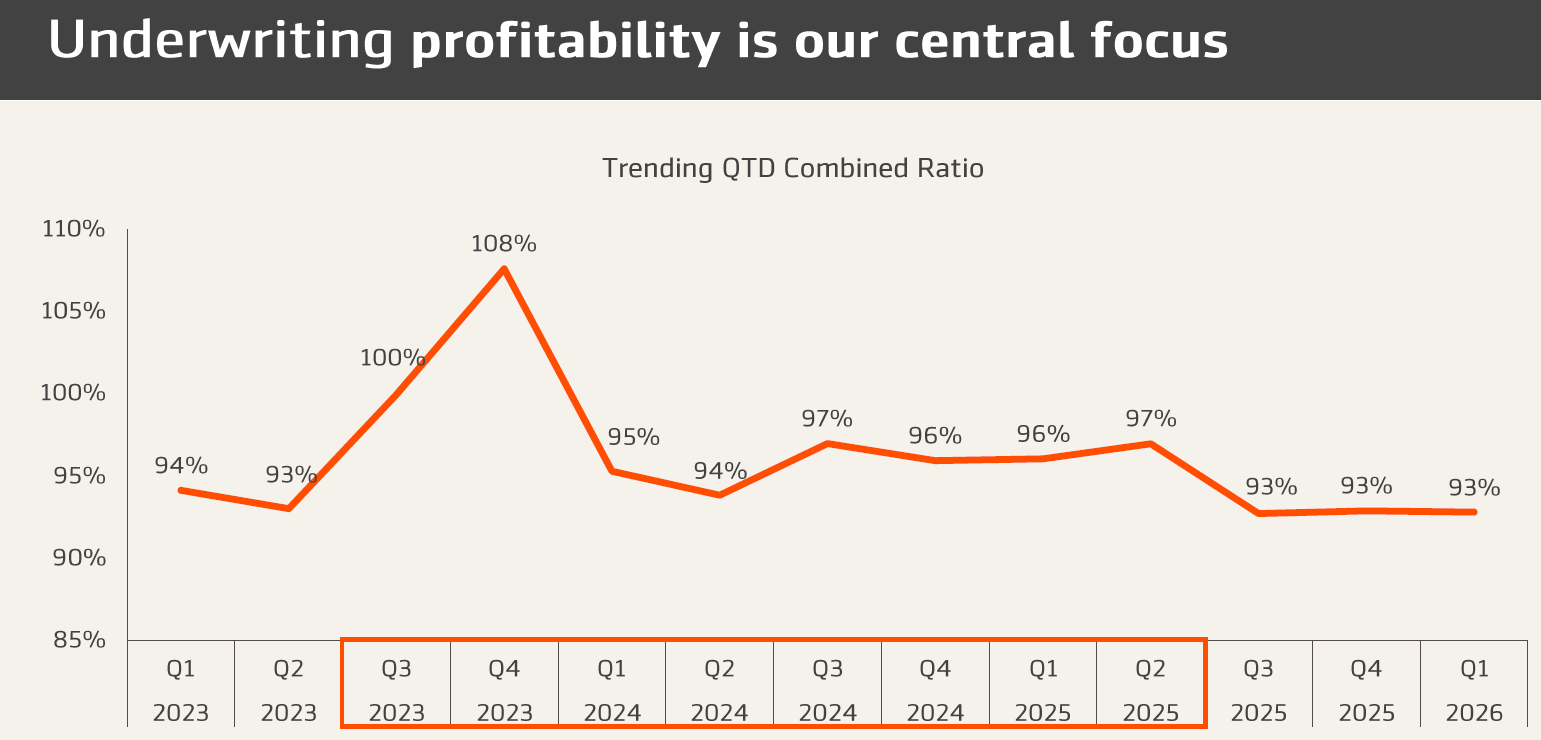
For Simon Wilson, who took the helm of the insurance division at the end of 2024, this is the fourth consecutive quarter with a combined ratio of around 93 percent. He does not mince his words about how that recovery came about. "The improvement is the result of a number of difficult choices, in which we chose the common sense of the bottom line over the vanity of premium growth," the insurance chief said during the conference call.
Behind those words lies a substantial clean-up. Markel halved its underwriting limit per policy on many US liability risks from USD 10 million to USD 5 million, exited directors' and officers' liability cover for listed companies (around USD 200 million in premium), discontinued loss-making auto-loan credit insurance, and in mid-2025 sold the renewal rights to the global reinsurance division, which carried around USD 1 billion in premium. At the same time, the organisation was restructured into three divisions, under which sit fourteen business units, each with its own profit-and-loss account and a single accountable leader, with 80 percent of the 2,200 central staff members moving into those units. Wilson put the outcome into perspective with a touch of British understatement:
"Reporting a combined ratio in the low nineties for four quarters in a row may look a bit boring on the surface. As far as we're concerned, boring can go on for a long time."
That the old accident years turn out to have been reserved conservatively was evident from a release of USD 167 million in claims reserves from prior years, mainly in property, marine and energy, and workers' compensation.
Pruning, building and the factor of time
At the annual shareholders' meeting in Richmond, which Markel itself calls The Reunion, insurance chief Wilson presented his programme under the heading "building to win" at the end of May and used the image of a gardener.
"You can do good portfolio management by pruning, like in a garden. But pruning alone will never make you a market leader again."
The building is happening at a rapid pace with artificial intelligence. Together with consultancy Bain, Markel set up the new business unit Cortex within a few months for hard-to-place US liability risks, which very recently began writing its first policies. Using Harvey AI, six product lines with a combined premium of over USD 500 million were completely redesigned, cutting the turnaround time for an initial risk assessment by 50 to 90 percent and growing the London war-risk portfolio by 50 percent in a year.
In addition, Markel made internal budget available for AI ideas from its own employees, nine of which had been put into use by April. The price tag in particular stands out. Traditional policy and claims administration software from suppliers such as Guidewire costs hundreds of millions of dollars, according to insurance chief Wilson, and implementation takes three to five years. With AI models such as Anthropic's Claude, Markel builds something similar in two months for USD 3 to 5 million, he said during the call.
At the same time, the insurance industry has a built-in lag. Premiums are earned over the course of a year, and it is only after roughly two years that it becomes clear whether an accident year was priced correctly. CEO Tom Gayner explained during the Reunion why he preaches patience, with a joke aimed at his insurance chief.
"Even if we had put Jesus Christ in charge of our insurance business, it would still take two years before we knew whether he understood it. So give the man some time."
That this is a work in progress became clear last quarter. Markel raised its claims expectations for personal umbrella policies (policies that give American individuals extra liability coverage on top of their regular insurance) and saw the combined ratio of the programs and solutions division rise from 91 to 94 percent. A portfolio of this size simply cannot be optimised all at once.
The reserve at State National
Since this year, Markel has no longer been reporting its subsidiaries State National and asset manager Nephila within the insurance division but within the financial division, under the responsibility of Andrew Crowley, president of Markel Ventures. The idea behind this is that both companies have a hybrid character that leans more on the income statement than on the balance sheet, while Wilson can focus entirely on the core business. State National is a so-called fronting insurer. The company makes its insurance licences available to external parties, allowing them to issue policies in State National's name. The company transfers the risk on those policies entirely to capital providers, who must post collateral as security. State National receives a fee for this service.
That went wrong last quarter, unfortunately. One of those capital providers went bankrupt, and the losses on five programmes, mainly liability cover for American rental housing complexes written between 2012 and 2021, rose faster than the collateral posted. In the first-quarter figures, Markel already reported a small shortfall. Following an internal actuarial review and a study by an external party, a reserve of USD 205 million has now followed, causing the financial division to post an operating loss of USD 149 million, compared with a profit of USD 78 million a year earlier. It is the first substantial credit loss in State National's more than forty-year history. CEO Gayner framed the charge in the transparent reporting tradition we know from the holding company:
"As always, at Markel we do our best to recognise and report bad news quickly, and to let good news take the time it needs to develop."
State National was acquired in 2017 for USD 900 million. Gayner pointed out that since the acquisition the company has cumulatively contributed more than USD 1 billion to profit, including this charge. Still, it remains unfortunate for Markel that there have been more of these avoidable missteps in recent years, which repeatedly divert attention from the strong core business.
In the other divisions, which previously belonged together under Markel Ventures, operating profit in the industrial segment fell by 27 percent to USD 75 million due to the cyclical downturn in car-hauling trailers and bakery equipment, while operating profit in the consumer and other division rose by 20 percent to USD 122 million thanks to Costa Farms' seasonally strong quarter. The bottom line showed net profit of USD 1.2 billion (USD 93 per share), driven mainly by unrealised gains on the USD 13.5 billion equity portfolio.
Buybacks below intrinsic value
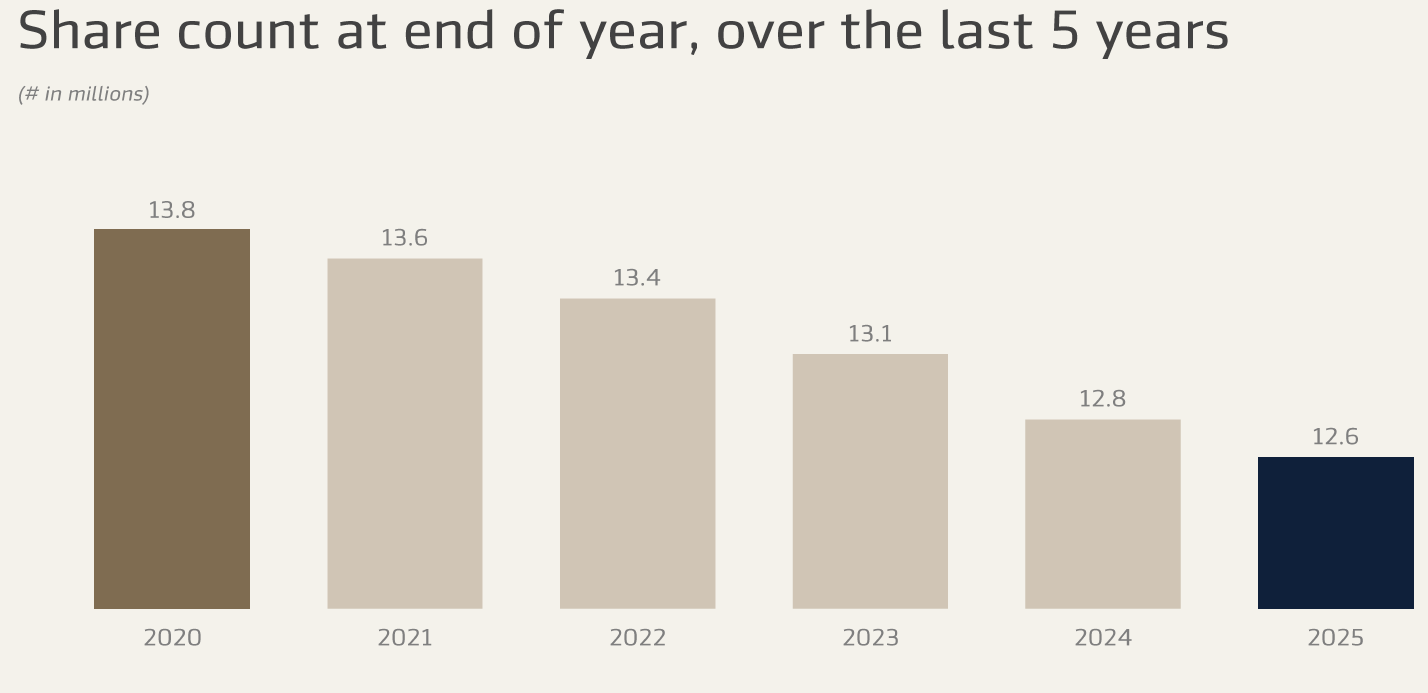
In the second quarter, Markel bought back USD 237 million of its own shares, around 1 percent of the outstanding share capital and considerably more than the USD 134 million in the first quarter. Since the start of 2022, more than USD 2 billion has been bought back, and the number of shares outstanding has fallen over five years from 13.7 million to 12.4 million (as measured on 30 June). The average buyback price this quarter was USD 1,858, and the buybacks are paid for entirely out of profit, without taking on additional debt. USD 1.1 billion remains available under the current buyback authorisation. CEO Gayner left no doubt about the pace during the call.
"We continue to believe that our own shares, at current prices and measured against the available alternatives, are the highest and best use of our capital, and we act accordingly."
At the shareholders' meeting, CEO Gayner added that buying back the next 10 percent of the shares at these prices will take considerably less time than the five years it took for the first 10 percent. As of this year, the company no longer discloses what a Markel share is truly worth, the so-called intrinsic value, as a concrete figure. In last year's shareholder letter, CEO Gayner still cited a figure of around USD 2,600 per share. Nowadays, Markel only publishes the calculation method, so that shareholders can work out the value themselves. That method adds two components together. The first component is the value of the balance sheet, including the investment portfolio. The second component is the average operating profit of the non-insurance businesses over the past three years. CEO Gayner drily remarked that shareholders could, if necessary, have ChatGPT or Claude do that sum for them.
The share price of around USD 1,900 is thus well below the intrinsic value of USD 2,600 cited last year. By comparison, the book value, equity per share, stands at USD 1,531. That intrinsic value keeps growing is evident from the profit figures over longer periods. Average operating profit per share over the past five years was USD 189, versus USD 89 in the five years before that. That amounts to average growth of 16 percent per year. Equity increased by an average of only 9 percent per year over the same period. Profit is therefore growing much faster than the capital underlying it, causing intrinsic value per share to rise faster than book value.
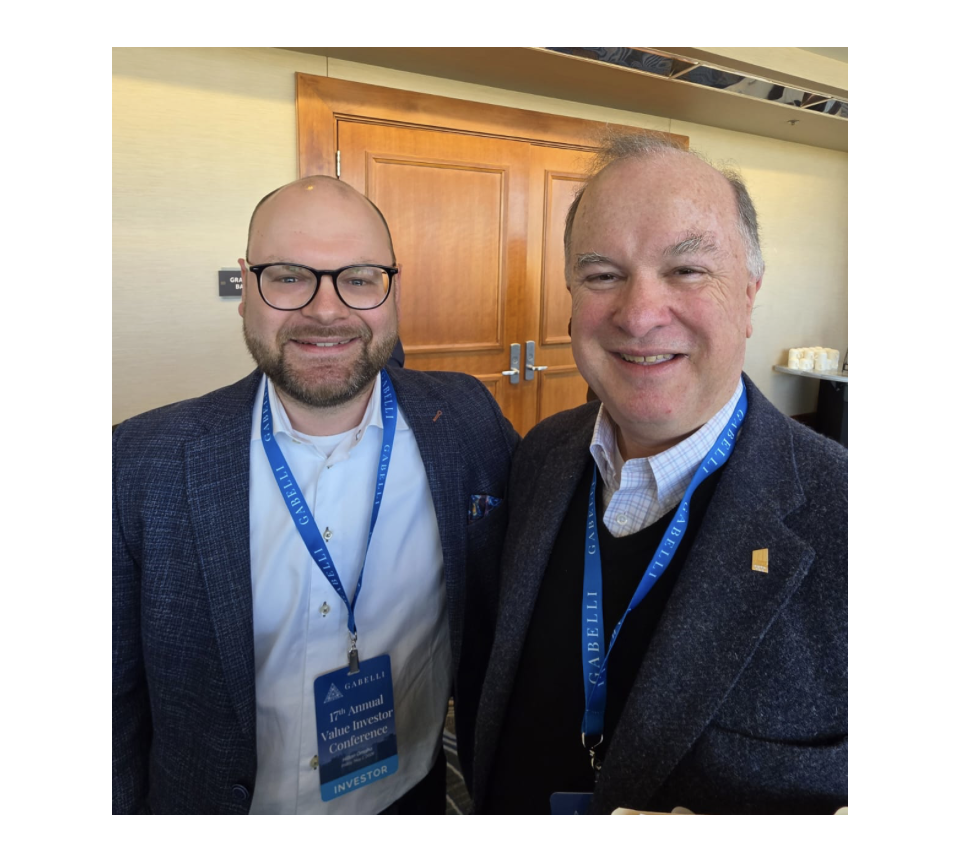
Asked how Markel is positioned for a potential recession, CEO Gayner appeared largely unconcerned. As a matter of principle, the company does not make predictions about the economy. It assesses every investment opportunity individually and directs capital to wherever the expected return is highest. Tom Gayner said the following on this:
"I don't know of a better position to be in for tough times than a strong balance sheet and a collection of businesses that produce cash flow through thick and thin."
Markel's own preliminary conclusion is that the expected return is currently highest from share buybacks. The avoidable missteps of recent years have hurt and have regularly weighed on the share price, but thanks to diversification across a wide range of activities, Markel has consistently been able to absorb these blows well. In the words of CEO Gayner, investors will need to remain patient for a while longer.
As long as the share price trades below intrinsic value, every share buyback increases the value per share for the shareholders who remain. For Markel, the share price decline offers an opportunity to put more capital to work at a higher expected return. In the meantime, CEO Gayner and insurance chief Wilson are building a stronger foundation, so that intrinsic value can grow even faster in the coming years than in the recent past. Given the number of missteps in recent years, however, the question is how long investors will retain that patience, since there are also insurance holding companies that have shown considerably fewer operational stumbles over the years.
Amazing Amazon
Earlier this year, we built up a position in Amazon (New York: AMZN). This is the first time we have written about this company, so we begin with a brief introduction before turning to the company's recently published quarterly results.
Many investors still primarily see Amazon as an online store, whereas in reality the company is one of the most broadly diversified technology holding companies in the world. This characterisation closely matches how we also view Alphabet, which has been part of our portfolio for some time. In both cases, it is not a single company with a single business model, but a collection of businesses, platforms and stakes that come together under one stock market listing.
The centre of gravity of profitability now lies elsewhere. Amazon Web Services (AWS) delivers the lion's share of operating profit and has grown into the largest cloud infrastructure provider in the world. This also includes its in-house semiconductors, designed internally at Annapurna Labs: Graviton for general-purpose computing, and Trainium and Inferentia for artificial intelligence. In addition, the advertising business has quietly grown into one of the largest in the world, with margins closer to those of software than those of retail. The marketplace itself should also not be seen as a traditional sales activity, but as a lucrative toll gate where third parties pay for commission, logistics and visibility.
Around this sits a vast ecosystem of activities, which is visually summarised in the overview below:
Overview of business units and brands fully owned by Amazon, plus the key minority stakes such as Anthropic, OpenAI and Rivian, as of July 2026.
Media and entertainment
Fully owned
E-commerce and marketplace
Fully owned
AWS, cloud and AI
Fully owned — largest profit engine
Devices and consumer tech
Fully owned
Groceries and physical retail
Fully owned
Healthcare
Fully owned
Logistics and robotics
Fully owned
Private-label brands
Fully owned
Significant stakes in other companies
Minority positions and announced acquisitions — this is now where most of the value sits
Overview compiled with the help of AI based on public sources, as of July 2026. Positions may since have changed and the list is not exhaustive.
To highlight a few components: in the media corner sits Twitch, the streaming platform for live broadcasts by gamers and creators. Within devices and consumer tech, Amazon is building robotaxi subsidiary Zoox for autonomous passenger transport and satellite initiative Amazon Leo for global broadband coverage. In healthcare, the company is taking steps outside traditional markets with primary care chain One Medical, and in physical retail, supermarket chain Whole Foods Market provides an anchor in the offline retail sector.
In addition, there is a range of external interests outside its own consolidation scope, with prominent private minority stakes and investments in established technology and AI names such as Anthropic and OpenAI, supplemented by strategic positions in EV manufacturer Rivian and satellite operator Globalstar. Amazon also keeps a finger on the pulse of young, innovative companies through specialised venture capital funds such as the Climate Pledge Fund and the Alexa Fund.
Recent quarterly results
Then there are the second-quarter figures, which Amazon published on 30 July. Revenue rose by 20% to $200.6 billion (!), and operating income increased by 43% to $27.5 billion. Net profit came in at no less than $62.6 billion, but that figure deserves an important caveat: it includes $53.4 billion in non-operating gains, mainly stemming from the revaluation of its stake in Anthropic. This is a paper profit that significantly inflates the quarterly figure and is of course not recurring. At the same time, the revaluation aptly illustrates our characterisation of Amazon as a technology holding company, in that its enormous capital strength makes it possible to build a broad portfolio of stakes, which, if successful, can generate significant returns, although repeating this kind of exceptional return in the future will be extraordinarily difficult.
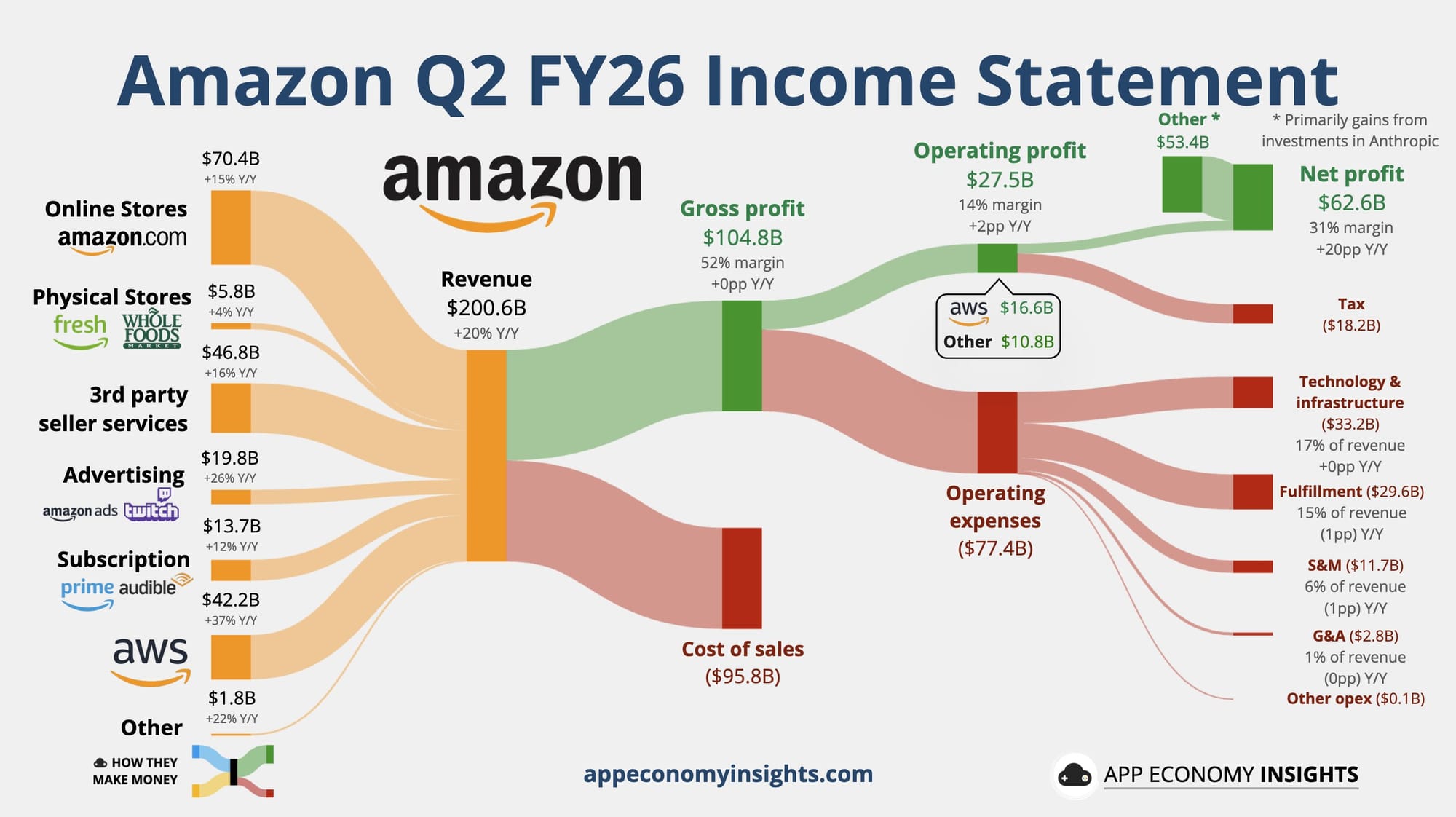
The overview above shows how revenue flows through the company. The advertising division had an excellent quarter with $19.8 billion in revenue, growth of 26% and thus an acceleration compared with the 22% of the previous quarter. Just as with Alphabet and Microsoft, the most important segment is the cloud division.
Cloud division AWS
CEO Andy Jassy opened the earnings call without beating around the bush: "I'll start with AWS, which is booming right now." The division grew by 36.7% to $42.2 billion, the fifth consecutive acceleration and the fastest growth in 18 quarters, when AWS was still less than half its current size. Amazon added $4.6 billion in revenue in a single quarter compared with the previous quarter. On an annual basis, AWS is now running at a revenue run rate (annualised revenue pace) of $169 billion. To illustrate this, Jassy noted that AWS as a standalone company would thereby rank 24th in the Fortune 500.
Whereas Amazon long believed AWS could reach revenue of several hundred billion dollars, it now believes it will be at least double that, and that it is entirely possible to become a company with $1,000 billion in annual revenue, according to CEO Jassy.
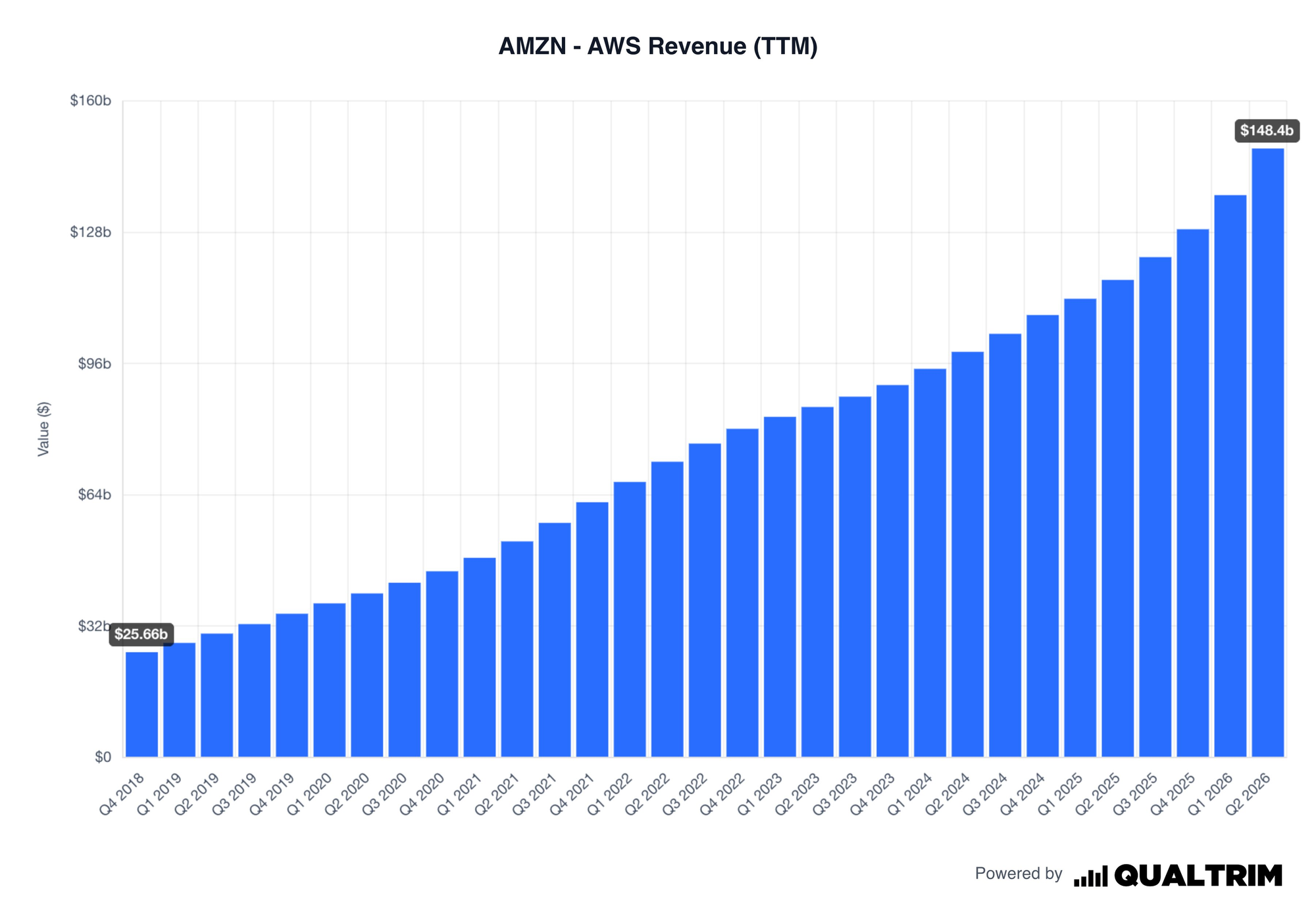
Remarkably, that growth acceleration is not coming at the expense of profitability - quite the opposite. AWS's operating income rose by more than 60% to $16.6 billion, good for an operating margin of over 39%, an improvement of 650 basis points compared with a year earlier. CFO Brian Olsavsky was adamant this was no coincidence:
"The profitability you see at AWS is not random, it is the result of disciplined efficiency gains, capacity optimisation and always keeping tight control over our fixed costs."
Jassy added that the AI activities are largely following the same margin trajectory they saw at the core business at the time, and are even running slightly ahead of that pace.
Two components stand out within AWS. Both the AI activities and the chip division each passed a run rate of $25 billion, both with triple-digit percentage growth. That chip division in particular deserves attention. The in-house designed Trainium chips for AI training and inference have already secured multi-year, multi-gigawatt commitments. Asked whether Amazon also intends to sell the Trainium chips separately from its own cloud environment, Andy Jassy said that an increasing number of customers are asking about this. According to Jassy, active discussions are being held on this, and there is a real chance that this will actually happen in the future, which would put the company directly on Nvidia's turf.
Record spending
All this demand has to be matched with capacity, and that costs capital. A lot of capital. Amazon raised its expected cash CapEx (capital expenditure) for 2026 from around $200 billion to around $220 billion, with the more expensive memory chips being the main culprit.
"Even at that amount, we still won't have enough capacity to meet all the demand we have in 2026. And I believe this dynamic will also hold in 2027. In fact, the demand we're already seeing for 2028 is striking." - CEO Andy Jassy
On the call, Jassy took ample time to explain why, at this level of investment, he has a clear line of sight to strong financial returns. He splits the investment into two capital cycles. The data centres themselves require capital that is spent two years before they come into use, but then last 30 years or longer without that upfront investment needing to be repeated. The servers and networking equipment that go inside them follow a much shorter cycle: these are only purchased a few months before they are put into use. "If the demand isn't there, we don't spend the capital," said Jassy. Servers pay for themselves in less than three years, last at least five to six years, and most AI capacity today is contracted for a minimum of five years. Each data centre generation therefore houses five to six server generations, with each successive generation enjoying better economics because the building is already in place.
The comparison with Alphabet and Microsoft
These figures do not stand alone: all three cloud hyperscalers reported over the past week and a half, and the picture is the same across the board: accelerating cloud growth, overflowing order books and increased investment budgets. The chart below captures that acceleration at a glance, with all three lines, and Alphabet's in particular, pointing upward for over a year now.
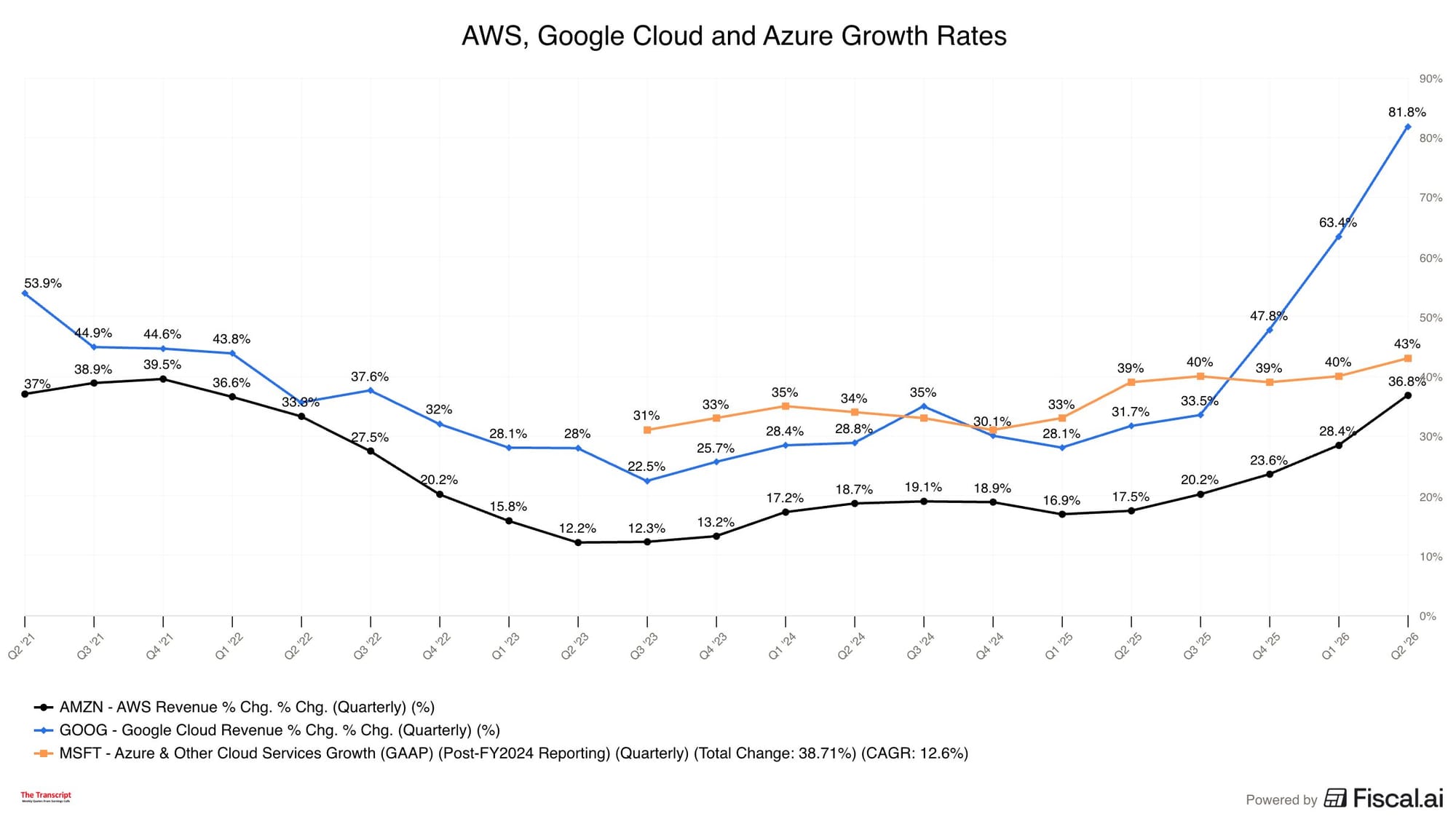
At Alphabet, which you will know from our portfolio, Google Cloud was the standout performer, growing 82% to $24.8 billion. Microsoft, reporting a day before Amazon, posted Azure growth of 43% and even expects an acceleration towards 45% for the coming quarter; as a result, Azure's annualised revenue passed the $100 billion mark. In relative growth terms, Amazon, at 36.7%, therefore lags both competitors, but with a run rate of $169 billion it remains by far the largest of the three.
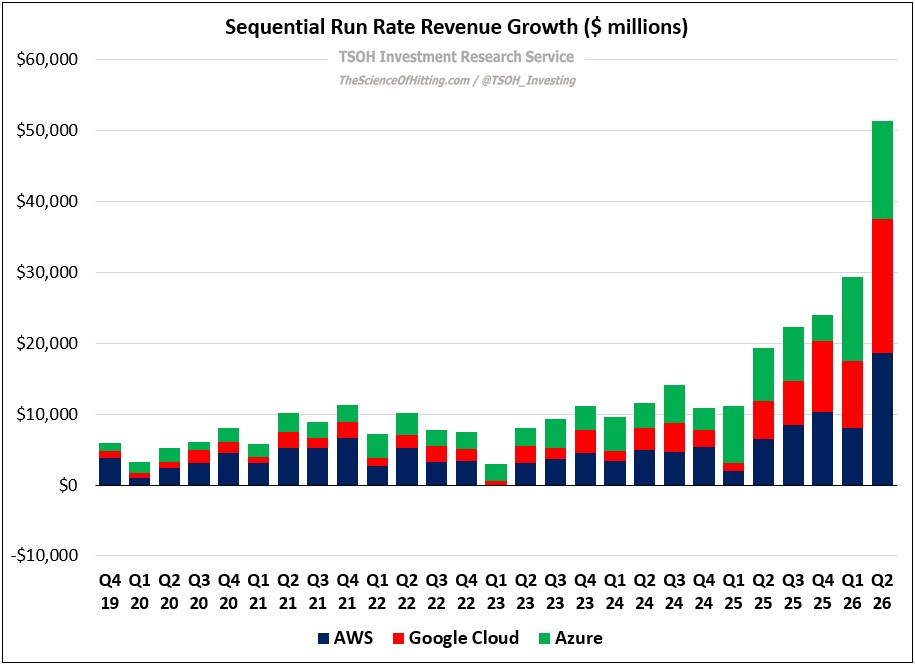
Just how exceptional the current pace is becomes clear from the chart below, which shows per quarter how much annualised revenue the three cloud divisions added together. For years, that combined increase hovered around $10 billion per quarter; in the second quarter of 2026, it exceeded $50 billion for the first time.
The downside is also the same across all three. The investment wave described above, which is pushing Amazon's free cash flow into negative territory, is visible across the sector: Alphabet raised its 2026 capex guidance to $195 to $205 billion, up from a previous $180 to $190 billion, and as a result likewise fell below zero on free cash flow last quarter, while Microsoft announced sharply higher investments once again for the coming fiscal year. Anyone looking only at today's cash flows sees the same worrying picture at all the hyperscalers, and in doing so, in our view, misses the other side of the balance sheet: the order books.
AWS's backlog stands at $496 billion, Google Cloud's at $514 billion, and Microsoft's commercial remaining performance obligations rose to $678 billion. Combined, that is more than $1,600 billion in future revenue already under contract. The question of whether there is AI overinvestment is being asked loudly on the stock market, but for now customer commitments point in a different direction.
Conclusion
In our view, this quarter presents an extremely nuanced picture. Although the enormous investment wave and the pressure on free cash flow may seem alarming at first glance, beneath it lies an unprecedented operating cash flow machine that grew by 33% over the past year. The in-house designed chips should add structurally better margins to that over the coming years. At the same time, the stream of capital expenditure will naturally taper off once the data centres are in place, given that these facilities last thirty years or longer and accommodate five to six server generations, each with better economics than the last. Moreover, the risk of overspending remains limited as long as the order book continues to act as a safety net.
Receive weekly insights in your inbox
Exclusive analyses and updates on family holding companies and global market developments.
Would you like more information about our services?
Get in touch
Disclaimer:
No rights can be derived from this publication. This is a publication of Tresor Capital. Reproduction of this document, or parts thereof, by third parties is only permitted after written permission and with reference to the source, Tresor Capital.
This publication has been compiled by Tresor Capital with the greatest possible care. The information is intended in a general sense and is not tailored to your individual situation. The information may therefore expressly not be regarded as advice, an offer or a proposal to purchase or trade investment products and/or to make use of investment services, nor as investment advice. The authors, Tresor Capital and/or its employees may hold positions in the securities discussed, for their own account or for their clients.
You should carefully consider the risks before you start investing. The value of your investments may fluctuate. Past performance offers no guarantee for the future. You may lose (part of) your invested capital. Tresor Capital disclaims any form of liability for any inaccuracies or errors. This information is purely indicative and subject to change.
Read the full disclaimer at tresorcapitalnieuws.nl/disclaimer .
This article was translated automatically from Dutch using AI. In case of any difference, the Dutch original prevails. Read the original in Dutch.