Family Holdings #33 - Addition of a new VMS serial acquirer


This week's topics:
In the second quarter, Berkshire Hathaway took profits on Apple shares, invested contrarily in, among others, UnitedHealth, and permanently added family business Bell Laboratories to the holding company.
Prosus benefits from the strong, AI-driven quarterly results of core holding Tencent, while itself reaching a strategic milestone with approval for the acquisition of Just Eat Takeaway.
The strong Q2 figures from KKR underscore the successful strategy to grow, following the model of a 'mini Berkshire Hathaway', into an investment holding company that creates sustainable value through asset management, insurance and long-term holdings.
In Brief:
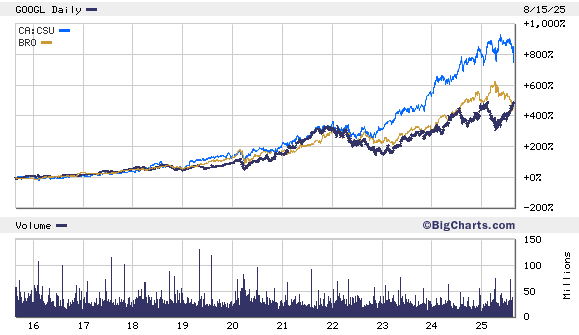
Alphabet (New York: GOOGL) remains undervalued and well positioned for strong long-term growth despite the ongoing competitive threat from AI platforms such as ChatGPT. That is according to Eric Sprague in an analysis on Seeking Alpha, which you can read here for free.
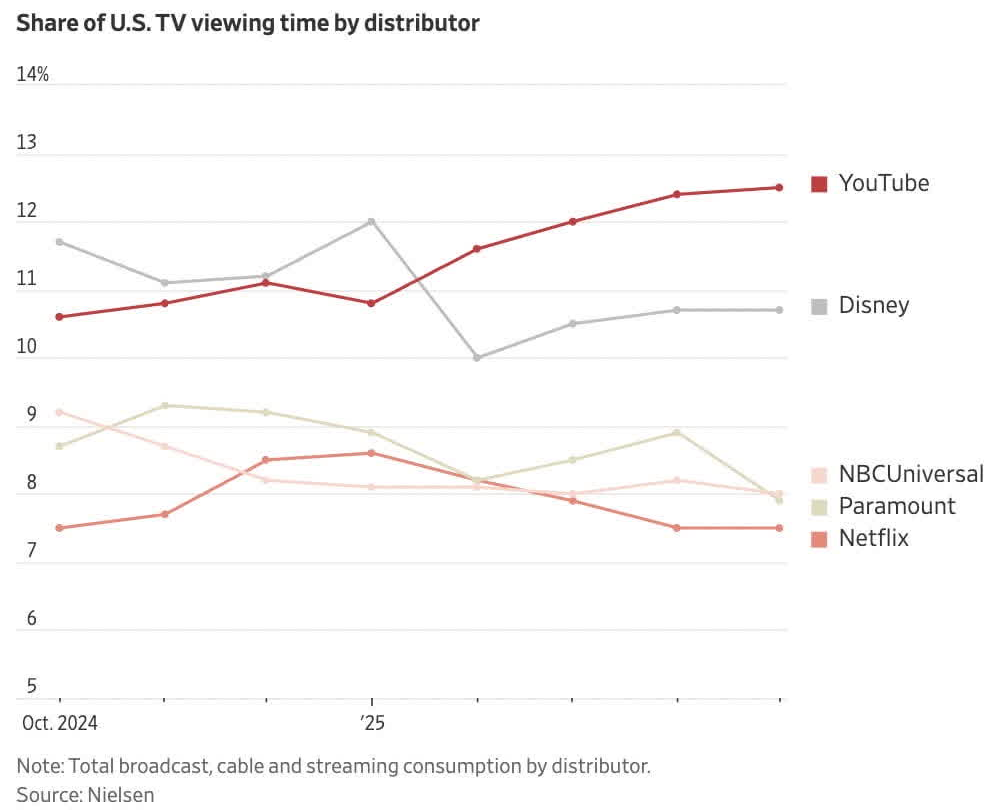
Search, YouTube and Google Cloud all show robust revenue growth and improving profitability. Recent data shows that Google's own AI integrations, such as AI Overviews and Gemini, are boosting user engagement rather than cannibalising the core business. The company retains its dominant position in commercial search and is even seeing increasing usage among the crucial Gen Z demographic. Meanwhile, YouTube's share of total US television viewing time is steadily growing, outpacing competitors such as Disney and Netflix.
Alphabet's long-term value is further bolstered by the significant, though often overlooked, options within the portfolio. Waymo, the autonomous driving subsidiary, is rapidly gaining market share from competitors such as Lyft and Uber in key markets like San Francisco. Strategic partnerships, such as the one with Toyota for a robotaxi service in Tokyo and the licensing of the technology for passenger cars, open the door to enormous new markets. Analysts already estimate Waymo's value at USD 150 billion in a base-case scenario, assuming annual growth of 129% over the next five years. Combined with steadily falling hardware costs and fleet expansion, Waymo offers, according to Sprague, a significant value component for the long-horizon shareholder that has not yet been fully priced in.
Brown & Brown (New York: BRO) continues its disciplined acquisition strategy unabated with the recent acquisition of the assets of Tire Shield. Through its Dealer Services division, the American investment holding company is thereby adding a specialist in administrative services for GAP and tyre insurance products, strategically broadening its offering for the automotive, RV and powersports industries.
Confidence in this ongoing value creation was underscored a few days earlier by a significant purchase by one of the executives. On 8 August, director Paul J. Krump bought nearly USD 250,000 worth of shares, a transaction that doubled his personal stake in the company at a stroke.
Constellation Software (Toronto: CSU) continued its M&A activity in August with the acquisition of Hungary's AredimTel, a provider of cloud-based call centre software. Shortly afterwards came the acquisition of UK-based Verilocation, a specialist in fleet management software and related telematics. These targeted 'bolt-on' acquisitions strengthen Constellation's market positions in the telecom and transport sectors, respectively.
Alphabet, Brown & Brown and Constellation Software ended the trading week on the New York and Toronto exchanges at prices of USD 203.90, USD 95.34 and CAD 4,353.38 per share.
Asseco Poland, a VMS serial acquirer with potential
In our portfolio, we focus on companies with a superior business model, led by exceptional management with a long-term vision. Occasionally a unique opportunity arises in which an already strong company is enriched with the expertise of the world's best capital allocators. This is the case with the Polish software company Asseco Poland (Warsaw: ACP), a relatively new position in the portfolio. The investment case hinges not so much on current financial performance, but on the enormous, latent potential that can be unlocked by the arrival of a new, strategic partner: Topicus.com.
Asseco Poland: a 'federation' of software companies in the 'Silicon Valley of Europe'
Asseco Poland is one of the largest IT companies in Poland, a country that is rapidly developing into the 'Silicon Valley of Europe' thanks to a fast-growing IT sector and a large pool of highly educated specialists. Following Constellation Software's lead ('constellation'), Asseco describes itself as a 'federation' of software companies.
This is no empty marketing term; it is a serial acquirer through and through. Since 2004, the company has completed no fewer than 140 acquisitions, building an impressive ecosystem in the process. The organisational structure is complex: Asseco Poland operates as a holding company with stakes in large, partly listed sub-holding companies such as Asseco International and Formula Systems, which in turn have dozens of subsidiaries of their own.
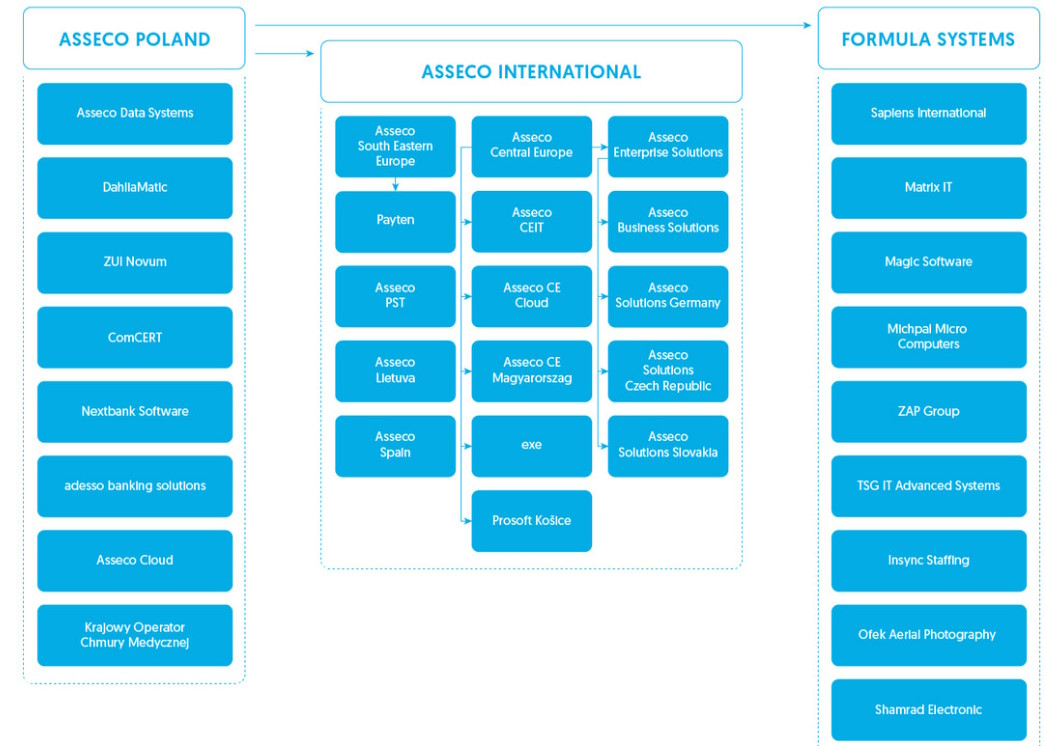
Like Constellation and Topicus, Asseco has a business model and culture geared towards acquiring software companies and helping them grow further. They pursue a similar strategy of encouraging entrepreneurs to sell their companies to Asseco. This cultural resemblance was a decisive factor in Topicus's investment.
Topicus director Ramon Zanders stated: "We believe in Adam Góral, the entire Asseco management team, and we stand behind their vision for the business. We value the principles they uphold and the corporate culture across the organisation, which closely resembles our own."
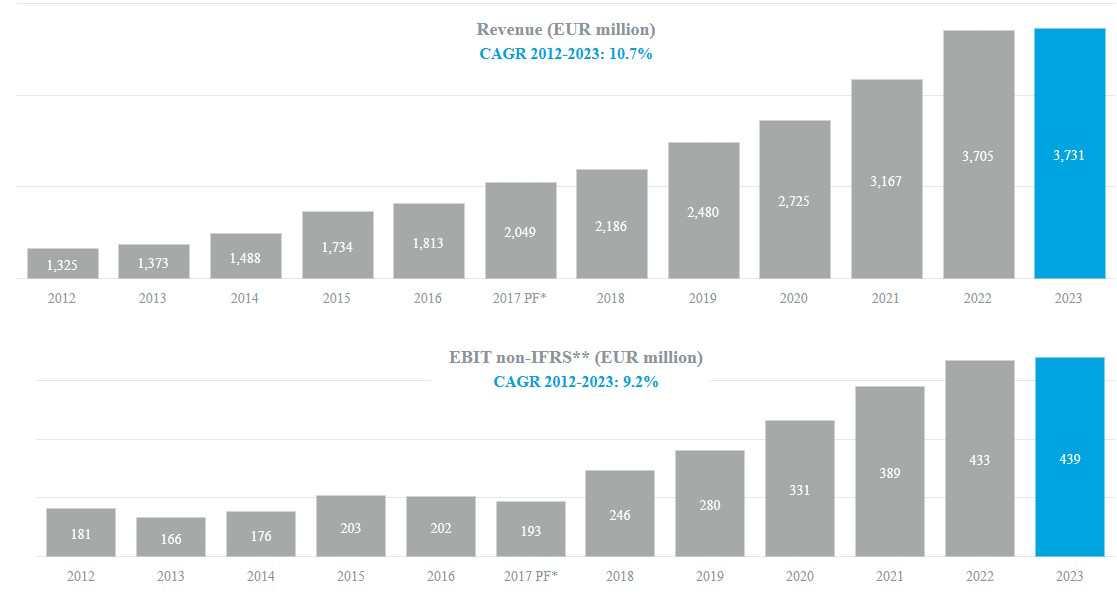
Historically, this model has paid off: between 2012 and 2023, Asseco's revenue grew by an average of 10.7% per year, while gross profit rose by 9.2% annually.
The arrival of Topicus: the catalyst
At the heart of the investment case is Topicus.com's recent entry. In two transactions, Topicus acquired a stake of approximately 24.8% in Asseco for a total of €417 million. This was done at a very favourable price of PLN 85 per share, while the share price at the time was considerably higher.
Crucially, Topicus has entered into a cooperation agreement with Adam Góral, Asseco's founder and largest shareholder (10.1% stake). Together, they now control a block of around 35%. The key points of this agreement are:
- Topicus and Adam Góral each gain the right to appoint three supervisory board members (so 6 of the 9 in total).
- Topicus and Góral will jointly determine the remuneration structure and vote on dividend policy.
- The best practices of Topicus and Constellation Software will be implemented at Asseco.
The most important provision is that the best practices of Topicus and Constellation Software will also be implemented at Asseco. These best practices and the distinctive remuneration structure (staff are required to use the bulk of their bonus to buy shares and hold them for four years) form the foundation underlying the success of Constellation and Topicus.
Adam Góral himself welcomed Topicus's arrival with open arms, pointing to a cooperative stance rather than a hostile takeover. Topicus director Ramon Zanders emphasised the cultural similarities and the intention to act as a long-term partner: "We never sell our companies or shares in them."

The Constellation blueprint: unlocking the potential
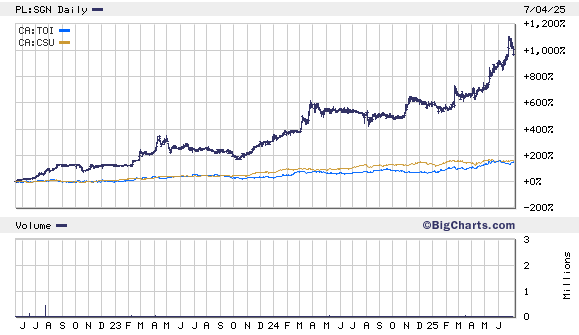
Implementing the 'Constellation playbook' is where the real potential lies.Analyst Christian Schmidt points to Topicus's earlier, highly successful intervention at Poland's Sygnity. Following the 2022 acquisition, Topicus there:
- Focused on its own product solutions and divested unprofitable activities.
- Implemented a strict cost control and optimisation policy.
- Kicked the acquisition engine into gear by leveraging Topicus's expertise in M&A.
The result was an explosive rise in Sygnity's share price. A similar trajectory at the much larger Asseco is expected to be able to lead to enormous value creation.
Analyst Paul (@Investmentideen on X) neatly sums up the essence of the investment thesis. He notes that Asseco looks expensive at first glance, but because of the various minority stakes that need to be consolidated, the actual valuation is considerably more attractive.
The crucial insight is, moreover, that a party such as Topicus/Constellation typically pursues an internal rate of return (IRR) target of 20%, based purely on the operational improvements and future cash flows of the investment, without speculating on a higher valuation multiple. This implies enormous confidence in their ability to drastically increase Asseco's underlying profitability.
Furthermore, he argues, Constellation's influence is likely to lead to a focus on reinvesting capital into new growth rather than paying down debt, which is a core part of the value-creation strategy.
Recent developments: the value in the portfolio becomes visible
A recent development underscores the quality of the assets within the complex Asseco group and serves as evidence of the latent value. On 13 August 2025, it was announced that private equity firm Advent International is acquiring Sapiens for USD 2.5 billion. Sapiens is a global provider of software for the insurance industry. The acquisition price of USD 43.50 per share represents a premium of no less than 64% over the closing price on 8 August 2025.
The link with Asseco is direct and significant: Sapiens' largest shareholder (44%) is Formula Systems, a company that is in turn controlled by Asseco Poland. The sale of Sapiens is expected to significantly increase the value of Formula Systems, which directly benefits Asseco and its shareholders, reportedly to the tune of USD 300 million. This successful transaction is a clear example of the value hidden within Asseco's many holdings and the management's competence in realising that value.

The cooperation agreement with founder Adam Góral provides a stable foundation and a cooperative environment for implementing the necessary operational improvements and cultural changes. With both Topicus and Góral involved, there is more than enough skin in the game. The successful turnaround at Sygnity serves as a promising precedent, although we must be realistic that Asseco is somewhat larger in scale.
There are, of course, risks. Executing the strategy carries execution risk, and the transaction with Topicus is still subject to regulatory approval (although no issues are expected).
However, we are convinced that the combination of an established market leader in an attractive growth market (the Polish IT sector) with the operational and M&A expertise of the world's best 'serial acquirer' offers a highly attractive risk-return profile for the patient long-term investor.
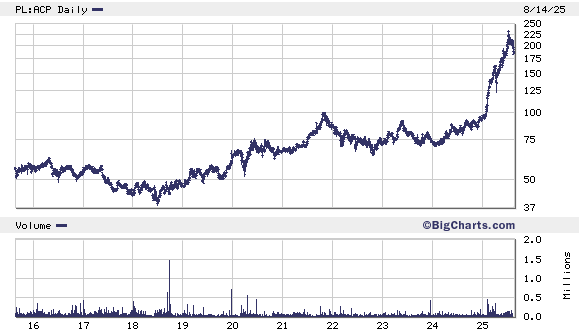
Asseco Poland ended the trading week on the Warsaw stock exchange at a price of PLN 184.60 per share.
Berkshire Hathaway transactions under the microscope, plus an unexpected acquisition
The recent transactions of the American investment holding company Berkshire Hathaway (New York: BRK-B) in the second quarter of 2025 once again demonstrate the disciplined capital allocation of Warren Buffett and portfolio managers Combs and Weschler.
The investment holding company has resumed selling Apple shares, offloading a stake worth more than USD 4 billion by selling 20 million shares. This move, a continuation of earlier sales, is seen as locking in profit on one of Berkshire's most successful investments ever, prompted by the tech company's high valuation. Despite the sale, Apple remains the undisputed anchor position in the portfolio, worth USD 57.4 billion. Alongside Apple, the stakes in Bank of America were further reduced and the position in T-Mobile was sold entirely.
At the same time, Berkshire was not idle on the buying side, building up positions in sectors that have recently come under pressure. Special mention goes to the serial acquirer Heico, in which Berkshire continues to expand its stake.
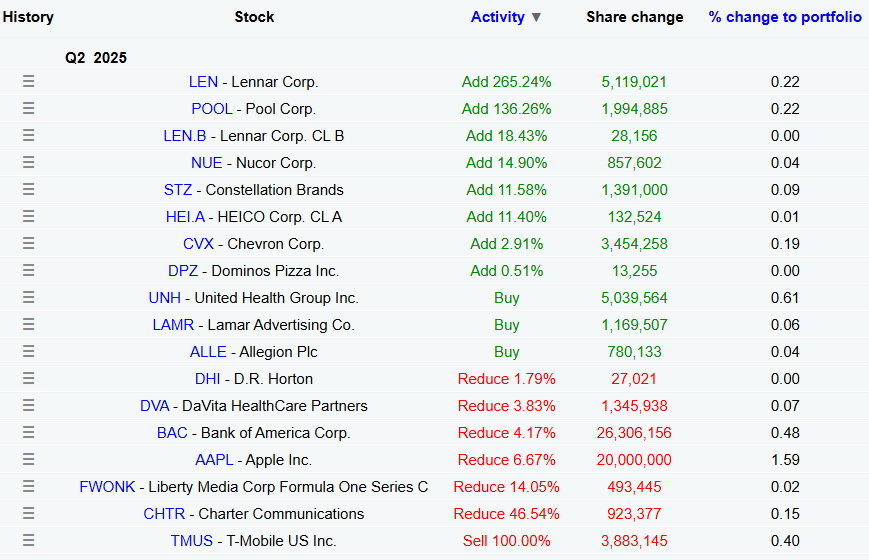
The "mysterious" purchases from the first quarter turned out to be steel producer Nucor and homebuilders D.R. Horton and Lennar, positions that were further expanded in the second quarter. The most striking new investment is a stake of approximately USD 1.6 billion in health insurer UnitedHealth Group, a classic contrarian move. UnitedHealth shares have fallen 46% this year amid a cyberattack, a DOJ investigation and a sudden change of CEO. In addition, smaller new positions were taken in outdoor advertising company Lamar Advertising and security specialist Allegion, while existing stakes in Chevron, Domino's Pizza and Constellation Brands were further topped up.
Acquisition
Besides the stock market transactions, a classic Berkshire Hathaway acquisition was also completed. The holding company has acquired Bell Laboratories, a 50-year-old family business and a world leader in pest control products. It is the first time the company has changed hands since it was founded in 1974 by the Stack family.
Fully in line with the Berkshire philosophy, Bell will continue to operate entirely independently, retaining its existing management and corporate culture. Buffett's message to the company underscores the long-term vision: "This transaction assures Bell that it can count on being around for the next 50 years as well," giving it a permanent home within the holding company.
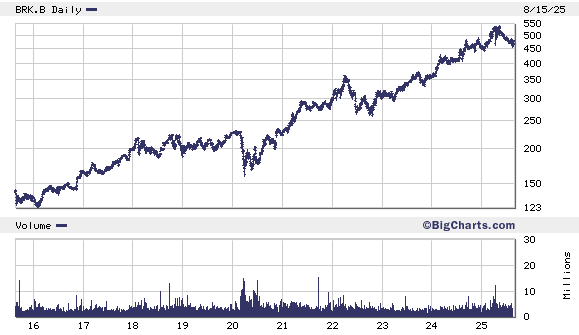
Berkshire Hathaway ended the trading week on the New York stock exchange at a price of USD 477.20 per B-share.
Prosus benefits from strong Tencent growth
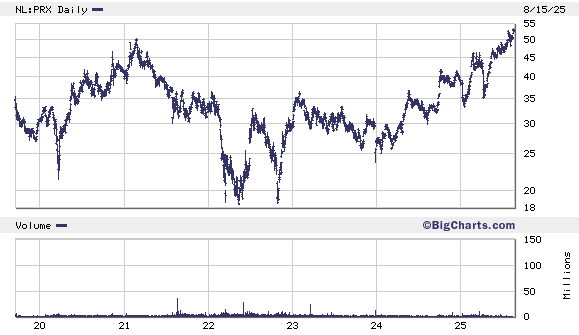
For shareholders of Dutch investment holding company Prosus (Amsterdam: PRX), all eyes remain fixed on the performance of core holding Tencent. The Chinese tech giant's recent strong quarterly results, combined with strategic approval for the acquisition of Just Eat Takeaway, underline the developments at the tech investor. As at 15 August 2025, Prosus's net asset value (available daily via the Prosus website) stood at EUR 77.30 per share, which, at a share price of EUR 53.11, implies a discount of approximately 31.3%. Tencent accounts for more than 80% of Prosus's value.
The strategic course under CEO Fabricio Bloisi is therefore focused on simplification and focus. The annual results for financial year 2025, already published by Prosus in June, confirm the operational improvements. E-commerce gross profit rose from USD 38 million to USD 443 million, resulting in a margin increase of approximately 1% to 7%. Group EBITDA doubled, while free cash flow rose to USD 1 billion. Besides core holding Tencent, Prosus now also holds a profitable and growing e-commerce portfolio, with strategic stakes in, among others, OLX, iFood, Meesho and Swiggy. Nevertheless, shareholders continue to await Tencent's results with anticipation.
Tencent: rock-solid Q2 results with AI as growth accelerator
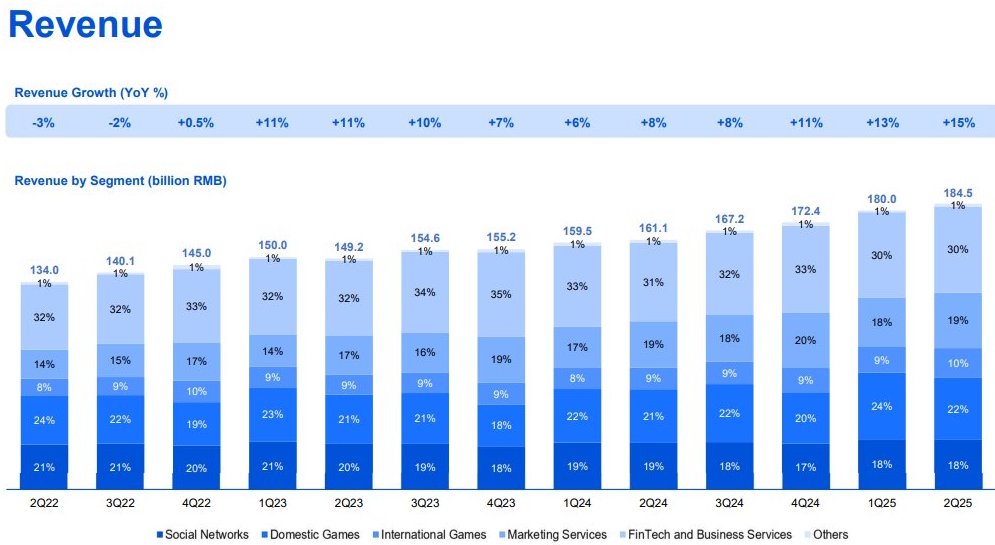
On 13 August 2025, Tencent presented second-quarter results that comfortably exceeded market expectations. Revenue rose 15% year-on-year to RMB 184.5 billion (approximately USD 25.7 billion), while net profit increased 17% to RMB 55.6 billion. This performance was driven by all segments, with artificial intelligence (AI) as the clear, overarching engine.
The gaming division remains the backbone of the company, with domestic games revenue growth of 17%, driven by established titles such as Honor of Kings and the successful launch of Dungeon & Fighter Mobile. Internationally, growth continued at an impressive 35%. Tencent's platform approach, which integrates games with social media, streaming and e-sports, ensures a stable and predictable revenue stream.
AI functions here as an integrated strategic spearhead. Unlike companies that develop AI as a separate product, Tencent has now deeply embedded AI within its core operations. In gaming, AI algorithms improve NPC intelligence, personalise gameplay and accelerate content creation.
For advertising, AI analysis optimises placement and relevance, directly leading to a higher ROI for advertisers. Within the WeChat ecosystem, AI-driven search functions and automated customer service increase usage time and engagement, while in Cloud & infrastructure, commercial AI services are combined with internal optimisations for cost reduction.
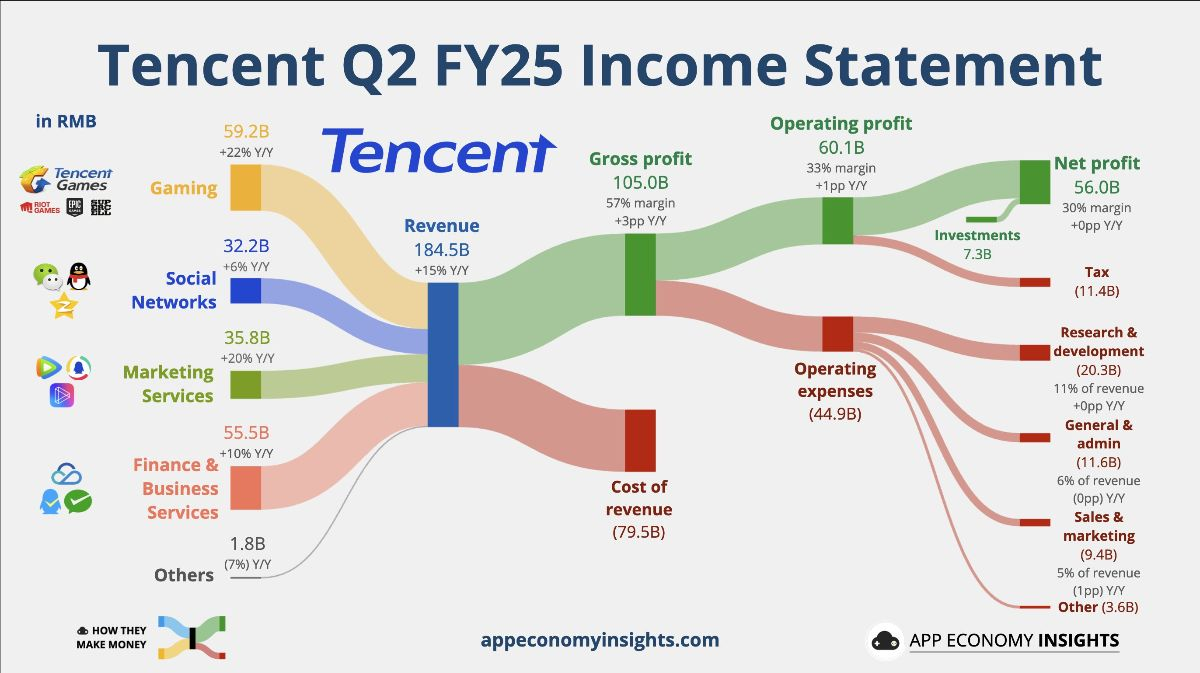
This broad application of AI creates multiple, mutually reinforcing growth pillars. In doing so, Tencent is not only strengthening its existing market positions but also opening up new revenue streams in fast-growing technological niches. This gives Tencent investors an attractive alternative to the dominant US technology companies – Prosus investors can still benefit from the global AI growth trend at a discount.
Approval of Just Eat Takeaway acquisition marks strategic milestone
Alongside its growth via Tencent, Prosus is taking important steps in consolidating its own e-commerce portfolio. The European Commission's conditional approval of the €4.1 billion acquisition of Just Eat Takeaway is a crucial development in this regard. Prosus, which already owns Brazil's iFood and holds stakes in India's Swiggy, thereby becomes the fourth-largest food delivery group in the world.
To address competition concerns, Prosus has committed to "significantly reducing" its 27.4% stake in German rival Delivery Hero within a year and to no longer exercising voting rights. According to the European Commission, this concession safeguards competition in the European market and paves the way for the completion of the transaction. The acceptance period for shareholders runs until 1 October, after which the deal is expected to become unconditional shortly.
Prosus ended the trading week on the Amsterdam stock exchange at a price of €53.11 per share.
KKR: a 'mini Berkshire Hathaway' in the making?
The American investment holding company KKR (New York: KKR) is increasingly positioning itself as a modern investment holding company. The results for the second quarter of 2025 not only confirm the strength of its diversified business model, but also underscore the strategic choice to, unlike many of its peers, commit fully to holding stakes for the long term. Where competitors often brand themselves as 'asset-light' asset managers, KKR distinguishes itself through an integrated approach, in which its own balance sheet and long-term stakes play a crucial role via its Strategic Holdings division.
Financial highlights Q2 2025: evidence of growth
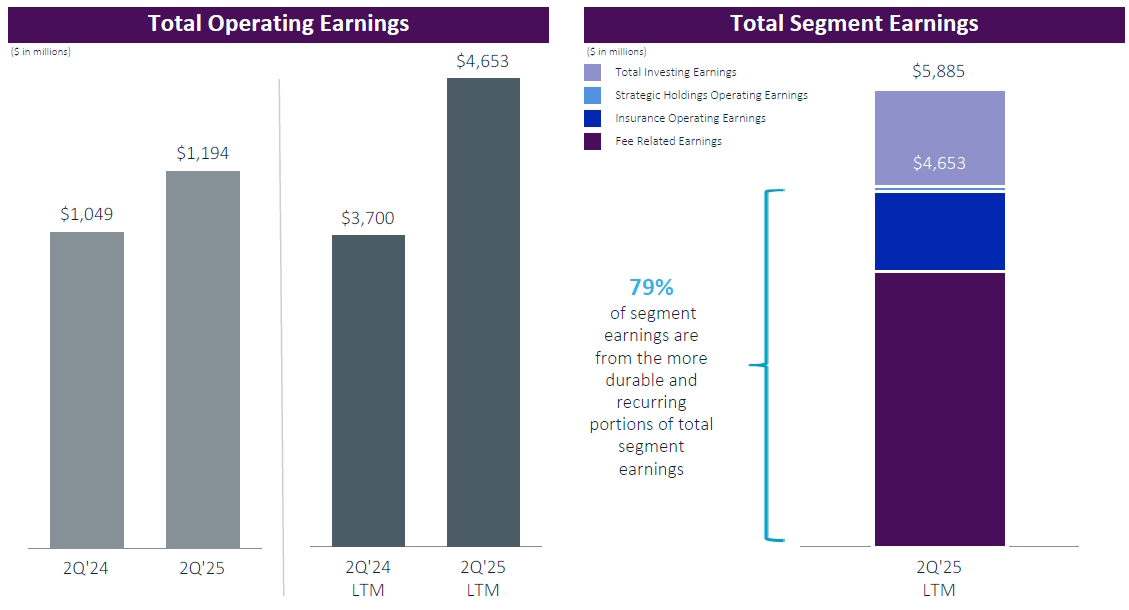
KKR reported impressive financial results for the second quarter, demonstrating the company's robust growth. Fee Related Earnings (FRE), a measure of stable, asset management fee-based income, rose 17% year-on-year to USD 887 million, or USD 0.98 per share. Over the last twelve months (LTM), FRE amounted to USD 3.6 billion, an increase of 34%.
Total Operating Earnings (TOE), which represent the company's more sustainable and recurring profit streams, rose 14% to USD 1.2 billion. Adjusted Net Income (ANI) came in at USD 1.1 billion, or USD 1.18 per share.
Co-CEOs Joseph Bae and Scott Nuttall highlighted the momentum: "We are active globally across investing, monetisation and fundraising. This momentum is flowing through into our financial results, with over 25% growth in Fee Related Earnings, Total Operating Earnings and Adjusted Net Income over the past 12 months."
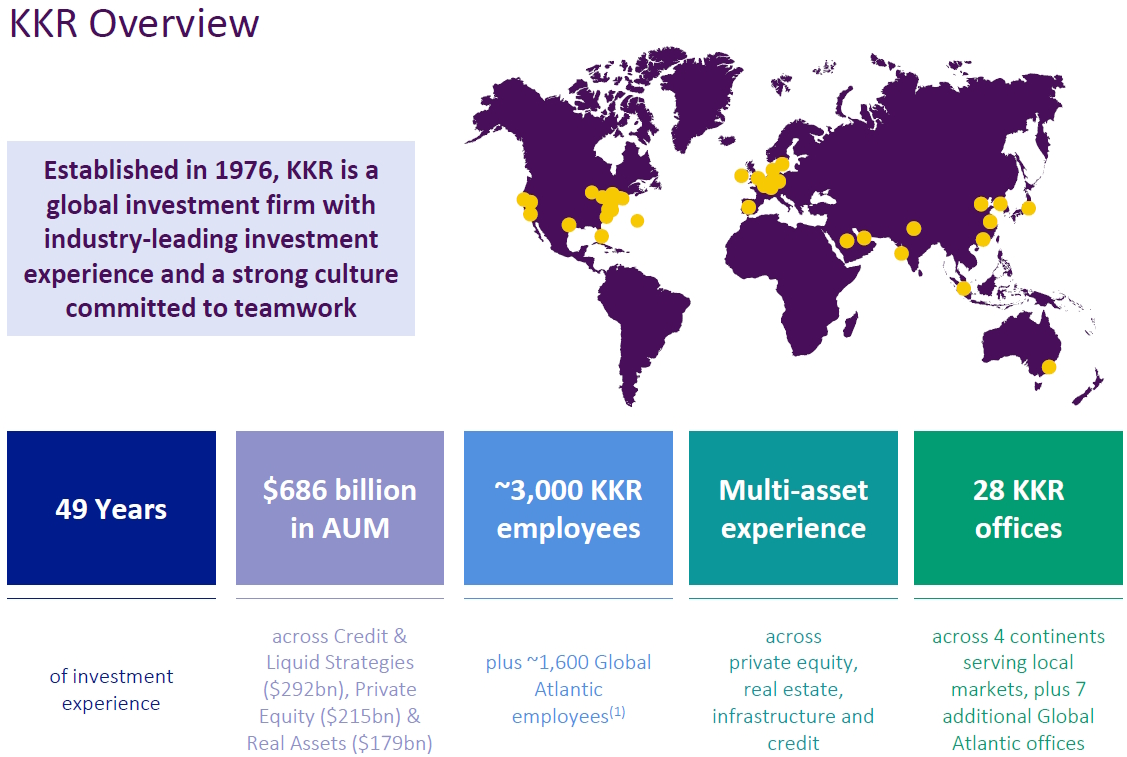
Assets Under Management (AUM), a crucial indicator for an asset manager, grew 14% year-on-year to a total of USD 686 billion. This growth was supported by strong fundraising, with USD 28 billion in new capital raised in the quarter and USD 109 billion over the last twelve months.
The three engines of the KKR investment holding company
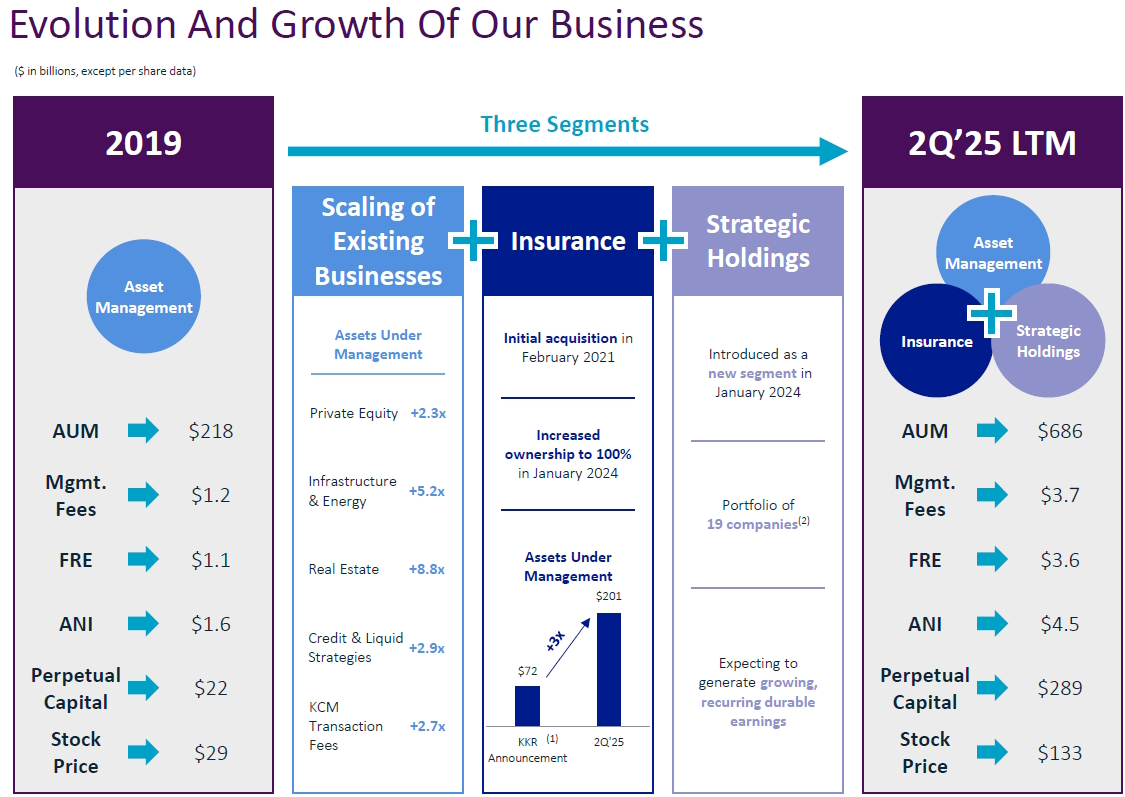
KKR's success is built on a business model with three growth engines: Asset Management, Insurance and Strategic Holdings. This integrated structure allows KKR to deploy capital flexibly, create synergies and generate sustainable long-term value.
1. Asset management: the scalable core
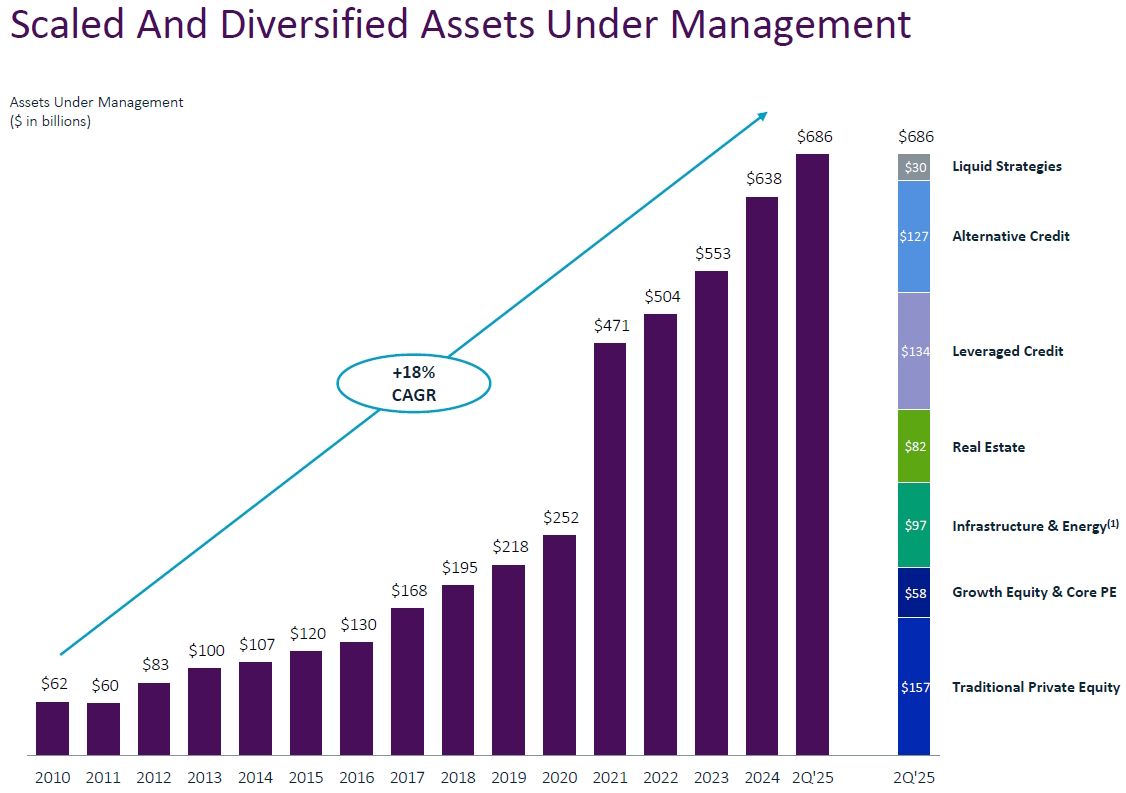
The asset management division remains the core of KKR, with a diversified platform spanning Private Equity, Real Assets and Credit & Liquid Strategies. AUM in this division have grown at a compound annual growth rate (CAGR) of 18% since 2010.
- Private Equity: With AUM of USD 215 billion, this remains a cornerstone of KKR. The traditional private equity portfolio rose 13% in value over the last twelve months. Recent capital inflows were mainly driven by the North America Fund XIV and the K-Series for high-net-worth individuals.
- Real Assets: This division, which encompasses infrastructure and real estate, grew to AUM of USD 179 billion. The infrastructure portfolio delivered a strong return of 14% over the last twelve months. Demand for infrastructure, driven by the energy transition and digitalisation, remains undiminished.
- Credit & Liquid Strategies: With AUM of USD 292 billion, this is the largest segment within asset management. A notable area of growth is Asset-Based Finance (ABF), where AUM grew more than 20% year-on-year to USD 75 billion. CFO Robert Lewin sees enormous opportunity here: "ABF is a USD 6 trillion addressable market today, which will grow to more than USD 9 trillion over the next four years."
2. Insurance: the engine of permanent capital
The full acquisition of Global Atlantic in early 2024 was a masterstroke of strategy. It not only added a substantial and stable capital base but also positioned KKR as a leading player in the insurance market. Global Atlantic has USD 201 billion in assets under management and is a leader in annuities and reinsurance.
The insurance operations generate permanent capital, capital with an indefinite duration, enabling KKR to invest with a long-term horizon without the pressure of immediate capital returns. KKR's total permanent capital now stands at USD 289 billion, up 16% year on year. This stable capital flow feeds the investment activities of the other segments. This strategy bears a resemblance to the model used by Berkshire Hathaway, where the stable capital flow from insurance operations (the 'float') is deployed for long-term investments.
3. Strategic Holdings: the core of KKR's 'mini Berkshire' ambition
The Strategic Holdings division is what truly sets KKR apart as an investment holding company. This segment embodies KKR's ambition to create, as Co-CEO Joe Bae put it, "in some ways a mini Berkshire Hathaway". It marks a clear break from rivals that prioritise 'asset-light' models. While competitors Apollo and Carlyle have relatively small balance sheets outside their insurance subsidiaries, KKR holds more than USD 100 billion in investments on its balance sheet, excluding the insurance arm.
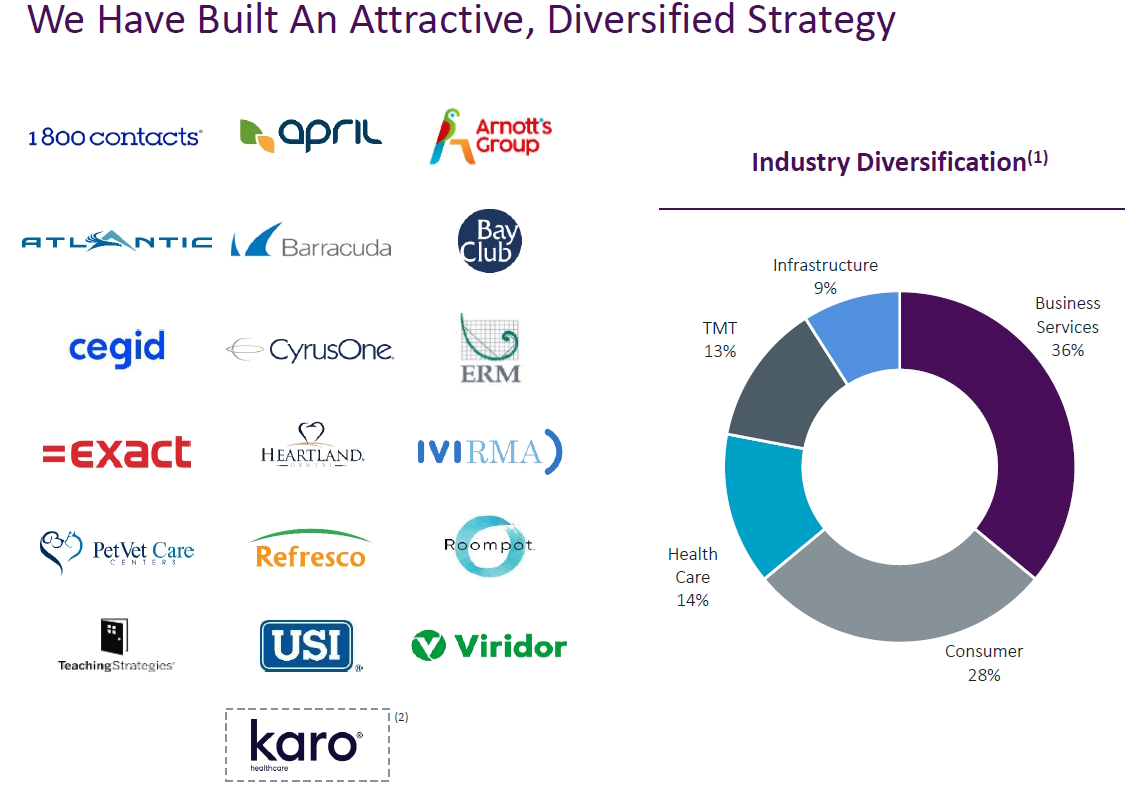
The core of the strategy is to hold stakes in 18 quality companies, such as Exact Software, Refresco and Roompot, for decades rather than selling them quickly. The aim is to let value compound and to build a portfolio that will eventually generate more than USD 1 billion per year in dividends. KKR plans to expand the portfolio with infrastructure and real assets.
A notable difference from Buffett's model is the structure: the Strategic Holdings division pays management fees and a share of the profits (carried interest) to the professionals in the asset management arm who manage the deals. This creates an internal synergy but also a cost structure that Berkshire Hathaway does not have. As a shareholder of the investment holding company KKR, you ultimately remain exposed to all these capital flows at the holding company level.
Exposure to megatrends: the pillars of future growth
KKR is strategically positioned to benefit from a number of global megatrends that will shape the economy over the coming decades.
- Digitalisation and AI: The exponential growth of data and artificial intelligence is creating enormous demand for digital infrastructure. KKR is investing substantially in data centres, fibre-optic networks and mobile infrastructure. Craig Larson, Head of Investor Relations, noted: "There's an enormous capital need. And in many ways the opportunity is broader than just data centres."
- Energy transition and climate: The shift to a sustainable economy requires trillions in investment in renewable energy, energy efficiency and climate-resilient infrastructure. KKR's infrastructure and climate funds tap directly into this trend.
- Growth in private wealth: KKR is increasingly focusing on the growing market of high-net-worth individuals seeking access to alternative investments. The K-Series platform, which offers products across private equity, infrastructure and credit, saw its AUM more than double in a year, from USD 11 billion to USD 25 billion. The strategic partnership with Capital Group opens the door to an even broader audience.
Outlook and strategic vision
With USD 115 billion in war chest (uncalled capital), KKR is excellently positioned to invest in an environment where volatility creates opportunities. Management is accordingly confident about the future. Robert Lewin stated: "Given all this momentum, we remain confident in our ability to deliver on the 2026 targets we shared last year, both for our fundraising and for our core metrics."
The recent acquisition of HealthCare Royalty Partners, a leader in biopharma royalty investments, is an example of KKR's strategy to broaden its platform with unique, long-term capital strategies.
In conclusion: KKR is more than an asset manager; it is an investment holding company that uniquely combines capital, expertise and a long-term vision. With substantial skin in the game from its founders and a unique way of giving everyone within the organisation, from the cleaning lady to senior management, shares in its holdings, KKR fosters an entrepreneurial culture within its organisation.
The second-quarter 2025 results confirm the strength of the business model. By investing through its three engines and capitalising on the key megatrends of our time, KKR is well positioned to deliver sustainable, compounding growth for its shareholders in the years ahead.
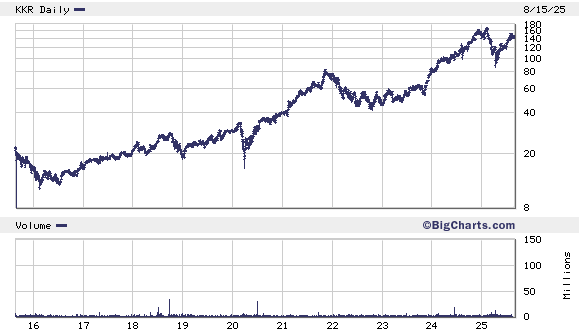
KKR ended the trading week on the New York stock exchange at a price of USD 142.28 per share.
Receive weekly insights in your inbox
Exclusive analyses and updates on family holding companies and global market developments.
Would you like more information about our services? Feel free to get in touch.
Get in touch
Disclaimer:
No rights can be derived from this publication. This is a publication of Tresor Capital. Reproduction of this document, or parts thereof, by third parties is only permitted with prior written consent and with reference to the source, Tresor Capital.
This publication has been compiled by Tresor Capital with the greatest possible care. The information is intended in a general sense and is not tailored to your individual situation. The information must therefore explicitly not be regarded as advice, an offer or a proposal to purchase or trade investment products and/or to take up investment services, nor as investment advice. The authors, Tresor Capital and/or its employees may hold positions in the securities discussed, for their own account or for their clients.
You should carefully consider the risks before you start investing. The value of your investments may fluctuate. Past performance offers no guarantee for the future. You may lose (part of) your investment. Tresor Capital disclaims any liability for any inaccuracies or errors. This information is purely indicative and subject to change.
Read the full disclaimer at tresorcapitalnieuws.nl/disclaimer .
This article was originally written in Dutch and automatically translated into English with the help of AI. In case of any difference, the Dutch original prevails.