
Family Holdings #34 - Holding company benefits from a historic medical breakthrough



This week's topics:
Scottish Mortgage is seeing a strong revaluation within its portfolio following a historic share price surge at Moderna (+177%), driven by positive Phase 3 results for a personalised mRNA cancer treatment. The breakthrough not only validates Moderna's technology but, via sequencing partner Personalis, also gives a direct boost to fellow portfolio holding Tempus AI. For SMT managers Tom Slater and Lawrence Burns, this is a very welcome windfall after years of share price pressure on Moderna.
Wärtsilä is emerging as one of the best-performing positions within investment holding company Investor AB. The engine maker's enormous success is being driven by AI data centres that are using Wärtsilä's capital-intensive machinery to bypass the overburdened power grid. The holding company's management, however, is looking beyond the AI boom and is focusing on the greening of the maritime fleet and flexible gas-fired power plants.
In Brief:
Constellation Software (Toronto: CSU) expanded significantly this week through its operating group Volaris. Subsidiary Vencora acquired the InsureTech division of the UK's Charles Taylor, a carve-out through which around 280 employees transferred. The activities include the digital transformation of legacy policy administration systems, IT stack modernisation, software for the London insurance market and managed services. In addition, Volaris acquired the UK's Alertacall, which supplies software and equipment to housing associations and senior living communities. Finally, subsidiary BiblioCommons acquired the US's StackMap, a provider of specialised wayfinding and digital mapping software that helps library visitors navigate physical collections and spaces.
Prosus (Amsterdam: PRX) is investing $100 million in India's Navi through subsidiary MIH Payments Holdings. It is the first external institutional funding round for the platform, which was founded in 2018. Navi offers digital payments, lending, insurance and investment products. Subsidiary Navi Finserv manages assets of more than 130 billion rupees (~$1.4 billion), and the group became consolidated profitable in the fourth quarter of financial year 2026. The deal follows preparations for an IPO in which Navi aims to raise around 30 billion rupees.
TerraVest Industries (Toronto: TVK) has received approval from the Toronto Stock Exchange to renew its share buyback programme, under which it can repurchase up to 1,545,961 shares (~10% of the free float) after having already repurchased 260,055 shares under the previous programme at an average price of approximately CAD 115. This clearly indicates that management considers the current share price undervalued and views the buyback of own shares at this level as an attractive use of capital.
KKR (New York: KKR) has, according to The Wall Street Journal, made a takeover offer for the listed UGI Corporation of $42.50 per share (~$9 billion). UGI operates regulated gas and electricity networks, gas pipelines, propane distributor AmeriGas and a European LPG division. The takeover bid fits within a broader trend in which KKR is allocating substantial capital to natural gas infrastructure and dispatchable capacity in order to meet the sharply rising energy demand from AI data centres.
Brookfield grows 15% and positions itself as the financier of AI infrastructure
The American-Canadian holding company Brookfield Corporation (New York: BN) closed the second quarter with distributable earnings (DE) before realisations of $1.4 billion. That works out to $0.61 per share, an increase of 15 percent. Including realised performance fees, DE rose to $1.5 billion, or $0.66 per share. Behind these headline figures, however, lies a more important story: the split across the three core pillars shows how the company's strategic direction is shifting.
As shown in the overview below, asset management emerged as the absolute profit engine this quarter, with a total contribution of $740 million. The lion's share of this, $492 million, stemmed from the 74 percent stake in listed subsidiary Brookfield Asset Management (BAM), supplemented by $248 million from direct investments.
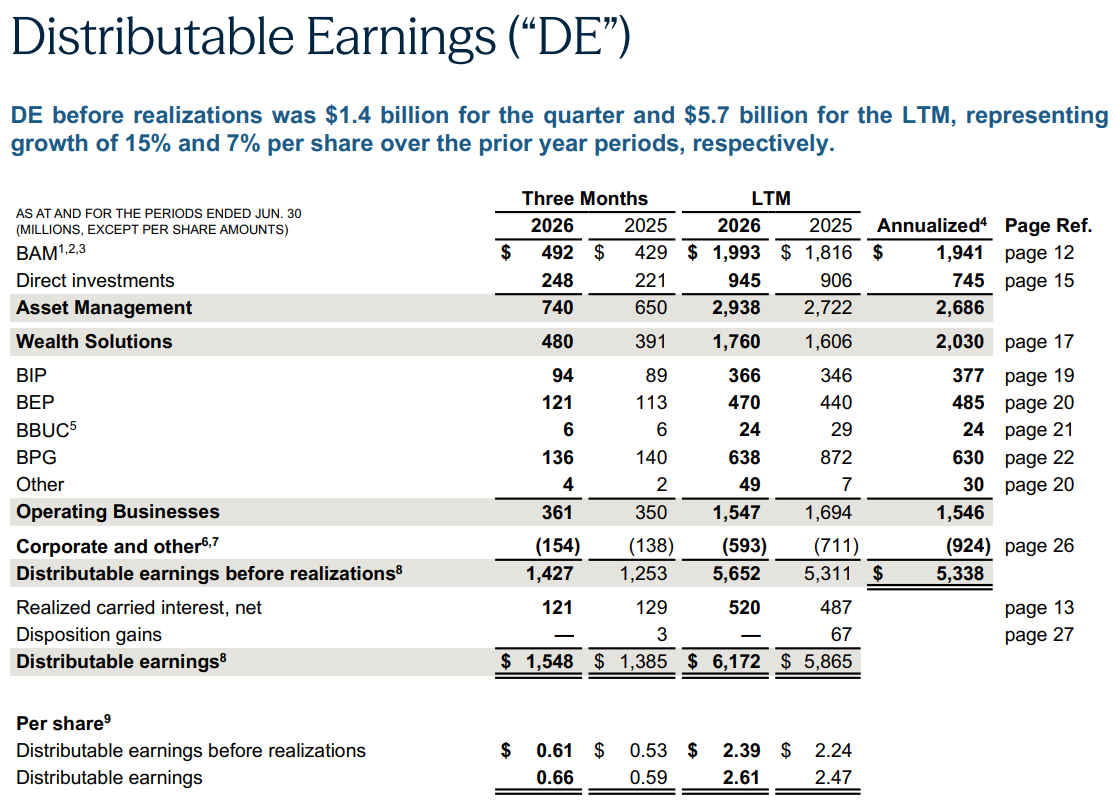
This strong performance was driven by a 20 percent increase in fee-related earnings, supported by a 19 percent rise in fee-bearing capital. Brookfield raised a record $77 billion in fresh capital in a single quarter ($163 billion over the past twelve months), at a generous profit margin of 57 percent on these fees.
Even more striking in the table is the powerful rise of Brookfield Wealth Solutions (BWS). This division provides insurance and wealth solutions and attracts permanent, long-duration capital through annuities and insurance products. BWS generated no less than USD 480 million in Distributable Earnings, an increase of a full 23 percent compared with USD 391 million in the same period last year. This substantial growth in assets under management and income is largely attributable to the successful acquisition of the British pension and annuity specialist Just Group.
During the call, Sachin Shah, CEO of BWS, explained why so much potential still lies in the acquired Just Group. By tackling the relatively high cost base of the British pension specialist and reinvesting the portfolio through Brookfield's own investment platforms, Brookfield sees scope to raise the profit margin by a total of more than 2.5 percentage points. Alongside these operational improvements, the new owner also delivers immediate commercial firepower. Under Brookfield's umbrella, Just Group now gains access to the largest pension auctions, tables it previously simply could not sit at. Shah did stress that the company remains selective: rather than bidding on overpriced portfolios, Brookfield only pursues deals offering an attractive return.
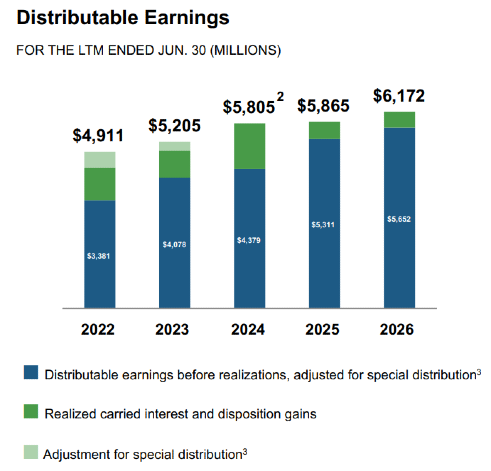
Even so, there is one point that leaves us less enthusiastic. As shown at the bottom of the same table, the company generated only USD 121 million in net performance fees this quarter (USD 520 million over the past twelve months). That stands in stark contrast to the promised acceleration in realisations, especially given that as much as USD 40 billion worth of assets were sold in the first half of the year. Brookfield itself expects normalised annual performance fees of USD 3.5 billion and assigns these a value of USD 27.3 billion. That forms a substantial part of the intrinsic value presented by management, yet it rests on a cash flow that, so far this year, is coming in at only one-sixth of that level.
Analysts rightly asked during the earnings call why the sales are not translating into fees. CFO Nicholas Goodman explained that Brookfield only collects a performance fee once the full invested capital and the preferred return per fund have been repaid to investors. That is methodologically commendably conservative, but it does not explain why the expected inflection point keeps being pushed further out.
Bruce Flatt's letter
Alongside the quarterly results, the most recent letter from CEO Bruce Flatt offers a clear window into the long-term strategy. Where the operating results show where Brookfield stands today, the letter sets out how the company is positioning itself for the future around three overarching themes.
1. Megatrends in energy
Flatt underpins the scaling-up of the platform by pointing to major global trends such as digitalisation and the energy transition. These megatrends are becoming increasingly capital-intensive and require combined disciplines, which strengthens Brookfield's competitive position. The energy division provides the most compelling evidence of this. Brookfield develops approximately 10 gigawatts of new solar and wind capacity every year. That is the annual equivalent of roughly seven times the size of xAI's Colossus 2, currently the largest operational data centre in the United States.
The most compelling part of the energy story concerns nuclear energy producer Westinghouse. Westinghouse's technology is used in more than half of all operational nuclear reactors worldwide, according to Flatt. For investors, it is crucial that this is not a volatile project business, as the bulk of the cash flows stem from recurring maintenance and fuel supply. Moreover, a USD 17.5 billion financial commitment from the US Department of Energy for the advance ordering of critical equipment significantly reduces execution risk in the construction of new reactors.
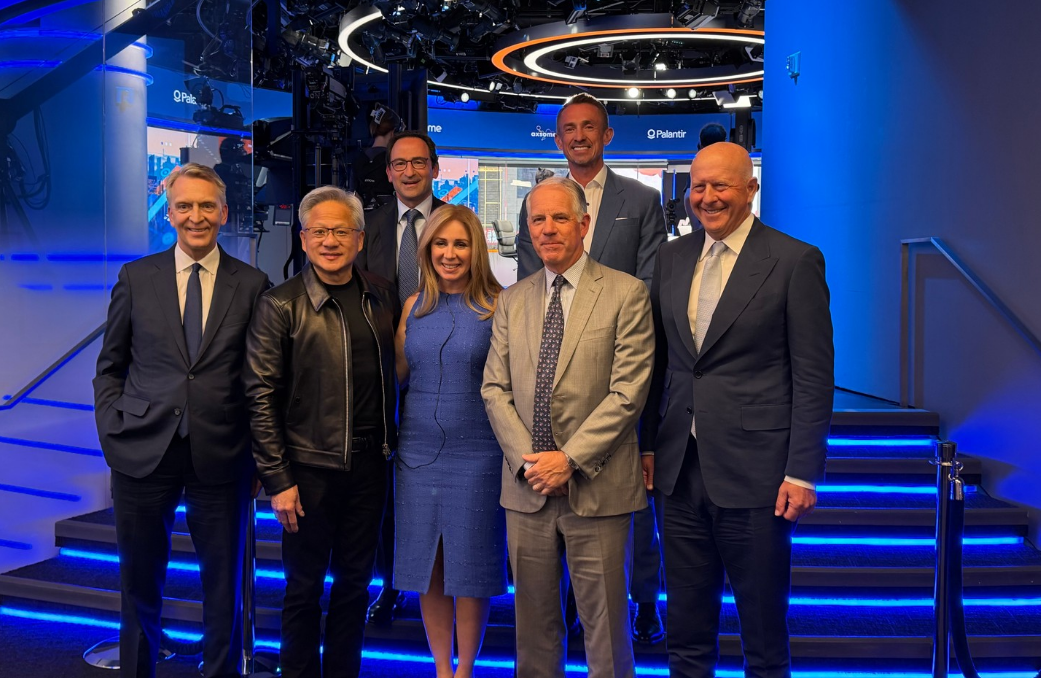
In addition, through a new letter of intent, Brookfield is forming a financing platform together with NVIDIA, Apollo, Blackstone, BlackRock, Goldman Sachs and KKR that aims to mobilise more than USD 500 billion in third-party capital for AI computing power. This explicitly does not involve money from NVIDIA's own balance sheet. The chipmaker provides the seal of approval and the system architecture, while the six wealth managers raise the capital. This formally establishes AI computing capacity as a new asset class.
In an interview on CNBC, Bruce Flatt explained why this is a logical next step. Brookfield has spent decades building the backbone of infrastructure, making the move from renewable energy and data centres to computing power a natural progression. According to Flatt, the bottleneck lies not in the supply of capital but in physical construction capacity. He emphasised that hundreds of trillions of dollars worldwide are seeking predictable cash flows, but that suitable structures for computing power simply did not yet exist. NVIDIA now makes credit assessment possible by indicating to whom it allocates its scarce chips. Nevertheless, the scepticism in the market about this initiative remains understandable. Even top executives in the sector point out that returns on such projects will not be high for everyone, while the entire construct hinges on the assumption that rapidly ageing GPUs retain (part of) their value once the next generation of chips appears.
The scale of this market is enormous. According to Jensen Huang, a 1-gigawatt AI factory can easily cost 50 to 60 billion dollars in land, power, real estate and computing power. The 10 gigawatts of new power generation that Brookfield builds annually thus serves an unprecedented investment cycle. At the close of the conversation, Flatt therefore deliberately steered the discussion towards energy. Whereas computing power as an asset class still has to mature, the financing structure for energy has long existed. With 14 nuclear power plants under construction and another 140 in the pipeline via Westinghouse, Brookfield is presenting the platform with NVIDIA not as a standalone financial product, but as the capstone of an energy position it has been building for twenty years.
2. Pension money as the next capital funnel
The second major theme in the letter concerns the strategic rationale for the pension market and BWS. Flatt argues that pension capital is among the longest-duration capital flows in the world. After all, individuals save for twenty, thirty or forty years to grow their capital and ultimately convert it into a stable income. Precisely for this reason, the largest pension funds have invested for decades in infrastructure, real estate, private credit, renewable energy and unlisted companies. This type of asset delivers resilient cash flows, offers protection against inflation and creates value over the long term.
For retail investors, this access has so far remained closed. Moreover, as companies increasingly stay private for longer, a steadily growing share of value creation is shifting to unlisted markets. Investors who limit themselves to listed securities are therefore fishing in a shrinking part of the pond and often only get in once most of the returns have already been made.
Recent changes in US regulation are bringing about a shift here. The US defined contribution market comprises no less than 14 trillion dollars in savings. Even if only a small percentage of that capital flows into private assets, it would represent one of the largest new capital flows for the sector.
This is exactly the same movement that Brookfield Wealth Solutions is already pursuing, albeit through a different channel. During the earnings call, Sachin Shah, CEO of Brookfield Wealth Solutions, explained why pensions align so well with the group's assets. With regular annuities, there is a risk that clients withdraw their money or have it paid out after a certain period (lapse risk). With a pension, the fund pays out until the participant's death, resulting in a highly predictable and long-lasting liability.

3. Simplification as the key to index inclusion
In his letter, Bruce Flatt returns twice to the same topic: the proposed merger of the holding company BN and BWS into a simpler, more powerful capital structure. Flatt emphasises that this restructuring offers several direct benefits. It better aligns the investment and insurance activities, creates a more scalable organisation, and expands access to long-term capital.
As an important additional benefit, Flatt notes that this simpler entity ("New BN") significantly improves eligibility for inclusion in the major US and global equity indices, a possibility that simply did not exist under the old structure. The completion of the Oaktree acquisition also strengthens this profile, given that more than 60 percent of investment and management staff are now based in the United States. During the conference call, President Nick Goodman provided further explanation. Under the old Canadian structure based in Ontario, there was no route whatsoever to inclusion in US indices. By basing New BN in Bermuda, the company is opting for a practical intermediate jurisdiction that is indeed accepted by US index providers such as S&P.
In addition, the company states in its quarterly report that it will switch from IFRS to US GAAP as of 1 January 2027. This accounting standard is required in order to report as a domestic US issuer. Inclusion in a leading index such as the S&P 500 would trigger an automatic inflow of billions of dollars in passive capital from ETFs and index funds. This not only increases trading liquidity but can also lead to a structurally higher valuation of the stock.
Nevertheless, caution remains warranted. The head office remains in Canada, where 15 per cent of the assets under management are also anchored. Moreover, the earlier experience surrounding subsidiary BAM in June 2025 is a sobering reminder that index provider S&P does not automatically follow suit. Goodman is therefore deliberately keeping expectations low by emphasising that this process will take time.
Scottish Mortgage benefits from medical breakthrough
Scottish Mortgage Investment Trust (London: SMT) is known by virtually every investor as a technology holding company, and of course not entirely without reason. Yet beyond the technology sector, this flagship of Baillie Gifford also holds various interests in healthcare and the life sciences. On Wednesday 19 August, two of those positions simultaneously benefited from the same piece of news. One of those positions within the portfolio, Moderna (Nasdaq: MRNA), surged by as much as 177 per cent that day after the company announced, together with partner Merck, that their personalised mRNA cancer treatment had successfully met the primary endpoints of a pivotal phase 3 trial. It marks the largest single-day gain by an S&P 500 company this century.
Moderna's $MRNA 177% gain today was the largest by any S&P 500 stock this century 📈 🤑 🥳 pic.twitter.com/zzvoLPazST
— Barchart (@Barchart) August 20, 2026
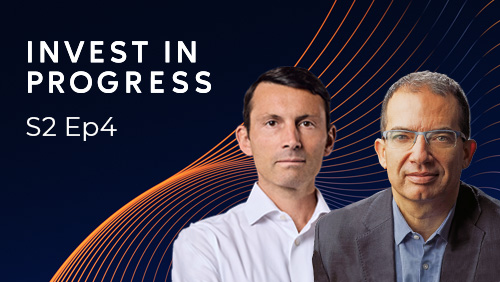
To understand the scale of the market reaction, it is essential to understand how the treatment works. It concerns intismeran autogene (mRNA-4157), not a vaccine in the traditional sense, but an individualised treatment. In a patient, the tumour is surgically removed, after which the DNA of the tumour tissue is compared with that of healthy cells. That difference reveals the mutations that are unique to that specific tumour. An mRNA code is then written that describes precisely those mutations and administered to the patient, so that the immune system learns to recognise the specific cancer cells. Administered alongside Keytruda, partner Merck's immunotherapy drug that releases the brakes on the immune system, this creates a combination that teaches the body where to look and gives it the tools to strike. CEO Stéphane Bancel already described it in January 2024, in conversation with Scottish Mortgage manager Tom Slater, as "restarting the immune system". This conversation can be listened to below.

The large-scale phase 3 trial examined that combination in more than 1,100 patients with fully resected melanoma (stage IIB through IV). The results showed hard evidence of success on two crucial points:
- Fewer cancer recurrences (the primary endpoint): Patients who received the combination remained demonstrably free of cancer for longer than the group that received only the standard treatment.
- Fewer metastases to other organs (the secondary endpoint): The combination effectively prevented the cancer from spreading to other parts of the body, such as the lungs, liver or brain.
The fact that Moderna's share price nearly tripled on this single announcement is because investors immediately looked beyond skin cancer alone. This is the first-ever positive phase 3 outcome for an mRNA cancer treatment, and for the neoantigen approach as a whole. The logic of the treatment is not disease-specific but patient-specific: the process of sequencing, determining the difference and writing the mRNA code is in principle identical, whether a tumour is located in the skin, lung, kidney or bladder. Anyone convinced by these results sees not merely one new drug, but a proven building block for countless future treatments. Analysts expect annual sales for this specific drug of USD 1.4 billion by 2032. The fact that Moderna's market value rose by USD 35 billion in a single day shows that investors are primarily paying for the potential of the underlying technology.
And it is precisely with that technology that the second position within Scottish Mortgage's portfolio comes into view, one that also benefited directly from this news: Tempus AI. The revaluation of the platform affected the entire chain. To analyse the tumour DNA quickly and accurately, Moderna's mRNA system relies on the sequencing technology of Personalis, a company recently acquired by Tempus AI for approximately USD 1.5 billion. As a result, Tempus owns the sequencing engine behind a clinically validated programme and stands ready to scale up these analyses once the drug receives final approval.
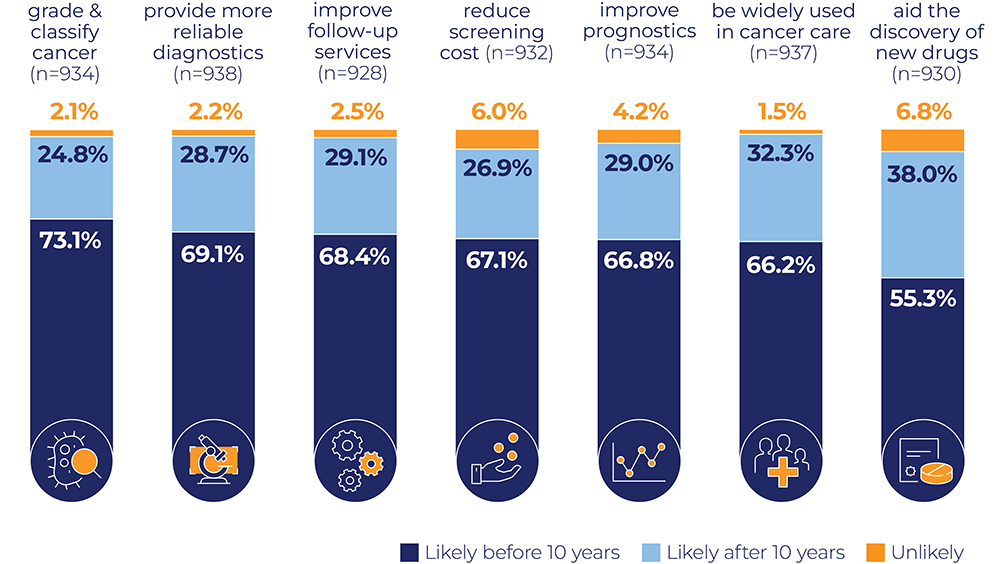
Scottish Mortgage first invested in Tempus AI in 2018 as a private, unlisted company, after which Tempus went public (IPO) in June 2024. The stake is admittedly smaller than the position in Moderna, but it benefits from exactly the same underlying investment case.
For Scottish Mortgage, this is the provisional culmination of a saga that has been running for six years. In November 2021, Moderna was the largest position in the portfolio at 9.2 percent, after a sixteen-fold share price increase driven by the coronavirus vaccine. After vaccine demand evaporated, the shares sank into losses and the company spent years waiting for new products, the stock featured structurally as a 'detractor' in the quarterly reports. Managers Tom Slater and Lawrence Burns reduced the holding from 12 to 4.6 percent (and within Scottish Mortgage to 1.8 percent by the end of July), but never sold it entirely.
Taking the last known number of 7,867,553 shares as a starting point and revaluing it at the peak of the share price surge, Moderna would come out at an estimated weight of roughly 5.5 percent. That would catapult the position from outside the top ten straight to third place in the trust (behind SpaceX and TSMC, but above NVIDIA). However, Moderna shares immediately fell by 23 percent the following day, and there is a chance the managers will trim the position somewhat in the coming period. We will only get exact confirmation of this at the next monthly update. Either way, the move delivered a welcome windfall for Scottish Mortgage's portfolio.
A hidden AI gem in Investor AB's portfolio
Recently, Het Financieele Dagblad published an extensive article by journalist Stijn van Gils about Wärtsilä, one of the less conspicuous but highly interesting holdings in the portfolio of the Swedish family holding company Investor AB (Stockholm: INVE-B).
 Stijn van Gils
With a stake of nearly 18 percent, Investor AB holds an important and steering voice within the Finnish company. Although this holding looks relatively modest at around 2.5 percent of the Swedish family holding company's total net asset value (NAV), next to traditional heavyweights such as Atlas Copco or ABB, the engine builder is proving to be one of the best-performing listed gems in the Nordic region.
In the article, Van Gils explains that Wärtsilä is best known to the general public and within the maritime sector as an established name in ship engines. The company holds an impressive market share of around 80 percent in the specialist market for four-stroke engines, which are mainly found in cruise ships and ferries. However, the fact that the share has surged in recent years, with the order book swelling to more than €8 billion, surprisingly has little to do with shipping and everything to do with the rise of artificial intelligence.
The explosive growth of AI applications requires gigantic amounts of electricity. As the regular power grid becomes congested in many countries, data centre developers are under great pressure to ensure their facilities have sufficient power and back-up capacity. In that search, data centres have discovered Wärtsilä's engines en masse. Whereas most data centres used to be too small for the Finnish company's machines, the newest AI data centres require capacities of hundreds of megawatts, precisely the sweet spot in which Wärtsilä operates. The large gas engines are now being used to keep entire data centres running or to step in directly when the grid's power supply fails.
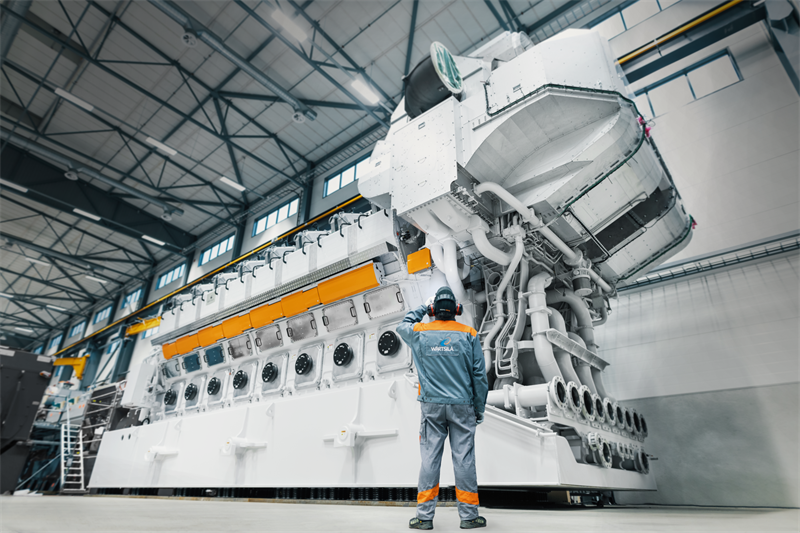
Nevertheless, drawing on analysts, the author does raise a number of caveats about this success. Handelsbanken analyst Timo Heinonen even calls the frenzy surrounding data centres a genuine hype. According to him, data centres are so desperate for energy that they are currently buying up almost anything that can generate power, even less suitable car engines. Although Wärtsilä's engines are a much better fit, traditional gas turbines remain a more efficient solution for continuous power supply in the long run. Several analysts therefore have a sell rating on the stock, arguing that the share price is running too far ahead of the fundamental reality.
Wärtsilä's management is not letting itself be rattled by this. CEO Håkan Agnevall stresses that the data centre market is a wonderful opportunity, but certainly not the only pillar under the company. According to management, the real sustainable value lies in greening the maritime fleet through biofuels and hybrid propulsion, and in supporting the energy transition on land. Wärtsilä's flexible gas power plants can start up within seconds and quickly ramp up or down. That makes them the ideal safety net for balancing the electricity grid at moments when the supply of solar and wind energy drops away.
Receive weekly insights in your inbox
Exclusive analyses and updates on family holding companies and global market developments.
Would you like more information about our services?
Get in touch
Disclaimer:
No rights can be derived from this publication. This is a publication of Tresor Capital. Reproduction of this document, or parts thereof, by third parties is only permitted after written consent and with reference to the source, Tresor Capital.
This publication has been compiled by Tresor Capital with the greatest possible care. The information is intended in a general sense and is not tailored to your individual situation. The information should therefore explicitly not be regarded as advice, an offer or a proposal to purchase or trade investment products and/or to take up investment services, nor as investment advice. The authors, Tresor Capital and/or its employees may hold positions in the securities discussed, for their own account or for their clients.
You should carefully consider the risks before you start investing. The value of your investments may fluctuate. Past performance is no guarantee of future results. You may lose (part of) your investment. Tresor Capital disclaims any liability for any inaccuracies or errors. This information is purely indicative and subject to change.
Read the full disclaimer at tresorcapitalnieuws.nl/disclaimer .
This article was translated automatically from Dutch using AI. In case of any difference, the Dutch original prevails. Read the original in Dutch.