
Family Holdings #34 – From good to great: the choice for Swedish top class



This week's topics:
The AI revolution is manifesting itself in various ways: from the pragmatic, decentralised innovation at VMS company Constellation Software to the large-scale, strategic investment in a national AI supercomputer by the Wallenberg family through their holding company Investor AB. While the valuation of AI infrastructure company Databricks is exploding, boosting the value of holding companies such as Scottish Mortgage Trust, the VMS sector is in fact seen as a defensive investment that is strengthening its competitive advantage by integrating AI cleverly.
Despite a reported decline in profit distorted by one-off items, Berkshire Hathaway shows strong underlying operational growth, creating an attractive disconnect with the share price, which has fallen on succession concerns.
The robust half-year growth at Topicus, driven by acquisitions, is better than it looks, since the full, substantial impact of the strategic investment in Asseco Poland will only become visible after consolidation in the coming quarters.
The investment case for Alphabet is partly based on the market's underestimation of YouTube's growth and the potential of Waymo, the view that AI complements rather than cannibalises Search's dominant position, and Google Cloud's proven technological superiority.
In Brief
Sofina's (Brussels: SOF) planned sale of private schools group Cognita, the second-largest holding in its portfolio, appears to be stalling. According to reports in the Financial Times, the multi-billion-euro deal is on shaky ground.
The sale is being hampered by too large a gap between the asking price and bids, partly due to uncertainty about the UK market following the Labour government's introduction of a 20% VAT levy on school fees. For Sofina, which acquired a 13.4% stake in Cognita in 2019, the failure of this exit would be a setback, although education remains an important pillar of its investment strategy.
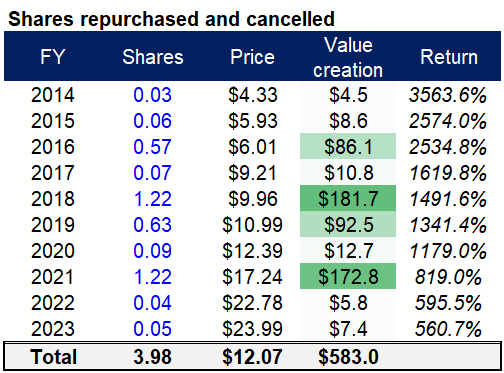
Terravest (Toronto: TVK) recently announced a new share buyback programme. The Canadian holding company plans to repurchase 1,558,516 shares, equivalent to 7.19% of shares outstanding. At the closing price of 20 August (CAD 143.23), this represents a total value of approximately CAD 223 million. This news is all the more significant given the historical context.
An analysis by @bizalmanac on X (formerly Twitter) shows that between 2018 and 2021 Terravest created more than CAD 600 million in shareholder value through exceptionally well-timed share buybacks (see image). This selective and sporadic policy underscores management's careful capital allocation. Precisely for this reason, this new buyback programme is seen as a very strong signal that management considers the shares undervalued.
AddTech and Lifco: choosing Swedish excellence
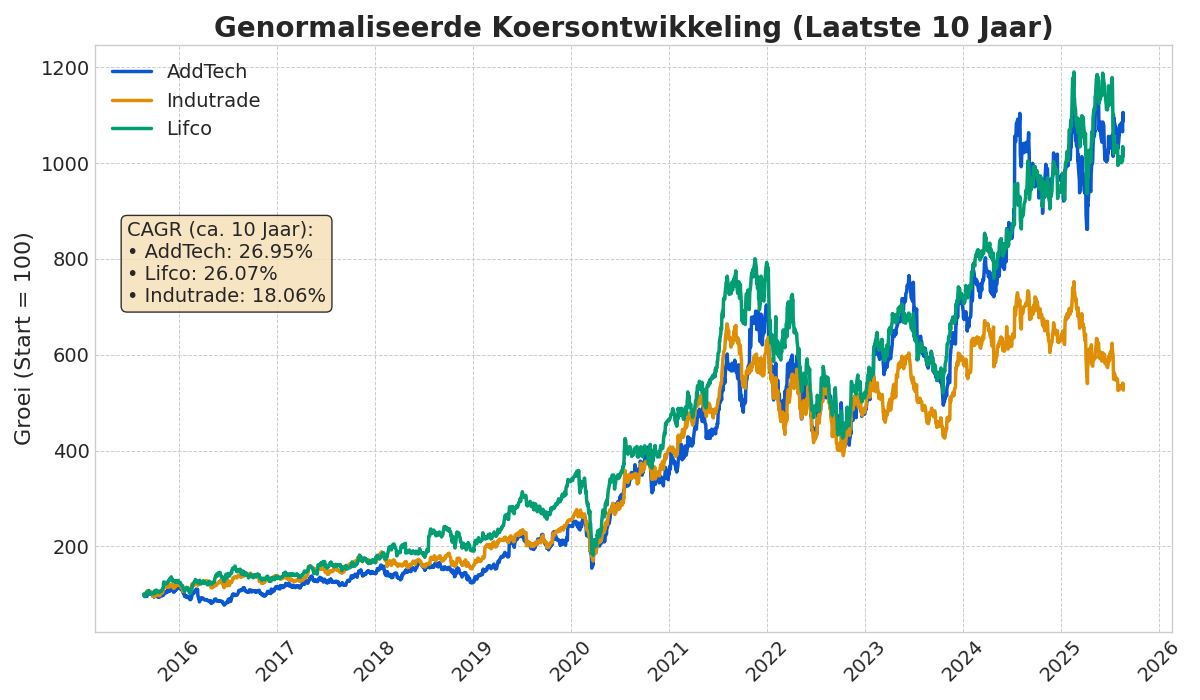
The Swedish investment holding company Indutrade (Stockholm: INDT) has been part of our family holding company strategy for years. It was the first Swedish serial acquirer we added to the portfolio. Even so, earlier this year we parted ways with Indutrade in order to consolidate the position into Addtech (Stockholm: ADDT-B) and Lifco (Stockholm: LIFCO-B).
We deliberately choose to report any transactions, and new positions in particular (such as the AddTech position earlier this year, for example), with a significant delay. We believe it is only logical that our clients are the first to be informed of changes in their portfolio, before we communicate this more broadly in the newsletter.
Consolidation into Swedish top tier
In line with our disciplined investment philosophy, which is focused on owning only the most superior companies for the long term, we have fully sold our position in Indutrade. The freed-up proceeds have been reinvested into our existing positions in Lifco AB and Addtech AB, two companies that, in our analysis, perform significantly stronger on the most crucial selection criteria.
The decision is the result of an in-depth comparative analysis based on four fundamental pillars. Although Indutrade is a solid and well-diversified company, it lags behind on the two criteria that weigh most heavily for us: profitability and return on invested capital.
1. Superior profitability
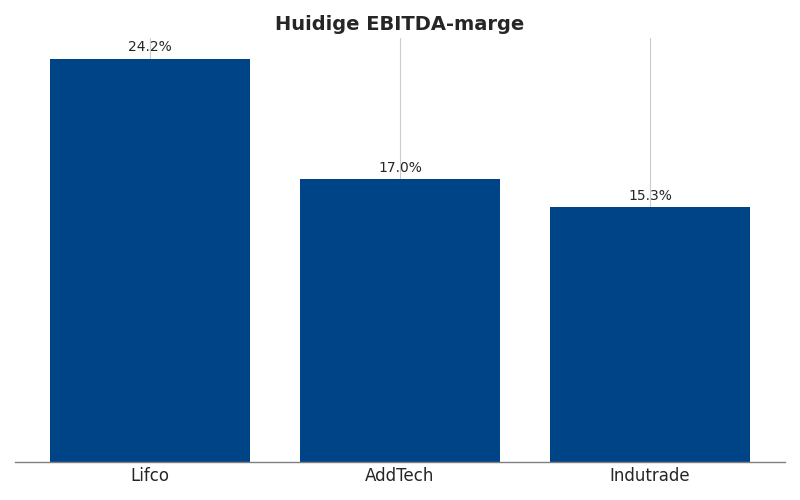
The data show a clear hierarchy. Lifco is the undisputed leader with an EBITDA margin of 24.2%, which is exceptional and points to the very high quality and pricing power of its subsidiaries. Addtech follows with a respectable 17.0%, but Indutrade has the lowest margin of the three at 15.3%. Lifco's superiority is structural and visible throughout the entire value chain.
2. Higher return on capital (ROIC)
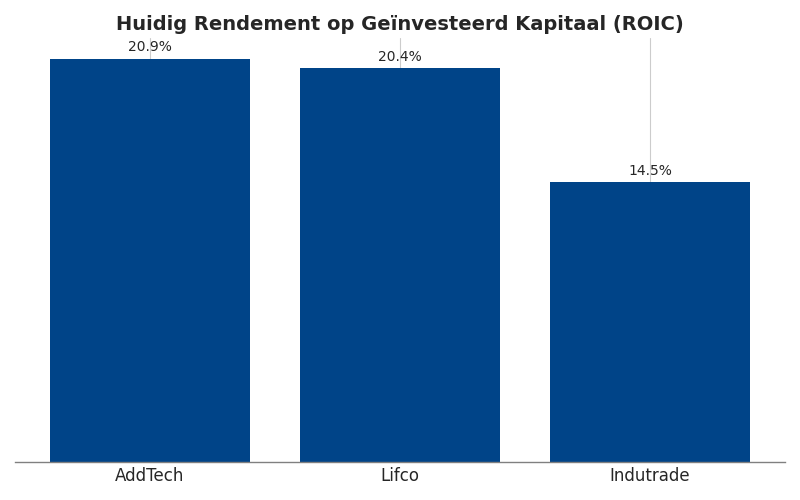
A high ROIC is the ultimate indicator of a superior business model and a strong competitive position (a "moat"). Here too, the divide is clear. Addtech (20.9%) and Lifco (20.4%) generate a return that is significantly higher than that of Indutrade (14.5%).
A ROIC above 20% points to companies that are exceptionally good at allocating capital to projects and acquisitions that generate returns well above their cost of capital. Indutrade's ROIC is not only lower than that of its peers, but also below its own strategic target of 20%.
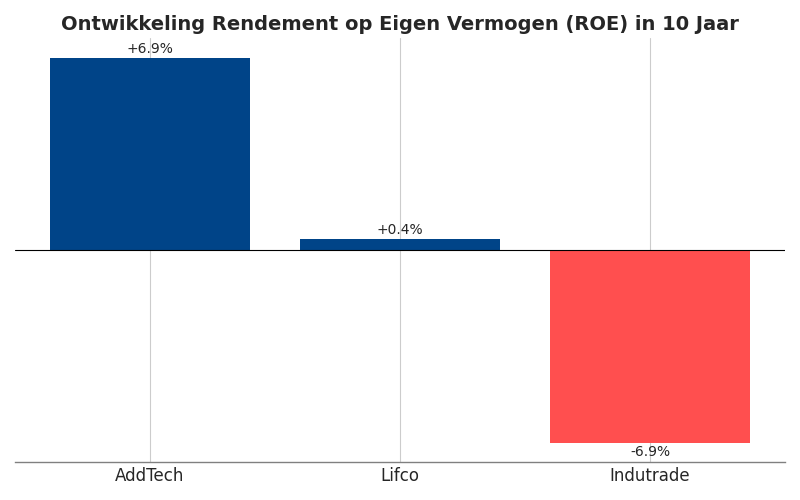
The declining trend in return on equity (ROE) over the past ten years was for us an additional and decisive warning signal. Whereas Lifco remained stable (+0.4%) and Addtech showed a strong improvement (+6.9%), Indutrade showed a worrying decline of -6.9%. This may point to a structural decrease in profitability or to acquisitions that are less profitable than those made in the past.
3 & 4. Balance sheet and diversification
On the other two pillars, a strong balance sheet and a diversified portfolio, all three companies score well. They all have healthy, prudently managed balance sheets with conservative debt ratios. Lifco stands out, however, with an exceptionally low debt ratio of just 0.83x EBITDA, making it the most financially robust of the three. The conclusion, then, is that although Indutrade is a good company, Lifco and Addtech are the superior choices in the context of our excellence-focused strategy. The consolidation is a logical step in the continuous refinement of the portfolio. AddTech, Indutrade and Lifco are currently trading on the Stockholm stock exchange at SEK 345.40, SEK 234.40 and SEK 349.20 per share, respectively.
AI developments: from VMS competition to sovereign supercomputers
Developments in the field of artificial intelligence (AI) are following one another in rapid succession, forcing investors to continuously evaluate the impact on their portfolio. Recent news items show how various organisations, from specialised software companies to influential investment holding companies, are approaching the opportunities and challenges of AI. This week we highlight three concrete examples: the pragmatic innovation strategy of Constellation Software, the establishment of a national AI initiative by the Wallenberg family, and the exploding valuation of AI infrastructure company Databricks.
VMS and Constellation Software's pragmatic innovation
Building on our earlier deep dive on the role of AI in the Vertical Market Software (VMS) sector, this week we fittingly already see a good illustration of the strategy pursued by VMS serial acquirers. In the deep dive, we concluded that the deep integration, high switching costs and business-critical nature of VMS software form a robust moat that is not easily threatened by AI. Instead, we see AI being deployed as a tool to improve existing products and efficiency.
A striking example is the internal AI competition that investment holding company Constellation Software organised through its subsidiary Jonas Software. Out of 129 pitches, the product "Looper" from Club Caddie was chosen as the winner, earning a cheque of USD 500,000. Looper allows golf course operators to gain direct access to data on transactions, members and inventory through simple questions, complete with visualisations. This initiative shows how Constellation uses its decentralised structure to encourage bottom-up innovation, exactly as CEO Dexter Salna put it: "If someone finds a good application of AI, we share it across our hundreds of companies."

This approach aligns with a recent observation by investor Adrián Value. On X (formerly Twitter), he highlighted the complexity of existing VMS solutions: "There must be a million lines of code behind it (...) This is a piece of mission-critical software that is hard to replace." AI can speed up the writing of new code, but replacing decades of deeply entrenched logic and customer relationships is an entirely different challenge. As the tweet states, AI development is "the easy part". The real value lies in understanding, integrating and selling the software, a process that requires deep domain knowledge.
Sweden's AI ambition
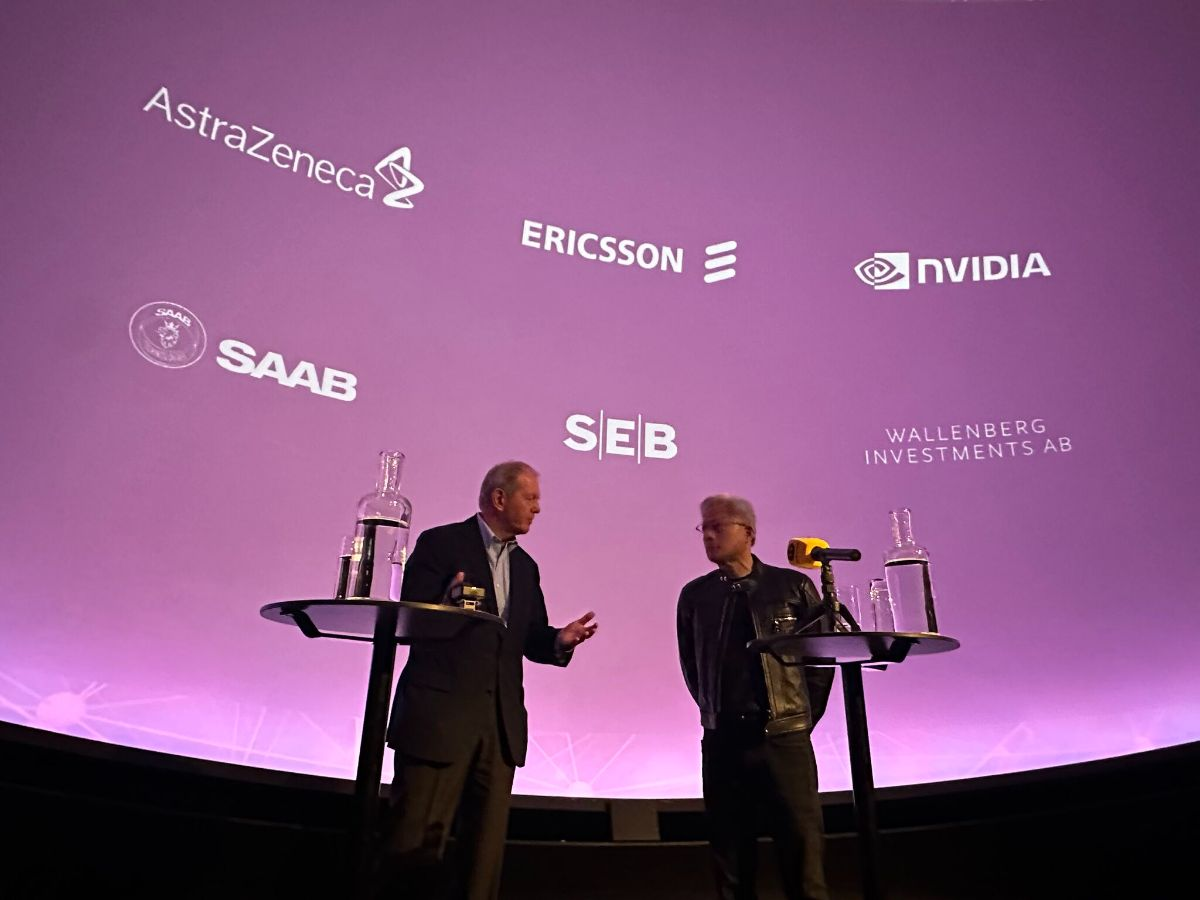
On a very different scale, we see a strategic move by Sweden's influential Wallenberg family through their investment holding company Investor AB. Key portfolio subsidiaries (AstraZeneca, Ericsson, Saab and SEB), together with the Wallenberg Investments foundation, have established a company called Sferical AI. The aim is to operate a sovereign AI supercomputer to strengthen the competitiveness of Swedish industry.
This initiative, which follows on from a partnership with NVIDIA, will be based on the latest NVIDIA DGX SuperPOD systems. It reflects a proactive, top-down approach in which investment in critical infrastructure is being made at national level so as not to fall behind in the AI era.
Marcus Wallenberg, chairman of Wallenberg Investments, states: "Through this initiative, we are creating the opportunity for some of Sweden's leading companies to position themselves at the forefront of the rapid structural transformation being driven by the development and use of AI."
Valuations in AI: the Databricks effect
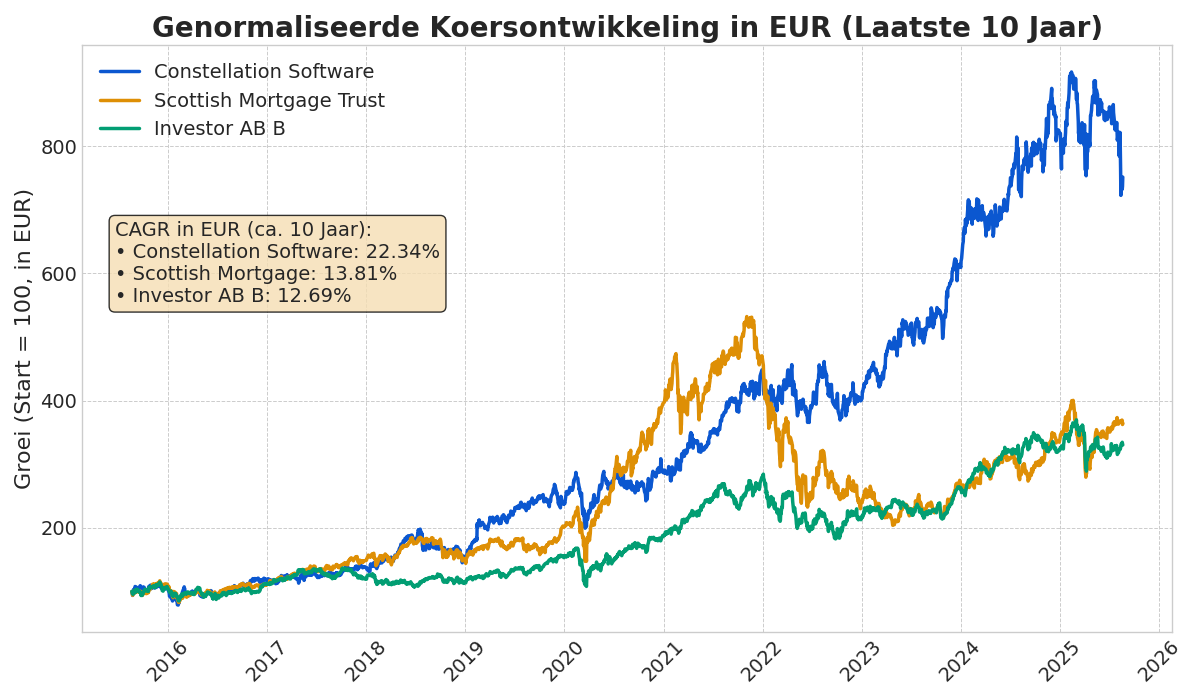
While some are building the applications and infrastructure, others are benefiting from the enormous inflow of capital into the sector. The investment holding company Scottish Mortgage Investment Trust (London: SMT) saw the value of its unlisted stake in Databricks rise by 60% in just nine months, to a valuation of more than USD 100 billion.
Databricks provides software that helps companies analyse and prepare their datasets for use with AI, positioning itself as a crucial player on the 'picks and shovels' side of the AI revolution. This enormous jump in valuation, driven by a new funding round of more than USD 1 billion, underscores investors' immense appetite for AI-related companies.
However, sentiment is being tempered by a warning from OpenAI CEO Sam Altman, who compared the current excitement to the dot-com bubble. He acknowledges both the hype and the technology's fundamental long-term importance. For Scottish Mortgage, the increase in value translates directly into a higher net asset value (NAV) and confirms their strategy of investing in high-quality, private growth companies.

At the same time, the Databricks case illustrates the enormous valuations being assigned to the enablers of the AI transition, with the accompanying risk of overheating. These developments reinforce our conviction that the VMS sector is well positioned. The moat around these companies is not being threatened but rather deepened by the smart integration of AI. While valuations at the forefront of the AI hype may be volatile, the underlying VMS companies continue to benefit from their durable business models while pragmatically deploying AI to create value.
In addition to the companies mentioned, within our family holding company strategy we also gain exposure to the necessary AI infrastructure through, for example, the owners of data centres (Google Cloud, part of Alphabet) or the builders of them (think of Brookfield and KKR). And then there is all the (renewable) energy needed to make this transition possible (MBB, Brookfield and KKR). Sofina, Prosus and Scottish Mortgage Trust also invest directly in the best AI companies. In this way, we have broad exposure to the AI revolution within our holding company portfolio.
Constellation Software, Investor AB and Scottish Mortgage Trust are currently trading on the Toronto, Stockholm and London stock exchanges at CAD 4,527.30, SEK 298.10 and GBP 10.90 per share, respectively.
Berkshire's second quarter warrants closer examination
Earlier this month, US investment holding company Berkshire Hathaway (New York: BRK-B) published its results for the second quarter of 2025. While reported operating profit fell by 4% to USD 11.16 billion, a deeper analysis of the figures paints a picture of operational resilience. Last week, we already published a review of Berkshire's transactions within its equity portfolio.
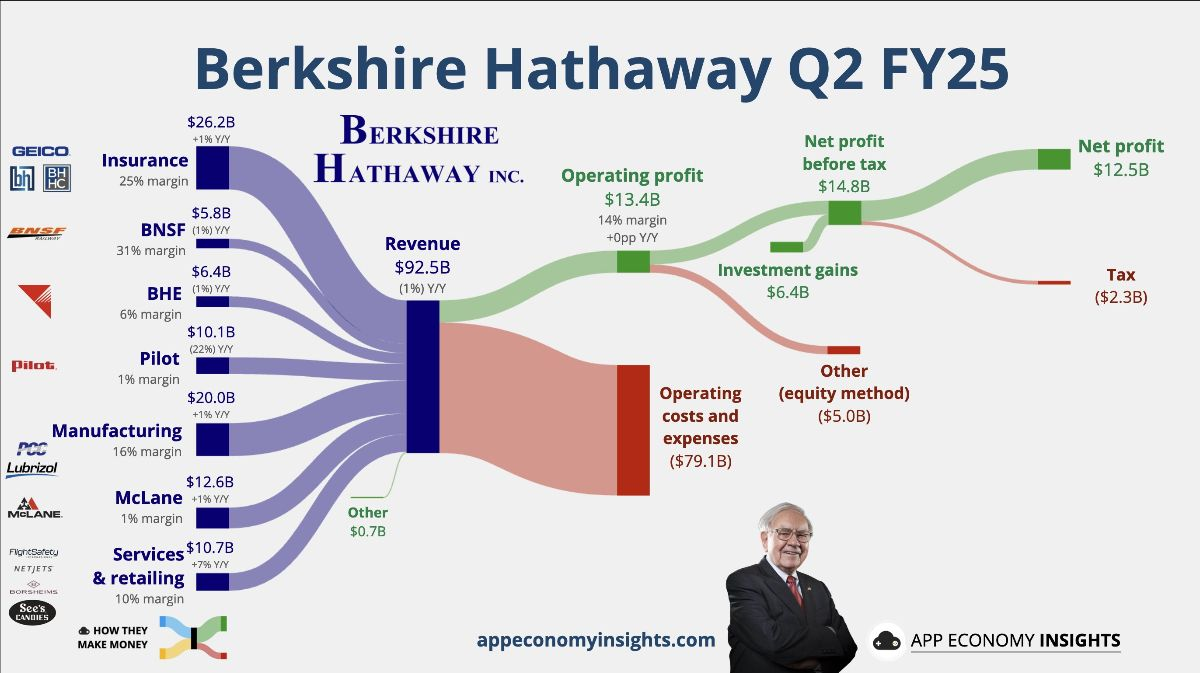
The reported decline in profit is distorted by a non-cash currency loss of USD 877 million on foreign debt. Analyst Chris Bloomstran rightly points out that, once this effect is corrected for, operating profit actually rose by 7.9% to USD 12.0 billion. This gives a cleaner picture of the companies' performance. Net profit was further affected by a one-off write-down of USD 3.8 billion on the investment in Kraft Heinz.
The underlying segments performed strongly overall:
- Insurance: Profitability remains robust, despite a decline compared with a record year. GEICO has "largely recovered" operationally, and the reinsurance arm showed discipline by writing less business in a less attractive market.
- BNSF (Railways): A standout performer with profit growth of 19.5%. The railway company is "firmly turning the corner" thanks to operational improvements.
- BHE (Energy): Higher profit, mainly due to the absence of new wildfire-related provisions. New legislation, however, is creating uncertainty about future investments in renewable energy.
- Manufacturing, Service & Retailing: A mixed picture, with a strong performance from aerospace supplier PCC, but continued weakness at consumer- and construction-related businesses.
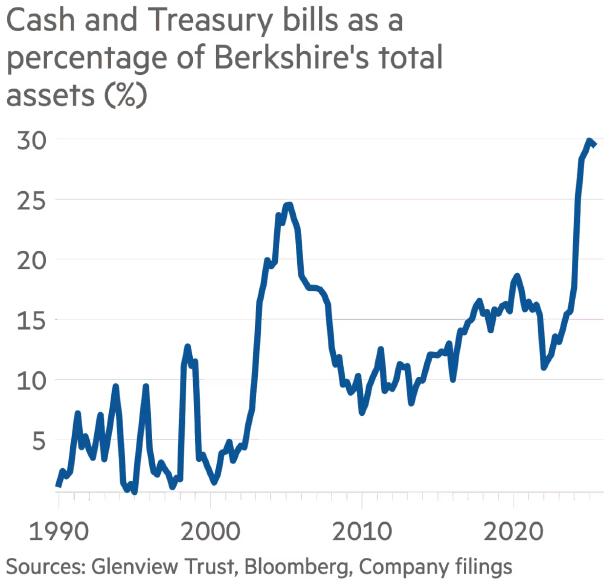
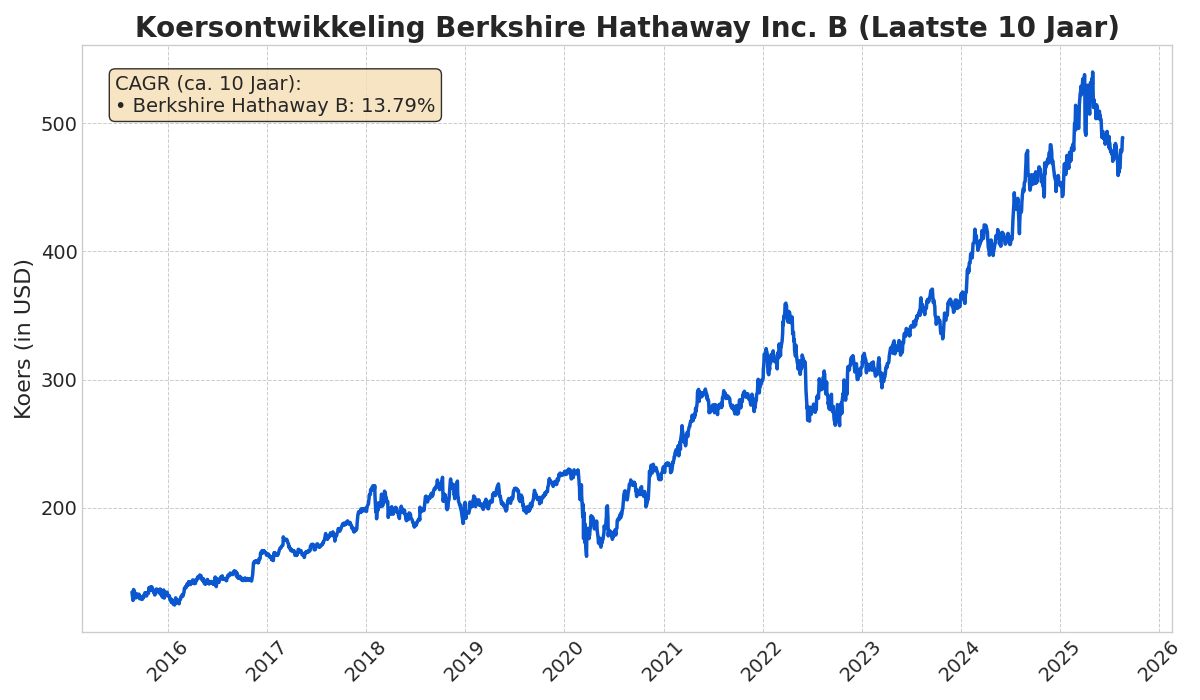
With a cash position of around USD 340 billion, not a single share was bought back in the first half of 2025. This was a clear signal that Buffett considered the company's own shares too expensive in the spring. However, the recent 14% share price decline since the May peak, caused by uncertainty around the succession, has brought the valuation back to a more attractive level.
The current situation at Berkshire Hathaway illustrates a classic dilemma. The market is pricing in a "succession risk", resulting in a weak share price. At the same time, the underlying operating machine, adjusted for accounting effects, is actually showing improvement. This disconnect between sentiment and fundamental performance, combined with the company's rock-solid capital discipline, confirms the strength of the conglomerate. The recent share price decline could well be the signal for the company itself to resume share buybacks.
Berkshire Hathaway is currently trading on the New York Stock Exchange at USD 492.39 per B-share.
Topicus results better than they appear at first glance
On 1 August 2025, Topicus.com Inc. (Toronto: TOI), the European VMS serial acquirer, announced its results for the first half of 2025. The figures show a robust performance, marked by significant revenue and profit growth.
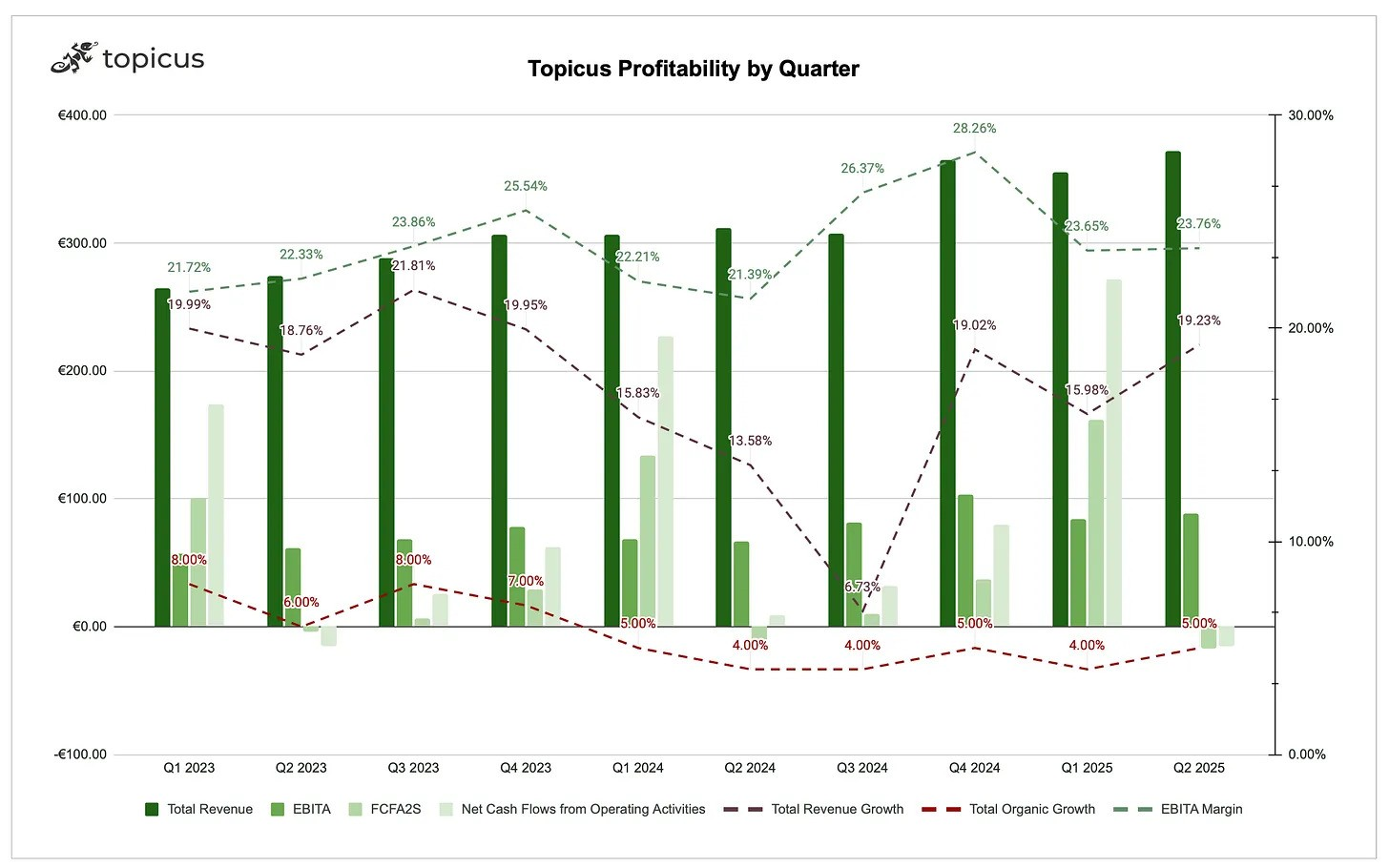
In the second quarter, revenue rose 20% year-on-year to €372 million, while revenue for the first half as a whole increased by 18%. This represents the highest growth since the third quarter of 2023. Organic growth stood at 5% for the quarter, in line with the trend of the past eighteen months. The most important part of revenue, recurring maintenance revenue, even rose by 7%. The remaining growth is attributable to the completion of 18 acquisitions during the first six months of the year.
Operating cash flow (CFO) was negative in Q2 (-€14.9 million). As the accompanying chart below illustrates, this is a seasonal pattern, as a significant portion of annual maintenance contracts is invoiced in the first quarter. It is therefore more relevant to look at the half-year cash flow, which rose by 9% compared with last year, underlining the company's financial health.
Last week we already wrote an extensive analysis of Asseco Poland (you can read it here).
Asseco stakes not yet fully consolidated
The investment in Asseco Poland is of great importance for Topicus's future. The company's current stake in Asseco is classified as a Fair Value through Other Comprehensive Income (FVOCI) investment, meaning it is treated as a long-term investment and not yet as a subsidiary. As a result, the unrealised gain resulting from the rise in the share price is included in the accounts, but Asseco's underlying P&L results are not yet consolidated.
The planned acquisition of an additional 15% of Asseco's shares is expected to be completed in Q3. At that point, Topicus is also likely to take up board seats, which will change the classification, and Asseco's P&L results will be incorporated into Topicus's consolidated figures. RBC Capital Markets estimates that, with the current stake, year-on-year revenue growth in the second quarter would already have been around 33%, and with the additional 15% this would rise even further to growth of approximately 53%.

An outlook that remains attractive
In the second quarter, a substantial amount of capital was deployed, namely €220 million, marking the third-highest quarter in the company's history since its listing. With the €36 million deployed after the quarter and the expected completion of the second investment in Asseco Poland in Q3, total capital deployment for 2025 is estimated at €775 million, an increase of 18% year on year. This substantial deployment of capital is underpinned by a strong balance sheet and additional financing capacity, enabling Topicus to continue actively consolidating fragmented vertical software markets in the coming quarters as well.
An investment memo by Seeking Winners notes that, with expected revenue of approximately €1.7 billion this year, the company is still only capturing around 2% of its total addressable market. By comparison, parent company Constellation Software sits at around 3.4%. This difference above all highlights just how much growth potential still lies ahead for Topicus, both organically and through further capital allocation.
The half-year results confirm that the company is able to accelerate its growth without compromising on quality. Cash flow remains predictable, capital allocation is disciplined, and the investment in Asseco adds a strategic lever that will immediately contribute additional value. As such, Topicus is not only positioned for a strong end to 2025, but also for a long period in which compounding and scaling will take centre stage.
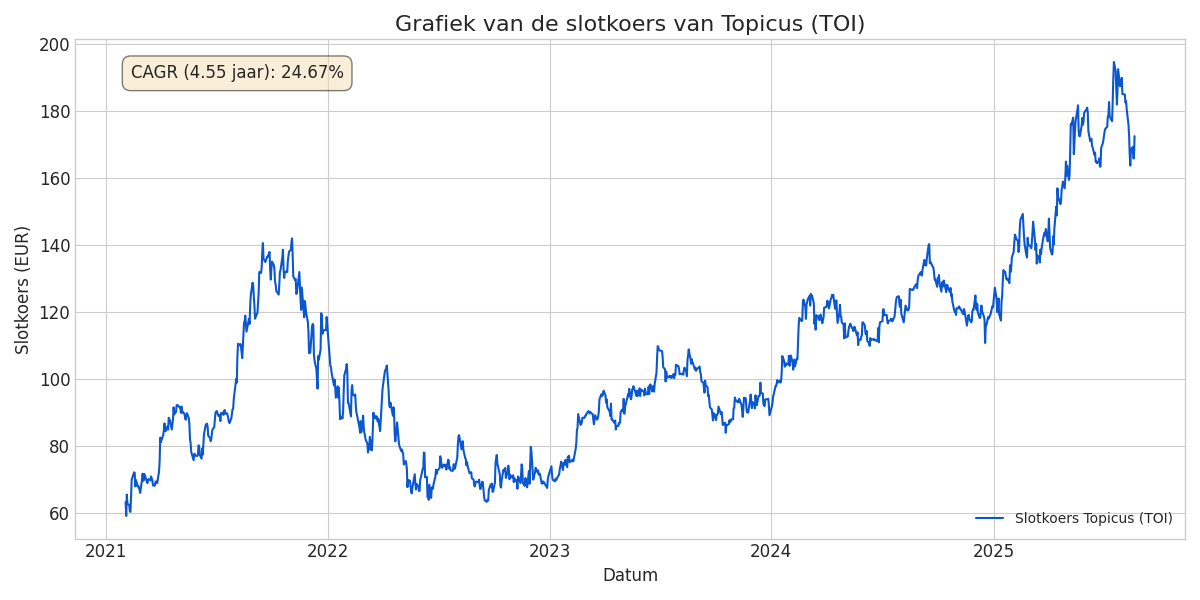
Topicus.com Inc. is currently trading on the Toronto stock exchange at a price of CAD 173 per share.
Alphabet: more than just Google Search
In recent months, there has been considerable debate in the market about the future position of the American investment holding company Alphabet (New York: GOOGL), in particular the impact of generative AI on Google Search's core business. The analysis by Luc Kroeze, entitled "Google Search: the end of an era or the start of a new chapter?", offers a valuable contribution to this debate. We recognise the complexity he outlines in forecasting and valuing the future of a dynamic company such as Alphabet. For us, however, this complexity is not an obstacle but rather an opportunity to create a competitive advantage through in-depth analysis.
Our view on the valuation of YouTube and Waymo
Our own analysis and valuation models arrive at similar conclusions regarding the strength of Alphabet, but we take a different approach on a few crucial points. For instance, we regard the assumed 5-year compound annual growth rate (CAGR) of 12.5% for YouTube as too conservative. Historically, YouTube has achieved average annual growth of almost 20% in recent years.
In our view, given its dominant position and the loyalty of its users, YouTube is better compared to platforms such as Netflix, albeit with an even stronger moat. Whereas Netflix is used almost exclusively for entertainment, YouTube is a platform that is also indispensable for gathering specific information in the form of shorter content (such as educational videos, tutorials or news). The daily use of YouTube by a broad audience makes it a fundamental part of digital life, and in our view this justifies a more optimistic growth forecast.
We also take a different view on the valuation of the company's 'other bets', including Waymo. We believe that leaving these future and current assets out of the valuation does not give a complete picture. Although the costs are included, a valuation of zero ignores the considerable potential and technological lead. Within our sum-of-the-parts analysis, we therefore include a conservative but realistic valuation, so as to correctly reflect the future and current value of these innovative subsidiaries, without setting expectations too high.
AI is not creating cannibalisation but complementarity
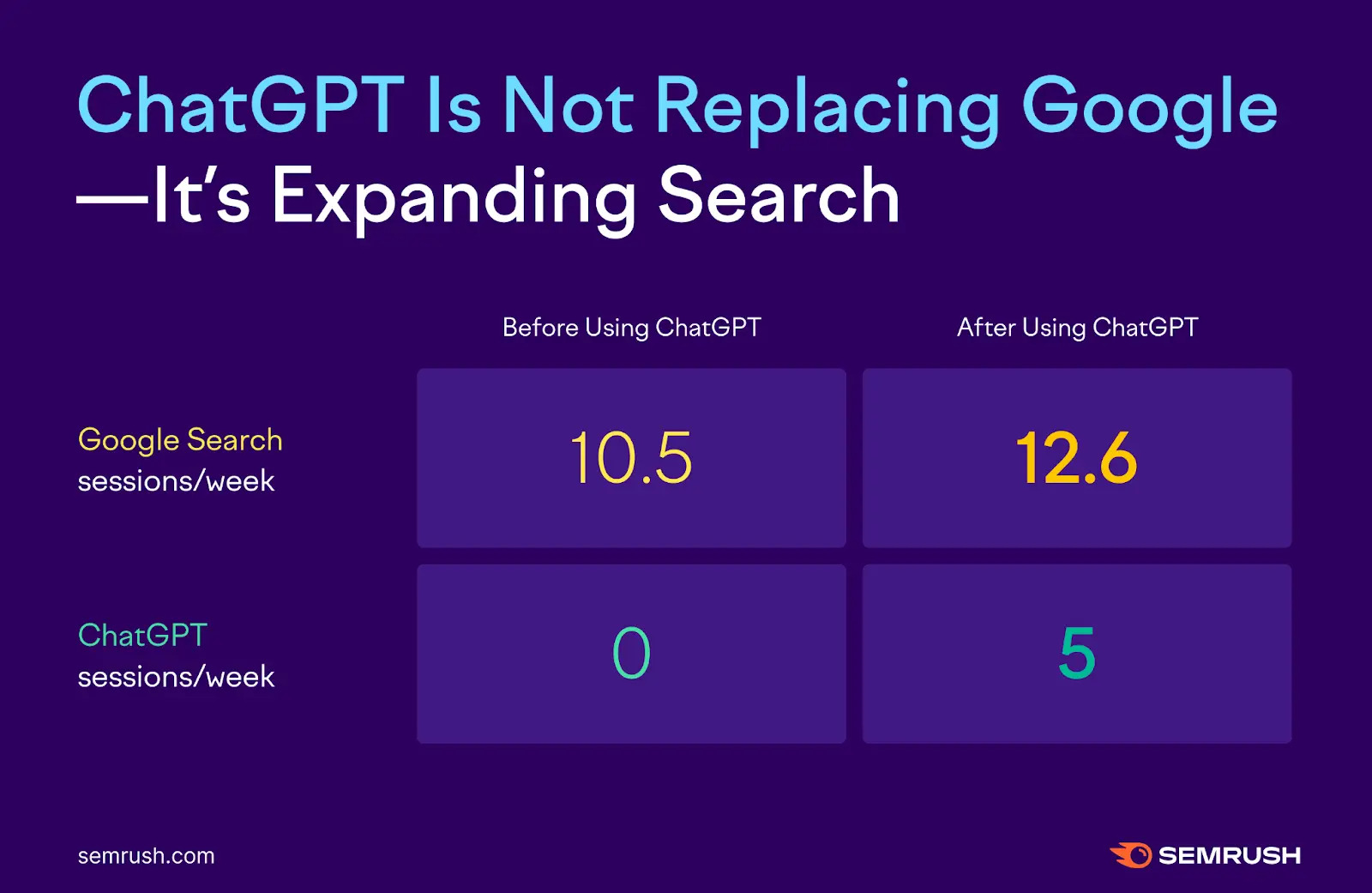
The core question of the extent to which AI will disrupt the search market is partly answered by a recent, extensive study from Semrush. The research, based on an analysis of more than 260 billion rows of clickstream data, shows that there is no cannibalisation taking place, but rather complementarity. The study concludes that users' total search activity is increasing, with people adding ChatGPT to their existing information needs without this coming at the expense of their use of Google Search. This confirms our view that Google Search is retaining its dominant position while also having the potential to develop further within the new AI landscape.
Recent deal with Meta confirms our view
Lastly, a recent piece of positive news has further strengthened our conviction in Alphabet's strategic position. The contract worth more than USD 10 billion that Meta Platforms has signed with Google for cloud services is a remarkable win. The choice of a tech giant like Meta for Google Cloud over established market leaders such as Amazon and Microsoft highlights the technological superiority and growing confidence in Google's cloud infrastructure.
This strong sentiment, together with the broad base of Google Search, YouTube, Google Cloud and the countless other businesses, underscores our conviction in Alphabet's lasting value and growth potential. We see it as a fundamental investment at the heart of the digital economy.
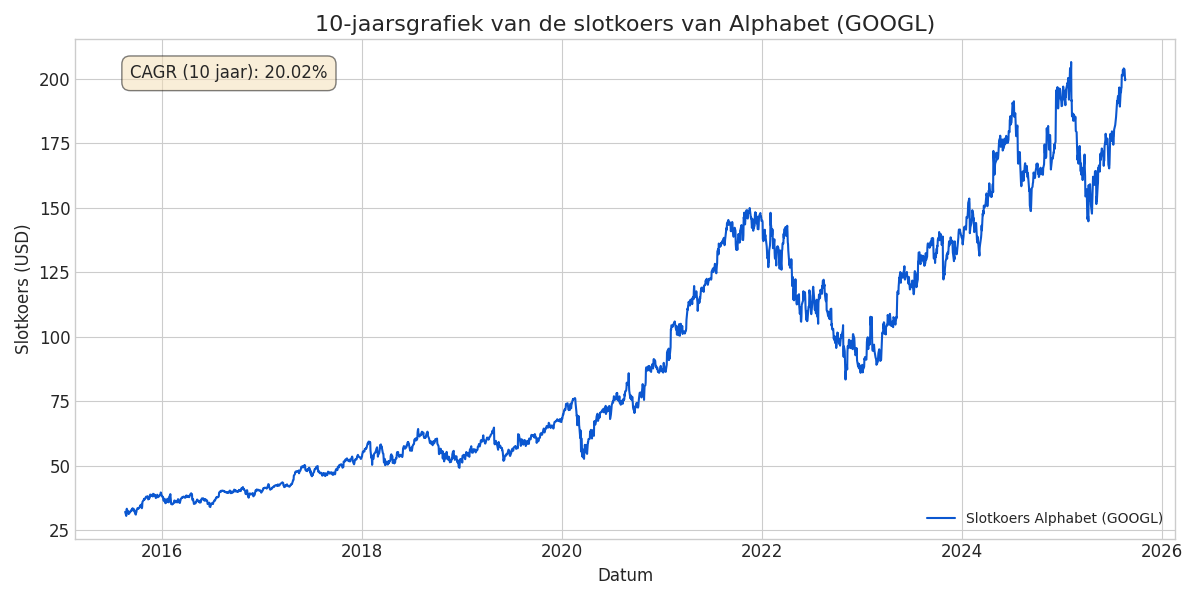
Alphabet is currently trading on the New York stock exchange at a price of USD 203.59 per Class A share.
Receive weekly insights in your inbox
Exclusive analyses and updates on family holding companies and global market developments.
Would you like more information about our services? Feel free to get in touch.
Get in touch
Disclaimer:
No rights can be derived from this publication. This is a publication of Tresor Capital. Reproduction of this document, or parts thereof, by third parties is only permitted with written consent and with reference to the source, Tresor Capital.
This publication has been compiled by Tresor Capital with the greatest possible care. The information is intended in a general sense and is not tailored to your individual situation. The information must therefore explicitly not be regarded as advice, an offer or a proposal to purchase or trade investment products and/or to obtain investment services, nor as investment advice. The authors, Tresor Capital and/or its employees may hold positions in the securities discussed, for their own account or on behalf of their clients.
You should carefully consider the risks before you start investing. The value of your investments may fluctuate. Past performance offers no guarantee for the future. You may lose (part of) your invested capital. Tresor Capital disclaims any liability for any inaccuracies or errors. This information is purely indicative and subject to change.
Read the full disclaimer at tresorcapitalnieuws.nl/disclaimer .
This article was originally written in Dutch and automatically translated into English with the help of AI. In case of any difference, the Dutch original prevails.