
Family Holdings #35 - "Profit is an opinion, cash flow is a fact"



This week's topics:
Asseco Poland delivered strong results over the first half of 2026. Led by accelerating organic revenue growth in the second quarter (~15%) and a substantial efficiency drive, proportional revenue climbed 14.9% to PLN 3,669.8 million. Profit margins all rose by more than 3 percentage points. One of the most important growth drivers remains the home segment Asseco Poland, which now generates well over half of operating profit. Here, the company benefited strongly from digital trust services and government investment via the national recovery plan (KPO). With a net cash position of PLN 1.3 billion and an order book that grew 16% to PLN 5,342 million, the software holding company has ample balance sheet strength to absorb one-off setbacks as well as to continue its active acquisition path.
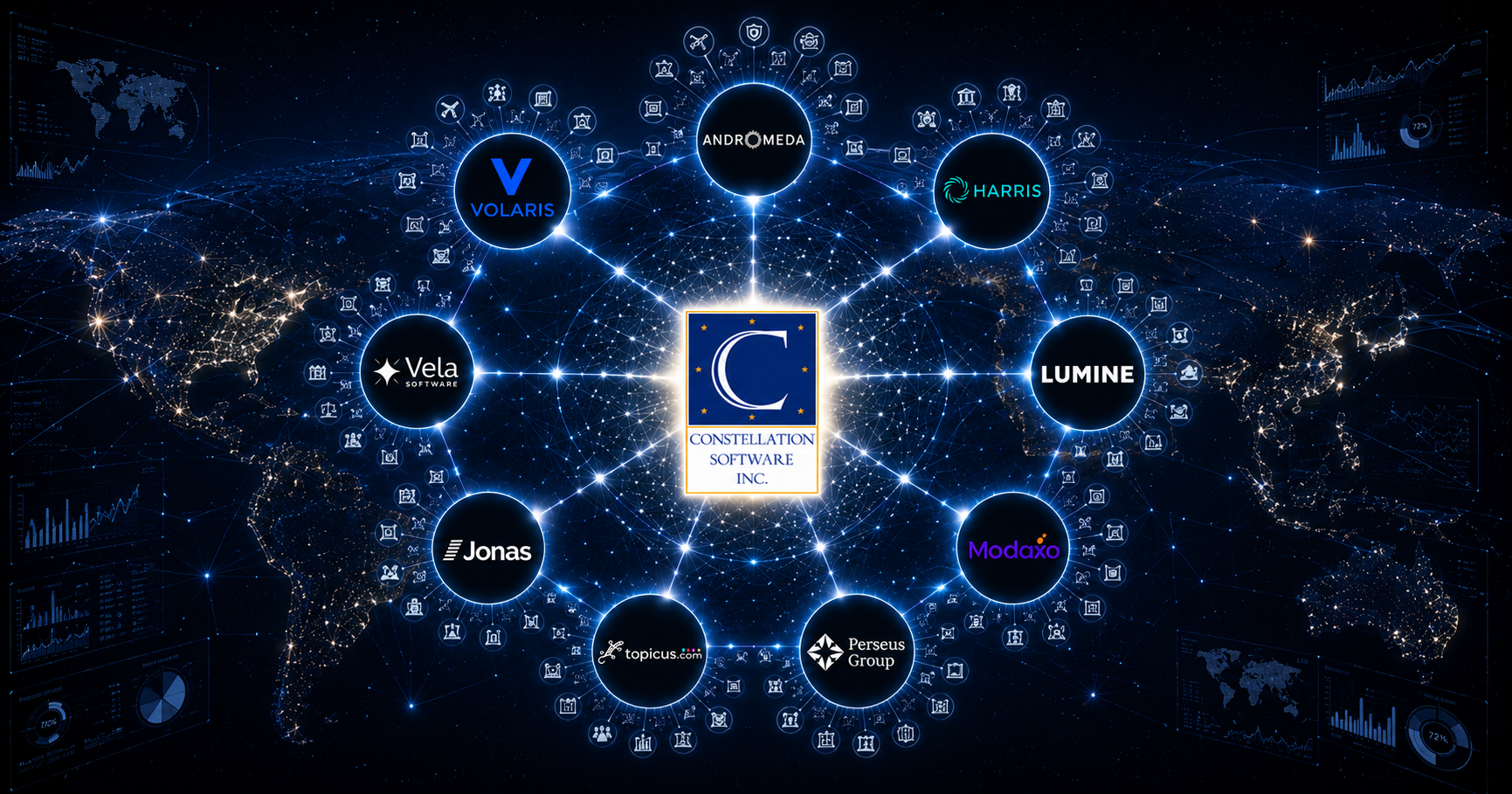
Volaris Group, part of the Canadian Constellation Software, trained more than 1,200 employees from 146 subsidiaries in artificial intelligence during the first half of 2026. The programme targeted developers, product teams and managers alike. The goal is to decentralise and accelerate AI adoption; after all, the bottleneck no longer lies in how you build software (AI speeds up coding), but in what useful products you develop with it. In the financial figures of Constellation, Topicus.com and Asseco, there is so far no sign of AI disruption; recurring maintenance revenue continues to grow steadily. AI is not yet generating extra revenue or higher margins, but is instead flowing entirely back into faster product development.
In Brief:
3i Group (London: III) is acquiring an additional stake of approximately 1.8% in Action parent company Peer Holding I B.V. for around £659 million, taking its total stake to 67.2%. At first glance, the fact that the required issuance of 21 million shares wipes out the effect of the earlier buyback programme in one go doesn't win any beauty prizes. However, this step warrants some nuance: the new shares are valued at the net asset value of £31.31 (against a share price of £28.34), while the average purchase price under the buyback stood at £24.28. This value differential allows 3i Group to capture an attractive spread, which on balance makes the transaction value-creating for shareholders.
Constellation Software's (Toronto: CSU) subsidiary Volaris Group announced this week the acquisition of Brazil's L5 Networks. Founded in 2005, the company was the first player to offer business telephony via the cloud in Brazil as a subscription service, and it now serves more than a thousand active customers and hundreds of thousands of users across eight industries. Eduardo Miyaki, responsible for acquisitions at Volaris, described the characteristics behind the selection: "L5 Networks has exactly the qualities we look for: consistent growth and a very strong recurring revenue model."
Addtech (Stockholm: ADDT-B) is expanding into the defence sector through its Addtech Industry business unit with the acquisition of all shares in the UK's RTL Materials Ltd. The company operates under the Rolatube brand and makes patented composite structures that can be rolled up, including masts that unfold on site. These products are used in the defence, aerospace, infrastructure and industrial sectors, where rapid deployment and low weight carry significant weight. RTL has around 60 employees and posts annual revenue of roughly GBP 11 million.
Rock-solid figures at HEICO now feel like the norm
American acquisition machine HEICO (New York: HEI-A) delivered an excellent performance across the board in the third quarter of its broken fiscal year 2026, with records everywhere. Total revenue rose 23% to $1.41 billion, while operating income increased 34%. Net income grew 33% to a record $235.4 million, or $1.67 per share, compared with $1.26 a year earlier. Organic revenue growth at the group level came in at an impressive 14%, meaning the company has now reported above its long-term average for two consecutive quarters.

In the first nine months of fiscal year 2026, operating cash flow rose 28% to $815.9 million, more than 1.15 times net income over this period. This fits seamlessly with HEICO's DNA, in which employees relentlessly focus on cash flow, according to Co-CEO Eric Mendelson when discussing the results:
"As we always say at HEICO: profit is an opinion, cash flow is a fact."
Co-CEO Victor Mendelson added that the company steers firmly on actual cash generation over accounting figures: "HEICO is a real business that generates real money. It's not just accounting figures rolling out of a machine; we actually earn money." This strong cash generation enabled the company to bring down its leverage ratio to 1.57x, despite having completed more than $1 billion in acquisitions over the past year.
How powerfully this flywheel works over the long term was aptly illustrated during the call by an interaction with René Plessner, a private investor who has held the stock since 1995. Whereas HEICO recorded a net profit of just $2.7 million for the whole of 1995, that figure had already reached $659 million after the first nine months of 2026, a 244-fold increase.
For thirty years, Plessner ignored the advice of financial advisers to diversify and kept confidently buying more shares. Co-CEO Victor Mendelson called him one of the smartest investors he has ever met. It is also an excellent example of wealth building by not focusing on short-term price swings, but on fundamentals, people and the long term. Eric Mendelson added that the company's ambitions for the coming decades remain just as great.
Behind these group results lie strong performances from both divisions:
- Flight Support Group (FSG): HEICO's largest division, focused on the manufacture, distribution and maintenance of aircraft parts, saw revenue rise 18% to $947.8 million (of which 12% organic), driven mainly by strong demand for replacement parts (+15% organic) and specialty products (+14% organic). This strong sales performance, combined with a favourable product mix, lifted the operating margin from 24.7% to 25.9%. Eric Mendelson also pointed out that the division's operating income grew organically by approximately 20%, comfortably outpacing revenue growth. Nobody at HEICO is rewarded based on revenue, he emphasised, because ultimately everything comes down to profit development.
- Electronic Technologies Group (ETG): the developer and manufacturer of precision electronic equipment showed an even stronger acceleration, with revenue up 36% to $483.5 million (of which 18% organic). Here too, the operating margin rose substantially, from 22.8% to 26.0%.
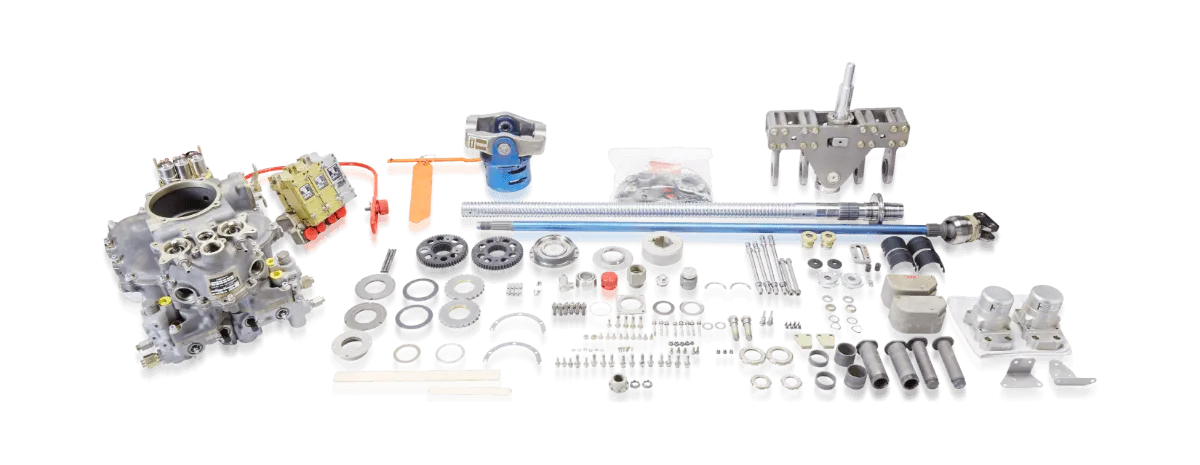
The reported accounting margins, incidentally, carry a significant drag from the amortisation of intangible assets arising from acquisitions (PPA). Excluding this amortisation, FSG's cash margin (EBITDA margin) came in at approximately 28.5%, and ETG's at 29.9%.
Asked what the secret is behind this consistently strong performance, Co-CEO Eric Mendelson stayed level-headed: it comes down to good markets, solid businesses and, above all, great people. HEICO owes its success to the simple fact that it works harder. Customers generally don't switch to HEICO because there's no alternative available, but because they choose to buy there of their own free will. They choose it for the highest quality and the shortest lead times at the sharpest price, but above all for the team that has been with the company for decades, according to the co-CEO.
What to expect
Beyond the record figures, management's commentary offered a clear view of the future and what we can expect in the coming period. HEICO traditionally does not issue hard quantitative guidance, but the sustained momentum of two consecutive quarters of strong organic growth is fuelling an undiminished optimistic tone, flanked by a few clear points to watch.
On the financial front, Eric Mendelson explained in his opening remarks that the balance sheet is excellently positioned for further growth. In the third quarter, HEICO issued $1.2 billion in senior notes, which was used to repay the existing credit facility. This facility was subsequently restructured, extended to June 2031 and increased to $2.2 billion, with an option to expand further to $3.0 billion. This guarantees ample liquidity to act immediately on new acquisition opportunities, or as CFO Carlos Macau put it with a wink: "So I can make sure that when Eric and Victor go to the supermarket to buy companies, they have enough cash in their pockets." Although, as usual, no firm commitments were made regarding specific deals, the acquisition pipeline remains well filled, according to Eric and Victor Mendelson. The successful integration process of Wencor has also given management a great deal of confidence in executing larger acquisitions, although the primary focus remains on small to medium-sized acquisitions. Eric Mendelson repeated several times the goal of growing net profit by 15 to 20% annually, both organically and through acquisitions.

What's interesting is that the pool of opportunities for acquisitions and organic growth keeps expanding, as the market applications for HEICO's products broaden and demand within these sectors picks up sharply. For instance, the company is increasingly supplying components to the data centre sector, driven by the global rollout of artificial intelligence. HEICO is also at the forefront of the fast-growing commercial space industry, alongside players such as SpaceX and Blue Origin, as well as numerous smaller companies. Within the defence division, particularly focused on missiles and advanced defence systems such as the Golden Dome, the company is seeing enormous demand.
Governments and defence customers are pressing suppliers to drastically scale up production capacity; in some cases, a desired capacity expansion of 4 to 10 times in the short term is being discussed. Management emphasised that HEICO is absolutely not hesitant about this and will willingly spend CapEx to invest in capacity ahead of time wherever the opportunities lie. This underlines that years of organic growth still lie ahead for the existing businesses, a trend that is not confined to the US but is also visible in Europe through subsidiaries such as Exxelia and Cook Defence.
Set against these strong growth drivers are a number of well-known trouble spots. Management stresses that these are not acute threats, but they are things to keep in mind. Global tensions, such as in the Middle East, are causing persistent ripples in the supply chain, translating into higher input costs and longer lead times for specific components. It is precisely these delays that create opportunities for HEICO. In a sector where turnaround times are crucial and parts need to be immediately available, rising OEM prices and slow deliveries are pushing customers more quickly towards HEICO's own PMA alternatives, on which the company earns higher margins.
Conclusion
In short, it was once again an exceptionally strong quarter for HEICO, even though by now that almost feels like business as usual. Without any major changes in direction or notable announcements, the company simply keeps demonstrating what it has excelled at for decades. It once again delivered tight operational execution, rock-solid cash flows and a steady expansion of its market position.
Asseco Poland accelerates in the second quarter
Asseco Poland (Warsaw: ACP) published its results for the first half of 2026 this week. For this company, we use the proportional figures. Asseco holds stakes in subsidiaries that it does not fully own. As a result, the total consolidated revenue of PLN 9,250 million says little about the revenue, and therefore the profit, that actually accrues to Asseco Poland's shareholders.
Based on the exact economic ownership interest, revenue for the first half came in at PLN 3,669.8 million, up 14.9%. Organic revenue growth on a proportional basis stood at 8.2% in the first quarter and at 12% for the first half as a whole. In the second quarter, this accelerated to around 15%, almost double the first-quarter rate. Of the PLN 179 million in additional operating profit, PLN 165 million came from existing operations.
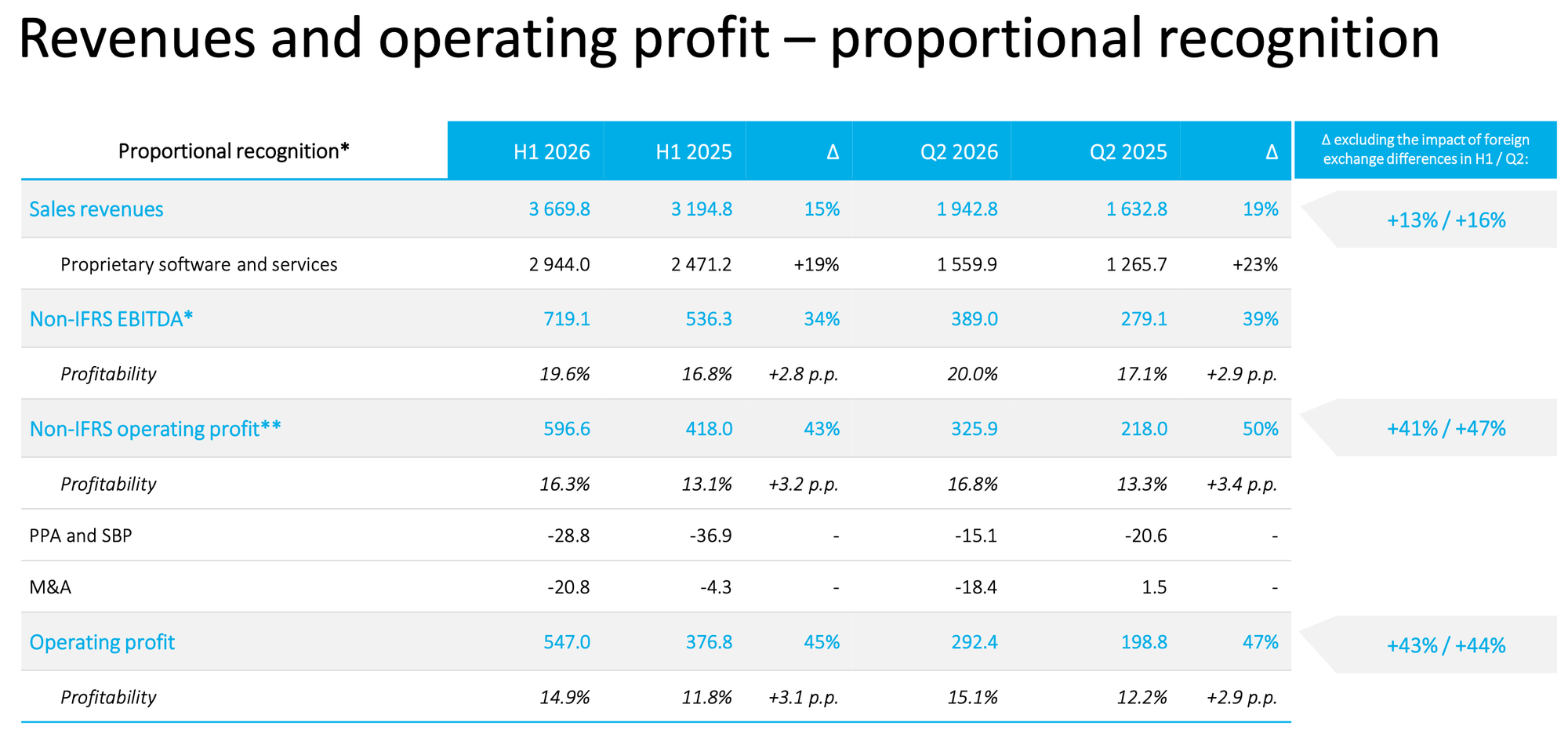
Profit margins rose across the board. The operating gross margin (EBITDA) increased from 16.8% to 19.6%, while the net operating margin (EBIT) climbed from 13.1% to 16.3%. Those are gains of more than 3 percentage points on a half-year basis. Since the partial acquisition by Topicus, Asseco has not shown a single quarter without operational improvement, proving that this philosophy is also bearing fruit at the Polish software holding company.
During the results presentation, analysts asked how much of the margin improvement stemmed from favourable market conditions and how much from the company's own efficiency gains. CFO Karolina Rzonca-Bajorek was unwilling to draw a hard line between the two, but did indicate that processes have been made more efficient: "You cannot generate more revenue if you don't make the organisation more efficient, especially when headcount stays the same." According to her, part of current demand is one-off in nature. The company is trying to convert those projects into recurring revenue through maintenance, software updates and follow-on services.
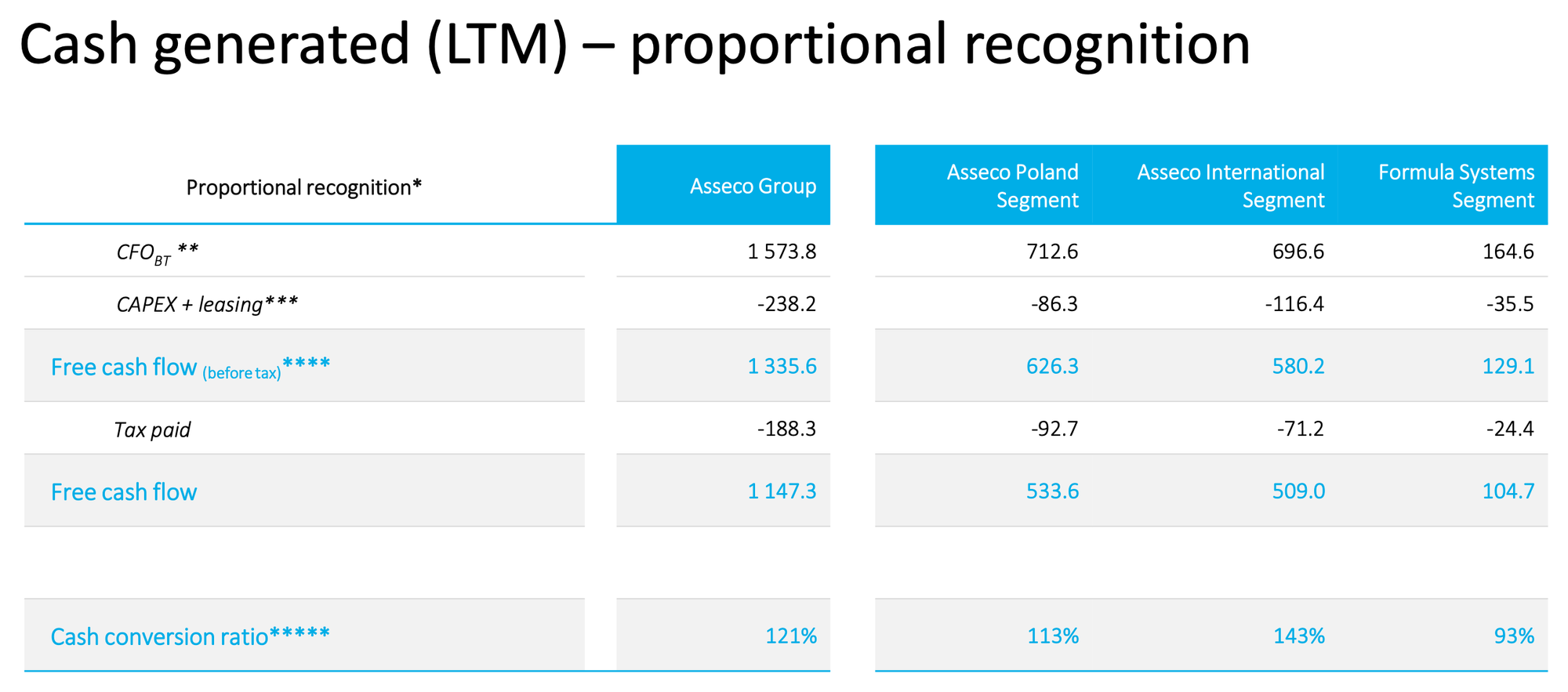
Cash flow also shows a steady increase. Operating cash flow before tax, on a proportional basis, rose over the past twelve months from PLN 1,378.4 million (end 2025) to PLN 1,573.8 million, an increase of more than 14%. After deducting investments and lease obligations, free cash flow before tax came to PLN 1,335.6 million. That is 121% of operating profit. After tax paid, PLN 1,147.3 million remained. According to the CFO, the net cash position stood at PLN 1.3 billion at group level. This excludes lease obligations and also excludes a further roughly PLN 200 million in long-term bank deposits that are immediately available; more than enough capital for additional acquisitions.
The main source of demand currently comes from the Polish government sector. Asseco is benefiting there from investments under the national recovery plan (KPO), particularly at more than 150 affiliated hospitals. Management indicated that the effect of this recovery plan was strongest in the second quarter, is still continuing in the third quarter, and will taper off in the fourth quarter. Outside the healthcare sector, however, the government division also performed strongly throughout 2025. The government segment is now the largest part of the group, accounting for 27% of revenue.
The strongest driver behind the results remains the Asseco Poland segment itself. On a proportional basis, revenue in this segment rose by 17%, while operating profit increased by more than 50%. That results in a profit margin of 25.4%, compared with 19.7% a year earlier. The Polish segment thus accounts for around 35% of group revenue and more than half of operating profit. An important growth driver here is Asseco Data Systems, which, alongside software for the banking and leasing sector, is growing strongly in digital trust services, such as electronic seals and digital signatures, driven by new EU regulation. In banking, Asseco Poland also signed a multi-year contract this year with the national development bank BGK.
Net profit attributable to shareholders, adjusted for acquisition effects, rose by 53% in the first half of the year to PLN 485.4 million. Management formally does not provide concrete figures for expectations for the full year. Asked about a net profit figure of PLN 800 million for 2026 circulating in the market, the board declined to comment on that figure, as the company does not issue forecasts. The CFO indicated that the outlook for the whole of 2026 is very good and called the description "a pretty decent year" an extremely cautious assessment.
Software subsidiary Sapiens is no longer included in the figures. Sapiens still contributed around PLN 18 million to profit in the first half of 2025. The rest of the group has almost entirely absorbed that loss of contribution. The USD 51 million dividend received from Sapiens in June explains the temporarily higher tax burden in the second quarter.
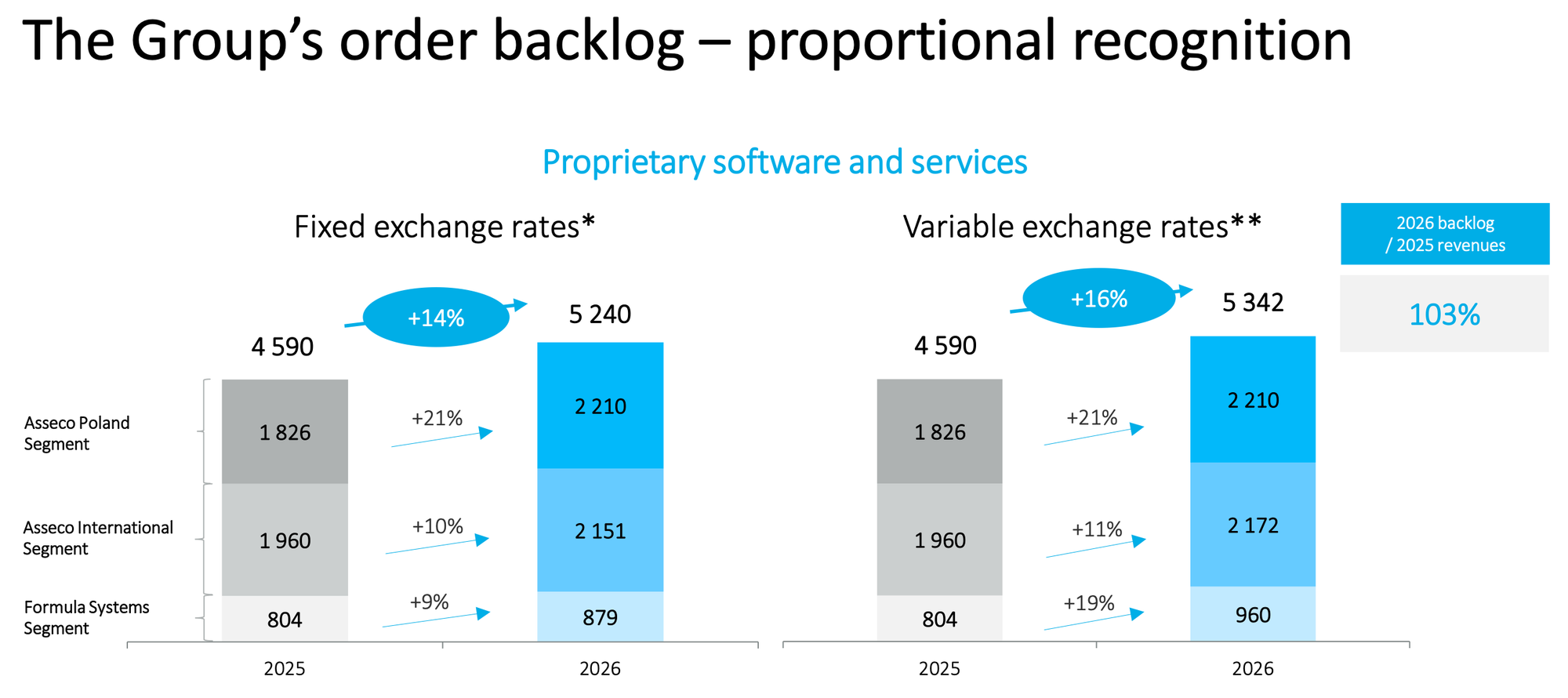
The filled order book supports that statement. The total value of signed orders for proprietary software and services stands at PLN 5,342 million, an increase of 16% compared with a year earlier. Within the Asseco Poland segment, the segment with the highest profit margins, the order book grew fastest, up 21%.
The filled order book provides the basis for further acquisitions. In 2026, nine companies have been added to the group so far, five of them in the first half of the year, all via subsidiary Formula Systems. After the balance sheet date, four more acquisitions followed, including the Portuguese RandTech Computing by subsidiary Asseco PST, which provides software for insurers, and the Polish Mc COMP, which provides software for more than 3,000 petrol stations and for the hospitality sector.
Not every segment performed equally well. At Asseco Spain, an inventory write-down of over PLN 18 million was recorded. Management indicated that this segment does not belong to the core activities and may be sold at some point. A failed project in Dubai has been fully written off and reduced gross profit by PLN 14 million. Subsidiary Matrix IT had negative operating cash flow due to billing arrangements and late payments from a large government client. Management expects a recovery in the second half of the year.
Finally, two long-term developments deserve attention. First, pressure on IT salaries has eased to a normal single-digit growth rate. Asseco is taking advantage of this by focusing on AI tools, allowing employees to generate more revenue without the need to grow headcount. Second, the company is closely following the defence sector. Although there are no concrete tenders under way yet, Asseco sees opportunities emerging over time as Polish government spending on defence and security services continues to increase.
Constellation subsidiary Volaris trains 1,200 employees in artificial intelligence
Volaris Group, one of the operating groups of Constellation Software (Toronto: CSU), organised an internal training programme on artificial intelligence for the first time this year. An operating group is one of the independent divisions in which Constellation has organised its many hundreds of software companies. The team that set up the programme looked back on it last week in the company's own magazine, Acquired Knowledge. The report describes how this decentralised holding company is trying to get a new technology adopted across its individual companies.
Between March and July 2026, six sessions took place, in Denver, Toronto, Vancouver, London, West Palm Beach and Berlin. In total, 146 Volaris companies took part and more than 1,200 employees were trained. Berlin, with 32 participating companies, was the largest and the final session. The programme consisted of three components. Programmers and product teams each received their own training, and there was also a separate programme for the executives of the participating companies.
AI engineer Riley Roberts saw the level of knowledge participants arrived with rise sharply in a short period of time. At the first sessions, people were still asking what artificial intelligence actually is and what you do with the associated programming tools. By the later groups, teams were already writing their software with the help of AI and mainly wanted to know how to do it better.
"The bottleneck has shifted from how you build to what you build."
Riley Roberts.
Programme lead James Whiting sees a much bigger shift among the product teams. In many Volaris companies, the product function has so far mainly consisted of handling customer queries and maintaining wish lists.
"We ask them to think like founders disrupting their own market."
James Whiting.
During the sessions, participants used AI to build a working prototype of a new product within a few days. According to Whiting, the difficulty lies afterwards in the question of whether such a product is the right answer to a real customer problem. "The much harder question is whether the idea itself is right,"
said programme lead James Whiting.
Whether customers are willing to pay for a new product is, in his view, not a technical question. It requires, he says, a different way of working and different talent. A week of training is not enough for that.
After the first gathering in Denver, Chris Wildsmith, responsible for business transformation within Volaris, pushed for more substantial training for the managers involved. The initial set-up consisted mainly of presentations from suppliers, whereas most of the impact turned out to come from managers working on a pilot model alongside their own team. "Teams whose manager joined in visibly progressed faster afterwards," notes transformation specialist Ellen Barss.
Every participant took a ninety-day plan back to their own company. Each group of managers was assigned a dedicated coach from training company Skillsoft, who also stayed involved afterwards. Programme lead Whiting constantly asks himself what happens on the day someone returns and is confronted with a pile of overdue work. "We facilitate and hold up a mirror. They have to do the work themselves," says programme lead James Whiting.

Technical background barely determined which teams went on to succeed and which stalled. "Openness and flexibility mattered more than technical skill," observes AI engineer Riley Roberts.
As an example, he cites Vancouver, where a participating company sent no programmers at all but a group of water technicians, who said beforehand that they understood little of it. By the third day, they were among the strongest teams in the group. Transformation specialist Barss sees that almost everyone returns to a calendar full of ongoing commitments, and that only those teams keep going where someone deliberately keeps time free to continue experimenting.
"In some cases, that is the difference between a company that survives and a company that thrives,"
concludes Riley Roberts.
Conclusion
Volaris's programme fits the picture we have been painting of Constellation Software over the past eighteen months. As early as 2025, the group retrained thousands of developers in AI-assisted programming, and management said at the time that building software faster would eventually cease to be a differentiator, since it would become the new standard. According to the board, the real competitive advantage lies in deep knowledge of the industry in which a subsidiary operates, in understanding the customer's processes, and in the data and trust relationships built up over decades. Management deliberately leaves this responsibility with the individual business units and rejects centrally directed AI development. Volaris's initiative fits that approach. The group organises the learning, while each company decides for itself what to do with the knowledge gained. This costs barely any capital compared with the amounts big technology companies are pouring into data centres.
 Michael Gielkens
Constellation's own figures show no sign yet of disruption from AI. Recurring maintenance revenue, by far the holding company's largest and most predictable source of income, continues to grow unabated (organically). Customers are therefore not cancelling their contracts and are still accepting price increases.
The same pattern is visible at Topicus.com (Toronto: TOI), Constellation's Dutch subsidiary, which is separately listed on the Toronto stock exchange. There, that same maintenance revenue has grown organically at a stable 6 to 7% for nine consecutive quarters.
AI is not yet generating extra revenue for the holding company, nor is it costing any revenue. The productivity gains are going into faster product development, not higher margins. Whether 1,200 trained employees and a series of pilot models will also produce new products and new revenue remains to be seen. Volaris itself says the real test begins once participants are back home. We will therefore be watching, over the coming quarters, primarily the organic growth of maintenance revenue and whether the subsidiaries actually bring new products to their customers.
Receive weekly insights in your inbox
Exclusive analyses and updates on family holding companies and global market developments.
Would you like more information about our services?
Get in touch
Disclaimer:
No rights can be derived from this publication. This is a publication of Tresor Capital. Reproduction of this document, or parts of it, by third parties is only permitted after written permission and with reference to the source, Tresor Capital.
This publication has been compiled with the greatest possible care by Tresor Capital. The information is intended in a general sense and is not tailored to your individual situation. The information should therefore explicitly not be regarded as advice, an offer or a proposal to purchase or trade investment products and/or to make use of investment services, nor as investment advice. The authors, Tresor Capital and/or its employees may hold positions in the securities discussed, for their own account or on behalf of their clients.
You should carefully consider the risks before you start investing. The value of your investments may fluctuate. Past performance is no guarantee of future results. You may lose (part of) your investment. Tresor Capital disclaims any form of liability for any inaccuracies or errors. This information is purely indicative and subject to change.
Read the full disclaimer at tresorcapitalnieuws.nl/disclaimer .
This article was translated automatically from Dutch using AI. In case of any difference, the Dutch original prevails. Read the original in Dutch.