
Family Holdings #37 - Half-year results D'Ieteren and the architecture of Alphabet's dominance


This week's topics:
Alphabet finds itself in a unique position within this capex supercycle. As @borrowed_ideas rightly points out, Google has a structural hedge: enormous internal demand for computing power through Search, YouTube, Gemini integration and Waymo. Whereas Meta or Amazon are largely dependent on external enterprise customers, Alphabet can justify its billions in AI infrastructure investment through its own ecosystems that absorb this capacity. That reduces the risk of overcapacity and strengthens the structural competitive advantage.
In Brief:
Addtech (Stockholm: ADDT-B) has, through its Electrification division, acquired the German company Innovatek OS GmbH. Innovatek develops and manufactures custom-built cooling systems for industrial applications, particularly in sectors such as e-mobility, medical technology and microscopy. The company has 52 employees and generates annual revenue of approximately EUR 12 million. Innovatek will be integrated into Addtech's Power & Mobility business unit, complementing existing operations in high-value niche markets.
Constellation Software (Toronto: CSU) is once again expanding its portfolio through subsidiary Volaris, which has acquired the RFID IIS division of SML Group. These operations will continue under the name ClarityRFID. The Texas-based company has around 135 employees and provides specialised software solutions for inventory management, shopping experience and enterprise intelligence. This responds to growing demand for digital solutions that help retailers and brands operate more efficiently and serve customers better.
Lifco (Stockholm: LIFCO-B) has acquired a majority stake in the Dutch company Citodent Imaging. This small Amsterdam-based business has 8 employees and generates revenue of approximately EUR 1.2 million. Citodent develops and sells software for managing X-ray images and diagnostic imaging for dentists across Europe. The company will be placed under Lifco's Dental division. With this addition, the tally for 2025 now stands at 13 acquisitions, three of which are in the Netherlands.
Prosus (Amsterdam: PRX) has taken part in the Series A funding round of more than USD 100 million for the British deep-tech company CuspAI. This young company, founded in 2024 and based in Cambridge with teams in Amsterdam and Berlin, is developing an AI platform that makes it possible to discover new materials up to ten times faster than with traditional methods. The company already collaborates with global players such as Hyundai, Kemira and Meta on applications in sustainable energy, water purification and CO₂ capture. For Prosus, this is a logical extension of its existing venture portfolio focused on deep tech and AI.
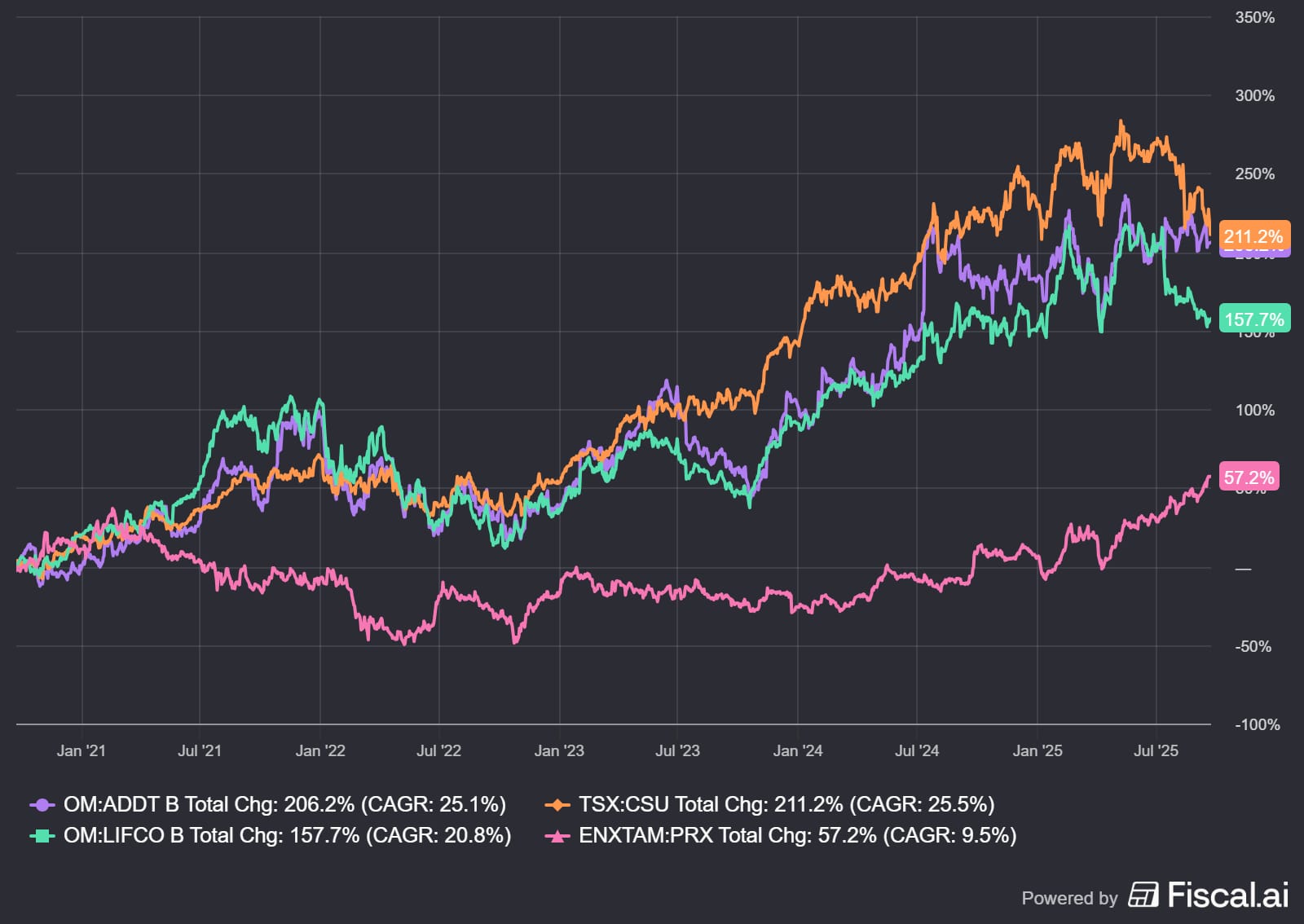
Addtech, Constellation Software, Lifco and Prosus Ventures are currently trading on the Stockholm, Toronto and Amsterdam exchanges at prices of SEK 333.60, CAD 4,398.89, SEK 333.80 and EUR 54.59 per share, respectively.
Disappointing results at D'Ieteren, but underlying strength remains visible
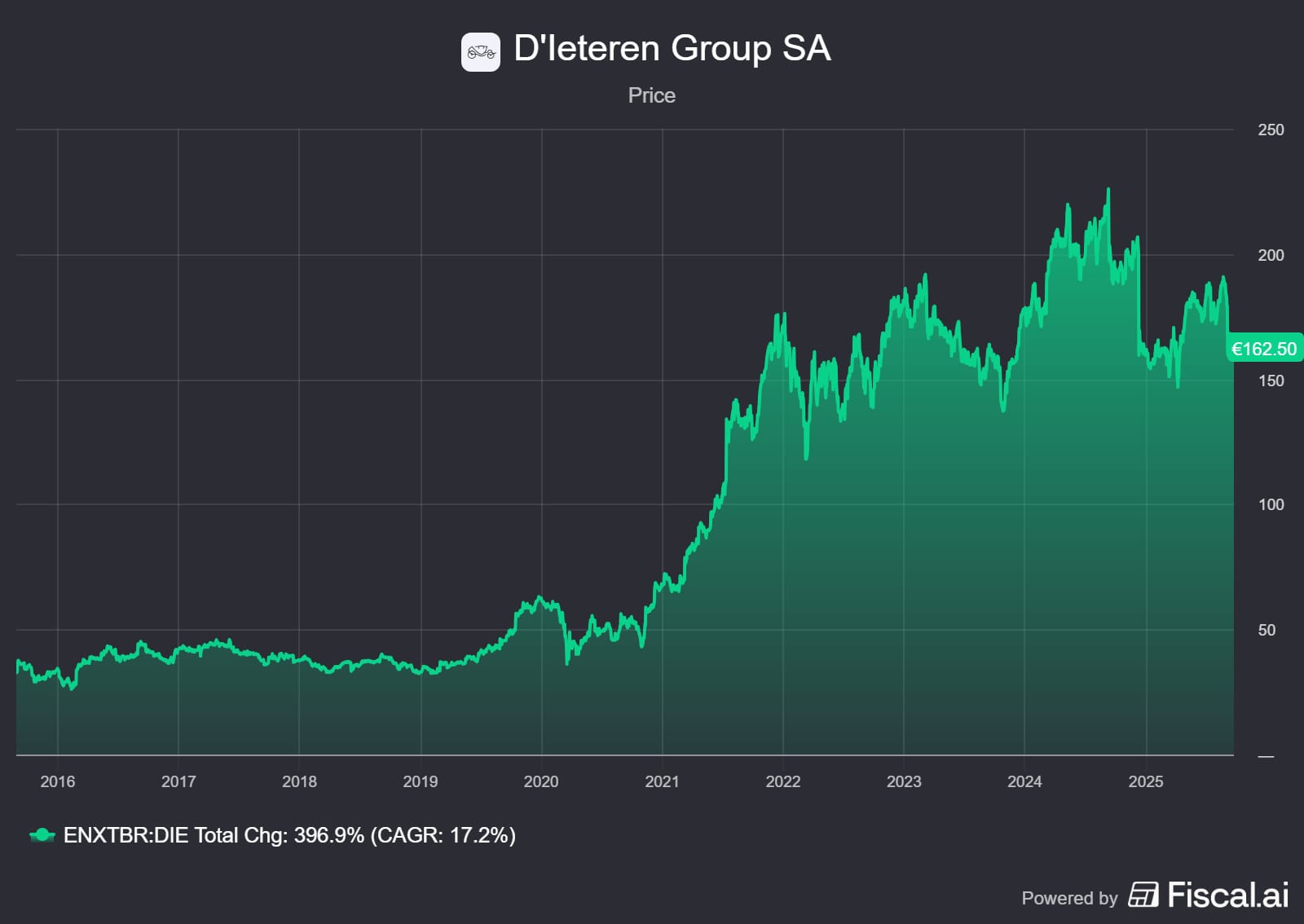
The Belgian investment holding company D’Ieteren (Brussels: DIE) disappointed with its first-half 2025 results. Profit before tax came in 22.7% lower and revenue shrank by 2.9%. The market reacted sharply: the share price fell by almost 10% on the Brussels exchange. Behind that headline, however, lies a broader discussion: how sustainable is the family holding company's strategy in a period of high debt, rising interest rates and growing economic headwinds?
Automotive & TVH under pressure
The Belgian car market took a blow, and this fed directly into D’Ieteren Automotive's figures. New car registrations fell by more than 10%, causing volumes to decline and market share to slip slightly. For a division that still symbolises D’Ieteren's historical roots, this is a painful signal. It highlights the structural sensitivity to the economy and the saturation of the car market, something we have also seen at other European players such as Exor this year.
Also concerning was TVH's performance. This Waregem-based parts company, in which D’Ieteren holds a 40% stake, saw revenue growth grind to a halt and margins decline. CEO Francis Deprez described the markets as “very weak”, as forklifts and aerial work platforms simply see less use in a cooling economy. On top of that came the unexpected departure of CEO Dominiek Valcke, adding uncertainty just as the organisation had to scale back its growth ambitions.
Belron and PHE keep the foundation intact
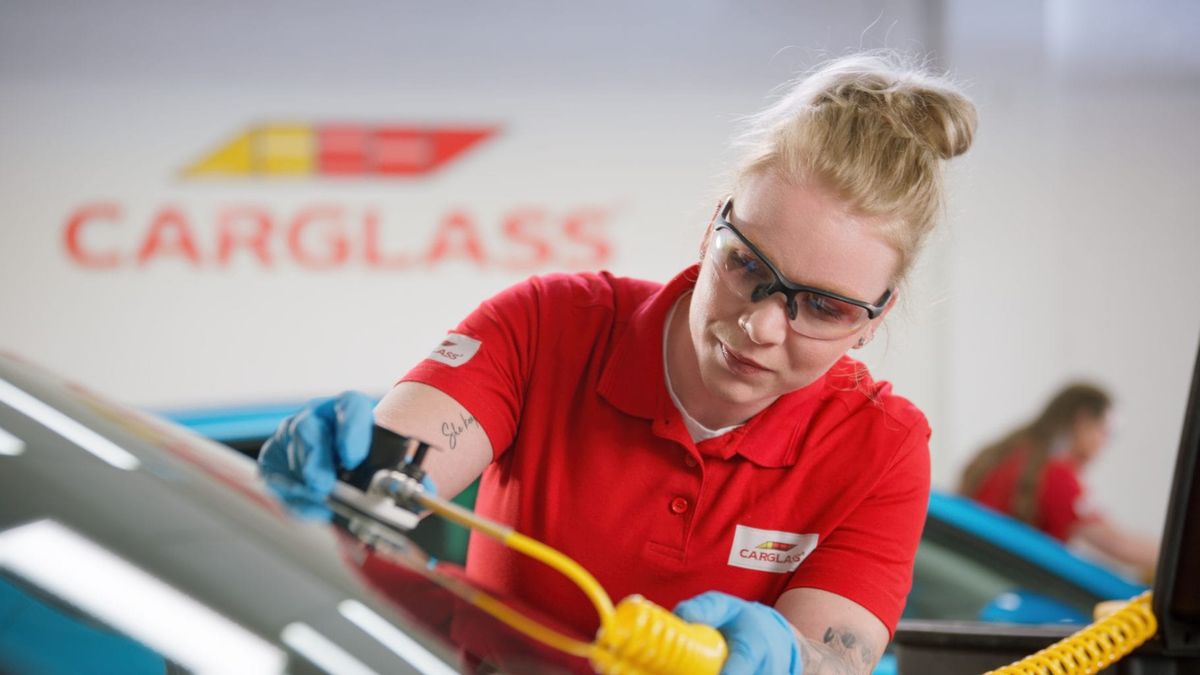
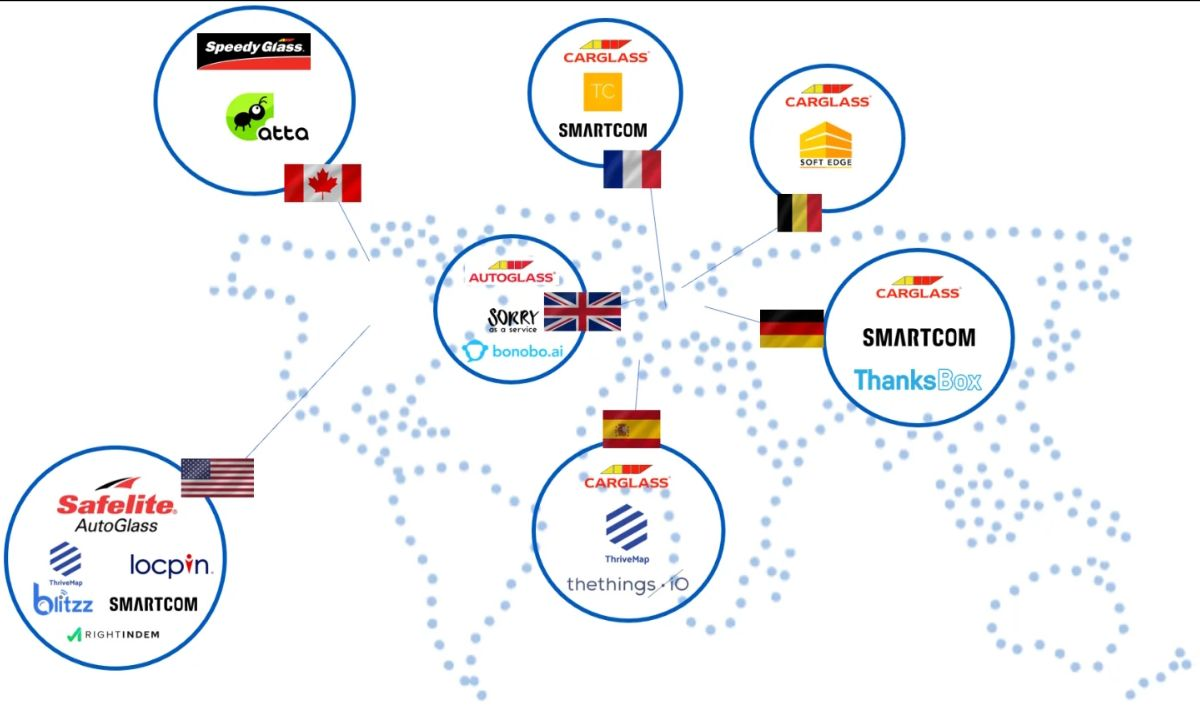
Against the weak links stands Belron, the absolute core of D'Ieteren. In the Netherlands and Belgium it is known under the Carglass brand, but globally too Belron has established itself as market leader (see the figure above).
Despite fewer trading days in the period, the group managed to grow revenue by over 4%, driven by ADAS recalibrations and value-added products. The margin improved again towards 21.4%, underlining Belron's status as a cash cow. PHE, the French parts distributor, also delivered solid growth and market share gains. This confirms PHE's role as the holding company's second growth pillar.
Strategic ballast: debt and super dividends
What the market mainly struggles with is the debt position. At the end of 2024, D'Ieteren took on extra financing to enable the buyout of family member Olivier Périer, an operation accompanied by super dividends for shareholders. Critics compare this approach to Brito's tactics at AB InBev: attractive in the short term, but a structural weakening in the long run.
That scepticism is understandable. Higher interest expenses are weighing on profit, and free cash flow fell sharply. Still, it must be emphasised that management is actively paying down debt: the full EUR 500 million bridge loan was already repaid in the first half of the year, bringing net debt at group level down from EUR 653 million to EUR 296 million. This demonstrates discipline in capital allocation.

Looking at the bigger picture, we see that D'Ieteren's real value lies with Belron, which alone generates around 60% of the bottom line. That makes Belron's performance the core of the investment case for us. And there we see exactly what we want to see: revenue growth despite difficult market conditions and a slight improvement in the operating profit margin. It is this kind of operational resilience and efficiency gains that make Belron the group's cash cow and reinforce the foundation under D'Ieteren's value.
In addition, management deserves credit for the way it is tackling the debt burden. The extra financing taken on at the end of 2024 for the family buyout understandably weighed on results, but as early as the first half of 2025 the full EUR 500 million bridge loan was repaid. Net debt consequently fell from EUR 653 million at the end of 2024 to EUR 296 million by mid-2025. This shows that capital allocation and debt reduction are clear priorities for management.
Finally, we also see signs of confidence from within. Shortly after the share price drop, insiders bought over EUR 750,000 worth of shares, the largest part of which was purchased by CFO Edouard Janssen himself (EUR 650,000). There are many reasons for insiders to sell, but usually only one reason to buy: the conviction that the share is undervalued.
Taken together, we conclude that the correction of almost 10% following the results is overdone. Yes, the peripheral activities are vulnerable, but the core of the company continues to grow and improve. Mr. Market seems to be missing the mark here, and the insider purchases speak volumes in that regard.
D'Ieteren ended the trading week on the Brussels stock exchange at a price of EUR 165.30 per share.
The architecture of Alphabet's dominance
Oracle's earnings call set the tone this week: demand for AI infrastructure is exploding, with a backlog of $455 billion and expected cloud revenue growth to $144 billion within four years. This illustrates how hyperscalers and AI labs are reserving capacity on a massive scale.
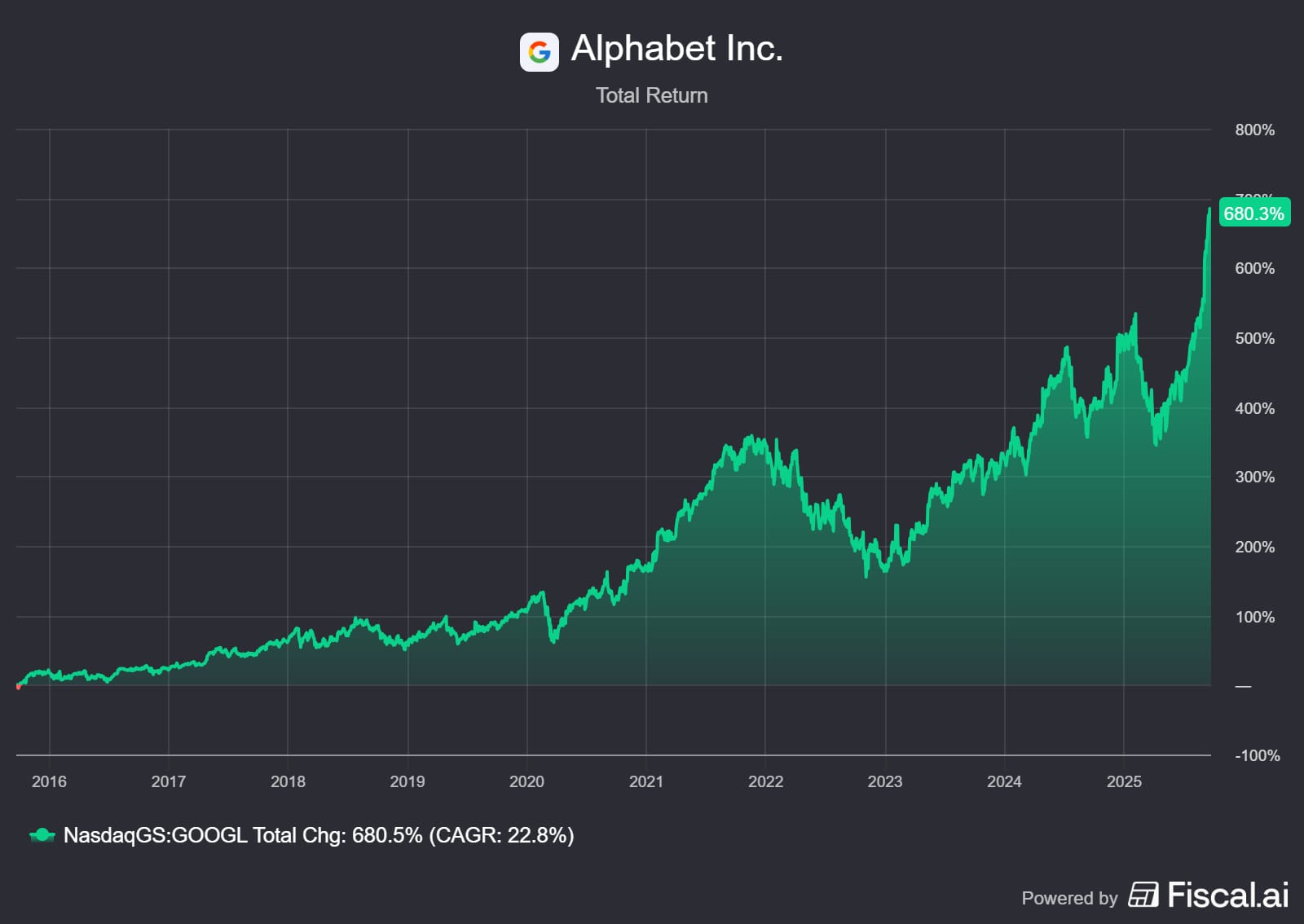
Alphabet (New York: GOOGL) occupies a unique position within this capex supercycle. As @borrowed_ideas points out, Google has a structural hedge: its own internal demand for compute via Search, YouTube, Gemini integration and Waymo. Where Meta or Amazon depend on external enterprise customers, Alphabet can justify its multi-billion investments in AI infrastructure through its enormous internal consumption. This reduces the risk of overcapacity and strengthens its competitive advantage.
The figures underline this: Google Cloud is now running at a $50 billion run-rate with $106 billion in backlog, of which 55% will turn into revenue within two years. Meanwhile, nine of the ten largest AI labs are already customers of the company. In addition, Alphabet is further expanding its ecosystem through partnerships: this week it announced a partnership with Qualcomm to integrate Gemini AI into cars via the Snapdragon Digital Chassis. With this, Alphabet is also taking steps towards software-defined vehicles and the future of mobility.
It is no surprise that analyst consensus is shifting. JPMorgan, BofA, Deutsche Bank, Barclays, KeyBanc and others recently raised their price targets to $245–265. This means the market is slowly moving towards a valuation level that we at Tresor Capital had already incorporated into our models earlier this year.
For us, this above all confirms that the underlying trend is still insufficiently priced in: Alphabet combines a unique internal demand for computing power with strong cloud growth and an ever-broadening AI ecosystem.
Alphabet is currently trading on the New York exchange at a price of USD 241+ per A share.
Receive weekly insights in your inbox
Exclusive analyses and updates on family holding companies and global market developments.
Would you like more information about our services? Feel free to get in touch.
Get in touch
Disclaimer:
No rights can be derived from this publication. This is a publication of Tresor Capital. Reproduction of this document, or parts thereof, by third parties is only permitted with written consent and with reference to the source, Tresor Capital.
This publication has been compiled by Tresor Capital with the greatest possible care. The information is intended in a general sense and is not tailored to your individual situation. The information may therefore explicitly not be regarded as advice, an offer or a proposal to purchase or trade investment products and/or to obtain investment services, nor as investment advice. The authors, Tresor Capital and/or its employees may hold positions in the securities discussed, for their own account or for their clients.
You should carefully consider the risks before you start investing. The value of your investments can fluctuate. Past performance offers no guarantee for the future. You may lose (part of) your original investment. Tresor Capital disclaims any form of liability for any inaccuracies or errors. This information is purely indicative and subject to change.
Read the full disclaimer at tresorcapitalnieuws.nl/disclaimer .
This article was originally written in Dutch and automatically translated into English with the help of AI. In case of any difference, the Dutch original prevails.