Family Holdings #38 - The impact of AI on VMS companies, part 2



This week's topics:
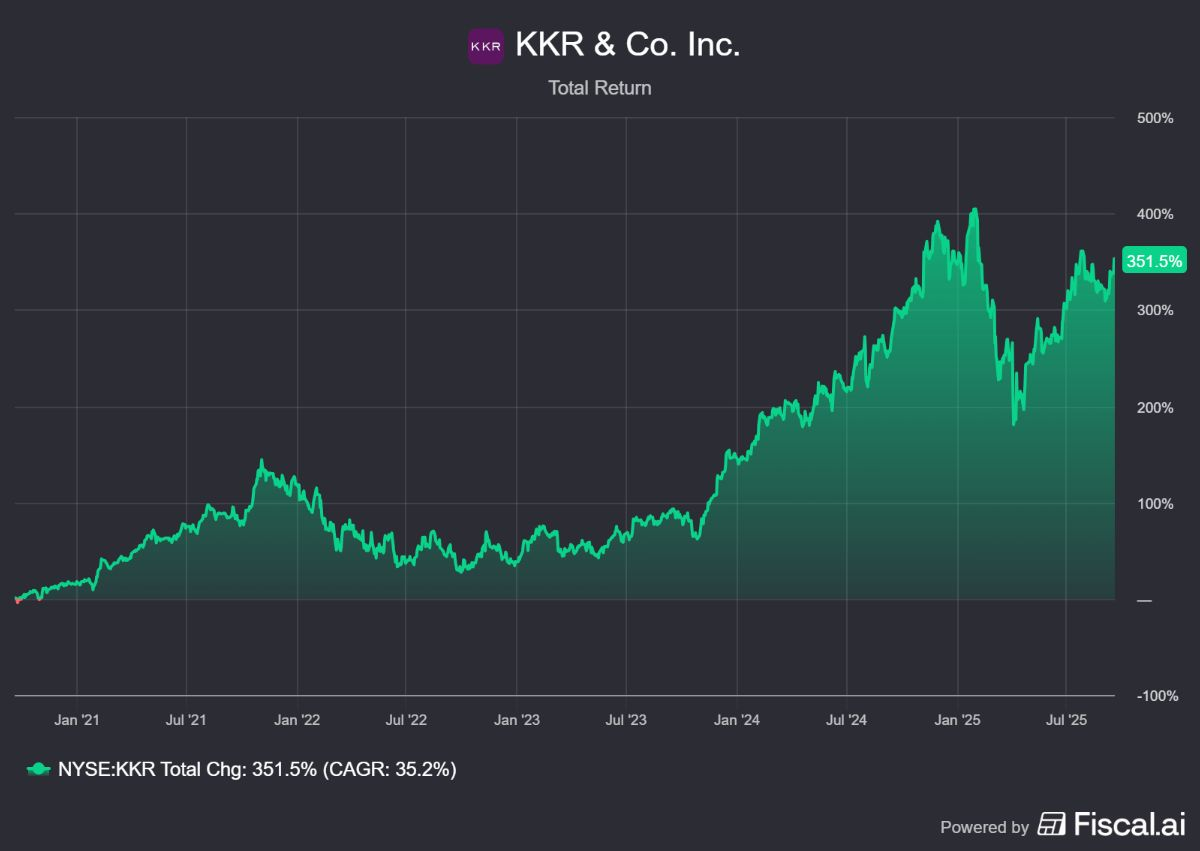
KKR CFO Robert Lewin reaffirmed the financial targets for 2026, underpinned by the diversified model of Asset Management, Insurance and Strategic Holdings. The focus is on long-term value creation by, following the example of compounders such as Berkshire Hathaway, reinvesting profits from its own balance sheet and letting them generate returns over the long term.
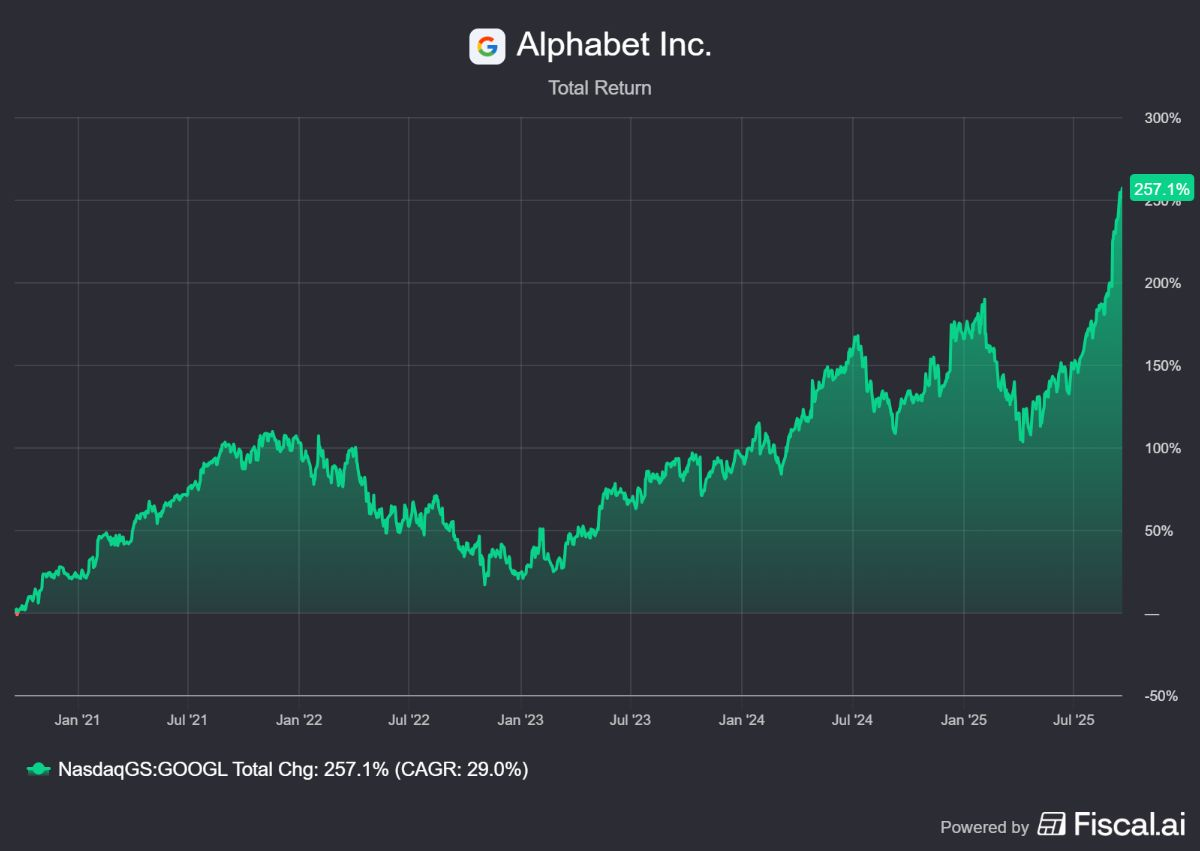
The market capitalisation of Alphabet passed USD 3,000 billion after its Gemini app recorded more downloads than ChatGPT, an important signal in the AI competitive battle. At the same time, the company is reinforcing its strategy by deeply integrating Gemini into the Chrome browser and through deals with Reddit, PayPal and Lyft.
Chapters Group reported strong revenue and profit growth in the first half of the year, driven by a high pace of acquisitions, although organic growth lagged somewhat behind its own target. The focus is on creating value through high-return acquisitions, which should in time alleviate concerns about increased share dilution.
In Brief:
Constellation Software (Toronto: CSU) this week acquired, through its subsidiary Jonas, the Hungarian company Jegymester, the market leader in ticketing. Jegymester, founded in 1995 and based in Budapest, provides both online and on-premise ticket sales solutions for a wide range of customers, from sports organisations to cultural institutions. In 2024, the company generated revenue of €11.7 million and employs around 20 people.
Constellation is also strengthening its position within hospitality tech: the Romanian company Bit Soft is joining Volaris Group. Bit Soft develops software solutions for hotels and restaurants, bolstering Constellation's European presence in this growth market.
Prosus (Amsterdam: PRX) achieved a successful stock market debut in Mumbai with Urban Company, India's largest technology platform for household services, at a valuation of approximately USD 2.8 billion. Prosus, which has been an investor since 2021, doubled its stake to 7.35% just before the listing, bringing its total investment to USD 139 million.
Urban Company, founded in 2014, connects millions of consumers with trained service providers for services including cleaning, beauty and repairs. The platform grew 38% in FY25 and became profitable, with an EBITDA margin of around 10% on its Indian consumer operations.
The IPO, which was oversubscribed a hundredfold, marks a milestone for the Indian technology sector. For Prosus, it is the third successful IPO from its India portfolio in twelve months, following Swiggy and BlueStone. This confirms the strategic value of its investments and underscores its position as an influential foreign investor in India's digital economy.
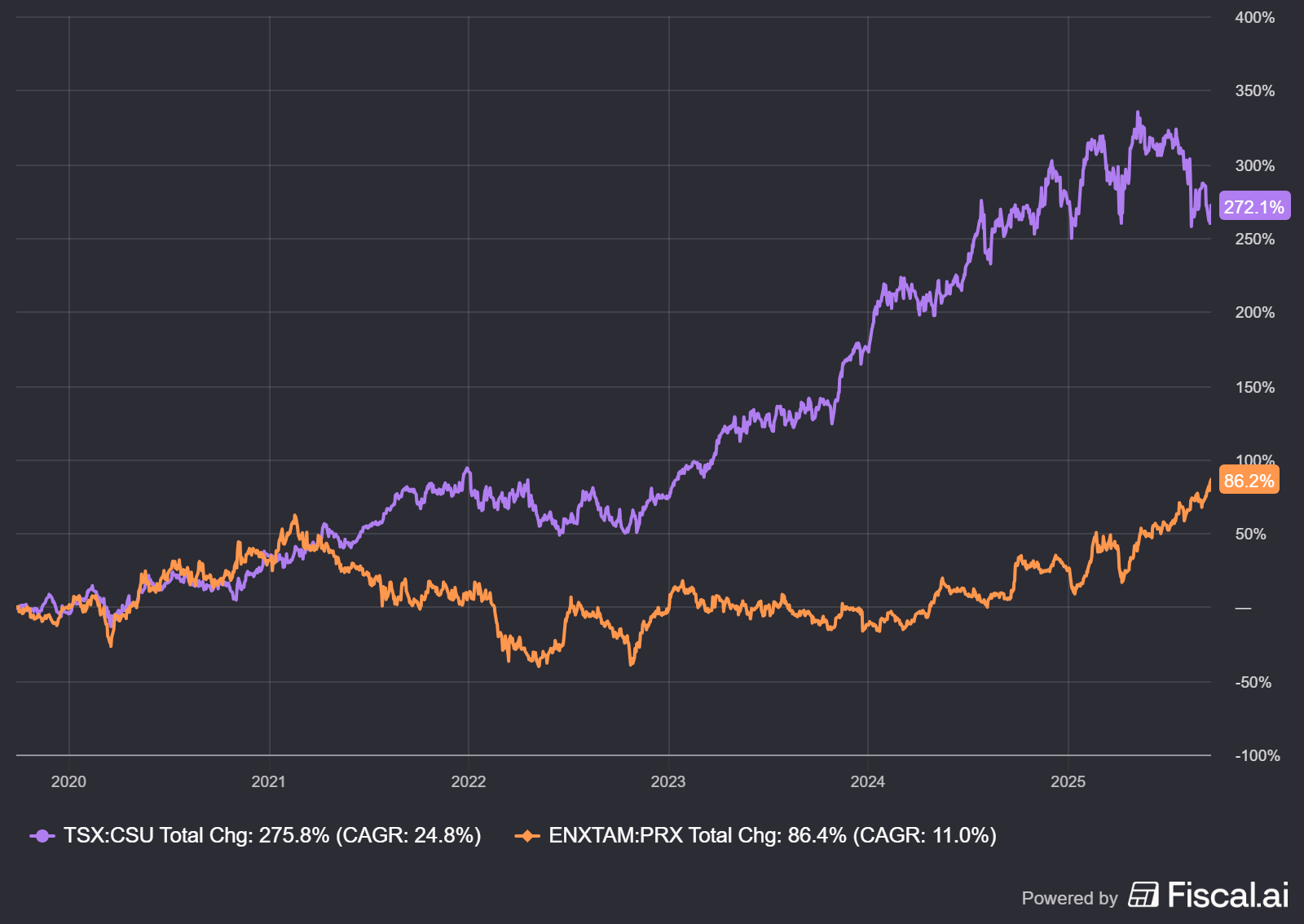
Constellation Software and Prosus are currently trading on the Toronto and Amsterdam stock exchanges at prices of CAD 4,418.64 and EUR 56.93 per share, respectively.
The impact of AI on VMS companies, part 2
In our earlier article, "Deep Dive – Software and AI, opportunity or threat?", we analysed the potential impact of artificial intelligence on the Vertical Market Software (VMS) sector. The core of our view was that, contrary to prevailing market fears, AI represents more of an opportunity than a threat for established VMS companies. The deeply entrenched competitive advantages, such as high switching costs and decades of domain knowledge, were identified by us as crucial lines of defence.
Recent developments and new insights from experts and business leaders provide additional, concrete support for this view. This addendum is intended to share that new information and further reinforce our original analysis.

The core of the software moat: domain knowledge, not technology
A commonly heard fear is that AI lowers the technological barrier to building software so much that new competitors could flood the market with cheaper alternatives. Jeff Horing, co-founder of renowned tech investor Insight Partners, offers a clear counterargument to this in a recent podcast. According to Horing, the barrier to displacing complex enterprise software has never been the technology itself.
"It was never a technology barrier. It was always a business knowledge barrier." - Jeff Horing
In his view, AI is the next generation of productivity tools, comparable to earlier innovations in software development. Although impactful, these too did not lead to the large-scale displacement of market leaders such as SAP. The real value and the 'stickiness' of VMS software lies not in the elegance of the code, but in its deep integration with the customer's business processes.
Horing therefore does not see AI as a threat, but as a "massive TAM accelerator": a tool that can greatly expand the total addressable market for existing software companies by enabling new functionality and automation on top of their existing, data-rich systems.

A voice from the field: Jan Mohr, CEO of Chapters
This view is strongly confirmed in a recent conversation we had with Jan Mohr, CEO of Chapters Group (Frankfurt: CHG), a serial acquirer of VMS companies in our portfolio. Mohr stresses that he knows of no case where a customer left to build a cheaper solution themselves using AI.
On the contrary, he sees commercial opportunities: "I know of more cases where this is a commercial opportunity than cases where it is a commercial threat." The ability to build an intelligent layer on top of the existing system of record actually creates new revenue streams. Mohr draws a crucial distinction:
- The real moat: the costs do not lie in rebuilding the software, but in the migration process. Mapping out all the processes, migrating the data, retraining staff and reconfiguring all the links with other systems; that is the real barrier to entry. These are the switching costs that make customers wary of changing, regardless of whether the new system was built by AI or by people. Especially for business-critical software used in, for example, hospitals or public transport companies, where the complexity and risks are immense, switching is a project spanning many years and millions of euros.
- Vulnerable software: software with low switching costs and less complex data integrations, such as business intelligence tools like Tableau or Power BI that sit on top of a dataset, is indeed vulnerable. Such visualisation and analysis functions can today be largely replicated by AI for free. However, the VMS model focuses precisely on the systems that generate, manage and safeguard a company's core data, the systems that are not easily replaced.

The market leader's response: Constellation Software
As discussed in our previous article, Constellation Software (Toronto: CSU) is the undisputed leader in the VMS sector. Constellation founder and CEO Mark Leonard addressed the situation in the announcement of a special webinar on the impact of AI, in a manner that is characteristically transparent and modest for him:
- "AI has created uncertainty for our employees, shareholders and customers. CSI's management does not claim to know the future of AI. We have a group of AI specialists within CSI. They do not know the future of AI either. However, they do help us track our own AI progress and that of AI in general in our markets."
This passage is telling. Rather than bold statements about how it will dominate AI, Leonard acknowledges the uncertainty and emphasises the process. This pragmatic and humble attitude is more reassuring than bravado. It also aligns seamlessly with the view of a major CSU shareholder we recently spoke to, who argues that the company's strength was never the modernity of its code, but its deep understanding of the niche market and its rock-solid customer relationships.
Constellation's internal focus on AI, which began as early as 2022, became visible to the outside world in 2025 when subsidiary Volaris held its second AI Summit, attended by more than 4,200 employees. The strategic approach was articulated there by COO Brian Beattie, who emphasised that it is not merely a new tool:
- "AI is about helping to create a business transformation, and it's about building new processes with AI at the core... It's a fundamental shift that's taking place."
More recently, Vela LatAm, another subsidiary, announced the creation of an AI Center of Excellence to share knowledge and accelerate innovation. The focus is on redesigning processes and delivering more value to customers.
The value of 'hard-won secrets'
The true strength of a VMS company, and the reason why AI does not pose an existential threat, is perfectly illustrated by a case study from the Dealer Management Software (DMS) market. This is business-critical software for car dealers, dominated by long-established players such as Reynolds & Reynolds (founded in 1866) and CDK.
In 2016, Jay Vijayan, Tesla's former CIO, launched a new, 'modern' competitor called Tekion. With a well-known name from the tech world and enormous funding of USD 640 million, Tekion seemed destined to disrupt the old guard. Almost a decade later, however, customer testimonials reveal that the product is still a "hot mess".
The reason lies at the heart of the VMS moat: great software is built on "hard-won secrets". These are deep insights into the customer and its work processes that have been built into the product over the course of decades. It's about the user flow, the interface, the frictionless processes; knowledge that a customer often cannot even articulate itself.
The author gives a powerful first-hand example of this from his time at Amazon. The company wanted to modernise its website for years but kept postponing it. The reason: the old, unattractive-looking website had a higher conversion rate and therefore simply sold more. Switching to a more attractive design would immediately cost revenue. Only after years of optimising every detail did they discover the 'secrets' of the old site. One such secret was that the precise font size and colour of the words "In Stock" affected revenue by a significant percentage, a difference of literally billions of dollars per year.
What Reynolds & Reynolds learned over decades, Tekion tried to buy with hundreds of millions of dollars: a deep understanding of the customer, distilled into a flawless product. The fact that a former Tesla CIO with USD 640 million in capital takes a decade to build a still fairly mediocre product illustrates the depth of the 'moat'. These 'secrets' are the real barrier, not the technology. For the VMS sector, this means that the best companies, those with the deepest market penetration and the most 'secrets', are best positioned to benefit from new technologies such as AI. They will use it to make their existing, indispensable products even better.

The market's fear about the impact of AI on VMS companies appears to be a misunderstanding of where the real value and competitive advantages of these companies lie. These are not technological in nature, but rooted in domain knowledge, customer relationships and the high switching costs inherent to deeply embedded, business-critical software.
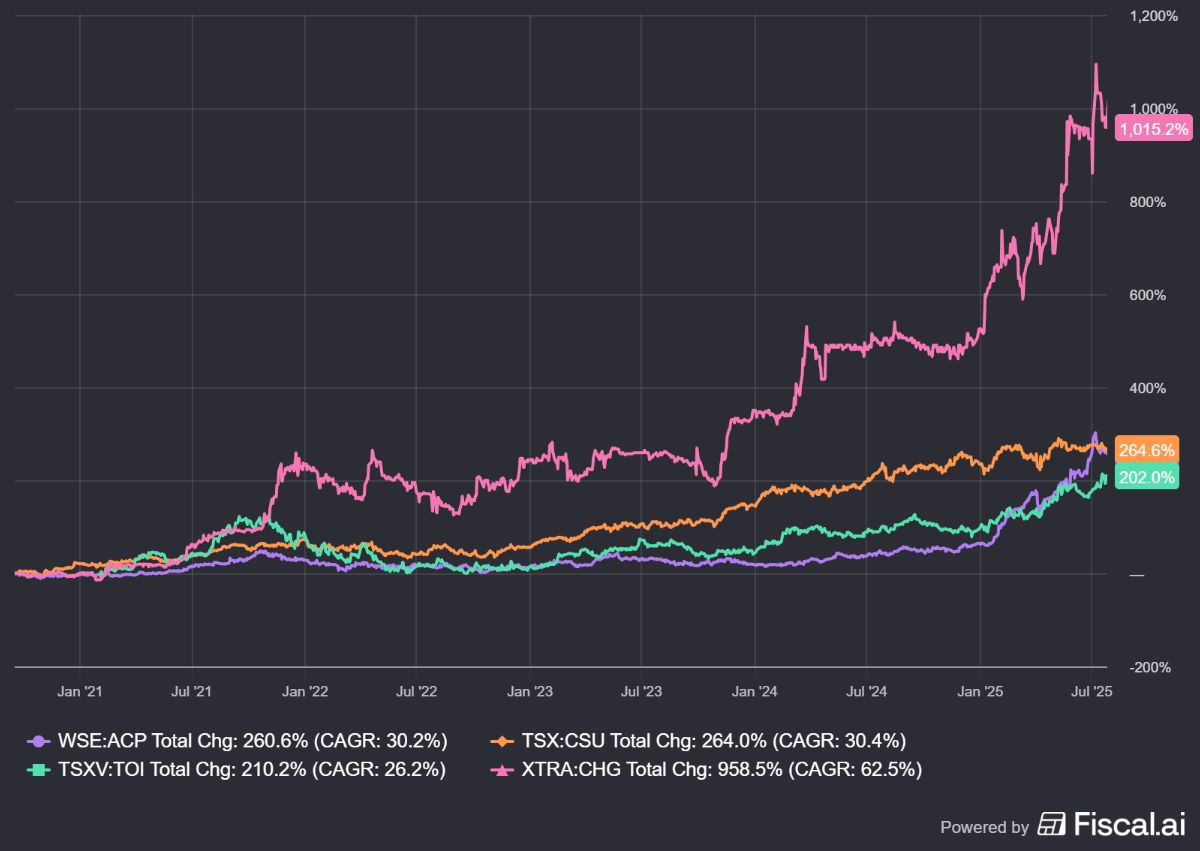
For the high-quality VMS serial acquirers in our portfolio, such as Constellation Software, Chapters Group, Asseco Poland (Warsaw: ACP) and (Toronto: TOI) Topicus, we therefore view AI as a catalyst for further growth and value creation, not as an existential threat. Moreover, these VMS companies themselves, with their dozens of independently operating subsidiaries, offer an additional layer of risk diversification.
Asseco Poland, Chapters Group, Constellation Software and Topicus are currently trading in Poland, Germany and Canada at prices of PLN 205.40, EUR 38, CAD 4,409.19 and CAD 161.27 per share, respectively.
KKR confirms growth strategy and 2026 financial targets
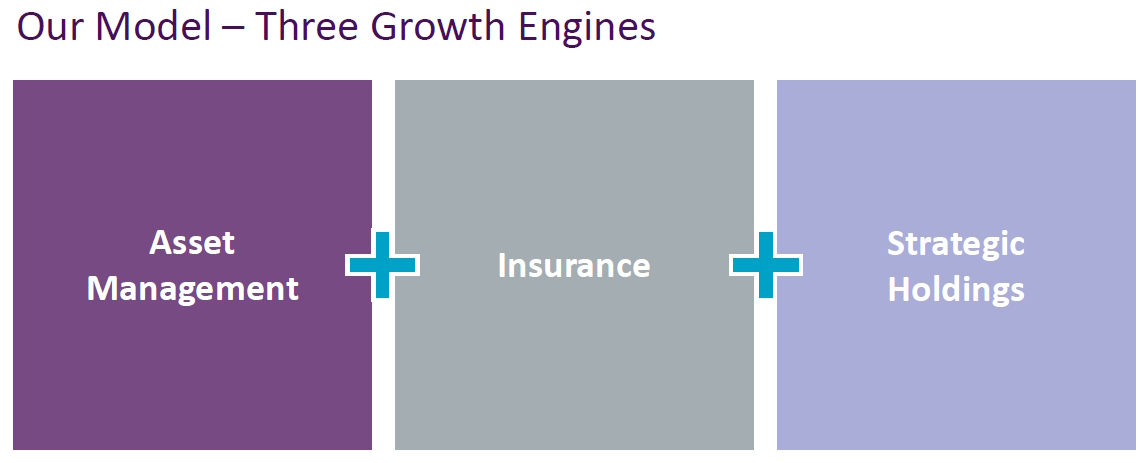
During the recent Barclays Global Financial Services Conference, CFO Robert Lewin of KKR (New York: KKR) gave a detailed overview of the strategy and growth drivers of the American investment holding company. At the heart of the message is the strength of the differentiated business model, which relies on the synergy between its three core activities.
This model rests on the pillars of Asset Management, Insurance (via Global Atlantic) and Strategic Holdings. The historical core is Asset Management, with nearly USD 700 billion in assets under management. This is complemented by the insurance arm Global Atlantic, which attracts long-term liabilities to invest via the KKR platform. Finally, the Strategic Holdings segment leverages private equity expertise as an additional, capital-friendly growth driver.
Lewin outlined a constructive macroeconomic picture, characterised by equity markets at record highs, tight credit spreads and low volatility. Although inflation is expected to remain above the 2% target, KKR anticipates two rate cuts in 2025 and three in 2026.
In private equity, KKR stands out for its disciplined and linear deployment of capital, in contrast to the sector, which invested at high multiples in 2021-2022. This is reflected in the fact that the US private equity franchise has distributed twice as much capital as it has called over the past eight years.
Fundraising remains robust, with the recent Americas Private Equity Fund having already raised USD 16 billion. Lewin does not expect a wave of takeovers in the private equity sector, but rather an organic consolidation in which weaker players shrink. This works in favour of large players such as KKR, which sees investment opportunities mainly outside the US, with a focus on Europe, Japan and India.
The infrastructure division has grown organically over five years from USD 15 billion to USD 90 billion in AUM (Assets Under Management), making it a world leader. The credit division is the largest business unit with USD 260 billion in AUM, with growth driven mainly by Asset-Based Finance (ABF).
The private wealth activities are also proving successful. The 'K-Suite' products, aimed at high-net-worth individuals, had already raised USD 10 billion in the first eight months of 2025.
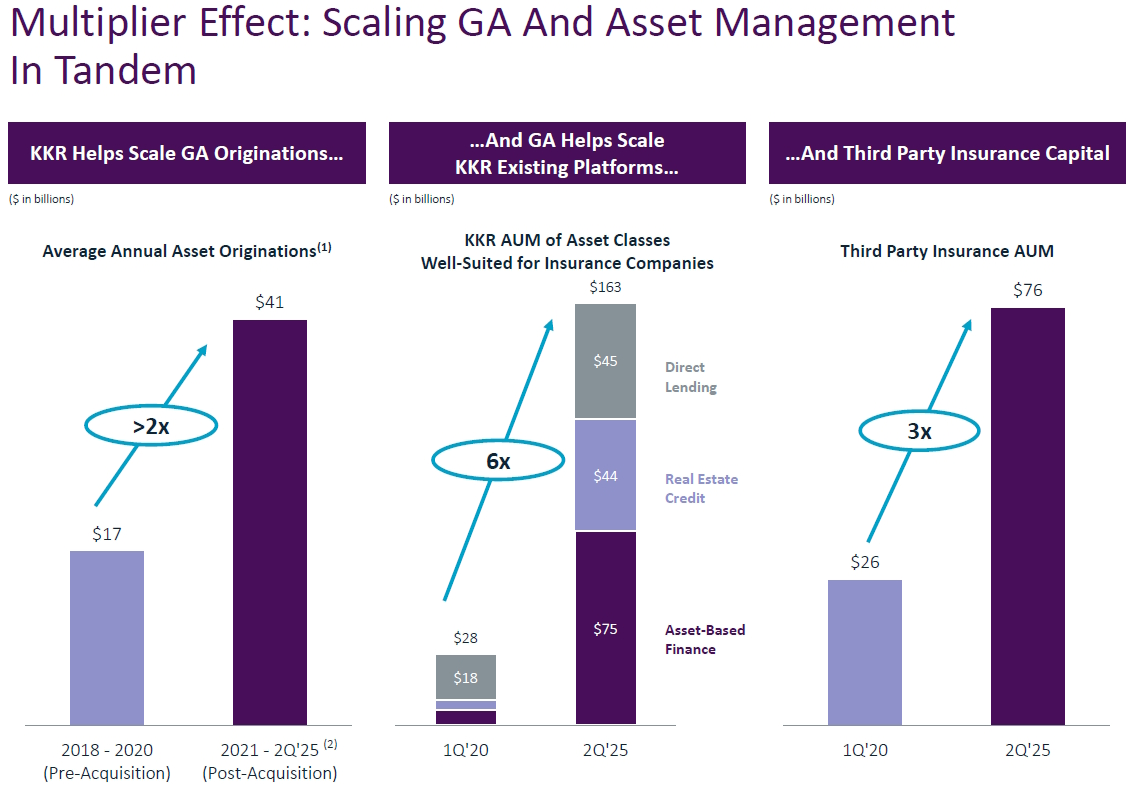
At Global Atlantic, the focus is on long-term profitability. The strategy of raising the allocation to alternative investments from 1% to 5-8% is building significant "hidden profitability" for the future, despite a short-term drag on earnings.
The Strategic Holdings segment forms the core of KKR's ambition for long-term value creation. The strategy, modelled on compounders such as Berkshire Hathaway, is to invest capital via the company's own balance sheet and let it compound over a long period. This breaks with traditional fund cycles and gives KKR the flexibility to act as both investor and owner with full control.
The focus is on reinvesting profits from cash-generating businesses to maximise the compounding effect, rather than paying out high dividends (a strategy favoured more by competitors such as Blackstone). This approach allows KKR to operate without restriction across various sectors, including business services, consumer goods and healthcare.
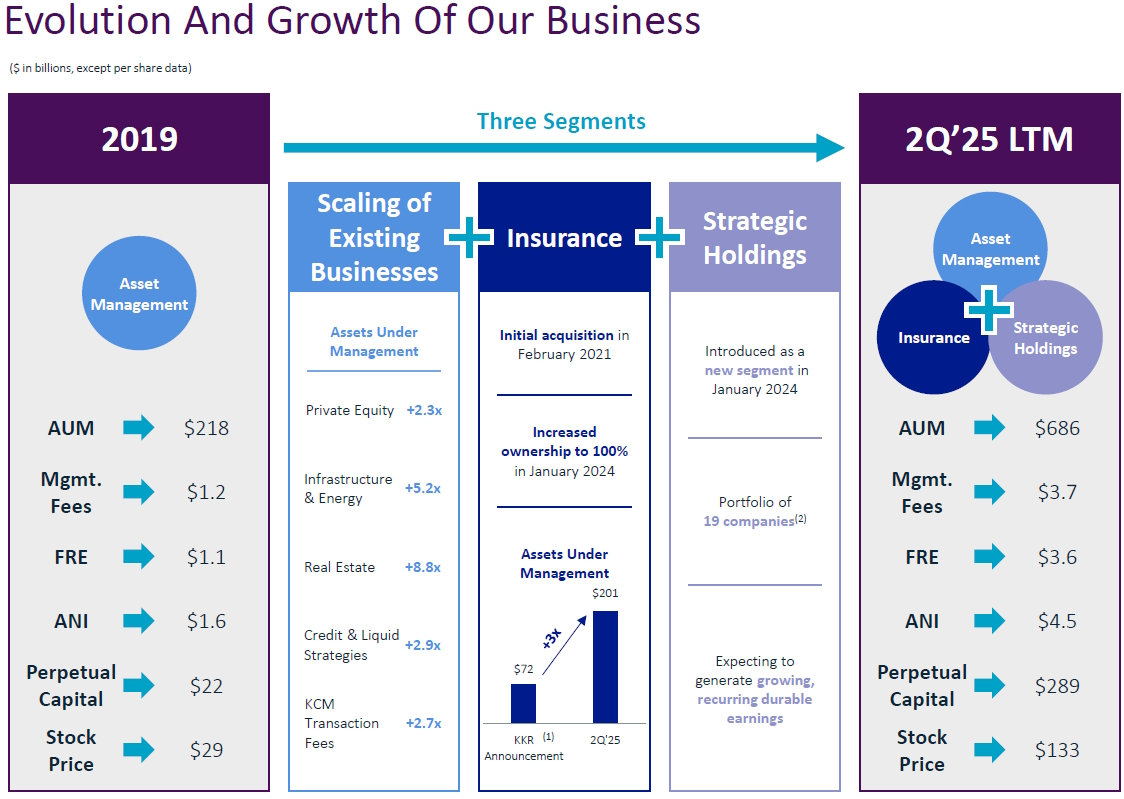
The segment currently comprises stakes in nearly 20 companies, with the aim of growing operating cash earnings from more than USD 350 million next year to more than USD 1.1 billion in 2030. This stable and growing income stream reduces the company's overall risk profile.
Finally, KKR reaffirmed its confidence in achieving its financial targets for 2026, including Fee Related Earnings (FRE) per share of more than USD 4.50 and After-tax Distributable Earnings (ANI) per share of between USD 7 and USD 8.
KKR is currently trading on the New York stock exchange at a price of USD 148.87 per share.
Alphabet breaks through the USD 3,000 billion mark
The American investment holding company Alphabet (New York: GOOGL) continues to make headlines. Google's Gemini app overtook ChatGPT in the number of App Store downloads and pushed the company's market capitalisation to USD 3,000 billion. Yet this week a programming competition in Azerbaijan showed that the battle for the best LLM model is still wide open: OpenAI's GPT-5 solved all 12 problems, while Gemini only managed 10. The gap is small, but it underlines that this AI race still has years to run.
Meanwhile, Google is rolling out Gemini in Chrome for US users, a step that turns the browser itself into an AI agent. Users can ask Gemini questions about open pages, have summaries generated across multiple tabs at once, and take direct action within integrated apps such as Docs, YouTube, Calendar and Maps. This shifts Chrome from a passive gateway to the internet into an active assistant that understands context and carries out tasks.
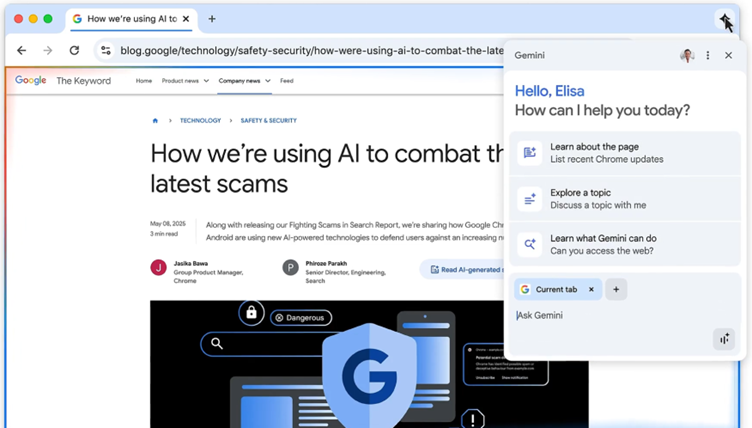
The applications are wide-ranging: think of automatically summarising lengthy research articles, comparing information from multiple sources, or scheduling appointments directly from a webpage. In the coming months, "agentic capabilities" will follow, enabling Gemini to independently handle repetitive tasks, such as booking appointments or placing online orders.
Alphabet also closed three notable deals within a single week:
- Reddit: in talks about deeper data integration and dynamic pricing structures, on top of the existing USD 60m+ content licence.
- PayPal: strategic partnership around AI shopping and payments, with PayPal as a core provider within Google's ecosystems.
- Lyft: Waymo is launching autonomous ride-sharing in Nashville via Lyft's platform, which offers scale without the need to develop its own app.
The common thread: the infrastructure is in place, and the AI agent is coming to life. Alphabet is building the bridge between AI models, everyday apps and commercial ecosystems step by step.
Alphabet is currently trading on the New York stock exchange at a price of USD 253.60 per Class A share.
Preliminary half-year results at Chapters Group in line with expectations
German investment holding company Chapters Group (Frankfurt: CHG) presented preliminary half-year results for 2025, once again posting substantial growth. Revenue came in at around EUR 85 million, an increase of 51% compared with the same period last year. Operating gross profit (EBITDA) stood at around EUR 19 million, representing a margin of over 22%, a clear confirmation of the efficiency with which the company operates.
CEO Jan Mohr highlighted the contribution of the Public Sector and Financial Technologies segments, and sees the first tangible effects of the internal Manuscript Method reflected in higher profitability. Organic growth is likely to come in at a mid-single-digit rate this year. That is below the mid-term target of +10% previously communicated by management, and therefore somewhat on the lean side. Even so, we do not see this as a major risk. Chapters is still in an early stage of its growth, and the recent acquisitions and integrations need time before they contribute in full.
In the first half of the year, the company already carried out several VMS acquisitions, and the consolidation of Expatrio in the fintech segment is further fuelling the deal machine. Management expects synergy benefits to become visible mainly from 2026 onwards. Since 30 June, Chapters has already made four more acquisitions.
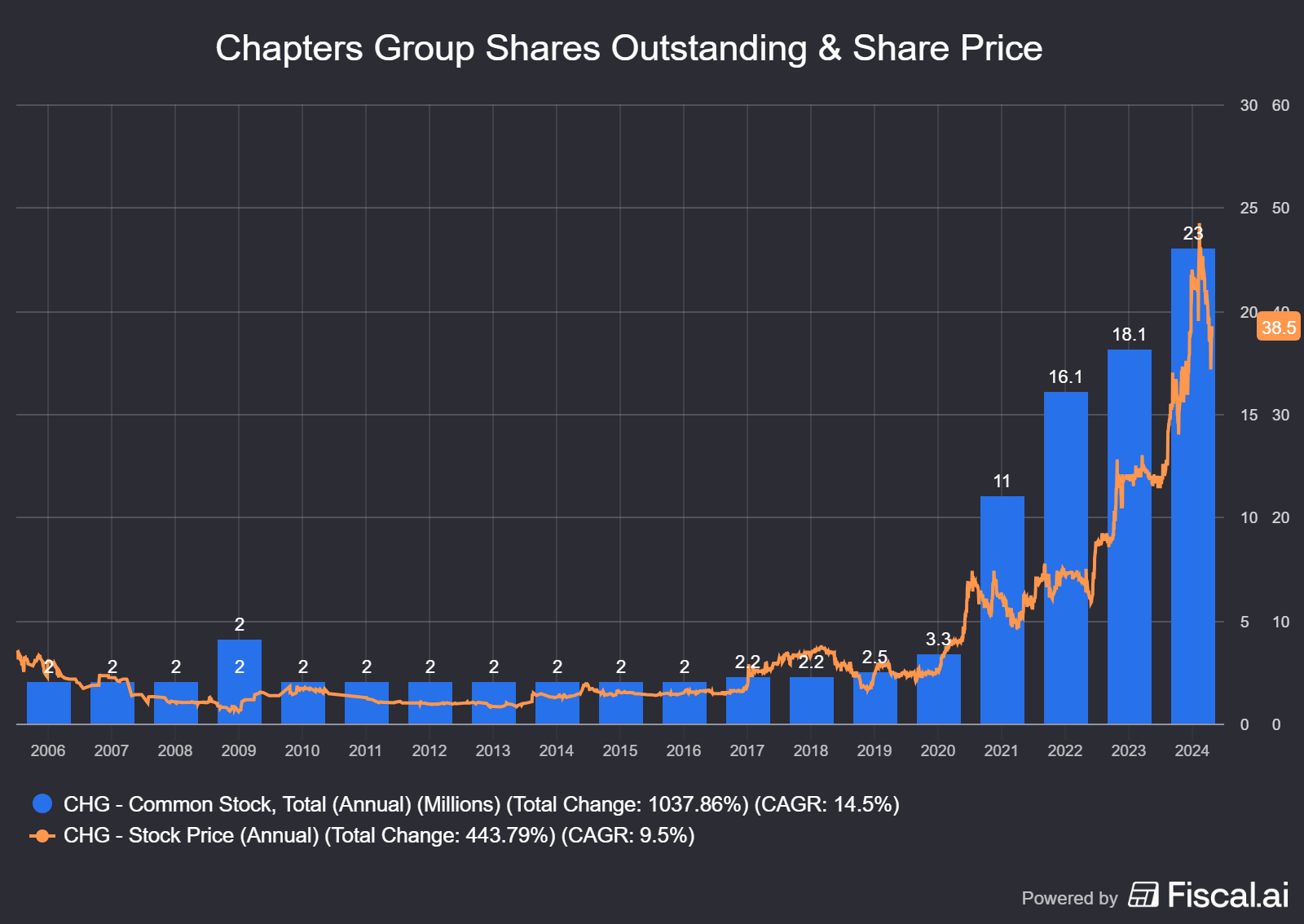
Analysts note that the number of shares outstanding has risen sharply in recent years, which could lead to dilution in the short term. At the same time, as long as the capital raised is deployed at an ROIC of ~25%, management's target, the value creation for shareholders will outweigh the dilution over time.
Our conclusion: Chapters combines strong operational efficiency with a high pace of acquisitions. As long as the company delivers on the promise of high returns on invested capital, the market will sooner or later look past the dilution as well.
Chapters Group ended the trading week on the Frankfurt exchange at a price of EUR 38.30 per share.
Receive weekly insights in your inbox
Exclusive analyses and updates on family holding companies and global market developments.
Would you like more information about our services? Please feel free to get in touch.
Get in touch
Disclaimer:
No rights can be derived from this publication. This is a publication of Tresor Capital. Reproduction of this document, or parts thereof, by third parties is only permitted after written consent and with reference to the source, Tresor Capital.
This publication has been compiled by Tresor Capital with the greatest possible care. The information is intended in a general sense and is not tailored to your individual situation. The information must therefore explicitly not be regarded as advice, an offer or a proposal to purchase or trade investment products and/or to obtain investment services, nor as investment advice. The authors, Tresor Capital and/or its employees may hold positions in the securities discussed, for their own account or for their clients.
You should carefully consider the risks before you start investing. The value of your investments may fluctuate. Past performance offers no guarantee for the future. You may lose (part of) your investment. Tresor Capital disclaims any form of liability for any imperfections or inaccuracies. This information is purely indicative and subject to change.
Read the full disclaimer at tresorcapitalnieuws.nl/disclaimer .
This article was originally written in Dutch and automatically translated into English with the help of AI. In case of any difference, the Dutch original prevails.