
Family Holdings #39 - Constellation Software shares its AI vision: founder Mark Leonard steps back



This week's topics:
Berkshire Hathaway sold its entire stake in China's BYD after a return of 4,000%. It also reinvested in Japanese trading houses.
The Belgian holding company Sofina is raising €545 million through a share issue that, despite a strong balance sheet, is being carried out at a steep discount. This transaction is the first step in a broader strategy to increase investment capacity by more than €1 billion, together with a future bond issue.
In Brief:
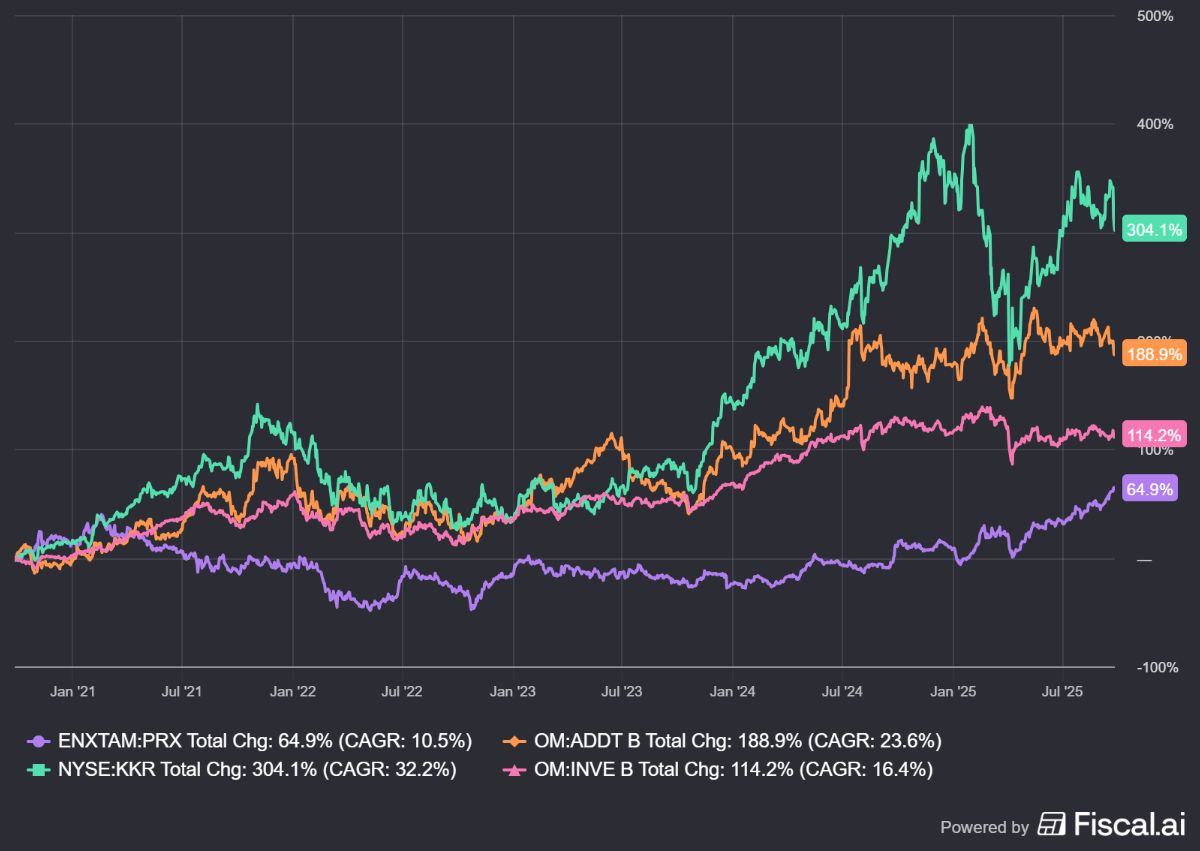
Prosus (Amsterdam: PRX) is, through its subsidiary OLX Group, fully acquiring the French online classifieds platform for cars La Centrale (a kind of Marktplaats) from Providence Equity Partners for €1.1 billion in cash. With the acquisition, OLX enters the structurally attractive French market and strengthens its position in the European used-car sector. The transaction fits with Prosus's ambition to build a leading European e-commerce ecosystem and validates the company's positive momentum, with its shares reaching new all-time highs again this week.
Addtech (Stockholm: ADDT-B) has announced a reorganisation that will take effect on 1 October 2025. The restructuring is designed to support the ambitious target of 15% annual growth in operating profit. Addtech validates this ambition with a historical average of more than 20% since its listing in 2001.
The company is expanding to six business areas, including new focus areas such as Electrification, Safety and Process, which respond to trends such as the energy transition and digitalisation. The new structure is intended to lay the foundation for both strong organic growth and increased acquisition capacity. Addtech will report under the new structure for the first time for the third quarter, on 5 February 2026.
KKR (New York: KKR) is signalling strong profitability for the third quarter. In an interim update, the company already reports USD 925 million in monetization income from the sale of investments. This amount, which is well above the market expectation of USD 711 million, was mainly achieved through the sale of positions, supplemented by dividend and interest income.
At the same time, KKR is demonstrating its firepower on the investment side. The firm is leading a consortium that is acquiring a 45% stake in the infrastructure arm of US-based Sempra for USD 10 billion, linked to a large-scale LNG project in Texas. The rapid pace of both successful divestments and new, large-scale deals underscores KKR's leverage on a recovering capital market cycle.
Investor AB (Stockholm: INVE-B) has received a price target increase from Swedish bank SEB, from SEK 355 to SEK 366, with a reiterated buy rating. According to SEB, the return for Investor's shareholders could in future turn out significantly higher than current market expectations. The bank outlines a strategic roadmap that focuses on structural adjustments to the ownership structure and increased transparency. The successful implementation of this strategy could, according to SEB's analysis, push the share price to a range of SEK 578 to SEK 636 within a period of five to seven years.
Prosus, Addtech, KKR and Investor AB ended the trading week on the Amsterdam, Stockholm and New York exchanges at prices of €58.40, SEK 312.00, USD 134.01 and SEK 288.10 per share, respectively.
Constellation Software shares its AI vision; founder Mark Leonard steps down
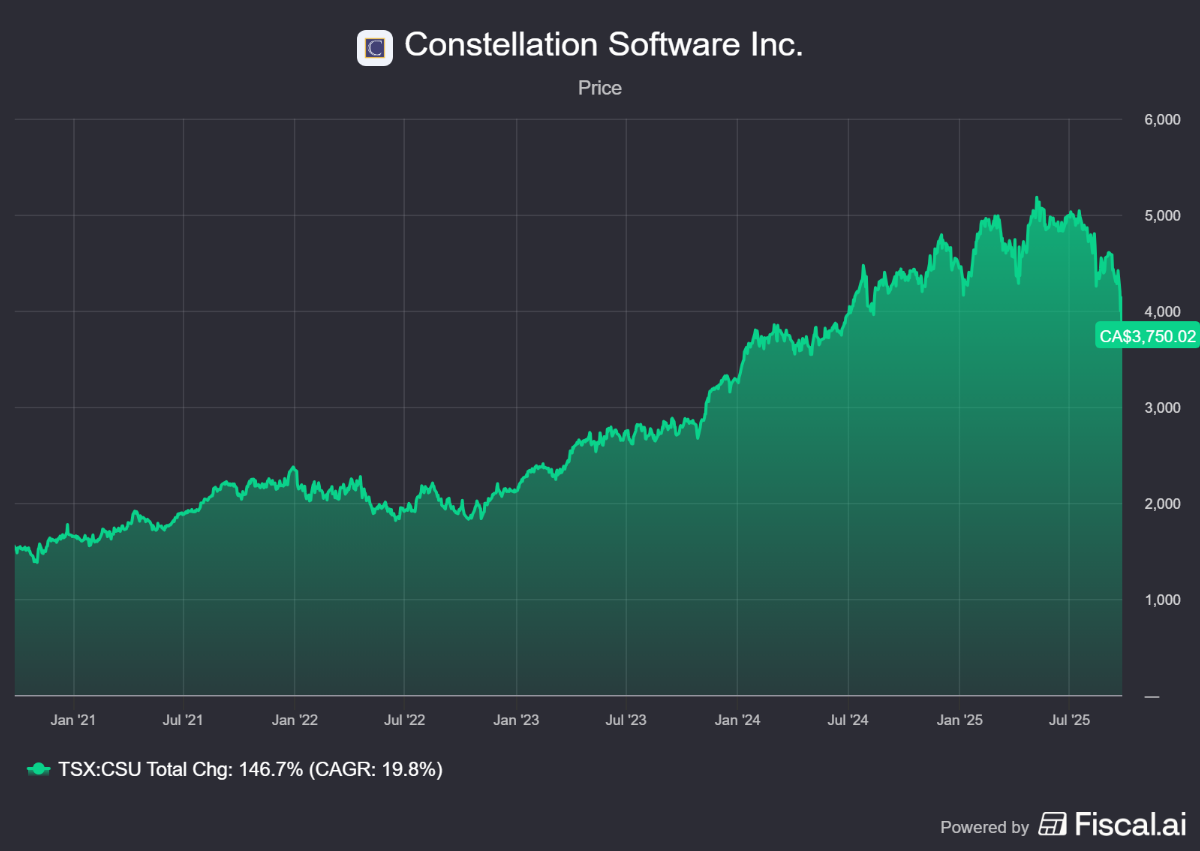
The Constellation Software (Toronto: CSU) share has been under pressure for quite some time now. As investors in the company, we have regularly written about the Vertical Market Software (VMS) giant and its peers over the past period. This week, for the first time, we gained clearer insight into how management itself views the impact of AI and the way it is being implemented within the organisation.
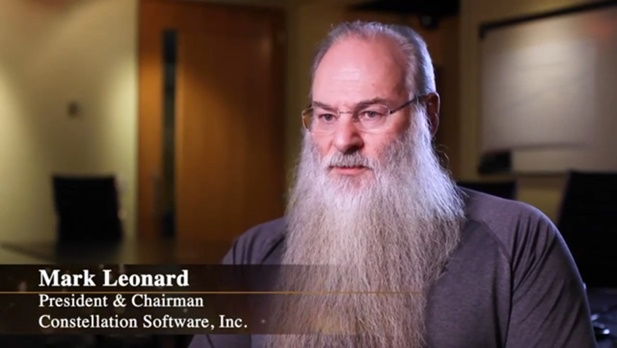
On Monday, CEO and founder Mark Leonard, flanked by four internal AI specialists, spoke during a webinar with investors and analysts. Outside of the extensive annual shareholders' meeting, Constellation is fairly averse to publicity; for Leonard personally, this appearance even turned out to be his last in his capacity as president of the company. Three days after the AI webinar, the company unexpectedly announced that Leonard was stepping down as president with immediate effect for health reasons.
In the official statement, chairman of the board of directors John Billowits expressed his gratitude: "On behalf of the board of directors and all employees of Constellation, I wish Mark a full and speedy recovery. Since Constellation's founding in 1995, his visionary leadership, humility and wisdom have inspired countless leaders and employees to build what has become a truly exceptional global software company."
Leonard remains active as a member of the company's board of directors, but his position as president will be taken over by COO Mark Miller. Leonard himself added: "The board of directors and I have full confidence in Mark Miller and our executive team to execute Constellation's business plan. Mark Miller has been a trusted advisor and a driving force within Constellation's executive team for more than thirty years, and I cannot think of anyone more experienced, knowledgeable and capable to lead the company at this time."

AI webinar
During the webinar, it stood out how cautious Leonard is about the AI hype. He opened with an anecdote about AI pioneer Geoffrey Hinton, who predicted in 2016 that radiologists would soon be replaced by AI, a prediction that proved premature. In the nine years since, the number of radiologists actually increased by 17%, while the US population grew by only about 6% over the same period. The number of radiologists per head of population thus rose from 7.9 to 8.5 per 100,000. Leonard's message: even someone like Hinton ("you and I will never know more than a fraction of what Jeff knew about AI") can misjudge the impact.
With that lesson in mind, Leonard warns against jumping to conclusions. Leonard argues that no one can predict whether the world of programming is heading towards a "renaissance or a recession" now that AI is making its entrance; productivity might surge tenfold, or it might only rise by 10%. A tenfold productivity gain would, according to Leonard, be a fantastic outcome: "You can imagine no longer having to accept software that does 80% of what you want; you'd get software that does 100% of what you want, fully tailored to your needs." At the same time, that same productivity gain could lead to an enormous oversupply of programmers.
Constellation therefore monitors developments closely, but does not get swept up in every hype. At the end of the call, Leonard reiterated that AI claims deserve healthy scepticism in a market that is being flooded with opportunistic voices.
Anyone who thought Leonard would use his upcoming departure as an occasion for a grand or emotional message was mistaken. In his characteristically calm, nuanced style, he spent an hour and a half talking with various business unit operators about AI. Realistic, solution-oriented, sometimes almost dry, but never spectacular. Precisely the tone that has typified Constellation for thirty years.

Opportunities and threats to Constellation's competitive advantage
A recurring theme in the webinar was why AI does not simply sweep away the companies in Constellation's portfolio. Their durable competitive advantages lie primarily in deeply embedded domain knowledge and customer processes, rather than in data alone. Constellation's companies know the processes of end users inside out. One of the AI experts on the call put it this way: "Our companies have an incredible understanding of the processes and workflows of end users, often even better than the end users themselves." Leonard described it as "the distillation of a conversation between the vendor and the customer that has often been going on for decades." That decades-long practical knowledge is converted into algorithms, functionality and reporting. The code contains unique, proprietary information that a generic AI system cannot simply replicate.
Large customers sometimes bolt their own AI tools onto Constellation's software, but these tend to remain superficial. Critical functionality requires deep integration with existing systems and workflows, integrations that are developed in close collaboration with customers. Even when customers experiment with AI, delivering true end-to-endsolutions usually remains the domain of the original software vendor.
Vertical market software sits on a spectrum. At one end are generic, horizontal applications that are cheap and simple (think of Microsoft Excel, for example), but often deliver no more than half of the desired functionality. At the other end are extremely costly, fully bespoke systems that align in every detail with an organisation's wishes. These are solutions for the very largest companies, which regard software as a strategic differentiator and are willing to invest millions in proprietary systems or large-scale implementations. Constellation serves the middle of this spectrum: packages that cut deep enough into niche processes, at a price level that remains affordable for most customers. Some customers eventually grow to the point where they see software as a strategic core activity and accept the cost of full customisation; at that point, Constellation sometimes loses them to players such as SAP. That dynamic has existed for years.
AI is expected to shift those boundaries. AI makes it possible to deliver more customisation more efficiently and at lower cost, keeping customers on board for longer. At the same time, it becomes easier for large customers to pursue customisation themselves. Leonard put it like this: "AI makes it much more attractive for us to deliver customisation, but at the same time increases the chance that the customer will do it themselves". It is the classic double-edged sword. The greater the productivity gains, the more scope Constellation has to offer customisation, but also the stronger the incentive for customers to experiment on their own.

Case study: IDEA Data Solutions
A telling example of how Constellation’s defensive moats against AI work in practice is the story of IDEA Data Solutions. This company, part of the Omegro portfolio within Constellation’s Volaris group, focuses entirely on ERP software for superyachts. It is vertical market software in its purest form, shaped by decades of interaction with a highly specific customer base.
Superyachts form a miniature world of their own. Vessels with crews of up to eighty people require complex maintenance schedules, strict safety inspections, certifications and finely tuned crew management. Founder Klaus Allebrodt saw at a shipyard in Mallorca in the late 1990s how new ships were still being delivered with stacks of paper manuals. The crew had to work through hundreds of pages to find out which part needed maintenance and when, or where a spare part was located. IDEA changed that. Its software digitised the entire information chain and added modules for inventory management, ISM compliance, certification, shore staff and crew organisation. The goal was simple but crucial: ensuring that a superyacht is ready to sail at any moment.
What happened next underscores just how important niche focus and customer dialogue are. In 2008, IDEA was acquired by SpecTec, then the market leader in maritime software. The idea was that economies of scale would follow, but in reality attention shifted to commercial shipping in Germany and Switzerland. The core superyacht business lost priority and innovation stalled. Only after Constellation (via Volaris) acquired SpecTec in 2014, and IDEA was carved out in 2018, did the company once again get the room to focus fully on its niche. That led almost immediately to growth and renewal. Even during the difficult COVID years (2020–2022), when the entire superyacht industry was hit hard, IDEA managed to deliver double-digit growth year after year. Today, management expects the business to triple in size within ten years, thanks to disciplined quarterly reviews and a consistent focus on the niche market.
The foundation of that ambition is something AI cannot replicate. IDEA’s success rests on deeply rooted sector knowledge and long-standing customer relationships. Over more than twenty years, the software has been shaped by hundreds of rounds of feedback from captains, engineers and owners. That is precisely what makes IDEA indispensable to its users. A generic AI might be able to search through manuals, but it does not understand how a shipyard, captain and owner work together to keep a yacht operational. CEO Christian Mühle emphasises the strength of the customer-centric approach that Omegro (Volaris) taught them: “Omegro has taught us to look at planned initiatives through the lens of the customer. However good an idea may be, if a customer isn’t willing to invest in it, there is no real product.” That insight only comes from years of collaboration and continuous alignment with the customer.
Current AI bottleneck: good, but not good enough
A key obstacle is that current AI models struggle with large, complex software packages. When building something new, they achieve impressive speeds, but with existing systems they lose track of the bigger picture. As a result, spotting errors or making far-reaching changes remains difficult. New techniques such as larger context windows and multi-agent architectures are expected to gradually improve this. Within Constellation, a specialised team is now testing AI across almost every stage of the software cycle: from coding and testing to documentation and system design. Teams working with it are exploring more alternatives at the design stage and sometimes seeing clear efficiency gains, although other applications still lag behind.

Generative models excel at writing new code, but are less capable at debugging existing systems. That's because they are trained on datasets of correct code, while examples of faulty code and their fixes are barely available. The models are trained on open-source codebases, not on datasets of defects, which makes it harder for them to recognise and resolve errors in existing, complex systems. Delivering a first version often goes well, but flawlessly analysing and repairing legacy systems is a different matter altogether. What looks like a tenfold acceleration at the build stage can thus turn into a tenfold increase in the maintenance burden.
Constellation therefore opts for a pragmatic approach. AI is only applied where it clearly adds value, and the results are critically assessed. During the webinar, an AI expert from Constellation stressed the need to distinguish between genuine value and ‘AI washing’: adding an AI label purely for marketing purposes. A solution often works in eighty per cent of cases, but the remaining twenty per cent, frequently the crucial edge cases, causes most of the problems. Whether AI-generated code requires more or less maintenance over its entire lifecycle is still unknown. Building new modules with AI is possible, but production code is closely monitored. Rebuilding entire systems purely to take advantage of AI capabilities is not an option for now.
Rolling out AI via the familiar bottom-up approach
The way Constellation implements AI follows the same philosophy as the rest of the company: fully decentralised. The holding company does not impose a blueprint, but lets the business units experiment for themselves. As soon as a successful application emerges within a group, the insights are shared so that other units can benefit from them. Management thus deliberately opts for spreading best practices rather than central mandates. Below is an overview of the AI implementations named within Constellation:
Adoption and product development
- In one operating group, 27% of business units are now developing an AI product or feature for customers.
- In another division, experimenting with AI solutions was made mandatory for everyone.
Internal application
- One operating group reported a month-on-month increase of 450% in employees' use of AI tools. The majority now work with them in one way or another.
- In R&D, 61% of business units use AI tools in some groups, and more than 70% in others. Effectiveness varies widely: some teams are achieving substantial efficiency gains, while others see barely any results.
Support, sales and marketing
- In support, sales and marketing, more than half of the companies now deploy an AI assistant on the front line. Even so, only 10% to 20% of queries were fully automated, compared with the 50% to 60% that had been expected. This highlights how stubborn real-world cases can be, even with a wealth of information available.
- In sales and marketing, around 50% of business units use AI for, among other things, lead generation, writing marketing copy and responding to RFPs more quickly. There are concrete examples of deals that came about thanks to AI-driven product combinations or faster tender responses.
The best estimate is that around 20% of all Constellation companies are currently running serious AI projects with potentially major impact, while the rest are still mainly experimenting. This percentage is expected to rise clearly over the next 18 months as successful cases spread. The general picture is that AI is widely present, but the degree of maturity varies considerably. Everyone is touching on it, but only some are already exploiting it in depth.
Mark Leonard's legacy
The news that Leonard is stepping down with immediate effect caused quite a shock on the stock market, with the share price dropping more than 15% intraday. That reaction appears to be driven mainly by emotion rather than fundamental concerns. Leonard is regarded as a visionary and an exceptional capital allocator. Under his leadership, Constellation grew into a globally operating software holding company with more than a thousand subsidiaries.
A profile in the Canadian newspaper The Globe and Mail paints a picture of an iconoclastic leader. Leonard, described by the newspaper as "big and powerfully built, like a linebacker, with a deep voice and a British accent", was known for his fierce intelligence and a directness that was sometimes perceived as sharp. At the same time, he was always curious and willing to change his mind on the basis of convincing data. His appearance, including an exceptionally long, Gandalf-like beard and informal dress sense, stood in stark contrast to the sharp suits of the Bay Street investors (Canada's equivalent of Wall Street) who idolised him.
Leonard's unique approach stems from his background. After completing an MBA, he started out as a venture capitalist in the 1980s, but after eleven years he considered himself an unsuccessful investor. He disliked the model in which firms invest for only a few years before selling again. He was more interested in buying and permanently holding companies he considered good. His inspiration came from the legendary Canadian entrepreneur Roy Thomson, who built a fortune by buying up local newspapers in small communities, businesses with loyal customers and little competition. Leonard replaced the newspapers with software vendors in niche markets, but the model remained identical.
His focus on shareholder value was extreme. In 2015, he stopped taking a salary. The reason, as he wrote in his annual president's letter, was that he wanted to lead a more balanced life and travel more comfortably without doing so at the company's expense. He refused to "take advantage" of shareholders and wanted to set the right example, but for his own account he chose comfort and speed over the economy class travel and modest hotels that the company culture prescribed. "So I'm afraid you will mostly find me up front in the plane from now on," he wrote. "I love what I do and don't want to stop, unless my health deteriorates or the board decides it's time for me to go."
Crucially, from the very start he designed a structure that does not depend on a single person. Constellation operates in a distinctly decentralised manner. When a company is acquired, its existing management stays in place, retaining autonomy and the company's specific culture. The holding company facilitates capital and knowledge sharing but does not interfere with day-to-day management. The result is a "culture of cultures", in which every acquired company retains its own identity while still benefiting from the holding company's scale and experience.
This foundation means that Constellation Software's continuity does not hinge on one individual. Leonard, as a person and in his way of leading, cannot be replaced, but thanks to the structure he built, his departure can be fully absorbed at an operational level. To keep the change as minimal as possible, the supervisory board is handing the baton to someone with an exceptional track record: Mark Miller, one of the company's most loyal and experienced figures.

Introduction: the new Mark
Mark Miller's story is almost seamlessly intertwined with that of Constellation. In the early 1990s, he was at the cradle of Trapeze, which specialised in public transport planning. Together with co-founders Ian Keaveny and Fran Fendelet, he built the company from the ground up. Rather than building from a distance, he travelled to visit customers, listened to their day-to-day pain points and translated these directly into functionality.
Their first customer was in St. John's, Newfoundland, where they helped implement the software on site and got to grips with the transport company's needs. In 1995, Trapeze became Constellation's first acquisition. Miller stayed involved, continued to build out Trapeze and became a confidant of Leonard. Even then, Miller operated in the way that is now characteristic of Constellation.
His career path, as described in an article on the Volaris website, reflects a deeply rooted operational focus and an unwavering belief in the power of culture. Miller's leadership was not shaped in the boardroom, but on the shop floor, in direct interaction with customers and employees. This hands-on approach, which he already applied in the early days of Trapeze, is the common thread running through his career. He learned early on that the success of a software company does not depend solely on the technology, but above all on the ability to solve a customer's specific problems.
This insight, combined with his talent for identifying and nurturing leadership within acquired companies, made him the ideal architect of the Volaris group. Under his leadership, Volaris grew into a conglomerate of hundreds of autonomous software companies, each with its own identity, but united by Constellation's principles: a long-term horizon, operational discipline and a relentless focus on generating cash flows. His style of leadership is one of 'coaching, not commanding'. He gives managers the freedom to run their own businesses, while at the same time requiring them to learn from the best practices shared across the network. This balance between autonomy and collective intelligence is the essence of the Constellation model, and Miller embodies it.

In 2001, he became COO of the parent company, a role he held for almost twenty-five years. He was closely involved in the hundreds of deals Constellation has struck since then and was responsible for the day-to-day coordination of its growth. In 2011, he additionally took charge of Volaris Group, which by then had grown into a mini-Constellation in its own right, and under his leadership it went on to acquire more than two hundred software companies.
He successfully applied Constellation's now-familiar principles of autonomy and knowledge sharing there. In some respects, this meant he was even closer to the acquisitions than Leonard, who focused more on capital allocation in the broader sense. This picture is confirmed in a recent YouTube interview in which he explains his leadership style and vision on culture. Anyone wishing to get better acquainted with Miller is encouraged to watch that recording.
Miller has been woven into the fabric of the company from day one. He doesn't need to adopt the culture; he is a co-architect of that culture. His own words speak volumes: "I don't remember all the companies we manage, but I do remember the challenges they faced, and I spread those solutions among the other companies". He doesn't see the portfolio as a list of names, but as a collection of problems and solutions that he wants to connect with one another. In style and attitude, he doesn't differ much from Leonard. Miller is no showman, but a thoughtful leader who listens, chooses his words carefully and travels extensively to speak with management teams in person. He sees culture as the sum of individual enterprises.
For shareholders, it is relevant that Miller has considerable skin in the game. He owns around one percent of Constellation Software, worth approximately USD 630 million at current prices. In addition, he holds stakes in Topicus.com (roughly USD 59 million) and Lumine Group (roughly USD 24 million). Together, this amounts to more than USD 700 million in personal wealth tied to Constellation and its spin-offs.
His confidence in the company's future was underlined once again this week: on 26 September, he bought additional shares through his holding company worth more than CAD 1 million. He was not the only one; chairman John Billowits and director Jean Soucy also bought shares this week. Miller is therefore not only a director, but also one of the largest individual shareholders. This is an important factor for us at Tresor Capital when analysing investment opportunities.
The handover from Leonard to Miller is meant to underline how robust the Constellation model is. Leonard was the founder and the face of the company, but not the heart of its culture. That lies in the hundreds of autonomous businesses that generate their cash flows year in, year out. Nothing changes for them. Meanwhile, Leonard will still play an important role as a board member in prompting, challenging and coaching the management team he himself put together.
That the acquisition machine keeps running undisturbed became clear once again this week with the acquisition of Estuary, a Vietnamese provider of sales-tech software, by the Vela group.

This discipline is also evident in the way Constellation departs from standard practice on Bay Street. The company does not grant share options, avoids buying back its own shares (a practice Leonard regards as shareholder-unfriendly), and pays only a minimal dividend because shareholders prefer capital to be deployed on new acquisitions. This extreme cost discipline was evident during the tech bubble of the COVID-19 pandemic: where competitors often paid 15 times revenue or more for acquisitions, Constellation is estimated to have paid just 0.8 times revenue on average over that period.
This philosophy at Constellation also translates into its acquisition strategy. Leonard emphasised that AI is no reason whatsoever to slow down the investment engine. Throughout the company's history, new technologies have never been a reason to stop putting capital to work; this was also true during the dot-com revolution in the early 2000s. The core strategy remains unchanged. Management states that the rise of AI can, at most, influence the price or the depth of due diligence on a specific deal, but will never halt the fundamental drive to acquire.
This is also precisely why we have little concern about Leonard's succession. The decentralised structure, the foundation that has stood for thirty years, and Mark Miller's experience as an operator and dealmaker mean that continuity is secured. Miller has led Volaris for years, where he oversaw more than two hundred acquisitions in exactly the same cultural style. It is also important for investors that Miller himself has more than USD 700 million of personal wealth tied to Constellation and its spin-offs. Skin in the game is one of the most important selection criteria for us at Tresor Capital, and Miller amply meets that standard.
The share is now trading at valuation levels we have not seen in a long time, and is in fact one of the more attractively valued holding companies within our universe (in line with internal policy, we never disclose that specific data externally). For the first time, we are seeing a correction that was not caused by a broad market decline, and only for the third time ever in Constellation's history a correction of this magnitude. As long-term investors, we see this as an opportunity rather than a threat.
This is confirmed by insider behaviour. The purchase of shares by Mark Miller earlier this week, together with other insiders, which brings the total insider purchases to more than CAD 1.8 million, is the strongest possible signal of confidence. Peter Lynch, one of the most successful investors of all time, put it aptly: "Insiders sell their shares for many reasons, but they buy them for only one reason: they think the stock price will rise." The logic is clear: while the sale of shares can have many causes, such as the need for liquidity or diversification, a purchase usually has only one motivation: the conviction that the share is undervalued and will rise in future.
That a share price decline is unpleasant should be obvious. Watching a healthy short-term return erode feels like a loss, unrealised though it may be. Yet investors in equities should be expected to have a thick skin. Why would equities deserve a structurally better return than supposedly safer bonds, the so-called risk premium, if there were no possibility of price fluctuations along the way?
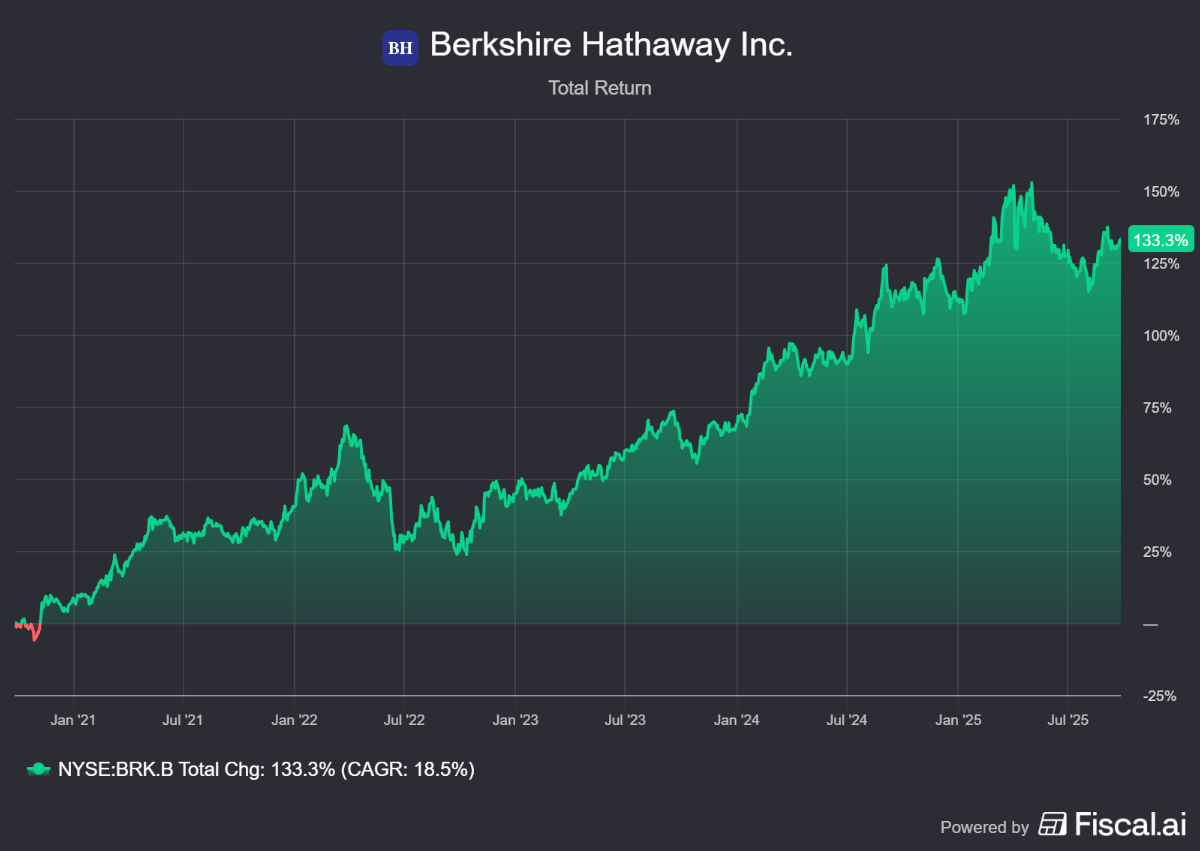
We end with a telling quote from the late Charlie Munger, Warren Buffett's right-hand man at Berkshire Hathaway. Despite the fact that Berkshire is regarded as a financial fortress, its share price has on several occasions fallen by as much as 50%. Against that backdrop, Munger made this statement:
“If you can't handle volatility, you're not fit to invest in equities. You'll get the mediocre result you deserve, compared with those who remain calmer through these market fluctuations.”
Constellation Software ended the trading week on the Toronto exchange at a price of CAD 3,660 per share.
Berkshire Hathaway's strategic shift: from China to Japan
Berkshire Hathaway (New York: BRK-B), the American investment holding company led by Warren Buffett, is carrying out a clear strategic repositioning of its listed portfolio. Recent transactions show a deliberate reduction of risk in China, illustrated by the complete sale of its stake in carmaker BYD, while capital is being reallocated to Japanese trading houses, where it has increased its stake in Mitsui & Co.
Farewell to a success story in China
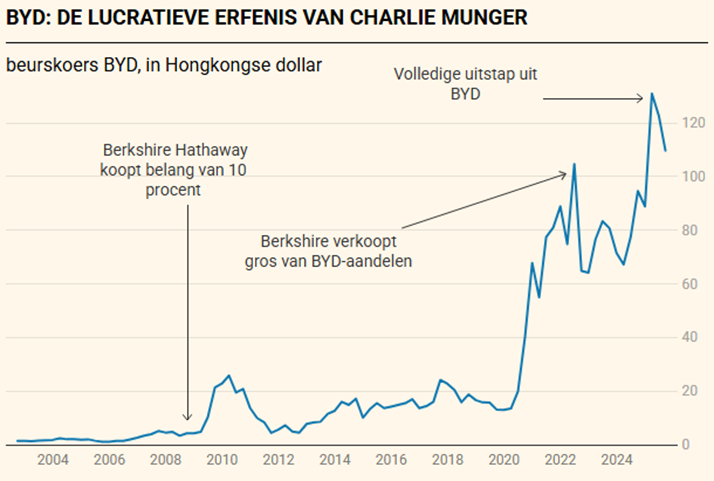
After a period of 17 years, Berkshire Hathaway has divested its entire position in Chinese electric carmaker BYD. The investment, which began in 2008 with an outlay of approximately USD 230 million for a 10% stake, grew into one of the most successful in the company's history. The sale delivers an exceptional return of around 4,000%.
The investment is often attributed to the conviction of the late Charlie Munger, who at the time recognised the potential of founder Wang Chuanfu and his technological lead. However, the exit marks more than simply taking profits; it appears to be a deliberate choice to reduce geographic risk in the portfolio.
Deepening investments in Japan
Where Berkshire is exiting China, capital is being reallocated to Japan. Berkshire has increased its stake in trading house Mitsui & Co. to above 10%, further strengthening its position as a major shareholder. This move follows shortly after a similar increase at peer Mitsubishi and confirms the structural nature of Berkshire's Japan strategy.
This strategy began in 2020 with initial positions of around 5% in the five major Japanese trading houses (Mitsubishi, Mitsui, Itochu, Marubeni and Sumitomo). These "sogo shosha" align closely with Berkshire's philosophy: they are deeply rooted, diversified conglomerates with stable cash flows and an increasing focus on shareholder returns. The systematic increases underscore the confidence of Buffett and his designated successor Greg Abel in the long-term value of these positions.
Positive signals from the largest position
Apart from the strategic shifts, there were positive signals regarding Berkshire's largest equity position, Apple. The recently launched iPhone 17 is seeing stronger than expected demand, prompting Apple to request a production increase of 30-40% from suppliers. Although Berkshire reduced its position last year, it still owns 280 million shares, representing a weighting of around 20% in the equity portfolio.
Berkshire Hathaway's B shares ended the trading week on the New York exchange at a price of USD 500.03 per share.
Sofina's capital increase: a strategic move for more firepower
Belgian holding company Sofina surprised investors this week with the announcement of a substantial capital increase. The company is issuing up to 2.45 million new shares, for a maximum of €545 million. For existing shareholders, this represents dilution of around 7%. The reference shareholder, the Boël family (holding around a 55% stake), has committed to participating in full, giving the transaction a solid foundation.
Strategic rationale behind the capital raise
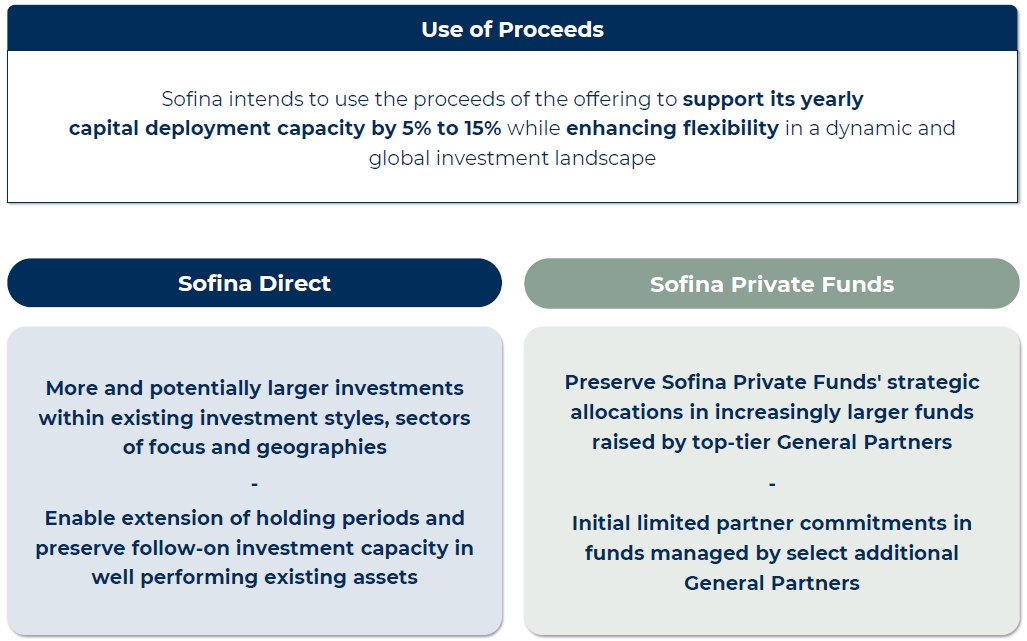
According to CEO Harold Boël, the capital increase is intended to allow the company to "do more of what we are good at, on a larger scale and with greater flexibility". The net proceeds will be used to increase the annual investment pace by 5% to 15%, equivalent to three to five additional transactions per year for the Sofina Direct portfolio.
With the additional resources, the holding company aims to strengthen its permanent capital base in order to accommodate larger investment tickets and have the flexibility to extend the holding period for investments in successful private companies. This last point is an important strategic element, given that the period during which companies remain unlisted is steadily lengthening. It enables Sofina to optimise value creation over a longer horizon.
Striking timing and structure
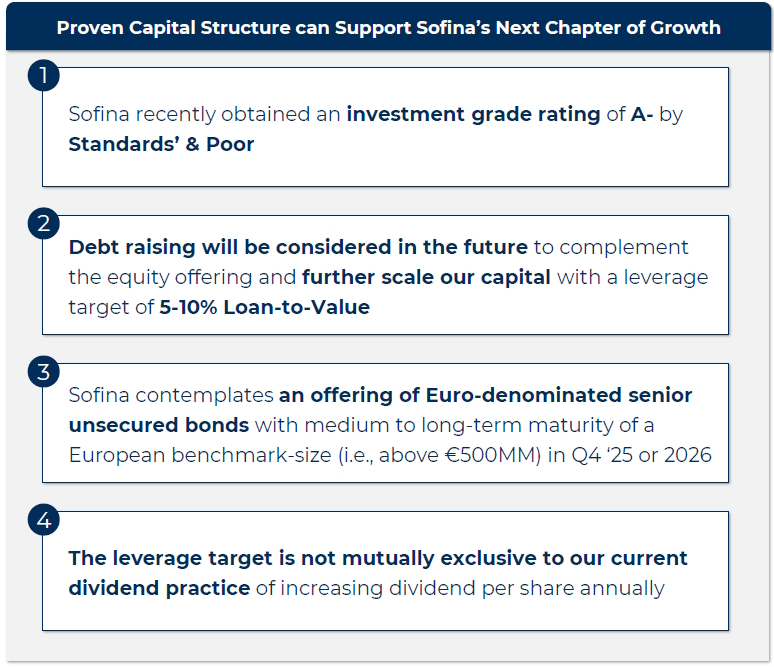
The timing of the capital increase is notable. As at 30 June 2025, Sofina reported net financial debt of just €76 million on a portfolio of almost €10 billion, resulting in a very low loan-to-value ratio of 0.8%. With such a strong balance sheet, the company could have taken on considerably more debt without jeopardising its creditworthiness.
The issue price of €223.00 per share implies a significant discount. This price is 12.1% below the theoretical ex-rights price (TERP) and represents a discount of 24.7% relative to the last reported net asset value (NAV) of €296 per share as at 30 June 2025.
However, this transaction is only the first phase of a broader strategy. Sofina has recently obtained an A- investment grade rating from Standard & Poor's. With this credit rating, the holding company plans to enter the bond market in the fourth quarter of 2025 or in 2026 for an issuance of at least €500 million. The combined proceeds of more than €1 billion will significantly boost Sofina's firepower and are intended to bring the loan-to-value ratio to a target range of 5-10% over time.
Impact on the portfolio and the shareholder
For existing shareholders, the transaction results in dilution in the short term. At the same time, the structure with preferential subscription rights (one new share for every 14 existing shares) gives them the opportunity to subscribe at a price significantly below both the share price and the intrinsic value.
In the long term, this strategic financing positions Sofina to further strengthen its unique market position. As one of the few Belgian players with access to the most prominent international private equity and venture capital funds, Sofina can maintain and build on its key role. The additional resources will be deployed in the five focus sectors (Consumer Goods, Digital Transformation, Education, Healthcare and Sustainable Supply Chains), where the holding company already holds strong positions in companies such as ByteDance, Drylock and Vinted.
For current shareholders, this does mean dilution in the short term, but it also offers the chance to expand their stake at an attractive price. After all, the shares are being offered at a double discount, which almost feels like a consolation prize. Looking ahead, this additional capital offers a favourable outlook for a higher pace of investment and faster growth for Sofina.
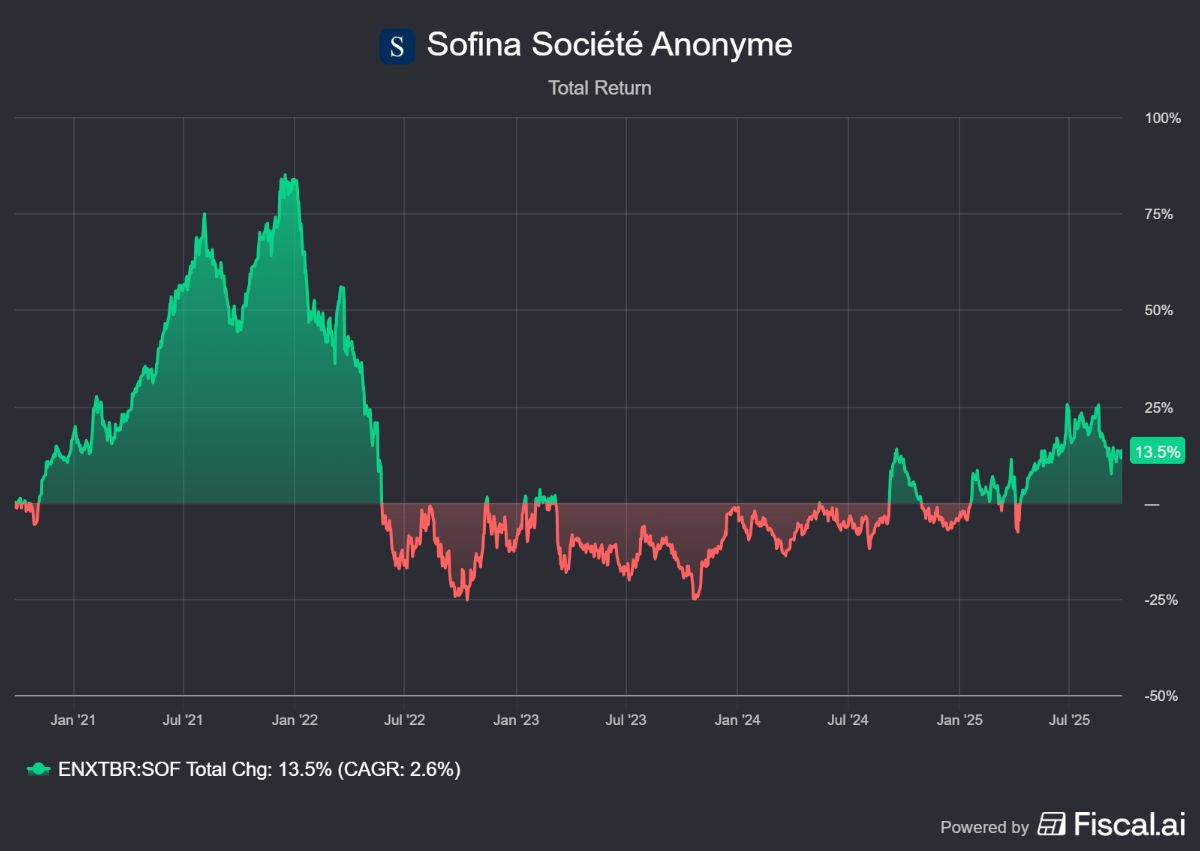
Sofina ended the trading week on the Brussels stock exchange at a price of EUR 254.40 per share.
Receive weekly insights in your inbox
Exclusive analyses and updates on family holding companies and global market developments.
Would you like more information about our services? Please feel free to get in touch.
Get in touch
Disclaimer:
No rights can be derived from this publication. This is a publication by Tresor Capital. Reproduction of this document, or parts of it, by third parties is only permitted after written consent and with reference to the source, Tresor Capital.
This publication has been compiled by Tresor Capital with the greatest possible care. The information is intended in a general sense and is not tailored to your individual situation. The information may therefore explicitly not be regarded as advice, an offer or a proposal to purchase or trade investment products and/or to take up investment services, nor as investment advice. The authors, Tresor Capital and/or its employees may hold positions in the securities discussed, for their own account or for their clients.
You should carefully consider the risks before you start investing. The value of your investments may fluctuate. Past performance offers no guarantee for the future. You may lose (part of) your invested capital. Tresor Capital disclaims any form of liability for any inaccuracies or errors. This information is purely indicative and subject to change.
Read the full disclaimer at tresorcapitalnieuws.nl/disclaimer .
This article was originally written in Dutch and automatically translated into English with the help of AI. In case of any difference, the Dutch original prevails.