Family Holdings #40 – Asseco and Topicus light up the sky in Poland

This week's topics:
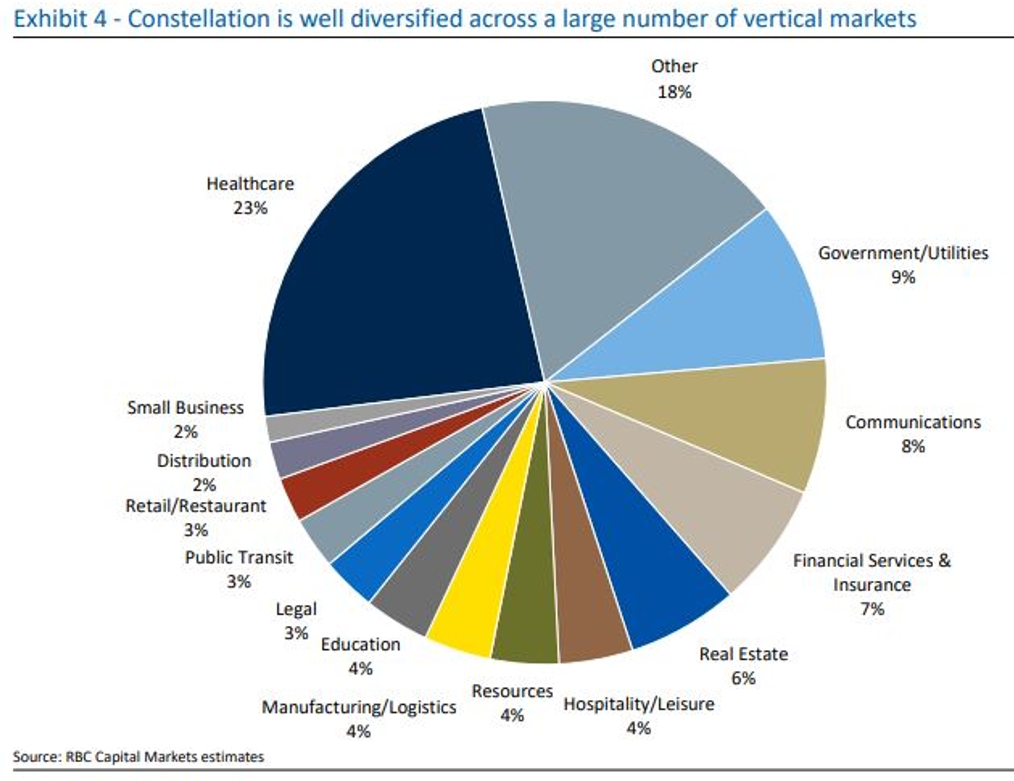
Despite the departure of founder Mark Leonard, Constellation Software under new president Mark Miller is continuing its proven, decentralised acquisition strategy unchanged, with a focus on operational strengthening and efficiency. Confidence in this continuity is strongly underlined by significant insider share purchases and a positive analysis from RBC Capital Markets, which confirm the strength of the business model.
Berkshire Hathaway is acquiring OxyChem from Occidental Petroleum for nearly USD 10 billion, the largest acquisition since 2022, significantly expanding its non-insurance operations. The transaction, led by incoming CEO Greg Abel, allows Occidental to substantially reduce its debt, while Berkshire acquires a quality chemicals company at a very favourable price and further strengthens its position as Occidental's largest shareholder.
KKR is making a record bet of more than USD 20 billion on the European market, strategically focusing on the fundamental building blocks of the economy: energy and digital infrastructure. Alongside large-scale investments in LNG and solar energy, KKR is focusing on making the capital-intensive data centre market more efficient, with the aim of building the most profitable platform, not necessarily the largest.
Following the passing of Laurans Mendelson, the architect who transformed Heico into a USD 40 billion+ aviation giant, his successful strategy based on a decentralised family model is being continued unchanged by his sons and Co-CEOs Eric and Victor Mendelson.
In Brief:
Brookfield Corporation (New York: BN) announced a merger of Brookfield Business Partners LP and Brookfield Business Corporation into a single Canadian company, BBU Inc. This represents a step towards a simpler and more accessible corporate structure. It is intended to deliver a broader investor base, higher liquidity, inclusion in international indices and greater transparency for shareholders. The shares will be listed in both New York and Toronto. The reorganisation is expected to be completed in the first quarter of 2026 and could be a precursor to similar simplifications at other Brookfield divisions, such as the Renewables and Infrastructure arms.
Lifco (Stockholm: LIFCO-B) has taken a majority stake in the Italian company Nobil Bio Ricerche S.r.l., a specialist in customising implant surfaces for dental manufacturers worldwide. The company, based in Portacomaro with 21 employees, generated revenue of approximately €4.1 million in 2024 and will be incorporated into Lifco's Dental division.
Constellation Software (Toronto: CSU) remains just as active on the acquisition front despite recent changes in management. Via its subsidiary Volaris, two new acquisitions were announced this week, bringing the total for the year to 67 deals. These are the Danish company AskCody, a developer of meeting management software integrated with Microsoft Outlook and 365, and the American company Alpine Testing Solutions, which specialises in psychometric testing software, data management and consultancy. An interesting detail is that Volaris is the division that Mark Miller, Constellation's new chief executive, led until recently.
Topicus (Toronto: TOI) has, through its subsidiary Sygnity S.A., entered into a conditional agreement for the acquisition of the hospital information system division (Comarch HIS) from Comarch. These operations will first be spun off into a separate entity and then be fully acquired by Sygnity. Completion of the transaction is expected by the end of 2025, subject to customary approvals.
Prosus (Amsterdam: PRX) has further expanded its position in the Indian transport market by acquiring approximately 9% of Rapido from Swiggy for USD 222 million. This increases Prosus's exposure to the Indian mobility sector, where it is already active through a 25% stake in Swiggy itself. It was also confirmed this week that the acquisition of Just Eat Takeaway (JET) is being formally completed: more than 90% of the shares have now been tendered, meaning completion will take place on 6 October and the company will be delisted from the Amsterdam stock exchange. CEO Fabricio Bloisi called the completion "the starting point of hard work to transform JET into a European tech champion", while JET chief executive Jitse Groen stressed that he was looking forward to working with the new owner to accelerate growth.
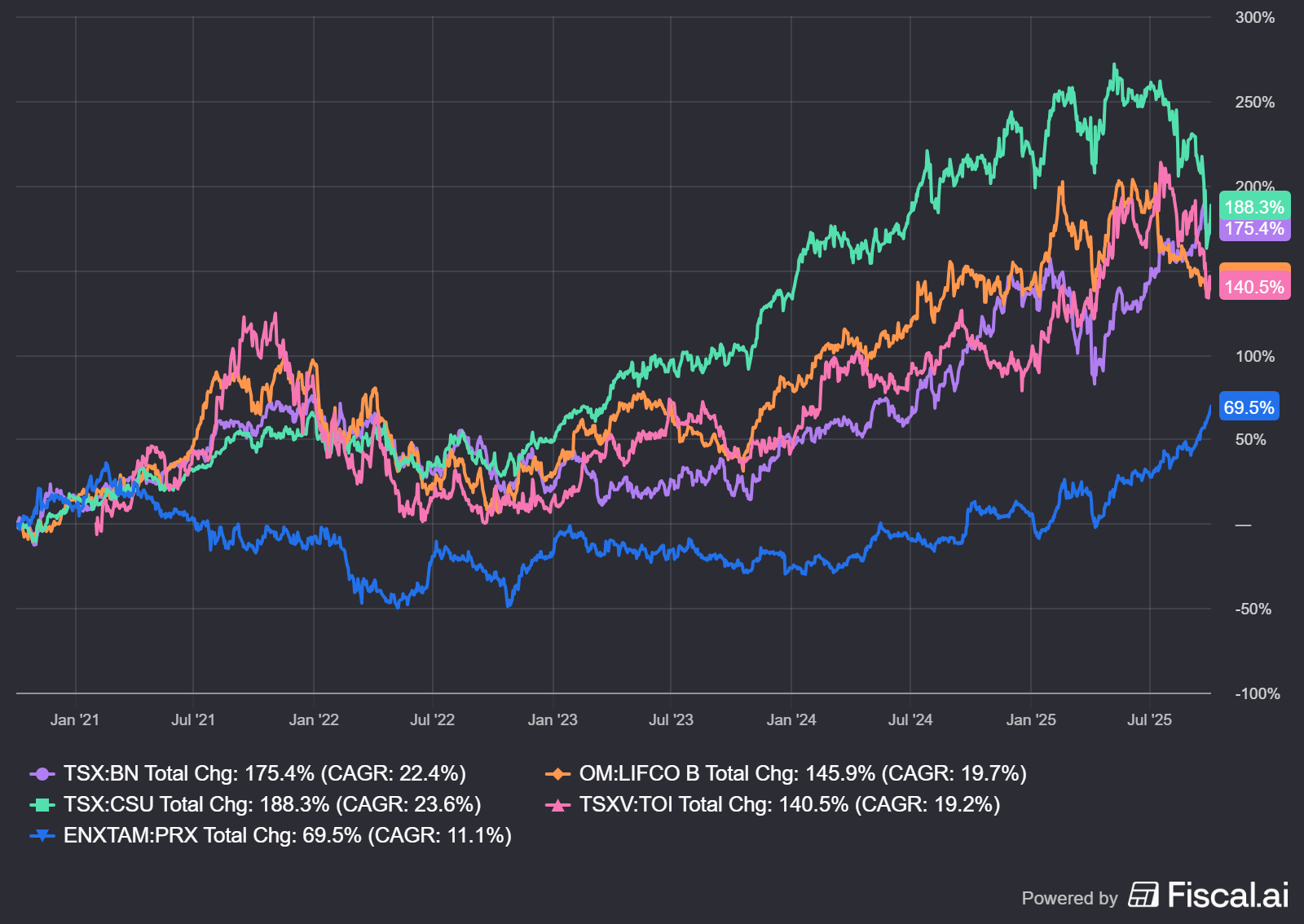
Brookfield, Lifco, Constellation Software, Topicus and Prosus ended the trading week on the New York, Stockholm, Toronto and Amsterdam exchanges at prices of USD 68.71, SEK 328.60, CAD 4,029.53, CAD 147.46 and EUR 61.80 per share, respectively.
Topicus gets green light for investment in Asseco, new era dawns for Polish acquisition machine
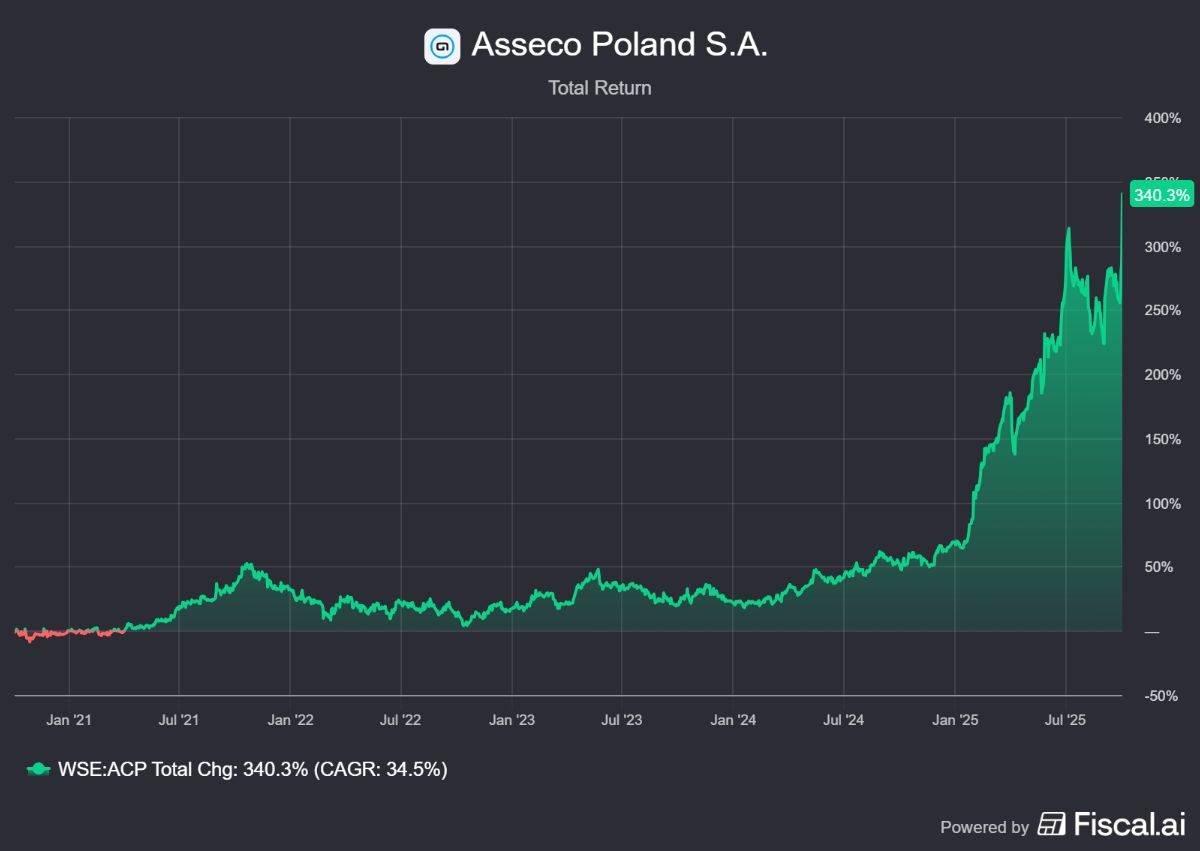
In our newsletter of 16 August 2025, we described our investment in the Polish serial acquirer Asseco Poland (Warsaw: ACP) as a textbook example of a 'bet-on-the-jockey' case. The essence of the investment case, we argued, does not necessarily hinge on current financial performance, but on the enormous latent potential that can be unlocked through the active involvement of a new strategic partner: the investment holding company Topicus.com (Toronto: TOI). With the formal approval of the second share transaction this week, this potential has now become a concrete reality.
The strategic alliance between Asseco and Topicus marks the start of a new chapter, in which the operational expertise and disciplined capital allocation of one of the world's most successful serial acquirers (Constellation Software, the parent company of Topicus) is integrated into the Polish IT giant.
After Topicus already acquired a 9.99% stake earlier this year, it has now taken over a further 12,318,863 of Asseco Poland's own shares. This corresponds to 14.84% of the share capital. As a result, Topicus's total stake rises to 24.84% of Asseco Poland's total share capital, equivalent to 20,618,892 shares.
A new strategic vision
In an open letter to Asseco Poland's shareholders, Topicus outlines a vision that is fully in line with the philosophy we highlighted in our earlier analysis. Topicus positions itself not as an activist, but as a long-term partner.
"Our mandate is simple: to be a patient, rational owner that supports managers who create durable value for customers and shareholders, in continuity with Asseco's long-established culture and values," the letter states.
The focus shifts radically from short-term indicators to the metrics that really matter in the long run. The new guiding principle for all decisions is a prime example of that long-term focus: "We care most about customer outcomes, product vitality, return on invested capital and cash flow generation, not short-term revenue or profit figures."
Implementing the 'Constellation playbook'
In practice, this new focus translates into a commitment to margin expansion, growth in annual recurring revenue (ARR) and extremely disciplined capital allocation. As the letter states: "Every zloty has alternatives: product investments, carefully selected acquisitions that meet strict return requirements, dividends, share buybacks or alignment programmes. We will favour the option that we believe increases long-term value per share."
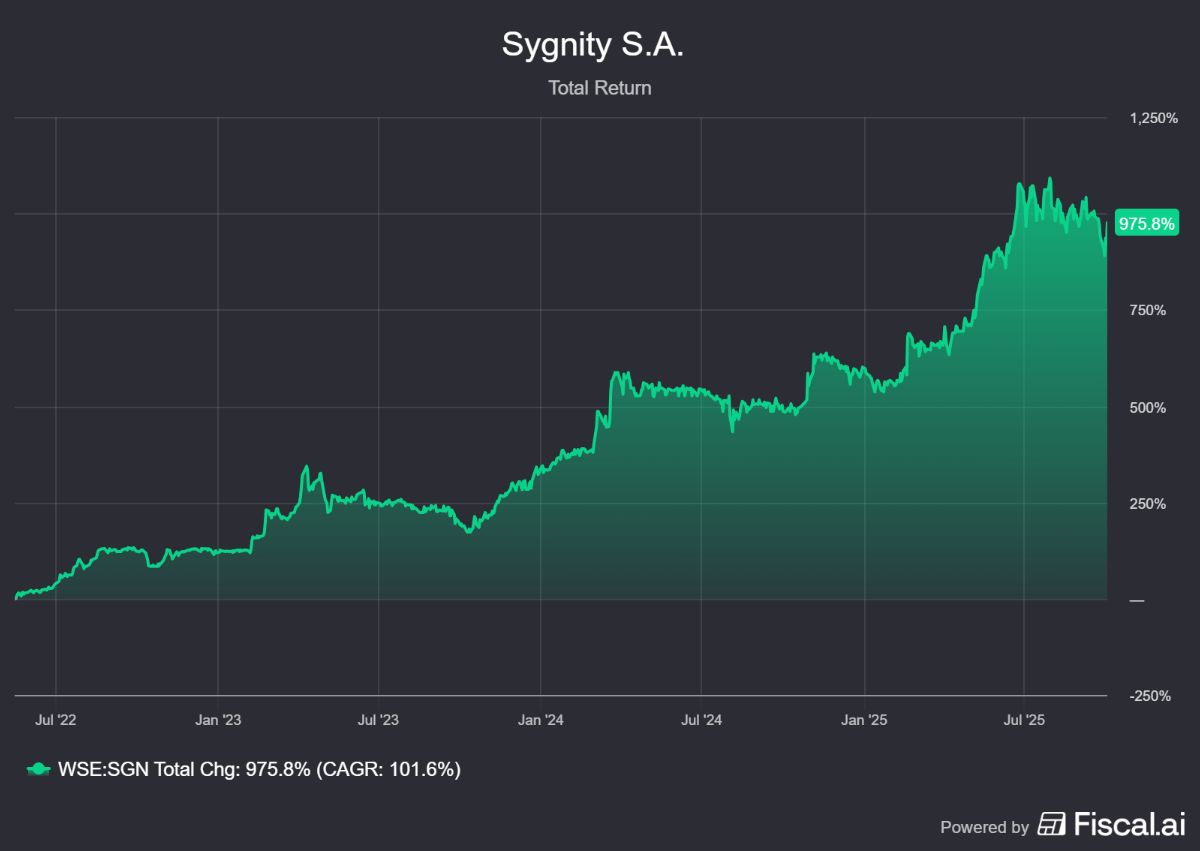
As we already noted in our newsletter, the successful intervention at Poland's Sygnity is a promising precedent. After Topicus acquired a controlling stake there in 2022, the focus shifted to proprietary product solutions, a strict cost-control policy was implemented, and the acquisition machine was switched on. The result was an explosive rise in Sygnity's share price, as shown in the figure below. The expectation is that a similar trajectory at the much larger Asseco could lead to enormous value creation.
Aligning interests
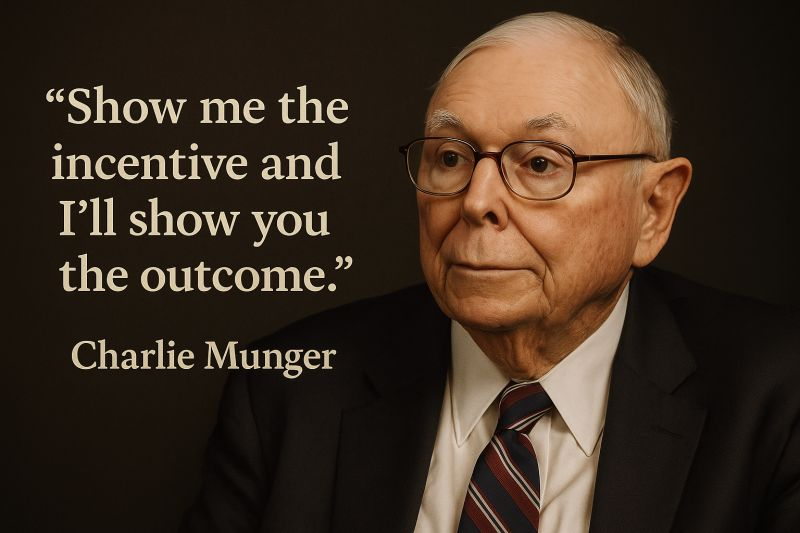
A crucial first step in the new strategy is properly aligning management's interests with those of external shareholders. On this, Topicus writes: "We like to see management share in the upside when things go well for shareholders and share in the pain during difficult times. The mechanisms used in doing so are crucial. We prefer managers who acquire shares at the prevailing market price, typically financed with part of their annual cash bonus and subject to multi-year vesting and holding periods."
To support the succession of founder Adam Góral, Topicus proposes a one-off 'management alignment programme'. "This is not normally how we operate, but the situation is unique: there is a new phase in leadership, the company has grown to a substantial size, and the management team (aside from the founder) holds barely any shares. We therefore believe a one-off, transparent grant of shares is a justified and appropriate step," Topicus's letter explains.
Crucially, no new shares will be issued, so there is no dilution for existing shareholders. The sources for this programme are 3.0% of the shares Asseco itself holds in treasury and 1.5% of shares to be acquired on the stock exchange. Of this total, 3.0% will be granted to Adam Góral, with the remaining 1.5% reserved for a select group of senior key officers.
Operational excellence and financial strength
While the strategic repositioning is taking shape, Asseco Poland continues to deliver rock-solid operational performance. The results for the second quarter of 2025 were excellent, with operating profit growth of 39%, revenue growth of 14% and thirteen acquisitions since the start of the year. This growth was broad-based across all segments, with strong demand from both the public sector (+17%) and financial institutions (+5%). The order book also remains extremely strong, with a value of PLN 13.65 billion (+10% compared with a year ago).
The combination of strong cash flows and the proceeds from recent divestments is enabling Asseco to reward its shareholders significantly. Management has already indicated that the proceeds from the share sale to Topicus (approximately PLN 1.05 billion) will be paid out as a "large" and possibly "record-breaking" dividend. What makes this particularly notable is that Topicus will thereby immediately recoup part of its cash outlay for the acquisition.
In addition, as we described in our earlier analysis, the sale of a majority stake in Sapiens by subsidiary Formula Systems will result in a further, substantial cash inflow. To channel capital back efficiently, the company is even considering introducing a mechanism for interim dividends.

The arrival of Topicus and Constellation has triggered a wave of interest from foreign investors. This has also put the company on Tresor Capital's radar. Where previously only a handful of international investors attended the conference calls, the most recent one drew as many as 30. This increased attention from long-term investors could further benefit the visibility and valuation of the share.
Investors have in any case welcomed the formal approval of the second Topicus share tranche with applause, as evidenced by the share price jump of more than 20% since the formal announcement of the deal earlier this week. However, if we look sideways at both the fundamental performance and the share price trajectory of Sygnity, the real action is only just getting started.
Asseco Poland ended the trading week on the Warsaw stock exchange at a price of PLN 245.40 per share.
Constellation Software continues its proven strategy under Mark Miller
Last week we wrote at length about the departure of Mark Leonard, the founder and president of the Canadian investment holding company Constellation Software (Toronto: CSU). For health reasons, Leonard will no longer be in day-to-day charge, but from his seat on the board of directors he will continue to oversee the company's strategy and philosophy.
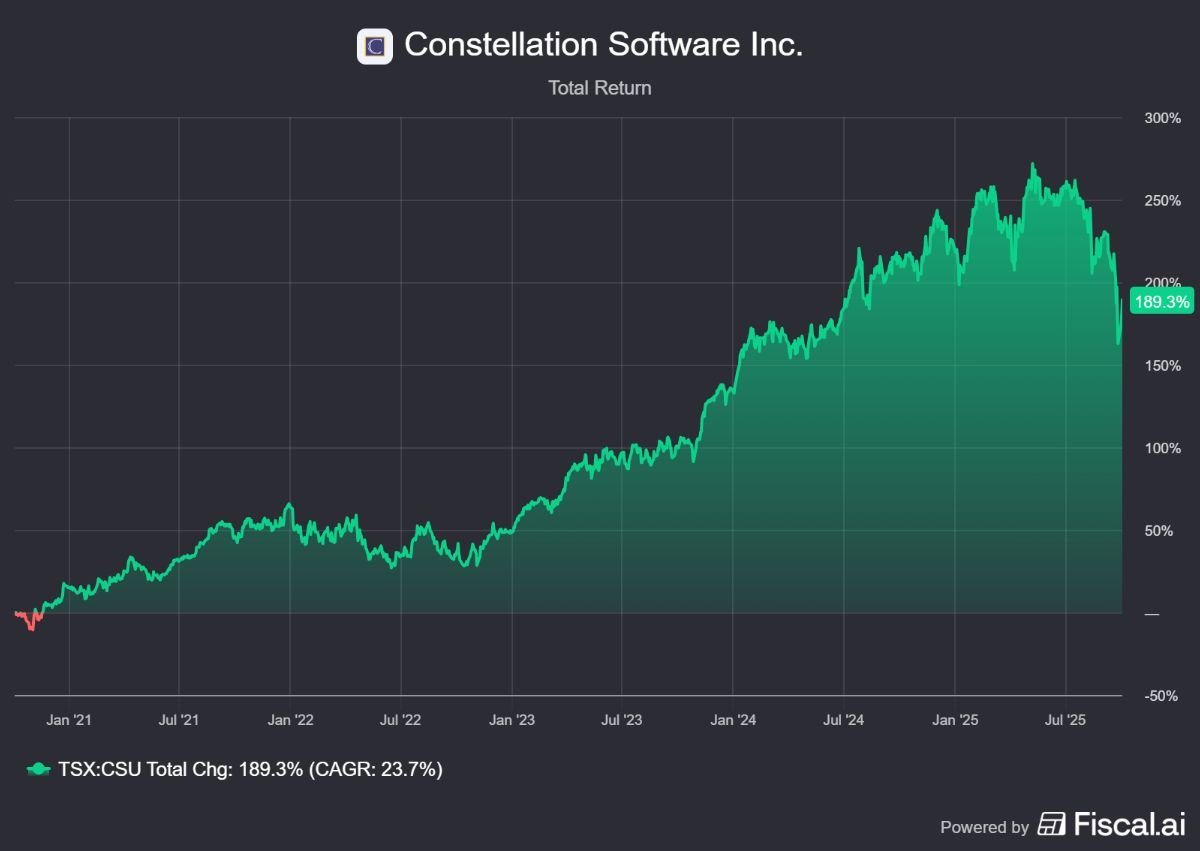
The sudden departure has, understandably, caused the necessary movement in the market. For us, however, this is no cause for concern; rather, it demonstrates the strength of the foundation Leonard has built. The succession by Mark Miller is a logical step that safeguards the company's continuity.
As we wrote last week, the core of Constellation's success is the decentralised structure that has been in operation for thirty years. Mark Miller's experience as an operator and dealmaker guarantees that the strategy will continue to be executed unchanged. Miller, who led the Volaris group for many years and oversaw more than two hundred acquisitions there in the same cultural style, is the ideal person for this role. For us as investors, it is crucial that Miller himself has invested more than USD 700 million of his personal wealth in Constellation and its spin-offs. Skin in the game is one of our key selection criteria, and Miller amply satisfies it.
CFO Jamal Baksh confirmed in a recent interview that in recent years Leonard focused mainly on overarching strategy, such as the potential for investments outside vertical market software (VMS). Day-to-day operational leadership already rested largely with the broader and highly experienced management team. Leonard's vision remains accessible to the company through his role on the board of directors.
Miller's vision: focus on mini-holding companies and efficiency
Under Miller, Constellation's proven approach will be continued: creating value by strengthening companies operationally and investing capital wisely. A clear example of his strategic preference is the recent merger of TUNE and CAKE, two companies active in affiliate marketing software within Constellation's Perseus subsidiary.
Such a merger is precisely the framework that Miller has rolled out more broadly at Volaris. By bringing these entities under joint leadership, a more focused mini-holding company emerges within a specific niche. The concrete benefit for the customer is that the best elements of both companies are combined, resulting in a stronger product offering and more efficient service delivery.
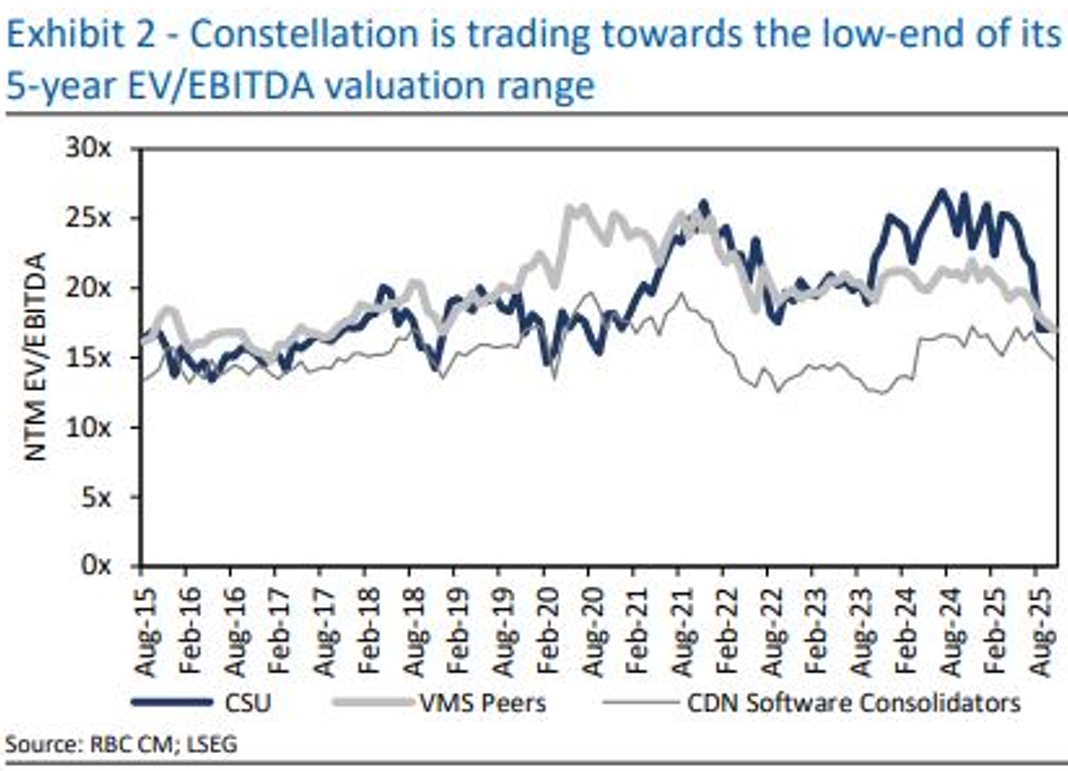
This strategy aligns with an analysis by RBC Capital Markets, written following the conference call with Mark Miller. They indicate that Miller wants to improve M&A coverage by refining the acquisition processes, rather than by lowering the strict return requirements. It is an approach that clearly puts quality above quantity. Furthermore, like Leonard, Miller sees opportunities for future spin-outs, similar to the success of Topicus and Lumine Group. According to management, such a step is only possible if a manager is ready to lead a separate entity, a complex acquisition target is in view, and the business unit in question already has sufficient scale of its own.
Insiders are buying: the ultimate signal of confidence
Confidence in the continuation of the strategy under the new president is strongly underlined by the behaviour of the insiders themselves. The purchase of 275 shares by Mark Miller last week was followed by other insiders. For instance, insider Brian Beattie bought 130 shares this week at a price of CAD 3,798.96. This brings the total of recent insider purchases to over CAD 2.3 million, an unambiguous signal of confidence.
Peter Lynch, one of the most successful investors of all time, put it aptly: "Insiders sell their shares for many reasons, but they buy them for only one: they think the price will rise." After all, there can be countless reasons to sell, but people only buy when they believe the share is undervalued.
RBC's analysis confirms the strategy
The analysts at RBC Capital Markets share our optimism. They maintain their Outperform rating and have a price target of CAD 6,000. Their analysis highlights the strength of the scalable business model and the deep "culture of capitalists" that Miller will continue to build. RBC believes that the decentralised M&A strategy, in which the business units themselves initiate acquisitions, is a proven success. Moreover, they do not see AI as a threat, but rather as a factor that could actually expand the market for Constellation's software companies.
The fundamentals of Constellation Software remain strong. The transition to a new president has been carefully prepared and the strategy is being continued by an extremely capable leader. The significant purchases by insiders underscore management's confidence in the company's future.
Constellation Software ended the trading week on the Toronto stock exchange at a price of CAD 4,029.53 per share.
Major deal for Berkshire Hathaway
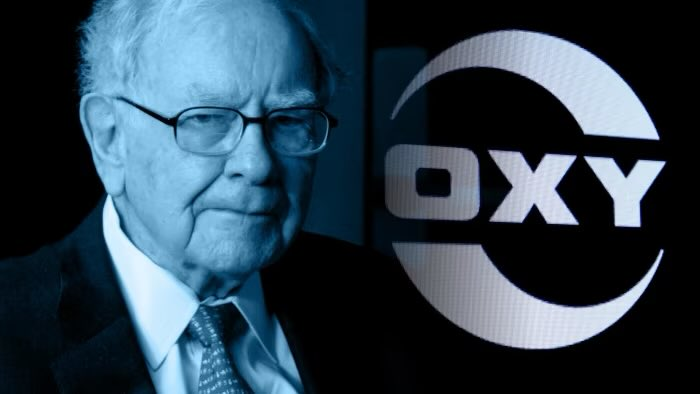
The American investment holding company Berkshire Hathaway (New York: BRK-B) of stock market guru Warren Buffett made its largest acquisition since 2022 this week. For just under USD 10 billion, Berkshire is buying OxyChem, the chemicals division of oil company Occidental Petroleum (New York: OXY).
A strategic transaction for both parties
The acquisition adds a substantial non-insurance activity to Berkshire Hathaway's extensive portfolio. Greg Abel, who will formally take over the reins from Buffett in two months, stated: "Berkshire is acquiring a robust portfolio of operating assets, supported by a highly skilled team. We look forward to welcoming OxyChem as an operating subsidiary within Berkshire."
For Occidental Petroleum, the sale is a strategic move to significantly strengthen its financial position. "This transaction strengthens our financial position and catalyses a significant opportunity we have built over the past decade in our oil and gas operations," said Vicki Hollub, CEO of Occidental. "Under Occidental, OxyChem has grown into a well-run, safely operating business, and we are confident that the business and its employees will continue to thrive under Berkshire Hathaway's ownership."
OxyChem is a global producer of basic chemicals used in, among other things, water purification, pharmaceuticals and paper production. In the twelve months prior to 30 June 2025, these operations generated revenue of USD 5 billion.
The impact on Occidental's balance sheet
Occidental plans to use the proceeds from the transaction to strengthen its balance sheet, a goal that was set following the acquisition of CrownRock in December 2023. Of the transaction proceeds, USD 6.5 billion will be used immediately to repay debt, with the aim of bringing total debt below USD 15 billion. This is expected to result in annual interest savings of more than USD 350 million.
A subsidiary of Occidental will retain OxyChem's historical environmental liabilities. These will continue to be managed by Glenn Springs Holdings Inc. As a result, Berkshire remains shielded from all liabilities relating to the historical operations of the chemicals company.
A new chemicals company for Berkshire
The acquisition of OxyChem is Berkshire's second major investment in the chemicals sector, following the acquisition of speciality chemicals company Lubrizol in 2011 for almost USD 10 billion, including debt. Although the transaction, valued at USD 9.7 billion, is significant, it makes only a small dent in the enormous cash position of Buffett's investment holding company, which stood at more than USD 340 billion at the end of June.
The price Berkshire is paying is also very interesting. Having previously come to the company's aid in completing the Anadarko acquisition, when Berkshire managed to secure the preferred shares so characteristic of Buffett, complete with free share options, on very attractive terms, the investment holding company now appears to be lending a helping hand once again.
The fact that Occidental needs to reduce its debt position offers Berkshire a great opportunity, as we can see from the acquisition multiple. Oxychem's competitors trade at 8-10x operating profit, while Berkshire is paying around 8x operating profit. A financially healthier Occidental is also in Berkshire's own interest, as it owns around 27% of the oil company's shares, worth approximately USD 11 billion.
The fact that this deal is being financed with cash, rather than through the conversion of the preferred shares, is also an important indication that Berkshire has struck a very good deal here. Berkshire thus retains the USD 10 billion in preferred shares, which yield an 8% return.
Our conclusion is that this is a good deal for both parties. Although this deal takes Occidental out of the danger zone in terms of debt and interest payments, it is primarily Berkshire that manages to reel in the family silver at a very reasonable price. Despite the changing of the guard, this is a typical Berkshire Hathaway deal. In other words: business as usual.
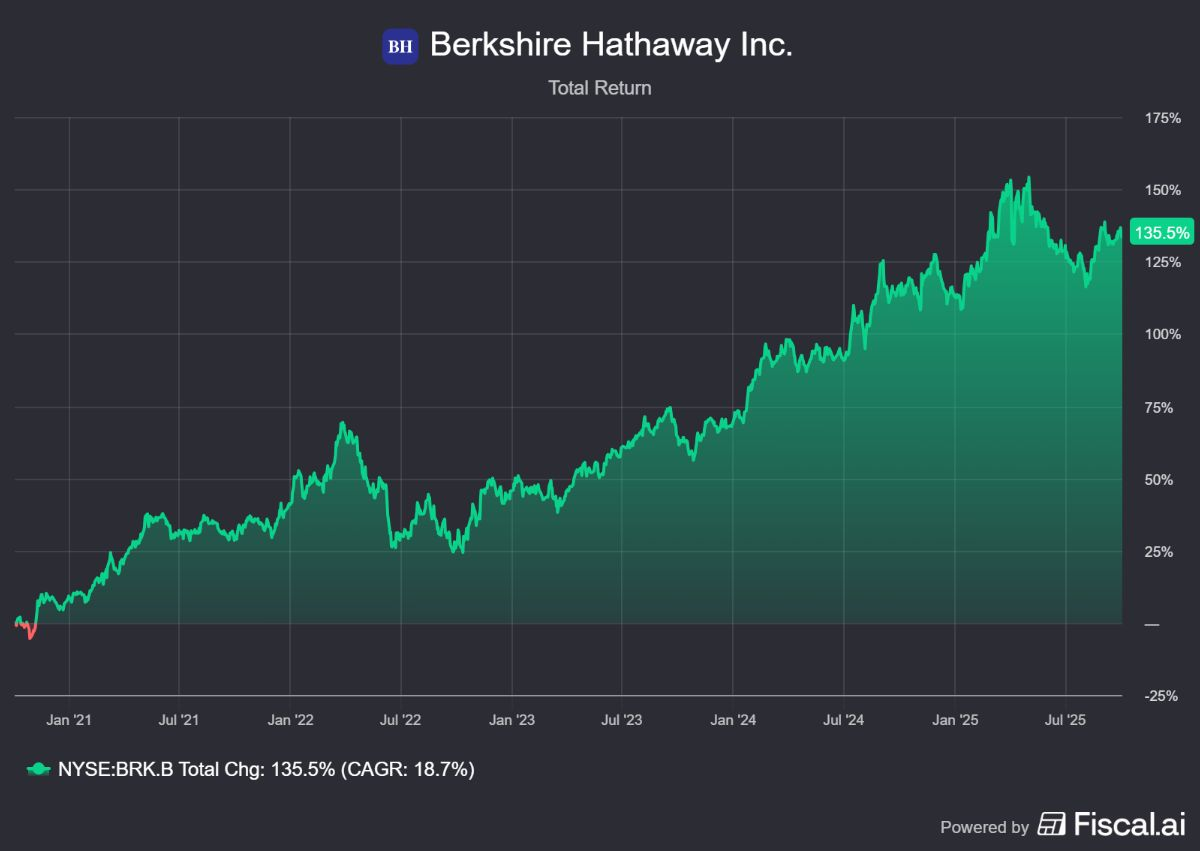
Berkshire Hathaway's B shares ended the trading week on the New York stock exchange at a price of USD 500.17 per share.
KKR invests billions in the backbone of the economy
The American investment holding company KKR (New York: KKR), whose founders and namesakes George Roberts and Henry Kravis are the largest shareholders, is placing heavy bets on Europe this year.
According to a report by The Financial Times, the company has already committed a record amount of more than USD 20 billion to the continent, spread across private equity, infrastructure, credit and real estate. These figures comprise solely KKR's own capital and that of its investment vehicles, excluding the external financing used for acquisitions. More than USD 10 billion of this amount comes from the company's buyout arm.
Philipp Freise, head of KKR's European private equity arm, emphasised at the IPEM private capital conference in Paris that Europe finds itself at a "pivotal moment". He views the current challenges, such as low productivity growth and an ageing society, as a "wake-up call" that is leading to progress and new investment opportunities. According to Freise, the fact that there has been structural underinvestment in digital infrastructure, the energy transition and defence creates an environment in which private capital, working alongside governments and entrepreneurs, can play a key role.

Strategic focus on energy and data
KKR's investment strategy is not confined to a geographic focus; the investment holding company directs its capital towards the fundamental building blocks of the modern economy: energy and data. This is evident from a series of recent, large-scale transactions.
KKR reached an agreement with Sempra for the acquisition of a 45% stake in Sempra Infrastructure Partners for USD 10 billion. Through this transaction, a KKR-led consortium becomes the largest shareholder with a 65% stake. The deal is directly linked to the further development of the Port Arthur LNG Phase 2 project, an initiative with an estimated capital expenditure of USD 12 billion for the construction of two new liquefied natural gas (LNG) facilities.
At the same time, KKR is stepping to the forefront of the energy transition. An insurance fund managed by KKR has acquired a 50% stake in TotalEnergies' North American solar portfolio. This portfolio, with a total value of USD 1.25 billion and a capacity of 1.4 gigawatts, will be jointly managed following the transaction, with TotalEnergies retaining operational control.
Efficiency in the data centre market
Alongside energy, digital infrastructure is a core pillar of KKR's strategy. According to the company, the current AI-driven rush on data centres is leading to major inefficiency and capital waste. In an interview with The Infrastructure Investor, Waldemar Szlezak, partner and global head of digital infrastructure at KKR, said that there are a lot of "stranded, inefficient dollars" in the data centre market.
KKR's approach is to optimise the entire chain. The company wants to "re-evaluate the whole ecosystem, from molecule to the rack and beyond." The recent appointment of Adam Selipsky, former CEO of Amazon Web Services, as a strategic adviser underscores this ambition.
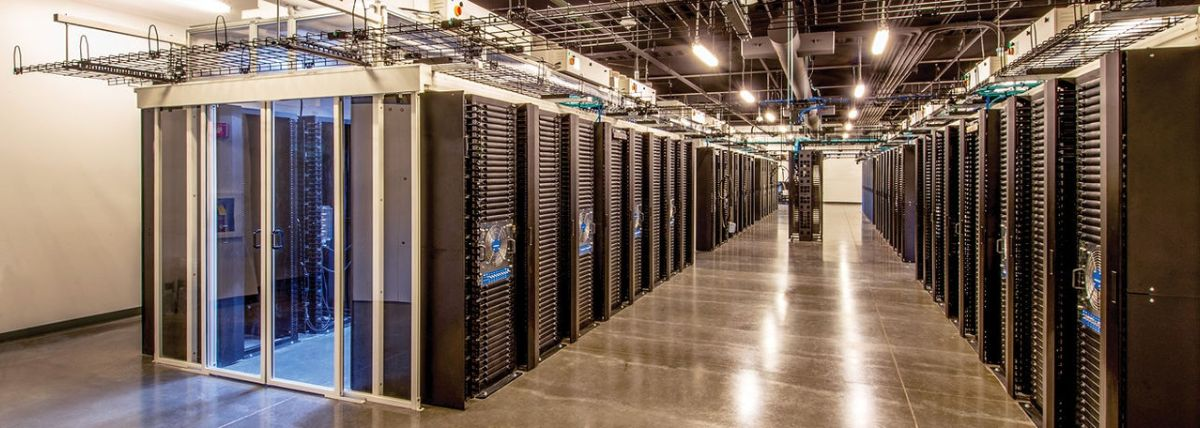
The investment holding company points to the enormous cost differences in building comparable AI data centres. Szlezak noted differences per megawatt that can range from USD 12 million to USD 18 million, a gap that can amount to as much as 50%. "Nobody knows whether USD 12 million is the right number or USD 18 million, but through efficiency you can get closer to the USD 12 million," Szlezak said.
While the market is now focused on speed, KKR is focused on lowering these costs. It does this by integrating power supply more intelligently and by adapting its construction strategy to local market conditions, such as building vertically in Europe, where land is expensive. With investments in platforms such as CyrusOne in the United States, GTR in the United Kingdom and Nxera in Singapore, KKR is positioning itself to lead this efficiency drive globally.
CyrusOne is a good example of KKR's philosophy. It is the investment holding company's most prominent data centre platform, which it took private in 2021 for USD 15 billion. The investment has been extremely successful. Raj Agrawal, KKR's head of real assets, said that CyrusOne's growth has even exceeded the most optimistic scenarios.
Despite the fact that the platform's growth is exceeding expectations, KKR's aim is not to build the largest company, but the most profitable one. Through its focus on value creation, KKR is positioning itself to eventually sell its investments for maximum profit, thereby generating a high return for its investors. Given the high quality of the company, its customers and its locations, the options for an eventual sale or IPO will, according to KKR, be "plentiful."
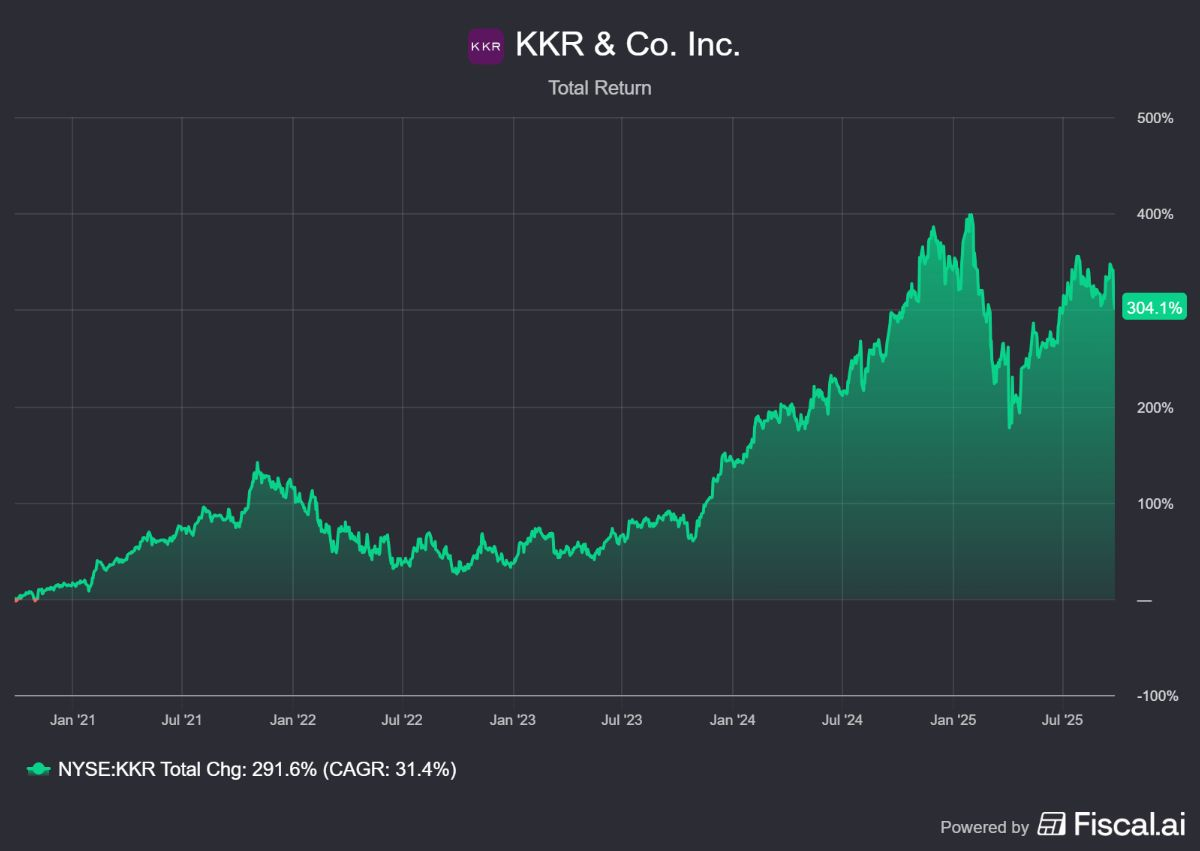
KKR ended the trading week on the New York stock exchange at a price of USD 127.50 per share.
In memoriam: Laurans Mendelson, the architect of Heico
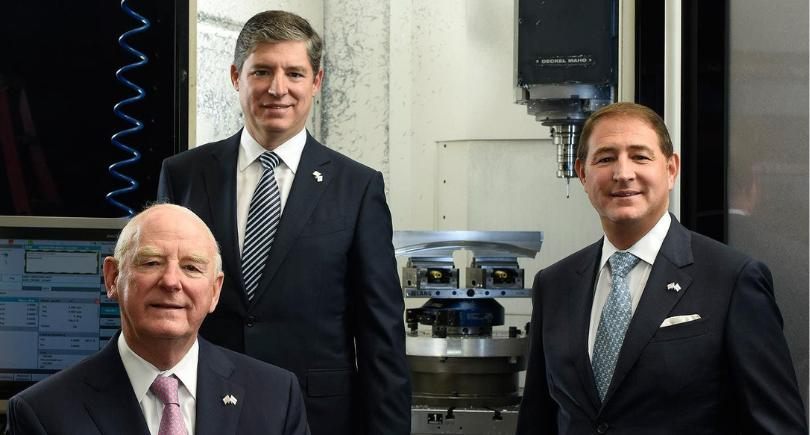
Laurans A. Mendelson, the Executive Chairman and the man who shaped the American investment holding company Heico (New York: HEI.A) into what it is today, passed away this week at the age of 87. He was the visionary leader who transformed Heico from a small, struggling business into today's aerospace giant.
Succession had been prepared for years. His sons, Eric and Victor Mendelson, have been appointed Co-Chairmen of the board of directors and remain in place as Co-CEOs. The company has confirmed that its strategy and day-to-day operations will remain unchanged, further underscoring the family's stability and long-term vision.
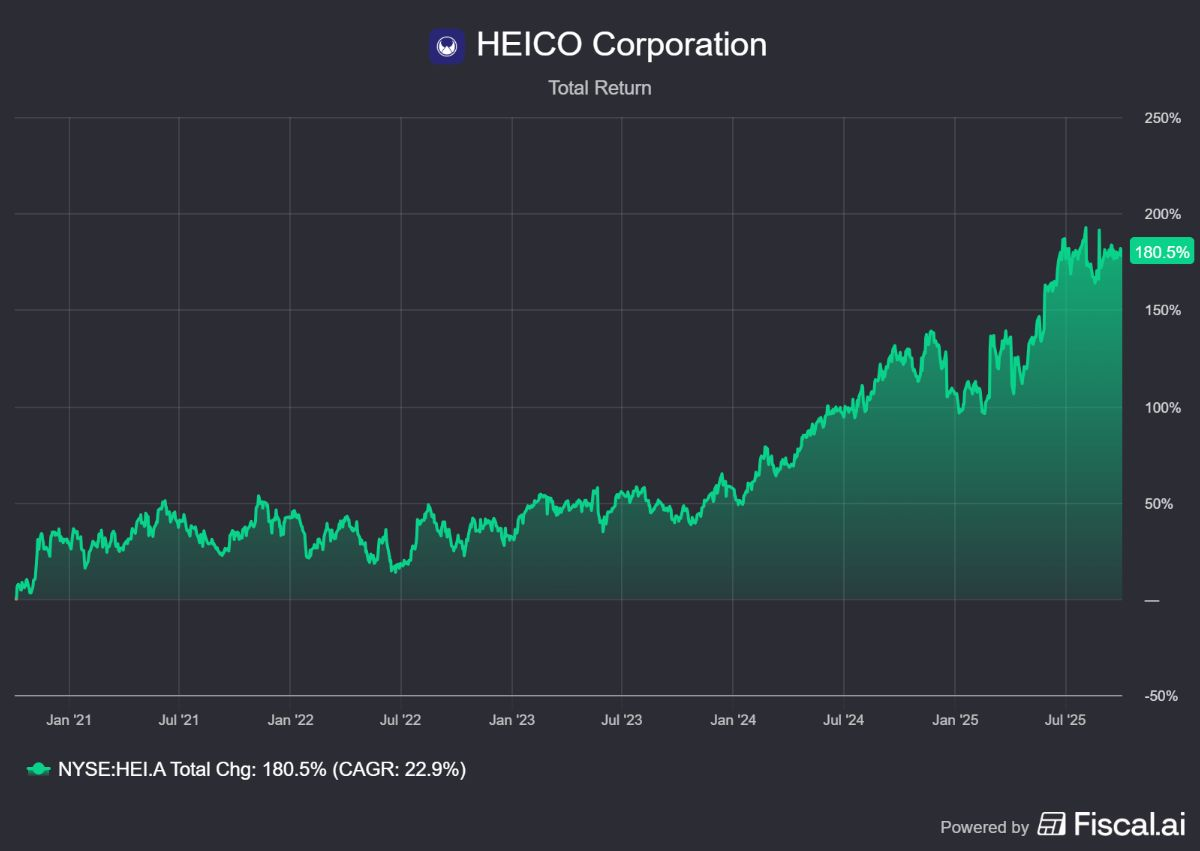
The legacy Mendelson leaves behind is unprecedented. In 1990, he and his sons took over leadership of a company with revenue and a market value of just USD 26 million. Under his leadership, Heico grew into a giant with a market capitalisation of more than USD 40 billion and revenue of nearly USD 4.5 billion. The value creation is phenomenal: an investment of USD 100,000 in 1990 was recently worth more than USD 130 million. That amounts to a compound annual return of nearly 23% over 35 years.
As we already wrote in our recent deep dive on Heico, it is precisely the combination of the decentralised model, the rock-solid culture and the family's long-term perspective that makes Heico so unique. Laurans Mendelson was the architect of this successful formula. He built a company for the long term, focused on technical perfection and lasting customer relationships.
For us at Tresor Capital, Laurans Mendelson was the textbook example of the type of entrepreneur we look for: a business builder who deploys capital patiently and with discipline. His sons are steeped in the same philosophy. The culture and strategy that have made Heico such a unique compounder therefore remain firmly anchored for the future.
Heico ended the trading week on the New York stock exchange at a price of USD 252.50 per A-share.
Receive weekly insights in your inbox
Exclusive analyses and updates on family holding companies and global market developments.
Would you like more information about our services? Please feel free to get in touch.
Get in touch
Disclaimer:
No rights can be derived from this publication. This is a publication of Tresor Capital. Reproduction of this document, or parts thereof, by third parties is only permitted after written consent and with reference to the source, Tresor Capital.
This publication has been compiled by Tresor Capital with the greatest possible care. The information is intended in a general sense and is not tailored to your individual situation. The information must therefore explicitly not be regarded as advice, an offer or a proposal to purchase or trade investment products and/or to use investment services, nor as investment advice. The authors, Tresor Capital and/or its employees may hold positions in the securities discussed, for their own account or on behalf of their clients.
You should carefully consider the risks before you start investing. The value of your investments may fluctuate. Past performance is no guarantee of future results. You may lose (part of) your invested capital. Tresor Capital disclaims all liability for any inaccuracies or errors. This information is purely indicative and subject to change.
Read the full disclaimer at tresorcapitalnieuws.nl/disclaimer .
This article was originally written in Dutch and automatically translated into English with the help of AI. In case of any difference, the Dutch original prevails.