
Family Holdings #46 - Insider purchases point to undervaluation of family holding companies



This week's topics:
Constellation Software and Topicus reported strong quarterly results with substantial revenue and cash flow growth, and continue to make acquisitions at a rapid pace. Despite these operational successes, investors remain cautious due to concerns about the impact of AI on niche software companies. However, insider purchases at Constellation, including from the new CEO, signal internal confidence in the low valuation and the company's future.
KKR reported a record quarter with $1.0 billion in fee-related earnings and $43 billion in inflows, largely thanks to the synergy between insurance subsidiary Global Atlantic and private credit. Although a rare $350 million clawback from an old Asia fund briefly dampened sentiment, the focus remains on the structural growth of the insurance arm.
In Brief:
Investor AB (Stockholm: INVE.B) reports that Patricia Industries' subsidiary Laborie is acquiring the US-based JADA System for USD 440 million. With a total potential value of USD 465 million, this is one of the largest add-on acquisitions within Patricia Industries in recent years. JADA generates annual revenue of USD 60–67 million, making it a meaningful expansion for Laborie. The deal is being financed with additional debt and is expected to close in Q1 2026.
Lifco (Stockholm: LIFCO-B) reports that CEO Per Waldemarson has bought 15,000 shares worth SEK 5.2 million. The purchase follows two weeks after Dental division EVP Martin Roland Linder also bought SEK 2.1 million worth of Lifco shares. A strong signal from the top of the company.
Prosus (Amsterdam: PRX) reports that iFood is acquiring the Brazilian company Advolve, which specialises in AI technology for the real-time creation and optimisation of advertising content. Advolve's technology will be integrated into iFood's Ads division, which has been active since 2021 and is now used by more than 230 companies. Prosus Ventures had already been a shareholder since early 2025. Financial details of the transaction have not been disclosed.
Constellation Software's (Toronto: CSU) Harris division is acquiring the French company Eloquant, a SaaS provider of AI-driven customer contact and CX solutions. Eloquant, based in Grenoble and Paris, serves more than 260 clients across sectors such as insurance, banking, energy and telecom, and processes over 450 million customer interactions annually.
HEICO (New York: HEI.A) is acquiring Axillon Fuel Containment, a manufacturer of fuel cells for military and commercial aviation as well as various military vehicles. Axillon is known for its long history in crash- and safety-focused fuel systems. The company, with around 530 employees and a large production and engineering facility in Georgia, will be placed under HEICO's Electronic Technologies Group. HEICO expects the acquisition to be earnings-accretive within a year.
Sofina (Brussels: SOF) saw two of its Indian holdings go public this week. Pine Labs made a strong debut: the fintech company opened above its issue price and closed 14% higher, valuing it at roughly EUR 2.75 billion. The IPO was 2.5× oversubscribed, driven mainly by institutional demand. According to its half-year report, Sofina holds 1.70% of the shares. Lenskart, a fast-growing eyewear and lens retailer with more than 2,000 stores across Asia, also listed in Mumbai this week. The IPO raised INR 72.8 billion (approximately EUR 707 million) and was 28× oversubscribed. Sofina has been a minority shareholder since 2019, although its stake has gradually been reduced since then.
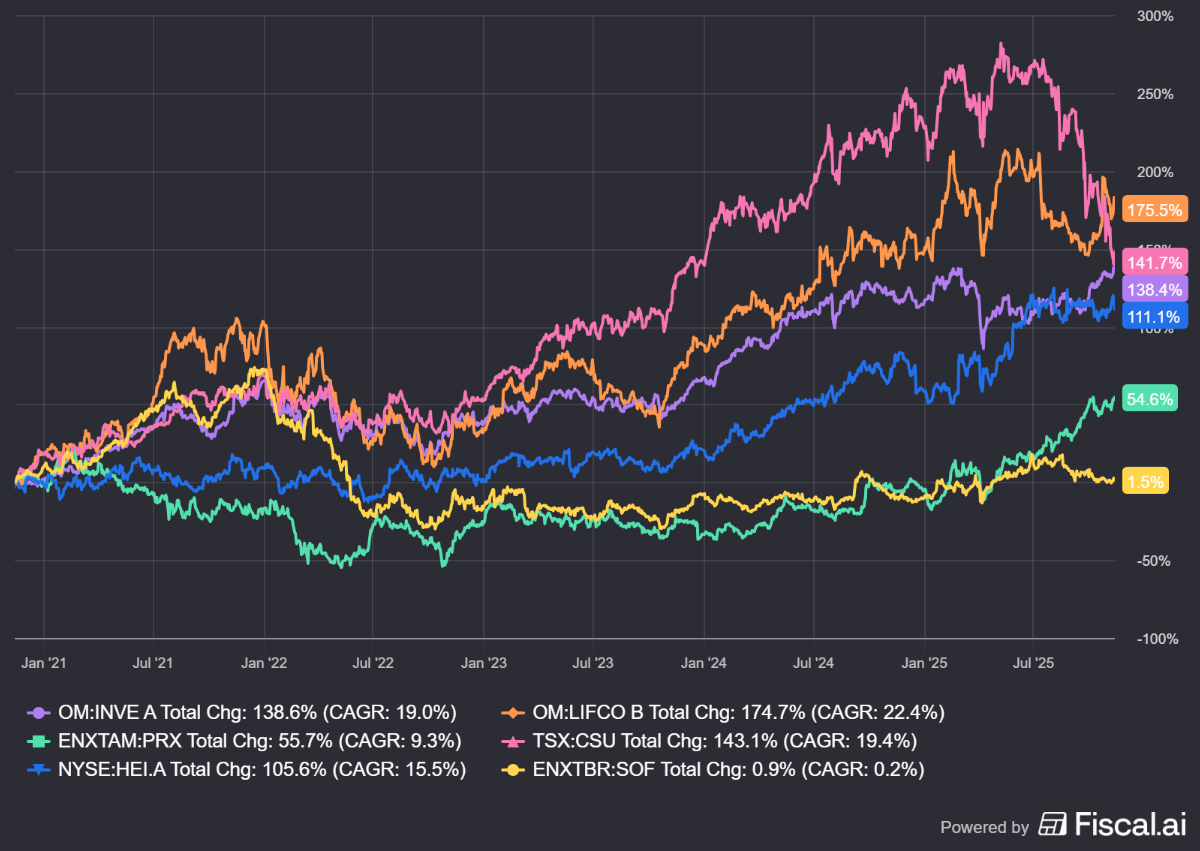
Investor AB, Lifco, Prosus, Constellation Software, HEICO and Sofina are currently trading on the Stockholm, Amsterdam, Toronto, New York and Brussels exchanges at prices of SEK 319.10, SEK 353.40, EUR 60.74, CAD 3,341.65, USD 246.72 and EUR 241 per share, respectively.
Strong 3i Group under pressure from weak France
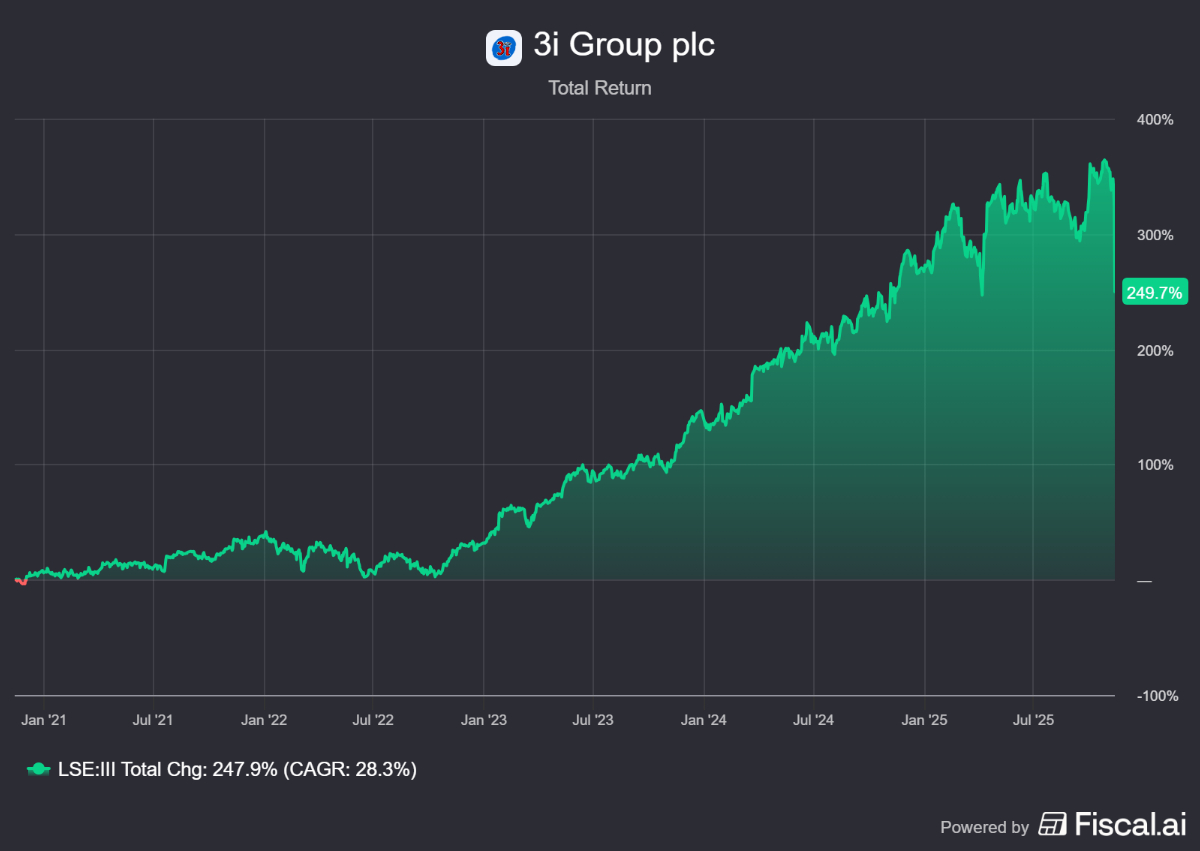
3i Group (London: III) published its half-year results this week for the period up to and including September. The British investment holding company had already prepared investors for weakening consumer spending in Germany and France during the Capital Markets Seminar in September. That message resurfaces in the half-year report. In terms of substance, the results were fully in line with our expectations, but the outlook sketched by management pushed the share price down sharply.In our view, this is a clear overreaction, a pattern we are seeing more often in the current fragile stock market climate.
Broad-based profit growth across the group
3i reports its company-calculated net asset value (NAV) every quarter. Since the end of June it has risen by 5%, since the end of March by 12%, and on an annual basis by as much as 26%. That is an exceptionally strong development, especially in the current macroeconomic climate. The main driver behind this value creation remains the private equity portfolio, which achieved a gross investment return of 14% in the first half of the financial year.
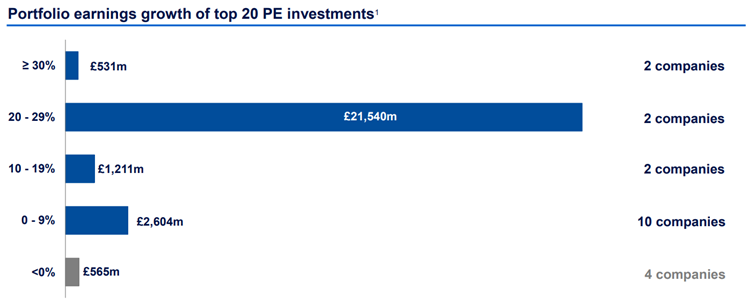
The long-term holdings Action and Royal Sanders contributed significantly to this, but broad-based profit growth was also visible elsewhere in the portfolio: no less than 98% of the twenty largest investments recorded an increase in profit over the past twelve months. Around 30% of these companies posted profit growth of 10% or more, once again highlighting the quality and diversification of the portfolio.
On the realisation side too, 3i again delivered proof of successful value creation. The previously announced sale of the IT services platform MAIT was completed at an IRR of 28%, while the earlier exit of MPM delivered a multiple of as much as 3.2x. Both deals comfortably exceeded the internal target of at least 2x, underscoring that 3i is not only building value within the portfolio but is also able to actually cash it in, even in a challenging transaction environment.
Action as the heart of the portfolio
If we zoom in on the group's centre of gravity, Action, which accounts for around 80% of 3i's total portfolio ratio, we see a company that continues to excel structurally despite temporary headwinds. Our view on Action is that it functions as a robust compounder: a company that creates value through a combination of mid- to high-single-digit like-for-like (LFL) growth and an exceptionally consistent pace of expansion. The model bears strong similarities to that of serial acquirers, combining organic growth within the existing base with scaling up through continuous expansion.
Action once again delivered figures in line with these expectations:
- In March 2025, management gave guidance of 6.1% LFL growth for the calendar year, the organic growth of existing stores. The realisation up to the end of September came in at 6.3%.
- Action opened 221 stores this year already and added another 35 outlets after the quarter. The total therefore stands at 255 stores year-to-date, prompting management to raise its ambition from 370 to 380 new stores this year. Converted, that amounts to more than one new store per day. Since the start of 2021, Action has thereby opened almost 1,600 stores.
The share price decline that followed the half-year results was therefore not the result of these solid operational performances, but mainly of the information management shared about October and the expectations for the remainder of the year.
France: the brake on the growth engine
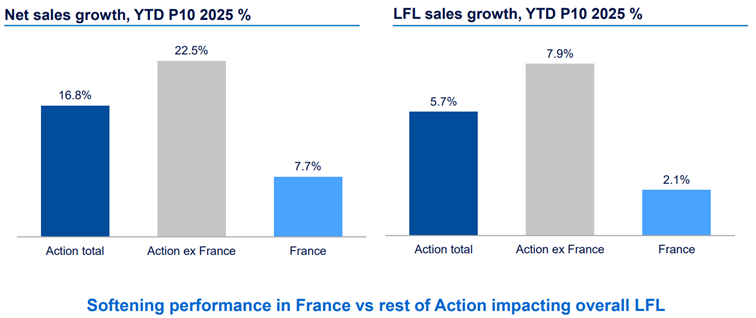
France, which accounts for roughly a third of Action's total revenue, currently represents the biggest source of headwinds. The combination of political unrest, a structurally weak economy, high debt and falling consumer confidence is putting pressure on sales momentum within the country. Where Action achieved impressive revenue growth of 22.5% outside France, France itself managed only 7.7%. In October the pressure became even more apparent: like-for-like revenue growth in France turned slightly negative, bringing the year-to-date figure to a meagre 2.1%.
According to management, the fact that French LFL growth is still positive year-to-date is in itself an achievement. Competitors in the French discount sector are faring considerably worse, management noted. CEO Simon Borrows warns that the weakness in France is likely to persist in the coming quarter and that total LFL growth for 2025 could as a result fall short of the 6.1% guidance. That outlook appears to be the main cause of the recent selling pressure.
Conclusion
Despite the temporarily weaker figures in France, 3i remains notably optimistic about the outlook for Action. We see this not only in their commentary, but also in their concrete decisions. In October, Action deliberately took on extra debt to finance future growth and to buy back shares from existing shareholders. 3i received £944 million in the process and immediately decided to reinvest £755 million of this to increase its stake by a further 2.2%, to 62.3%.
This confidence is further underlined by CEO Simon Borrows, who personally purchased 30,000 additional 3i shares, an investment of more than £1 million. A powerful and shrewd signal that, in his view, the sharp share price reaction is out of proportion to the underlying performance.
And that is precisely how we see it too. Of course, it is not insignificant that a third of revenue, currently generated in France, is under pressure, and that this may persist for some time. But the market seems to be completely overlooking the fact that the remaining two-thirds, outside France, are performing very strongly, with revenue and LFL growth of more than 22% and 7% respectively. Expansion is running at full speed, the company is opening more stores than planned and maintaining its dominant position with remarkably strong customer loyalty and positive momentum in new markets such as Romania and Switzerland. The long-term investment case remains intact, and the actions of management at both Action and 3i confirm this picture.
3i Group PLC ended the trading week on the London Stock Exchange at a price of GBP 33.35 per share.
Strong quarterly results from Constellation and Topicus do not yet fully allay investors' AI concerns
The investment holding companies active in acquiring niche software businesses, Canada's Constellation Software (Toronto: CSU) and its Dutch subsidiary Topicus.com (Toronto: TOI), published strong quarterly results last week. Yet investors' focus still remains on fears around AI.
Topicus
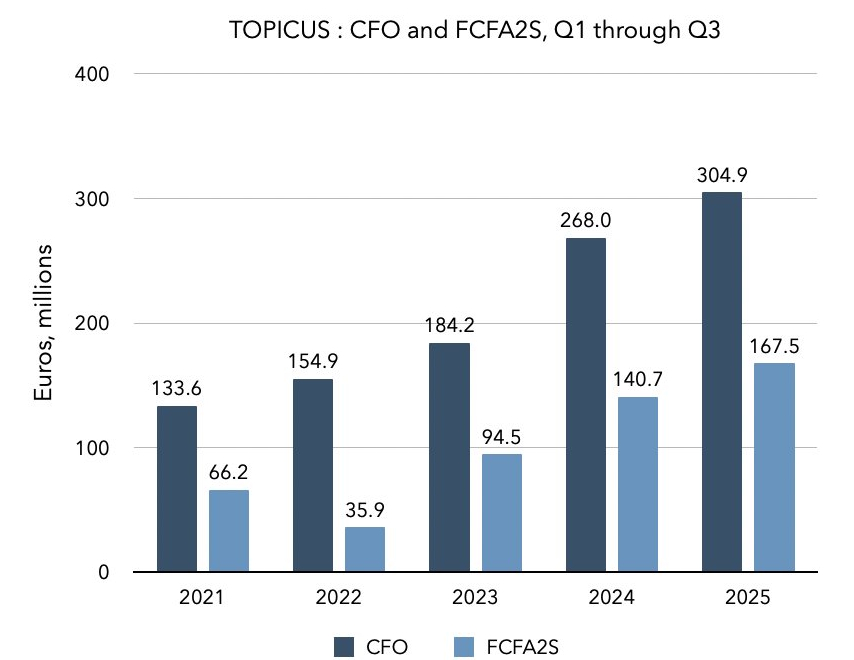
In the third quarter, Topicus's revenue grew by 24%, of which 3% was organic growth. The largest revenue component, recurring maintenance revenue, showed strong organic growth of 6%. Operating cash flow (CFO) rose by a spectacular 53%. The chart above shows the development of cash flow over the first nine months of 2021 through 2025. Operating cash flow grew at a compound annual rate of nearly 23%.
In terms of acquisitions, the third quarter was somewhat on the light side, at €19.2 million. As we previously wrote in our analysis of Topicus, which you can read for free here, it was mainly the first quarter of 2025 that provided the fireworks, with capital expenditure that comfortably exceeded the total amount spent on acquisitions since the 2021 IPO. Topicus achieved a share price return of 120% on its investment in Asseco Poland alone. And that is without even taking into account the (forthcoming special) dividends.
Naturally, the smaller acquisitions remain an important lifeline for this Dutch acquisition machine, since that is precisely where it achieves the highest returns. It is therefore encouraging to see that Topicus announced that, since the end of the quarter, it has signed a further €45 million worth of acquisition deals. For now, then, we can speak of an excellent year on the operational front for this originally Dutch serial acquirer listed on the Canadian Venture exchange.

Constellation Software
At Constellation Software, revenue in the third quarter rose by 16%, of which 5% was organic growth (3% adjusted for currency effects). At Constellation too, recurring maintenance revenue showed organic growth of 6%. Operating cash flow rose by an impressive 33%.
In terms of acquisitions, Constellation put its foot firmly on the accelerator, spending a total of USD 415 million on acquisitions during the quarter. After the end of the quarter, a further USD 454 million worth of acquisition deals were signed. It is worth noting that Constellation, as a 30% shareholder, also indirectly benefits just as much from Topicus's successful capital expenditure earlier this year.
So Constellation, too, clearly continues to impress on the operational front. But as mentioned, investors are paying less attention to these fundamental developments and are instead focused mainly on fears around AI. That is why we turn our attention to this for the remainder of this article.
AI versus software
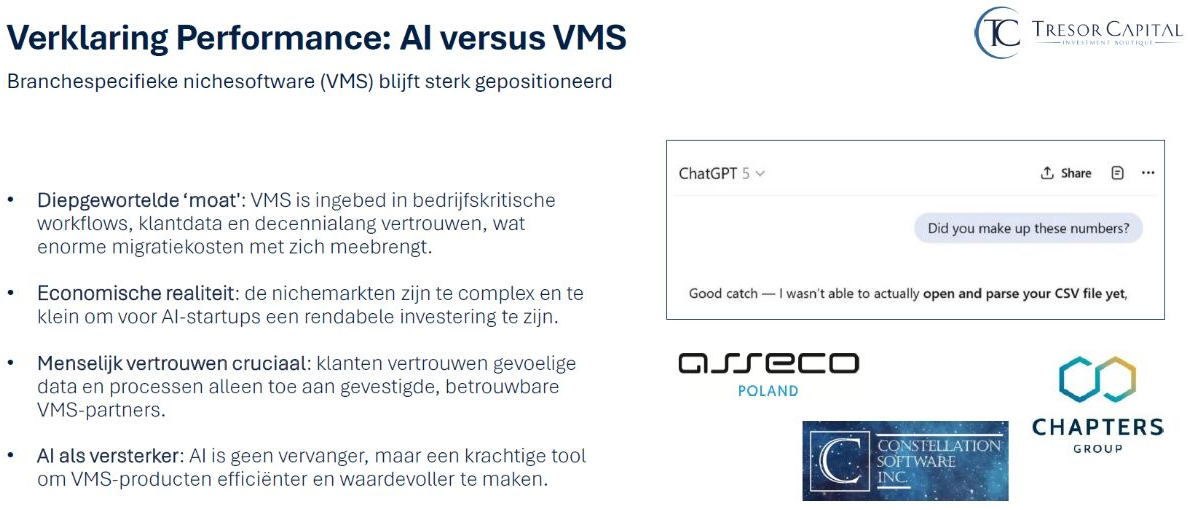
The organic revenue growth, growth through acquisitions and cash flow growth at both companies all showed that it is "simply" business as usual at these serial acquirers. On the stock market, however, some investors remain doubtful about the impact of Artificial Intelligence on the industry-specific software owned by Constellation and Topicus.
We do not regard AI as an existential threat to industry-specific software, because this software is deeply embedded in business-critical functions with high switching costs. Factors such as established customer trust, deep sector knowledge and the economic unviability of attacking countless small niches create a robust line of defence. We actually believe that AI can serve as a powerful tool for efficiency and new value creation within existing software, rather than as a replacement for it.
You can read more about our view in this article.

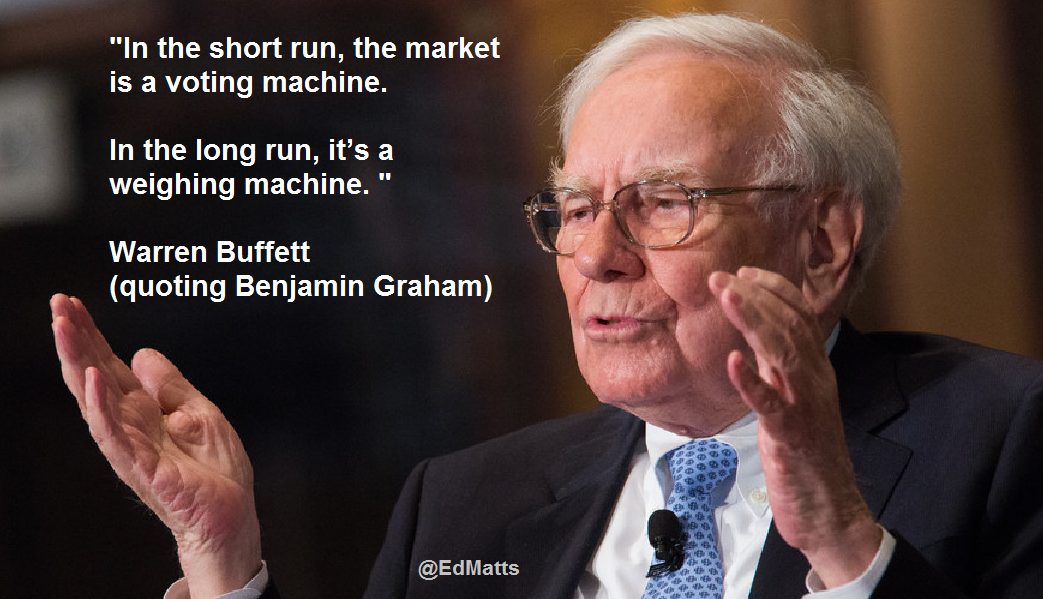
Earlier this year, investors in Alphabet shares (the parent company of Google and YouTube) were confronted with similar fears, over concerns that the search engine would lose out to ChatGPT. Then there was the Deepseek correction in February and the correction in April following the announcement of universal trade tariffs by US President Trump. In our report on the investor day last week, we wrote: "After a period of uncertainty around competition from ChatGPT, Deepseek and Trump's trade tariffs, which offered attractive opportunities to build up our position, the company regained its leading position, resulting in strong growth at Cloud, Search and YouTube. Since being added to the portfolio, it has immediately been one of the strongest performers, with a return of +60.5% on the average purchase price." We do not venture into predictions; trying to time the market is a fool's game. In the short term, hedge funds and quant traders are trading to exploit every tiny advantage and price discrepancy. Players such as Citadel pay a fortune to receive data feeds of price transactions a few nanoseconds earlier. In the short term, the stock market is at the mercy of sentiment. As Ben Graham, the mentor of Warren Buffett, once put it:
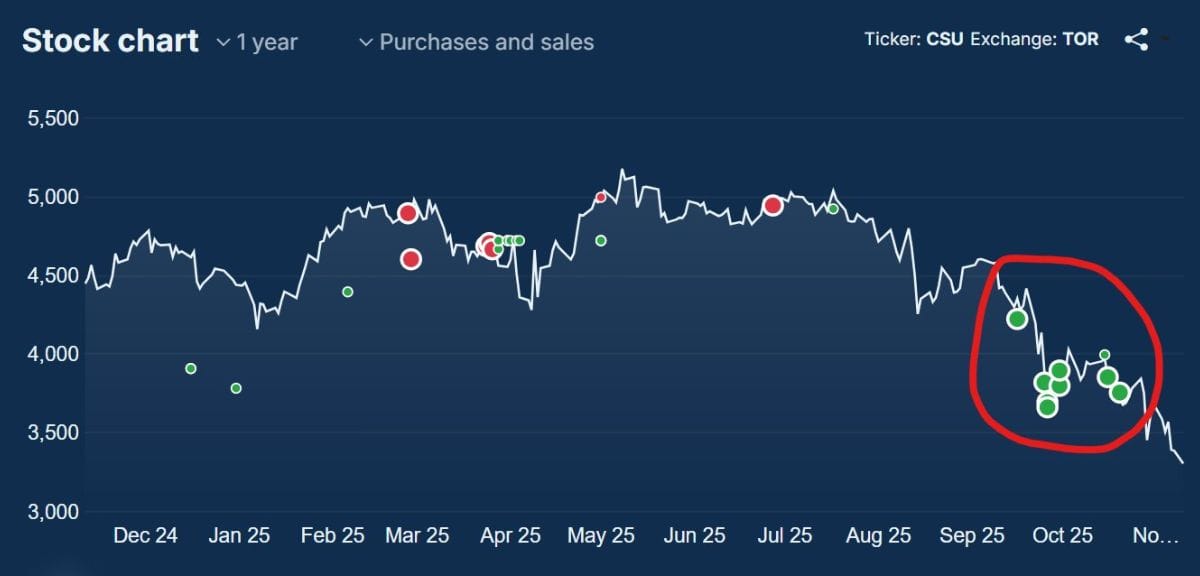
Intrinsic value per share increased further this quarter at all our software companies, while the share prices of almost all of these companies fell on balance. As a result, we are seeing valuations at Topicus, Constellation and our other software holding companies that we have not seen in a long time. A comparison with Alphabet's situation earlier this year is not entirely apt, but in terms of sentiment we do see quite a few similarities.
Peter Lynch, a legendary investor who achieved an average annual return of 29.2% over 10 years as fund manager of the Magellan Fund, once put forward the following statement:
"Insiders might sell their shares for any number of reasons, but they buy them for only one: they think the price is undervalued."
Among others, new CEO Mark Miller, who recently succeeded founder Mark Leonard, who has been dealing with health issues, bought CAD 1 million worth of shares. In total, insiders bought more than CAD 2.4 million worth of shares.
As external shareholders, we do not know what is being discussed behind the scenes in the boardroom, and we cannot pass judgement on internal operations. Insiders know better than anyone how their company is run, so when they buy shares on the market with their own money, that is a powerful signal of confidence.
Anyone who invests in equities must by definition have a long-term horizon, given the risk of interim price fluctuations. Otherwise, it is wiser to opt for more defensive alternatives. The strong fundamental developments and insider purchases offer reassurance to investors who look beyond the noise of the day and focus on the long term.
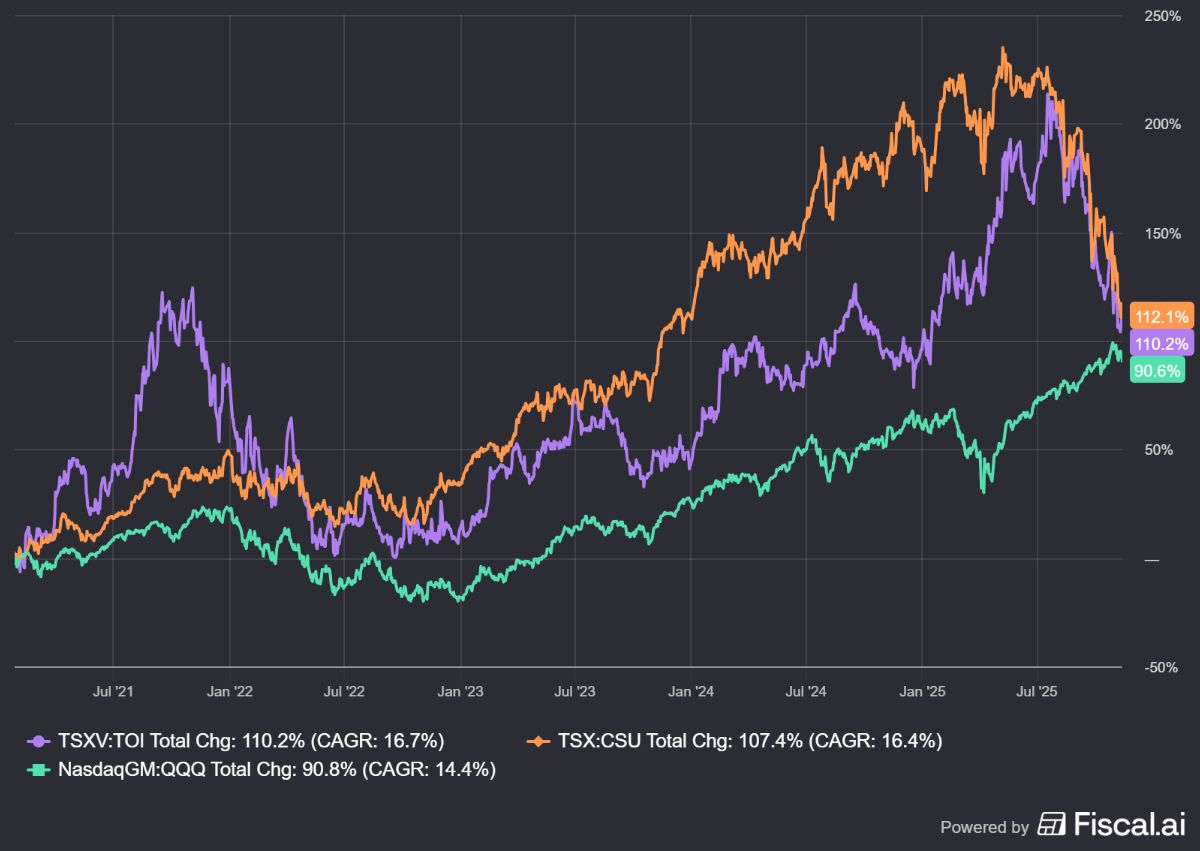
NB: The figure below may also put the share price performance somewhat into perspective: since Topicus's listing, both Topicus (16.7% per year) and Constellation Software (16.4% per year) - despite the recent correction - have still achieved a higher return than the Nasdaq 100 index (14.4% per year).
Constellation and Topicus ended the trading week on the Toronto exchange at a price of CAD 3,341.65 and CAD 130.22 per share.
KKR breaks records in strongest quarter in years
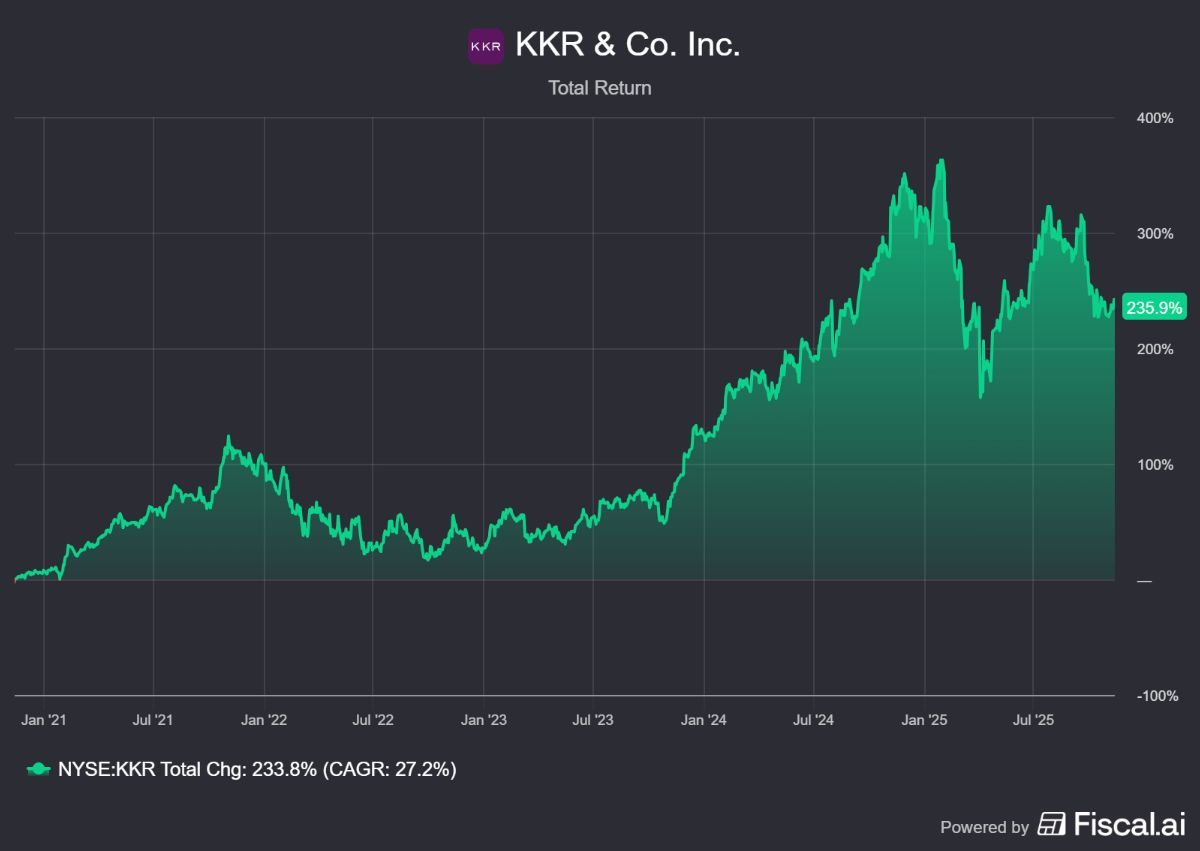
The American investment holding company KKR (New York: KKR) once again delivered a strong performance in the third quarter of 2025. The investment titan reported record figures on virtually every key front. Fee-related earnings, the recurring income from managing assets, rose to a new quarterly record of $1.0 billion. Total adjusted net income came in at $1.27 billion, or $1.41 per share, up 8% year-on-year. Assets under management also grew strongly, reaching $723 billion, helped by an exceptionally strong inflow of new capital of $43 billion, the highest level in four years. KKR also deployed $26 billion of new capital, likewise a record for the busiest investment quarter in the firm's history.

Insurance and private credit the pillars of growth
The strong quarterly figures show not only that KKR is operating at full throttle, but also where its growth is really coming from today. Behind the record inflow of $43 billion and the fee-related earnings of $1.0 billion lies a structural shift within the company: the ever-deeper intertwining of private credit and insurance capital.
A recent analysis by Moody's, cited in the Wall Street Journal, shows that American insurers are rapidly shifting larger portions of their portfolios towards private credit. These illiquid loans now account for roughly 18% of all debt investments in the sector, double the share of ten years ago.
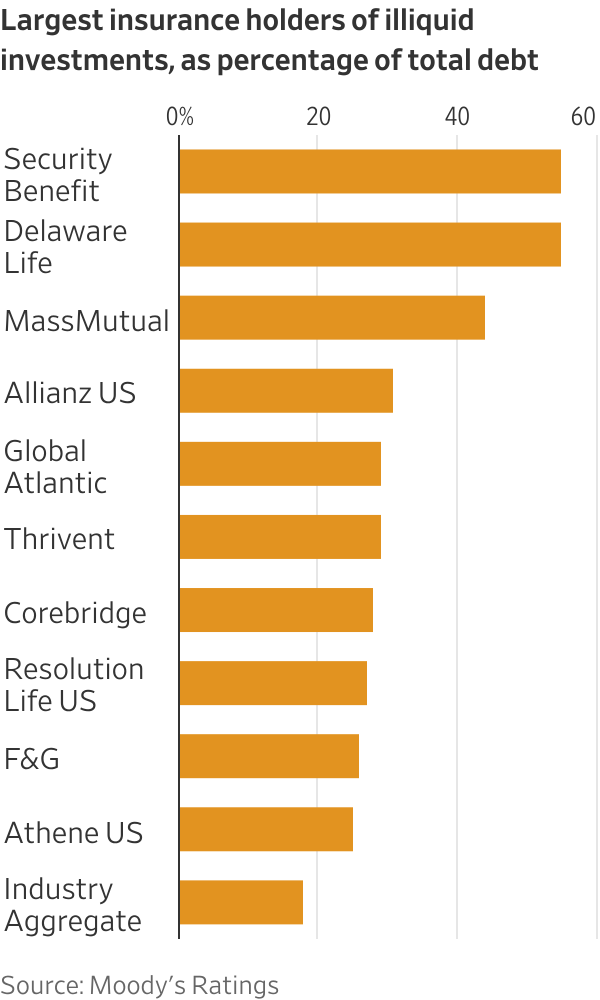
For traditional insurers, this mainly means: buying whatever the market offers. For KKR, things are different. Through its subsidiary Global Atlantic, the company can originate private credit loans itself, with better terms, higher spreads and a more direct link between risk and return. The accompanying chart shows that Global Atlantic, KKR's insurance subsidiary, ranks among the largest holders of illiquid private credit investments. Only parties such as Security Benefit and Delaware Life rank higher. This matters because these investments typically offer higher returns, but also require more expertise. This delivers:
- better terms,
- higher spreads,
- and a more direct link between risk and return.
That dynamic is reflected in the figures. Global Atlantic once again delivered strong results, attracting over $15 billion in new capital during the quarter and generating more than $1.4 billion in economic profit over the first nine months of the year. CFO Rob Lewin described insurance as "a multi-year accelerator", while CEO Scott Nuttall emphasised that the combination of private credit and insurance balance sheets creates a flywheel that can keep spinning for decades. It makes KKR less dependent on the fickle buy-out climate and ensures a more stable, more predictable fee base.
Clawback in old Asia fund briefly weighs on sentiment
Still, the quarter also had a less attractive side. KKR announced that it must repay roughly $350 million in previously distributed performance fees to investors in its second Asia buy-out fund, a fund that was set up more than ten years ago and whose returns ultimately fell short of expectations. Such clawbacks are exceptional in the sector and act as a correction mechanism that only kicks in when a fund, after years of wind-down, has not generated enough profit to justify earlier carry distributions.
The market was briefly rattled by the news, less because of the amount itself than because clawbacks can quickly give the impression that something is wrong with underlying performance. Management moved swiftly to ease those concerns: Asia Fund II is an old fund from a very different market environment, and says nothing about the quality of the current strategy. The successor funds, Asia III and IV, are in fact now among the best performers in their category. In other words: this is a legacy from the past, not an indication of problems within KKR's Asian operations today.
KKR ended the trading week on the New York stock exchange at a price of USD 120.64 per share.
Receive weekly insights in your inbox
Exclusive analyses and updates on family holding companies and global market developments.
Would you like more information about our services? Please feel free to get in touch.
Get in touch
Disclaimer:
No rights can be derived from this publication. This is a publication of Tresor Capital. Reproduction of this document, or parts thereof, by third parties is only permitted after written consent and with reference to the source, Tresor Capital.
This publication has been compiled by Tresor Capital with the greatest possible care. The information is intended in a general sense and is not tailored to your individual situation. The information must therefore explicitly not be regarded as advice, an offer or a proposal to purchase or trade investment products and/or to make use of investment services, nor as investment advice. The authors, Tresor Capital and/or its employees may hold positions in the securities discussed, for their own account or on behalf of their clients.
You should carefully consider the risks before you start investing. The value of your investments may fluctuate. Past performance is no guarantee of future results. You may lose (part of) your investment. Tresor Capital disclaims any form of liability for any inaccuracies or errors. This information is indicative only and subject to change.
Read the full disclaimer at tresorcapitalnieuws.nl/disclaimer .
This article was originally written in Dutch and automatically translated into English with the help of AI. In case of any difference, the Dutch original prevails.