
Family Holdings #48 - MBB reveals its trump card and Prosus steps out of Tencent's shadow



This week's topics:
KKR is benefiting from Japan's growing openness to private equity and is playing a key role in the modernisation of the Japanese capital market. With its Ownership Works model, in which employees become co-owners, KKR responds perfectly to the Japanese paradox of employees who typically stay with the same employer for decades yet feel remarkably little engagement with their work.
Prosus showed in its half-year results that the broader portfolio is increasingly contributing, even though Tencent still accounts for roughly 80% of NAV. Thanks to commercial synergies, the holding company is managing to increase revenue per user and successfully integrate new categories. At the same time, operational improvements are driving a sharp rise in margins and free cash flow, demonstrating that Prosus is slowly but surely shedding its role as a mere Tencent proxy.
Judges Scientific, one of the highest-quality serial acquirers in the United Kingdom, announced an important board change this week. Founder and CEO David Cicurel will step down from his role in February 2026 and become Non-Executive Chair. We visited the company in 2022 and briefly look back on that here.
In Brief:
Alphabet (New York: GOOGL) saw its share price rally strongly again this week, after it emerged that the company is in talks with Meta about a large-scale deal in which Google would supply several billion dollars' worth of TPU capacity for use in Meta's data centres from 2027 onwards. In addition, Meta is said to want to start renting chips via Google Cloud as early as next year. Although neither company has officially confirmed this, it suggests that major players are actively seeking alternatives beyond Nvidia to further scale up their AI capacity, with Google's TPU architecture currently appearing to be the most obvious alternative.
Brookfield (New York: BN) is investing $11 billion, together with Reliance Industries and Digital Realty, in the South Indian state of Andhra Pradesh through a joint venture. The aim is to develop 1 gigawatt of AI data centre capacity in the region.
KKR (New York: KKR) is becoming the new majority shareholder of the Rotterdam-based IT company Techone, which is being sold by investor Nedvest at a valuation of €600 million. Techone serves 35,000 SME clients, has more than 1,000 employees, nearly twenty locations, and generated €156 million in revenue in 2024. The company offers digital workplace solutions built around Microsoft, including cybersecurity and network services, and has made 57 acquisitions in recent years.
Lifco (Stockholm: LIFCO-B) has signed an agreement to acquire all shares of the British company DB Orthodontics Ltd. DB Orthodontics manufactures and sells orthodontic materials to dental professionals in the United Kingdom and worldwide. In the past financial year, the company generated revenue of approximately £8.9 million and has 54 employees.
3i Group (London: III) insiders bought additional shares again this week. Two members of senior management together purchased more than 15,000 shares at prices around £33 per share, worth nearly £500,000.
Alphabet, Brookfield, KKR, Lifco and 3i Group are currently trading on the New York and Stockholm exchanges at USD 317.45 (Class A share), USD 47.03, USD 122.56, SEK 347.20 and GBP 31.58 per share, respectively.
| Share | YTD | 3 years* | 5 years* | 10 years* |
|---|---|---|---|---|
| Alphabet | 51.5% | 43.7% | 30.2% | 22.6% |
| Brookfield | 9.2% | 19.5% | 17.6% | 14.9% |
| KKR | -26.6% | 28.9% | 27.2% | 22.8% |
| Lifco | 14.6% | 24.6% | 19.9% | 21.7% |
| 3i Group | -13.4% | 36.1% | 28.9% | 21.8% |
Returns shown in EUR; *The annual compounded return
MBB SE reveals its ace up its sleeve
The German investment holding company MBB SE (Frankfurt: MBB) published strong third-quarter results earlier this month. Since we already covered the record results of subsidiary Friedrich Vorwerk extensively in the week 43 newsletter (see link below), in this article we mainly share the new insights. Now that the final figures are in, and after studying the recent interview that founder, major shareholder and CEO Christof Nesemeier gave to Börsen Radio Network AG, our attention shifts to the rest of the holding company. It is clear that behind Vorwerk's success, another gem is hiding within the MBB portfolio.
 Michael Gielkens
MBB is celebrating its thirtieth anniversary this year, and 2025 looks set to go down as one of the best years in the family holding company's history. Revenue rose 13% in the first nine months to €862 million. Operating profit grew by a spectacular 54% to €144 million. The driving force is unmistakably Vorwerk, but there is a second growth engine operating in the shadows that Nesemeier describes as his ace up his sleeve. This is subsidiary DTS.
The ace up the sleeve in the portfolio
During the interview, Nesemeier makes an interesting statement about the composition of the portfolio. While the market is mainly focused on Vorwerk's explosive growth, the CEO points to DTS as the hidden value within the holding company. MBB took a stake in DTS in 2008, when it was still a simple IT service provider. Today it has transformed into a fully fledged IT security company with proprietary software and a Security Operations Center.
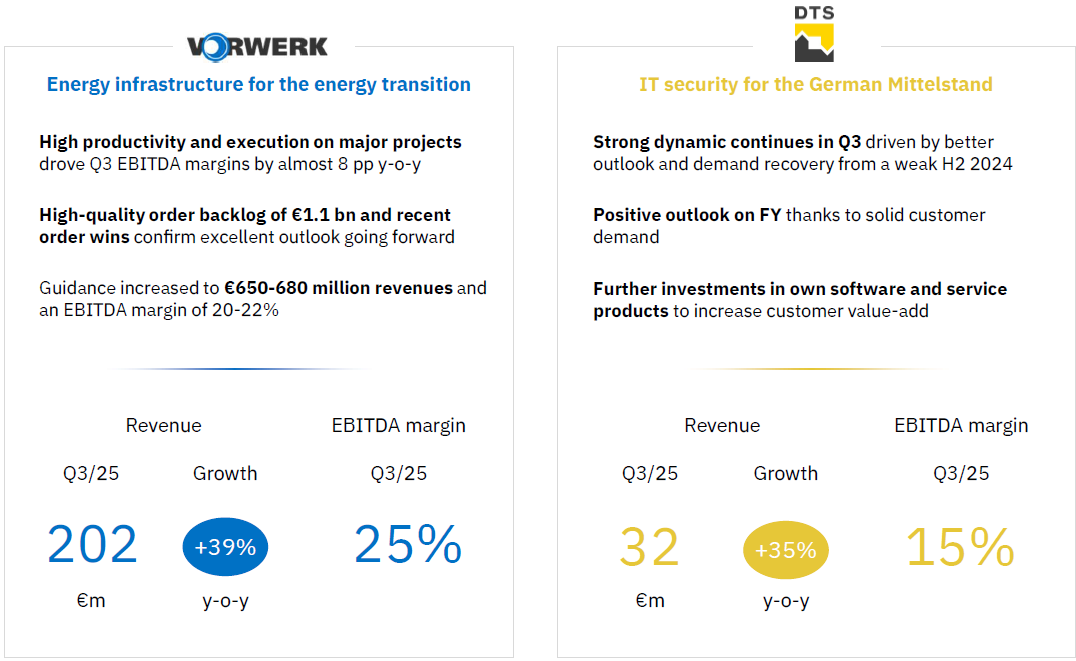
The figures back up his enthusiasm, as DTS's revenue rose 25.2% in the first nine months to €90.3 million. In the third quarter, this growth even accelerated to 39%. The operating margin stands at around 15%, and the company is on track for substantial annual revenue.
"We're now heading towards €120 million in annual revenue, which we couldn't have dreamed of a few years ago," says Nesemeier. Although the market has been relatively subdued because interesting government contracts have not yet materialised this year, he says DTS is developing brilliantly. Nesemeier states that MBB has so far barely made any acquisitions for DTS, but wants to change this in order to build a significant player. He sees an explosive mix emerging from the core business, the financial firepower and the experience with previous IPOs, which could generate plenty of excitement in the future. Although he is not yet willing to promise anything about a listing, MBB will aggressively continue developing the company.
Financial strength and capital allocation
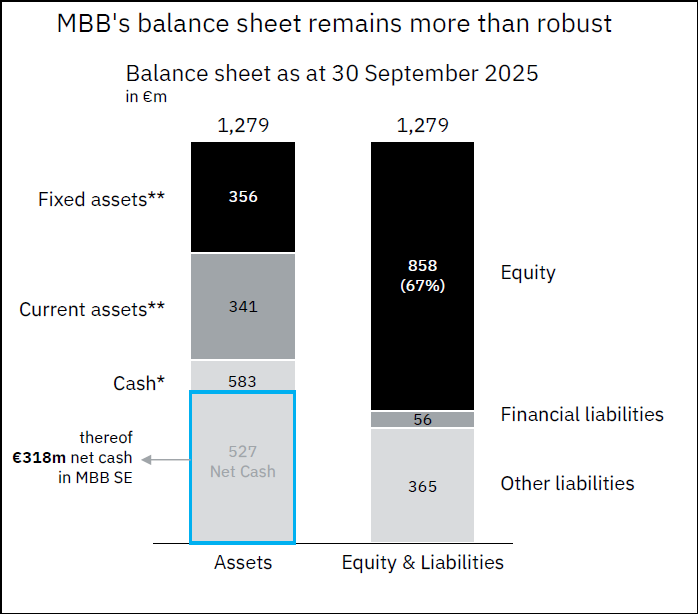
MBB's balance sheet can be summed up in one word: solid. At group level, the holding company has a net cash position of €527 million, of which €318 million is directly attributable to the holding company. This enormous amount of cash raises the question of what the next step will be.
Nesemeier and CFO Torben Teichler indicate that they are deliberately opting for a fully opportunistic approach. There is no rush to buy just for the sake of buying. MBB is looking for capital-light business models and is casting a wide net across sectors ranging from infrastructure to aviation.
Nesemeier assumes that "in due course there will certainly be a significant setback again". He speculates on a scenario in which capital becomes scarce and "the money has left the market", allowing MBB, with its well-stocked cash reserves, to be one of the few able to strike and acquire very good companies at very good prices. In this way, as he puts it himself, "gladly completely opportunistic", he aims to add a seventh portfolio company to the group.
The M&A pipeline is well filled, and the quality of the leads has improved due to the changed interest rate environment. Until then, share buybacks serve as an important capital allocation tool whenever the discount to intrinsic value becomes too large.
Two speeds across the segments
The portfolio presents a clear picture of two speeds. On the one hand, the Service & Infrastructure division is flourishing, while on the other hand, the technology and consumer divisions are facing headwinds. The Service & Infrastructure segment, comprising Vorwerk and DTS, is the absolute growth engine, with revenue up almost 45% and operating profit nearly doubling to €118.4 million.
Vorwerk's order book remains at a very high level of €1.1 billion, with new orders in hydrogen and LNG infrastructure continuing to flow in. By contrast, the Technological Applications segment, comprising Aumann and Delignit, saw revenue decline by 27.5% due to caution in the automotive industry. Despite the lower volumes, Aumann managed to raise its operating profit margin to 11.8% thanks to strict cost control.
"The companies are getting somewhat smaller and need to partly reinvent themselves, but that doesn't make them bad companies," says the CEO. He points to what he sees as rock-solid fundamentals and healthy cash reserves, particularly at Aumann. MBB sees this as an opportunity to redevelop these companies, with their highly educated engineers who have worked on leading technologies.
Nesemeier does not expect a quick return to the old days in the automotive industry, but does see value in the technology and cash flow generation of his companies. In the Consumer Goods segment too, comprising Hanke and CT Formpolster, demand remains weak due to cautious consumer confidence, with revenue down 12%. However, there is light at the end of the tunnel, with a capacity expansion at Hanke due to be completed in the fourth quarter.
Valuation and conclusion
Management has raised its guidance for the full year 2025, and now expects revenue of between €1.1 billion and €1.2 billion with an operating profit margin of 15 to 17%. Nesemeier states that, despite the rise this year, MBB shares are not expensive.
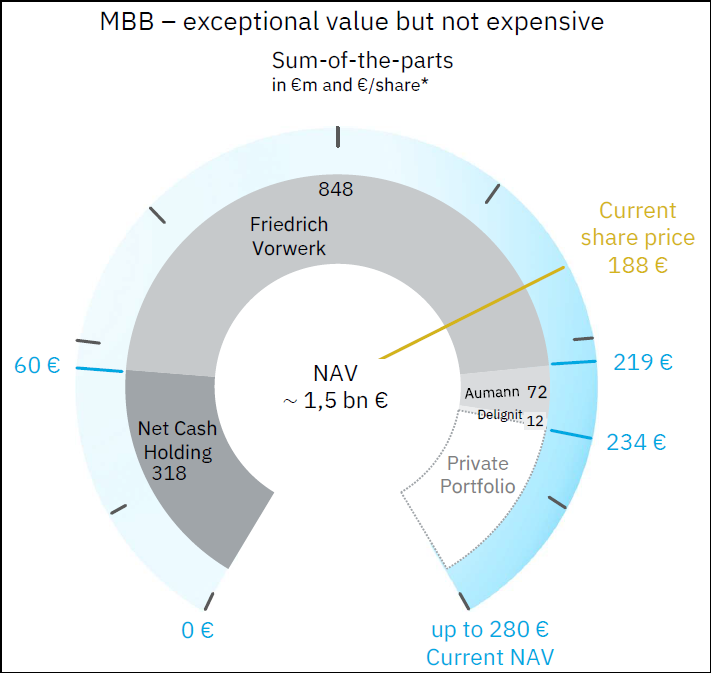
Anyone looking at intrinsic value, according to Nesemeier, sees a value that is "heading more towards €280"
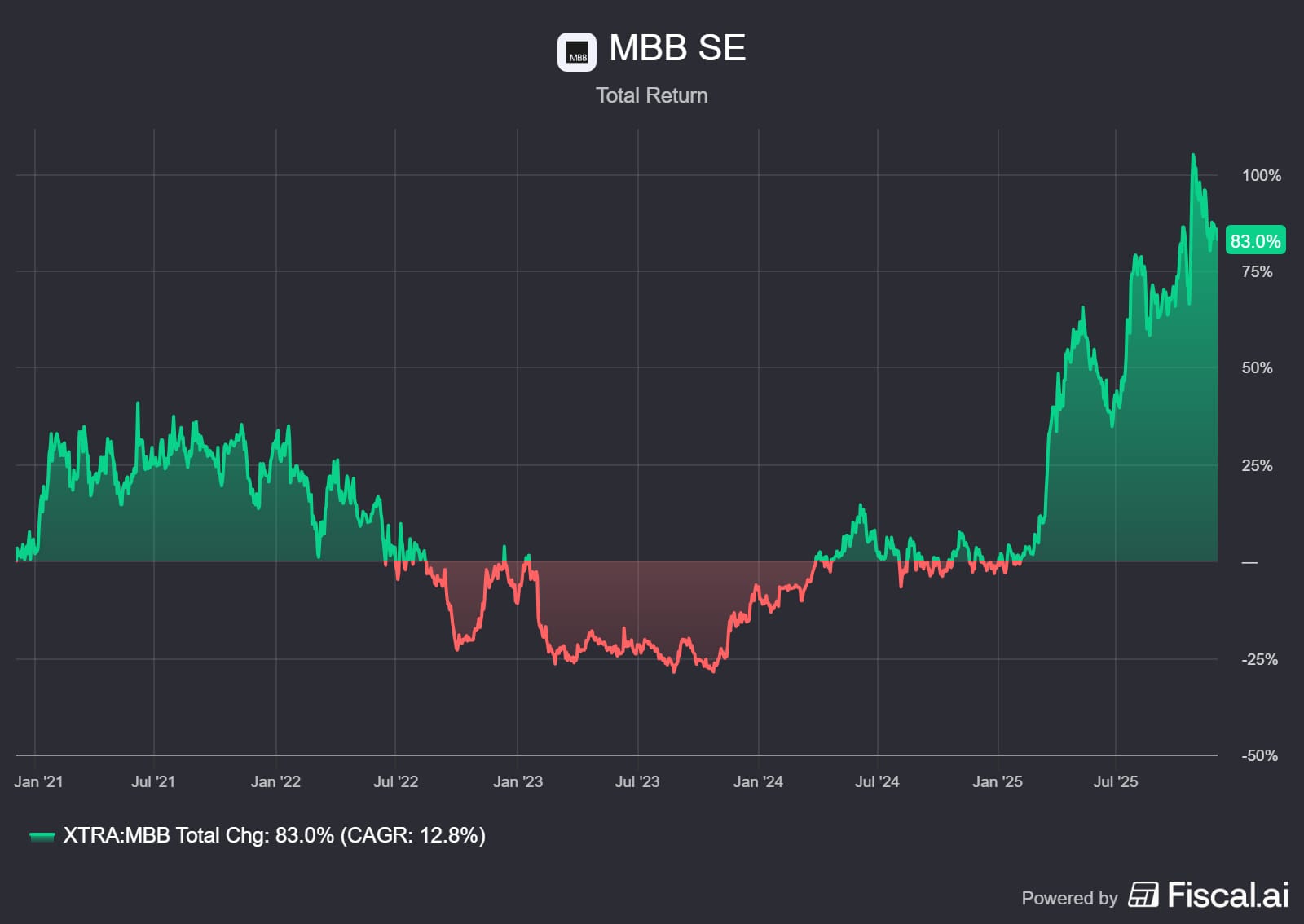
Nesemeier understands that a share that has returned almost 100% at its peak this year may look expensive. However, anyone looking at intrinsic value, according to him, sees a value that is "heading more towards €280". With a current share price of around €180, this implies a discount of more than 30%, which he considers suspiciously high for the record books. To back up his words, he significantly added to his own holding a few weeks ago at €165.
Investors effectively get the private companies, such as the fast-growing wildcard DTS, thrown in for free. The combination of a proven management team that has been at the helm for thirty years, and an enormous cash position for future M&A, makes MBB an interesting holding company to follow. DTS and Vorwerk are driving the strong growth in operating profitability, while management patiently waits for acquisition opportunities to add a seventh leg to the holding company. The focus on capital allocation and the patience to wait for the right opportunities fits seamlessly with our philosophy.
MBB ended the trading week on the Frankfurt stock exchange at a price of €181.40 per share.
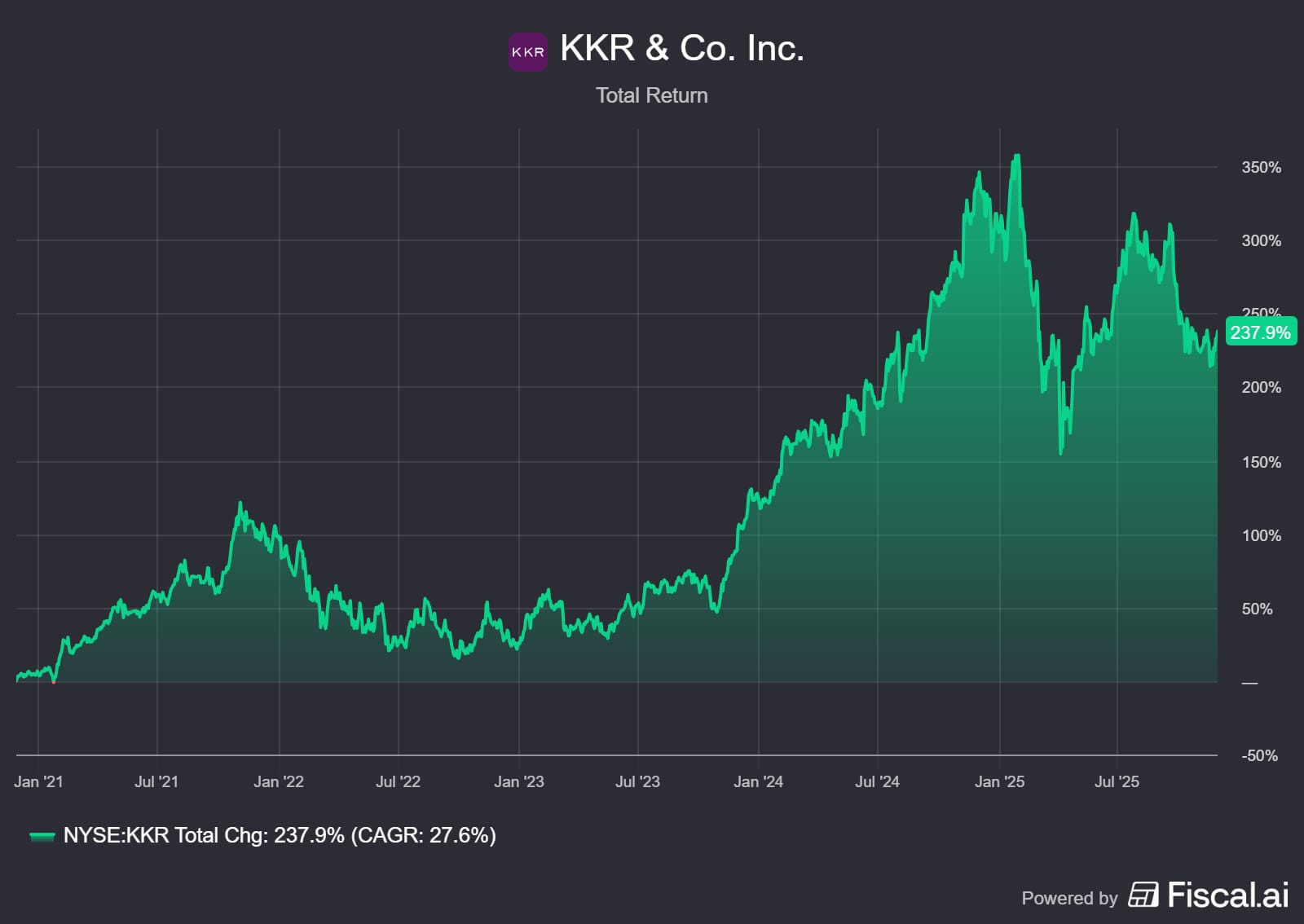
KKR and the evolution of the Japanese capital market
According to the Financial Times, a fundamental shift has taken place in how Japan views foreign capital. Whereas private equity was dismissed as 'vultures' in the past, the sector is now embraced by both the government and the business community. The American investment holding company KKR (New York: KKR) plays a key role in this transformation and is now even introducing innovative ownership structures to the Japanese market.
The Japanese paradox and Ownership Works
An important part of KKR's strategy is the introduction of Ownership Works in Japan, the first international expansion of this US-founded initiative. The programme aims to give even blue-collar workers on the shop floor shares in the companies where they work. In doing so, the investment holding company creates skin in the game down to the deepest layers of its portfolio companies.
This plays into a unique Japanese paradox: the country has an extremely low staff turnover rate, yet employee engagement is among the lowest in the world. According to a Gallup report, only 7% of employees feel engaged with their work, placing Japan 137th out of 141 countries.

Pete Stavros, co-head of private equity at KKR, sees a huge opportunity here. By turning employees into co-owners, KKR aims to boost that engagement. This is a proven model for value creation. KKR states that companies using this model achieved a return of 3.5 times their investment, compared with an average of 2.5 times for companies without such a programme. Japanese companies in KKR's portfolio, such as Bushu Pharma and software developer Yayoi, have already started implementing Ownership Works.
Demographics and government support
The macroeconomic cocktail in Japan remains ideal for a player with KKR's scale. The country is grappling with an ageing group of founders without succession plans and a shrinking labour market. The government actively supports initiatives such as Ownership Works, as it aligns with its policy of encouraging greater wealth growth among households. The presence of senior government officials at the launch of this initiative underscores just how much attitudes towards private equity have changed. It also helps KKR soften its image and strengthen its position in competitive bidding processes.
Besides the domestic dynamics, KKR is benefiting from geopolitical reality. Now that China is off-limits for many Western investors, a great deal of capital is flowing into Japan. KKR is deploying its scale and expertise to take undervalued companies private and modernise them away from the public markets. According to the Financial Times, this is not a temporary trend but a necessary evolution of the Japanese economy, in which both capital and employees become more closely involved in the company's success. KKR shareholders, in turn, also benefit from this.
KKR is currently trading on the New York stock exchange at USD 122.65 per share.
Prosus shows its own strength
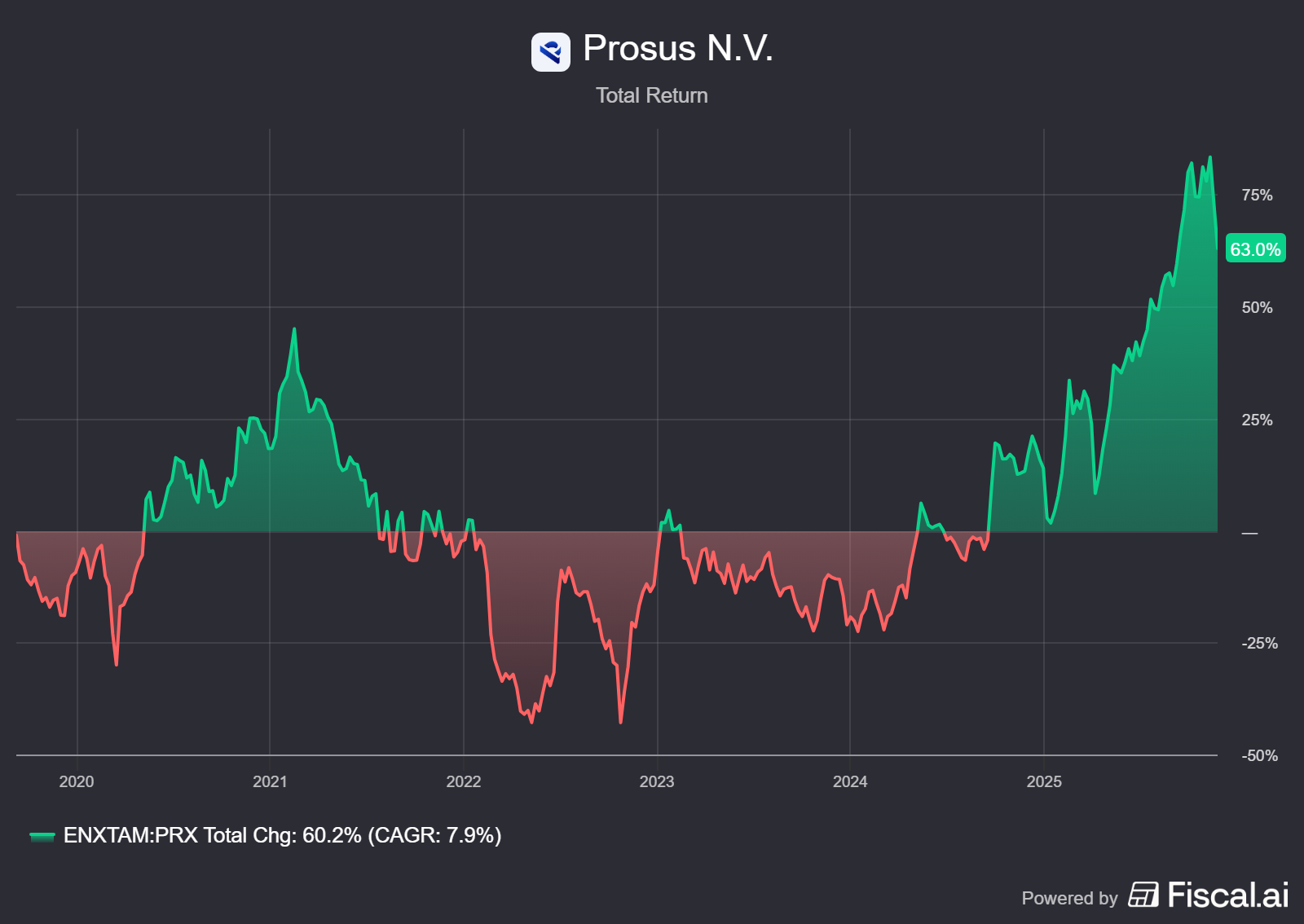
In recent months, we have increasingly touched on the European tech investment holding company Prosus (Amsterdam: PRX) in the In brief section of our newsletter. The company has regularly made headlines recently through a series of new stakes, ranging from major strategic acquisitions to smaller technology-driven deals. CEO Fabricio Bloisi recently presented the results for the past half-year (HY2026), a presentation in which his trademark Brazilian flair and optimism were as present as ever. Tencent still represents around 80% of Prosus's NAV, but the latest figures show that the rest of the portfolio is starting to contribute more and more prominently.
A broadening and complementary ecosystem
Prosus now owns and manages 29 companies, mainly active in Latin America, Europe and India. With recent acquisitions such as Rapido (India, consumer tech), Advolve (Brazil, AI marketing) and the full takeover and delisting of Just Eat Takeaway (JET) in Europe, the holding company is positioning itself increasingly firmly across the entire value chain of the digital economy.
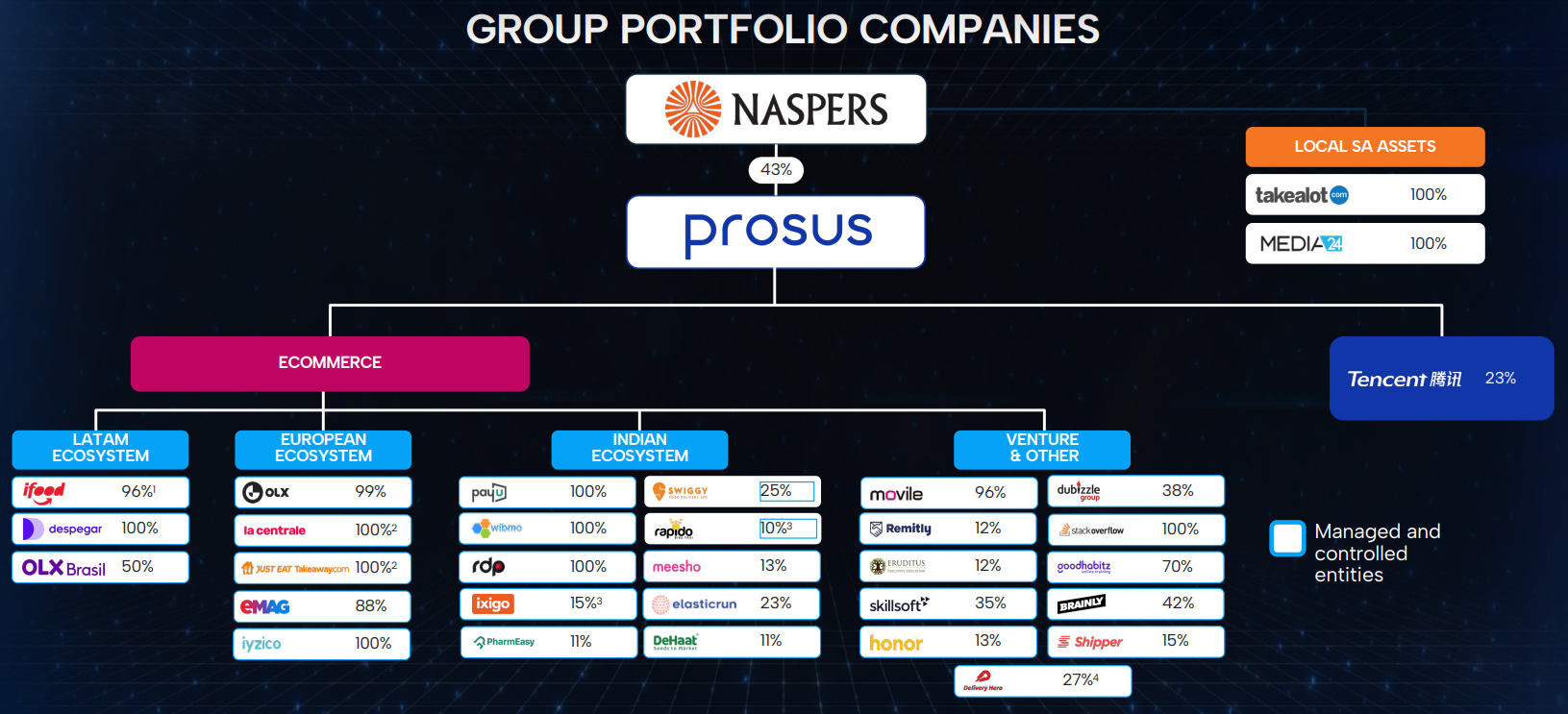
From payment platforms to delivery services, transport, marketplaces and marketing, Prosus now holds a strategic piece of the puzzle in many markets. This broad presence not only creates economies of scale but also mutual cross-sell and upsell opportunities. This is precisely the area in which management has been experimenting in Latin America in recent periods.
Bloisi explains that, after acquiring Despegar (an online travel platform), iFood has used its enormous user base of now 70 million customers to integrate travel into the iFood ecosystem. Within the app, an entirely new travel category has been launched in which iFood:
- displays travel promotions,
- rolls out personalised offers,
- integrates Despegar deals into the user flow.
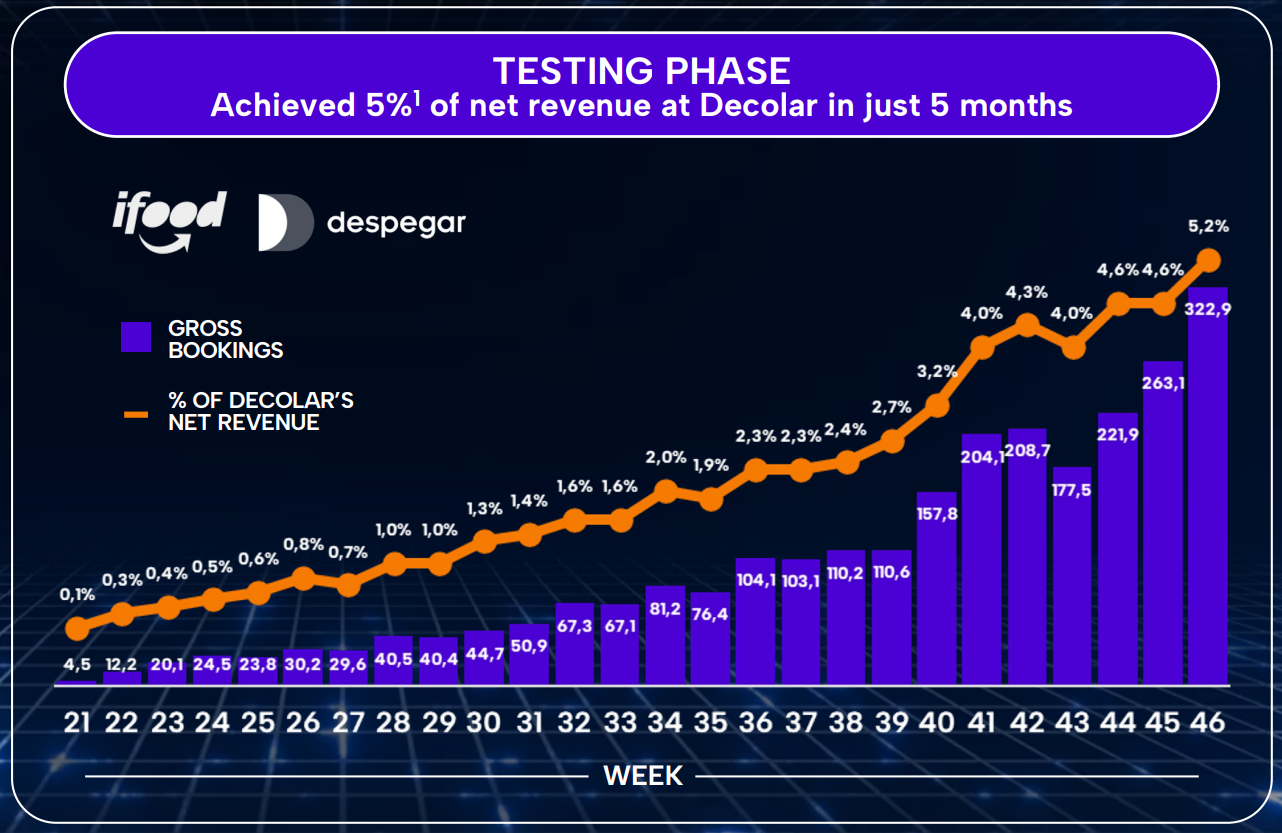
Through discounts, vouchers, cashback campaigns and loyalty points, iFood is encouraging its existing users to make their first booking via Despegar. Early results suggest this approach is working, as around 5% of the revenue of Despegar's Brazilian division now comes in via the iFood platform. This suggests that combining multiple strong B2C platforms within a single region can clearly yield strategic advantages.
Efficiency improvements boost cash
Prosus is placing increasing emphasis on operational efficiency, with the acquisition of Advolve playing an important role. This company brings an AI-driven marketing approach that automates ad creation, testing and optimisation. According to CEO Bloisi, this is already delivering around 25% lower acquisition costs, with broad applicability across the entire portfolio. AI is also being integrated ever more deeply into internal processes and commercial decision-making.
The impact of this is clearly visible in the figures: revenue grew by 22% (26% excluding Emag), adjusted EBITDA by 58%, and the margin jumped from 11% to 15%. Free cash flow (excluding Tencent dividends) turned around from –$873 million three years ago to +$59 million, a half-year record.
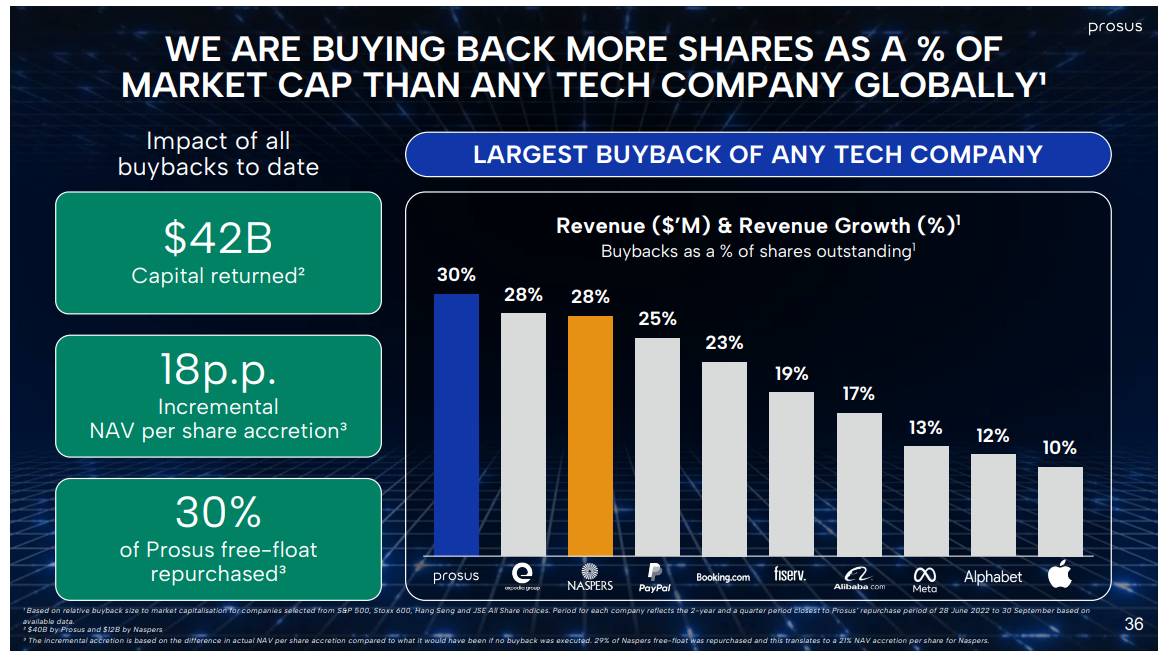
This improved efficiency also increases scope for capital allocation. Since the start of the buyback programme, Prosus and Naspers have together repurchased $42 billion worth of shares, reducing the free float by approximately 30%. According to management, this has lifted NAV per share by roughly 18 percentage points compared with a scenario without buybacks, an exceptional achievement, both in absolute and relative terms.
Conclusion
With these half-year results, Prosus shows that it is increasingly trying to shed its image as a Tencent proxy. Although Tencent, at 80% of NAV, remains structurally dominant, the rest of the portfolio is visibly starting to generate value of its own. Most companies are showing solid growth and clear efficiency improvements, with Emag as the only major exception.
At the same time, management is proving that the broader strategy is starting to work. By cleverly linking platforms within the same region, as with iFood and Despegar, Prosus is simultaneously increasing both the breadth of its offering and revenue per user across multiple businesses. These commercial synergies are now also being reinforced by the operational discipline the company has built up over the past eighteen months. The recent results show that Prosus is able to actually capture margin improvements and roll them out broadly across the portfolio. The question now is whether the company can replicate this approach in the integration of Just Eat Takeaway.
Prosus ended the trading week on the Amsterdam stock exchange at a price of EUR 54.26 per share.
Leadership change at Judges Scientific
Judges Scientific (London: JDG), one of the highest-quality serial acquirers in the United Kingdom, announced an important board change this week. Founder and CEO David Cicurel will step down as CEO on 9 February 2026 and take on the role of Non-Executive Chair. Current Business Development Director Dr Tim Prestidge is being promoted to CEO, while Ralph Elman moves into the position of Deputy Chair.
For investors, this move marks the start of a new phase, but not a break with the past. Cicurel remains closely involved in the acquisition strategy, historically the core of Judges' value creation, and thus remains the intellectual centre of the M&A machine he has built over the past twenty years. Under his leadership, Judges grew into a decentralised group of niche businesses with high margins, strong cash flows and a track record of exceptional returns on invested capital.
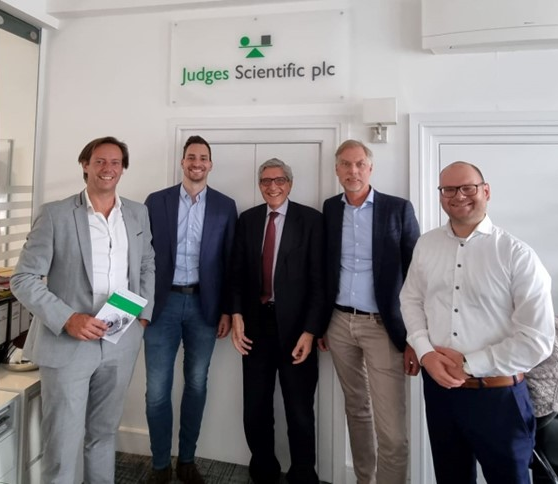
Our impression of Cicurel and Judges – company visit in 2022
During our company visit to Judges in London in 2022, we were given a particularly direct insight into the culture Cicurel has shaped over two decades: down-to-earth, ethical, disciplined and deeply focused on long-term value creation. Despite the group's impressive performance, Cicurel remained remarkably approachable; he personally poured our coffee, a detail that fits perfectly with the culture of understated excellence we also saw reflected in the subsidiary companies.
Our conversations at the time covered supply chain issues, currency effects, pricing power and the functioning of the acquisition pipeline. Cicurel told us then that succession had been carefully prepared. Now, three years later, that has proven to be exactly the case.
If you would like to read more about that company visit and the strategic insights we gained at the time, you can find the full report here:
Receive weekly insights in your inbox
Exclusive analyses and updates on family holding companies and global market developments.
Would you like more information about our services? Please feel free to get in touch.
Get in touch
Disclaimer:
No rights can be derived from this publication. This is a publication of Tresor Capital. Reproduction of this document, or parts thereof, by third parties is only permitted after written consent and with reference to the source, Tresor Capital.
This publication has been compiled by Tresor Capital with the greatest possible care. The information is intended in a general sense and is not tailored to your individual situation. The information must therefore explicitly not be regarded as advice, an offer or a proposal to purchase or trade investment products and/or to take up investment services, nor as investment advice. The authors, Tresor Capital and/or its employees may hold positions in the securities discussed, for their own account or for their clients.
You should carefully consider the risks before you start investing. The value of your investments may fluctuate. Past performance offers no guarantee for the future. You may lose (part of) your investment. Tresor Capital disclaims any form of liability for any inaccuracies or errors. This information is purely indicative and subject to change.
Read the full disclaimer at tresorcapitalnieuws.nl/disclaimer .
This article was originally written in Dutch and automatically translated into English with the help of AI. In case of any difference, the Dutch original prevails.