
Economy & Markets #42 - Xi Jinping is playing the king of diamonds, but is it a bluff?
How China has become a superpower in precious metals, and how Europe is once again on the losing end.


This week's topics:
A new geopolitical roadmap: from unipolar to polycentric
In 1405, the Chinese admiral Zheng He set sail with the largest fleet the world had ever seen: 317 ships, crewed by 27,000 people. His "treasure ships" were five times the size of Columbus's Santa Maria. He reached East Africa, built trade networks across three continents, and drew up maps that connected the world for the first time. China was set to become the first maritime superpower, technologically, economically and geographically.
But the officials of the court bureaucracy in Beijing deemed trade, seafaring and foreign enterprise unworthy of an imperial, self-serving power, and turned their focus back inward. The great ships were banned and the sea charts burned. Within half a century, Portuguese explorers were sailing the same routes, using maps that had once been Chinese. Europe became a world power and China grew poorer: the rest, as they say, is history. Or is it?
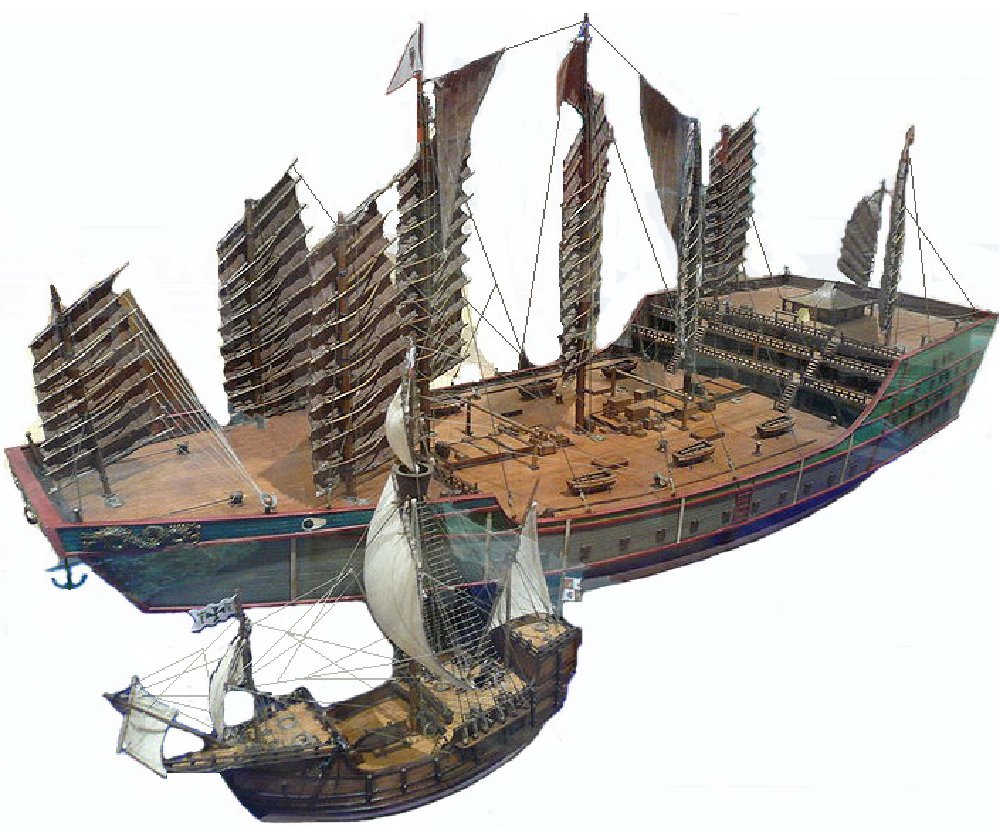
Is Europe handing its maps back to China?
Six hundred years after Zheng He's maritime expeditions, some European countries once again appear willing to hand back their sea charts, this time to China (and the United States). The city of Hamburg, for centuries one of Europe's great global ports, voted in favour of the Zukunftsentscheid (future decision) in a referendum last weekend: enshrining in law that the city must become climate-neutral as early as 2040, five years ahead of schedule, whatever the economic consequences.
What looks visionary and ambitious is, according to Die Welt, mostly symbolic politics: "No global impact, significant local side effects." The costs of home renovations, industrial greening and mobility electrification are estimated at €40 billion, which will be passed on to tenants and, above all, small business owners through local taxes.
The port authority and the logistics and transport sector are by definition highly energy-intensive and now fear a sharp drop in tonnage. Although, if this trend continues, Germany will end up importing even more goods from China. Energy-intensive companies such as copper producer and smelter Aurubis, which recently built one of the world's most modern copper smelters in Hamburg, also describe the future of their Hamburg plant as "uncertain". Airbus, too, assembles its aircraft in Hamburg and is now considering shifting production to France if energy prices rise further and the number of permitted flights is restricted.
Both companies are, incidentally, clearly taking a leading role by betting on hydrogen as a green energy carrier, but here too the problem is that producing hydrogen is extremely expensive and is still penalised, since hydrogen is currently still produced using natural gas. Critics therefore point out that the choice to accelerate sustainability only leads to higher local costs and sees ambition turn into the relocation of production.
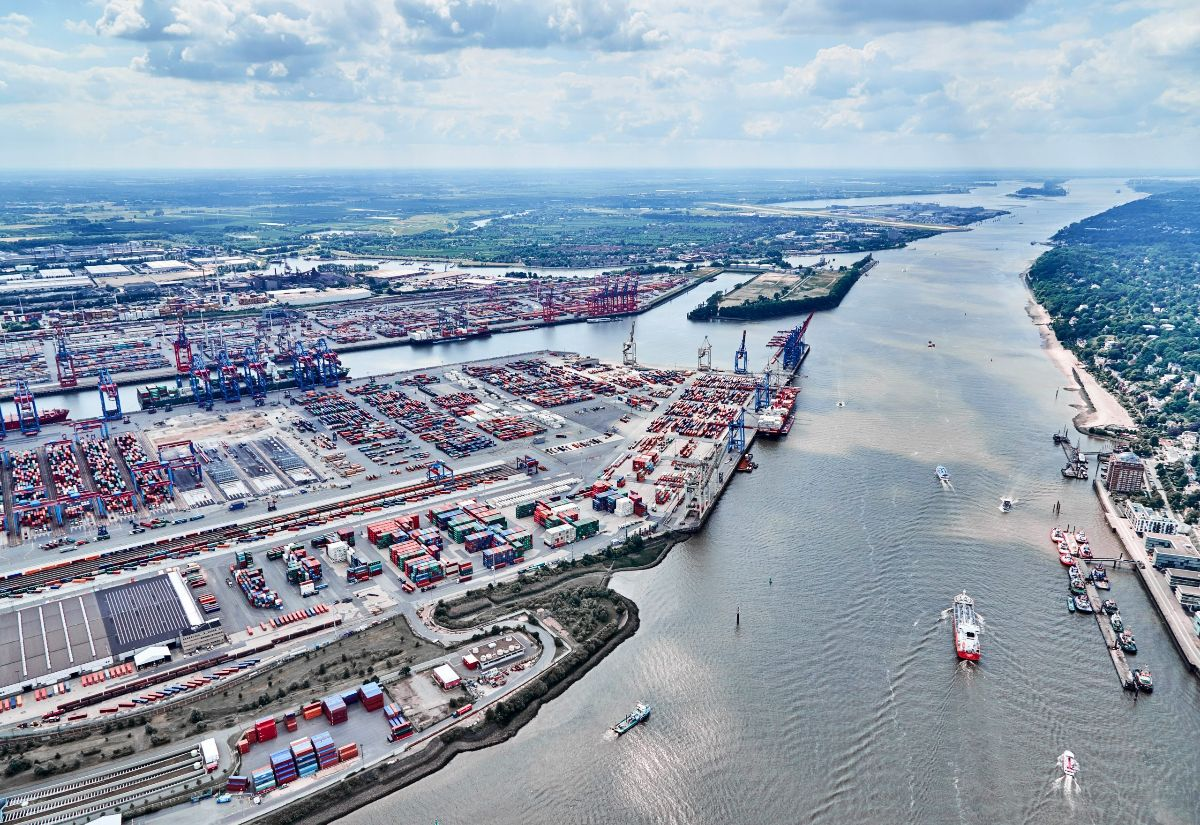
Europe is rapidly losing its industrial heartland
Hamburg, once the beating heart of European trade, symbolises a deeper problem: Germany is deindustrialising at a rapid pace. This should raise questions about the generally very optimistic view of European equities. Since 2018, German industrial production has fallen by more than 19%. The economy has now contracted for three consecutive years: in 2023 (-0.3%) and 2024 (-0.2%), with slightly negative growth expected again for 2025. This persistent recession is taking place despite the sizeable €600 billion stimulus package that the new German government announced this year, to be spread over the next ten years.
What Hamburg is to the port, the car industry is to Germany: for years a symbol of efficiency, now a source of vulnerability. The accelerated phase-out of the combustion engine has starkly exposed this weakness. While manufacturers invest billions in electrification, they face high costs, a slow rollout of charging infrastructure, and consumers who remain reluctant to switch fully to electric driving.
During the recent Autogipfel (car summit) in Berlin, Chancellor Friedrich Merz announced a change of course. According to Merz, there should be "no hard stop for the combustion engine" in 2035, when the European ban on new petrol and diesel cars is due to take effect. He advocates a technology-neutral approach, in which hybrid drivetrains and synthetic fuels can also play a role. To keep the transition socially bearable, the German government is setting aside an additional €3 billion in subsidies for electric vehicles for low- and middle-income households. In addition, the tax exemption for EVs is being extended until 2035.
The business community supports this pragmatic course. Volkswagen CEO Oliver Blume called an outright ban "unrealistic" and received backing from suppliers who warn of job losses and the possible relocation of production abroad. At the same time, Germany is seeking allies, including Italy, Poland and the Czech Republic, to lobby in Brussels for a phased transition and so secure a postponement of the ban.
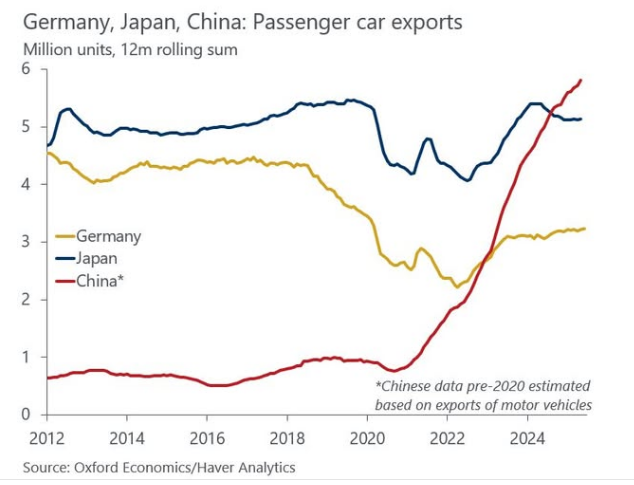
Europe divided over pensions: Germany tightens the screws, France loosens them
The persistent recession and the process of de-industrialisation threaten to impoverish Germany at a rapid pace. In response, the German government has opened the debate on a further rise in the retirement age, potentially to 73. A measure that, despite the need for fiscal stability, is unlikely to do much for consumer and business confidence in the near term. France, meanwhile, is charting the opposite course. New prime minister Lecornu has announced plans to lower the retirement age to 63, easing social pressure at home but widening the differences within the European Union.
China plays its export ban as a geopolitical trump card, Trump threatens new tariffs
Last week, China further tightened export controls on rare earth metals. New regulations require companies to apply for a licence to export certain raw materials and technologies related to mining and processing, including magnets and components of Chinese origin. Crucially, this measure applies not only to Chinese producers but also to foreign companies that use Chinese rare earth metals or technology in their products. The timing is not entirely coincidental: the export rules take effect just before planned summit talks on 30 October between US President Donald Trump and Chinese President Xi Jinping, suggesting that China is deploying this step as a strategic instrument.
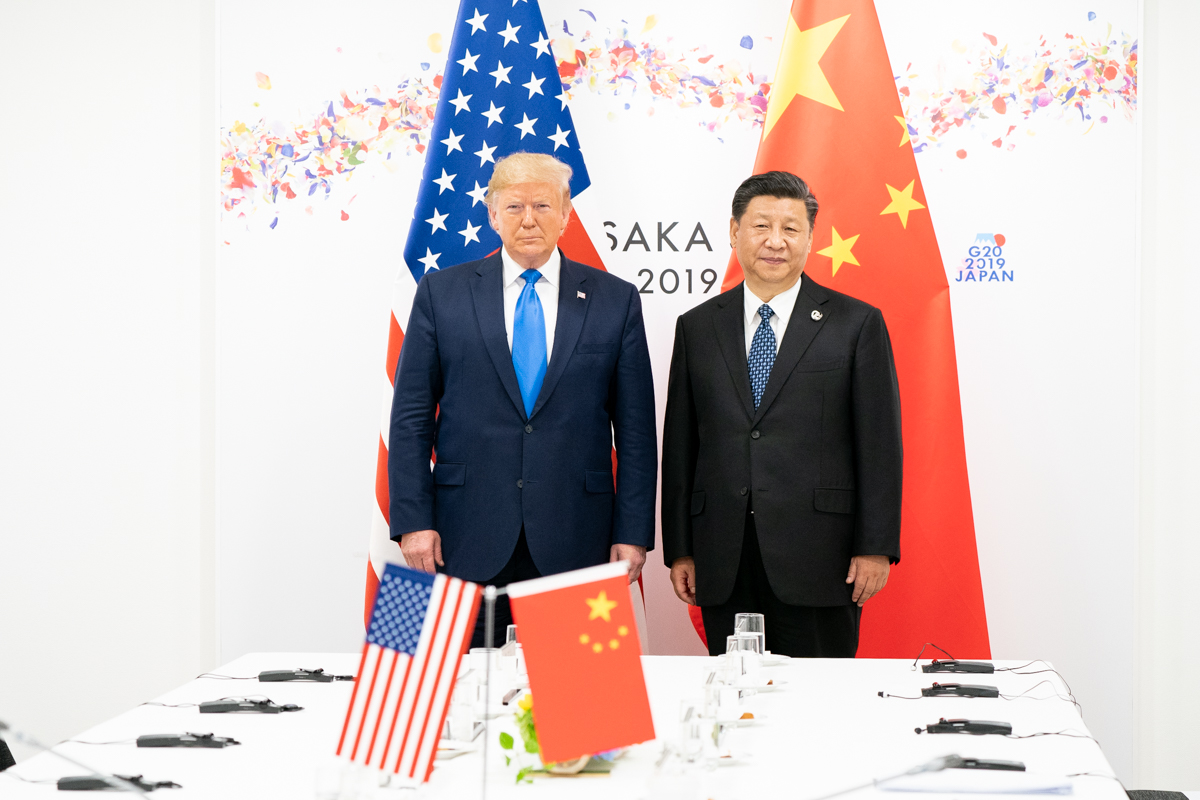
For the United States, this poses a direct challenge, particularly for the defence and technology sectors, which are heavily dependent on rare earth metals. China's control over the supply chain gives it the power to restrict critical supplies, putting pressure on the American side to consider concessions or accelerate alternative supply chains. Trump announced that, from 1 November 2025, he would impose an additional 100% tariff on Chinese goods.
Rare metals: rare, or just polluting?
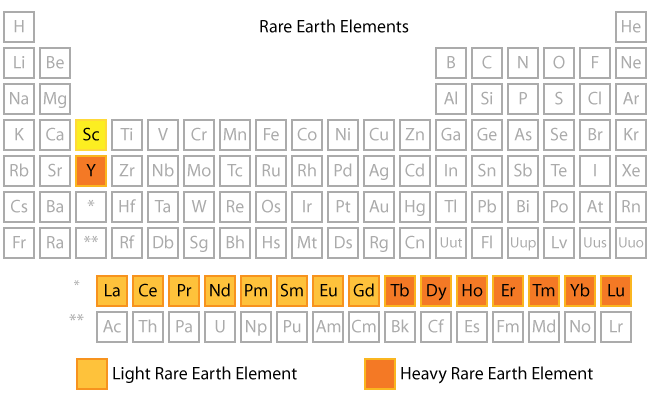
Rare earth metals are, geologically speaking, not so much scarce as present in low concentrations within the earth's crust. The bottlenecks therefore lie in concentration, separation and refining, processes that are costly, chemically complex and highly energy- and water-intensive. Rare metals such as neodymium, lithium, cobalt, cerium, palladium, praseodymium and dysprosium are each essential to modern technologies such as batteries and magnets for electric cars, defence equipment, smartphones and solar panels.
China's strategic "moat" in rare metals
Over the past decades, China has masterfully positioned itself as a monopolist in the production and processing of rare metals. While Western countries scaled back their mining and chemical processing operations over cost and environmental concerns, Beijing recognised the strategic importance and built up its access to cheap energy (coal-fired power plants) and abundant water supply into an economic moat in this sector.
In 2023, global production amounted to roughly 350,000 tonnes of rare earth oxides (REO), the vast majority of which was mined in China. In terms of volume, this is an extremely small market: by comparison, around 22 million tonnes of copper and 70 million tonnes of aluminium are produced annually. The real leverage therefore lies not in mining output itself, but in processing. China can produce up to 40% more cheaply than its competitors and controls an estimated ninety percent of global refining capacity, giving it dominance over the production of permanent magnets, the actual bottleneck of the green industry.
That dominant position is no accident. China has deliberately chosen to keep the environmentally and energy-intensive parts of the chain within its own borders. The country has been willing to accept the pollution, high water consumption and CO₂ emissions involved. Chinese data indicate around 75 m³ of heavily polluted wastewater and 40 to 80 tonnes of CO₂ emissions per tonne of metal produced, roughly five times the water consumption and seven times the CO₂ emissions of copper production.
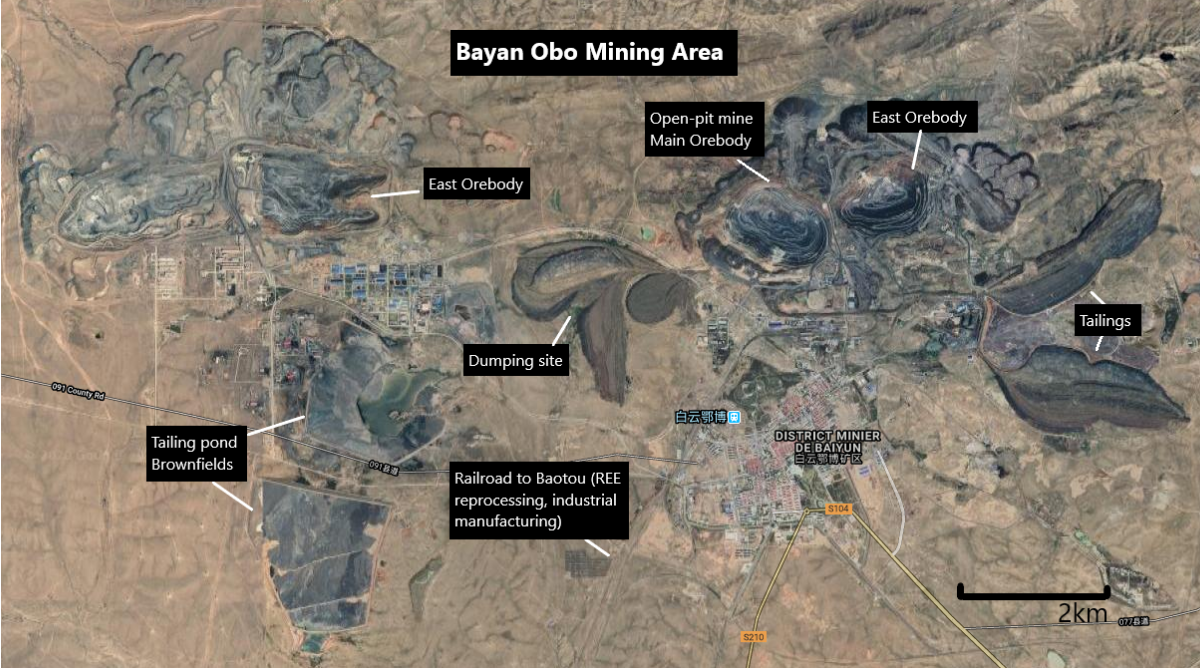
At the Bayan Obo mine, the largest in the world, this translates into roughly 13 million m³ of water consumption per year for a production of 750,000 tonnes of concentrates. Behind China's refining power, then, lies a considerable environmental price, largely driven by coal-fired power and wastewater pollution.
With the recent export restrictions on rare earth metals and magnets, Beijing has once again demonstrated its geopolitical leverage. The G7 countries are now talking about coordinated countermeasures and an accelerated diversification of the supply chain. The United States is attempting, through the Inflation Reduction Act and the Defense Production Act, to build its own midstream industry, together with partners such as Australia and Canada. Defence provides an additional driver here. Under the guise of "strategic control", the build-up of production capacity within the US is being approved at an accelerated pace. This is not surprising: an F-35 fighter jet or a Leopard 2 tank contains roughly 400 to 450 kilograms of rare earth metals, while a submarine requires as much as 6,000 kilograms. These metals are therefore not only crucial for the energy transition, but also form the invisible backbone of modern military power.
According to the Financial Times, Europe is once again lagging behind here too: it does have a Critical Raw Materials Strategy, but attempts at large-scale mining and processing run into political and environmental resistance. The result is that Europe has become doubly dependent: on American digital technologies and on Chinese raw materials processing. While China and the US invest trillions in strategic industries such as AI, robotics and batteries, European efforts remain "marginal". Without a rapid mobilisation of capital and industry, Glenny warns, the EU will slide into a structural position of being a "supplicant", dependent on both Washington and Beijing.
Cryptos lose their shine, gold shines on
While crypto prices slumped, gold prices simply kept rising, a sign that in turbulent times confidence is once again shifting towards precious metals. Last week the trade war escalated right around the closing time of the US stock markets. Investors looking to reduce their risk sought out markets that also allowed trading after the close and naturally ended up in the 24-hour markets for crypto and altcoins. What followed was a genuine wave of selling during the night from Friday to Saturday, which even led to the liquidation of several heavily leveraged crypto funds.
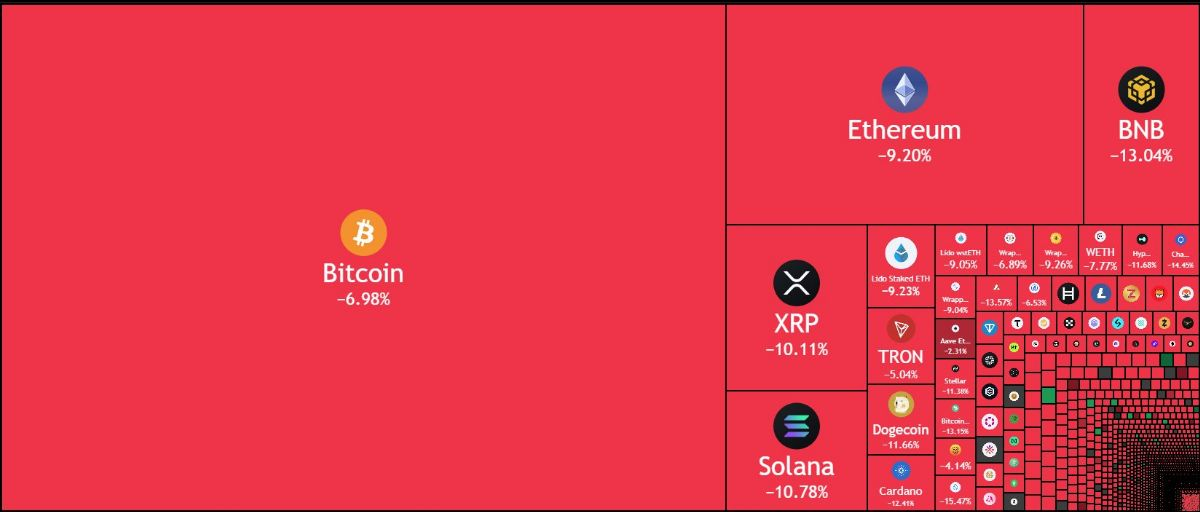
On 10 October, the crypto market was then hit by an abrupt flash crash. Altcoins in particular took heavy blows (declines of more than 30%), while Bitcoin held up reasonably well (-10%). According to Charlie Erith, founder of Wiston Capital, the total market value of crypto fell by more than 13% since 6 October. At the low point, tokens (excluding Bitcoin, Ether and stablecoins) dropped by almost 33% in just 25 minutes, accounting for around USD 18.7 billion in liquidations and the closure of 1.6 million trading accounts.
The event made painfully clear that crypto has not yet earned the safe-haven status that some attribute to it. In periods of geopolitical and monetary uncertainty, investors still seek the relative security of tangible assets. Moreover, in recent months, the ability to invest in cryptos using leverage has rapidly become popular, which has precisely triggered the accelerated unwinding of positions.
Meanwhile, the gold price is marking USD 4,300 per ounce, posting its highest weekly return (>8%) since 2008 (when Lehman bank went bankrupt).
Doing nothing is the biggest risk
An interesting discussion has arisen on LinkedIn this week between Coen van de Laar (Achmea Asset Management) and several other financial experts about the influence of taxes on investing and the perverse incentives that result from it. In his post, Van de Laar shares recent calculations showing that, once inflation and tax are taken into account, the real return for many investors over the long term is practically zero or even negative.
With elections approaching, virtually every party is promising a "fairer" tax system. But what does fair actually mean, when savings and investments have for years been structurally eroded by inflation and tax?
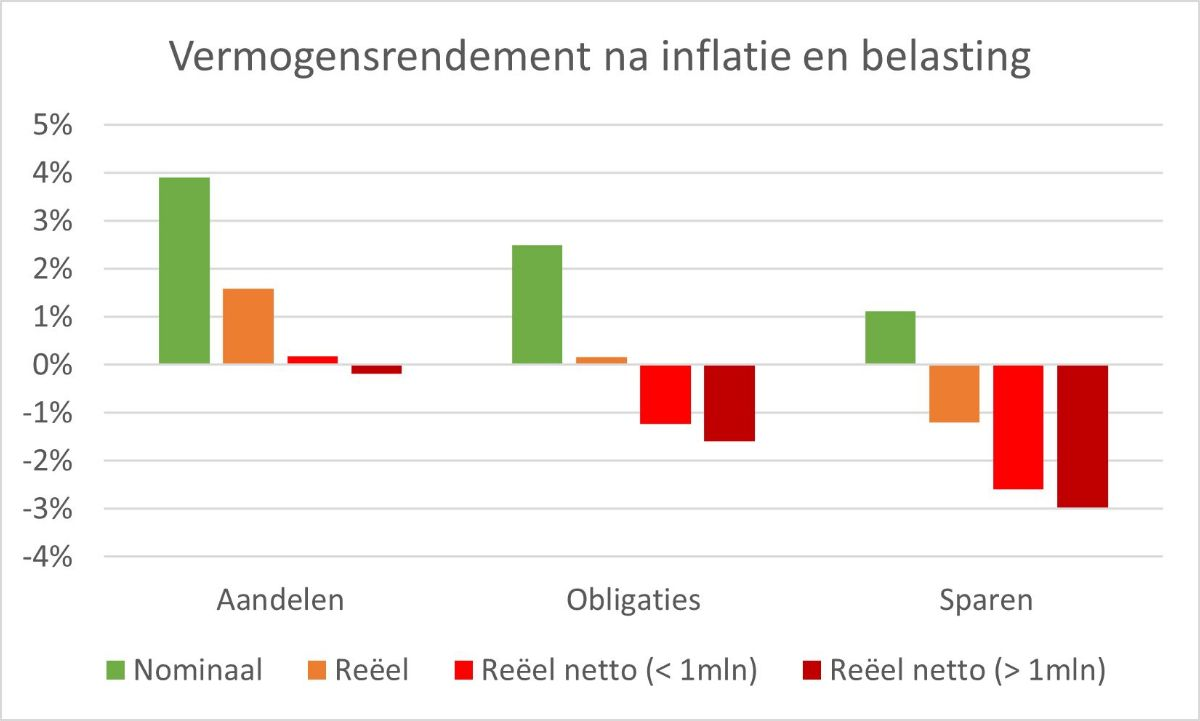
In his contribution Coen van de Laar shows just how heavily the box 3 wealth tax (tax on savings and investments) now weighs on Dutch households, especially given the proposed increase to 49%. According to his calculations, once inflation and the box 3 levy are factored in, hardly anything is left of the historical average return on equities, bonds and savings. His message is pointed: the government is not taxing investors' profits, but their purchasing power. For most households, this means that wealth does not grow, but slowly evaporates.
The discussion ties in with an earlier analysis by David Blitz (Robeco), who drew similar conclusions a year ago. Blitz pointed out that since the launch of the euro (1999), the real return on bonds has been practically zero, and clearly negative for savings. Even equities, normally the best protection against inflation, generate barely any added value after tax. His suggestion: tax not the nominal return, but the profit after correcting for inflation. That would distribute the tax burden more fairly and make saving and investing attractive again.
For investors, the conclusion is inescapable: if you want to preserve or grow your wealth, you cannot hide behind savings accounts or bonds. Not investing is itself a form of investing, just one that loses to inflation.
Receive weekly insights in your inbox
Exclusive analyses and updates on family holding companies and global market developments.
Would you like more information about our services? Feel free to get in touch.
Get in touch
Disclaimer:
No rights can be derived from this publication. This is a publication of Tresor Capital. Reproduction of this document, or parts thereof, by third parties is only permitted with prior written consent and with reference to the source, Tresor Capital.
This publication has been compiled by Tresor Capital with the greatest possible care. The information is intended in a general sense and is not tailored to your individual situation. The information must therefore explicitly not be regarded as advice, an offer or a proposal to purchase or trade investment products and/or to take up investment services, nor as investment advice. The authors, Tresor Capital and/or its employees may hold positions in the securities discussed, for their own account or on behalf of their clients.
You should carefully consider the risks before you start investing. The value of your investments may fluctuate. Past performance offers no guarantee for the future. You may lose (part of) your invested capital. Tresor Capital disclaims any liability for any inaccuracies or errors. This information is purely indicative and subject to change.
Read the full disclaimer at tresorcapitalnieuws.nl/disclaimer .
This article was originally written in Dutch and automatically translated into English with the help of AI. In case of any difference, the Dutch original prevails.