Family Holdings #24 - AI, AI, AI



This week's topics:
Alphabet is issuing USD 85 billion in new shares, its first share issuance in almost twenty years, with Warren Buffett's Berkshire Hathaway participating for USD 10 billion. That raises the question of why a company with USD 165 billion in annual operating cash flow needs to raise so much extra capital. The answer lies in demand for AI that outstrips its own supply, in a cloud division growing at 63 percent, and in multi-billion-dollar compute contracts extending all the way to a remarkable deal with SpaceX. We break down the three scenarios behind the timing, explain why the ceiling on how much tech companies can spend on AI is no longer set by their profits but by the market, and use the shift from training to inference to show why Alphabet's own TPU chips are for the first time genuinely putting pressure on Nvidia, so convincingly that even its rival committed to Google's hardware for five years.
Chapters Group and Topicus.com both published their views on AI within vertical market software (VMS), the former via an interview with CTO Tobias Pook, the latter via a blog post from Topicus Finance CEO Clint van Haalen. Two holding companies, two perspectives, one shared conclusion, namely that AI makes building software cheaper but makes precisely the qualities an established VMS holding company already possesses more valuable. We place both pieces side by side and explain why domain knowledge, customer trust and data remain the real moats, with an update from Pook on the Momentum initiative along the way.
Tencent is, according to the Financial Times, close to launching a built-in AI agent in WeChat, the super-app used by 1.4 billion Chinese users. After years in which Tencent lagged behind Alibaba and ByteDance in AI models, such an agent on China's most-used app could close the gap in one stroke, although computing power, cost and consumer trust remain open questions. We recap the news and also discuss the recent interview with Prosus' CEO Fabricio Bloisi, a major shareholder of Tencent, on agentic commerce.
In Brief:
HEICO (New York: HEI.A) announced this week that its subsidiary Exxelia has acquired 90% of US-based CalRamic Technologies; the remaining 10 percent stays in the hands of founder and CEO Jeff Day. CalRamic designs and manufactures high-voltage ceramic capacitors for high-reliability applications, primarily in aerospace and defence. The company will now fall under HEICO's Electronic Technologies Group.
Investor AB (Stockholm: INVE.B) has further increased its stake in private equity house EQT. This week the Wallenberg holding company bought 1.20 million EQT shares at an average price of SEK 291.68, representing a transaction value of SEK 348.7 million (~€32 million). Investor thus remains by far the largest shareholder of EQT, with 183.29 million shares, or 14.94% of the capital and voting rights. As we discussed with you before, this is not the first time this year that Investor has added to its position; it did so earlier in February and March, and now again.
The Boël holding company Sofina (Brussels: SOF) took a minority stake in the UK's Creature Comforts, a provider of "integrated pet care" founded in London three years ago that combines its own clinics with online consultations and a subscription model. The amount was not disclosed. Creature Comforts, which now operates twelve clinics, intends to use Sofina's funding to open new clinics more quickly, offer 24-hour care and further develop its technology. It is Sofina's second investment in a short space of time; last week the holding company put money into Indian start-up FirstClub, an online supermarket platform, in a USD 55 million funding round it led together with Peak XV (the former Indian arm of Sequoia).
Constellation Software (Toronto: CSU) was active in the market in three ways over the past week. On 5 June, it took a 3.2 percent stake in listed Accesso Technology Group (ACSO, London), a supplier of software for ticketing, point of sale and guest experience management. This is another application of the PEMS strategy (Public Equity Minority Stakes), in which Constellation takes minority positions in listed software companies rather than acquiring them outright. In addition, the group carried out two regular acquisitions. Through Libra Software Group (operating group Vela), it acquired Australia's Expedient, active in supply chain software for logistics and freight forwarding, and through Omegro (operating group Volaris), it acquired the UK's tlmNexus from Brighton, which supplies software for the management of defence and security equipment, with the UK Ministry of Defence as a key customer.
National Bank Financial reiterated its outperform rating this week on TerraVest Industries (Toronto: TVK), with a price target of CAD 170, despite the reports surrounding Executive Chairman Charles Pellerin. Analyst Nathan Po assumes that TerraVest's growth strategy will most likely remain "business as usual" and so far sees no indication that the rest of management is involved in the matter. Even in the unlikely scenario that the acquisition machine grinds to a halt, Po points to organic growth catalysts, namely the recovery in freight and the response to abundant demand for data centre capacity.
Topicus (Toronto: TOI) has, through subsidiary TSS, acquired Germany's EBG Data GmbH from Neuss by means of a carve-out, the separation of a business unit from a larger entity, in this case from ANWR Group. EBG Data, founded in 1988, supplies retail and merchandise management software to European customers, with a focus on the sub-verticals of sporting goods, toys and footwear, and serves more than 1,100 customers.
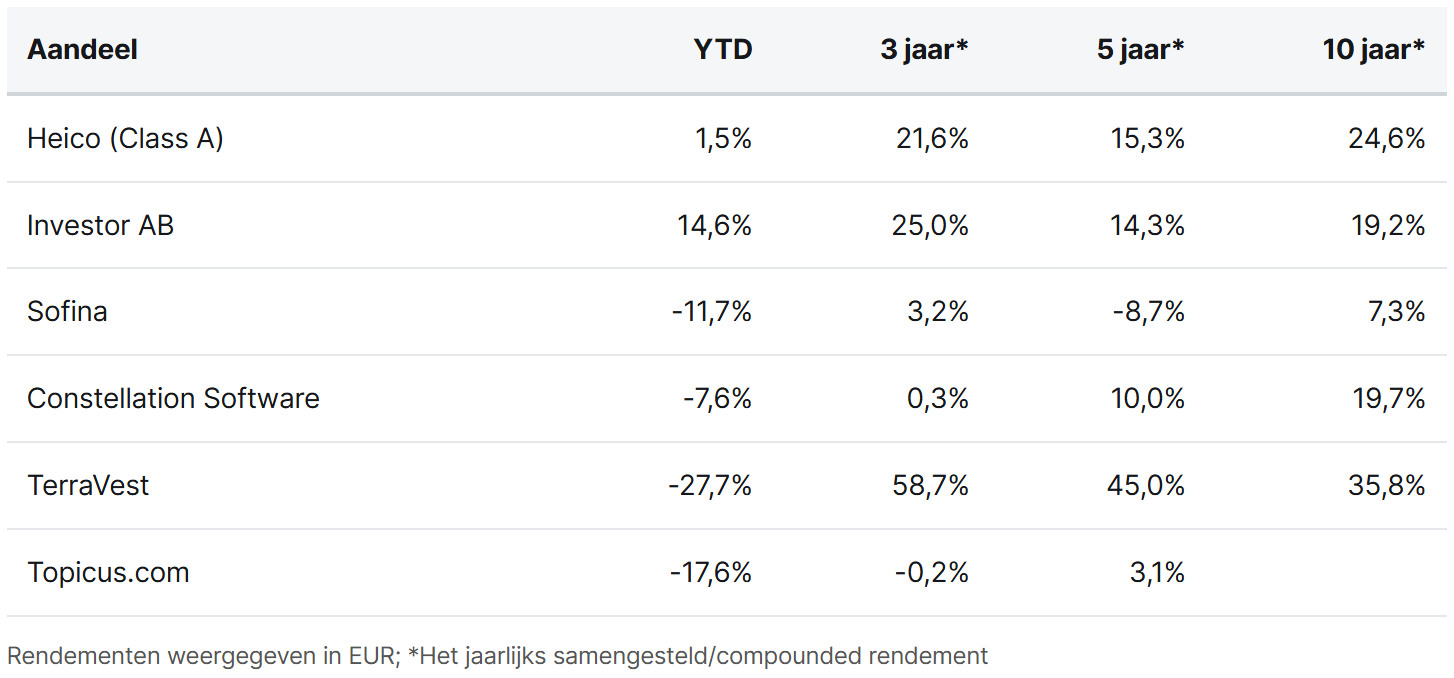
Heico, Investor AB, Sofina, Constellation Software, TerraVest and Topicus are currently traded on the New York, Stockholm, Brussels and Toronto exchanges at prices of USD 246.48, SEK 379.10, EUR 215.80, CAD 2,936.20, CAD 118.49 and CAD 102.57, respectively.
At the table with KKR: A 'K-Shaped Everything'
During our analyst Joep Dikken's recent visit to the London office of investment holding company KKR (New York: KKR), he sat down with Philipp Freise and Craig Larson. With these two gentlemen, KKR brought experienced professionals to the table. Freise, co-head of European private equity activities, has been with the firm since 2000 and experienced the dotcom bubble, the credit crisis, the European debt crisis and the pandemic up close. Larson has been with the firm for seventeen years and leads investor relations.
Ahead of the conversation, there was no tightly defined objective in mind. There was no search for shocking revelations or hard-hitting headlines; the aim was to hold an open dialogue based on a number of relevant topics. It offered a unique opportunity to gain knowledge and experience from one of the largest and most experienced capital allocators in the world.
 Joseph Chamberlain
In addition, KKR published its substantial Mid-Year Outlook 2026 this week, titled 'The Divergence Conundrum'. In this report of nearly ninety pages, the firm bundles its semi-annual macro view on growth, inflation, asset allocation and investment themes. The report successively addresses central themes such as the security of critical sectors, energy infrastructure and collateral-backed cash flows. It also contains a section with frequently asked questions on bond markets and expected returns, followed by regional economic forecasts for the United States, the eurozone, China and Japan. Finally, capital markets are addressed, with specific attention to interest rates, the S&P 500, oil and the dollar. KKR emphasises that this represents the personal view of Henry McVey and his team, and not the official research position of the firm itself.
Would you like to read more about the visit, the recent outlook and the deals surrounding KKR? In this week's Deep Dive, we discuss it in detail.
 Joep Dikken
Alphabet raises billions to finance unprecedented AI growth
Alphabet (New York: GOOGL), the parent company of Google, surprised financial markets last week with a plan to raise 85 billion dollars through the sale of shares. This is a notable move, as it is the first time in nearly twenty years that the company has issued shares in this manner. The capital injection is directly linked to the immense infrastructure required for the further development of artificial intelligence (AI).
An important part of this share sale is a major investment of USD 10 billion by Berkshire Hathaway, Warren Buffett's investment company (read also our newsletter from last week for the Berkshire perspective). The remaining USD 75 billion is being raised through a mix of, among other things, guaranteed share issuances (USD 35 billion) and the direct sale of shares on the stock exchange (USD 40 billion). In financial media, Berkshire Hathaway's involvement is seen as a powerful, positive signal and an important show of confidence in Google's AI infrastructure. Investors note that Alphabet has long used the debt market for financing, having taken on more than USD 55 billion in debt since November, but is now taking a different route. Analysts suggest that credit markets may be becoming less favourable for the extremely expensive financing of AI data centres, which is why Alphabet considers it wiser to change course now and raise new capital from the equity market instead.
Why does a company known as a gigantic money machine, which generated USD 165 billion in operating cash flow last year alone, need so much additional capital? Alphabet answered this question itself in no uncertain terms in a recent press statement:
"The company is experiencing strong demand for its AI solutions and services from businesses and consumers, at levels that exceed the company's available supply".
This explosive demand is clearly reflected in the figures. In the first quarter of 2026, Google Cloud's revenue grew by 63% to an impressive USD 20 billion. To expand the required computing power (compute), Alphabet is closing enormous multi-billion-dollar deals. For instance, an agreement was recently signed under which Google will rent up to USD 30 billion worth of cloud services and computing power, including access to 110,000 chips from market leader Nvidia, from the space company SpaceX. The contract is structured so that Google pays USD 920 million per month to SpaceX from October 2026 through June 2029. In the run-up to this, capacity will be gradually built up at a reduced rate. Firm guarantees have also been built in: if SpaceX fails to deliver the promised chips by 30 September 2026 (including a one-month extension), Google has the right to terminate the contract immediately or negotiate a lower price for the capacity that has been delivered. From the end of 2026, both parties will also have the flexibility to terminate the agreement with a notice period of 90 days.
The sudden need for USD 85 billion shows that the limit on what tech companies can spend on AI is no longer determined by their own profits, but by what the market is willing to finance. Rihard Jarc outlines three interesting scenarios on X:
- Accelerating demand: Alphabet is seeing demand for its cloud services and its own AI model (Gemini) rise so sharply that it must increase its planned infrastructure investments substantially more than it originally anticipated.
- Getting ahead of competitors: Alphabet is trying to strategically stay ahead of the planned stock market listings of competitors such as OpenAI, SpaceX and Anthropic. By raising large sums of money now, it is withdrawing liquidity from the market. With this money, it can also secure scarce computer chip suppliers, to prevent competitors from cutting it off later.
- An internal technological breakthrough: A third possibility is that Alphabet has achieved a huge breakthrough behind the scenes in the development of its AI models. To roll out this new model, it anticipates needing vastly more computing power, and it wants to secure financing for this now while the market is still very positively disposed.
These scenarios certainly do not exclude one another; it is most likely a combination of the three. An enormous amount of capital is probably needed to further roll out and commercialise the company's own TPU chips. A recent analysis of the technological developments behind these chips shows why this capital injection is so crucial:
 Beth Kindig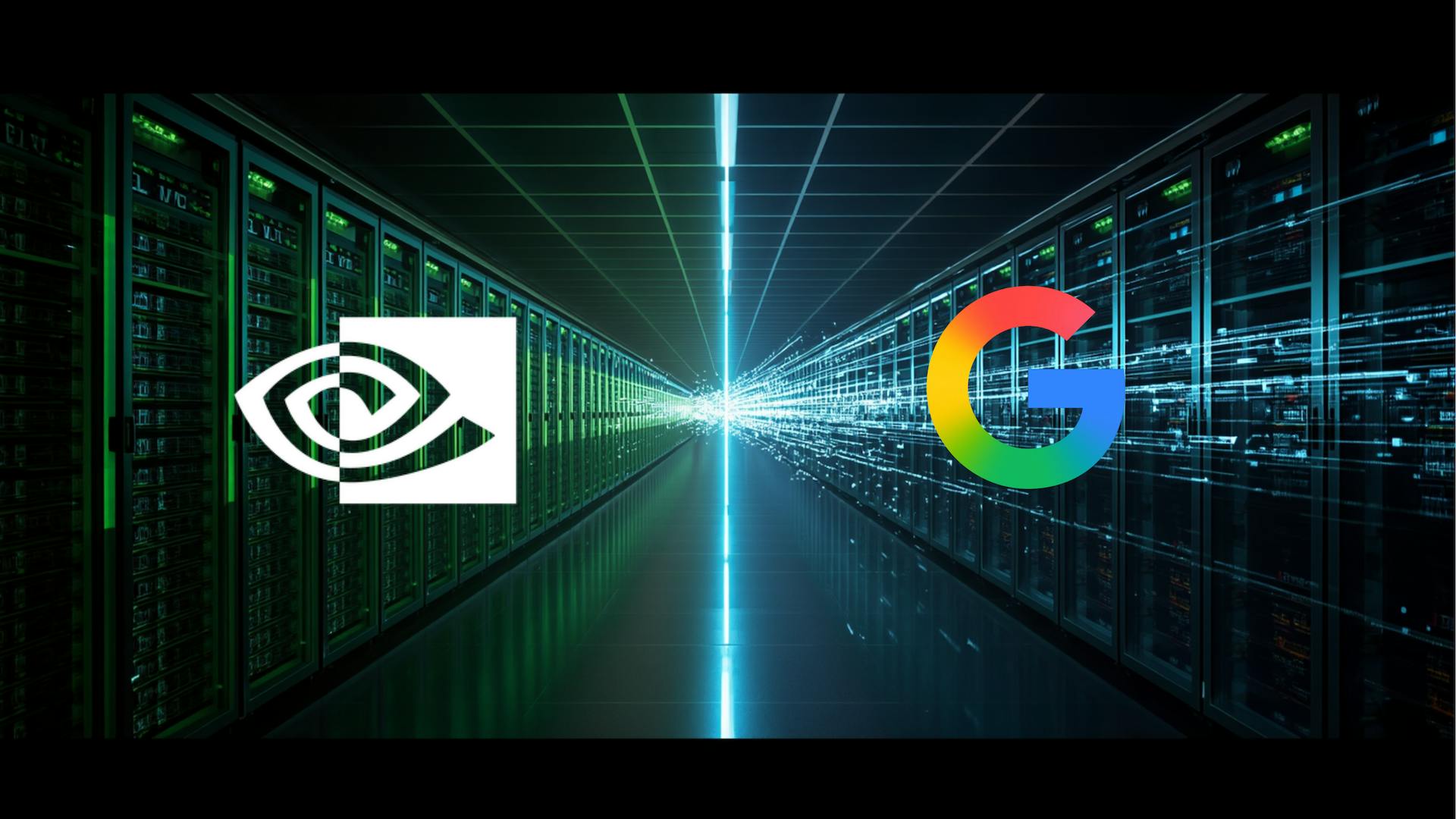
In this analysis, I/O Fund highlights Google's strategic decision to start selling its own AI chips (TPUs) to external data centres. This step marks the moment at which Google is entering into direct competition with market leader Nvidia in the open market for AI hardware. According to author Beth Kindig, Google's timing is no coincidence, but is driven by a fundamental shift in the way AI is being used.
The AI market is transforming at a rapid pace. Whereas the focus in recent years was on training large models once, the emphasis is now shifting towards 'inference': the continuous application and running of those models by end users. Because inference is an 'always-on' process, it will eventually consume the largest share of data centre capacity. According to McKinsey estimates, the split will still be 50/50 between training and inference in 2026, but by 2030 inference will already account for 60% of capacity. As a result, the financial goal for tech companies is changing. It will no longer be purely about having the most computing power, but about minimising the cost per unit of processed data (the 'token').
The author explains that Alphabet has designed its newest AI chips (the TPU v8) to communicate with one another in a much smarter and faster way than competitor Nvidia's systems. In practice, this translates directly into cost advantages. For the same price, the new generation delivers up to 80% more performance than its predecessor. This effect is already visible in the market, since the use of Alphabet's own AI model (Gemini) is currently roughly 60% cheaper than comparable models from competitors such as OpenAI and Anthropic. The fact that this more efficient infrastructure is hitting the mark is further underlined by the market itself: AI developer Anthropic has traditionally relied heavily on Amazon's systems, but has now nevertheless chosen to commit itself on a gigantic scale to this cheaper computing power from Google for the next five years. Whether this is a deliberate choice based on quality or simply the result of capacity constraints naturally remains unclear.
Alphabet is currently trading on the New York stock exchange at a price of USD 360.03 per Class A share.
Two VMS holding companies, one shared conclusion
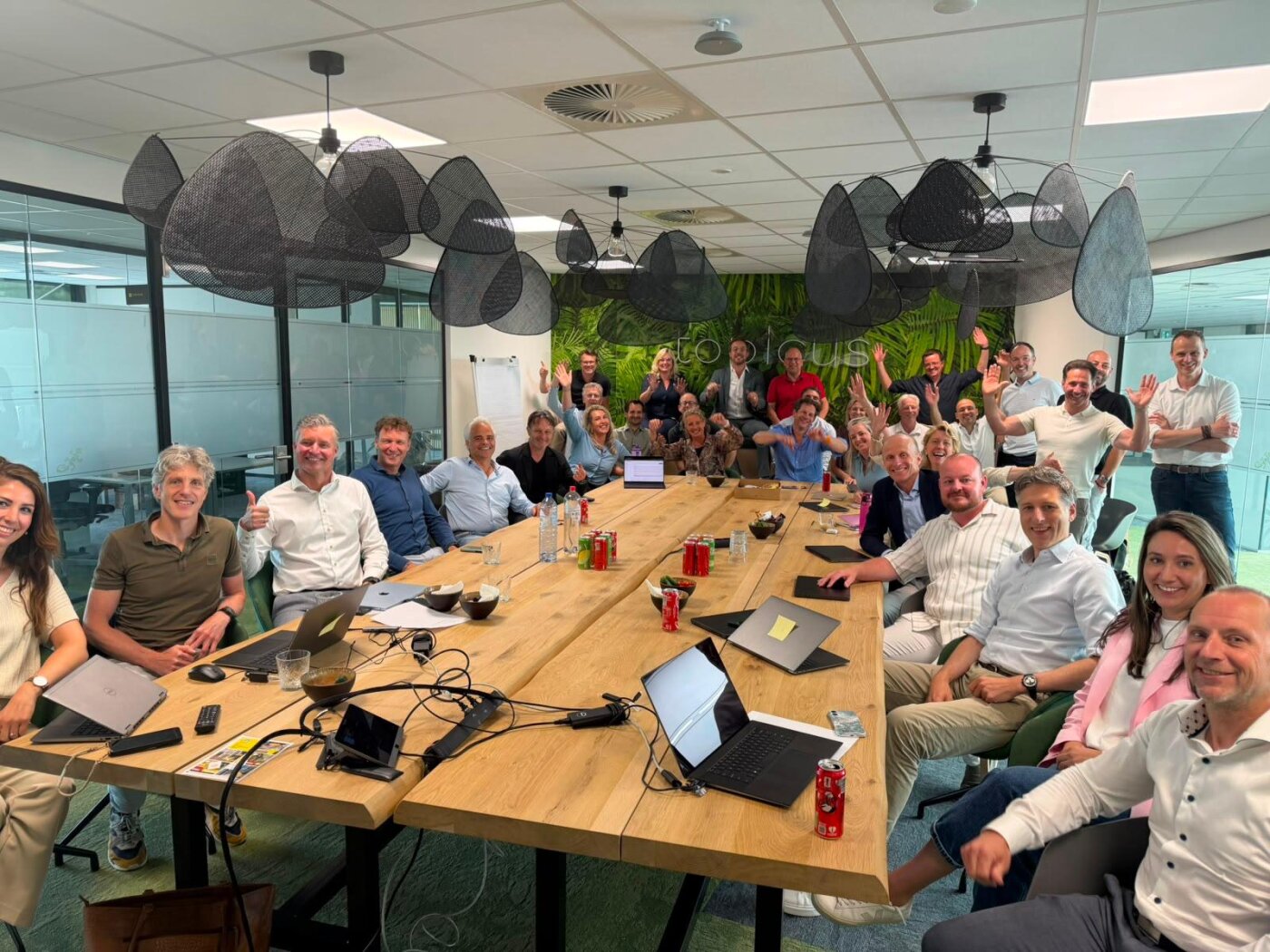
Recently, both the German VMS holding company Chapters Group (Frankfurt: CHG) and the Dutch-Canadian Topicus.com (Toronto: TOI) published pieces on the role of AI within vertical market software (VMS, i.e. software for well-defined niche markets). This is a topic that recurs regularly in this newsletter. It concerns an interview with Tobias Pook, Chief Technology Officer (CTO) of Chapters Group, and a blog post by Clint van Haalen, CEO of Topicus Finance, a division within Topicus.com. Two different holding companies, two different angles, and yet an almost identical conclusion. We set them side by side below.

What AI actually lowers, and what it does not
Van Haalen sums up the essence in one sentence: AI lowers the threshold for building software, but not the bar for putting that software into production. During an internal Vertical AI Immersion Day, Topicus had its management teams build a new application in small groups within just a few hours; what struck Van Haalen most was the speed with which an idea turned into a working prototype. In his view, the distance between an idea and a tangible concept has become drastically smaller.
At the same time, he issues a warning, since building an AI-first application is something quite different from delivering a reliable vertical software product that functions in a production environment. Architecture, security, governance, scalability and operational safeguards, he argues, still require professional expertise. That expertise is shifting rather than disappearing, namely towards understanding model behaviour, validating outputs, managing token consumption, protecting data and meeting compliance requirements.
Pook arrives at a related observation from a different angle, regarding what AI actually does make cheaper. He argues that a large codebase, once one of the most important moats of a VMS company, no longer offers protection in a world of agentic development (software development in which AI agents write code autonomously). Low customer churn, he says, was always a derivative of underlying qualities, and sometimes simply of the fact that replicating millions of lines of code was not worth the effort for newcomers. That particular moat is eroding; what remains, according to both, is the part that is hardest to replicate.
The moats that AI does not erode, but amplifies
Domain expertise, customer trust and decades of structured data are, according to Pook, the moats that AI does not invalidate. Van Haalen puts the same idea in terms of Topicus's own position, namely that the value never came from technology alone, but from the combination of deep domain knowledge, reliable software that carries critical processes every day, close customer relationships and years of implementation experience.
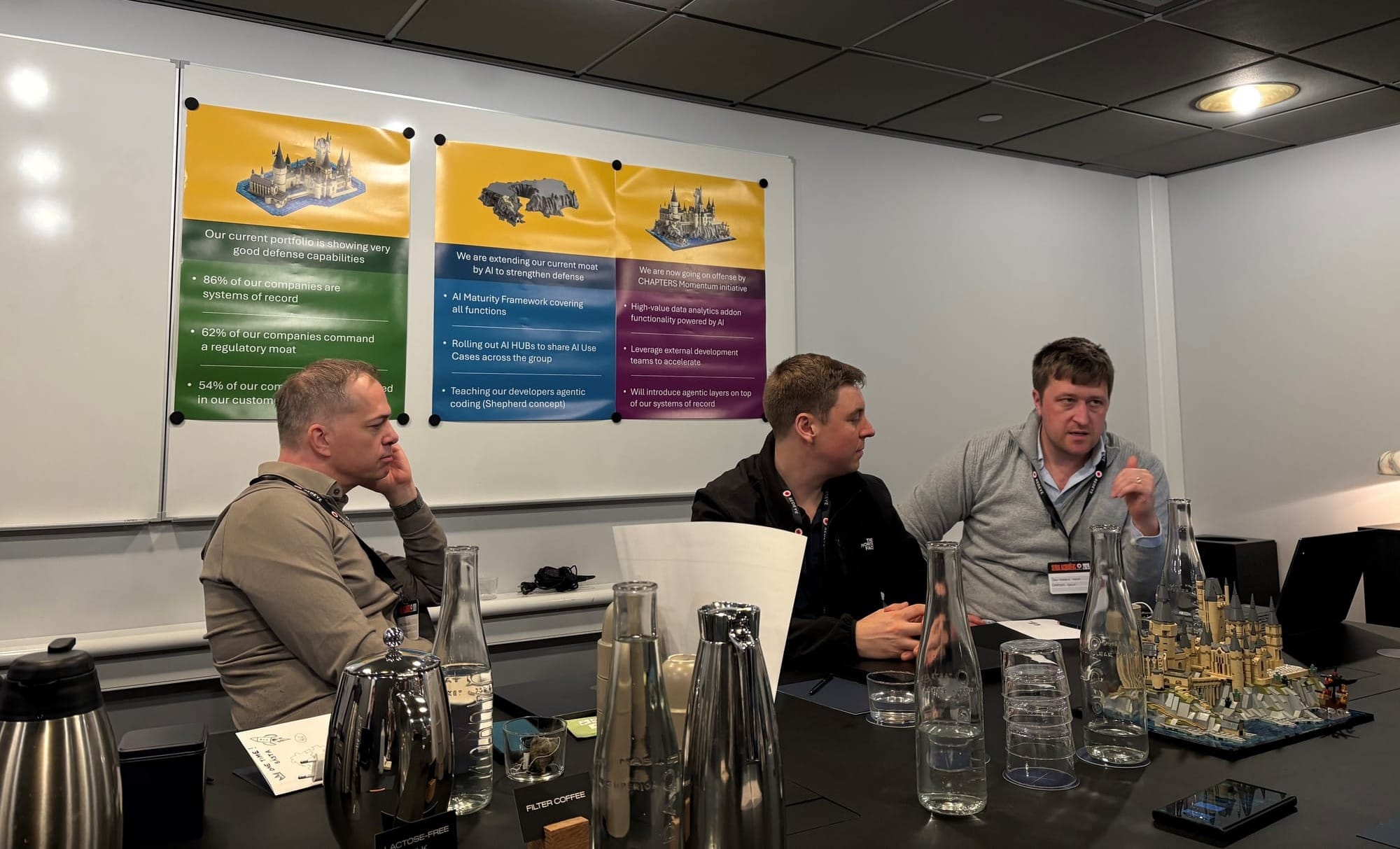
Both, however, go a step further than simply "not eroded". Pook points out that the customer data accumulated over decades has always been valuable, but that AI opens up new and faster ways to extract useful insights from it for the customer; the existing pile of data thus becomes a source of new functionality rather than a passive asset. Van Haalen reasons along the same lines, namely that the value of that expertise increases rather than decreases as AI becomes more powerful. In both lines of reasoning, then, AI actually reinforces existing advantages.
The economic logic behind this is relevant for investors. Both companies serve sectors in which trust and regulation are all-important and in which the consequences of a mistake are severe. Pook argues that no one replaces such mission-critical systems without a clear business case and a thorough risk assessment, and that the ability to produce code quickly is not among the most important factors in that decision. Van Haalen points out that customers in critical sectors continue to demand solutions that are safe, compliant, reliable and explainable, and partners who understand their regulatory environment and the consequences of mistakes. It is, in the words of both executives, precisely that data built up over years and that customer trust which an AI-native newcomer cannot easily replicate.
From talking about AI to building it in
Both pieces also address the question of how you translate this conviction into change within a decentralised group, and both warn against non-commitment. Van Haalen notes that the next phase of AI adoption does not begin with experimenting, but with setting up the structures, controls and capabilities that enable an organisation to scale AI responsibly and sustainably. Pook puts it more sharply, saying that he does not want to build a handful of lighthouseprojects while leaving the rest of the business as it is.
At Chapters, this has taken shape in the Momentum initiative, launched in February 2026, in which all operating companies identify their biggest bottlenecks and submit proposals for AI tools that, based on their own data, deliver demonstrable cost savings or quality improvements for customers. In the interview, Pook gives an update on where things stand. The submissions were used for a group-wide competition from which the three most promising, usable applications were selected, each backed by concrete customer commitments; these are now being built by external teams in collaboration with the CTO office and the operating companies, funded by the holding company on top of the regular R&D budget.
Pook calls the number and quality of the submissions a pleasant surprise and reports that the originally one-off competition model has since been turned into a permanent programme. Under this programme, companies can continuously submit use cases with a fully worked-out business plan and a group of core customers co-investing, in exchange for implementation support and funding. He describes Momentum as a phased framework that makes artificial intelligence development less risky by validating customer demand and financial commitments step by step, and states explicitly that he does not want to chase prestige projects, in other words functionality that looks modern but adds little value. He expects the first tangible effects on annual recurring revenue (ARR) from new AI features in 2027. In addition, Chapters is rolling out an AI Hub, an environment in which operating companies can use the latest models with data within their own networks, at a pace of two to three companies per week.
Topicus approaches this through its Immersion Days, where management teams do not discuss AI but experience it themselves, drawing the conclusion that decisions around AI (platform strategy, governance, intellectual property, cost management, the limits of autonomous decision-making) are no longer technology questions but strategic decisions.
Conclusion
What stands out in both pieces is a level-headed attitude towards a technology that mostly triggers hype elsewhere. Neither denies that AI is disruptive, and Pook is honest about the moats that are under pressure, but both frame the shift within the same context. AI makes building software cheaper, thereby shifting scarcity towards precisely the qualities that an established VMS holding company already possesses, namely trust, domain expertise, data and operational reliability in regulated environments. Pook accordingly calls moving forward wholeheartedly the rational choice rather than the aggressive one, because a wait-and-see approach only works if the pace of change turns out to be slow, and in any other scenario it puts the business model at risk. We share that reasoning, and it is precisely for this reason that we feel comfortable as shareholders of these companies amid the rise of AI.
Chapters Group and Topicus.com ended the trading week on the Frankfurt and Toronto exchanges at share prices of EUR 31.50 and CAD 102.98, respectively.
Tencent: an AI loser, until it no longer is?
The Financial Times reported earlier this month that Tencent, the main holding of the Dutch holding company Prosus (Amsterdam: PRX), is close to launching a built-in AI agent for WeChat. This super-app is used in China by roughly 1.4 billion people for almost everything, from messaging and payments to ordering rides.
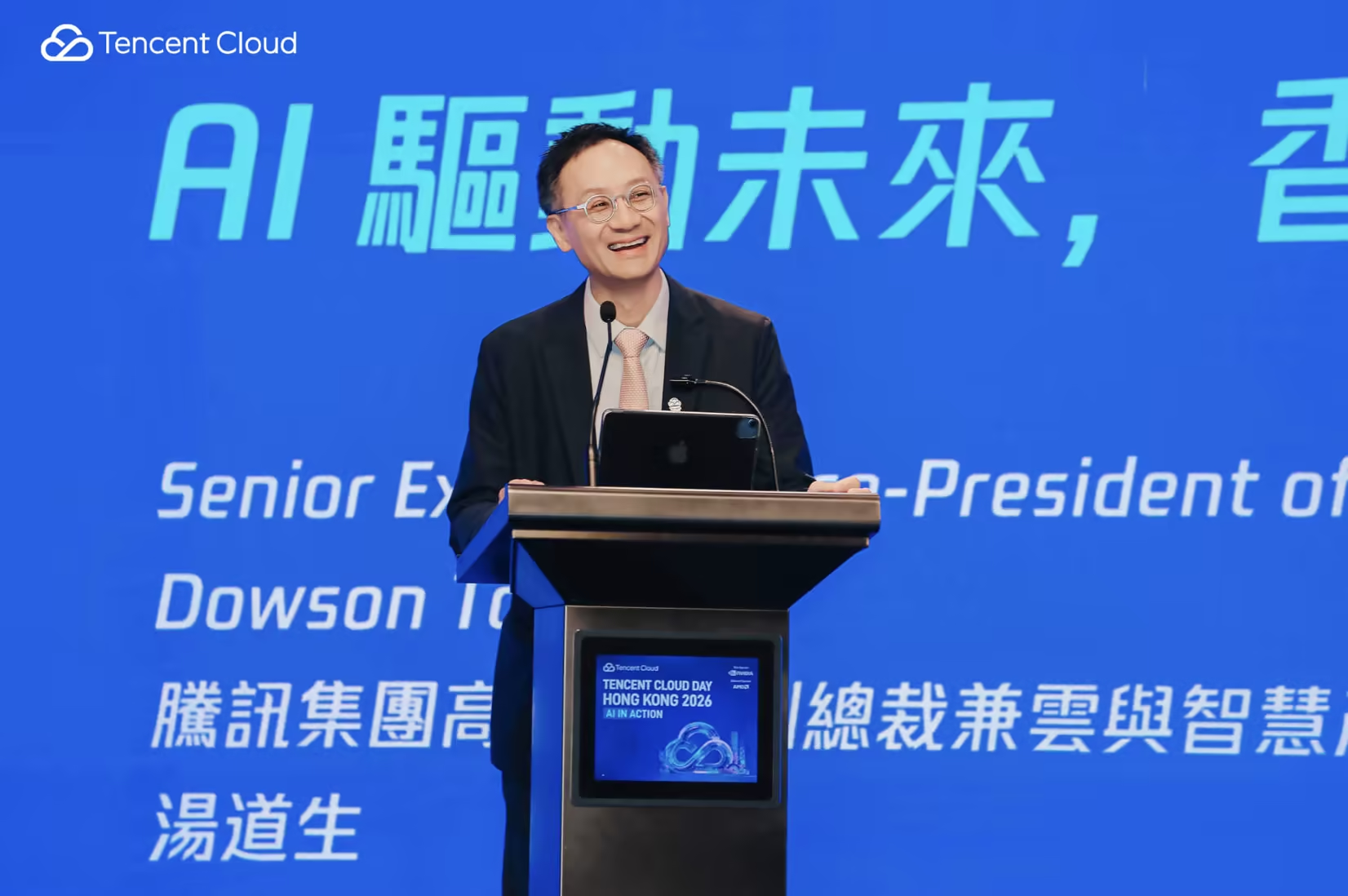
According to the FT, Tencent is testing a prototype of the agent that can complete tasks within the app, and the company intends to start the mandatory compliance process that precedes a public launch as early as this month. This will be followed by a test with a small group of external users and a phased rollout; there is no definitive launch date yet, as the length of the approval process is uncertain. Users would reportedly be able to open the agent by swiping right on the home screen, after which it automatically taps into WeChat's millions of mini-apps, the foundation underlying the app's broad functionality, for example to find a café and order a drink based on taste and price preferences. Tencent already has a chatbot with a search function, Yuanbao, within WeChat, but a fully-fledged agent is a substantially bigger step.
The strategic stakes are high. Tencent has fallen behind domestic rivals such as Alibaba (with its Qwen app) and ByteDance (Doubao) in AI models, both of which have already rolled out agent functions and are growing rapidly. If Tencent manages to get a working agent onto China's most widely used app, it could close that gap in one stroke. President Martin Lau called agentic AI a breakthrough application on the recent analyst call, and the share price rose 10% on the news. Even so, a sober assessment is warranted, as there are obstacles. Having sufficient computing power for a mass rollout remains a challenge now that Nvidia chips can no longer be used, the rollout is expected, according to internal estimates, to be very costly with uncertain revenues in the short term, and whether consumers will actually let an agent trade with their money remains to be seen. So this is not a fait accompli, but an ambitious and capital-intensive project still at an early stage.
This theme also features prominently at the Prosus level. In the recent podcast 'In Good Company' hosted by Nicolai Tangen, CEO of the Norwegian sovereign wealth fund Norges Bank Investment Management, Prosus CEO Fabricio Bloisi names enabling agents to complete transactions, or agentic commerce, as one of his top priorities. He is now building this capability across the group's own ecosystems, including iFood in Brazil, Just Eat (Thuisbezorgd) in Europe, Swiggy in India and the payment platform PayU. In doing so, he applies his well-known approach of small, entrepreneurial teams ("jet skis") operating within an organisation that must be both disciplined and disruptive at once. You can watch the full interview above.
Receive weekly insights in your inbox
Exclusive analyses and updates on family holding companies and global market developments.
Would you like more information about our services?
Get in touch
Disclaimer:
No rights can be derived from this publication. This is a publication of Tresor Capital. Reproduction of this document, or parts of it, by third parties is only permitted after written consent and with reference to the source, Tresor Capital.
This publication has been compiled by Tresor Capital with the greatest possible care. The information is intended in a general sense and is not tailored to your individual situation. The information should therefore explicitly not be regarded as advice, an offer or a proposal to purchase or trade investment products and/or to obtain investment services, nor as investment advice. The authors, Tresor Capital and/or its employees may hold positions in the securities discussed, for their own account or for their clients.
You should carefully consider the risks before you start investing. The value of your investments may fluctuate. Past performance is no guarantee for the future. You may lose (part of) your invested capital. Tresor Capital disclaims any liability for any inaccuracies or errors. This information is purely indicative and subject to change.
Read the full disclaimer at tresorcapitalnieuws.nl/disclaimer .
This article was translated automatically from Dutch using AI. In case of any difference, the Dutch original prevails. Read the original in Dutch.