
Family Holdings #25 - Digital sovereignty within permanent capital



This week's topics:
Cipal Schaubroeck, the market leader in ICT solutions for Flemish local authorities, was acquired last year by Constellation Software subsidiary Total Specific Solutions (Topicus.com). That acquisition raised questions in Flanders similar to those being asked in the Netherlands today: is it wise to hand sensitive government ICT to a foreign conglomerate? CEO Nico Kras gives an inside look for the first time.
Brookfield CEO Bruce Flatt and Howard Marks, co-chairman of Oaktree Capital, offer a joint view of the market in an interview with Barron's. The partnership between the two firms, described by Barron's as Wall Street's best-kept secret partnership, combines Brookfield's position in the backbone of the economy with Oaktree's expertise in credit provision. Marks warns that seventeen years of favourable economic conditions have blinded investors to the risks of illiquidity and that asset prices are structurally above their intrinsic value. Flatt, for his part, sees enormous opportunities in AI infrastructure, but tempers the market euphoria: the complexity of building data centres is being systematically underestimated, which creates value for parties with the scale and operational capacity to actually deliver it.
Chapters Group saw strong expansion in 2025 with sixteen acquisitions, which pushed pro forma total output up to EUR 195 million and operating profit to EUR 49.1 million. Adjusted organic revenue growth stood at 4.7% and operating profit grew organically by 12%, while the net loss of EUR 29.65 million is purely of an accounting nature due to goodwill amortisation. For 2026, management expects a normalisation of profitability and an acceleration of organic growth, with operating profit expected to increase by 14% to 17%.
In Brief:
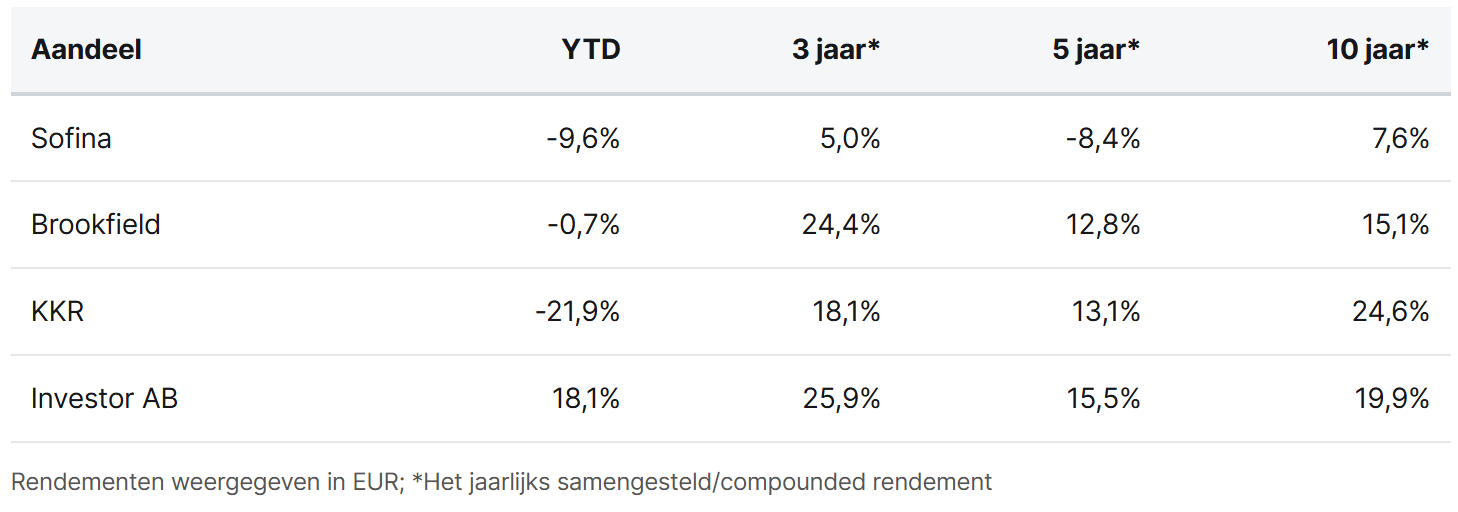
Sofina (Brussels: SOF) saw two pieces of news this week. On the one hand, the bad news from the Thoma Bravo corner, namely the definitive takeover of struggling software company Medallia by a group of creditors including Blackstone, KKR and Apollo, which means Thoma Bravo sees its entire stake of over 5 billion dollars evaporate. For Sofina, which holds Thoma Bravo as the ninth-largest position in its private funds portfolio, the impact is limited thanks to broad diversification, although it is of course not good news. On the other hand, good news from portfolio company Drylock Technologies, the Belgian nappy company. Drylock paid out a dividend of 30 million euros to its shareholders, the Van Malderen family and Sofina as a quarterly shareholder. It is only the second time in Drylock's history that the company has rewarded its owners in this way, a sign that the company's cash flow position is strong enough to allow capital to flow back.
Brookfield (New York: BN) is seeing one of its data centre companies head towards the stock market. Csquare, a Brookfield-backed company that manages 64 data centres with a total capacity of around 389 megawatts of sellable computing power, has filed for an initial public offering (IPO) with the US market watchdog, the SEC. The company intends to list its shares on the New York Stock Exchange under the ticker CSQR, with Brookfield remaining the majority shareholder. Although the underlying figures are not spectacular, the structurally growing demand for AI computing power forms the foundation of the story.
KKR (New York: KKR) took two notable steps this week. First, the investment holding company announced a new investment of 1.4 billion dollars in aircraft leasing via partner Altavair, aimed at long-term sale-and-leaseback arrangements with established airlines and freight carriers. Persistent delivery problems at Airbus and Boeing are keeping the supply of new aircraft tight, which structurally supports the leasing market. Second, KKR is benefiting from the SpaceX effect in the space sector. German satellite company OHB, in which KKR holds a 28.6% stake, announced a rights issue of 500 million euros for mergers and acquisitions, investments in launch vehicles and the scaling-up of production facilities. This makes OHB the first space company to tap the capital markets in the wake of SpaceX's historic stock market listing, which passed the 2 trillion dollar mark last week. KKR is selling part of its stake through a secondary placement but retains the largest portion of its position.
Investor AB (Stockholm: INVE.B) saw a familiar face depart from subsidiary Ericsson this week. Börje Ekholm, who headed the Swedish telecoms giant for nine years, will step down as CEO and chairman at the end of September. Ekholm is no stranger to the Wallenberg family: he joined Investor AB in 1992 and headed the holding company itself from 2005 to 2015. The rift was fuelled by the disastrous acquisition of the American company Vonage in 2022 for USD 6.2 billion, on which USD 4 billion has since been written off, as well as Ekholm's open fixation on the United States. His advocacy for relocating the head office to the US and a donation to Donald Trump's inauguration were unacceptable to the Wallenberg family. Per Narvinger, current head of the networks division, will take over.
Sofina, Brookfield, KKR and Investor AB ended the trading week on the Brussels, New York and Stockholm exchanges at prices of EUR 220.80, USD 44.44, USD 97.01 and SEK 391.20 respectively.
Local as a weapon at Asseco Poland
During the recent Energy and Defense Industry Suppliers Forum in Rzeszów, Tomasz Bendlewski, vice-chairman of serial acquirer Asseco Poland (Warsaw: ACP), shared his vision of the future. He outlined how Asseco has grown into a technological powerhouse and the strategic course the company is currently pursuing.
Bendlewski looked back on his twenty-year career within Asseco's energy division and emphasised how much the times have changed. Poland used to be a typical Central European country with low wages; as a result, it was able to offer cheaper products and services, but did not yet enjoy the market's full trust. He described how, for years, they had to convince customers that the quality of their products was not inferior to that of Western competitors. According to Bendlewski, both aspects have completely changed today.
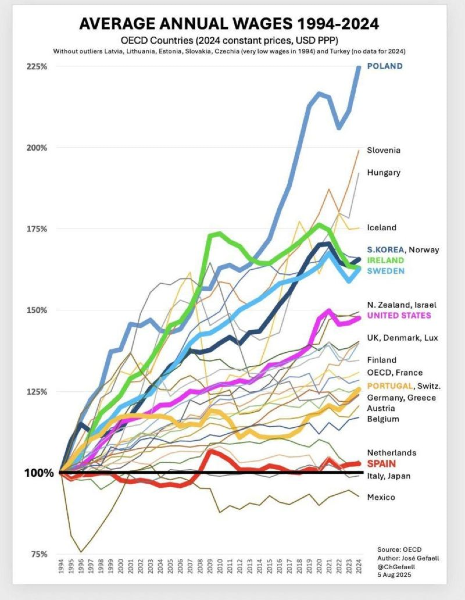
Poland is now a highly developed country where wages have risen sharply in recent years and are now at the Western average level. The price competition that used to be central has thus disappeared, but according to Bendlewski, this poses no problem whatsoever. Price has long since ceased to be the main focus; the core of their success now lies in innovative designs, advanced technologies and a rock-solid team. The company harnesses global technologies to create local solutions that seamlessly meet the needs of customers, both within and outside Poland.
A striking example of this is a recent innovation in the defence sector, presented by Grzegorz Bartler, also vice-chairman of Asseco Poland's management board. He presented the Polish anti-drone system developed by the company. This system uses artificial intelligence to analyse drone sounds and determine location and trajectory, enabling a fast and accurate defensive response. The system operates entirely passively: it emits no signals itself, making it extremely difficult for adversaries to detect. It relies on a network of acoustic sensors installed on existing street lighting, from which they also draw their power.


Bartler concluded by noting that, although the system was primarily designed for the defence sector, there is also considerable potential for civilian applications. As an example, he mentioned detecting unlawful demonstrations or illegal street races based on sound analysis.
The anti-drone system is thus more than a technological showcase. It is a concrete embodiment of what Bendlewski understands by digital sovereignty. Sensitive data on flight movements, security incidents and critical infrastructure remains processed and stored within Poland's borders, on a platform managed and maintained by a Polish company. Asseco is carrying that exact principle through to the broader market.
Poland is on the eve of enormous investments in the energy transition and the modernisation of its armed forces, and Asseco is positioning itself as the anchor point ensuring that these investments actually benefit the country itself. By engaging smaller local IT players as subcontractors and taking on overall responsibility itself, Asseco keeps both the data and the economic added value within Poland. "By choosing local suppliers, a significant share of the investments stays within the country, for instance through tax revenues. This acts as a flywheel for further economic growth," says Bendlewski. It is a role the company takes on with some conviction after 35 years.
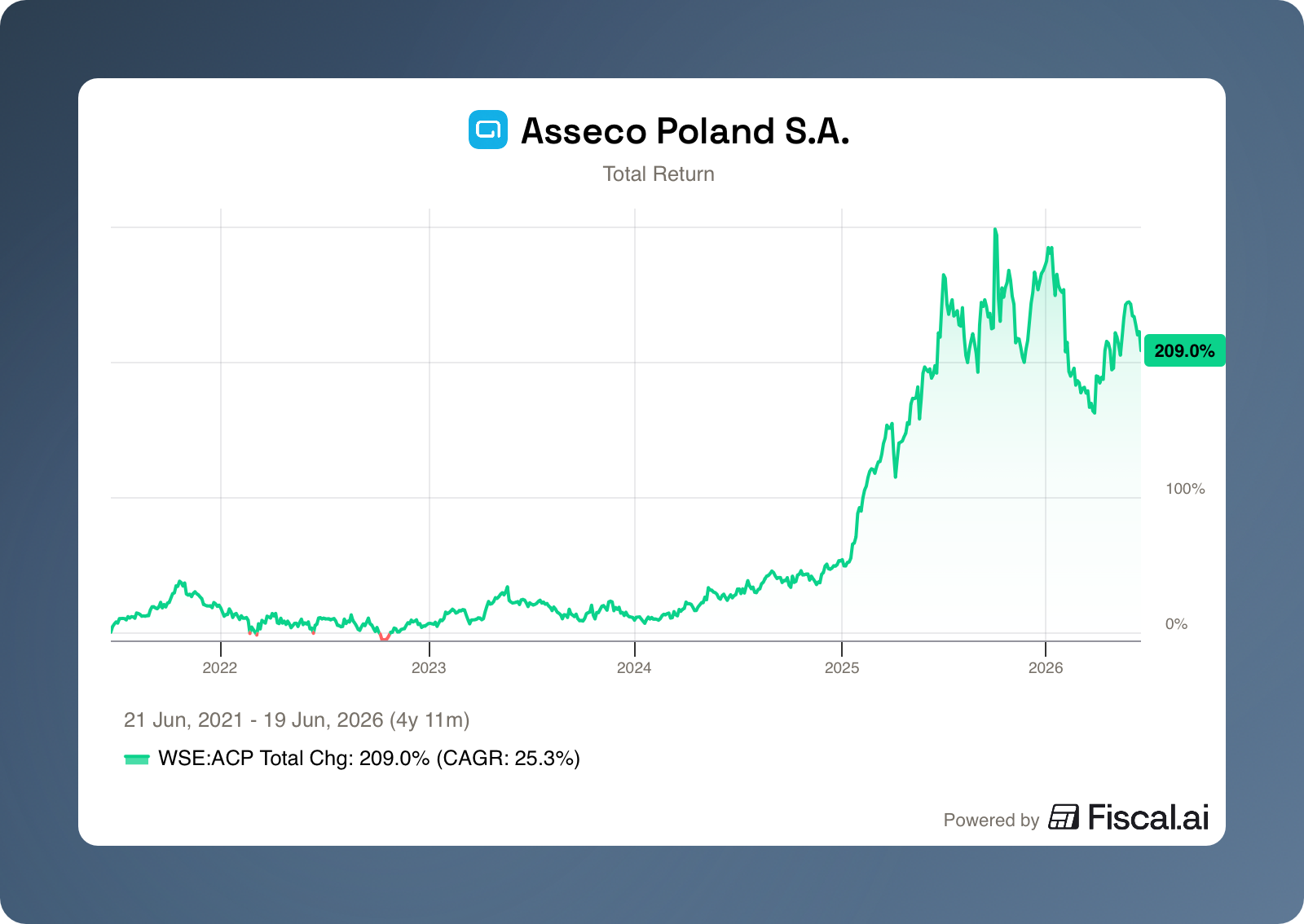
Asseco Poland ended the trading week on the Warsaw exchange at a price of PLN 177.95 per share.
A look from inside the Constellation family
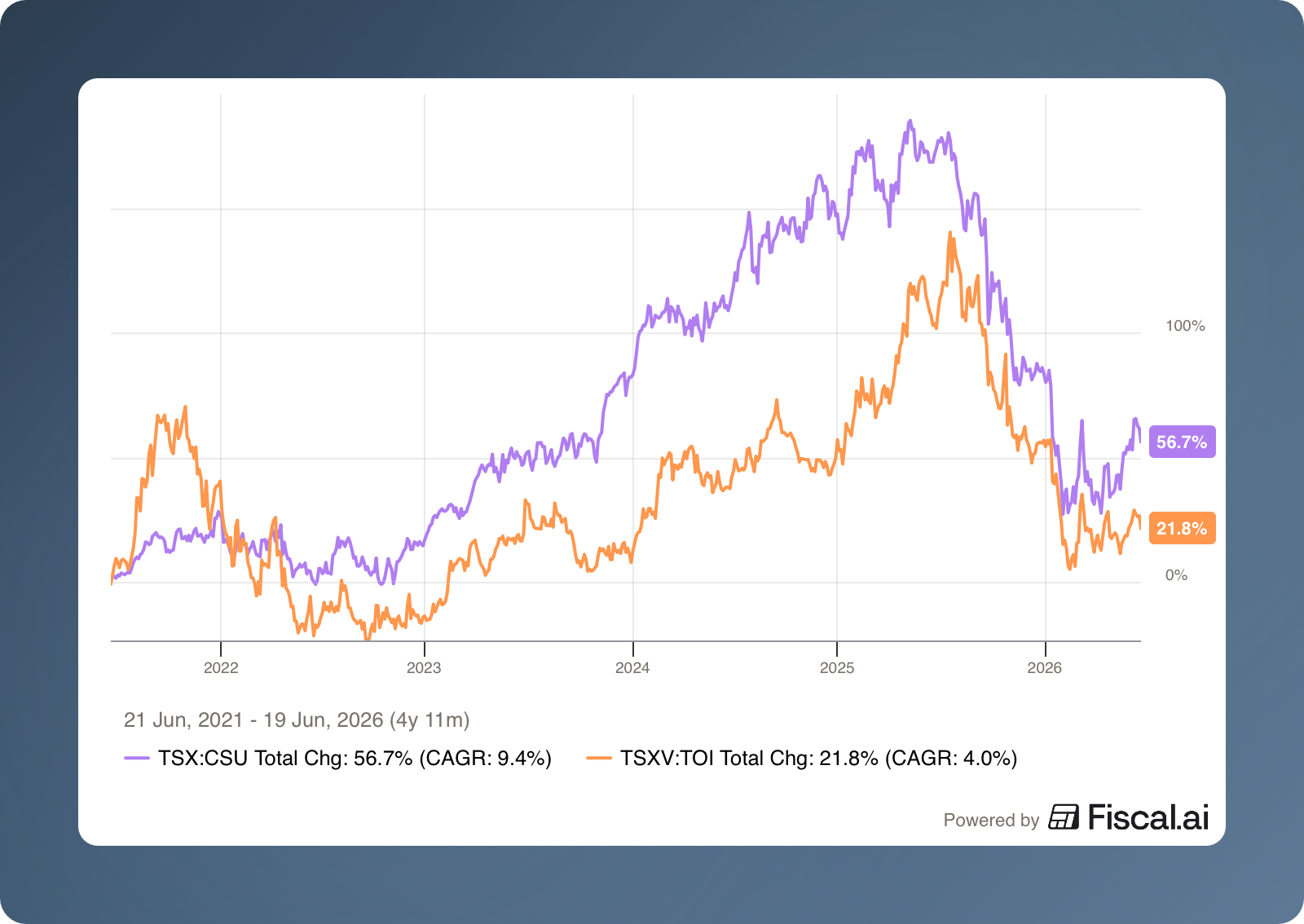
Since Cipal Schaubroeck, market leader in ICT solutions for Flemish local governments, became part of Constellation Software subsidiary (Toronto: CSU) Topicus.com (Toronto: TOI) last year via its subsidiary Total Specific Solutions, criticism has regularly been voiced in public debate. Similar to the current uproar in the Netherlands over the sale of critical government ICT to foreign parties, concerns also arose in Flanders. The question is, after all, a legitimate one: is it wise to hand over systems that contain sensitive data and are crucial to municipal processes to a foreign conglomerate? Critics immediately feared a scenario in which data use would be commercially exploited and municipalities manoeuvred into a dependent position through price increases.
In an interview with De Tijd, CEO Nico Kras reflects on the now well-advanced integration within the Constellation family. He counters fears of an 'asset-stripping scenario' by emphasising the new owner's business philosophy. According to Kras, Constellation does not create value by exploiting a monopoly position, but rather by benchmarking intensively and sharing knowledge between the various subsidiaries. This cross-pollination is already starting to bear fruit in the form of new products, which the company will present next week.
Rebutting the criticism
Kras firmly rebuts the criticism from municipalities regarding the price increases of recent years. A factual analysis shows that the rates for basic applications, such as payroll, civil affairs and social services software, have remained stable between 2020 and 2025, with the exception of necessary wage indexations. According to the CEO, the cause of rising IT bills for local authorities therefore lies elsewhere: they result from growing demand for automation and the sharply increased prices (40 to 90%) charged by other international software vendors. He points out that many a centre city already pays more for standard Microsoft office applications than for the entire core package of Cipal Schaubroeck.
He also counters concerns about data sovereignty in Europe by stressing that Cipal Schaubroeck handles personal data extremely strictly. All information is processed on its own servers, and central storage of national register data is strictly prohibited. The company applies a rigorous policy, as evidenced, among other things, by the decision to remove specific applications for social records from the Microsoft cloud. Compliance with these strict protocols is further safeguarded by annual external audits.
This insider view demonstrates that the takeover is not a centralist yoke, but rather a strengthening of local focus. Kras describes Constellation as a dynamic 'spider's web' of thousands of small, autonomous companies, a structure that has now also been implemented within Cipal Schaubroeck. By splitting the company into ten virtual entities, each with its own management, entrepreneurship is encouraged and closeness to customers is anchored, according to Kras.
Constellation Software and Topicus.com ended the trading week on the Toronto stock exchange at a price of CAD 2,792.88 and CAD 98.84 per share, respectively.
Receive weekly insights in your inbox
Exclusive analyses and updates on family holding companies and global market developments.
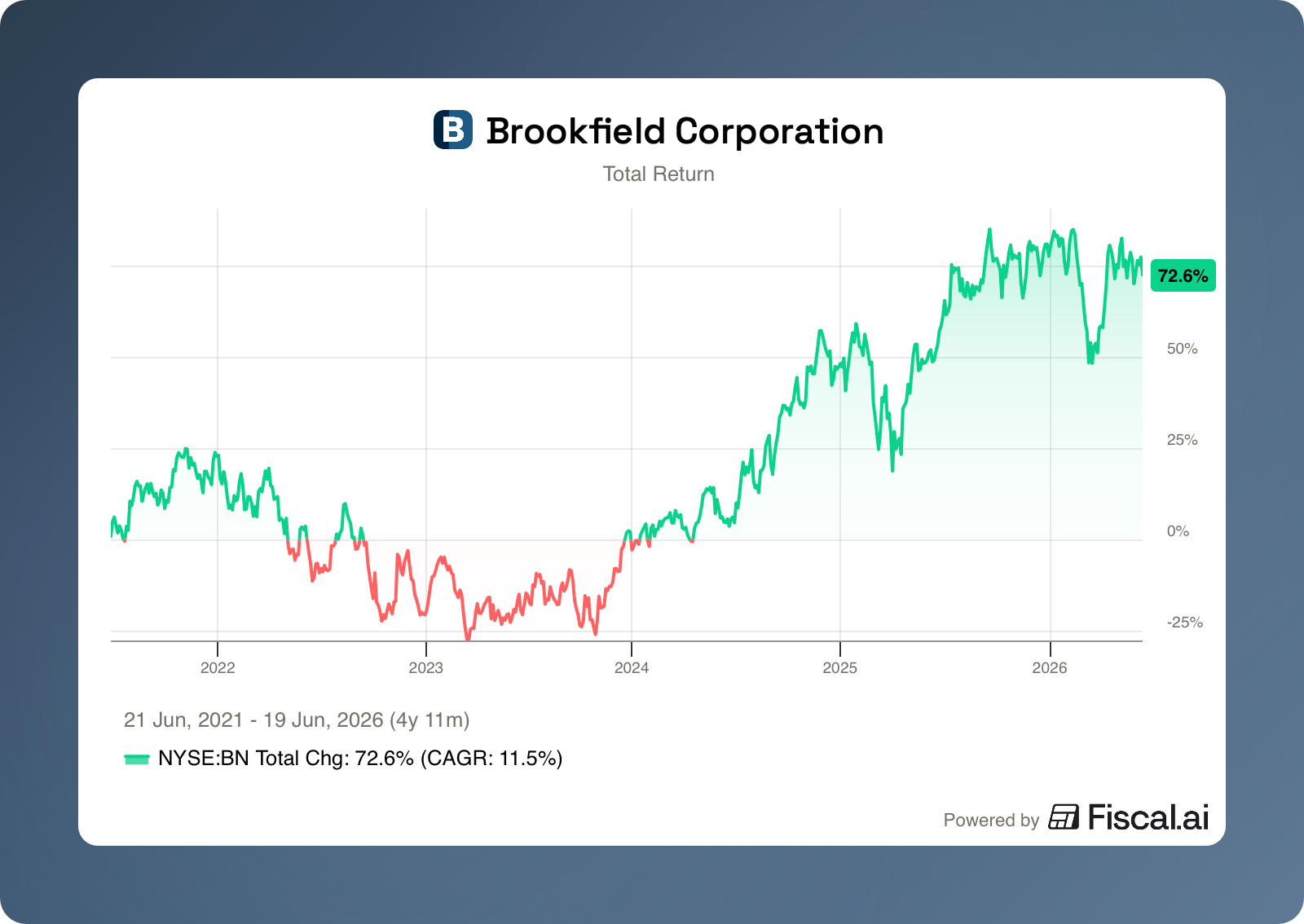
Brookfield's and Oaktree's view on the market and investing
In a recent interview with Barron's, Bruce Flatt (CEO of Canadian investment holding company Brookfield Corporation) and Howard Marks (co-chairman of Oaktree Capital and a director at Brookfield) explain the logic behind their partnership. The collaboration, which began in 2019 and recently culminated in a full acquisition, is strategically driven: Brookfield, a global player in the ‘backbone’ of the economy (such as infrastructure, railways and renewable energy), was seeking the best possible expertise in lending to serve clients at scale. The integration has deliberately remained decentralised in order to preserve Oaktree's own investment culture and processes. Marks stresses that Brookfield does not act like a ‘control freak’. In fact, access to Brookfield's capital resources further aligns interests with clients, as it allows Oaktree to put more of its own capital (skin in the game) into its strategies. Barron's describes the partnership as: "Wall Street's best-kept secret partnership."

Whereas this structural integration forms the basis of their joint operation, the discussion on the market cycle shifts focus to the psychological factors that determine current prices. Asked about the current phase of the financial markets, Howard Marks responds cautiously. In his view, the key gauge is whether the market is being driven by optimism or pessimism. Since the Federal Reserve adopted a more accommodative (dovish) policy stance at the end of 2022, optimism has been dominant, which has often pushed asset prices above intrinsic value.
Marks warns that the favourable economic conditions of the past seventeen years have blinded investors to the risks of illiquidity. He argues that investors should proactively ask themselves: "How do we prepare for less optimistic times?" However, Marks emphasises, the pendulum can also swing too far in the other direction. The risk of market psychology is that sentiment is often more extreme than the fundamentals warrant. As an example, he points to the current software sector, where, despite the negative headlines, he does not currently see a wave of defaults.
Against this market psychology, Bruce Flatt sets out a physical reality, in which he sees enormous growth opportunities in the productivity gains arising from AI and the computing power it requires. However, he adds an important caveat regarding market expectations around AI and data centres: the complexity of building these facilities is being underestimated. Flatt explains that developing large-scale power supply and data centres is extremely hard work that can cost between $20 billion and $250 billion per project. As a result, the actual capacity that comes to market is often far lower than expected, which creates value for players such as Brookfield that have the operational capabilities and scale to actually deliver it.
Given these complex market conditions, Bruce Flatt closes the conversation with a plea for patience and a long-term perspective. In his view, the most important thing that investors often overlook, particularly during times of extreme market peaks or troughs, is that generating returns is about "compounding capital over very, very long periods of time". He cites Warren Buffett as the ultimate example: success does not come from speculating, but from investing in great businesses run by capable people who act as good stewards of your capital.
Brookfield Corporation ended the trading week on the New York Stock Exchange at a price of USD 44.44 per share.
Chapters Group's profitability rises sharply
German serial acquirer Chapters Group (Frankfurt: CHG) has published its annual report for financial year 2025. We previously discussed the strategy, the preliminary annual figures and our meeting with management in a Deep Dive. In this piece, we look at the final annual figures and what they reveal about the underlying profitability of the portfolio.
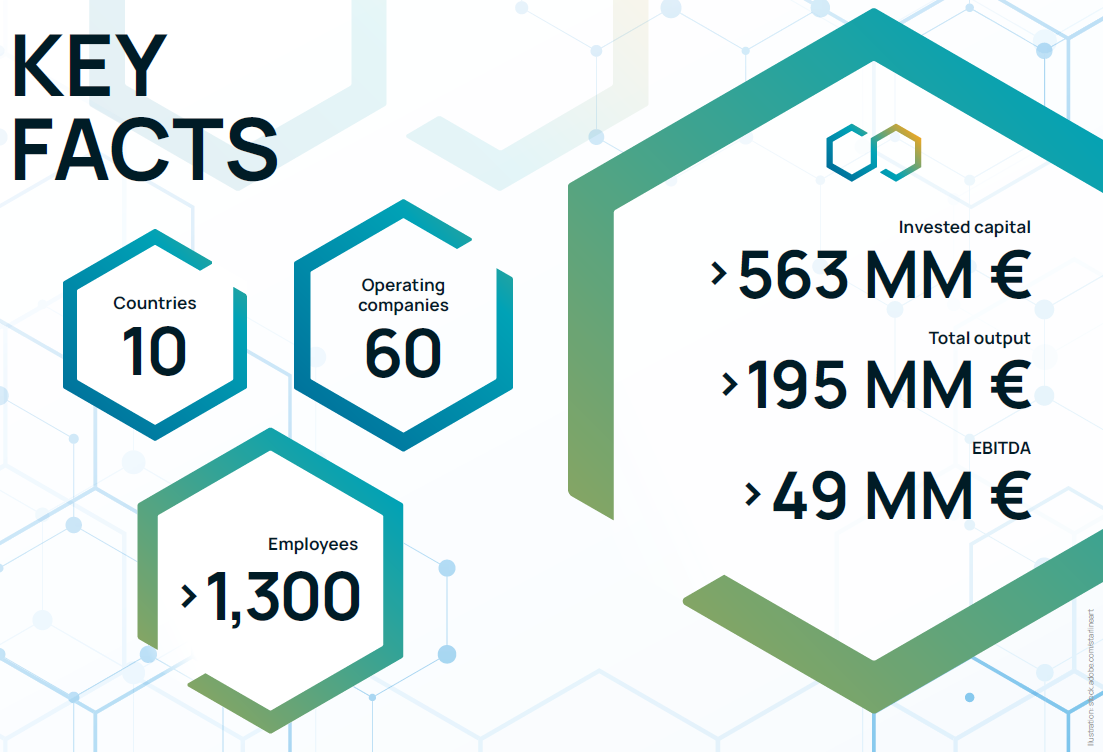
At the end of 2025, the holding company had sixty operating companies in ten countries, together accounting for more than 1,300 employees and over EUR 563 million of invested capital. It was by far the strongest year for growth through acquisitions in the Public and Enterprise segments, with sixteen companies joining the group. To finance this expansion, Chapters issued its first-ever corporate bond, worth EUR 72 million.
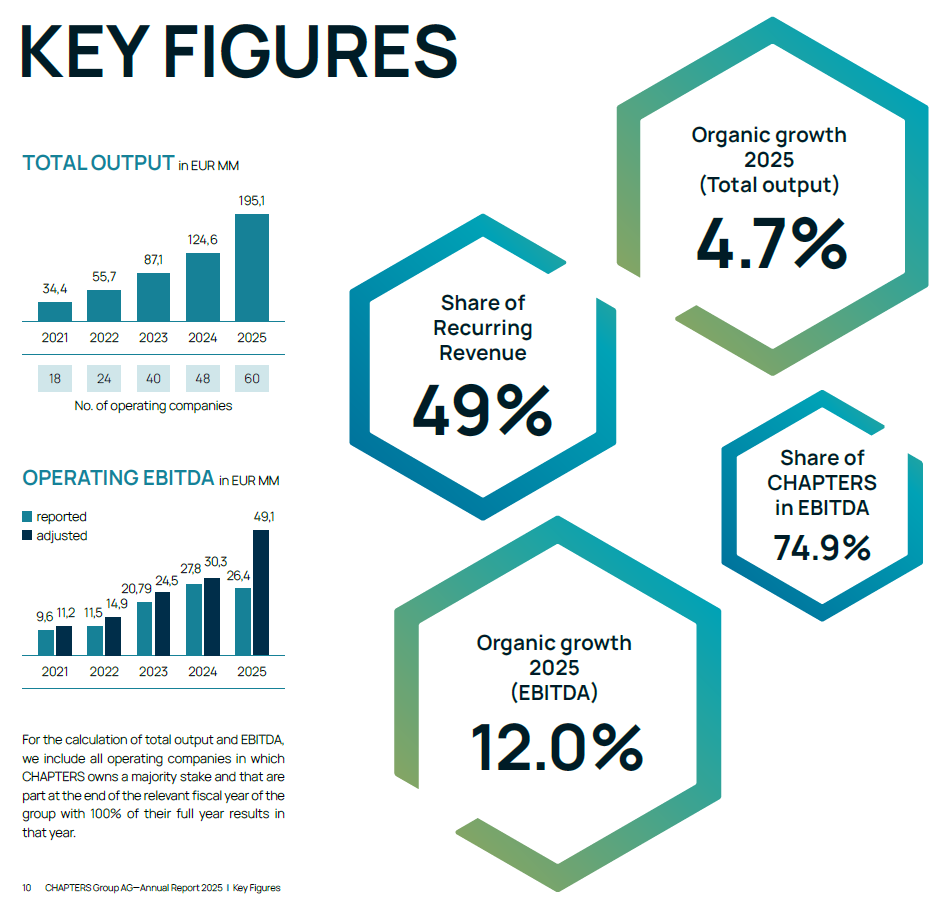
On a pro forma basis, total output, revenue adjusted for changes in inventory, rose to EUR 195 million, compared with EUR 124.6 million a year earlier. Operating profit came in at EUR 49.1 million versus EUR 30.3 million in 2024. Almost half of revenue (49 percent) is recurring, underlining the predictability of the business model. Of that operating profit, 74.9 percent accrued to Chapters itself, with the remainder going to minority shareholders in the underlying companies.
Pro forma versus consolidated
Chapters presents its results in two versions. It is important to understand the difference. In the pro forma view, every company in which the holding company held a majority stake at the end of the financial year is included for the full year, even when the acquisition only took place later in the year. This gives the best picture of the underlying annual revenue and profit of the current portfolio.
The figures under German accounting rules work differently. Under these rules, an acquired company is only included from the day of the acquisition onwards. For a serial acquirer that added sixteen companies in a single year, that makes a big difference. This is reflected in two items. The revenue that acquired companies generated in the period before Chapters bought them, EUR 30.95 million, is included in the pro forma total output but falls outside the consolidated figures. Conversely, the revenue of the companies Chapters sold in 2025, EUR 6.07 million, is included in the consolidated figures but not in the pro forma figure. After all, those companies were still owned by Chapters for part of the year, whereas the pro forma figure only reflects the portfolio as at the end of 2025.
 Michael Gielkens
Organic growth shows the same pattern. Reported organic growth in total output came in at 1.5 percent, below the previously given guidance. That low growth figure is largely one-off. It was held back by the loss-making discontinuation of some projects and by corrections to the accounting of acquired companies, together accounting for approximately EUR 4.26 million, plus an effect of EUR 1.11 million from the first-time recognition of deferred revenue. Adjusted for these items, organic revenue growth came in at approximately 4.7 percent, in line with guidance. Operating profit grew organically by 12 percent, within the expected range of 10 to 13 percent.
Beneath all these figures, at holding company level, there is a consolidated net loss of EUR 29.65 million. That loss is almost entirely accounting-driven in nature. It stems from the EUR 35.5 million impairment on goodwill and on acquired intangible assets, plus some one-off costs. Chapters expects profitability to normalise in 2026.
 Joep Dikken
Outlook
In the annual report, Chief Technology Officer Tobias Pook, who joined in October 2025, spoke at length about the role of AI in software. We already covered this in our previous newsletter (see the link above). Pook sees AI primarily as an opportunity and wants the holding company's software to evolve from systems that record data (systems of record) into systems that themselves carry out tasks (systems of action). In his view, the existing strengths of the companies, such as their domain expertise, customer trust and data built up over many years, remain the decisive advantage for Chapters. He expects the first measurable contribution from AI initiatives to revenue from 2027 onwards, while the efficiency gains from automation are already playing a role now.
For 2026, management expects an acceleration in organic growth in total output to 7 to 9 percent, with recurring revenue growing faster than the total. Operating profit is expected to grow organically by 14 to 17 percent.
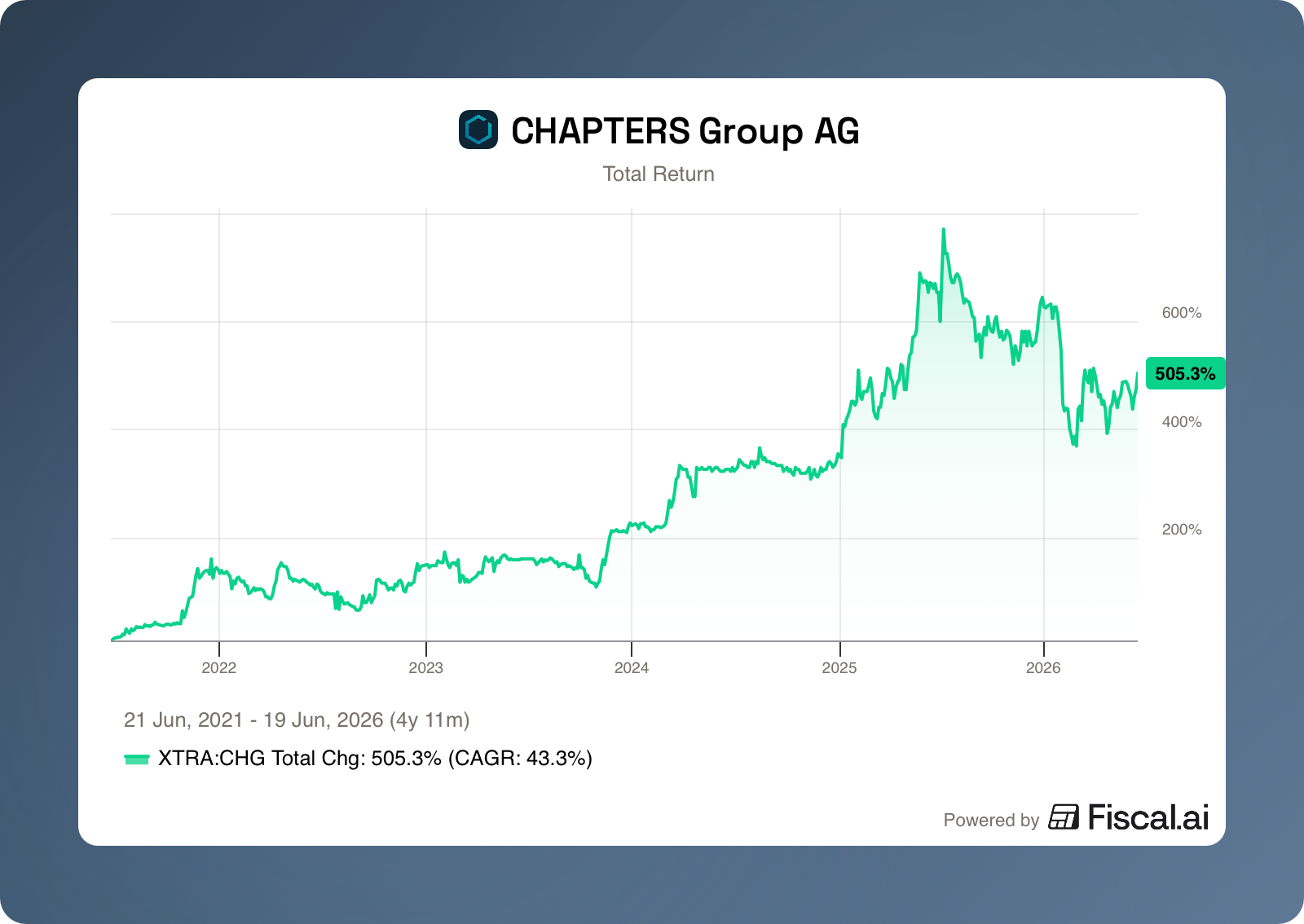
Chapters Group ended the trading week on the Frankfurt exchange at a price of EUR 33.65 per share.
Receive weekly insights in your inbox
Exclusive analyses and updates on family holding companies and global market developments.
Would you like more information about our services?
Get in touch
Disclaimer:
No rights may be derived from this publication. This is a publication of Tresor Capital. Reproduction of this document, or parts thereof, by third parties is only permitted after written consent and with reference to the source, Tresor Capital.
This publication has been compiled by Tresor Capital with the greatest possible care. The information is intended in a general sense and is not tailored to your individual situation. The information should therefore explicitly not be regarded as advice, an offer or a proposal to purchase or trade investment products and/or to obtain investment services, nor as investment advice. The authors, Tresor Capital and/or its employees may hold positions in the securities discussed, for their own account or for their clients.
You should carefully consider the risks before you start investing. The value of your investments may fluctuate. Past performance is no guarantee of future results. You may lose (part of) your invested capital. Tresor Capital disclaims any form of liability for any inaccuracies or errors. This information is purely indicative and subject to change.
Read the full disclaimer at tresorcapitalnieuws.nl/disclaimer .
This article was translated automatically from Dutch using AI. In case of any difference, the Dutch original prevails. Read the original in Dutch.